Search results
Search for "bifunctional" in Full Text gives 250 result(s) in Beilstein Journal of Organic Chemistry. Showing first 200.
Electrochemical reduction of unsaturated carbon–carbon bonds via 3d transition-metal catalysis
Beilstein J. Org. Chem. 2026, 22, 955–981, doi:10.3762/bjoc.22.75
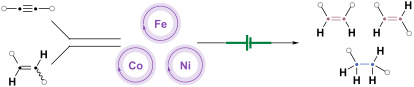
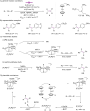
- storage for controlling regioselective C–C bond formation beyond semihydrogenation chemistry [125]. In 2025, the Wang group reported a nickel electrocatalytic system featuring a bifunctional ligand equipped with a pendant amine, specifically designed to promote Ni–H formation while simultaneously
- to alkanes. Electrochemical nickel-catalyzed hydrogenation of alkenes. Electrochemical Ni–H formation and hydrogenation of alkenes using a bifunctional ligand. Nickel hydride electrocatalysis for the hydrogenation of alkenes. Funding I.C. and the Choi group are grateful to the MSIT and MOE. This








Site-specific labelling of native peptides and proteins: chemical and enzymatic strategies
Beilstein J. Org. Chem. 2026, 22, 857–881, doi:10.3762/bjoc.22.67
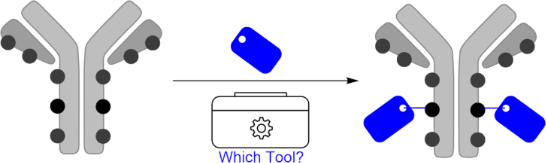
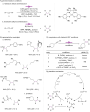
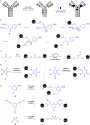
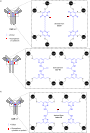
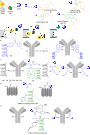
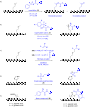
- discussions of rebridging technologies, see references [34][43][44][45]. Affinity-guided protein modifications Affinity-guided protein labelling, also known as affinity-directed conjugation, is a native-sequence modification strategy founded on supramolecular recognition. It employs a bifunctional probe
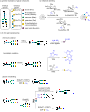
- has been the development of linchpin-directed modification (LDM) [104]. These bifunctional reagents contain two reactive groups separated by a spacer: one engages in a reversible interaction with a common surface residue, while the other is an irreversible chemical handle that covalently modifies a








Synthesis and structural elucidation of a novel bis-spirooxindole from isatin and ethylenediamine
Beilstein J. Org. Chem. 2026, 22, 813–820, doi:10.3762/bjoc.22.63

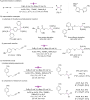
- antagonists, HIV-1 NNRTIs, and modulators of actin-dependent growth arrest – further exemplify the pharmacological breadth of this structural class [13][14][15]. The propensity of isatin to engage in condensations with bifunctional nucleophiles has, however, also revealed a tendency toward structural
- -proline (7), which leads to the formation of the dispirocyclic product 9 whose structure was ultimately established by X-ray diffraction after initial ambiguity based on spectroscopic data alone (Scheme 1) [16][17]. This case illustrates how condensations of isatin with bifunctional nitrogen nucleophiles
- , multicomponent systems combining isatin derivatives with diamines have been reported to furnish bis-spirocyclic architectures like 21 without detectable formation of the corresponding diimines 22 [20] (Scheme 3). Collectively, these precedents demonstrate that condensations of isatin with bifunctional nitrogen


Synthesis of heterocycles based on azomethine ylides from α-amino acids (or amines) and carbonyl compounds
Beilstein J. Org. Chem. 2026, 22, 705–741, doi:10.3762/bjoc.22.55
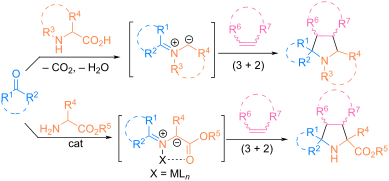
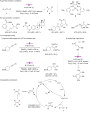
- diastereoselectivity of the reaction, have a significant impact on enantioselectivity. The same bifunctional squaramide L24 showed better efficiency as a catalyst for the (3 + 2) cycloaddition reaction of azomethine ylides from isatin and benzylamines to nitroalkenes [100]. A wide variety of heterocyclic systems have


Cone p-aminocalix[4]arenes enriched with ‘clickable’ alkyne or azide functionalities
Beilstein J. Org. Chem. 2026, 22, 399–415, doi:10.3762/bjoc.22.28
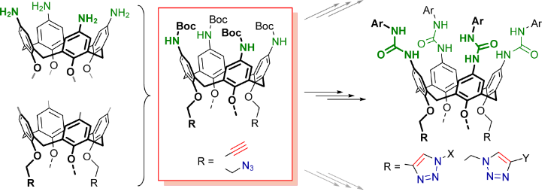
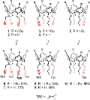
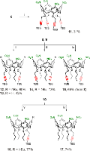
- the above benefits brought to the calixarene structures by amino groups, the power of CuAAC reactions in building multifunctional architectures, and following the pioneering work on bifunctional “Janus” calix[4]arenes joining propargyl groups and nitro/amino/azide groups in the structures [9], we




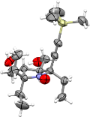
Synthesis of tricyclic fused pyrrolidine nitroxides from 2-alkynylpyrrolidine-1-oxyls
Beilstein J. Org. Chem. 2026, 22, 344–351, doi:10.3762/bjoc.22.22

- that rigid tricyclic systems apparently do not have a screening effect on the radical center. Conclusion In this work we showed that formation of rigid tricyclic annulated systems from bifunctional nitroxides bearing alkynyl and another functional group in neighboring positions is feasible. The new




Competitive cyclization of ethyl trifluoroacetoacetate and methyl ketones with 1,3-diamino-2-propanol into hydrogenated oxazolo- and pyrimido-condensed pyridones
Beilstein J. Org. Chem. 2025, 21, 2716–2729, doi:10.3762/bjoc.21.209
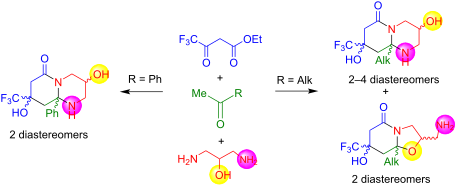
- without catalysis or using triethylamine–acetic acid as a bifunctional catalyst (Scheme 2). The reactions with alkyl methyl ketones 2b,c in 1,4-dioxane without catalysis led to the formation of a mixture of octahydropyrido[1,2-a]pyrimidinones 4b,c and hexahydrooxazolo[3,2-a]pyridones 5b,c, but with a
- the substituent in the methyl ketone component, since, with acetone, the octahydropyrido[1,2-a]pyrimidinone formation predominates, and with the elongation of the alkyl substituent in methyl ketone both processes become competitive. However, the use of bifunctional AcOH/Et3N catalysis leads to an


Catalytic enantioselective synthesis of selenium-containing atropisomers via C–Se bond formations
Beilstein J. Org. Chem. 2025, 21, 2447–2455, doi:10.3762/bjoc.21.186
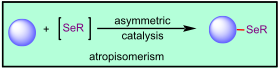
- (Scheme 4). In 2025, Yang, Lu, and co-workers employed bifunctional catalysts, including chiral thiourea derivatives or chiral phosphoric acid, to activate alkynes and selenols through multiple hydrogen-bonding interactions, thereby achieving an enantioselective hydroselenation of alkynes [22]. All
- intermediate Int 16 on VQM to form intermediate Int 17. As bifunctional organic catalysts, chiral ureas can synergistically activate both alkynes and selenols, thereby addressing the challenge of overcoming the increased difficulty of racemization caused by the presence of bulky SeR groups (Scheme 5). Summary


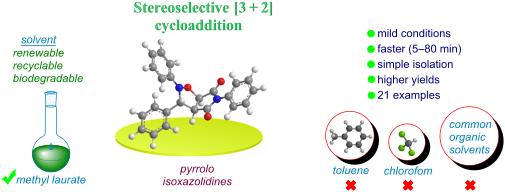
The high potential of methyl laurate as a recyclable competitor to conventional toxic solvents in [3 + 2] cycloaddition reactions
Beilstein J. Org. Chem. 2025, 21, 2389–2415, doi:10.3762/bjoc.21.184
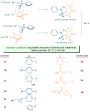
- using N-methyl,C-phenylnitrone and N-methylmaleimide [110]. Furthermore, although mono- and bifunctional N-methylnitrones exhibit higher cycloaddition reaction rates than their N-phenyl analogues, their impact on selectivity is diminished [111]. It is well established that nitrones prepared from






C2 to C6 biobased carbonyl platforms for fine chemistry
Beilstein J. Org. Chem. 2025, 21, 2103–2172, doi:10.3762/bjoc.21.165
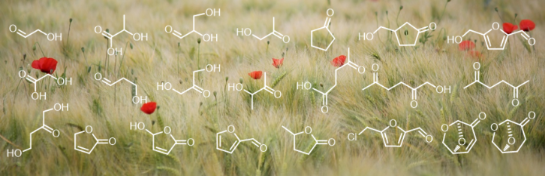
- -hydroxypropan-2-one with acylacetonitrile towards furan derivatives using a Sc(OTf)3 catalyst. C2-based bifunctional acetals, such as glycolaldehyde diethyl acetal, α-bromoacetaldehyde acetal, and 1,4-dithiane-2,5-diol also take part in the reaction as counterpart reagents. The well-known fungicide fenfuram was
- dehydration over mesoporous solid acids and the second one is a metal-catalyzed hydrogenation. HFO was obtained in 85% yield and its conversion rate to GBL was about 97%. Different bifunctional Pt-based solid acids were used. An overall GBL yield of 82.7% from furfural was obtained (Scheme 33). Gollnick and
- of Lewis acid–base bifunctional catalyst (Zr-β zeolite and K2CO3) in the Meerwein–Ponndorf–Verley reduction of a concentrated furfural solution (17.3–80.5 wt % in ethanol) combined with in situ cross-aldol condensation with acetaldehyde and crotonization. Ethanol was used as hydrogen donor for the


Chiral phosphoric acid-catalyzed asymmetric synthesis of helically chiral, planarly chiral and inherently chiral molecules
Beilstein J. Org. Chem. 2025, 21, 1864–1889, doi:10.3762/bjoc.21.145
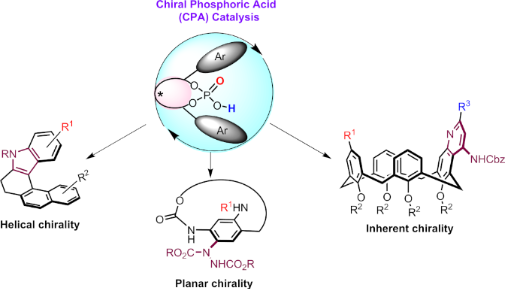
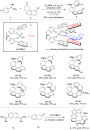
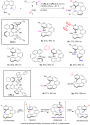
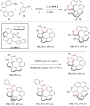
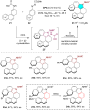
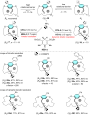
- asymmetric Mannich reactions, the past two decades have witnessed the remarkable evolution of CPA catalysis into one of the most versatile platforms for achieving diverse enantioselective transformations [3][4][5][6][7][8]. CPA catalysts are generally recognized as bifunctional catalysts with two distinct










Systematic pore lipophilization to enhance the efficiency of an amine-based MOF catalyst in the solvent-free Knoevenagel reaction
Beilstein J. Org. Chem. 2025, 21, 1854–1863, doi:10.3762/bjoc.21.144
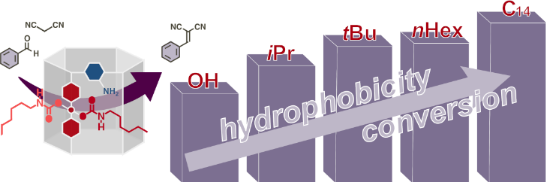
- reaction was complete, we reacted KSU-1 with n-hexyl and tetradecyl isocyanate as well (Table 1, entries 3 and 4) because we wanted to use longer alkyl chains to further increase the lipophilicity. To obtain our bifunctional amine-based KSU-1 MOF catalysts, we incubated KSU-1 in a 0.2 M solution of the


Catalytic asymmetric reactions of isocyanides for constructing non-central chirality
Beilstein J. Org. Chem. 2025, 21, 1648–1660, doi:10.3762/bjoc.21.129

- . Moreover, an axially chiral tertiary alcohol-phosphine 42 was prepared from 39a through a three-step procedure including N-methylation, reduction of phosphine oxide, and Grignard addition to ester. Subsequently, 42 was applied as a bifunctional Lewis base organocatalyst in the formal [4 + 2] cyclization
- -squaramide bifunctional ligand L8 as the catalyst, a universal synthesis of tri- and tetra-ortho-substituted biaryl phenols 51 containing a thiazole moiety was achieved in 85–99% yield with 56–99% ee. It is worth mentioning that this work represents the first example of catalytic asymmetric DKR of biaryl





Copper catalysis: a constantly evolving field
Beilstein J. Org. Chem. 2025, 21, 1477–1479, doi:10.3762/bjoc.21.109
- cross-coupling reactions of bifunctional boryl- and germyl-containing compounds. On the other hand, a Full Research Paper presented by Lee and co-workers introduces a highly regioselective formal hydrocyanation method of allenes [7]. The strategy is based on a copper-catalyzed hydroalumination of
Microwave-enhanced additive-free C–H amination of benzoxazoles catalysed by supported copper
Beilstein J. Org. Chem. 2025, 21, 1462–1476, doi:10.3762/bjoc.21.108
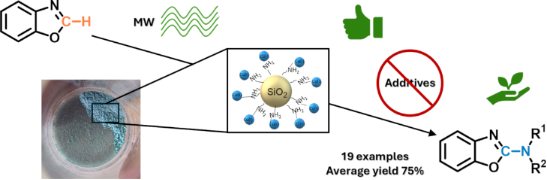
- . Additionally, using supported metals instead of metal salts can prevent the formation of chelates, which might otherwise impact the efficiency of the procedure. Moreover, this approach can provide bifunctional catalysis as the support itself contributes to the catalyst's reactivity, thus enhancing its overall



High-pressure activation for the solvent- and catalyst-free syntheses of heterocycles, pharmaceuticals and esters
Beilstein J. Org. Chem. 2025, 21, 1374–1387, doi:10.3762/bjoc.21.102
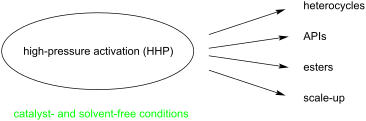
- appears to be applicable for other substrates as well, although the yields were lower, which is mainly due to the decomposition of the products (Scheme 1). HHP-assisted cyclization of chalcones with hydrazines for the synthesis of pyrazoles The cyclization of 1,3-bifunctional compounds, such chalcones


Recent advances in amidyl radical-mediated photocatalytic direct intermolecular hydrogen atom transfer
Beilstein J. Org. Chem. 2025, 21, 1306–1323, doi:10.3762/bjoc.21.100
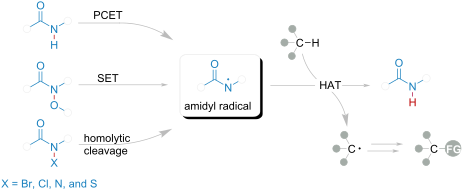
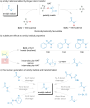
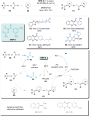
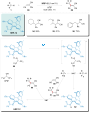
- require electrophilic heterocycles. These limitations hinder the broader application of such systems. Alexanian’s group modified amidyl radical precursors by incorporating halogen atoms, transforming them into bifunctional reagents. The HAT component of amidyl radical precursors was facilitated by amidyl
- area. Switchable amidyl radicals provide an effective toolkit for completing hydrogen atom transfer processes. Transitioning from noble metal photocatalysts to organic photocatalysts and from HAT reagents to bifunctional reagents, these remarkable photocatalytic systems have inspired innovations across






Development and mechanistic studies of calcium–BINOL phosphate-catalyzed hydrocyanation of hydrazones
Beilstein J. Org. Chem. 2025, 21, 755–765, doi:10.3762/bjoc.21.59
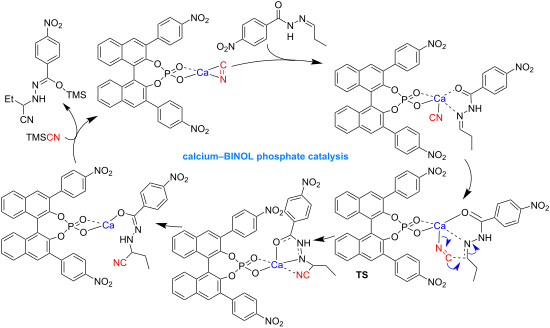
- in elucidating the mechanism by which these bifunctional compounds act as powerful catalysts [21][22][23][24][25][26][27][28][29]. Since Ishihara disclosed the crucial role of calcium in many purportedly purely organocatalytic BINOL phosphate-catalyzed reactions [30][31], several asymmetric synthesis


Synthesis of HBC fluorophores with an electrophilic handle for covalent attachment to Pepper RNA
Beilstein J. Org. Chem. 2025, 21, 727–735, doi:10.3762/bjoc.21.56
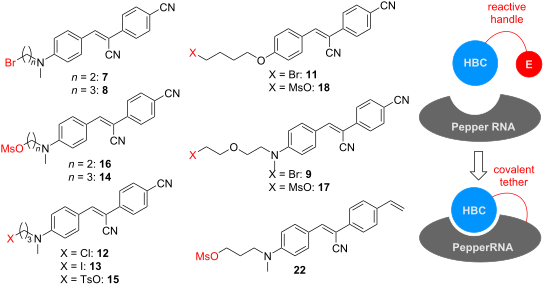
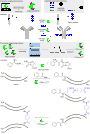
- 14 (Figure 2). Synthesis of a bifunctional Pepper dye Encouraged by the efficient attachment of the bromo- and mesyloxypropyl-modified HBC fluorophores to the Pepper aptamer, we generated a bifunctional HBC ligand with a second handle that is available for bioorthogonal reactions. The original
- usefulness of this type of bifunctional fluorescent ligands in RNA affinity purification has recently been demonstrated by our group [11]. Conclusion Covalent fluorescent light-up aptamers (coFLAPs) are opening new avenues for RNA imaging [11]. In this work, we describe robust synthetic routes for twelve HBC
- bromoalkyl HBC derivatives 7, 8, and 9. Synthesis of the HBC ether derivative 11. Derivatization of the HBC fluorophore 5 to generate handles with distinct electrophilic groups. Synthesis of mesylated HBC fluorophores 16, 17, and 18. Synthesis of the bifunctional HBC fluorophore 22. For an application of 22



Study of the interaction of 2H-furo[3,2-b]pyran-2-ones with nitrogen-containing nucleophiles
Beilstein J. Org. Chem. 2025, 21, 556–563, doi:10.3762/bjoc.21.44
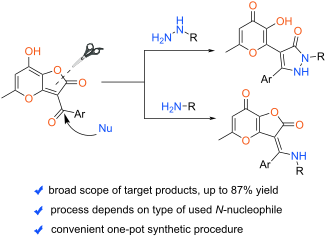
- to pyrazolones occurred. The analogous process using hydroxylamine allowed us to prepare the similar isoxazolone with allomaltol fragment. Extensive studies have enabled the development of a straightforward approach to novel bifunctional products containing both allomaltol and pyrazolone cores. The


Vinylogous functionalization of 4-alkylidene-5-aminopyrazoles with methyl trifluoropyruvates
Beilstein J. Org. Chem. 2025, 21, 533–540, doi:10.3762/bjoc.21.41
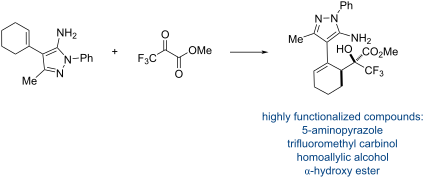
- [32]. Then, we increased the reaction scale to 0.2 mmol and obtained similar results (Table 1, entry 13). At this point, we decided to explore the use of a bifunctional organocatalyst in order to improve the yield. When squaramide SQ-1 was used as a catalyst, we observed a similar yield and
- diastereoselectivity after 24 h of reaction (61% yield and 7:1 dr, Table 1, entry 14). By lowering the reaction temperature to 50 °C using the same catalyst (Table 1, entry 15), the yield of the reaction increased slightly to 73% in 24 hours. Disappointingly, the bifunctional thiourea THIO-1 gave a lower yield and



Beyond symmetric self-assembly and effective molarity: unlocking functional enzyme mimics with robust organic cages
Beilstein J. Org. Chem. 2025, 21, 421–443, doi:10.3762/bjoc.21.30
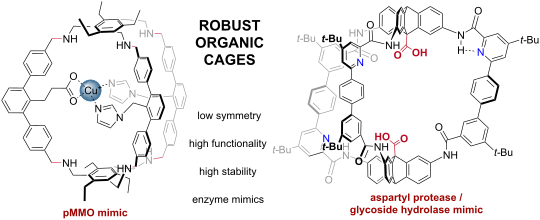
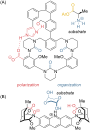
- , therefore, that for redistribution penalties to be lessened, the equal and opposite stabilization must be granted to that same space. This is the basis of bifunctional/dual activation, as shown in Figure 1. Since very few reported supramolecular cavity designs provide bifunctional activation, cavity
- phosphodiesters by 105–107 by electrophilic activation of ester and nucleophilic activation of water or peroxide at the metal ion [101][102]. The takeaway message is that polarization is most effective when it is bifunctional. In enzymes, there is never just a nucleophile – there is always a metal, “oxyanion hole
- organocatalysts [222][234] all suffer from the same limitation: they all fail to rigidly organize sufficient bifunctional groups to obtain clear transition-state binding – a hallmark of enzymes and organocatalysts [107][180]. Strategy towards organocatalytic organic cages: My laboratory has levied the following




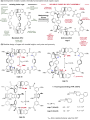
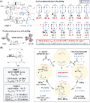
Recent advances in organocatalytic atroposelective reactions
Beilstein J. Org. Chem. 2025, 21, 55–121, doi:10.3762/bjoc.21.6
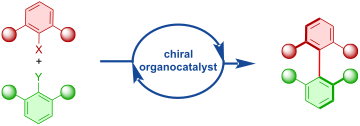


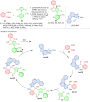









Intramolecular C–H arylation of pyridine derivatives with a palladium catalyst for the synthesis of multiply fused heteroaromatic compounds
Beilstein J. Org. Chem. 2024, 20, 3256–3262, doi:10.3762/bjoc.20.269
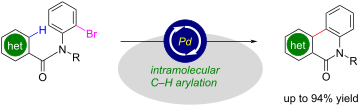
- previous result for the cyclization of 5b to afford the doubly cyclized product 6b (reported yield: 85% [23]), suggesting that the superior reactivity was found for bifunctional bisamides compared to monoamides. It was also found that the reaction also is applicable to a carbocyclic amide derivative. When


Non-covalent organocatalyzed enantioselective cyclization reactions of α,β-unsaturated imines
Beilstein J. Org. Chem. 2024, 20, 3221–3255, doi:10.3762/bjoc.20.268
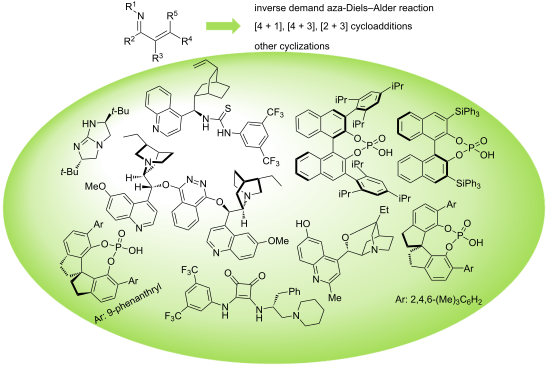
- -raising activation (amine-based catalysis and N-heterocyclic carbenes), and iii) LUMO-lowering and HOMO-raising activation (bifunctional thioureas and squaramides). Due to the ubiquitous nature of non-covalent interactions in organic systems, they can play a decisive role in asymmetric transformations [15
- covered in this review are hydrogen-bond donors such as thioureas and squaramides, Brønsted bases such as tertiary amines, and Brønsted acids such as chiral phosphoric acids. As depicted in Figure 4, a bifunctional squaramide is able to activate both an α,β-unsaturated imine through hydrogen bonding with
- reviews [17][18]. Review Hydrogen bond donors: bifunctional thioureas and squaramides The use of bifunctional catalysts is commonplace in organocatalyzed transformations [19][20][21][22][23]. These catalysts are able to activate an electrophile and a nucleophile simultaneously and in IEDADA reactions they