Search results
Search for "boronic ester" in Full Text gives 43 result(s) in Beilstein Journal of Organic Chemistry.
Diastereodivergent electrophilic trapping of α-boryl lithium derivatives
Beilstein J. Org. Chem. 2026, 22, 882–887, doi:10.3762/bjoc.22.68
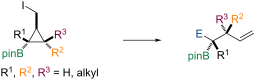
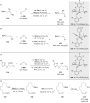
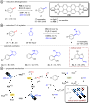
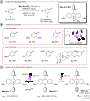
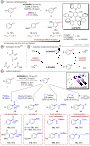
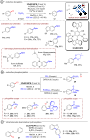
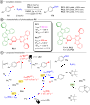
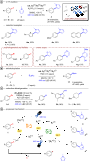
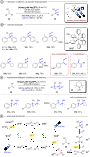
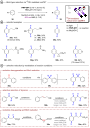
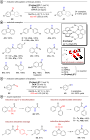
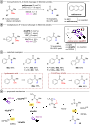
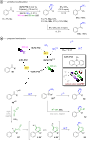
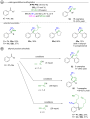
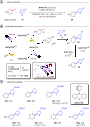
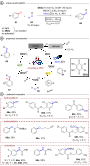
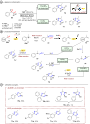
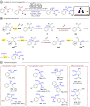
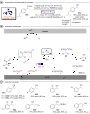
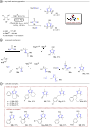
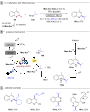
- task [25][26][27]. The electronic character of these intermediates, especially for boronic ester derivatives that allow coordination between oxygen atoms and the metal counterion, complicates predictable stereochemical outcome. Developing strategies to harness the exceptional nature of these carbanions
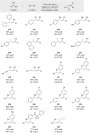
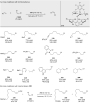
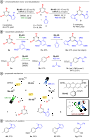
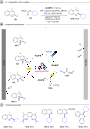
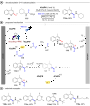
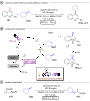
- . For both 6a/6b and 6c, the alkyl substituent, whether R3 (6a, 6b) or R2 (6c), has a syn-relationship with the boronic ester group. Furthermore, performing the reaction with diastereomers 5c (R1 = R3 = Pr, R2 = H) and 5d (R1 = R2 = Pr, R3 = H), produced product 6d with the same relative configuration




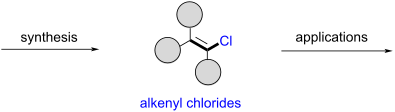
Synthesis and applications of alkenyl chlorides (vinyl chlorides): a review
Beilstein J. Org. Chem. 2026, 22, 1–63, doi:10.3762/bjoc.22.1
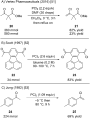
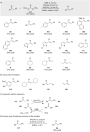
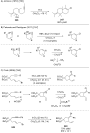
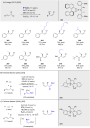
- also be applied to hydroxy- or carboxylic acid-containing olefins by adding 1.1 equivalents of HB(pin) to perform traceless protection of these functional groups, which are otherwise incompatible with molybdenum metathesis catalysts. The in situ-generated boronic ester is conveniently cleaved by silica

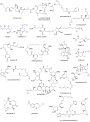

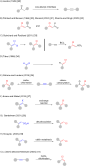





















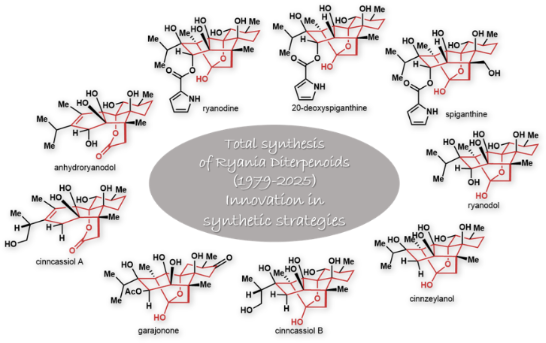
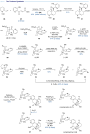
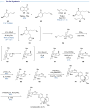
Total syntheses of highly oxidative Ryania diterpenoids facilitated by innovations in synthetic strategies
Beilstein J. Org. Chem. 2025, 21, 2553–2570, doi:10.3762/bjoc.21.198
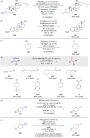
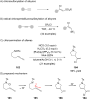
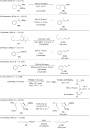
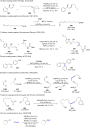
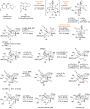
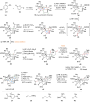
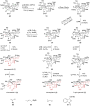
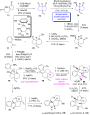
- , and introduction of an isopropenyl group afforded compound 75. Subsequent protection of the vicinal diol as a boronic ester and diastereoselective reduction of the C3 carbonyl group yielded compound 76. Esterification with acylating reagent 77 under basic conditions, followed by boronic ester removal






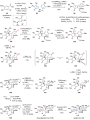

Comparative analysis of complanadine A total syntheses
Beilstein J. Org. Chem. 2025, 21, 2334–2344, doi:10.3762/bjoc.21.178
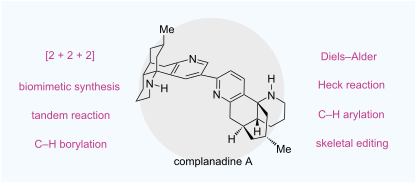
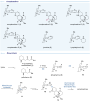
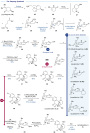
- lycodine 34 underwent Ir-catalyzed C3–H borylation mainly guided by steric factors to provide boronic ester 35 in 75% yield. With the boronic ester handle at the C3 position, the subsequent Suzuki–Miyaura cross coupling between 35 and 33 occurred smoothly to deliver pseudo-dimer 36, which upon acidic
- used in the Sarpong synthesis was again utilized here to introduce a boronic ester at the C3 position, which was further converted to 3-bromopyridine 55 with CuBr2. With both 54 and 55, Tsukano and co-workers employed a remarkable pyridine N-oxide directed C–H arylation method developed by Fagnou et al
- skeleton and the newly developed C–H borylation to install a boronic ester handle at the desired position for a Suzuki–Miyaura cross coupling to build the C2–C3’ linkage which was hidden in bis(trimethylsilyl)butadiyne (20) of the Siegel synthesis. Both the groups of Tsukano and Dai utilized a pyridine N



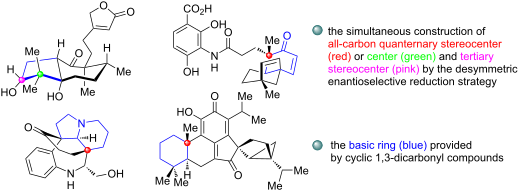
The application of desymmetric enantioselective reduction of cyclic 1,3-dicarbonyl compounds in the total synthesis of terpenoid and alkaloid natural products
Beilstein J. Org. Chem. 2025, 21, 2085–2102, doi:10.3762/bjoc.21.164
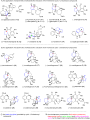
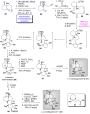
- modification of the terminal double bond afforded ketoaldehyde 31. The 2-bromoallylation [15] of 31 with boronic ester 32 stereoselectively constructed the C3–OH group to give homoallylic alcohol 33. Next, a successive manipulation by removal of TBS group, CSA-catalyzed ketalization, and DMP oxidation of the







3,3'-Linked BINOL macrocycles: optimized synthesis of crown ethers featuring one or two BINOL units
Beilstein J. Org. Chem. 2025, 21, 1719–1729, doi:10.3762/bjoc.21.134

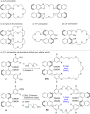
- routes towards macrocycles featuring one BINOL unit. a) Two-fold Suzuki coupling and b) two-fold Williamson synthesis. Reagents and conditions: i) bis(boronic ester) 75/6/7/8 (1.0. equiv), Pd2(dba)3 (0.1 equiv), P(o-Tol)3 (0.2 equiv), n-Bu4N+OH− (3.2. equiv), toluene/H2O 5:1, 90 °C; ii) ethylene glycol





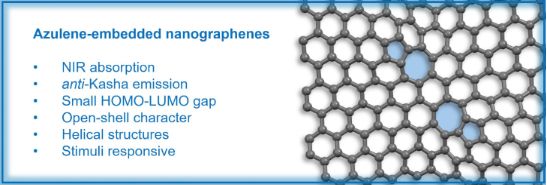
Recent advances and future challenges in the bottom-up synthesis of azulene-embedded nanographenes
Beilstein J. Org. Chem. 2025, 21, 1272–1305, doi:10.3762/bjoc.21.99
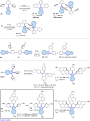
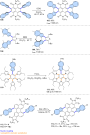
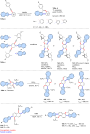
- synthetic strategy. The tandem Suzuki coupling/Knoevenagel condensation strategy leading to PAH 85 was independently reported by Liu [61] and Mastalerz (Scheme 12) [62]. The first group reported a cascade formal [3 + 4] annulation between triple boronic ester 83 and naphthalene 84 which combines a Suzuki






Studies on the syntheses of β-carboline alkaloids brevicarine and brevicolline
Beilstein J. Org. Chem. 2025, 21, 955–963, doi:10.3762/bjoc.21.79
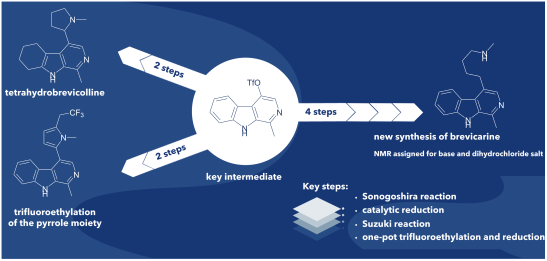
- brevicarine (2) could not be detected by LC–MS. As regards our plans for an alternative synthesis of racemic brevicolline ((±)-1), our primary goal was the direct coupling of the pyrrole ring to compound 3, instead of its ring-closing construction shown in Scheme 1. Suzuki reaction of 3 with pyrrole boronic
- ester 29 gave pyrrolo-β-carboline 30 in excellent yield (Scheme 7). Our attempts for the selective saturation of the pyrrole ring of 30 by catalytic reduction were unsuccessful. When the hydrogenation was carried out under mild conditions (ambient temperature, 15 bar H2) in the presence of PtO2.H2O


Recent advances in allylation of chiral secondary alkylcopper species
Beilstein J. Org. Chem. 2025, 21, 639–658, doi:10.3762/bjoc.21.51
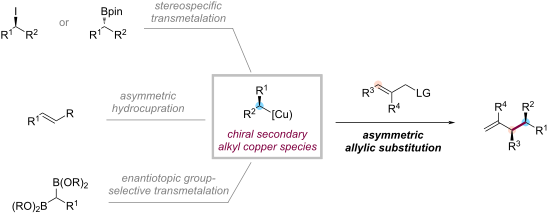
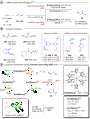
- electronegativity, reaching 1.648 Å in the reactive alkoxytrialkyl complex D and 1.659 Å in the tetraalkyl "ate" complex E. The B–C bond lengths in amido- and alkyl-substituted boronic ester complexes B and C fell between these extremes, suggesting an intermediate level of activation. These findings prompted
- -diborylalkanes 47 using an H8-BINOL-derived phosphoramidite ligand L5, achieving exceptional enantiocontrol (Scheme 16) [59]. Their studies revealed the critical role of both the alkali metal cation and boronic ester moiety. While LiOt-Bu provided excellent enantioselectivity (er = 95:5), NaOt-Bu and KOt-Bu





Synthesis of acenaphthylene-fused heteroarenes and polyoxygenated benzo[j]fluoranthenes via a Pd-catalyzed Suzuki–Miyaura/C–H arylation cascade
Beilstein J. Org. Chem. 2024, 20, 3290–3298, doi:10.3762/bjoc.20.273
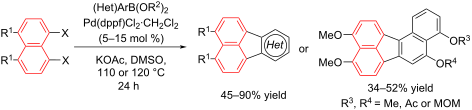
- ] or catechol [47] boronic esters as the final products. Therefore, it is important that they can be directly utilized with our methodology without further boronic ester interconversions. To this end, we first tested the reaction of thiophene-3-ylboronic acid pinacol ester (17b), and we were pleased to
- ). Finally, due to our interest in the structural features and chemistry of 1,8-dihydroxynaphthalene (1,8-DHN) [48][49], we were curious to check the reactivity of the previously unknown boronic ester 17d, which was prepared in one step from thiophene-3-ylboronic acid (17a) and 1,8-DHN [50]. Note that
- boronic esters of 1,8-DHN have recently been investigated and reported by Krempner and co-workers [51]. To our delight, the Suzuki–Miyaura coupling/intramolecular C–H arylation sequence between 12 and boronic ester 17d proceeded smoothly affording product 15a in 84% yield. The results summarized in Table




Germanyl triazoles as a platform for CuAAC diversification and chemoselective orthogonal cross-coupling
Beilstein J. Org. Chem. 2024, 20, 3198–3204, doi:10.3762/bjoc.20.265
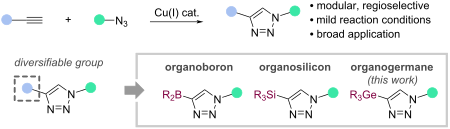
- chromene (12) were tolerated. Benzylic azides were accommodated including those bearing nitro (2), iodo (3), and boronic ester groups (5, 21). Strained rings were effective including cubane (18) and bicyclopentane (20). While 18 and 20 were isolated in lower yield, no evidence of ring opening was observed


C–C Coupling in sterically demanding porphyrin environments
Beilstein J. Org. Chem. 2024, 20, 2784–2798, doi:10.3762/bjoc.20.234
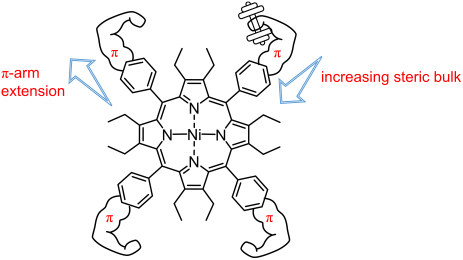
- porphyrins appended with boronic ester groups to be structurally disseminated by X-ray crystallography [62][63]. Compound 46 was found to crystallize in a 1:1 ratio with bis(pinacolato)diboron, with a void size of 8–9 Å. The formation of channel-type lattice structures is thermodynamically unfavorable, when


Chemo-enzymatic total synthesis: current approaches toward the integration of chemical and enzymatic transformations
Beilstein J. Org. Chem. 2024, 20, 1693–1712, doi:10.3762/bjoc.20.151
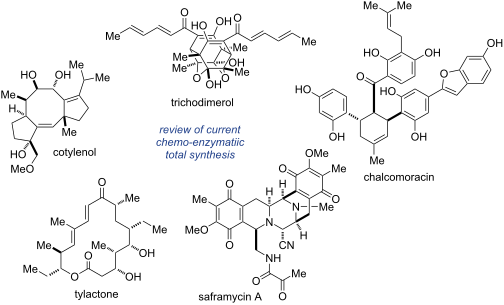
- Suzuki–Miyaura coupling with boronic ester 53 and O-acetylation furnished 54. The dienophile component, morachalcone A (44), was synthesized from phenol 55 in four steps including O-prenylation and subsequent Claisen rearrangement, aldol condensation with 56, and deprotection. The key chemo-enzymatic




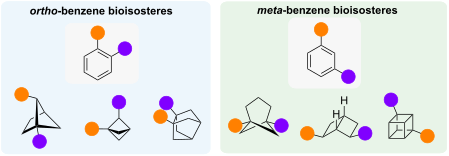
(Bio)isosteres of ortho- and meta-substituted benzenes
Beilstein J. Org. Chem. 2024, 20, 859–890, doi:10.3762/bjoc.20.78
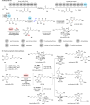
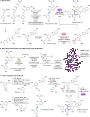
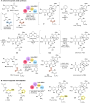
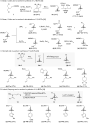
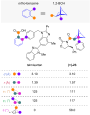
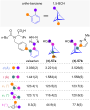
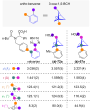
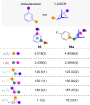
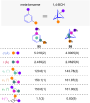
- rearrangement, amine (±)-27 was then accessible in one additional step. Formation of redox active ester (±)-28 from acid (±)-26 allowed photochemical Minisci reaction to 1,2-BCH (±)-29 and borylation to boronic ester (±)-30. Synthesis of phenol isostere (±)-31 was possible through oxidation of boronic ester
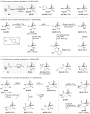
- synthesis of some 1,5-BCHeps, including 134b, was also possible on mmol scale. Through derivatization of iodine-substituted 1,5-BCHeps 134f and 134g, an even larger number of 1,5-BCHeps were accessed (Scheme 14B) [27][47]. For example, lithium–halogen exchange was used to prepare acids 135f–g and boronic
- ester 136g. The latter could then be oxidised to the corresponding alcohols 137f–g. The bridgehead iodine substituent could also be harnessed in iron-catalysed Kumada coupling reactions to furnish a larger number of arene-substituted 1,5-BCHeps 138. Anderson and co-workers also reported access to

















Mechanisms for radical reactions initiating from N-hydroxyphthalimide esters
Beilstein J. Org. Chem. 2024, 20, 346–378, doi:10.3762/bjoc.20.35
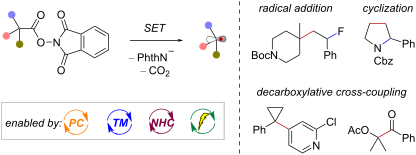
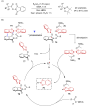
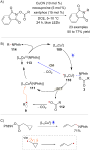
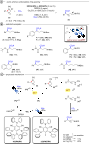
- dimerization of radical 76. Reaction between radical 9 and species 78 affords boronic ester 79 while returning boryl radical 76. Finally, chain propagation takes place via reaction of 76 with another equivalent of the NHPI ester 3. The Baran lab has recently published a complementary electrochemical method








A deep-red fluorophore based on naphthothiadiazole as emitter with hybridized local and charge transfer and ambipolar transporting properties for electroluminescent devices
Beilstein J. Org. Chem. 2023, 19, 1664–1676, doi:10.3762/bjoc.19.122
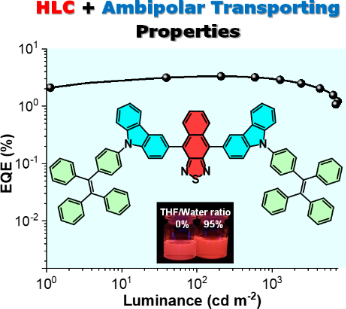
- -N-carbazole 2 in good yield (87%). Compound 2 was then converted to the boronic ester intermediate 3 in 41% yield over two steps: monobromination at the carbazole unit of 2 with NBS/THF at low temperature giving the unisolated mixed brominated product followed by borylation with bis(pinacolato


Photoredox catalysis harvesting multiple photon or electrochemical energies
Beilstein J. Org. Chem. 2023, 19, 1055–1145, doi:10.3762/bjoc.19.81

























Group 13 exchange and transborylation in catalysis
Beilstein J. Org. Chem. 2023, 19, 325–348, doi:10.3762/bjoc.19.28
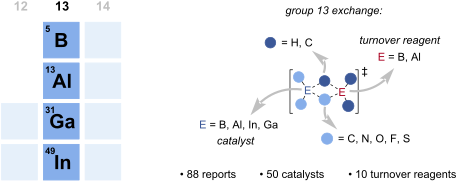
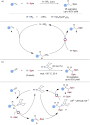
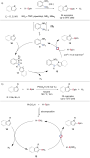
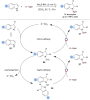
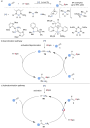
- in catalysis beyond their typical use as Lewis acids [46]. This strategy has allowed the synthesis of bench-stable boronic ester products, rather than sensitive alkylboranes, and enabled the use of substoichiometric amounts of enantioenriched boron reagents, which can be challenging to prepare. This
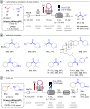
- [58]. The alkyne 1 and dialkylborane reacted to give an alkenylborane 2. Transborylation with HBpin gave the alkenyl boronic ester 3 and regenerated the catalyst, HBR2. Isotopic labelling (H10Bpin) confirmed B–C(sp2)/B–H transborylation proceeded by σ-bond metathesis, and not ligand exchange. Using
- allene 14, giving a boryl diene 16. A Cope rearrangement of the boryl diene 16 followed by transborylation gave the dienyl boronic ester 18 and regenerated the catalyst (Scheme 5). Chang reported the alkoxide-promoted hydroboration of N-heteroarenes with HBpin, the first explicit example of a B‒N/B‒H










Introducing a new 7-ring fused diindenone-dithieno[3,2-b:2',3'-d]thiophene unit as a promising component for organic semiconductor materials
Beilstein J. Org. Chem. 2022, 18, 944–955, doi:10.3762/bjoc.18.94
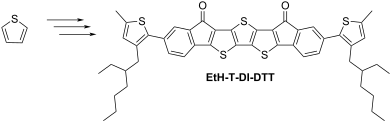
- derivative of 31 could be isolated; it hydrolysed on the column back to the starting material. Thus, after reacting 31 with n-butyllithium and trimethyl borate, the obtained species was reacted in situ with pinacol to generate the corresponding boronic ester 32, which could be isolated by column


Borylated norbornadiene derivatives: Synthesis and application in Pd-catalyzed Suzuki–Miyaura coupling reactions
Beilstein J. Org. Chem. 2022, 18, 368–373, doi:10.3762/bjoc.18.41
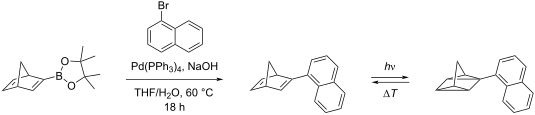
- catalyst and additive. The 1H NMR-spectroscopic analysis of the reaction showed that in both attempts no reaction occurred. It may be concluded that the nucleophilicity of the boronic ester is not sufficient, however, under the employed conditions, it can be hydrolyzed to the more reactive boronic acid


Synthesis of 4-substituted azopyridine-functionalized Ni(II)-porphyrins as molecular spin switches
Beilstein J. Org. Chem. 2020, 16, 2589–2597, doi:10.3762/bjoc.16.210
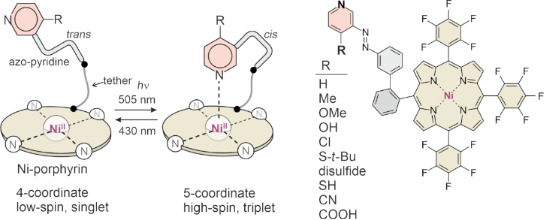
- molecules 1f–j (Figure 1) were synthesized by a modular approach described by Heitmann et al. [15]. The boronic ester 22 was prepared according to a mixed aldehyde procedure [16][17] and the substituted azopyridines 14, 18, 20, and 21 were attached using Suzuki conditions. Synthesis of azopyridines 10–12


The B & B approach: Ball-milling conjugation of dextran with phenylboronic acid (PBA)-functionalized BODIPY
Beilstein J. Org. Chem. 2020, 16, 2272–2281, doi:10.3762/bjoc.16.188
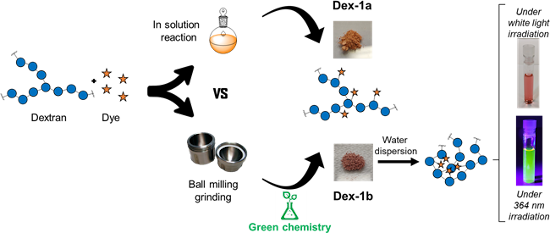
- biocompatibility while remaining fluorescent. Keywords: ball milling; boronic ester; dextran; bodipy; nanoparticles; Introduction In the last few decades, mechanochemistry has gathered a great deal of attention and a lot of efforts have been focused on its use in organic synthesis, catalysis, biotransformation
- properties of BODIPY and the biocompatibility of dextran. The BODIPY dextran nanoparticles were characterized regarding their size, morphology, polarity, and toxicity in vitro. We demonstrate the feasibility of mechanochemistry for boronic ester formation [23] to a glycan polymer as a route of conjugation


Synthesis of 3-substituted isoxazolidin-4-ols using hydroboration–oxidation reactions of 4,5-unsubstituted 2,3-dihydroisoxazoles
Beilstein J. Org. Chem. 2020, 16, 1313–1319, doi:10.3762/bjoc.16.112
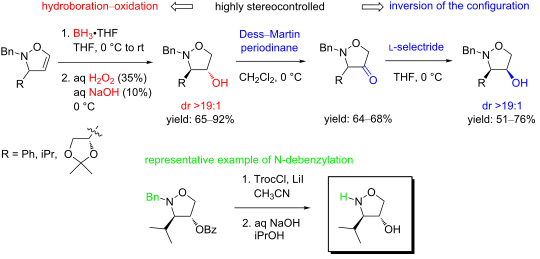
- -hydroxyisoxazolidines by the treatment of boronic ester-substituted isoxazolidines with basic hydrogen peroxide has previously been described [30][31]. To start with, the phenyl-substituted 2,3-dihydroisoxazole 5a was chosen as the starting substrate. After optimizing Kang's reaction conditions in terms of the borane


Synthesis of novel multifunctional carbazole-based molecules and their thermal, electrochemical and optical properties
Beilstein J. Org. Chem. 2020, 16, 1066–1074, doi:10.3762/bjoc.16.93
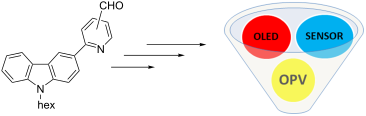
- % aqueous NaOH in the presence of tetrabutylammonium iodide (TBAI) [33][34][35]. Upon chromatography 3-bromo-9-hexylcarbazole (4) was obtained as a liquid in good yield. 3-Bromo-9-hexylcarbazole (4) was then converted into the pinacol boronic ester by treating with bis(pinacolato)diboron in the presence of


Aldehydes as powerful initiators for photochemical transformations
Beilstein J. Org. Chem. 2020, 16, 833–857, doi:10.3762/bjoc.16.76
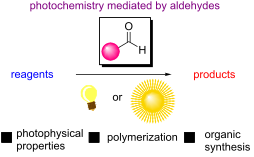
- 96 h. The aryl (i.e., 133), ether (i.e., 140a), ester (i.e., 140b), tert-butyldimethylsilyloxy (i.e., 140c), boronic ester (i.e., 140d), acetal (i.e., 140e), and indol products (i.e., 140h) of various bromo-substituted starting materials were successfully obtained. For 1-bromo-3-chloropropane, the