Search results
Search for "elimination" in Full Text gives 909 result(s) in Beilstein Journal of Organic Chemistry. Showing first 200.
Z-Selective semihydrogenation of alkynes via Ni/Lewis acid synergistic catalyzed system using DMF as hydrogen source and solvent
Beilstein J. Org. Chem. 2026, 22, 1004–1012, doi:10.3762/bjoc.22.79
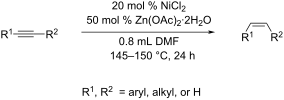
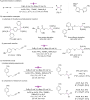
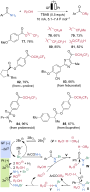
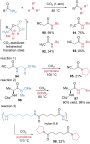
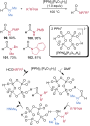
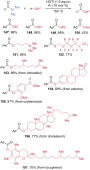
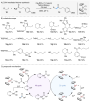
- intermediate C. Following decarboxylation, the resulting dihydrido vinyl-nickel species D undergoes reductive elimination to release the (Z)-alkene product and regenerates the Ni(0) catalyst A, thereby closing the catalytic cycle. Conclusion In summary, we have developed a highly Z-selective semihydrogenation



Electrochemical reduction of unsaturated carbon–carbon bonds via 3d transition-metal catalysis
Beilstein J. Org. Chem. 2026, 22, 955–981, doi:10.3762/bjoc.22.75
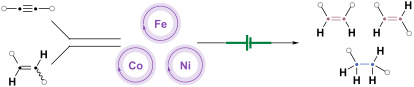
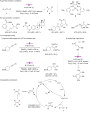
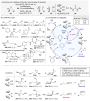
- metal–alkenyl intermediate. In some cases, this organometallic species can further undergo chain walking, where iterative β-hydride elimination and reinsertion enable migration of the metal center along the carbon skeleton before product release, thereby allowing remote hydrogenation or positional
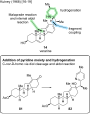
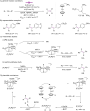
- through the combination of anodic iron salts and electrochemically generated silyl hydrides, actively participate in the reaction pathway (Scheme 2C) [91]. The authors proposed that the ring-opening product arises from β-carbon elimination of an intermediate generated via migratory insertion, followed by
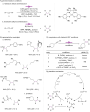
- involving migratory insertion and β-hydride elimination, which ultimately accounts for the observed preference for E-selective alkyne reduction [96]. In addition to the alkyne reduction process, the same e-HAT platform could be extended to alkene isomerization and reduction as well. In 2026, the Derosa








Palladium-catalyzed benzocyclization reactions of quinoline-2-carboxamides via sequential C–H/N–H functionalization
Beilstein J. Org. Chem. 2026, 22, 905–914, doi:10.3762/bjoc.22.71
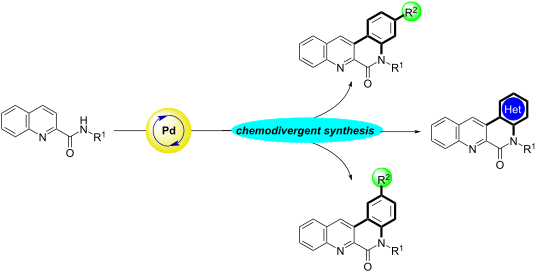
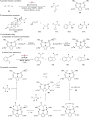
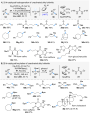
- concerted metalation-deprotonation (CMD) process, a carbon–palladium bond is formed to give the palladacycle intermediate Int-4. Next, reductive elimination between the quinoline and arene moieties forms the C–C bond to give intermediate Int-1 and regenerates the palladium(0) catalyst. Another oxidative
- addition to the carbon–bromine bond of Int-1 generates Int-5, and a nitrogen–palladium bond is formed to afford the seven membered palladacycle intermediate Int-6. Finally, this intermediate undergoes reductive elimination between the nitrogen and carbon atoms to provide the lactam product 3. Conclusion




Cascade transformation of 2-(diazoacetyl)-2H-azirines to 2-aroyl-3-hydroxy-1H-pyrroles via condensation with aromatic aldehydes
Beilstein J. Org. Chem. 2026, 22, 897–904, doi:10.3762/bjoc.22.70
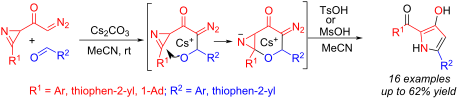
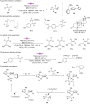
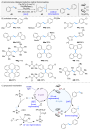
- F requires overcoming an excessively high energy barrier, so the conversion of intermediate E to intermediate F or directly to H apparently occurs via proton elimination/addition. The elimination of a nitrogen molecule from intermediate H is accompanied by the opening of the 6-membered ring and


Diastereodivergent electrophilic trapping of α-boryl lithium derivatives
Beilstein J. Org. Chem. 2026, 22, 882–887, doi:10.3762/bjoc.22.68
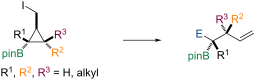
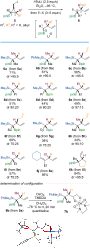
- moderate yields with good diastereoselectivity. Reaction with cyclohexanone led to partial elimination, which proceeded to completion upon warming the reaction mixture to room temperature, affording the bora-Wittig product 6j in moderate yield [39]. Furthermore, an intramolecular reaction was investigated




Site-specific labelling of native peptides and proteins: chemical and enzymatic strategies
Beilstein J. Org. Chem. 2026, 22, 857–881, doi:10.3762/bjoc.22.67
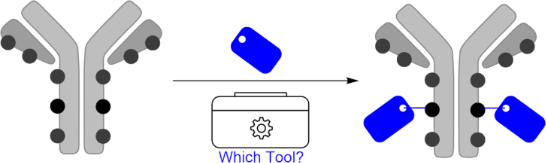
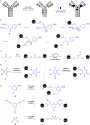
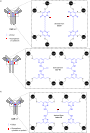
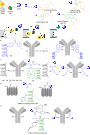
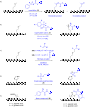
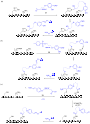
- product can be reacted with hydroxylamine-containing payloads to afford oxime-linked conjugates (Scheme 3c) [29][30]. Additionally, dibromomaleimides 8 [31][32] and dibromopyridazinediones 9 (Scheme 3d) [33] bearing payloads at the N-position can rebridge cysteines through an addition–elimination








The trans-influence in gold chemistry from a catalytic perspective
Beilstein J. Org. Chem. 2026, 22, 838–856, doi:10.3762/bjoc.22.66
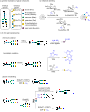
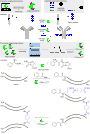
- ) [32][50]. Most species were obtained in high purity in solution and characterised spectroscopically. Even the gold dihydrides and the aryl hydrides are remarkably stable and resistant to H–H or H–C(aryl) reductive elimination, even though in Au(III) complexes of monodentate ligands the reductive H–H
- and H–C elimination barriers were calculated to be quite low [62]. The stability of species like 16–21 towards reductive elimination is evidently the result of the steric rigidity imposed by the chelating ligand framework. With this number of diverse hydride complexes in hand, it was possible to re
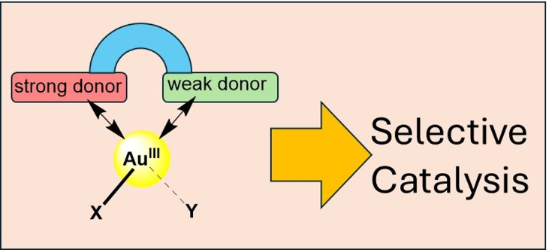
- system. Here the metal centre is subject to the effect of two good donors of about equal strength. This is the only system reported so far where gold(III) displays palladium-like reactivity, such as alkene insertions into Au–alkyl bonds and β-H elimination. The influence of C(−) and/or -PiPr2 donors


Knoevenagel condensation of 4,5- and 1,8-diazafluorenes
Beilstein J. Org. Chem. 2026, 22, 803–812, doi:10.3762/bjoc.22.62
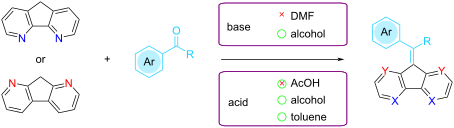
- the protonation and subsequent addition of a nucleophile (H2O) an intramolecular rearrangement facilitated by the proximity of a neighboring nitrogen atom (in position 1 or 8) occurred (see Scheme 3). Elimination of the aldehyde leads to the formation of 1,8-diazafluorene (2), which can be oxidized




Rongalite addition to dienones: diastereoselectivity in cyclic sulfone synthesis; stereochemical rationalization and prospects as a general conjugate nucleophile
Beilstein J. Org. Chem. 2026, 22, 742–752, doi:10.3762/bjoc.22.56

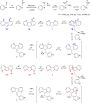
- sulfones 1a/1b in the same diastereomeric ratio (≈7:1) as observed earlier. This supports the idea that sulfinate addition is reversible. Adducts 1a and 1b most likely form from dibenzalacetone generated in situ. Therefore, prior elimination of p-toluenesulfinate to give dibenzalacetone, followed by




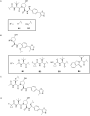
Advantages of PROTACs in achieving selective degradation of homologous protein families
Beilstein J. Org. Chem. 2026, 22, 628–661, doi:10.3762/bjoc.22.49


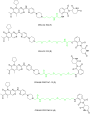

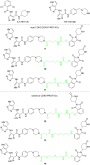


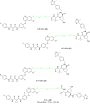
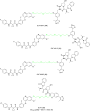




Towards the targeted protein degradation of CK2: design and synthesis of CAM4066-based PROTACs
Beilstein J. Org. Chem. 2026, 22, 611–619, doi:10.3762/bjoc.22.47
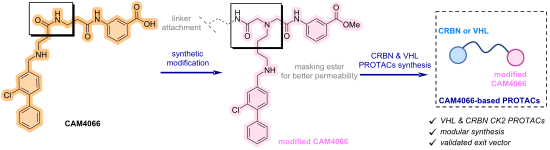
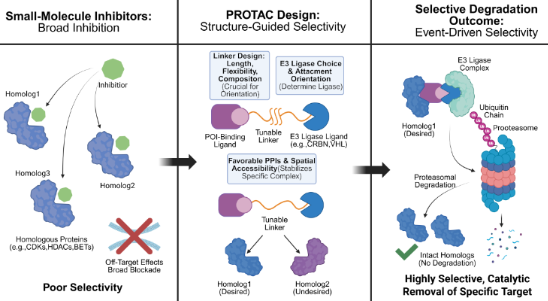
- occupancy-driven pharmacology. Proteolysis-targeting chimeras (PROTACs) represent a rapidly advancing strategy for induced protein degradation. By transiently engaging both a target protein and an E3 ubiquitin ligase, PROTACs promote proteasomal elimination of the target rather than sustained binding [8

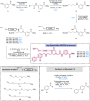
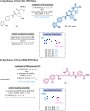
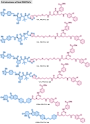
Modern synthetic pathways towards eribulin and its subunits
Beilstein J. Org. Chem. 2026, 22, 495–526, doi:10.3762/bjoc.22.37
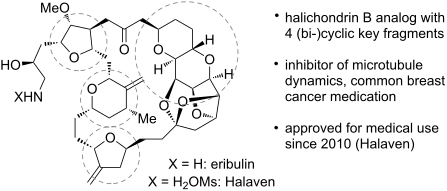
- in 71% yield. A detailed mechanism for this transformation is shown in Scheme 24 below [98]. Here, the Rh(II)-induced elimination of N2 generates carbene 218, which is attacked by the adjacent allyl ether moiety to form unstable zwitterion 219. Sigmatropic rearrangement and acidic workup yielded 213
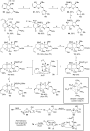
- known procedure [79]. Acidic treatment in MeOH and subsequent addition of MeLi furnished full acetal 301 (Scheme 35). Treatment with Tf2NPh yielded an intermediate enol triflate, which underwent a β-hydride elimination towards allene 302 upon addition of Pd2(dba)3. Next, ring opening of the full acetal








Dialkylaminoalkylation of β-ketosulfones via ring-opening of 3-sulfonylpyrrolidines
Beilstein J. Org. Chem. 2026, 22, 383–389, doi:10.3762/bjoc.22.26
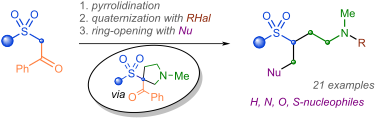
- promote Hofmann elimination. To enhance the leaving ability of the nitrogen atom we prepared ammonium salts 3 of the obtained pyrrolidines via treatment with alkyl halides. Since the preparation of quaternary ammonium salts of pyrrolidines is straightforward, we employed a one-pot method for its synthesis
- . Second is a step-wise route through retro-Claisen reaction, formation of the carbanion at the α-position to sulfonyl group, and Hofmann elimination of the quaternary nitrogen at the β-position. Both routes lead to the formation of terminal vinyl sulfone C, which reacts with the nucleophile present in the
- reaction media to form 4-Nu-3-(sulfonyl)butan-1-amines 4. An attempt to obtain 3,4-bis(phenylthio)butan-1-amine via reduction of the sulfonyl group [43][44] of the product 4r with LiAlH4 gave an unexpected reductive elimination of the thiophenol moiety furnishing N,N-dimethyl-3-(phenylsulfonyl)butan-1


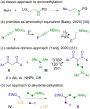


Recent advances in the cleavage of non-activated amides
Beilstein J. Org. Chem. 2026, 22, 352–369, doi:10.3762/bjoc.22.23
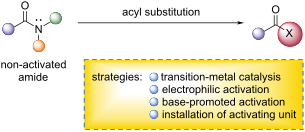
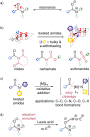
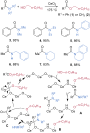
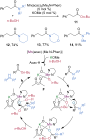
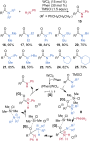
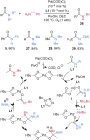
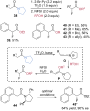
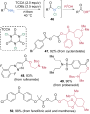
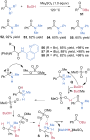
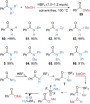
- state S, which is stabilized by two new hydrogen-bonding interactions. Finally, elimination of [MeNH3]MeSO4 delivers the butyl ester product. In 2025, Dou et al. developed a metal-free alcoholysis of amides mediated by HBF4, exhibiting a very broad substrate scope (Scheme 12) [60]. The esterification of
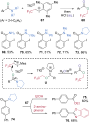
- hydrogen chloride acting as a Lewis acid, enabling nucleophilic attack by the amine to form a tetrahedral intermediate Z. Subsequent intramolecular hydrogen shift, followed by elimination of dimethylamine, affords the protonated transamidation product. In 2021, Lee et al. discovered that carbon dioxide










Ring contraction and ring expansion reactions in terpenoid biosynthesis and their application to total synthesis
Beilstein J. Org. Chem. 2026, 22, 289–343, doi:10.3762/bjoc.22.21
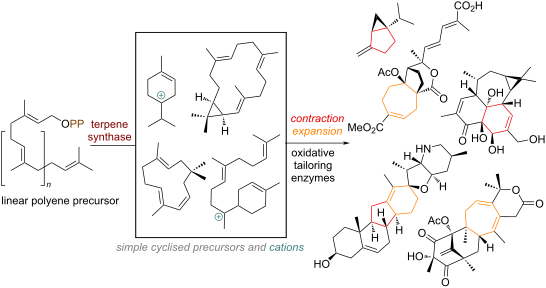
- rise to the isomeric terpin-4-yl cation 6b. By way of cyclopropane formation, a different, so called, thujyl cation 6c is conceivable. Elimination then furnishes the ring-contracted 5/3-ring systems from the original cyclohexyl intermediate to give sabinene (7) and α-thujene (8). Another example of a 6
- is initiated via protonation of geranylgeranyl pyrophosphate (GGPP, 12) at the terminal olefin with CpPS (= Clitopilus passeckeranis pleuromutilin synthase), forming the decalin system 12a. A cascade of 1,2-shifts delivers the carbocation 12b which undergoes ring contraction and elimination to give
- astellifadiene synthase) [69]. Geranylfarnesyl pyrophosphate (18) is first cyclised through 1,11- and 10,14-connections to the tertiary carbocation 18a, and undergoes the previously described ring expansion, cyclopentane cyclisation (analogous to Scheme 3, see above) to 18b. Elimination affords the triene






Arene activation via π-bond localization: concepts and opportunities
Beilstein J. Org. Chem. 2026, 22, 257–273, doi:10.3762/bjoc.22.19
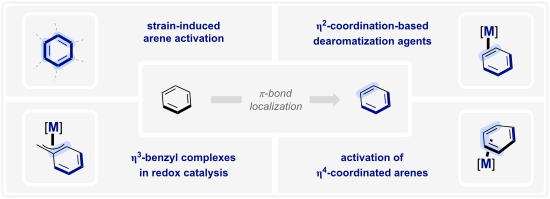
- process. Subsequent computational studies, however, refined this mechanistic understanding, revealing that reductive elimination proceeds through coupling of the C(3) terminus of the η1-allyl fragment with the para-carbon of the η3-benzyl ligand (Scheme 6A, right) [75]. Together, these insights




Synthesis of diaryl phosphates using phytic acid as a phosphorus source
Beilstein J. Org. Chem. 2026, 22, 213–223, doi:10.3762/bjoc.22.15
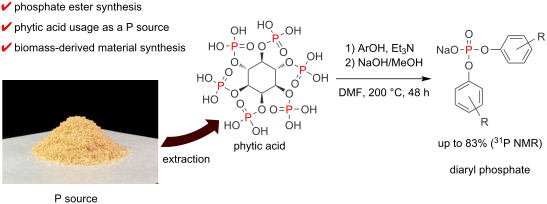
- the other mechanism is based on an E2 reaction, which involves the elimination of phosphoric acid accompanied by alkene formation. The phosphoric acid ester of a secondary alcohol releases phosphoric acid and alkenes through thermal degradation, which has been previously observed using isosorbide
- phosphoric acid through a hydrolysis or E2 elimination reaction. The generated phosphoric acid forms a salt with triethylamine. Next, the phenoxy anion activated by the amine undergoes a nucleophilic attack on the phosphorus atom of the salt of phosphoric acid, resulting in the formation of MPP with the
- elimination of H2O. Then, two MPP molecules undergo a dehydration condensation reaction to form DPpyP [56]. Finally, the phenoxy anion undergoes a nucleophilic attack on the phosphorus atom of DPpyP, and DPP is formed through the elimination of MPP. In the absence of triethylamine, the esterification reaction




Base-promoted deacylation of 2-acetyl-2,5-dihydrothiophenes and their oxygen-mediated hydroxylation
Beilstein J. Org. Chem. 2026, 22, 192–204, doi:10.3762/bjoc.22.13
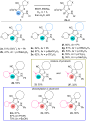
- ethanol (Scheme 5, VII). However, under these conditions only decomposition of 4g was observed, and neither deacetylated nor hydroxylated products were isolated. Interestingly, chromatography of 4g on neutral alumina resulted in elimination of the sulfonylimine group to give compounds 5g. Therefore, the
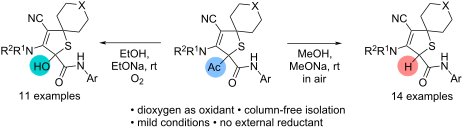
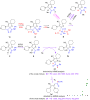
- led to the intermediate A. Elimination of ethyl/methyl acetate from intermediate A afforded anion B. The latter reacted in ethanolic solution with molecular oxygen [52] with the formation of peroxide anion C. The protonation of anion C with proton sources (residual water or/and solvent or 3a can serve




Total synthesis of natural products based on hydrogenation of aromatic rings
Beilstein J. Org. Chem. 2026, 22, 88–122, doi:10.3762/bjoc.22.4
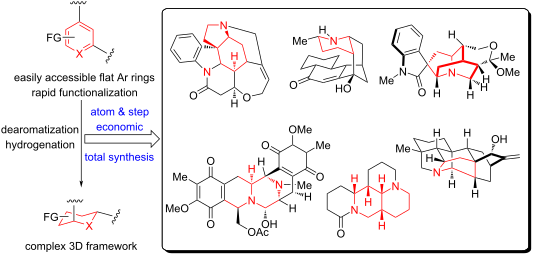
- resulting intermediate was trapped with a side chain enolate (derived from a methyl ketone), successfully constructing the pentacyclic aspidospermidine core. The next three steps comprised nitrogen methylation, ketone reduction, and hydroxyl elimination to afford 186. In the final two steps, an ethyl group






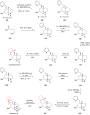


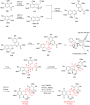


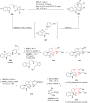

Advances in Zr-mediated radical transformations and applications to total synthesis
Beilstein J. Org. Chem. 2026, 22, 71–87, doi:10.3762/bjoc.22.3
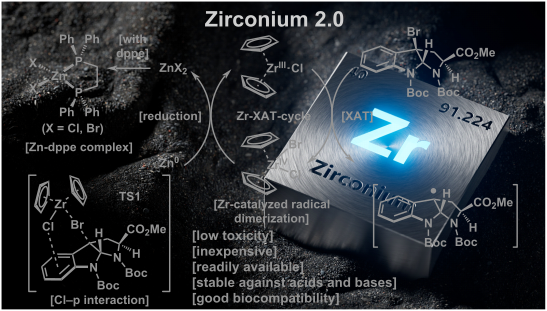
- transmetallation with a NiII complex generated by oxidative addition of the thioester to Ni0. Finally, reductive elimination from NiII furnishes the ketone. Given the strong Zr–S bond (BDE = 137 kcal/mol) [12], zirconocene is thought to play a key role in facilitating the oxidative addition of Ni0 to the thioester








Reactivity umpolung of the cycloheptatriene core in hexa(methoxycarbonyl)cycloheptatriene
Beilstein J. Org. Chem. 2026, 22, 64–70, doi:10.3762/bjoc.22.2
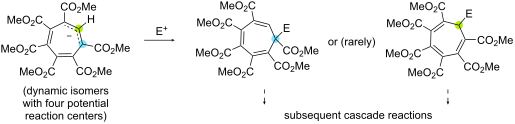
- -group elimination but through intermolecular hydride-transfer reactions as well. Therefore, the expected strategy to establish a chemical bond with a cycloheptatriene core is a reaction of a tropylium ion derivative with a nucleophile. Such reactions may involve either carbon [9][10][11] or heteroatom


Synthesis and applications of alkenyl chlorides (vinyl chlorides): a review
Beilstein J. Org. Chem. 2026, 22, 1–63, doi:10.3762/bjoc.22.1
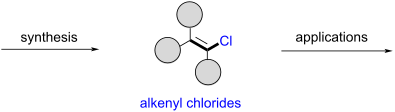
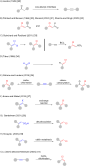
- 1875, Louis Henry extended this transformation to ketone 4 (Scheme 1B) [46]. Exposure to PCl5 gave a mixture of chlorinated intermediates described as 5 and 6, which, upon prolonged treatment with ethanolic KOH, underwent elimination to afford allene 7. Henry also observed that thermal treatment of the
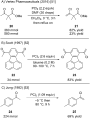
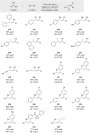
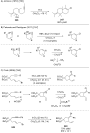
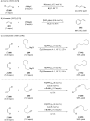
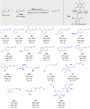
- corresponding alkyne 50 by elimination with LDA were achieved in superb yields (Scheme 10). Gross and Gloede introduced catechol–PCl3 as an effective reagent for the conversion of ketones to the corresponding alkenyl chlorides [62] (Scheme 11A). Hudrlik later demonstrated that, in the case of 2
- under the reaction conditions (acetate II). Subsequent addition of HCl to intermediate II generates chloride III, which undergoes elimination to yield the desired product IV. Kodomari and co-workers serendipitously discovered a related reaction in which a large excess of acetyl chloride (8 equivalents























Total synthesis of asperdinones B, C, D, E and terezine D
Beilstein J. Org. Chem. 2025, 21, 2730–2738, doi:10.3762/bjoc.21.210
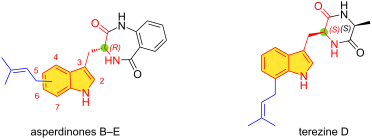
- presence of the allyl or propenyl group at different positions does not appear to affect the yields (Scheme 6). Importantly, it was observed that reduction and β-elimination of the organozinc reagent prepared from 29 took place during the cross-coupling reaction, thereby affecting the yield (Scheme 7) [60
- in the presence of the Pd catalyst. It follows that elimination and reduction must occur after Pd insertion and formation of a pallado–zinc intermediate which undergoes β-elimination and proton transfer. Seminal studies by Jackson [61] have reported related results with iodozinc N-Boc-ʟ-alanine


Tandem hydrothiocyanation/cyclization of CF3-iminopropargyl alcohols with NaSCN in the presence of AcOH
Beilstein J. Org. Chem. 2025, 21, 2694–2702, doi:10.3762/bjoc.21.207
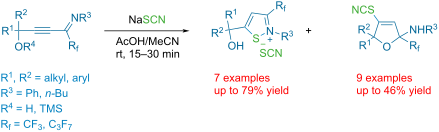
- thiocyanic acid at the triple bond – vinylthiocyanate A (Scheme 2). Isothiazolium thiocyanate 2 is formed by the attack of the imino nitrogen atom on the sulfur atom and the elimination of the CN anion in the Z-isomer of intermediate A. On the other hand, intramolecular addition of the hydroxy group to the



Recent advancements in the synthesis of Veratrum alkaloids
Beilstein J. Org. Chem. 2025, 21, 2657–2693, doi:10.3762/bjoc.21.206
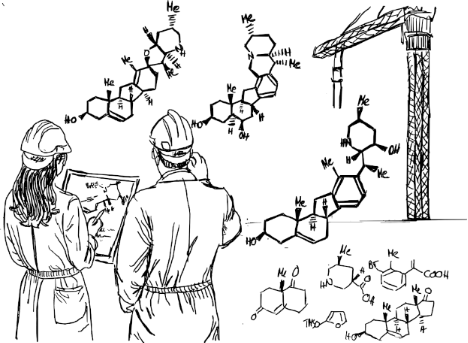
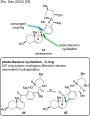
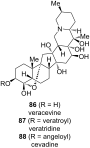
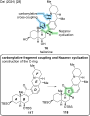
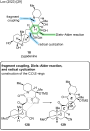
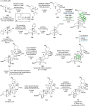
- starting material was again the (S)-Wieland–Miescher ketone (34). This was transformed to nitrile 46 via a seven-step sequence consisting of protecting group manipulations, a double bond isomerization to position C5–C6, as well as a 1,2-cyanide addition, and subsequent elimination (Scheme 10). The cyanide
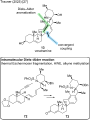
- selectively, and, through acid-catalyzed cyclization, the spiro-E-ring was fused. Elimination of the alcohol moiety at C13 installed the double bond in the correct position at C12–C13. Final Fmoc-deprotection furnished cyclopamine (6). In summary, the Zhu/Gao group disclosed the total synthesis of cyclopamine
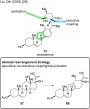
- rearranged scaffold 85 in three steps. Acetyl protection and elimination at C9–C11, followed by a Birch reduction, yielded a dienone structure. The latter was then hydrogenated, a methyl group was installed in α-position to the ketone, and an enone was formed to give 81 over 12 steps. Then, 2-ethyl-5