


Search results
Search for "hydration" in Full Text gives 141 result(s) in Beilstein Journal of Organic Chemistry.
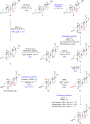
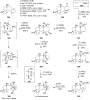
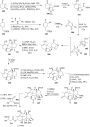
Synthesis of depressin, cryptomeridiol and 4-epi-cryptomeridiol enabled by a terpenoid chiral pool-producing platform
Beilstein J. Org. Chem. 2026, 22, 683–690, doi:10.3762/bjoc.22.53
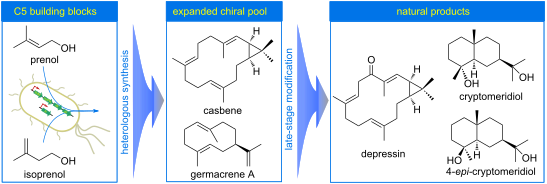
- hydroxy group allowed the synthesis of compound 1 from 4 in nine steps. Selective acid-mediated 5,10-transannular cyclization of 5 followed by hydration reaction furnished both products 2 and 3 in two steps. Keywords: chemoenzymatic synthesis; chiral pool; isopentenol utilization pathway; terpene
- (crossed) conformation during the transannular 5,10-cyclization process [66][67], albeit with the formation of two double bond isomers 17a/b that were difficult to be separated from each other. The mixture of the C3–C4 and C4–C15 double bond isomers 17a/b was then subjected to the Mukaiyama hydration
- -carbon alcohols prenol and isoprenol. Late-stage redox modification of the casbene skeleton allowed us to synthesize depressin in nine steps, while transannular cyclization of the germacrene A skeleton followed by hydration has made cryptomeridiol and 4-epi-cryptomeridiol easily accessible in two steps


Using generative AI to transform peptide hits into small molecule leads
Beilstein J. Org. Chem. 2026, 22, 672–679, doi:10.3762/bjoc.22.51
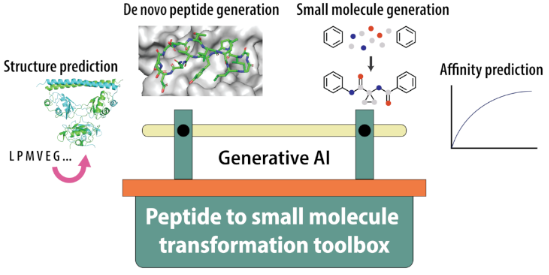
- bound complexes, including computational analysis of the amino acid interactions (SiteMap [16]) and hydration in the binding pocket (grid inhomogeneous solvation theory [17] in AmberTools [18]). The pharmacophores were then used as the basis for virtual screening with docking (Glide [19][20]) to obtain


Chemoenzymatic synthesis of the cardenolide rhodexin A and its aglycone sarmentogenin
Beilstein J. Org. Chem. 2025, 21, 2637–2644, doi:10.3762/bjoc.21.204
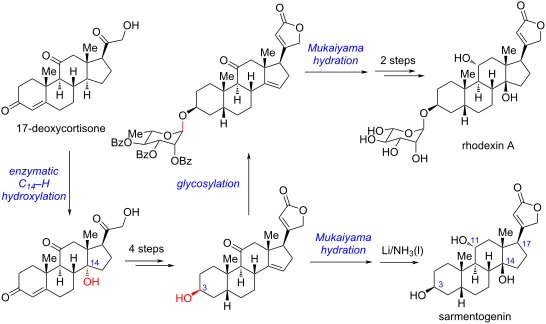
- aglycone sarmentogenin in 7 steps from 17-deoxycortisone. The synthesis features a scalable enzymatic C14–H α-hydroxylation, a Bestmann ylide-enabled one-step construction of the butenolide motif, a late stage Mukaiyama hydration, and a stereoselective C11 carbonyl reduction. Keywords: cardiac glycosides
- ; C–H hydroxylation; chemoenzymatic synthesis; Mukaiyama hydration; protecting-group-free synthesis; Introduction Cardiac glycosides (CGs) are widely distributed natural products, generated by plants and amphibians [1]. Structurally, they are composed of an aglycone-steroidal moiety, an unsaturated
- donor, through a late-stage glycosylation. The aglycon 2 can be derived from the Δ14 olefin intermediate 3 via Mukaiyama hydration and several functional group transformations. In turn, 3 would be generated from the key C14α-hydroxylated intermediate 4 via an elimination process. For the synthesis of 4



Silica gel with covalently attached bambusuril macrocycle for dicyanoaurate sorption from water
Beilstein J. Org. Chem. 2025, 21, 2604–2611, doi:10.3762/bjoc.21.201
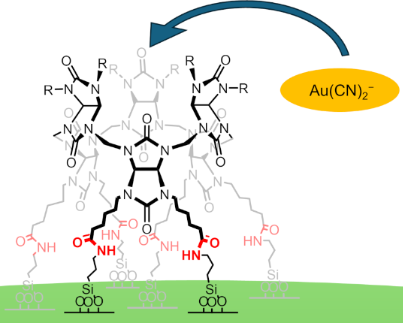
- remains a major challenge due to the strong hydration of anions. Here, we report the preparation of silica gel functionalized with covalently anchored bambusuril macrocycles. In aqueous solution, this material efficiently sorbs dicyanoaurate(I), the key anion in gold mining, even in the presence of


Recent advances in total synthesis of illisimonin A
Beilstein J. Org. Chem. 2025, 21, 2571–2583, doi:10.3762/bjoc.21.199
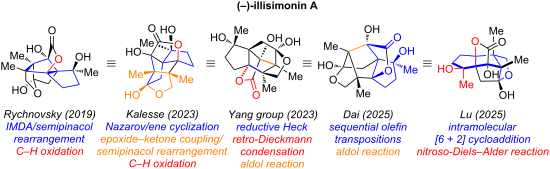
- reductive Heck reaction of 59 enabled the transannular connection between C4 and C5, generating key intermediate 60, which possesses the same carbon skeleton as the proposed biosynthetic key intermediate 50 and contains the suitable functional groups for further elaboration. Mukaiyama hydration of 60
- ]dec-5-ene)-catalyzed intramolecular aldol reaction connected C6 and C8, assembling the trans-pentalene ring and affording the core carbon framework of illisimonin A. The C1 hydroxy group was initially introduced by a Mukaiyama hydration reaction using O2 as the stoichiometric oxidant; however
- -catalyzed oxidative lactonization, yielding 76 with a newly established quaternary center at C1 and isomerization of the double bond to C2=C3. Photocatalyzed isomerization of the C2–C3 double bond in 76 to C3=C4 furnished 77 [39][40]. A Mukaiyama hydration introduced a hydroxy group at C4, accompanied by






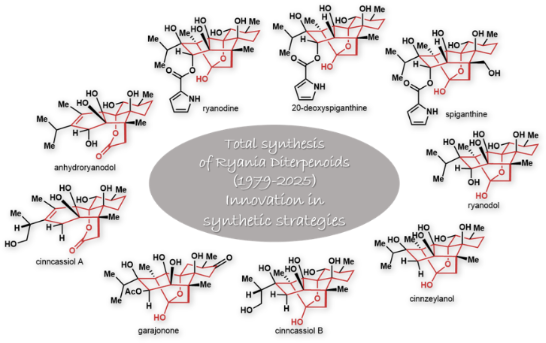
Total syntheses of highly oxidative Ryania diterpenoids facilitated by innovations in synthetic strategies
Beilstein J. Org. Chem. 2025, 21, 2553–2570, doi:10.3762/bjoc.21.198
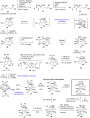
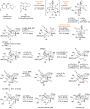
- follows: Commercially available compounds 31 and 32 were converted to the C2-symmetric 33 over 13 steps, enabling construction of the AB bicyclic skeleton in the target molecules. Compound 33 then underwent Mukaiyama hydration to adjust the C15 oxidation state, followed by water-promoted consecutive
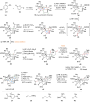
- successfully accomplished via an epoxide ring-opening/tandem lactonization/olefin hydration sequence. In total, 12 consecutive redox manipulations (7 oxidations and 5 reductions) established all stereocenters, with subsequent functional group transformations completing the total synthesis of garajonone (8
- transesterification sequence produced mono-enone 106, whose hydration installed the C6 stereocenter to yield 107. Further protecting group and oxidation state adjustments afforded lactone 108, which was transformed via an intramolecular SN2′ reaction (single-electron reduction), m-CPBA epoxidation, acid-promoted







Effect of a photoswitchable rotaxane on membrane permeabilization across lipid compositions
Beilstein J. Org. Chem. 2025, 21, 2498–2512, doi:10.3762/bjoc.21.192
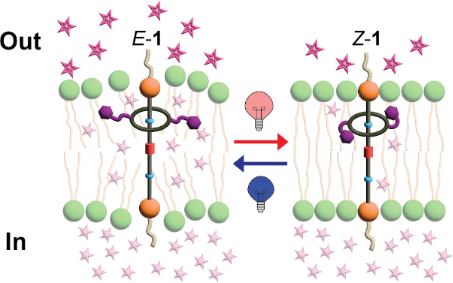
- structure, and saturation, can result in different membrane mechanics, hydration, thickness, intermolecular spacing, and non-covalent interactions with the rotaxane. For example, EYPC bilayer thickness increases linearly with cholesterol concentration and can induce the formation of nanodomains [16]. Such




Recent advances in Norrish–Yang cyclization and dicarbonyl photoredox reactions for natural product synthesis
Beilstein J. Org. Chem. 2025, 21, 2315–2333, doi:10.3762/bjoc.21.177
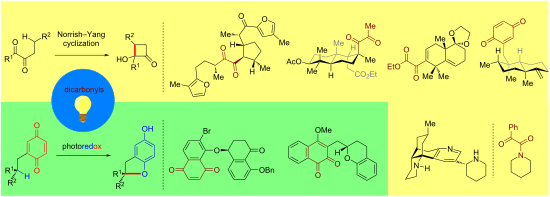
- bonds of 83 (Scheme 10). Building block 76 was first obtained in 18% overall yield from β-ketoester 74 through a sequence involving Michael addition, decarboxylation, nitrile hydration, and cyclization under vacuum. Aminoketal 81 – a direct precursor to the oxygen-sensitive α,β-unsaturated iminium 81a







C2 to C6 biobased carbonyl platforms for fine chemistry
Beilstein J. Org. Chem. 2025, 21, 2103–2172, doi:10.3762/bjoc.21.165


The application of desymmetric enantioselective reduction of cyclic 1,3-dicarbonyl compounds in the total synthesis of terpenoid and alkaloid natural products
Beilstein J. Org. Chem. 2025, 21, 2085–2102, doi:10.3762/bjoc.21.164
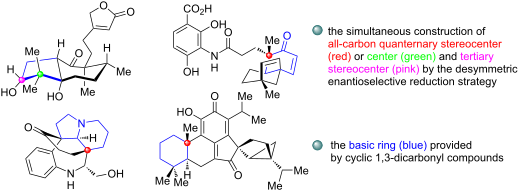
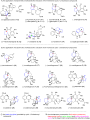
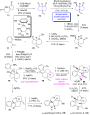
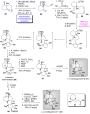
- underwent the 1,2-addition of isopropenyllithium reagent (prepared from n-BuLi/tetraisopropenyltin (67) [55]) and DMP oxidation to afford ketone 68. A three-step transformation including RCM, Mukaiyama hydration, and esterification, 68 was converted to methyl oxalate 69. Irradiation of the reaction mixture
- transformations of 121 generated bromodiene 122. Next, the metal–halogen exchange/intermolecular addition of 122 with aldehyde (+)-123 and in situ PtCl2-promoted hydrolysis and hydration gave tricyclic product 124. The BnMe3NOH-mediated intramolecular Michael/aldol cascade reaction of 124 constructed the C/D







Oxetanes: formation, reactivity and total syntheses of natural products
Beilstein J. Org. Chem. 2025, 21, 1324–1373, doi:10.3762/bjoc.21.101
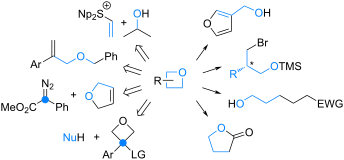










Synthesis of β-ketophosphonates through aerobic copper(II)-mediated phosphorylation of enol acetates
Beilstein J. Org. Chem. 2025, 21, 1192–1200, doi:10.3762/bjoc.21.96
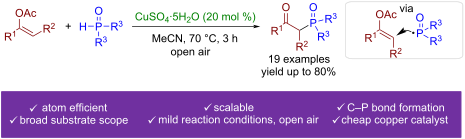
- -inflammatory [21][22] as well as enzyme inhibition activities [23][24][25][26]. Traditionally, β-ketophosphonates were prepared via Arbuzov reaction [27], acylation of alkylphosphonates [28], and hydration of alkynylphosphonates [29][30][31]. However, these methods have several drawbacks, including low atom


Recent advances in synthetic approaches for bioactive cinnamic acid derivatives
Beilstein J. Org. Chem. 2025, 21, 1031–1086, doi:10.3762/bjoc.21.85
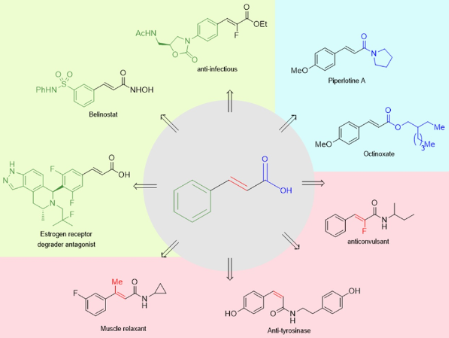
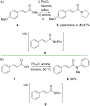
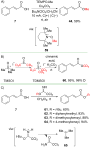
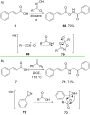
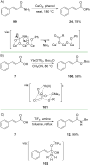
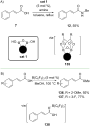
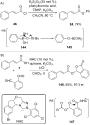
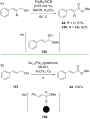
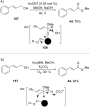
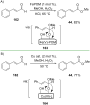
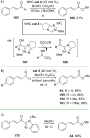
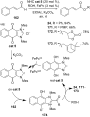
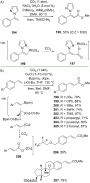
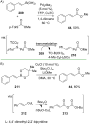
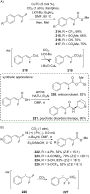
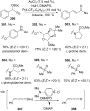
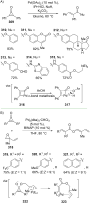
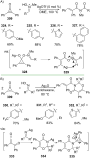
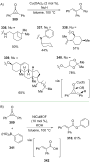
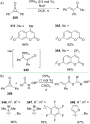
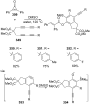
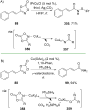
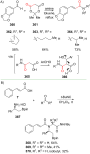
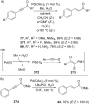
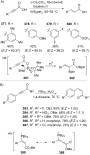
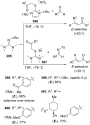
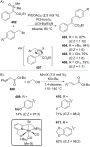
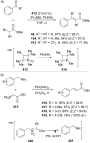
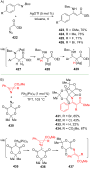
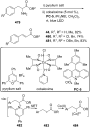
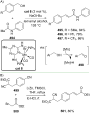
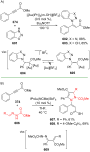
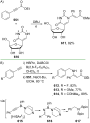
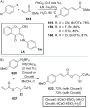
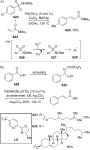
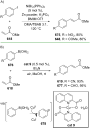
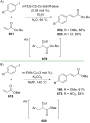
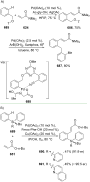
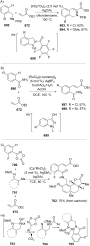
- multimetal-organic framework (M-MOF, M= Cu, Ni) which successfully catalyzed the one-pot cyclopropenone hydration/Chan–Lam coupling reaction of 309 and boronic acid 341 to give the corresponding ester 310 in good yield via the formation of acid 342 (Scheme 76B). Cyclopropenone was also subjected to non-metal










































Recent total synthesis of natural products leveraging a strategy of enamide cyclization
Beilstein J. Org. Chem. 2025, 21, 999–1009, doi:10.3762/bjoc.21.81
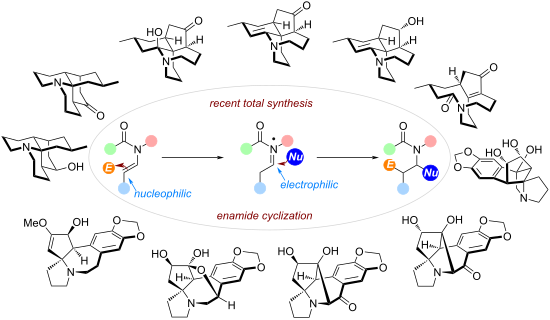
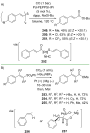
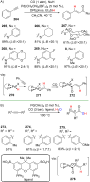
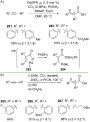
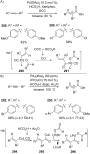
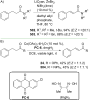
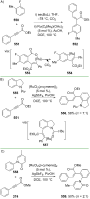
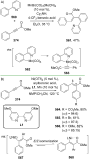
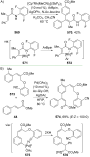
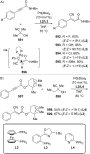
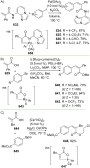
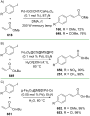
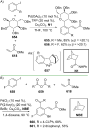
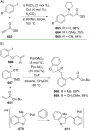
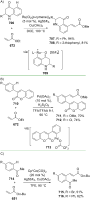
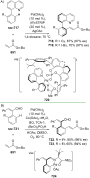
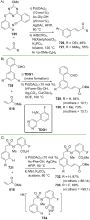
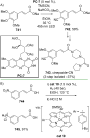
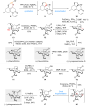
- quaternary center in a single step. As depicted in Scheme 1, key enamide 1 was prepared from (R)-pulegone in 6 steps. In the presence of the weak acid H3PO4, protonation of 1 generates a stabilized iminium ion 2, which then undergoes a 6-exo-trig cyclization to deliver 4 after hydration of cation 3. Notably
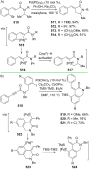
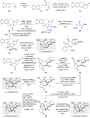
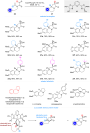
- the reduction of amide-generated ketone 12 after a subsequent Dess–Martin oxidation. Upon treatment of 12 with Co(acac)2 and PhSiH3 in iPrOH at 80 °C, the Mukaiyama hydration of enamide delivered hemiaminal 13. Despite the incorrect configuration of the newly formed hydroxy group, it is considered
- inconsequential due to the reversibility of hemiaminal. Consequently, further reduction of the amide could complete the total synthesis of (+)-fawcettimine with in situ adjustment of the hemiaminal configuration. The incorrect configuration observed in the Mukaiyama hydration also inspired the authors to develop





Unraveling cooperative interactions between complexed ions in dual-host strategy for cesium salt separation
Beilstein J. Org. Chem. 2025, 21, 845–853, doi:10.3762/bjoc.21.68
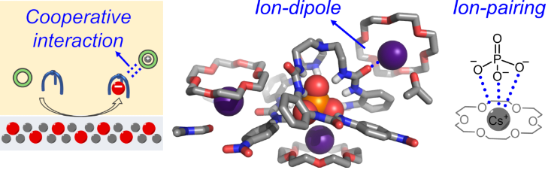
- , the extraction efficiency follows the order of PO43− > CO32− > SO42− > NO3−, consistent with the order of negative charges as well as the anions’ hydration energies (Table 1) [49][50]. This anti-Hofmeister selectivity of phosphate over other studied oxyanions is normally seen in liquid–liquid and
- displays higher hydration energy than that of sulfate, and the tetrahedral shape of sulfate anion matches the pseudo-tetrahedral cavity of the folded hexaurea receptor [30]. Secondly, for Cs+ cations, two types of Cs+ binding are shown in the solid state. Two type-(I) cesium cations are found to be
- conteranion, chloride, nitrate, carbonate, sulfate and phosphate) into chloroform, we demonstrate efficient extraction of Cs3PO4 solids. The extraction efficiency follows the order of Cs3PO4 > CsCl > Cs2CO3 > Cs2SO4 > CsNO3, reflecting the hydration energies and binding affinities of the corresponding anions


Synthesis, characterization, antimicrobial, cytotoxic and carbonic anhydrase inhibition activities of multifunctional pyrazolo-1,2-benzothiazine acetamides
Beilstein J. Org. Chem. 2025, 21, 348–357, doi:10.3762/bjoc.21.25
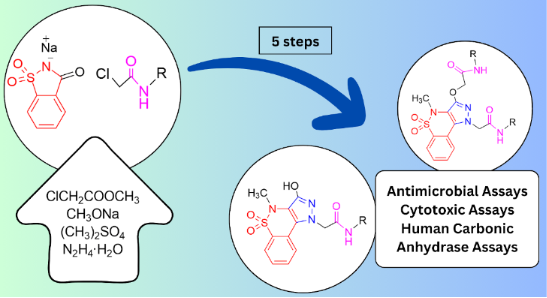
- (Figure S44 in Supporting Information File 1). In vitro carbonic anhydrase inhibition In vitro assessment of all targeted pyrazolobenzothiazine scaffolds for human carbonic anhydrase (hCA) inhibition was performed adopting a stopped-flow CO2 hydration method. The enzyme inhibition assays were carried out
- -diphenyltetrazolium bromide]. Control metabolic activity shown by cells treated with 0.1% DMSO was set to 100% cell growth. CA inhibition assays The inhibition potential of the synthesized compound 7a–h against different hCAs (I, II, IX, XII) was analyzed by adopting a stopped-flow CO2 hydration method described by
- /benzyl/cyclohexyl groups. Experimental data of microbroth dilution assays against different strains of S. aureus.a Experimental data of human carbonic anhydrase (hCAs) inhibition assays adopting a stopped-flow CO2 hydration method. Supporting Information Supporting Information File 6: Experimental


Emerging trends in the optimization of organic synthesis through high-throughput tools and machine learning
Beilstein J. Org. Chem. 2025, 21, 10–38, doi:10.3762/bjoc.21.3
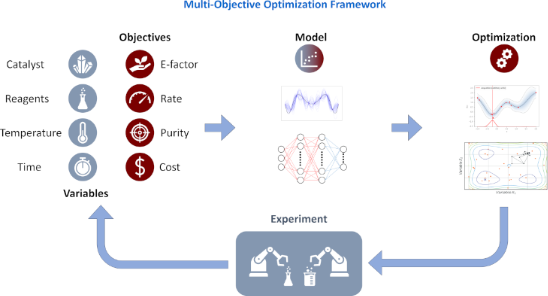
- Fitzpatrick et al. [58], allows researchers to oversee chemical reactions online. The hydration of 3-cyanopyridine to an amide was monitored by online MS, offering real-time conversion insights. Through 30 experiments within ten hours, five key reaction parameters were finely tuned for optimal conditions


Synthesis of tricarbonylated propargylamine and conversion to 2,5-disubstituted oxazole-4-carboxylates
Beilstein J. Org. Chem. 2024, 20, 2827–2833, doi:10.3762/bjoc.20.238

- mechanism, as illustrated in Scheme 3b [13][14], we cannot negate this mechanism because the reaction media and bases were different. PCPA 4a was heated in the presence of methanesulfonic acid to undergo 6-endo-dig cyclization. However, hydration predominantly occurred, converting the ethynyl group to a
- phenacyl group, yielding 9 without any detectable cyclization product (Scheme 4). This hydration process is thought to proceed via two paths. The reaction is initiated by the protonation of the ethynyl group to generate the vinyl cation intermediate 10. Product 9 is directly formed by the attack of a water
- through successive nucleophilic additions to the central carbon atom of DEMO. Cyclization of 4a quenched by D2O. Plausible mechanisms for the ring closure of 4. Hydration of the ethynyl group of 4a. Optimization of the reaction conditions for the reaction of 1a with the lithium acetylide of 3a. Addition


Interaction of a pyrene derivative with cationic [60]fullerene in phospholipid membranes and its effects on photodynamic actions
Beilstein J. Org. Chem. 2024, 20, 2732–2738, doi:10.3762/bjoc.20.231
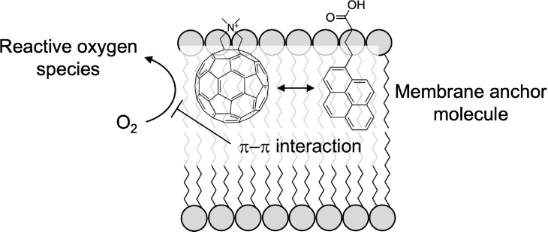
- localized near the surface of phospholipid membranes [11][12]. With this model system, we aimed to examine whether both the intramembrane localization and the photodynamic actions of catC60 can be modulated by PyBA. Results and Discussion The catC60-loaded liposomes (catC60-lip) were prepared by hydration
- the photocontrol of the plasma membrane potential (Vm) using fullerene-containing triad molecules on a millisecond scale. Experimental Preparation of liposomes with catC60 (catC60-lip) or C60 (C60-lip) Liposomes were prepared using a thin-film hydration method. DMPC (NOF AMERICA Corporation, White


5th International Symposium on Synthesis and Catalysis (ISySyCat2023)
Beilstein J. Org. Chem. 2024, 20, 2704–2707, doi:10.3762/bjoc.20.227
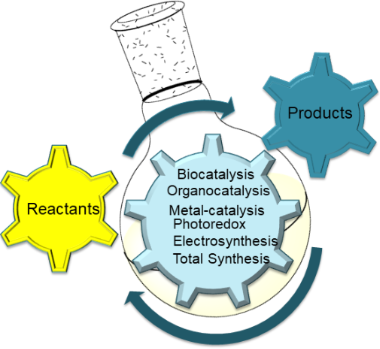
- carbene (NHC) framework from polysubstituted aminoimidazo[5,1-b]oxazol-6-ium salts, which demonstrated strong catalytic activity in gold-catalyzed alkyne hydration and arylative cyclization reactions [14]. The synthesis of this new carbene involved the use of a novel nitrenoid reagent that was

Deciphering the mechanism of γ-cyclodextrin’s hydrophobic cavity hydration: an integrated experimental and theoretical study
Beilstein J. Org. Chem. 2024, 20, 2635–2643, doi:10.3762/bjoc.20.221
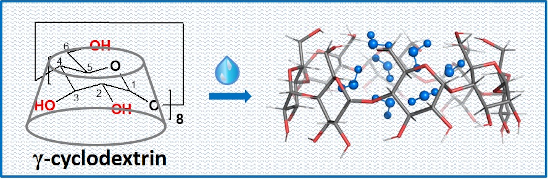
- substances. Host CDs are highly accommodative to water molecules as well and usually contain water in the native state. There is still an ongoing discussion on both the total number of water molecules and their preferred binding position inside the cavities of the CDs. To understand the hydration/dehydration
- light on the mechanism of the γ-CD hydration and to address some unanswered questions: (i) what are the preferable locations for water molecules in the macrocyclic cavity (“hot spots”); (ii) what are the major factors contributing to the stability of the water cluster in the CD interior; (iii) what type
- of interactions (i.e., water–water and/or water–CD walls) contribute to the stability of the water assemble; (iv) how does the mechanism of the γ-CD hydration compare with those of its α-CD and β-CD counterparts. Keywords: cyclodextrin; DFT calculation; DSC/TG; hydration; thermodynamic


2-Heteroarylethylamines in medicinal chemistry: a review of 2-phenethylamine satellite chemical space
Beilstein J. Org. Chem. 2024, 20, 1880–1893, doi:10.3762/bjoc.20.163
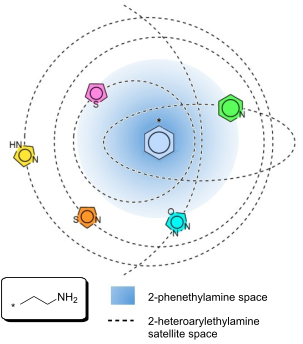
- hydration reaction of carbon dioxide to bicarbonate, cyanates to carbamic acids, aldehydes to gem-diols, etc., and represent a potential therapeutic target for diseases like osteoporosis, edema, obesity or cancer [29]. Alım et al. [30] evaluated a series of thiophene sulfonamides based on the high stability




SOMOphilic alkyne vs radical-polar crossover approaches: The full story of the azido-alkynylation of alkenes
Beilstein J. Org. Chem. 2024, 20, 701–713, doi:10.3762/bjoc.20.64
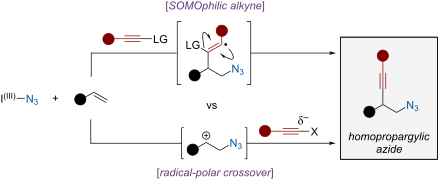
- azido-hydration reaction [18]. The homopropargylic azide was obtained in only 28% yield using phenyl vinyl ketone. Based on reported aza-alkynylation reactions [19][20][21][22][23] and modern azidation methods using radical chemistry [17][24][25][26] three approaches could be envisaged. All of them


A laterally-fused N-heterocyclic carbene framework from polysubstituted aminoimidazo[5,1-b]oxazol-6-ium salts
Beilstein J. Org. Chem. 2024, 20, 621–627, doi:10.3762/bjoc.20.54
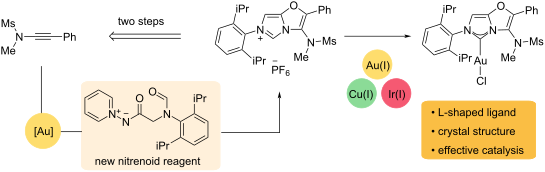
- -step ynamide annulation and imidazolium ring-formation sequence. Metalation with Au(I), Cu(I) and Ir(I) at the C2 position provides an L-shaped NHC ligand scaffold that has been validated in gold-catalysed alkyne hydration and arylative cyclisation reactions. Keywords: annulation; carbene; gold
- ], intramolecular cyclisation [36] or a mixture of both [8][37][38][39]. The new ligand system proved to deliver competent catalysis. Conversion was seen in all cases at 1 mol % catalyst loading (Scheme 3). Use of 13 resulted in a slight increase of the anti-Markovnikov hydration product 17 over 18 when compared to


Possible bi-stable structures of pyrenebutanoic acid-linked protein molecules adsorbed on graphene: theoretical study
Beilstein J. Org. Chem. 2024, 20, 570–577, doi:10.3762/bjoc.20.49
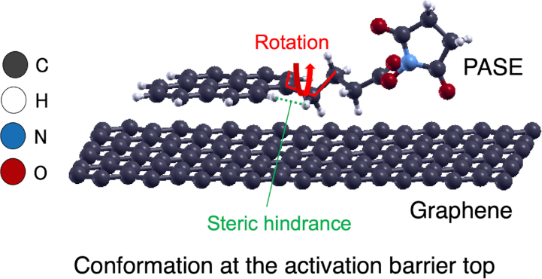
- molecules because the chain portion of PASE turns upward. Therefore, the stabilization energy of hydrogen-bond formation is greater in conformation 2 than in conformation 1. To improve the stability of conformation 2, hydration effects by electrostatic interactions between PASE and the solvent are also
- important. A selective hydration of the polar moiety while keeping the pyrene moiety stable can relatively strengthen the stability of conformation 2. Thus, as the polarity of the solvent increases, the probability of conformation 2 appearance is expected to increase. Mechanism of bi-stability in PASE on
- molecule turns upward, increasing the number of sites that can form hydrogen bonds with water molecules in conformation II. Therefore, the formation of hydrogen bonds can stabilize conformation II relatively more strongly than conformation I. The hydration effect also improves the stability of conformation





