Search results
Search for "photocatalysts" in Full Text gives 116 result(s) in Beilstein Journal of Organic Chemistry.
Photoorganocatalytic trifluoromethylation of (het)arenes in green conditions
Beilstein J. Org. Chem. 2026, 22, 662–671, doi:10.3762/bjoc.22.50
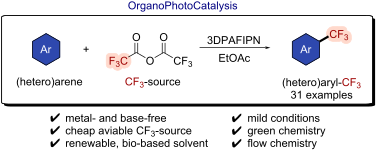
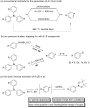
- -based complexes to other transition metals and organic photocatalysts, as well as diverse CF3 sources. The major limitations of these methodologies include the high cost of catalysts and trifluoromethylating reagents, along with the use of toxic species such as transition-metal complexes and hazardous
- approaches can be regarded as among the most environmentally sustainable methods for trifluoromethylation. MacMillan and co-workers reported the photochemical trifluoromethylation of arenes and heteroarenes using Ru- and Ir-based photocatalysts together with trifluoromethanesulfonyl chloride (TfCl) in the
- transformations, acetonitrile is most commonly employed owing to its aprotic nature, compatibility with a wide range of photocatalysts, and transparency to visible light. However, solvent selection guides from Pfizer, GSK, and Sanofi rate acetonitrile as “Usable,” “Major issues,” and “Recommended,” respectively




Get a better glimpse on sequential photoreactions of trisnorbornadienes with 19F NMR spectroscopy
Beilstein J. Org. Chem. 2026, 22, 527–534, doi:10.3762/bjoc.22.38
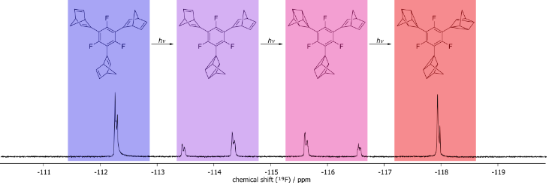
- photocatalysts. However, these key parameters do not match the better ones of the parent norbornadiene 1b. Furthermore, the fluoro-substituted derivative 2f0,3 appears to be prone towards thermal decomposition. Thus, even though this compound serves as an ideal probe for the investigation of the photoreaction by


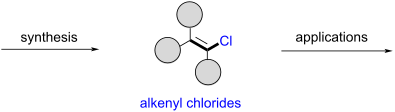
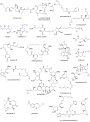
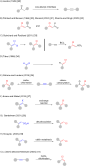
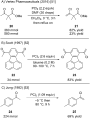
Synthesis and applications of alkenyl chlorides (vinyl chlorides): a review
Beilstein J. Org. Chem. 2026, 22, 1–63, doi:10.3762/bjoc.22.1






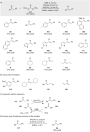

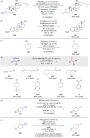


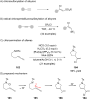
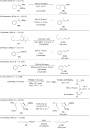


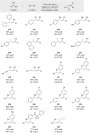


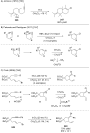


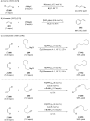


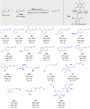
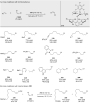
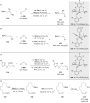


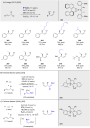


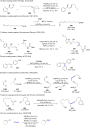


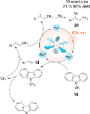
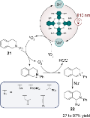
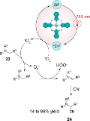
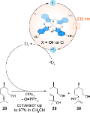
Visible-light-driven NHC and organophotoredox dual catalysis for the synthesis of carbonyl compounds
Beilstein J. Org. Chem. 2025, 21, 2584–2603, doi:10.3762/bjoc.21.200
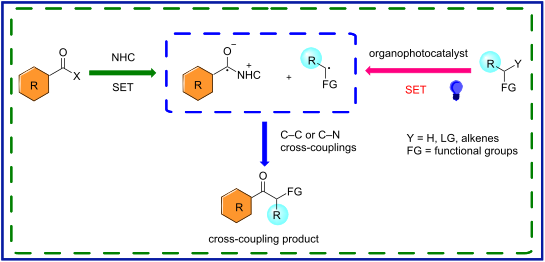
- , particularly the synergistic combination of N-heterocyclic carbenes (NHCs) with organic photocatalysts, has opened new avenues in molecular construction, particularly for the novel, practical preparation of carbonyl group-containing compounds [13][14][15][16]. These ubiquitous ketone, ester, and amide
- carbenes (NHCs) with photocatalysts. The review encompasses transition-metal-based photocatalytic reactions for C–C and C–HA cross-coupling reactions involving various acyl fluorides, amides, aldehydes, carboxylic acids, and esters, highlighting their broad applications in organic synthesis and medicinal
- ][47][48][49][50]. This review focuses on recent synthetic developments of NHC-catalyzed, visible-light-promoted dual organophotocatalysis for preparing carbonyl compounds and related organic intermediates by combining NHC and organic photocatalysts. Organocatalysts have a significant impact on the

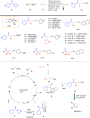
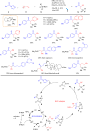
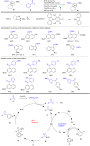

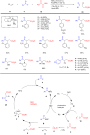
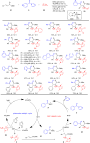

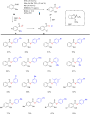

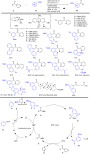

Synthesis of the tetracyclic skeleton of Aspidosperma alkaloids via PET-initiated cationic radical-derived interrupted [2 + 2]/retro-Mannich reaction
Beilstein J. Org. Chem. 2025, 21, 2470–2478, doi:10.3762/bjoc.21.189
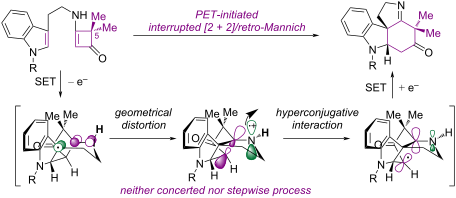
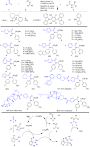
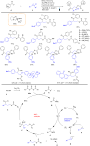
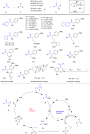
- catalysts that could promote the proposed PET reaction of 9a on the basis of our previous results [15]. The reaction was performed in MeCN in the presence of photocatalysts under blue light-emitting diode (LED) irradiation at 30 °C. The results are listed in Table 1. Catalysts I [28], II [29], and III [30


Enantioselective radical chemistry: a bright future ahead
Beilstein J. Org. Chem. 2025, 21, 2283–2296, doi:10.3762/bjoc.21.174
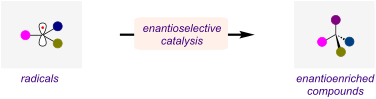
- catalysts. The drawbacks of chiral Lewis acids have been overcome to an extent using organocatalysis. The use of photochemistry to generate radicals by light-induced electron transfer has resulted in elegant enantioselective radical transformations. Several transition-metal photocatalysts [9] and organo
- -photocatalysts [10][11][12] have been successfully incorporated into enantioselective radical reactions. The use of transition metals to catalyze enantioselective radical reactions can be considered a major advancement in the field of asymmetric catalysis. Several metals such as cobalt, nickel, copper, and
- substrates or organometallic complexes upon photoexcitation has enabled the synthetic community to access reactive open-shell species under very mild conditions. The ability of excited photocatalysts to induce other reagents, substrates, or other catalysts to participate in new activation modes makes them a


Photochemical reduction of acylimidazolium salts
Beilstein J. Org. Chem. 2025, 21, 1973–1983, doi:10.3762/bjoc.21.153
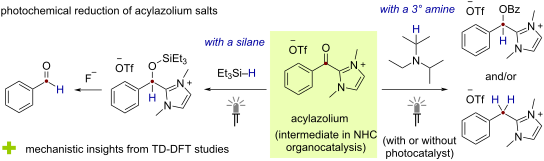
- to the photocatalyzed process, testing a selection of photocatalysts in the presence of 1 equivalent of DIPEA under blue light irradiation (λmax = 440 nm). Notably, under these modified conditions, the photocatalyzed reaction with the originally test photocatalyst, [Ir(dF(CF3)ppy)2(dtbpy)]PF6


Stereoselective electrochemical intramolecular imino-pinacol reaction: a straightforward entry to enantiopure piperazines
Beilstein J. Org. Chem. 2025, 21, 1897–1908, doi:10.3762/bjoc.21.147
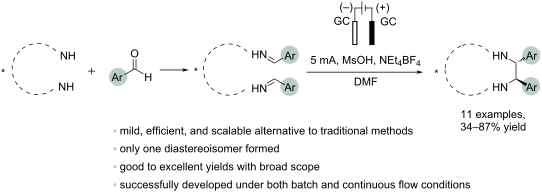
- photocatalysts (Scheme 2). The combination of photoredox catalysis with imine activation enabled the reductive coupling of imines under mild reaction conditions, providing direct access to benzyl and aryl vicinal diamines with good to excellent yields. Organic electrochemistry represents an attractive and





Photocatalysis and photochemistry in organic synthesis
Beilstein J. Org. Chem. 2025, 21, 1645–1647, doi:10.3762/bjoc.21.128
- implement. Two decades later, photocatalysis and photochemistry remain among the most studied topics in modern organic synthesis. Nowadays, chemists can choose from a wide range of organometallic [12][13], organic [14][15], or heterogeneous photocatalysts [16][17] to trigger visible-light photoredox
- catalysis, and this arsenal of catalysts is constantly expanding. In this thematic issue, the Dell’Amico group describes the development of a new class of organic donor–acceptor photocatalysts that show promising activity for several transformations [18]. Additionally, Hoffmann and co-workers contributed a
- Review article discussing photocatalysts capable of harnessing low-energy red light to trigger chemical reactions [19]. In addition to photoredox catalysis, several mechanistic platforms that leverage light – such as the use of electron donor–acceptor complexes [20], proton-coupled electron transfer [21

General method for the synthesis of enaminones via photocatalysis
Beilstein J. Org. Chem. 2025, 21, 1535–1543, doi:10.3762/bjoc.21.116
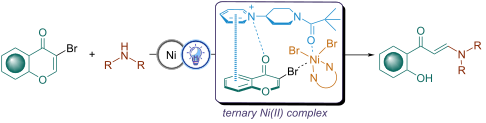
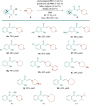
- by DME, DMSO or acetone diminished the product yields (Table 1, entries 7–9). The reactivity of acridinium PC1 was superior to that of other photocatalysts, including 4-CzlPN (PC2) and [Ir(dF(CF3)ppy)2(dtbbpy)]PF6 (PC3) (Table 1, entries 10 and 11). Attempts to increase the temperature of the process
- , the rate of the reaction is independent of the concentration of the 3-bromochromone substrate 7a and amine 8a (Figure S4, Supporting Information File 1). Based on the above experiments and prior work on the photocatalytic reductive halogenation using acridinium photocatalysts [45][46], a possible




Microwave-enhanced additive-free C–H amination of benzoxazoles catalysed by supported copper
Beilstein J. Org. Chem. 2025, 21, 1462–1476, doi:10.3762/bjoc.21.108
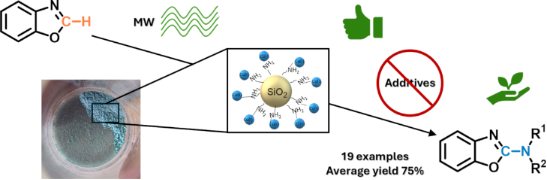
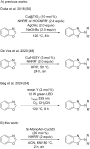
- amination reactions of benzoxazole, which, although metal-free, are still limited in versatility and require photocatalysts such as eosin Y and a tightly controlled O2 atmosphere [54]. The objective of the present study aims to provide a rapid, additive-free and convenient alternative to existing approaches



Tautomerism and switching in 7-hydroxy-8-(azophenyl)quinoline and similar compounds
Beilstein J. Org. Chem. 2025, 21, 1404–1421, doi:10.3762/bjoc.21.105
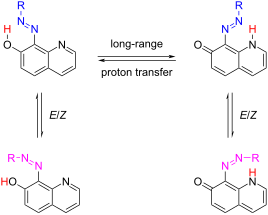
- and systems, including gels [17], metal-organic frameworks [18][19][20][21], photocatalysts [22][23], container molecules [24][25][26], drug delivery systems [27][28][29], photoresponsive polymers [30][31][32][33][34][35][36][37], photoswitches [12][13][38][39][40][41], optical storage devices [42][43




Recent advances in amidyl radical-mediated photocatalytic direct intermolecular hydrogen atom transfer
Beilstein J. Org. Chem. 2025, 21, 1306–1323, doi:10.3762/bjoc.21.100
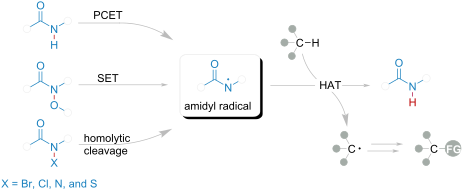
- with a systematic understanding and strategic toolkit, thereby propelling the development of direct functionalization of C–H, B–H, Si–H, and Ge–H techniques in modern organic synthesis. Most of the photocatalysts used in this review are listed in Figure 3. Review Amidyl radical from N–H bond cleavage N
- cycloalkenes and alcohols. To eliminate the need for noble metal photocatalysts in the system, Duan’s group employed 2,4,5,6-tetra-9H-carbazol-9-yl-1,3-benzenedicarbonitrile (4CzIPN) as a metal-free photocatalyst (Scheme 3) [71]. This system initiated the formation of amidyl radical 20 from HRP-3 through a
- to produce amidyl radicals and oxygen anions in the presence of photocatalysts activated by visible light. Two representative cases illustrating this approach were reported in 2023. Building upon the experiments conducted by Alexanian’s group, Yan’s group extended the applicability of carborane as a






Recent advances in oxidative radical difunctionalization of N-arylacrylamides enabled by carbon radical reagents
Beilstein J. Org. Chem. 2025, 21, 1207–1271, doi:10.3762/bjoc.21.98
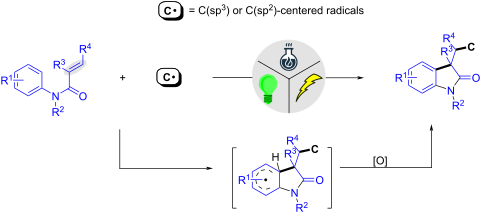
- particularly noteworthy for its use at room temperature, requiring no transition metals, photocatalysts, or additives. Notably, Umemoto's reagent served as the trifluoromethyl source, and the reaction was facilitated under blue LED irradiation, achieving good to excellent yields. Moreover, this approach




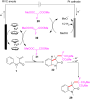


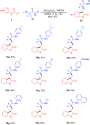


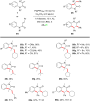


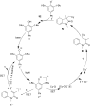




Biobased carbon dots as photoreductants – an investigation by using triarylsulfonium salts
Beilstein J. Org. Chem. 2025, 21, 1024–1030, doi:10.3762/bjoc.21.84
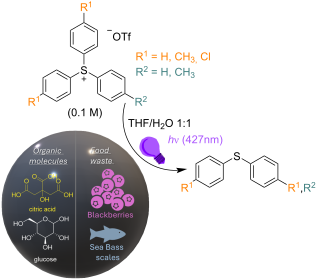
- biocompatibility. The electrochemical properties of such materials have been then evaluated by cyclic voltammetry (CV). For all the properties mentioned above, CDs emerged as low-cost and sustainable photocatalysts. Indeed, upon visible-light irradiation, the generated excited state CD* can operate as either


Study of tribenzo[b,d,f]azepine as donor in D–A photocatalysts
Beilstein J. Org. Chem. 2025, 21, 935–944, doi:10.3762/bjoc.21.76
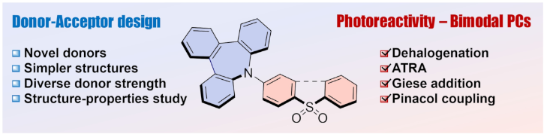
- great applicability in the field of photocatalysis. Most of these compounds are based on complex D–A–D structures or multi-D–A systems, such as 4CzIPN. Whereas these systems have been widely studied and applied as photocatalysts, simpler D–A structures remain less explored. Nevertheless, the simplicity
- powerful tool for the construction and functionalization of organic molecules and materials. Thus, the scientific community has focused on the design and study of new organic molecules that can be used as photocatalysts, replacing generally more expensive metal-based complexes [1][2][3]. Furthermore, there
- is a particular interest in the obtainment of organic molecules with well-balanced redox potentials in the excited state that can act as bimodal photocatalysts, facilitating their use in oxidative and reductive quenching cycles. In this sense, it is crucial to understand the molecule's structure



Light-enabled intramolecular [2 + 2] cycloaddition via photoactivation of simple alkenylboronic esters
Beilstein J. Org. Chem. 2025, 21, 854–863, doi:10.3762/bjoc.21.69
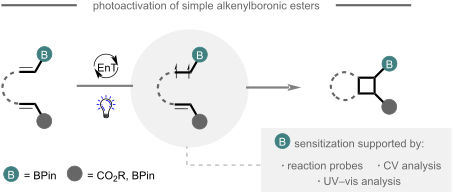
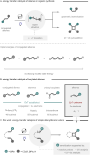
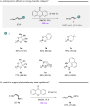
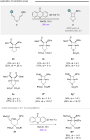
- be derivatized to demonstrate the synthetic utility of the process. Although reactivity is currently limited to intramolecular quenching, it is envisaged the developed insights will serve as a blueprint for future endeavors to achieve sensitization using high energy photocatalysts, especially when



Photocatalyzed elaboration of antibody-based bioconjugates
Beilstein J. Org. Chem. 2025, 21, 616–629, doi:10.3762/bjoc.21.49
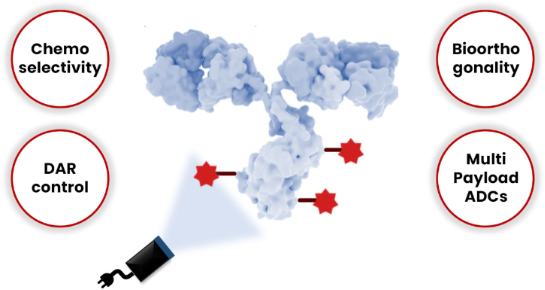
- catalysts, including photoredox catalysts, energy-transfer catalysts, and genetically encoded photocatalysts, highlighting their distinct features, mechanisms, applications, and prospects [41]. This thorough analysis showcased the promising advancements in the chemical modification of proteins. As this
- selectivity and the preservation of sensitive biological structures when appropriate redox potentials of photocatalysts are applied to the targeted amino acid. Additional advantages of photoinduced reactions include the ability to perform the reactions rapidly (typically <15 minutes). It was only in the late
- the light, the lamp wattage, and diverse photocatalysts or mechanisms (e.g., energy transfer, photoredox, or electron-donor/electron-acceptor photoinduced electron transfer) might all be brought to bear on controlling the DAR. In addition to the DAR, homogeneity for conjugation at specific sites using


Photomechanochemistry: harnessing mechanical forces to enhance photochemical reactions
Beilstein J. Org. Chem. 2025, 21, 458–472, doi:10.3762/bjoc.21.33
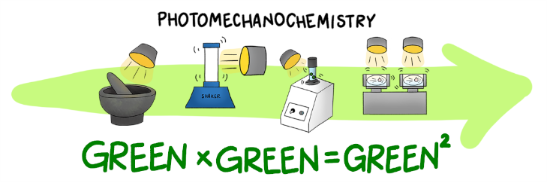
- transform molecules. Intriguingly, photocatalysts typically absorb harmless visible light and can be chosen ad hoc to trigger the desired chemistry. Indeed, the photocatalyst–substrate interaction can occur via energy transfer [4][5][6][7][8], single-electron transfer [9][10][11][12], or hydrogen-atom
- insoluble reagents and/or photocatalysts. Additionally, as discussed, the use of impact forces can lead to unique selectivity profiles compared to solution-based methods, further enhancing its utility. Thirdly, dissolved oxygen must be often meticulously removed in solution-based methods via tedious




Beyond symmetric self-assembly and effective molarity: unlocking functional enzyme mimics with robust organic cages
Beilstein J. Org. Chem. 2025, 21, 421–443, doi:10.3762/bjoc.21.30
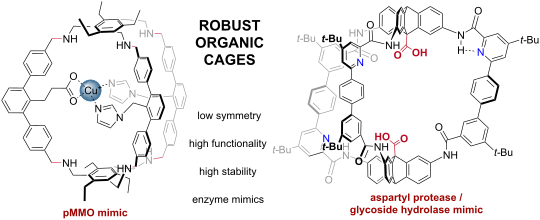
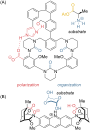
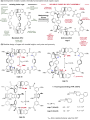
- of increasing importance in the search for sustainable feedstocks, and cages that organize and polarize have advantages in this precise reactivity. The need for polarization may be circumvented by incorporating photocatalysts into cages [183][429], which are also likely to provide novel site
- -selective reactions [21][185][430][431][432][433]. Cage structure may also activate photocatalysts [434] or help restrict detrimental photocatalyst deactivation reactions [435]. We also point towards conformational autodesymmetrization [39] as a largely ignored strategy to develop low-symmetry cavities




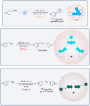
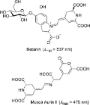
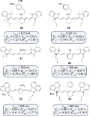
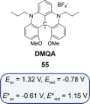
Red light excitation: illuminating photocatalysis in a new spectrum
Beilstein J. Org. Chem. 2025, 21, 296–326, doi:10.3762/bjoc.21.22
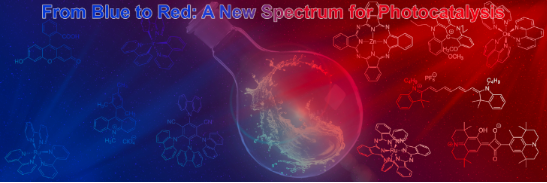
- advantageous for large-scale applications, offering enhanced safety and operational simplicity. Traditionally, research in this field has focused on metal-based photocatalysts, particularly those based on transition metals like ruthenium and osmium due to their intrinsic photophysical properties. However, with
- growing concerns around environmental sustainability, there is increasing interest in developing photocatalysts that are more accessible, tunable, and eco-friendly. Each section of this document discusses a specific approach to red-light photocatalysis, reflecting the field’s evolution and exploring
- diverse catalyst types and applications. The first section is dedicated to metal-based photocatalysts. Complexes involving metals such as osmium and ruthenium, have dominated red-light photoredox catalysis because of their ability to absorb low-energy photons and sustain redox cycles via stable excited











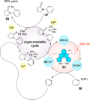
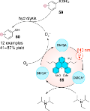

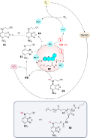
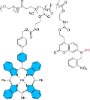




Emerging trends in the optimization of organic synthesis through high-throughput tools and machine learning
Beilstein J. Org. Chem. 2025, 21, 10–38, doi:10.3762/bjoc.21.3
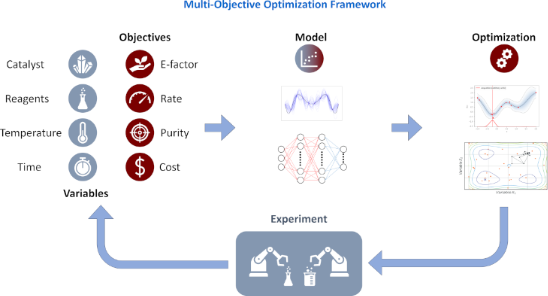
- heterogeneous solid–liquid reactions. In their report, they described the reaction slugs as serial microbatch reactors (SMBRs) separated through gas segments that incorporated liquid reagents and solid photocatalysts in a continuous flow. The slugs were generated by establishing a stable gas–liquid segmented


Advances in the use of metal-free tetrapyrrolic macrocycles as catalysts
Beilstein J. Org. Chem. 2024, 20, 3085–3112, doi:10.3762/bjoc.20.257
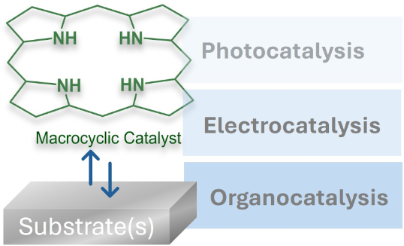
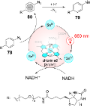
- , photocatalysts, and electrocatalysts are presented here. The effect of macrocyclic structural modifications such as their functionalization with different substituents, distortion from planarity, conformational flexibility and rigidity towards catalytic activity are presented, highlighting the potential of these
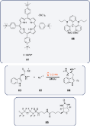
- photocatalysts. The results demonstrated that these substituents significantly influenced the redox properties of the porphyrins, yielding up to 86% with the electron-poor meso-tetrakis(pentafluorophenyl)porphyrin (67), compared to H2TPP and other electron-rich systems. This finding indicated that fine-tuning
- macrocycles as photocatalysts in organic synthesis, involving both single electron transfer (SET) and energy transfer (ET) mechanistic approaches [84]. This review does not only focus on the metal-free porphyrin macrocycles, but it also covers the area of different porphyrinoid systems, such as heteroatom


Recent advances in transition-metal-free arylation reactions involving hypervalent iodine salts
Beilstein J. Org. Chem. 2024, 20, 2891–2920, doi:10.3762/bjoc.20.243

- Morita–Baylis–Hillman (MBH) acetates using a variety of diaryliodonium triflates [65]. The reaction was carried out with MBH acetate 33 and diphenyliodonium triflate 16 in the presence of different photocatalysts and bases. Methylene blue trihydrate (MB·3H2O) was identified as a highly active




Transition-metal-free synthesis of arylboronates via thermal generation of aryl radicals from triarylbismuthines in air
Beilstein J. Org. Chem. 2024, 20, 2577–2584, doi:10.3762/bjoc.20.216
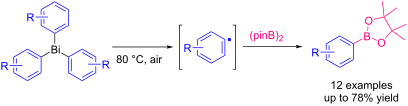
- of photocatalysts or UV light irradiation without metal catalysts [45][46][47][48]. Similar homolysis by electrolysis has also been reported [49]. These two activation methods required special equipment (i.e., light sources or electronic devices). To achieve thermal homolysis of the Ar–Bi bonds, the
- aryl radicals without photocatalysts, and the trapping with diselenides afforded a variety of diaryl selenides [59]. Based on these backgrounds of our studies and the fundamental property, i.e., the weak bond dissociation energy of the Ph–Bi bond (46 kcal/mol) [60], we hypothesized that aryl radicals