


Search results
Search for "photochemical reaction" in Full Text gives 52 result(s) in Beilstein Journal of Organic Chemistry.
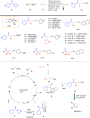
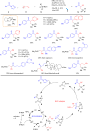
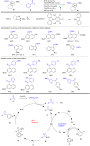
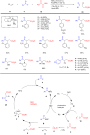
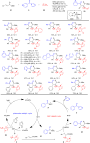
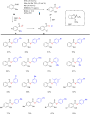
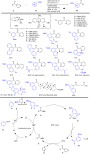
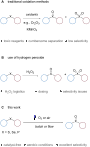
Visible-light-driven NHC and organophotoredox dual catalysis for the synthesis of carbonyl compounds
Beilstein J. Org. Chem. 2025, 21, 2584–2603, doi:10.3762/bjoc.21.200
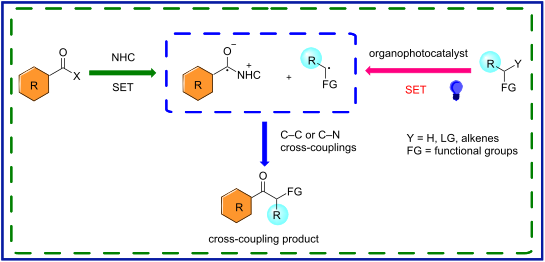
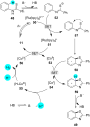
- oxidants, and proceeds in an atom-economical manner. This photochemical reaction displays a wide substrate scope, tolerating a broad range of aryl and aliphatic aldehydes with good functional group compatibility. Mechanistic studies revealed that the photochemical reaction proceeds via radical–radical





Effect of a photoswitchable rotaxane on membrane permeabilization across lipid compositions
Beilstein J. Org. Chem. 2025, 21, 2498–2512, doi:10.3762/bjoc.21.192
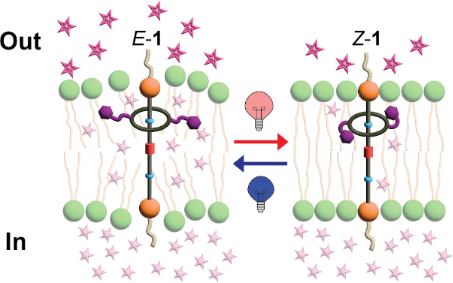
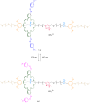
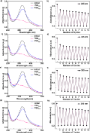
- sulforhodamine B. Initial studies suggest a photochemical reaction of the axle, which is suppressed when the macrocycle is threaded. Furthermore, the distinct release kinetics and absorption profiles of rotaxane 1 and axle 3, combined with the reversible photoswitching of rotaxane 1 versus the irreversible




Transformation of the cyclohexane ring to the cyclopentane fragment of biologically active compounds
Beilstein J. Org. Chem. 2025, 21, 2416–2446, doi:10.3762/bjoc.21.185
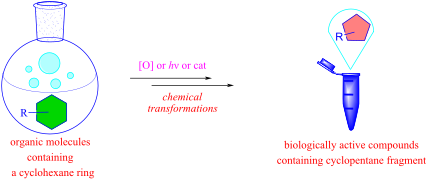
- compounds [78][79][80][81][82]. The work of Davis, Derksen and co-workers [83] presents interesting results on the use of UV light to study the reactivity of bicyclic divinyl ketones and the dependence of photochemical reaction products on wavelength. Under anhydrous conditions, irradiation of divinyl
- Dotson et al. [84] for cis/trans salts 159 (Scheme 30). The authors noted that photochemical experiments carried out in benzene solutions with benzylic esters cis-159 or trans-159 gave complex product mixtures. To achieve higher conversion, a photochemical reaction was carried out in the crystalline


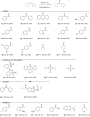
Recent advances in Norrish–Yang cyclization and dicarbonyl photoredox reactions for natural product synthesis
Beilstein J. Org. Chem. 2025, 21, 2315–2333, doi:10.3762/bjoc.21.177
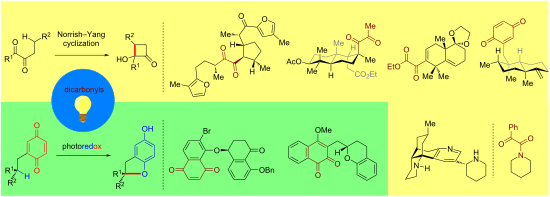
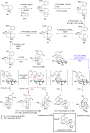
- , 108d) underwent the desired photochemical reaction (Scheme 13b), yielding spiroacetals 109a, 109b, and 109d following CAN (cerium(IV) ammonium nitrate) oxidation. In contrast, C7-methoxy-substituted analogs (108c, 108e) remained unreactive. Reactivity correlated with UV–vis absorption profiles







Understanding the origin of stereoselectivity in the photochemical denitrogenation of 2,3-diazabicyclo[2.2.1]heptene and its derivatives with non-adiabatic molecular dynamics
Beilstein J. Org. Chem. 2025, 21, 2007–2020, doi:10.3762/bjoc.21.156
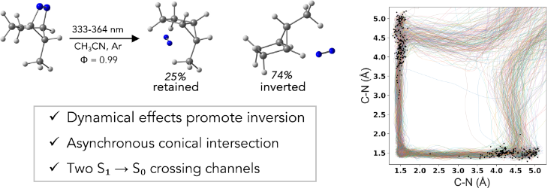
- preference for inversion across several derivatives of 1 [77][78]. These studies suggest that the thermal denitrogenation of diazabicyclo[2.1.1]hep-2-ene undergoes a concerted mechanism of elimination of nitrogen, while the photochemical reaction proceeds via a stepwise mechanism. Quantum mechanical
- light source. Electronic transitions to these excited states are impossible in the experiment and thus will not be considered for this photochemical mechanistic study. DBH photodenitrogenation mechanism We then turned our attention to the photochemical reaction mechanisms leading to the formation of


Deep-blue emitting 9,10-bis(perfluorobenzyl)anthracene
Beilstein J. Org. Chem. 2025, 21, 515–525, doi:10.3762/bjoc.21.39
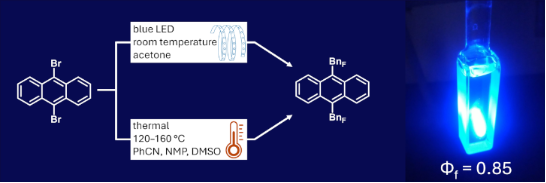
- photochemical reaction. Its structure was elucidated by NMR spectroscopy and single crystal X-ray diffractometry. The latter revealed no π–π interaction between neighboring ANTH cores. A combination of high photoluminescence quantum yield (PLQY) of 0.85 for 9,10-ANTH(BnF)2, its significantly improved
- . The new compounds 9-ANTH(BnF) and 9,10-ANTH(BnF)2 were prepared in varying amounts using several synthetic procedures, including conventional high-temperature Cu-/Na2S2O3-promoted reactions and a room-temperature photochemical reaction. The former approach resulted in challenging work-ups, low yields





Photomechanochemistry: harnessing mechanical forces to enhance photochemical reactions
Beilstein J. Org. Chem. 2025, 21, 458–472, doi:10.3762/bjoc.21.33

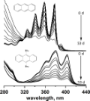
- exposure of the operator to potentially hazardous solid mixtures. A key technological challenge in this domain is to develop methods to effectively deliver photons to the reaction mixture. In 2017, Štrukil reported the first instance of a photochemical reaction conducted within a ball milling apparatus




Giese-type alkylation of dehydroalanine derivatives via silane-mediated alkyl bromide activation
Beilstein J. Org. Chem. 2024, 20, 3274–3280, doi:10.3762/bjoc.20.271
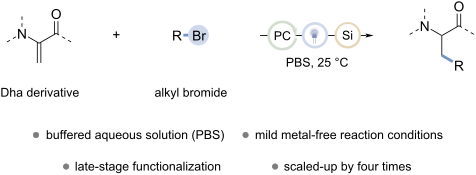
- activation. The biocompatibility of the reaction enabled by the PBS solution and the mild photochemical reaction conditions makes the transformation useful for late-stage functionalization under physiological conditions. Besides, the reaction was successfully scaled up by roughly four times, leading to a



Development of a flow photochemical process for a π-Lewis acidic metal-catalyzed cyclization/radical addition sequence: in situ-generated 2-benzopyrylium as photoredox catalyst and reactive intermediate
Beilstein J. Org. Chem. 2024, 20, 1973–1980, doi:10.3762/bjoc.20.173
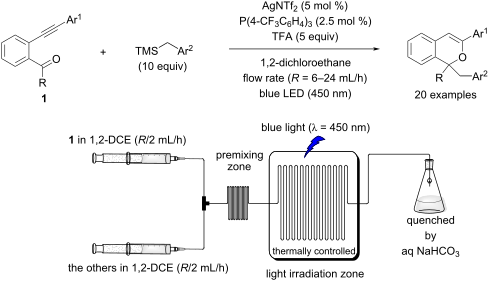
- Abstract A flow photochemical reaction system for a π-Lewis acidic metal-catalyzed cyclization/radical addition sequence was developed, which utilizes in situ-generated 2-benzopyrylium intermediates as the photoredox catalyst and electrophilic substrates. The key 2-benzopyrylium intermediates were
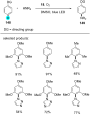
- benzyltrimethylsilane derivatives as the donor molecule in the flow photoreactor to provide 1H-isochromene derivatives in higher yields in most cases than the batch reaction system. Keywords: 2-benzopyrylium; flow chemistry; isocromene; photochemical reaction; π-Lewis acidic metal; Introduction Flow chemistry has
- system is an excellent method for improving the efficiency of the present sequential transformation, avoiding product degradation under photochemical reaction conditions. Further investigation of other flow photochemical reactions using in situ-generated organic cations is in progress in our laboratory


A fiber-optic spectroscopic setup for isomerization quantum yield determination
Beilstein J. Org. Chem. 2024, 20, 1684–1692, doi:10.3762/bjoc.20.150
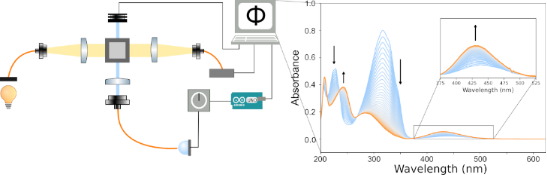
- the change in the concentration of A is given by Equation 2 [47]: The first term gives the photochemical reaction from A to B, which is governed by the number of photons absorbed at a given wavelength, qA, as well as the quantum yield ΦA→B for this reaction. NA is Avogadro’s number, V is the total


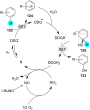
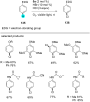
Selective and scalable oxygenation of heteroatoms using the elements of nature: air, water, and light
Beilstein J. Org. Chem. 2023, 19, 1146–1154, doi:10.3762/bjoc.19.82
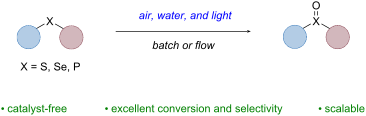
- suppress the photochemical reaction while carrying out another light-induced transformation. Aromatic additives (Table 2): In parallel we observed the significant influence on the reaction rate when the substrate contained an aromatic moiety (e.g., the thioanisole oxidation is over 10 times faster than the





Synthesis of substituted 8H-benzo[h]pyrano[2,3-f]quinazolin-8-ones via photochemical 6π-electrocyclization of pyrimidines containing an allomaltol fragment
Beilstein J. Org. Chem. 2023, 19, 778–788, doi:10.3762/bjoc.19.58
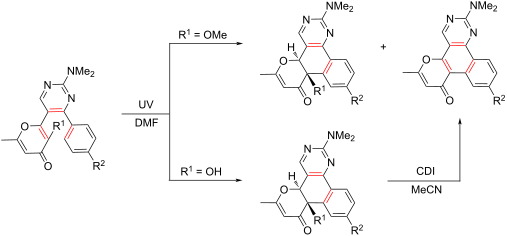
- more preferable process compared to aromatization. The above-mentioned photochemical reaction of pyrimidines 10 allows to synthesize polycyclic products 12 (Scheme 8, method A). In this case, the yields of compounds 12 did not exceed 41%, which is associated with low regioselectivity of the process and


Flow synthesis of oxadiazoles coupled with sequential in-line extraction and chromatography
Beilstein J. Org. Chem. 2022, 18, 232–239, doi:10.3762/bjoc.18.27
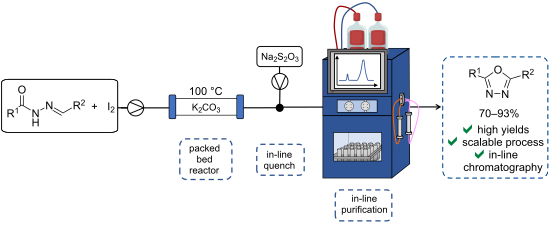
- ]pentane (BCP) building blocks [36], we investigated their use in the oxadiazole-forming reaction. The BCP acid chloride 5 was synthesised from [1.1.1]propellane (3) via the photochemical reaction with isopropyl 2-chloro-2-oxoacetate (Scheme 4). The corresponding BCP acyl hydrazone was then obtained


A photochemical C=C cleavage process: toward access to backbone N-formyl peptides
Beilstein J. Org. Chem. 2021, 17, 2932–2938, doi:10.3762/bjoc.17.202
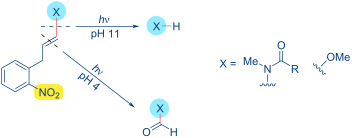
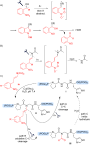
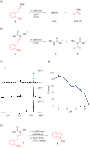
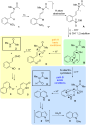
- studies into this reaction demonstrate two mechanistically distinct photocleavage pathways, with selectivity dependent on pH. In addition to an anticipated alkenyl sp2 C–X bond cleavage pathway, we identified a new photochemical reaction pathway, prevalent under neutral and acidic reaction conditions



1,2,3-Triazoles as leaving groups in SNAr–Arbuzov reactions: synthesis of C6-phosphonated purine derivatives
Beilstein J. Org. Chem. 2021, 17, 193–202, doi:10.3762/bjoc.17.19
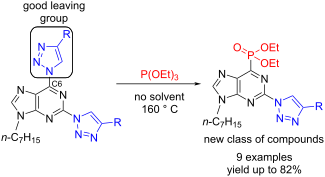
- -phosphonate synthesis. They can be obtained by 1) the reaction of a lithiated C8 position with diethyl chlorophosphate (C→D, Scheme 1) [14] and 2) an intermolecular [15] or intramolecular [16] photochemical reaction between 8-bromopurine derivatives and phosphite (E→F and G→H, respectively, Scheme 1). Further


Dawn of a new era in industrial photochemistry: the scale-up of micro- and mesostructured photoreactors
Beilstein J. Org. Chem. 2020, 16, 2484–2504, doi:10.3762/bjoc.16.202
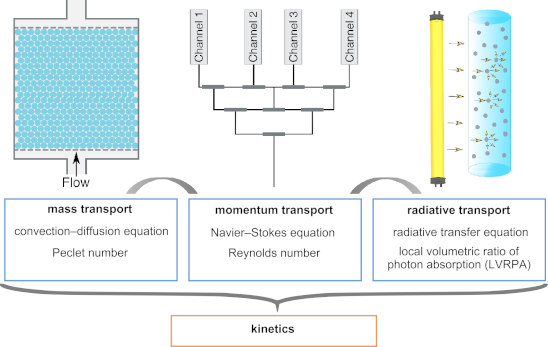
- selection of a proper light source needs to be considered. The reactor material should be inert to the reaction medium and transparent to the wavelength range that drives the photochemical reaction. Ideally, the light source should emit light only in the wavelength range of interest and should have a high
- flow, which is characterized by the regularly sized bubbles surrounded by liquid slugs. The light distribution is affected by the presence of bubbles in the Taylor flow. In a recent study, a photochemical reaction model was developed to optimize the performance of reactors that use a Taylor flow in a




Formation of an exceptionally stable ketene during phototransformations of bicyclo[2.2.2]oct-5-en-2-ones having mixed chromophores
Beilstein J. Org. Chem. 2020, 16, 2297–2303, doi:10.3762/bjoc.16.190

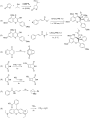
- given in Table 1. Synthesis of 7a,b. Photochemical reaction of 7a,b; a) solvent and conditions are given in Table 2. Conversion of ketene 10a to its methyl esters 11a,b. Chemical yields of the formation of photoproducts 4, 5 and 6. Result of photoreaction of 7a,b at various wavelengths in different


A method to determine the correct photocatalyst concentration for photooxidation reactions conducted in continuous flow reactors
Beilstein J. Org. Chem. 2020, 16, 871–879, doi:10.3762/bjoc.16.78
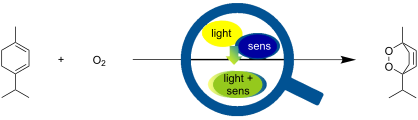
- photochemical reaction, the often overlooked key reagent is, in fact, the light, and through the subsequent interaction between light and the photocatalyst, the light is transformed. Following this logic led to the observation that one needs to more carefully consider not only the concentration of the catalyst


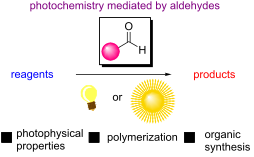
Aldehydes as powerful initiators for photochemical transformations
Beilstein J. Org. Chem. 2020, 16, 833–857, doi:10.3762/bjoc.16.76
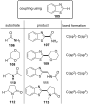
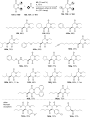
- transferred to the olefins in the Paterno–Büchi reaction, they performed a photochemical reaction between benzaldehyde (8) or benzophenone and the 3-methyl-2-pentenes 69 and 70, respectively. The isomerization of the starting olefins indicated a bimolecular energy transfer mechanism (Scheme 17). Benzophenone






Photophysics and photochemistry of NIR absorbers derived from cyanines: key to new technologies based on chemistry 4.0
Beilstein J. Org. Chem. 2020, 16, 415–444, doi:10.3762/bjoc.16.40
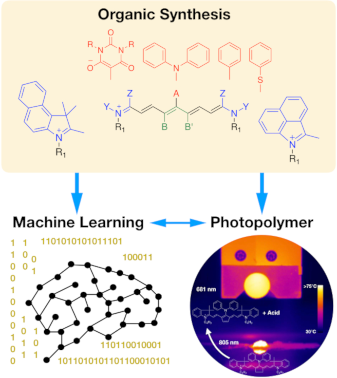
- excited state possesses several competitive reaction pathways for deactivation. This is a photochemical reaction such as photoinduced electron transfer serving as source to generate reactive intermediates such as initiating radicals or conjugate acid [5]. Photophysical events of S1 occurring after one


Recent developments in photoredox-catalyzed remote ortho and para C–H bond functionalizations
Beilstein J. Org. Chem. 2020, 16, 248–280, doi:10.3762/bjoc.16.26
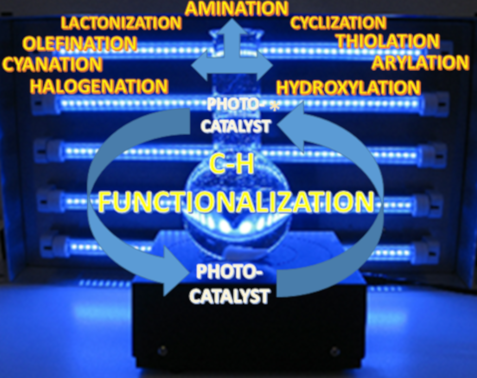
- into chemical energy via the generation of reactive intermediates through electron transfer reactions. A photochemical reaction is directed by the photophysical properties of an electronically excited molecule. The first vibrational equilibrated singlet excited state is S1, and it depends on both












Chemical tuning of photoswitchable azobenzenes: a photopharmacological case study using nicotinic transmission
Beilstein J. Org. Chem. 2019, 15, 2812–2821, doi:10.3762/bjoc.15.274
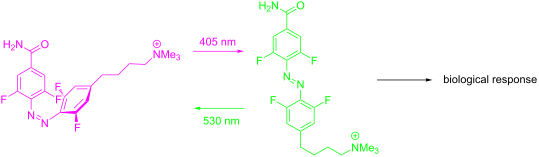
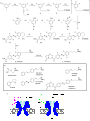
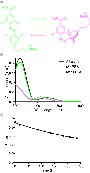
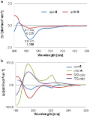
- a monofluoro-AB (1FAB) [18]. Spectra in HEPES, pH 7.4 at rt. Photochemistry of 4FABTA (2), and thermodynamic stability in physiological buffer. a) Trans–cis photochemical reaction of 2. b) Absorption spectra of all trans-2 (black), cis-2 PSS (from 532 nm laser), and trans-2 PSS (from 405 nm laser




α-Photooxygenation of chiral aldehydes with singlet oxygen
Beilstein J. Org. Chem. 2019, 15, 2076–2084, doi:10.3762/bjoc.15.205

- ]. For that reason, for our optimization studies we used enantioenriched aldehyde 1 (S/R 2:1 mixture of enantiomers) formed in the photochemical reaction of cinnamaldehyde (12) with benzyltrimethylsilane (BnTMS, 13) catalyzed by commercially available imidazolidinone cis-14 (Scheme 3) [16]. Aldehyde 1



Fluorinated azobenzenes as supramolecular halogen-bonding building blocks
Beilstein J. Org. Chem. 2019, 15, 2013–2019, doi:10.3762/bjoc.15.197
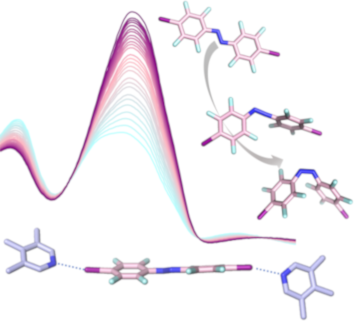
- Information File 1, Figures S1 and S12). By introduction of fluorine atoms ortho to the azo bond, the two n→π* of E- and Z-state become sufficiently separated to address them individually using visible light sources. Along with averting UV light for the photochemical reaction, high PSS ratios can be observed


Norbornadiene-functionalized triazatriangulenium and trioxatriangulenium platforms
Beilstein J. Org. Chem. 2019, 15, 1815–1821, doi:10.3762/bjoc.15.175
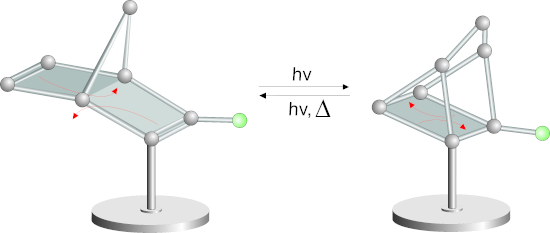
- s−1 under air and 0.95·10−3 s−1 under nitrogen. Hence, the thermal reaction (in contrast to the photochemical reaction) is not largely affected by oxygen. The half-life of the metastable quadricyclane is t1/2 = 655 h in benzene under air at 293 K (Table 1). Minor amounts of degradation products (<1





