Search results
Search for "reagent" in Full Text gives 1318 result(s) in Beilstein Journal of Organic Chemistry. Showing first 200.
Electrochemical reduction of unsaturated carbon–carbon bonds via 3d transition-metal catalysis
Beilstein J. Org. Chem. 2026, 22, 955–981, doi:10.3762/bjoc.22.75
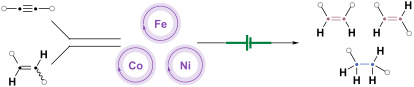
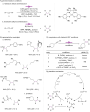
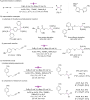
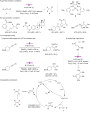
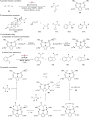
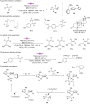
- reduction while circumventing the need for molecular hydrogen or stoichiometric reducing agents. Consequently, the merger of 3d transition-metal catalysis with electroorganic synthesis represents a conceptual shift beyond traditional reagent-driven approaches, enabling precise control over redox events








Palladium-catalyzed benzocyclization reactions of quinoline-2-carboxamides via sequential C–H/N–H functionalization
Beilstein J. Org. Chem. 2026, 22, 905–914, doi:10.3762/bjoc.22.71
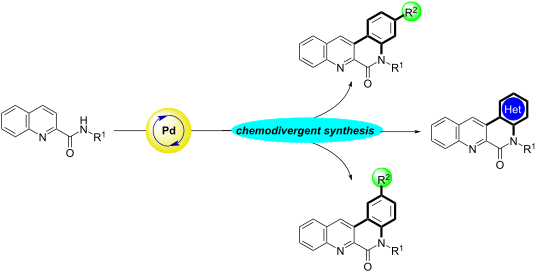
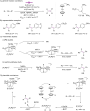
- reactions of aryl carboxamides offer a method for synthesizing chemodivergent products from a single substrate. Importantly, these reactions are controlled by the different reactivities of the halogen atoms in the reagent structures. Several carbocycle C–H/N–H activated benzocyclizations have already been
- , the relative amounts of reagents were optimized for this annulation reaction (Table 1, entries 17–19). Ultimately, it was determined that the optimal reagent quantities were 20 mol % Pd(OAc)2, 80 mol % P(4-MeOC6H4)3, and 2.0 equiv of 2a, which afforded the product 3aa in 81% yield (Table 1, entry 19




Site-specific labelling of native peptides and proteins: chemical and enzymatic strategies
Beilstein J. Org. Chem. 2026, 22, 857–881, doi:10.3762/bjoc.22.67
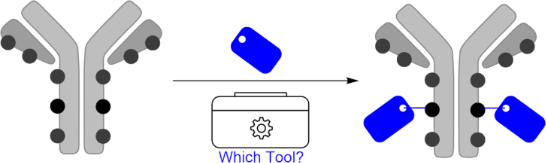
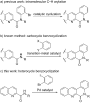
- reagent, 1) was used to label the α-amino group of insulin during sequence determination (Scheme 1a). Its selectivity over lysine’s ε-amine originates from the low pKa of the N-terminus, influenced by the adjacent carbonyl group and systematically characterized at ≈6–7 (Scheme 1b) [7]. Building on this
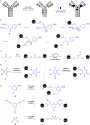
- , with many already commercially available. Their small size makes them atom-economical but achieving site-specificity remains challenging since identical residues are often distributed across protein surfaces. The first example was Sanger’s reagent (1-fluoro-2,4-dinitrobenzene, 1) mentioned above [6
- sortase. Optimisations using depsipeptides or coupling strategies have further improved conversion efficiency and reduced reagent consumption [144]. Due to its ease of preparation, large libraries of sortase variants have been generated and screened to expand substrate scope [143]. In one example, sortase








Knoevenagel condensation of 4,5- and 1,8-diazafluorenes
Beilstein J. Org. Chem. 2026, 22, 803–812, doi:10.3762/bjoc.22.62
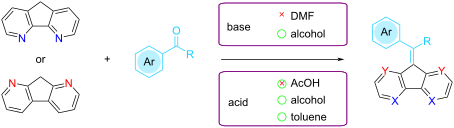
- the smelly solvent pyridine, moisture-sensitive environmentally aggressive reagent (TiCl4) and subsequent complicated treatment of the resulting reaction mixture making it inapplicable for large-scale high-efficiency production of functional materials. Therefore, analyzing the literature examples we




Synthetic study of vic-bromination of diarylacetylenes, easy purification and separation
Beilstein J. Org. Chem. 2026, 22, 795–802, doi:10.3762/bjoc.22.61
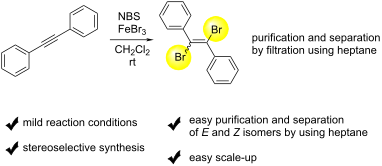
- (VII)) to give (E)-1,2-dibromo-1,2-diphenylethylene, selectively (Scheme 1a) [3]. However, MTO is an expensive reagent and a more versatile synthetic method is highly needed. As a simple method, the reaction of diphenylacetylene and Br2 in CH2Cl2 was reported by Glorius in 2007 [4], but the selectivity
- -diphenylethylenes (Scheme 1c) [5]. Previous studies reported the selective synthesis of (E)-1,2-dibromo-1,2-diphenylethylene and related compounds, but Br2 or expensive reagent, which was difficult to handle, was often used [6][7][8][9][10][11][12][13][14][15]. Based on these research backgrounds, we have also been

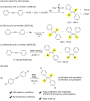


Rongalite addition to dienones: diastereoselectivity in cyclic sulfone synthesis; stereochemical rationalization and prospects as a general conjugate nucleophile
Beilstein J. Org. Chem. 2026, 22, 742–752, doi:10.3762/bjoc.22.56

- used as a bleaching agent in the dyeing industry for more than a century [5][6]. Over the last 10 years particularly, it has begun to join the toolbox of reagents in organic synthesis, and shows diverse reactivity. It has been employed in reductions, radical processes and as a reagent for C1 transfer
- [7][8][9][10][11][12][13][14]. Importantly for our work, it can also act as an equivalent of the unstable hyposulfite (SO22−) ion (Figure 1) [15][16]. The reagent was first used for the preparation of symmetrical sulfones as early as 1971 [17], but interest in the reagent has increased dramatically
- . The major product was isolated and assigned as 5 (from axial attack of a small hydride reagent) [24]. From analysis of the NMR spectra of 5, it was clear that the molecule retained symmetry following reduction, reflected in the reduced number of signals in both 1H and 13C spectra compared to alcohol 4


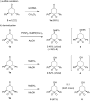


Synthesis of heterocycles based on azomethine ylides from α-amino acids (or amines) and carbonyl compounds
Beilstein J. Org. Chem. 2026, 22, 705–741, doi:10.3762/bjoc.22.55
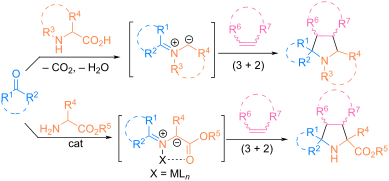
- )benzylamine (92) as an azomethine ylide precursor in (3 + 2)-dipolar cycloaddition reactions with electron-deficient exo-cyclic 93 and endo-cyclic alkenes 94 (Scheme 36) [77][78][79]. To generate the azomethine ylide from reagent 92, TFA in methylene chloride at room temperature or LiF in acetonitrile with


Photoorganocatalytic trifluoromethylation of (het)arenes in green conditions
Beilstein J. Org. Chem. 2026, 22, 662–671, doi:10.3762/bjoc.22.50
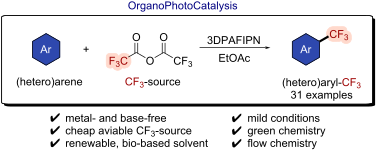
- transformations were performed in acetonitrile, which reduces their ecological compatibility, particularly for large-scale applications. Tlili and co-workers have described the use of an organic photocatalyst for the CF3-functionalization of styrenes with the Langlois reagent (sodium trifluoromethanesulfinate


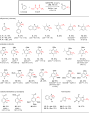


Melifoliox B, a novel phloroglucin derivative isolated from Melicope barbigera (Rutaceae) and synthesis of new oxidation products from melifoliones A and B
Beilstein J. Org. Chem. 2026, 22, 535–546, doi:10.3762/bjoc.22.39
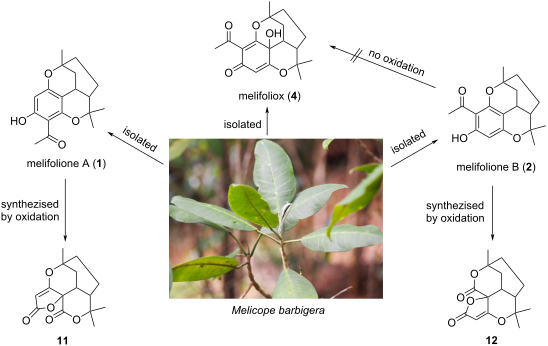
- , reaction with alkaline Lugol’s solution yielded the mono-iodized isomers of both melifolione A (8) and melifolione B (9), identified by their NMR spectra (Figure 2). Reaction with iodosobenzene diacetate – a typical reagent to form para-quinols from phenols [8] – yielded small amounts of a substance, that


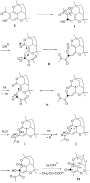

Modern synthetic pathways towards eribulin and its subunits
Beilstein J. Org. Chem. 2026, 22, 495–526, doi:10.3762/bjoc.22.37
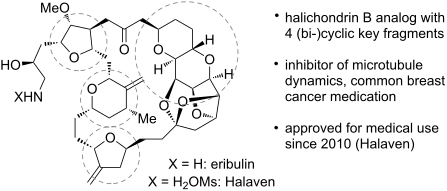
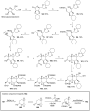
- allylation, 280 was isolated as a single diastereomer upon recrystallization. The dihydroxylation, oxidative cleavage and reduction with NaBH4 afforded diol 281, whose primary alcohol unit was protected enabling the selective oxidation towards ketone 283. Olefination with 293 (Nysted reagent) and
- conditions, which led to a cyclization, and benzylated with BnBr towards 321. Stereoselective Michael addition of a Gilman reagent yielded 322. Reduction of the lactone unit yielded a lactol, which is in equilibrium with acyclic aldehyde and alcohol. The aldehyde was trapped via HWE reaction and the obtained
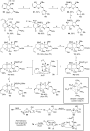
- . AcOH, H2O, rt; ii. NBS, NaHCO3, NaOAc, THF, H2O, 0 °C; iii. acetic anhydride, pyridine, DCM, 0 °C; (e) i. allyl-TMS, BF3·OEt2, MeCN, −10 °C; ii. DDQ, DCM, H2O; (f) i. DMP, NaHCO3, DCM, rt; ii. NaBH4, DCM, MeOH, −78 °C; iii. Stryker’s reagent, toluene, rt; iv. (±)-CSA, MeOH, 60 °C; (g) acetic anhydride








Synthesis and uranyl(VI) extraction performance of a calix[4]pyrrole–tetrahydroxamic acid receptor
Beilstein J. Org. Chem. 2026, 22, 486–494, doi:10.3762/bjoc.22.36
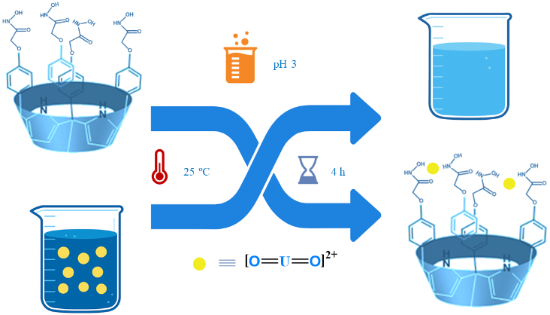
- aldehydes [45], alcohols [46], and amides [47] have also been reported. However, the literature states that there is no particular reagent or reaction condition that can serve as a general rule for the synthesis of hydroxamic acids [48]. In this study, the direct reaction of hydroxylamine with the PCP ester


Cone p-aminocalix[4]arenes enriched with ‘clickable’ alkyne or azide functionalities
Beilstein J. Org. Chem. 2026, 22, 399–415, doi:10.3762/bjoc.22.28
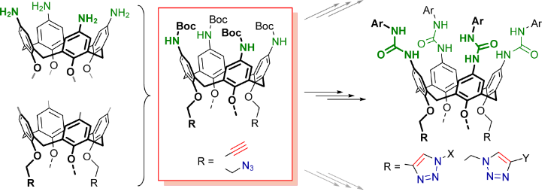
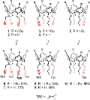
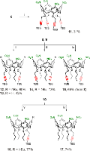
- (to ≈1 M), reducing the content of acetic acid in the mixture (to 1 mol per mol of HNO3) and extending the room-temperature reaction time to 72 h. Yet, under these conditions, the desired calix[4]arene 11 was obtained in only 31% yield (Scheme 2), and further variations in reagent excess/concentration




Recent advances in the cleavage of non-activated amides
Beilstein J. Org. Chem. 2026, 22, 352–369, doi:10.3762/bjoc.22.23
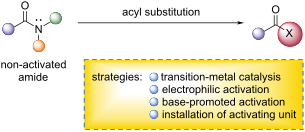
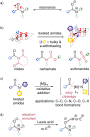
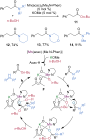
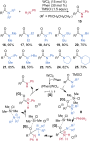
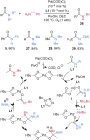
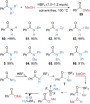
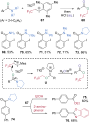
- electrophilic benzylating reagent (Scheme 7) [55]. DPT-BM functions as an O-benzylating reagent that generates benzyl cation equivalents upon dissolution in the solvent under non-acidic conditions. Thus, the reaction of an amide with DPT-BM is proposed to form a benzyl imidate salt J, which subsequently
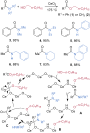
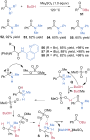
- (SO2F2) was demonstrated to be a powerful electrophilic reagent for amide-bond cleavage by Qin et al. (Scheme 8) [56]. Under an atmosphere of SO2F2, esterification of tertiary amides 28, 35–37 smoothly afforded esters 34 in high yields, although the efficiency was reduced when a bulky substituent was
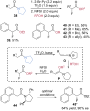
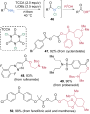
- 2.2 equivalents of 2-bromopyridine as a base, pyrrolidine-derived amides 38 were effectively activated. Subsequent addition of NFSI as the electrophilic fluorinating reagent, along with alcohols as the nucleophile, afforded the corresponding esters 39–43 in moderate yields. Mechanistically, the








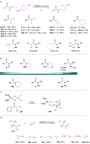


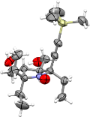
Synthesis of tricyclic fused pyrrolidine nitroxides from 2-alkynylpyrrolidine-1-oxyls
Beilstein J. Org. Chem. 2026, 22, 344–351, doi:10.3762/bjoc.22.22

- of 9a. The yield of 9b in this reaction depends on excess of the reagent. Heating of 9a with five equivalents of MsCl and excess of DIPEA afforded 9b in 65% yield. When a 1.5-fold excess of mesyl chloride per hydroxy group was used, another nitroxide 9c was isolated in 26% yield along with 9b (43




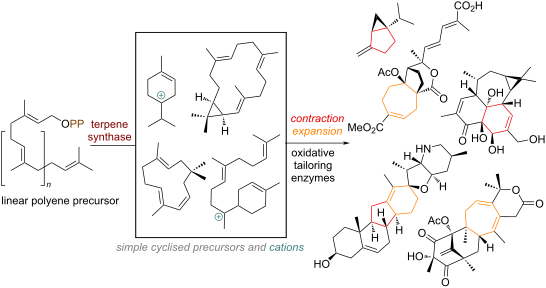
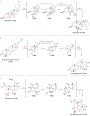
Ring contraction and ring expansion reactions in terpenoid biosynthesis and their application to total synthesis
Beilstein J. Org. Chem. 2026, 22, 289–343, doi:10.3762/bjoc.22.21


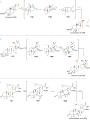


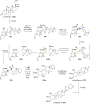


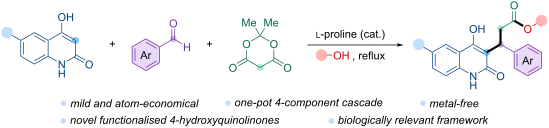
A mild and atom-efficient four-component cascade strategy for the construction of biologically relevant 4-hydroxyquinolin-2(1H)-one derivatives
Beilstein J. Org. Chem. 2026, 22, 244–256, doi:10.3762/bjoc.22.18
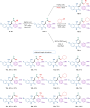
- esterification of acids 11a–c afforded the isopropyl esters 12a–c in 71–98% yields. Similar attempts were made using cyclohexyl alcohol both as reagent and solvent in Fischer–Speier esterification; however, difficulties in purifying the reaction mixtures due to the large excess of alcohol prevented isolation of


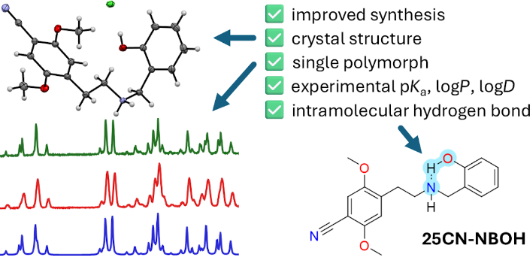
Improved synthesis and physicochemical characterization of the selective serotonin 2A receptor agonist 25CN-NBOH
Beilstein J. Org. Chem. 2026, 22, 175–184, doi:10.3762/bjoc.22.11
- ). Acetonitrile (Ph. Eur.), absolute ethanol (Reag. Ph. Eur.), ethyl acetate (HPLC grade), dichloromethane (HPLC grade), ammonia (25%, analytical reagent grade), and diethyl ether (reagent grade) were purchased from VWR (Radnor, PA, USA). Sodium hydrogencitrate sesquihydrate (99%), salicylaldehyde (≥98


A new synthesis of Tyrian purple (6,6’-dibromoindigo) and its corresponding sulfonate salts
Beilstein J. Org. Chem. 2026, 22, 167–174, doi:10.3762/bjoc.22.10
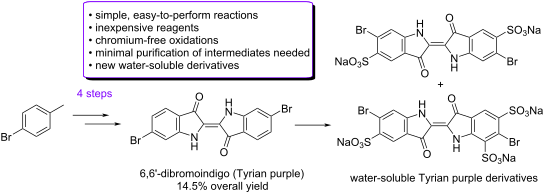
- -bromo-2-nitrobenzaldehyde (4), which can then be directly converted into 1. However, oxidation of the tolyl methyl group into an aldehyde has proved an ongoing challenge. Several syntheses have used a chromium(VI) oxidation to yield the desired product, but the toxic nature of this reagent and the


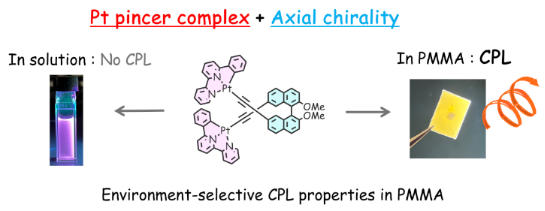
Design and synthesis of an axially chiral platinum(II) complex and its CPL properties in PMMA matrix
Beilstein J. Org. Chem. 2026, 22, 143–150, doi:10.3762/bjoc.22.7
- optoelectronic applications. Experimental General information All reagents and solvents were of commercial reagent grade and used without further purification. Dichloromethane for spectroscopy was purchased from FUJIFILM Wako Pure Chemical Corporation. All compounds were identified by 1H , 13C NMR and ESI-MS. 1H


Highly electrophilic, gem- and spiro-activated trichloromethylnitrocyclopropanes: synthesis and structure
Beilstein J. Org. Chem. 2026, 22, 123–130, doi:10.3762/bjoc.22.5
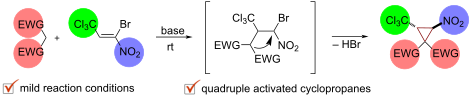
- by several approaches: forming of the CF3-group in a nitrocyclopropane (reaction of 2-nitrocyclopropanecarboxylic acid with sulfur tetrafluoride [31][32]), cyclopropane formation from a nitroethene substrate and a CF3-containing reagent (Corey–Chaykovsky reaction [33]), as well as reactions involving


Total synthesis of natural products based on hydrogenation of aromatic rings
Beilstein J. Org. Chem. 2026, 22, 88–122, doi:10.3762/bjoc.22.4
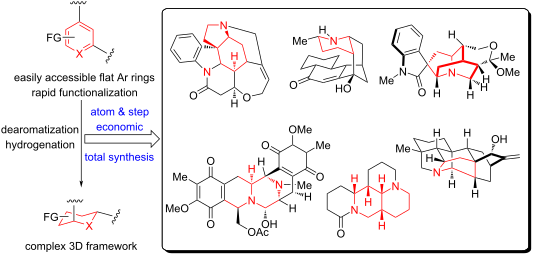
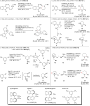
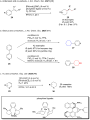
- -methylaspidospermidine (Scheme 27) [95][96]. In a single-step reaction, pyridine 182 was activated with 2-chloroethyl triflate and the resulting pyridinium salt was dearomatized with a Grignard reagent to produce ketone 184. In this step, the Grignard nucleophile added regio- and diastereoselectively at the 2-position











Advances in Zr-mediated radical transformations and applications to total synthesis
Beilstein J. Org. Chem. 2026, 22, 71–87, doi:10.3762/bjoc.22.3
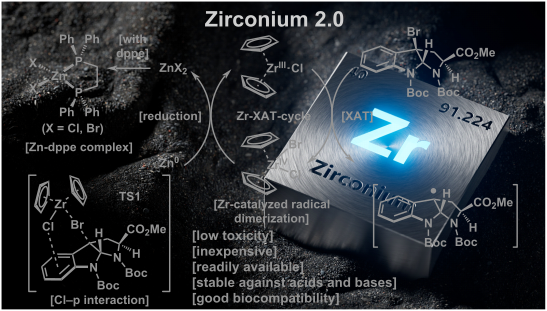
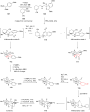
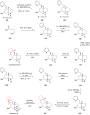
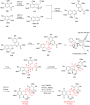
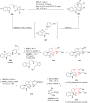
- . Zirconium was first discovered by Klaproth in 1789 and subsequently isolated by Berzelius in 1824. In 1952, Wilkinson and Birmingham synthesized zirconium-containing organometallic compounds, pioneering research in organozirconium chemistry [2]. In 1974, Schwartz et al. reported the Schwartz reagent, which
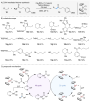
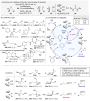
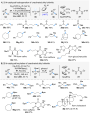
- Schwartz’s reagent (Scheme 1) [7][8]. When compound 2, bearing an alkyl halide and an olefin moiety, was treated with triethylborane and Schwartz’s reagent in tetrahydrofuran, a halogen atom transfer (XAT) occurred at the alkyl halide, generating alkyl radical 3. This radical subsequently underwent
- , Schwartz’s reagent reacts with triethylborane to generate a low-valent zirconium complex 5. This complex abstracts the halogen atom from the alkyl halide, forming alkyl radical 8. The radical then cyclizes onto the olefin, and the resulting radical intermediate undergoes hydrogen atom transfer (HAT) from








Reactivity umpolung of the cycloheptatriene core in hexa(methoxycarbonyl)cycloheptatriene
Beilstein J. Org. Chem. 2026, 22, 64–70, doi:10.3762/bjoc.22.2
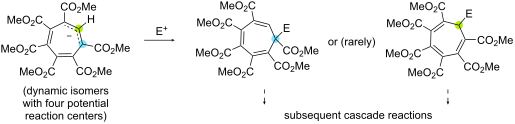
- direct i-substitution. Conclusion Umpolung reactivity of electron-deficient hexa(methoxycarbonyl)cycloheptatriene through its antiaromatic anion allows to introduce a connection between the cycloheptatriene core and an electrophilic reagent. The cycloheptatrienyl anion mainly exists as a conformer with
- further transformation in the case of allylation. Reactions with diazonium salts mainly involve a vicinal addition of the reagent to the anion and subsequent 1,5-sigmatropic shift, 6π-electrocyclization, and azocyclopropane rearrangement into dihydroindazole derivatives. Analysis of the reaction


Synthesis and applications of alkenyl chlorides (vinyl chlorides): a review
Beilstein J. Org. Chem. 2026, 22, 1–63, doi:10.3762/bjoc.22.1
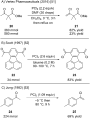
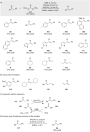
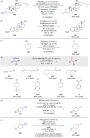
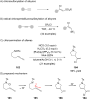
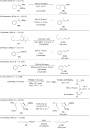
- corresponding alkyne 50 by elimination with LDA were achieved in superb yields (Scheme 10). Gross and Gloede introduced catechol–PCl3 as an effective reagent for the conversion of ketones to the corresponding alkenyl chlorides [62] (Scheme 11A). Hudrlik later demonstrated that, in the case of 2
- -methylcyclohexanone (54), this reagent markedly alters the product distribution compared to PCl5 [63] (Scheme 11B). However, since the reaction conditions differ significantly, it remains unclear whether the product distribution is driven by the reagent itself or by the reaction conditions employed. In 2007, Prati
- -workers reported the serendipitous discovery that N-acyl-2,3-dihydro-4-pyridinones react with the Vilsmeier reagent to afford the corresponding alkenyl chlorides (Scheme 14) [67]. Notably, dihydropyridones failed to react with POCl₃ in the absence of DMF. In 2003, Wähälä reported a closely related























Sustainable electrochemical synthesis of aliphatic nitro-NNO-azoxy compounds employing ammonium dinitramide and their in vitro evaluation as potential nitric oxide donors and fungicides
Beilstein J. Org. Chem. 2025, 21, 2739–2754, doi:10.3762/bjoc.21.211
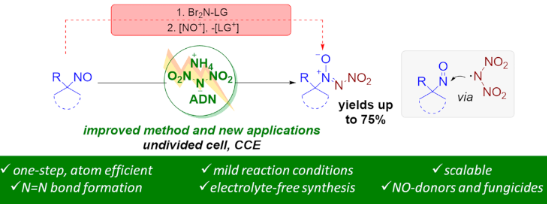
- overcome existing constraints in functional group compatibility, efficiency, and reagent scope. In this regard, the direct formation of nitrogen-nitrogen or nitrogen-oxygen bonds presents a significant challenge due to the variety of possible side processes and the low thermodynamic driving force for N–N
- group developed a one-step electrochemical approach to the synthesis of nitro-NNO-azoxy arenes employing ammonium dinitramide (ADN) [87]. The achieved use of ADN, known as prospective chlorine-free green oxidant for aerospace propulsion applications [89][90][91], as both a reagent and an electrolyte is
- compounds with ammonium dinitramide, leading to efficient formation of the nitro-NNO-azoxy group. The developed strategy involves performing the electrosynthesis in an undivided cell under high current density with ADN employed as both a reagent and an electrolyte. The synthesized aliphatic nitro-NNO-azoxy