Search results
Search for "stereocontrol" in Full Text gives 148 result(s) in Beilstein Journal of Organic Chemistry.
Z-Selective semihydrogenation of alkynes via Ni/Lewis acid synergistic catalyzed system using DMF as hydrogen source and solvent
Beilstein J. Org. Chem. 2026, 22, 1004–1012, doi:10.3762/bjoc.22.79
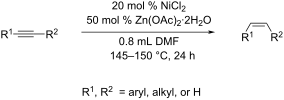
- frequently exhibit modest stereocontrol. While cobalt-based systems have demonstrated some ability to tune Z/E selectivity, they often rely on ammonia borane as the hydrogen donor, which presents certain atom-economic disadvantages [5][28][29][30][31][32][33]. Clearly, new strategies are needed to advance

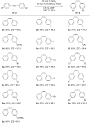


Electrochemical reduction of unsaturated carbon–carbon bonds via 3d transition-metal catalysis
Beilstein J. Org. Chem. 2026, 22, 955–981, doi:10.3762/bjoc.22.75
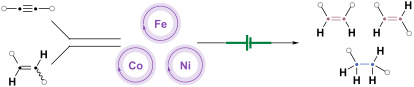
- stereoselective hydrogenation of alkynes under electrochemical and transition-metal-catalyzed conditions. The alkyne semihydrogenation generally benefits from the stronger coordination ability of the C–C triple bonds and the greater accessibility of metal-bound intermediates, thereby often enabling stereocontrol


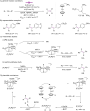

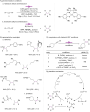

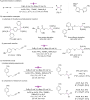
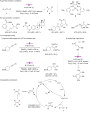


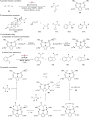


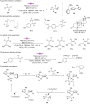
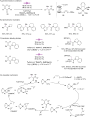
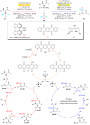
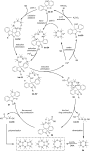
Recent advances in copper-catalyzed direct hydroamination of alkenes with (hetero)aromatic amines
Beilstein J. Org. Chem. 2026, 22, 925–947, doi:10.3762/bjoc.22.73
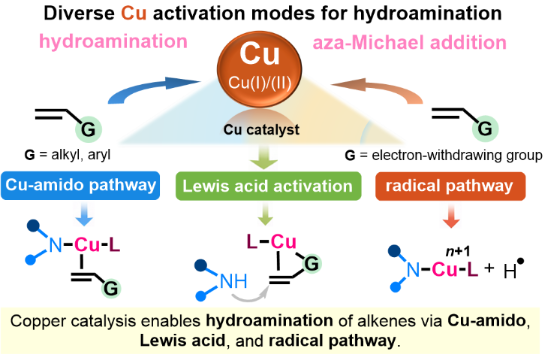
- at 30 °C in CH3CN with DBU as a base. Under these conditions, various pyrazoles underwent hydroamination to furnish the corresponding N-cyclopropylpyrazoles in moderate-to-excellent yields with excellent stereocontrol, typically yielding >20:1 diastereomeric ratios and up to 98% ee. The reaction
- higher levels of stereocontrol, remains challenging. Continued catalyst development and mechanistic insight will further advance the synthetic utility of copper-catalyzed direct hydroamination reactions. Mechanistic pathways in copper-catalyzed hydroamination. Synthesis of copper–amido complexes. Cu


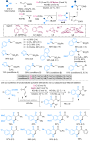


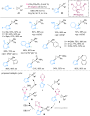


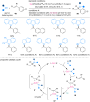

Synthesis of heterocycles based on azomethine ylides from α-amino acids (or amines) and carbonyl compounds
Beilstein J. Org. Chem. 2026, 22, 705–741, doi:10.3762/bjoc.22.55
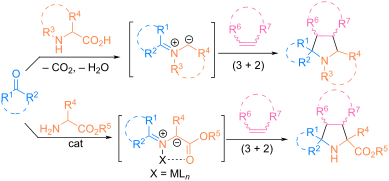
- derivatives with multiple chiral centers under high regio- and stereocontrol. Currently, strategies using azomethine ylides based on imino esters or α-amino acids with a variety of cyclic and acyclic carbonyl compounds dominate. Enantioselective (3 + 2) cycloaddition reactions of azomethine ylides obtained
- with a dipolarophile, such as an alkene or alkyne, to form a five-membered heterocycle in one step. Currently, this type of reaction allows for the efficient preparation of bi- and polycyclic fused or spiro-linked structures with multiple chiral centers and high regio- and stereocontrol [1][2][3][4


Recent advances in the stereoselective synthesis of distal biaxially chiral molecules
Beilstein J. Org. Chem. 2026, 22, 461–479, doi:10.3762/bjoc.22.34
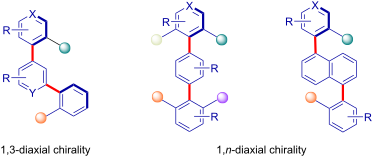
- -to-axial strategy not only expands the toolbox for constructing remote biaxial and multiaxial chiral systems but also offers enhanced stereocontrol, especially for sterically congested or electronically challenging substrates. As such, it serves as a complementary and highly effective route for the


Screwing the helical chirality through terminal peri-functionalization
Beilstein J. Org. Chem. 2026, 22, 205–212, doi:10.3762/bjoc.22.14
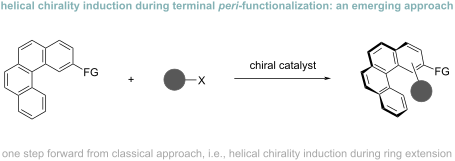
- a functional group installed in the terminal core of helicened with high level of stereocontrol, rather than merely increasing the number of fused rings in a helical system. The direct introduction of suitable functional groups at strategic positions can expand the structure diversity and enhance


Circumventing Mukaiyama oxidation: selective S–O bond formation via sulfenamide–alcohol coupling
Beilstein J. Org. Chem. 2026, 22, 158–166, doi:10.3762/bjoc.22.9
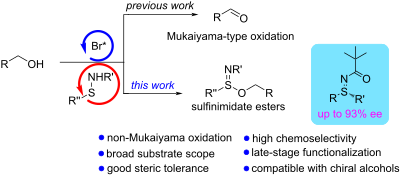
- substitution to give enantioenriched sulfilimines with up to 93% ee, underscoring the potential of this platform for the streamlined construction of chiral sulfur(IV)–nitrogen frameworks. Further optimization to enhance stereocontrol is currently underway. Representative molecules containing a sulfilimine


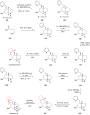
Total synthesis of natural products based on hydrogenation of aromatic rings
Beilstein J. Org. Chem. 2026, 22, 88–122, doi:10.3762/bjoc.22.4
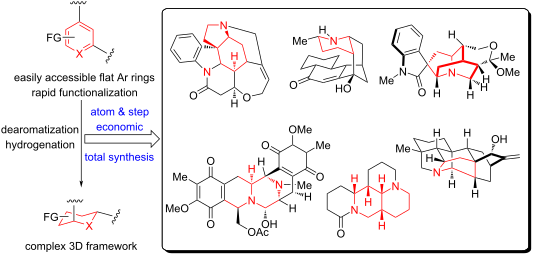
- rings becomes achievable, enabling access to reduced products with well-defined configurations [38]. Although the repertoire of ligands capable of exerting precise stereocontrol remains limited, each provides distinct advantages that suit different metals and reaction conditions. From the perspective of
- systems. In addition, converting a planar sp2-hybridized-atoms-enriched framework into three-dimensional sp3-hybridized-atoms-enriched architectures inherently generates new stereocenters, making stereocontrol essential in asymmetric variants. As highlighted in the methods below, recent advances in
- the reaction include high functional group tolerance and excellent stereocontrol. In the same year, Zhou and co-workers reported a rhodium/bisphosphine-catalyzed asymmetric hydrogenation reaction of all-carbon aromatic rings 69 (Scheme 8) [64]. Through desymmetrization or kinetic resolution, a series











Recent advancements in the synthesis of Veratrum alkaloids
Beilstein J. Org. Chem. 2025, 21, 2657–2693, doi:10.3762/bjoc.21.206
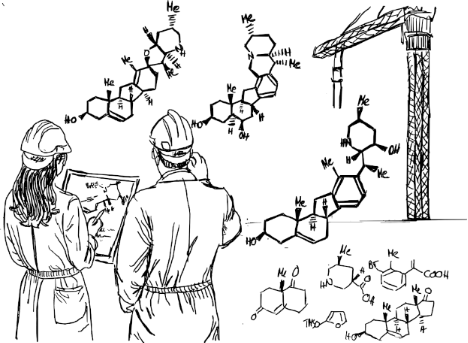
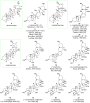
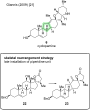
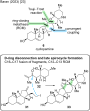
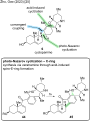
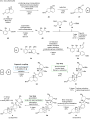
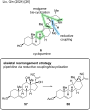
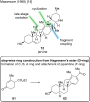
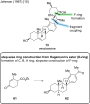
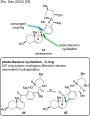
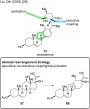
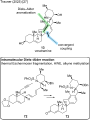
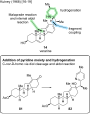
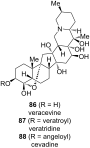
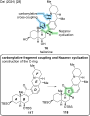
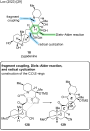
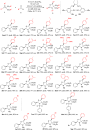
- cores through modular and strategic bond connections, but they also give a reflection on the advancement of modern synthetic methods and retrosynthetic logic. This review will cover recent syntheses, highlighting the convergence of modern strategic disconnections, stereocontrol, and late-stage
















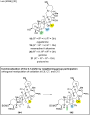
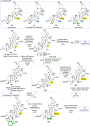
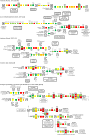
Recent advances in Norrish–Yang cyclization and dicarbonyl photoredox reactions for natural product synthesis
Beilstein J. Org. Chem. 2025, 21, 2315–2333, doi:10.3762/bjoc.21.177
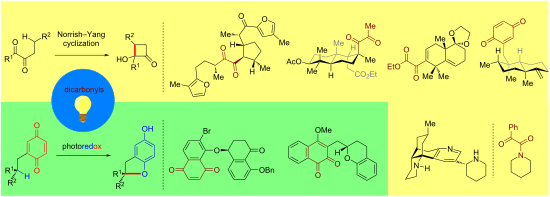
- stereochemical inversion of the Norrish–Yang reaction. This achieved efficient construction of benzofuranone-based 4,5-spirocycles with contiguous all-carbon quaternary centers, offering a conformational regulation protocol for stereocontrol in complex polycyclic systems. 1.3 Avarane-type meroterpenoids In 2024
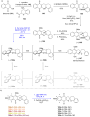
- epimers. This strategy merges photochemical selectivity with cross-coupling efficiency, avoiding reactive metal incompatibility and enabling precise stereocontrol for chiral nitrogen heterocycles. 3 Antibiotics 3.1 Synthetic study toward γ-rubromycin Since 2017, Suzuki's group has developed a







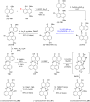
Enantioselective radical chemistry: a bright future ahead
Beilstein J. Org. Chem. 2025, 21, 2283–2296, doi:10.3762/bjoc.21.174
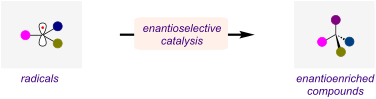
- lactone 26. The Zhang group has extended the chiral metalloradical catalysis to cyclopropanation by the intermolecular reaction between styrenes and ketodiazoacetates [59]. Cyclopropanes were obtained in good yields with high relative and absolute stereocontrol. Properties, such as relatively high earth


Bioinspired total syntheses of natural products: a personal adventure
Beilstein J. Org. Chem. 2025, 21, 2048–2061, doi:10.3762/bjoc.21.160
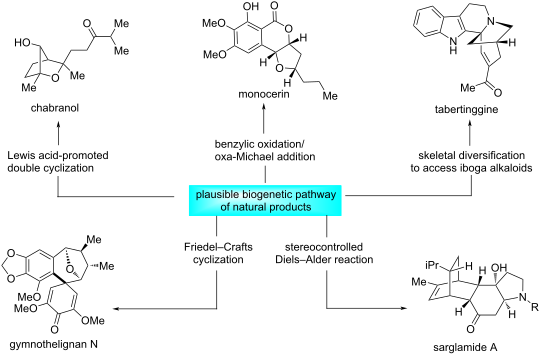
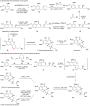
- divergent coupling approaches, and the stereocontrol with Evans oxazolidinone was always reliable to obtain an sole diastereomer (Scheme 6d). Bioinspired concise and scalable total synthesis sarglamides In 2023, Yue and co-workers investigated the ingredients of the Chinese folk medicine Sarcandra glabra



Measuring the stereogenic remoteness in non-central chirality: a stereocontrol connectivity index for asymmetric reactions
Beilstein J. Org. Chem. 2025, 21, 1995–2006, doi:10.3762/bjoc.21.155
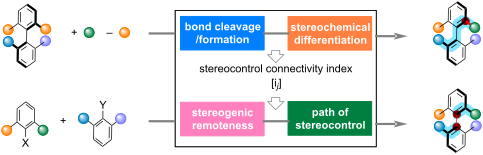
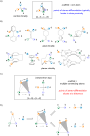
- Ivan Keng Wee On Yu Kun Choo Sambhav Baid Ye Zhu Department of Chemistry, Faculty of Science, National University of Singapore, 3 Science Drive 2, Singapore 117543 10.3762/bjoc.21.155 Abstract Despite the rapid development of asymmetric synthesis, judging the remoteness of stereocontrol has
- remained an intuitive and empirical practice, particularly for reactions that create non-central chirality. We put forward a stereocontrol connectivity index to parameterize asymmetric reactions according to the bond connectivity relationships between the prochiral stereogenic elements, the reactive sites
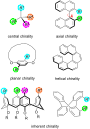
- , planar chirality, and “inherent chirality” are illustrated using the stereocontrol connectivity index produced following a unified 3-step process. Application of such stereochemical classification could facilitate the development of new synthetic methodologies and catalyst systems to construct diverse




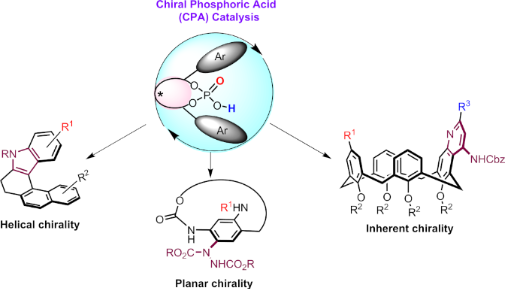
Chiral phosphoric acid-catalyzed asymmetric synthesis of helically chiral, planarly chiral and inherently chiral molecules
Beilstein J. Org. Chem. 2025, 21, 1864–1889, doi:10.3762/bjoc.21.145
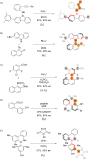
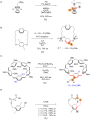
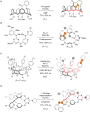
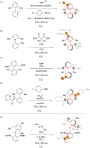
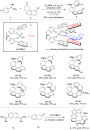
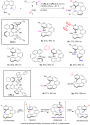
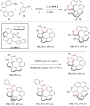
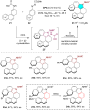
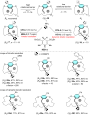
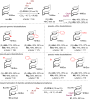
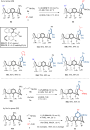
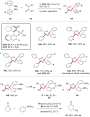
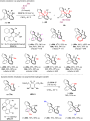
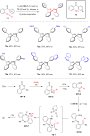
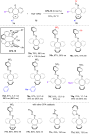
- interactions with the enehydrazine intermediate, which is essential for achieving high levels of stereocontrol. Using the optimal catalyst CPA 1, a series of aza[6]helicenes 3a,b was synthesized with excellent enantioselectivity and high yield. However, this method demonstrated notably reduced efficiency and










Synthesis of chiral cyclohexane-linked bisimidazolines
Beilstein J. Org. Chem. 2025, 21, 1786–1790, doi:10.3762/bjoc.21.140
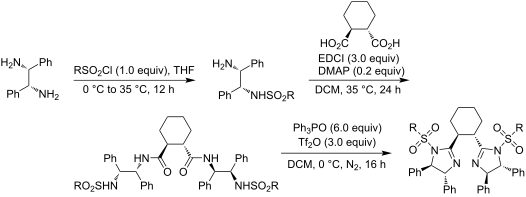
- (1S,2S)-cyclohexane-1,2-dicarboxylic acid (3) and (1R,2R)-1,2-diphenylethane-1,2-diamine (1), hoping that the phenyl groups in the designed bisimidazoline ligands stemming from the vicinal diamine play an important role in the stereocontrol of catalytic asymmetric organic reactions [23][24][25][26
- bisimidazoline ligands 5 on the stereocontrol in catalytic asymmetric reactions (Table 1). To improve the synthetic efficiency, a different strategy for the synthesis of a nonsulfonylated cyclohexane-linked bisimidazoline with subsequent sulfonylation with different sulfonyl chlorides was also considered and


Copper catalysis: a constantly evolving field
Beilstein J. Org. Chem. 2025, 21, 1477–1479, doi:10.3762/bjoc.21.109

- hydride catalysis, and enantiotopic group-selective allylations of 1,1-diborylalkanes as core strategies. At the same time, the authors provide detailed mechanistic insights into the stereocontrol and provide a perspective on currently unresolved challenges in the field. Concerning Full Research Papers
Oxetanes: formation, reactivity and total syntheses of natural products
Beilstein J. Org. Chem. 2025, 21, 1324–1373, doi:10.3762/bjoc.21.101
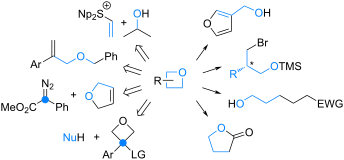
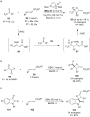
- towards tetrasubstituted oxetanes 53 via hydrosilylation of homopropargylic alcohols 51 followed by iodocyclisation (Scheme 13) [47], generating the 4-membered rings with excellent stereocontrol and in high yields. Optimisation studies of the second step revealed that the cyclisation must be carried out










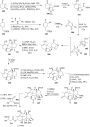
Synthetic approach to borrelidin fragments: focus on key intermediates
Beilstein J. Org. Chem. 2025, 21, 1135–1160, doi:10.3762/bjoc.21.91
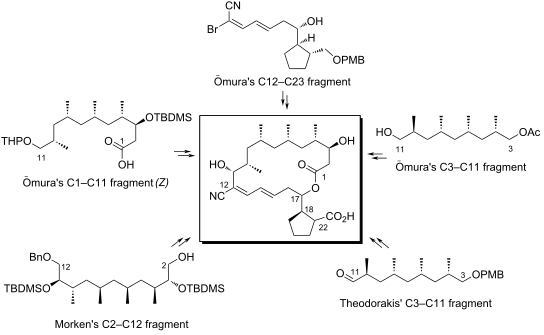
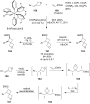
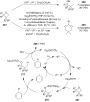
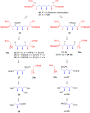
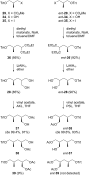
- and deprotection steps, functional group transformations, stereocontrolled allylation, cross-metathesis, and Horner–Wadsworth–Emmons (HWE) olefination. This method highlights the power of catalytic stereocontrol, achieving the complex architecture of borrelidin fragments with efficiency and precision
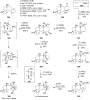
- 70% overall yield across three steps, with a dr exceeding 98:2. The reaction continued with the reduction of thioester 98 to aldehyde 99, followed by HWE olefination with (EtO)2P(O)CH2COMe, yielding compound 100 in 92% yield (Scheme 16). The stereocontrol achieved by the catalysts was again








Salen–scandium(III) complex-catalyzed asymmetric (3 + 2) annulation of aziridines and aldehydes
Beilstein J. Org. Chem. 2025, 21, 1087–1094, doi:10.3762/bjoc.21.86
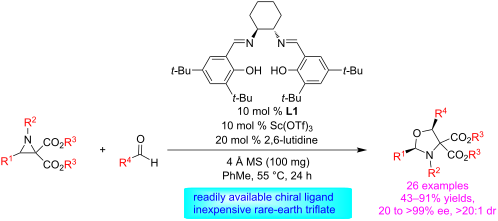
- functionalized oxazolidine derivatives in moderate to good yields and good to excellent enantioselectivities and high diastereoselectivities. The stereocontrol was rationalized in the proposed reaction mechanism. Experimental Unless otherwise noted, all materials were purchased from commercial suppliers. Toluene



Recent total synthesis of natural products leveraging a strategy of enamide cyclization
Beilstein J. Org. Chem. 2025, 21, 999–1009, doi:10.3762/bjoc.21.81
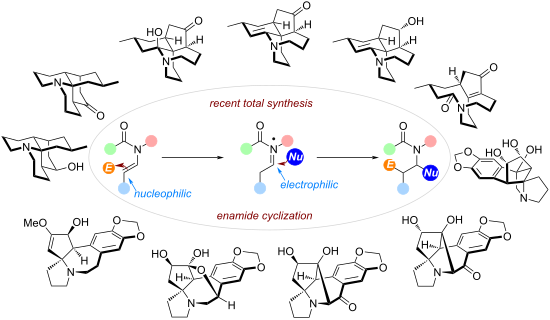
- , the terminal alkene remains intact during this process, and the initial protonation proceeds with full stereocontrol, rendering this transformation both highly chemo- and diastereoselective. From the cyclization result, it is presumed that the higher nucleophilicity of the alkyne functionality over
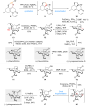
- elegant [2 + 3] cycloaddition of secondary enecarbamates [28], the extension of this reaction to enamides lacking an N–H group is a notable advancement. After extensive optimization, the chiral dirhodium catalyst cat. 1 was found to be most capable in terms of both stereocontrol and efficiency. The use of
- cases, the use of a chiral Cr(III)(salen)Cl complex in combination with InCl3 was necessary to maintain a high level of stereocontrol. Total synthesis of (−)-cephalocyclidin A The bicyclic and tricyclic N-heterocycles without a fused arene are essential core structures in a wide array of alkaloids. A





Harnessing tethered nitreniums for diastereoselective amino-sulfonoxylation of alkenes
Beilstein J. Org. Chem. 2025, 21, 947–954, doi:10.3762/bjoc.21.78

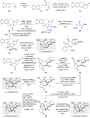
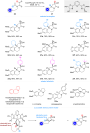
- examples of amino-sulfonoxylations using tethered nitreniums. Putative reaction mechanism. (A) Scale-up and (B) applications. Optimization results. Structure–reactivity relationship with nitrenium tethers. Examination of sulfonic acid scope. Substrate scope exploration with an emphasis on stereocontrol and


Recent advances in controllable/divergent synthesis
Beilstein J. Org. Chem. 2025, 21, 890–914, doi:10.3762/bjoc.21.73
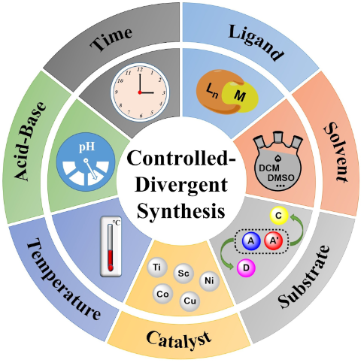
- C(sp3)–C(sp3) coupling via distal stereocontrol, efficiently producing C3-alkylated pyrrolidines, while the nickel catalytic system afforded C2-alkylated pyrrolidines through a tandem alkene isomerization/hydroalkylation process. This method utilized readily accessible catalysts, chiral BOX ligands







Copper-catalyzed domino cyclization of anilines and cyclobutanone oxime: a scalable and versatile route to spirotetrahydroquinoline derivatives
Beilstein J. Org. Chem. 2025, 21, 749–754, doi:10.3762/bjoc.21.58
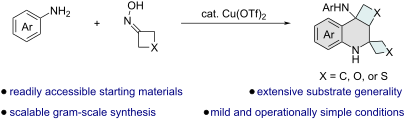
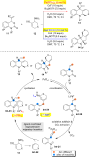
- stereocontrol (Scheme 1b) [24]. In 2023, Zeng et al. reported the first example of a chromium-catalyzed spirocyclization between anilines and cyclobutanones, providing direct access to medicinally relevant cyclobutane-annulated and structurally constrained spirotetrahydroquinoline (STHQ) scaffolds [25]. Given




Recent advances in allylation of chiral secondary alkylcopper species
Beilstein J. Org. Chem. 2025, 21, 639–658, doi:10.3762/bjoc.21.51
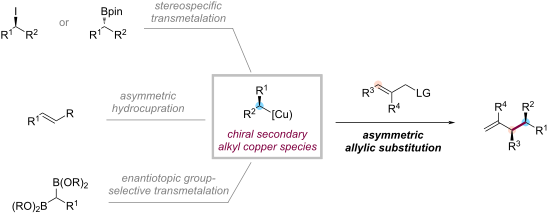
- complete stereocontrol. For example, the reaction of syn-alkylcopper species 14 with 3-methylbut-2-en-1-yl bromide (15) provided the corresponding SN2 product 16 in excellent yield and stereoselectivity (SN2/SN2' = >99:1, dr = 97:3). Remarkably, the regioselectivity of these reactions could be completely
- [58]. This methodology has emerged as a powerful strategy for constructing stereogenic centers with high levels of stereocontrol, offering important complementarity to established CuH-catalyzed processes. While CuH-catalyzed processes have proven highly effective for numerous substrates, they exhibit





The effect of neighbouring group participation and possible long range remote group participation in O-glycosylation
Beilstein J. Org. Chem. 2025, 21, 369–406, doi:10.3762/bjoc.21.27
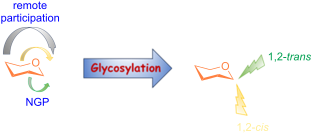
- achieve better stereocontrol and to facilitate the formation of synthetically challenging glycosidic linkages. Keywords: chemical O-glycosylation; neighbouring group participation; remote group participation; solvent effect; stereocontrol; Introduction Cell surface glycans in living cells have