


Search results
Search for "π-stacking" in Full Text gives 227 result(s) in Beilstein Journal of Organic Chemistry. Showing first 200.
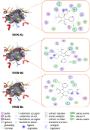
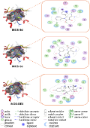
4-(1-Methylamino)ethylidene-1,5-disubstituted pyrrolidine-2,3-diones: synthesis, anti-inflammatory effect and in silico approaches
Beilstein J. Org. Chem. 2025, 21, 817–829, doi:10.3762/bjoc.21.65
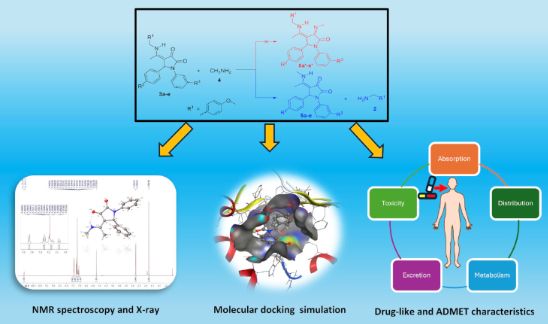
- π–π stacking is observed in the crystal packing of the complexes, but only C–H···π interactions are present. Two C–H···O hydrogen bonds complete the interactions stabilizing the crystal packing (Figure S1 and Table S2 in Supporting Information File 1). Inhibitory activity of NO production It is


Binding of tryptophan and tryptophan-containing peptides in water by a glucose naphtho crown ether
Beilstein J. Org. Chem. 2025, 21, 541–546, doi:10.3762/bjoc.21.42
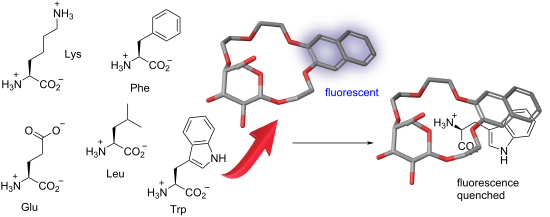
- protons of 1 shifted downfield and a marginal downfield shift of several crown ether protons as well as H-1 and H-3 of the glucopyranose was also observed. These observations suggest that the main interaction between 1 and H-Trp-OH is the π–π stacking between the naphthalene unit of 1 and the indole


Deep-blue emitting 9,10-bis(perfluorobenzyl)anthracene
Beilstein J. Org. Chem. 2025, 21, 515–525, doi:10.3762/bjoc.21.39
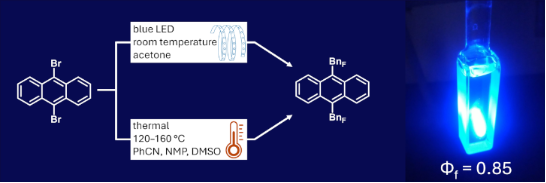
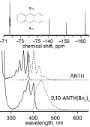
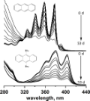
- ANTH and the –C6F5 group might provide the desired spatial isolation of the ANTH (and other PAH) cores, and result in enhanced photoluminescence by disrupting close π–π stacking in the solid state. In addition, air- and photostability might also be improved due to the steric and electronic properties





Unprecedented visible light-initiated topochemical [2 + 2] cycloaddition in a functionalized bimane dye
Beilstein J. Org. Chem. 2025, 21, 500–509, doi:10.3762/bjoc.21.37
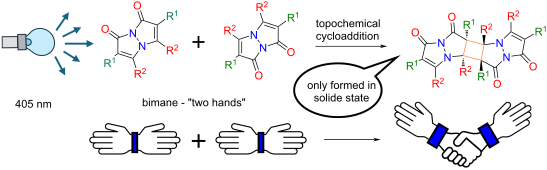
- compounds used thus far is likely due to reliance on their ability to undergo π-stacking interactions, which facilitate face-to-face packing. Therefore, the discovery of a new type of structure capable of undergoing this reaction, as reported here, represents a significant advancement, enabling the


Red light excitation: illuminating photocatalysis in a new spectrum
Beilstein J. Org. Chem. 2025, 21, 296–326, doi:10.3762/bjoc.21.22
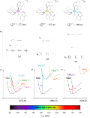
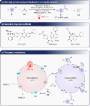
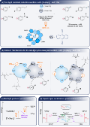
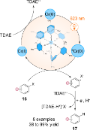
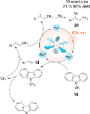
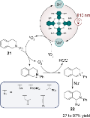
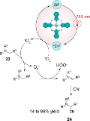
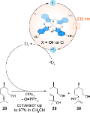
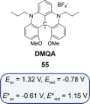
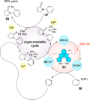
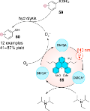
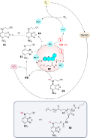
- involving π–π-stacking [75]. The resulting radical anion releases NO also yielding the anion 63. Electron transfer to the radical cation of the photocatalyst regenerates it. In this step, the neutral radical 64 is also formed. Hydrogen abstraction (hydrogen atom transfer, HAT) yields compound 65. NO and the
















Synthesis and characterizations of highly luminescent 5-isopropoxybenzo[rst]pentaphene
Beilstein J. Org. Chem. 2025, 21, 270–276, doi:10.3762/bjoc.21.19
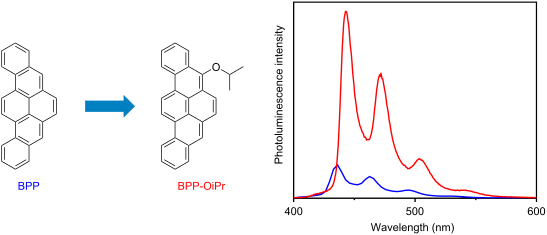
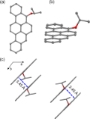
- consisting of four molecules, every two of them are stacked with the plane-to-plane distance of 3.45 Å (Figure 1c), displaying a lamellar π–π stacking motif in the overall packing structure (Figure S1 in Supporting Information File 1) [26][27][28][29]. The X-ray structure is well consistent with a model




Hydrogen-bonded macrocycle-mediated dimerization for orthogonal supramolecular polymerization
Beilstein J. Org. Chem. 2025, 21, 179–188, doi:10.3762/bjoc.21.10
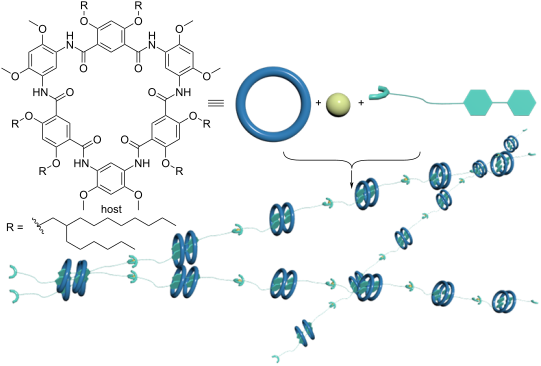
- effectively applied to form orthogonal supramolecular polymers. The macrocycle-mediated connectivity was confirmed by single-crystal X-ray diffraction, which revealed a unique 2:2 binding motif between host and guest, bridged by two cationic pyridinium end groups through π-stacking interactions and other
- , including pyridinium and its derivatives [40]. More importantly, it favors intermolecular π-stacking interactions with aromatic guests [48]. Herein, we report on a novel supramolecular dimerization motif in 2:2 stoichiometry using H-bonded aramide macrocycles for constructing orthogonal supramolecular
- , particularly π-stacking interactions between the aromatic rings in a parallel fashion from both host and guest, which is demonstrated by the crystal structure of the key element of the recognition motif. Results and Discussion Backdrop for design considerations Our interest in macrocycle-mediated



Non-covalent organocatalyzed enantioselective cyclization reactions of α,β-unsaturated imines
Beilstein J. Org. Chem. 2024, 20, 3221–3255, doi:10.3762/bjoc.20.268
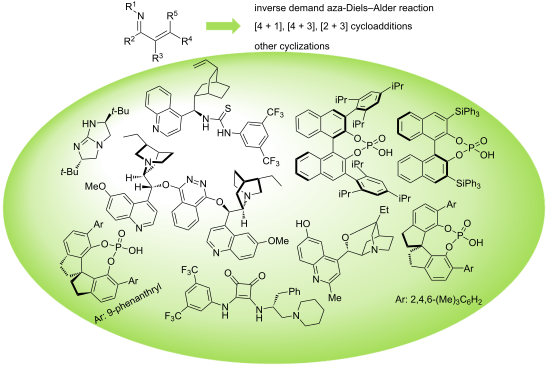
- quinuclidine moiety can act as a base activating a nucleophile, secondly the secondary hydroxy group can participate in hydrogen bonding or can behave as a Brønsted acid (Figure 5). Additionally, the quinoline moiety can interact through π–π stacking with the reactants. On the other hand, the (DHQD)2-based
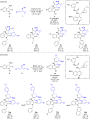
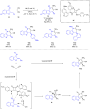
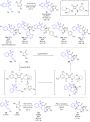
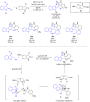
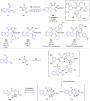
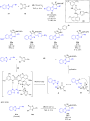
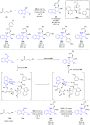
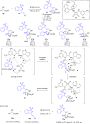
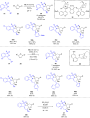
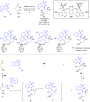
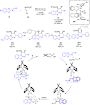
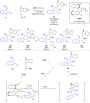
- to the nitro group, resulting in the formation of an anionic nucleophilic specie A. The latter reacts with the cyclic 1-azadiene via stereoselective Michael addition, forming intermediate B, stabilized by π–π stacking interactions between the Ar group and the aromatic cyclic moiety of the 1-azadiene











Synthesis of the 1,5-disubstituted tetrazole-methanesulfonylindole hybrid system via high-order multicomponent reaction
Beilstein J. Org. Chem. 2024, 20, 3077–3084, doi:10.3762/bjoc.20.256
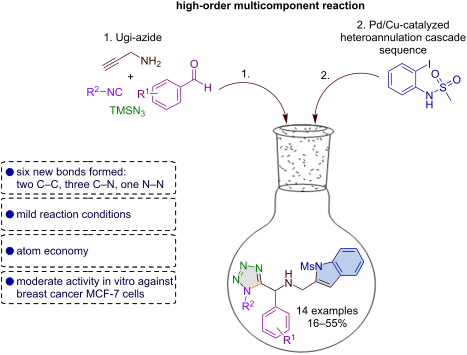
- combining the indole moiety with the 1,5-disusbtituted tetrazole pharmacophore could increase the non-covalent interactions, including π–π stacking, hydrogen bonding, and hydrophobic interactions. This combination may improve the pharmacodynamic profile, providing a solid foundation for developing compounds



4,6-Diaryl-5,5-difluoro-1,3-dioxanes as chiral dopants for liquid crystal compositions
Beilstein J. Org. Chem. 2024, 20, 2940–2945, doi:10.3762/bjoc.20.246
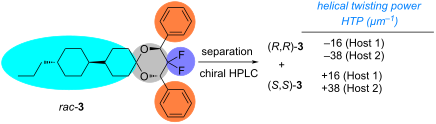
- . Molecular structures like those depicted in Figure 1 suggest that low conformational flexibility in combination with π-stacking interactions between the aryl moieties of the dopant and those of the LC mixture might be the key parameters for a high HTP. Significant efforts have been made exploring a wide


The charge transport properties of dicyanomethylene-functionalised violanthrone derivatives
Beilstein J. Org. Chem. 2024, 20, 2921–2930, doi:10.3762/bjoc.20.244
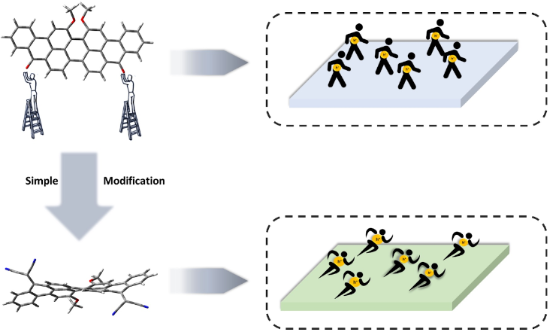
- one with branched alkyl chains, 3a. This could be the result of the more highly disordered packing arrangement of this molecule in the solid state, induced by the branched side chains that hinder the formation of π–π stacking interactions. The influence of dicyanomethylene groups on the charge
- , organic semiconductor molecules with large fused conjugated systems have achieved high charge carrier mobility. Such molecular structures improve the intermolecular interactions (such as π–π stacking) that are required to facilitate the hopping of charge carriers between adjacent molecules [7][8][9
- pass through the device [30]. The π–π intermolecular interactions, the molecular stacking and mobility of a solution-processable violanthrone derivative has been studied. It was shown that π–π stacking can be enhanced in solution and in the solid state by adding a non-solvent (n-hexane) to chloroform


Anion-dependent ion-pairing assemblies of triazatriangulenium cation that interferes with stacking structures
Beilstein J. Org. Chem. 2024, 20, 2567–2576, doi:10.3762/bjoc.20.215
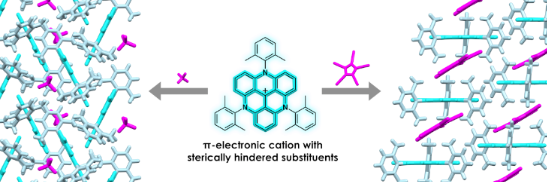
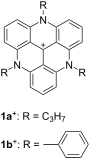
- +) cations, used as visible light fluorescent dyes, have been synthesized via a nucleophilic aromatic substitution (SNAr) reaction with primary alkylamines (e.g., 1a+; Figure 1) [15][16]. The highly planar geometry of the TATA+ core unit induces π–π stacking structures in single-crystal and film states, as
- in the other TATA+ cations that form π–π stacking structures [11][12][15][16][22]. The angles between the two staggered TATA+ planes were 53.7° and 51.4° for 2+-BF4− and 2+-PF6−, respectively. The orthogonal arrangement of TATA+ and the o-CH3-substituted aryl units was suitable for forming



Asymmetric organocatalytic synthesis of chiral homoallylic amines
Beilstein J. Org. Chem. 2024, 20, 2349–2377, doi:10.3762/bjoc.20.201
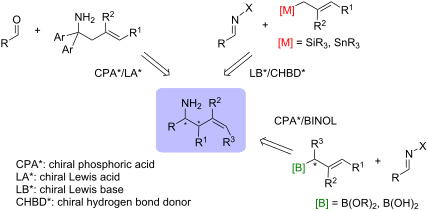
- 78 with a pending 4-pyrenyl group. The catalyst acts as H-bond donor but additionally it controls the chiral environment through π-stacking interaction with the aryl group of the substrate, blocking one of the enantiofaces of the iminium intermediate 79. The reaction proceeds in Et2O at −50 °C and
- (trifluoromethylphenyl) group with other fluorinated aromatics (86–90) showed a gradual decrease in ee (92% ee in 90 to 68% ee in 86 and 88) depending on the degree of fluorination. Computational modelling for the 3,5-bis(trifluoromethylphenyl) catalyst 78 revealed that π-stacking interactions of the 4-pyrene group with
- give the desired product 99 after 72 h returning hemiaminal (Scheme 21). Alkyl acetals, such as cyclohexyl carboxaldehyde acetal reacted sluggishly with low yield and selectivity (<10% yield, 43–50% ee), possibly due to their inability to participate in π–π interactions. In general, the π-stacking


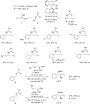


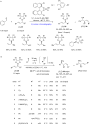


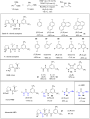


Novel truxene-based dipyrromethanes (DPMs): synthesis, spectroscopic characterization and photophysical properties
Beilstein J. Org. Chem. 2024, 20, 2163–2170, doi:10.3762/bjoc.20.186
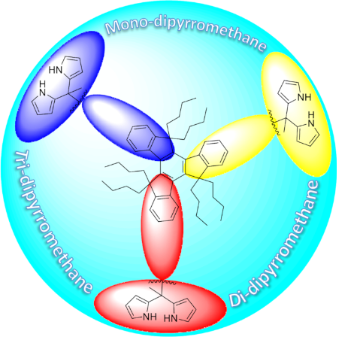
- -planar having π‐conjugation [2][3][4]. Remarkably, these unique characteristics of the truxene scaffold, results in strong π–π stacking ability in addition to the strong electron‐donating capability – hinting for the truxene’s capability as a worthy building block in the advancement of cutting-edge


Understanding X-ray-induced isomerisation in photoswitchable surfactant assemblies
Beilstein J. Org. Chem. 2024, 20, 2005–2015, doi:10.3762/bjoc.20.176
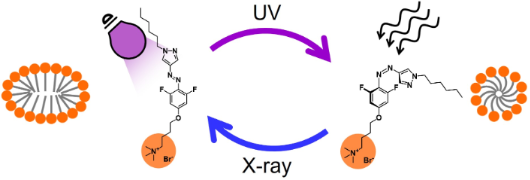
- , Supporting Information File 1). This morphology change can be attributed to two changes in the AAPTAB on E–Z isomerisation [19]. Firstly, the shape change of the AAPTAB to the bent, “T-shape” conformation prevents the π–π stacking which was previously possible in the more planar, E isomers that were arranged



Synthesis and characterization of 1,2,3,4-naphthalene and anthracene diimides
Beilstein J. Org. Chem. 2024, 20, 1767–1772, doi:10.3762/bjoc.20.155
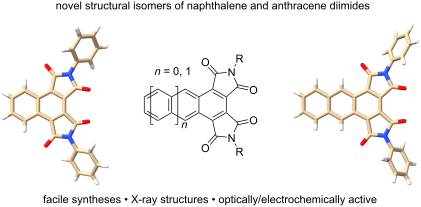
- -Ph as determined by X-ray crystallography. Representative C=O···H–C and C–H···π interactions are indicated in teal and magenta, respectively. Top-down views of π-stacking modes in c) 7-Ph and d, e) 8-Ph. Hydrogen atoms have been removed for clarity in c–e. Atom color code: C = tan, H = white, Cl


Supramolecular assemblies of amphiphilic donor–acceptor Stenhouse adducts as macroscopic soft scaffolds
Beilstein J. Org. Chem. 2024, 20, 1590–1603, doi:10.3762/bjoc.20.142
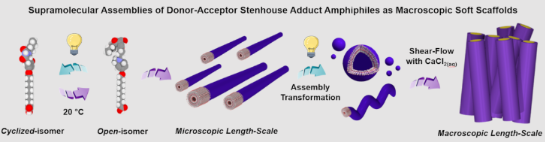
- = 2.24 nm could be attributed to the longer molecular axis of DA11 in dimer form, while that at d = 0.36 nm originated from π–π stacking of the DASA motif. Consistently, diffraction from the longer molecular axis of DA10 in dimer form was shorter (d = 2.19 nm) than that of DA11, revealing the subtle
- π–π stacking of the DASA motifs. However, no significant unidirectional alignment was observed in WAXD and SEM images of DA7 and DA6 macroscopic soft scaffolds (Figure S11a and S11c as well as S12a and S12c, Supporting Information File 1, respectively). Electron microscopy and WAXD revealed that a




Generation of alkyl and acyl radicals by visible-light photoredox catalysis: direct activation of C–O bonds in organic transformations
Beilstein J. Org. Chem. 2024, 20, 1348–1375, doi:10.3762/bjoc.20.119
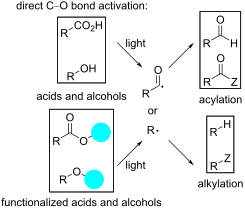
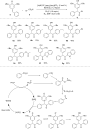
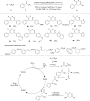
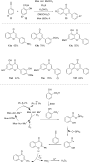
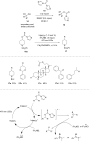
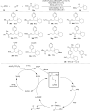
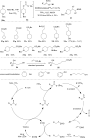
- radical cation 81 and Mes–Acr because of the favorable π–π stacking. Ethyl vinyl ether, which is the most nucleophilic molecule in the reaction, combined with radical cation 81 to form the oxonium radical 82, which could proceed in two directions: 1) β-elimination, yielding radical 83 and 2) photoinduced






Synthesis of indano[60]fullerene thioketone and its application in organic solar cells
Beilstein J. Org. Chem. 2024, 20, 1270–1277, doi:10.3762/bjoc.20.109
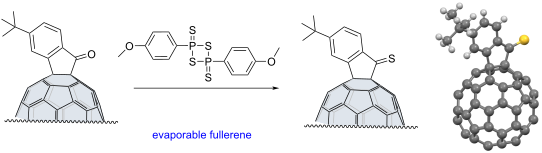
- -butyl groups, which disrupted the π–π stacking between the fullerene cages. The slight difference in sublimation temperature between t-Bu-FIDO and t-Bu-FIDS might be due to the slightly higher electron density of the sulfur atom compared with the oxygen atom. Additionally, data on the degradation


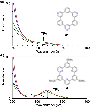
Introduction of peripheral nitrogen atoms to cyclo-meta-phenylenes
Beilstein J. Org. Chem. 2024, 20, 1207–1212, doi:10.3762/bjoc.20.103
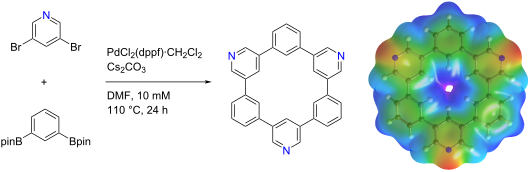
- π-stacking may also enable exploration of molecular assemblies. The experimental lone-pair electron densities were directed outward in 3a and could be used as linkers for metal atoms to assemble trigonal pyramidal macrocycles, for instance, in networks of metal organic frameworks [23][24



Light on the sustainable preparation of aryl-cored dibromides
Beilstein J. Org. Chem. 2024, 20, 1076–1087, doi:10.3762/bjoc.20.95
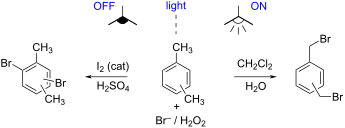
- ], photonics [2], and diagnostics [3]. Their popularity stems from their structural rigidity, potential conjugation with the remaining structure, and the capability to form additional π–π-stacking interactions. Dihalides, in particular, are highly preferred in such applications, enabling the formation of



Structure–property relationships in dicyanopyrazinoquinoxalines and their hydrogen-bonding-capable dihydropyrazinoquinoxalinedione derivatives
Beilstein J. Org. Chem. 2024, 20, 1037–1052, doi:10.3762/bjoc.20.92
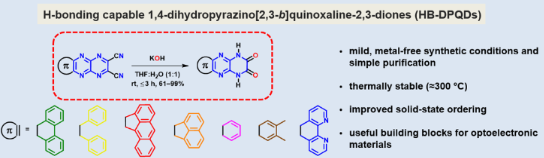
- and charge injection/extraction processes [7]. The additional merits of H-bonding designs in organic optoelectronic materials include higher thermal stability, synergistic stabilizing effects with π-stacking interactions, etc. [8]. Acenes and N-heteroacenes are two prominent π-conjugated scaffolds for
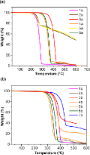
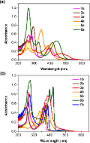
- favorable π–π stacking in the solid state. The 5% weight loss values range from 232 °C to 353 °C. Compounds with larger π-surfaces exhibited greater thermal stability (353 °C for 3a, 304 °C for 4a, 312 °C for 6a) while others displayed 5% weight loss values under 250 °C (232 °C for 1a, 244 °C for 2a and 238
- packing of 2b is expected to be favorable for charge mobility within stacked arrangements [36][37]. Additionally, the intermolecular π–π stacking distance is reduced to 3.285 Å in the staggered form (Figure 6f and 6g), 0.27 Å shorter than its non-hydrogen bonding dicyano comparator 2a. The single-crystal




Spin and charge interactions between nanographene host and ferrocene
Beilstein J. Org. Chem. 2024, 20, 1011–1019, doi:10.3762/bjoc.20.89
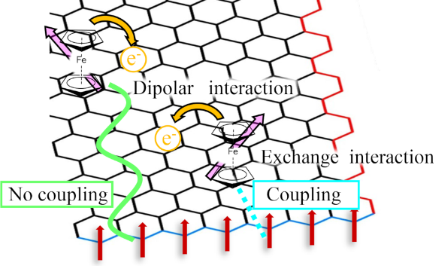
- material design should be important in this viewpoint, especially in choosing appropriate guest molecules. Since π electrons extend to in-plane directions in nanographene, a guest molecule with an aromatic ring is promising for significant interaction with the nanographene host through π–π stacking
- mesoporous silica (MCM-41) [18]. So, ferrocene is expected to exhibit strong host–guest interactions with a nanographene host through π–π stacking. Regarding ferrocene as a guest molecule for nanocarbon hosts, carbon nanotubes (CNTs) have been used to accommodate guest ferrocene molecules, where the amount


Skeletal rearrangement of 6,8-dioxabicyclo[3.2.1]octan-4-ols promoted by thionyl chloride or Appel conditions
Beilstein J. Org. Chem. 2024, 20, 823–829, doi:10.3762/bjoc.20.74
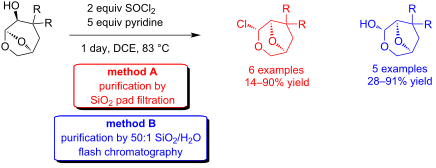
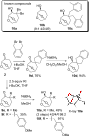
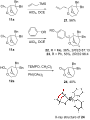
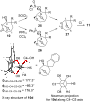
- Diels–Alder adducts of 1, and similar results on the effect of configuration were observed [21]. During some recent attempts at the chlorination of the π-stacking chiral auxiliary 10a using SOCl2 [9], we observed the migration of O8 resulting in the formation of anomeric chlorides analogous to the




Possible bi-stable structures of pyrenebutanoic acid-linked protein molecules adsorbed on graphene: theoretical study
Beilstein J. Org. Chem. 2024, 20, 570–577, doi:10.3762/bjoc.20.49
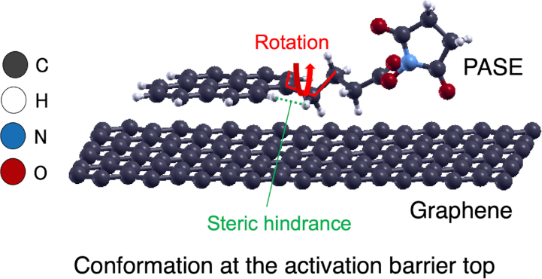
- reported. The adsorption of PASE has been considered to mainly come from the pyrene fragment, which forms π–π stacking on these graphitic carbon materials [6][7][8]. The sensitivity of the oscillator-based sensor depends on the structure of the linker molecule. Therefore, understanding the adsorption





