Search results
Search for "anticancer agents" in Full Text gives 69 result(s) in Beilstein Journal of Organic Chemistry.
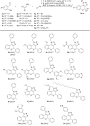
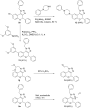
Synthesis and properties of quinazoline-based versatile exciplex-forming compounds
Beilstein J. Org. Chem. 2020, 16, 1142–1153, doi:10.3762/bjoc.16.101
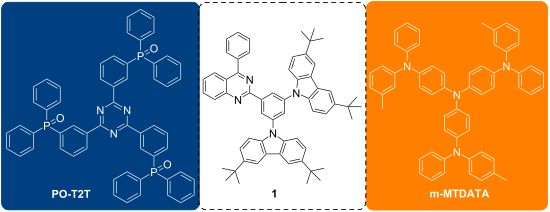
- , such as monitoring of specific biological activities and as antimalarial and anticancer agents [5][6]. However, electroactive properties of derivatives of this acceptor have been scarcely reported. Quinazoline-based compounds were used as hosts for red phosphorescent OLEDs with an external quantum


Combining enyne metathesis with long-established organic transformations: a powerful strategy for the sustainable synthesis of bioactive molecules
Beilstein J. Org. Chem. 2020, 16, 738–755, doi:10.3762/bjoc.16.68
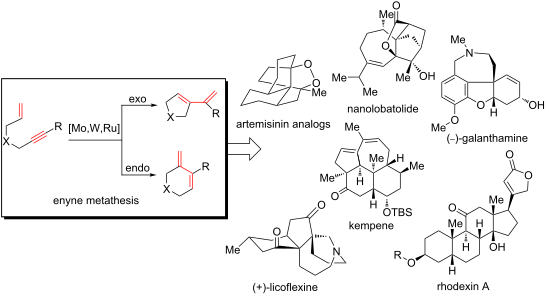
- . Securinega alkaloids The total synthesis of the Securinega alkaloids, (−)-flueggine A (18) and (+)-virosaine B (19), which are potent anticancer agents, was proposed by Wei et al. [90] via a relay ring-closing metathesis (RRCM) associated with a 1,3-dipolar cycloaddition. The enyne precursors bearing a




Rapid, two-pot procedure for the synthesis of dihydropyridinones; total synthesis of aza-goniothalamin
Beilstein J. Org. Chem. 2020, 16, 135–139, doi:10.3762/bjoc.16.15

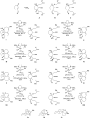
- cell line, Figure 1). Thus, a path for the generation of a new class of potential anticancer agents based on the aza-goniothalamin framework was determined [17][18]. Results and Discussion Our approach to the synthesis of the dihydropyridinone framework was inspired by the work carried out by Veenstra


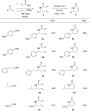

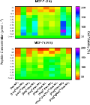
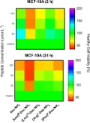
α,ß-Didehydrosuberoylanilide hydroxamic acid (DDSAHA) as precursor and possible analogue of the anticancer drug SAHA
Beilstein J. Org. Chem. 2019, 15, 2524–2533, doi:10.3762/bjoc.15.245

- sorting) The results were further complimented with ROS dependent cytotoxicity in the above cell line. ROS generation, induced by various anticancer agents plays a key role in apoptosis [37]. Cells were treated with SAHA, 11b, 11f and 11g at GI25, GI50 and GI75 concentrations for 24 h and analyzed in the


Current understanding and biotechnological application of the bacterial diterpene synthase CotB2
Beilstein J. Org. Chem. 2019, 15, 2355–2368, doi:10.3762/bjoc.15.228
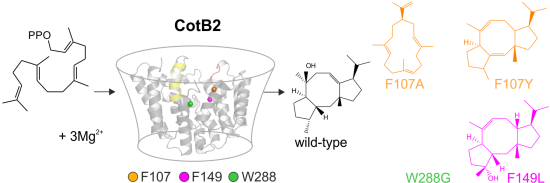
- isolated in 1985 from cigarette smoke condensate and identified as anticancer agents [76]. With quite similar potency (α-CBT: 25.2 µM and β-CBT: 21.9 µM [77]), they showed inhibition of the induction of Epstein–Barr virus early antigen by lymphoblastoid cancer cells. In the tobacco plant itself, both


Heck- and Suzuki-coupling approaches to novel hydroquinone inhibitors of calcium ATPase
Beilstein J. Org. Chem. 2019, 15, 971–975, doi:10.3762/bjoc.15.94
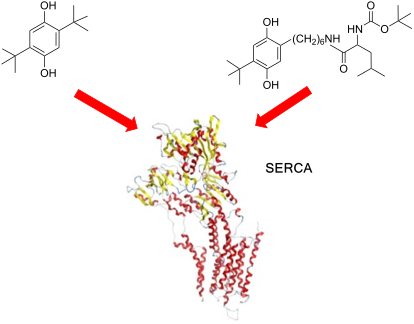
- sarcoplasmic reticulum (SR) within muscle cells. It transfers Ca2+ from the cytosol to the lumen of the SR at the expense of ATP hydrolysis. Specific inhibitors of SERCA are of significance to human health because of their well-documented value as research tools and their potential as novel anticancer agents


Photochemical generation of the 2,2,6,6-tetramethylpiperidine-1-oxyl (TEMPO) radical from caged nitroxides by near-infrared two-photon irradiation and its cytocidal effect on lung cancer cells
Beilstein J. Org. Chem. 2019, 15, 863–873, doi:10.3762/bjoc.15.84
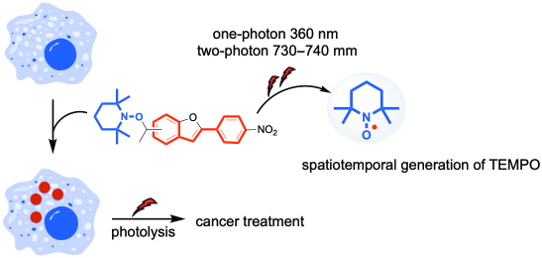
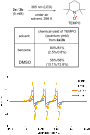
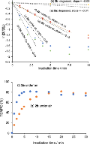
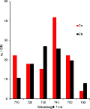
- for 2b in benzene. The cytocidal effect of compound 2a on lung cancer cells under photolysis conditions was also assessed to test the efficacy as anticancer agents. In a medium containing 100 μg mL−1 of 2a exposed to light, the number of living cells decreased significantly compared to the unexposed
- strong DNA-damaging activity [65], they play important roles as anticancer therapeutic agents [66]. Among the free radicals, nitroxides including the TEMPO radical have unique properties, where they can act not only as radical scavengers, but also as anticancer agents [67]. Due to the unique properties






A chemoenzymatic synthesis of ceramide trafficking inhibitor HPA-12
Beilstein J. Org. Chem. 2019, 15, 490–496, doi:10.3762/bjoc.15.42
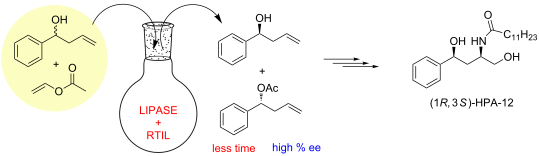
- and inexpensive synthesis of HPA-12 was felt. Our own interest in developing anticancer agents also prompted us to develop a new and practical enantioselective synthesis of 2 [26][27][28][29]. To realize our objective, we paid particular attention to obtain 2 using reactions that are high-yielding and


Study on the regioselectivity of the N-ethylation reaction of N-benzyl-4-oxo-1,4-dihydroquinoline-3-carboxamide
Beilstein J. Org. Chem. 2019, 15, 388–400, doi:10.3762/bjoc.15.35

- mentioned above, we have been putting some effort on synthesizing different 4-oxoquinoline-3-carboxamide derivatives as potential anticancer agents [13]. The synthesis of such derivatives have been planned considering that, once having obtained the 4-oxo-1,4-dihydroquinoline-3-carboxamide scaffold


Synthesis of nonracemic hydroxyglutamic acids
Beilstein J. Org. Chem. 2019, 15, 236–255, doi:10.3762/bjoc.15.22
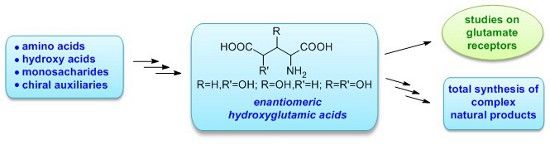
- ]. Several derivatives of L-glutamic acid functioning as anticancer agents have been reported [4]. But primarily L-glutamic acid is known as the major excitatory neurotransmitter in central nervous system which acts by binding to glutamate receptors [5][6][7]. However, these interactions are linked to


Regioselective addition of Grignard reagents to N-acylpyrazinium salts: synthesis of substituted 1,2-dihydropyrazines and Δ5-2-oxopiperazines
Beilstein J. Org. Chem. 2019, 15, 72–78, doi:10.3762/bjoc.15.8

- ; Introduction Pyrazine and piperazine ring systems are key structural elements in a large number of biologically active molecules [1][2][3][4][5][6]. Compounds containing these scaffolds were shown to behave as anticancer agents [2][3][4][5], sodium channel blockers [5], and also display antiviral activity [7

Assembly of fully substituted triazolochromenes via a novel multicomponent reaction or mechanochemical synthesis
Beilstein J. Org. Chem. 2018, 14, 2689–2697, doi:10.3762/bjoc.14.246
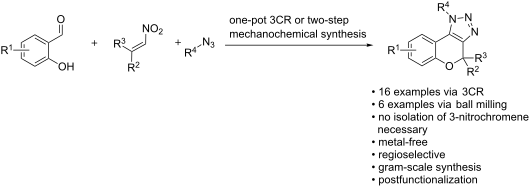
- and 5e furnishes piperazin-1-ylchromene 12 in 64% yield. Furthermore, as highly methylated flavonoid derivatives [47] and 6-(3,5-dimethoxyphenyl)chromenes [48][49] have been demonstrated to be potent anti-seizure drugs and anticancer agents, respectively, a Suzuki–Miyaura reaction was performed




Microwave-assisted synthesis of biologically relevant steroidal 17-exo-pyrazol-5'-ones from a norpregnene precursor by a side-chain elongation/heterocyclization sequence
Beilstein J. Org. Chem. 2018, 14, 2589–2596, doi:10.3762/bjoc.14.236
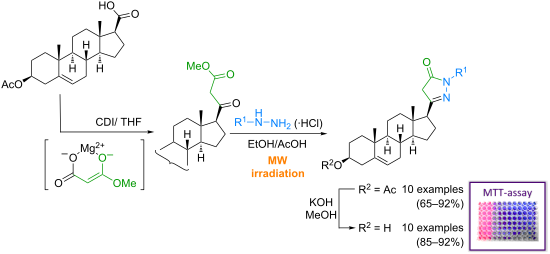
- . This indicates that the pyrazolone heterocyclic ring at the 17β position is a promising scaffold for the design of anticancer agents of the Δ5 androstene series. 1H NMR spectra of compound 7f in CDCl3 (top; # solvent signal) and in DMSO-d6 (bottom; # solvent signal). Multistep synthesis of steroidal β


Natural and redesigned wasp venom peptides with selective antitumoral activity
Beilstein J. Org. Chem. 2018, 14, 1693–1703, doi:10.3762/bjoc.14.144
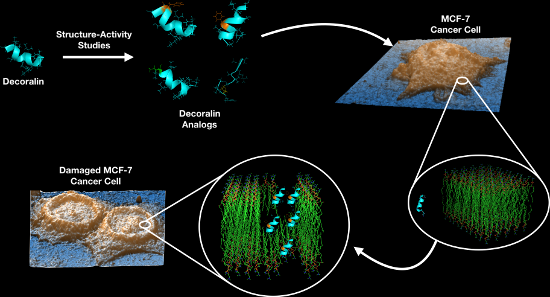
- eventual clinical development, as it displayed reduced hemolytic activity than Dec-NH2 and exhibited selective killing of cancer cells. The ACPs described here represent excellent scaffolds for the generation of potent, non-toxic, and selective anticancer agents. Experimental Peptide synthesis




An overview of recent advances in duplex DNA recognition by small molecules
Beilstein J. Org. Chem. 2018, 14, 1051–1086, doi:10.3762/bjoc.14.93
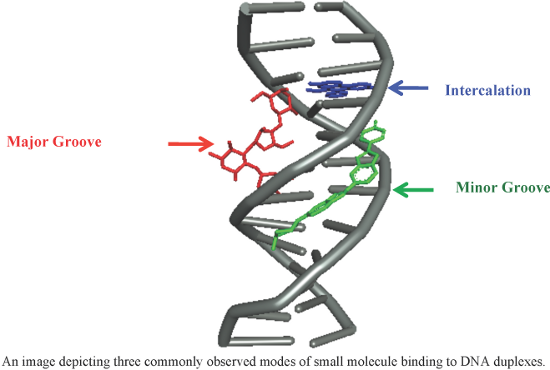
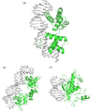
- cancer cells towards apoptosis through the mitochondrial pathway. Mitrasinovic has reported sequence-dependent binding of various structurally different flavonoids (quercetin (QUE) and flavopiridol (FLP)), a family of prospective anticancer agents, to duplex DNAs [104]. The five hydroxy groups in QUE



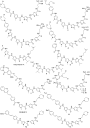


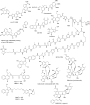

On the design principles of peptide–drug conjugates for targeted drug delivery to the malignant tumor site
Beilstein J. Org. Chem. 2018, 14, 930–954, doi:10.3762/bjoc.14.80
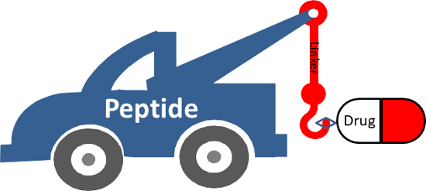
- diminishing expressed nucleoside receptors responsible for the cell uptake of gemcitabine [6]. Additionally, chemotherapy with anticancer agents is often hampered by their poor aqueous solubility, low oral bioavailability and metabolic instability. These drawbacks are linked to the unfavorable ADME
- original anticancer agents is their uncontrolled toxicity which results in severe side effects. Without the addition of a targeting moiety, they bear low capacity to discriminate cancerous from normal cells. Moreover, the addition of a peptide as a targeting vehicle can enhance the pharmacokinetic and
- most common anticancer agents used against a wide variety of tumors. It is sold under the brand name Taxol by Bristol-Myers Squibb Company and is FDA approved for the treatment of breast cancer, ovarian cancer, non-small cell lung cancer and AIDS-related Kaposi's sarcoma. The main disadvantages in the


5-Aminopyrazole as precursor in design and synthesis of fused pyrazoloazines
Beilstein J. Org. Chem. 2018, 14, 203–242, doi:10.3762/bjoc.14.15
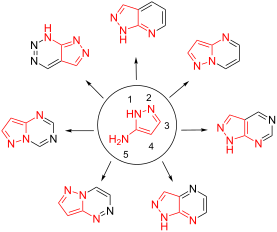
- [3,4-d]pyrimidine derivatives 221 (Scheme 59). The synthesized pyrazolo[3,4-d]pyrimidines 221 were proved to be good anticancer agents by MTT assay against HL-60 cancer cell lines. Zhang et al. [135] reported the reaction of 5-amino-4-cyanopyrazole 208 and aliphatic acids (R2COOH) in the presence of


Transition-metal-free [3 + 3] annulation of indol-2-ylmethyl carbanions to nitroarenes. A novel synthesis of indolo[3,2-b]quinolines (quindolines)
Beilstein J. Org. Chem. 2018, 14, 194–202, doi:10.3762/bjoc.14.14
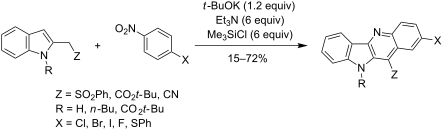
- as anticancer agents [1][6][7] (Figure 1). Synthetic strategies towards indolo[3,2-b]quinolines have been reviewed [8]. These methodologies usually employ multistep procedures. Selected starting materials applicable to the synthesis of indolo[3,2-b]quinolines are presented in Scheme 1. Bis(2


Total syntheses of the archazolids: an emerging class of novel anticancer drugs
Beilstein J. Org. Chem. 2017, 13, 1085–1098, doi:10.3762/bjoc.13.108
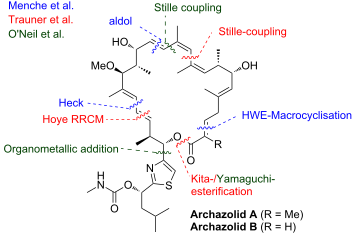
- the archazolids, complex polyketide macrolides which present the most potent V-ATPase inhibitors known to date, rendering these macrolides important lead structures for the development of novel anticancer agents. The limited natural supply of these metabolites from their myxobacterial source renders
- become important lead structures for the development of novel anticancer agents. As shown in Scheme 1 for the most prominent representatives archazolid A (1) and B (2) [38][39][40], their unique architectures are characterized by a 24-membered macrolactone ring with seven alkenes, including a
- a more concise route may be possible. Efforts are now being directed in the design and development of truly practicable and scalable routes to more stable archazolids to enhance the further preclinical development of these novel anticancer agents. Particular importance will be the development of a


First DMAP-mediated direct conversion of Morita–Baylis–Hillman alcohols into γ-ketoallylphosphonates: Synthesis of γ-aminoallylphosphonates
Beilstein J. Org. Chem. 2016, 12, 2906–2915, doi:10.3762/bjoc.12.290

- ] since they are considered as important surrogates for α-amino carboxylic acids, peptide mimics as well as versatile intermediates for the design of potential anticancer agents. β-Aminophosphonates present also an important place among the various compounds containing both a P–C bond and an amino group


Synthesis, fluorescence properties and the promising cytotoxicity of pyrene–derived aminophosphonates
Beilstein J. Org. Chem. 2016, 12, 1229–1235, doi:10.3762/bjoc.12.117
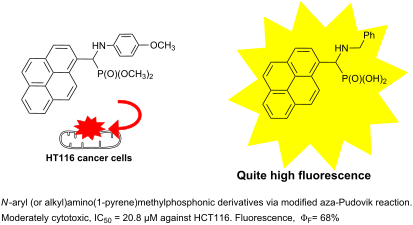
- was observed for N-benzyl substitution (3Aa). Results obtained for the α-hydroxyphosphonate 5A (IC50 = 25.8 µM against HT29) give the impact to look for potential anticancer agents among the α-hydroxyphosphonic derivatives. Conclusion A large series of various amino(pyren-1-yl)methylphosphonates was


Indenopyrans – synthesis and photoluminescence properties
Beilstein J. Org. Chem. 2016, 12, 825–834, doi:10.3762/bjoc.12.81

- ]isochromen-5(11H)-ones have been reported as key intermediates for the development of several topoisomerase I (Top1) anticancer agents [4][5][6][7]. A natural product exhibiting very promising antitumor activity is β-lapachone having a naphtho[1,2-b]pyrandione skeleton [8][9]. Also worth mentioning in this



Synthesis of Xenia diterpenoids and related metabolites isolated from marine organisms
Beilstein J. Org. Chem. 2015, 11, 2521–2539, doi:10.3762/bjoc.11.273
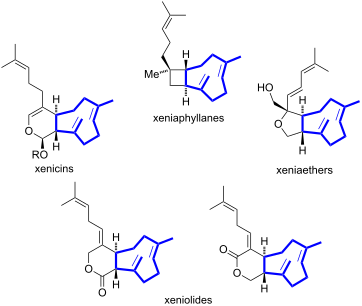
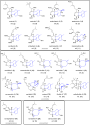
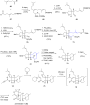
- therefore of great interest for drug discovery, especially for their application as anticancer agents [1]. Marine soft corals of the genus Xenia (order Alcyonacea, family Xeniidae) are known to be rich in xenicane diterpenoids. The first reported member of these metabolites was xenicin (1), isolated from







Novel carbocationic rearrangements of 1-styrylpropargyl alcohols
Beilstein J. Org. Chem. 2015, 11, 1017–1022, doi:10.3762/bjoc.11.114
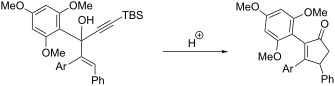
- : carbocationic rearrangement; cyclopentenones; furans; propargyl alcohols; Introduction In the course of our medicinal program on a new class of anticancer agents [1][2][3], we developed a novel synthesis of cyclopentenones substituted by three different aryl groups (Scheme 1) [4]. This approach combines a


Gold-catalyzed formation of pyrrolo- and indolo-oxazin-1-one derivatives: The key structure of some marine natural products
Beilstein J. Org. Chem. 2015, 11, 897–905, doi:10.3762/bjoc.11.101

- synthesis of pharmaceutically relevant building blocks has always been a significant goal in organic synthesis. Moreover, modification of natural products is also an important approach to identify promising anticancer agents. Especially due to the bioactivity of lukianols, many groups accomplished the