Search results
Search for "bifunctional" in Full Text gives 250 result(s) in Beilstein Journal of Organic Chemistry. Showing first 200.
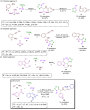
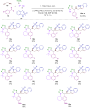
Germanyl triazoles as a platform for CuAAC diversification and chemoselective orthogonal cross-coupling
Beilstein J. Org. Chem. 2024, 20, 3198–3204, doi:10.3762/bjoc.20.265
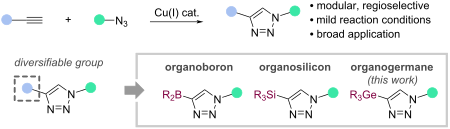
- further diversification of the triazole products, including chemoselective transition metal-catalysed cross-coupling reactions using bifunctional boryl/germyl species. Keywords: chemoselectivity; click chemistry; copper; germanium; triazole; Introduction Since its inception, click chemistry has been


Multicomponent reactions driving the discovery and optimization of agents targeting central nervous system pathologies
Beilstein J. Org. Chem. 2024, 20, 3151–3173, doi:10.3762/bjoc.20.261
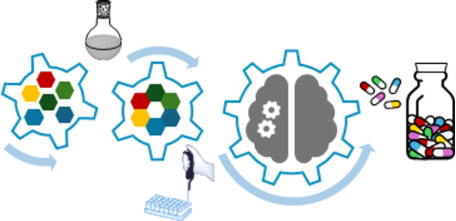
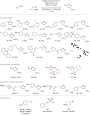
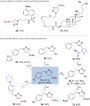
- single step. The oxazepine scaffold can be easily accessed using the Ugi four-component reaction. By modifying this scaffold, the researchers aimed to reduce the hydrogen-bond donating properties. The Passerini reaction, employing bifunctional salicylaldehydes and isocyanides successfully yielded




Advances in the use of metal-free tetrapyrrolic macrocycles as catalysts
Beilstein J. Org. Chem. 2024, 20, 3085–3112, doi:10.3762/bjoc.20.257
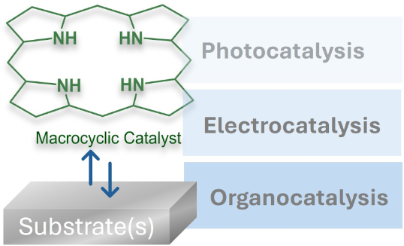
- active groups for a variety of substrates, making their use as supramolecular organocatalysts based on bifunctional activation mechanism (hydrogen-bonding/Lewis basicity) highly promising. At the same time, additional functional groups that are required for the catalysis can be easily installed on the
- pyrrolic N/N–H moieties [58][59][60]. Overall, these alterations provide a versatile toolkit for tailoring porphyrin properties for various applications. In 2017, Senge and co-workers, reported the first example of using metal-free tetrapyrrolic porphyrins as bifunctional organocatalysts, confirming that
- one remaining –NH group is catalytically active while both tri- and tetraalkylated analogues 40 and 41, without an –NH unit, are not. Further, the authors performed 1H NMR experiments with a different substrate:macrocycle ratio and suggested a bifunctional reaction mechanism involving both inner amine


Synthesis of the 1,5-disubstituted tetrazole-methanesulfonylindole hybrid system via high-order multicomponent reaction
Beilstein J. Org. Chem. 2024, 20, 3077–3084, doi:10.3762/bjoc.20.256
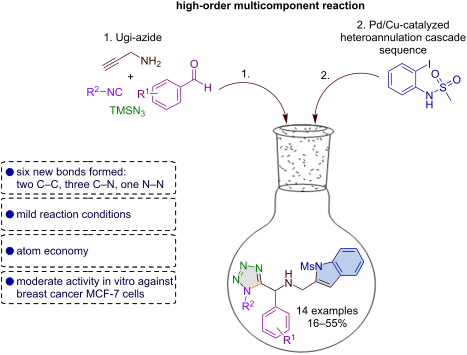
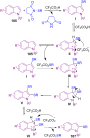
- trifluoroethanol as the solvent and at room temperature [23][24][25][26]. In the initial reaction, propargylamine served as a bifunctional reagent, with the primary amine group participating in the first step and the terminal alkyne promoting the subsequent heteroannulation. (Scheme 2). As observed in our previous
- trifluoroethanol to Et3N for the subsequent catalysis). Thus, this protocol enabled a straightforward and rapid synthesis of highly 2-substituted indoles under mild reaction conditions, highlighting the versatility of propargylamine as a bifunctional reagent in post-Ugi-azide transformations. Our group pioneered
- reaction is utilized as a post-Ugi-azide reaction, using propargylamine as a key bifunctional reagent. The results of cytotoxic activity were moderate. However, the information obtained from this study, together with that obtained with previously described analogs, provide important information for



C–C Coupling in sterically demanding porphyrin environments
Beilstein J. Org. Chem. 2024, 20, 2784–2798, doi:10.3762/bjoc.20.234
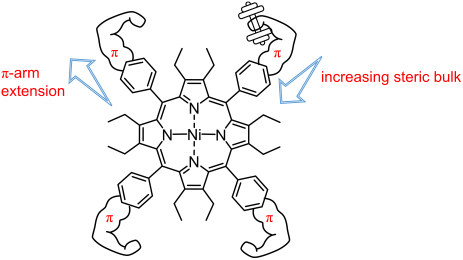
- independent faces and trap anions such as pyrophosphate [15]. Saddle-shaped porphyrins have also been exploited by researchers for the use in organocatalysis as bifunctional system [16][17]. Dodecasubstitution of porphyrin, as seen in Figure 1, often results in saddle-shaped distortion; however, ruffled [18


A review of recent advances in electrochemical and photoelectrochemical late-stage functionalization classified by anodic oxidation, cathodic reduction, and paired electrolysis
Beilstein J. Org. Chem. 2024, 20, 2500–2566, doi:10.3762/bjoc.20.214
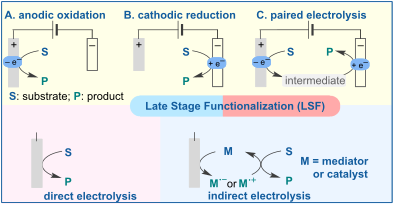
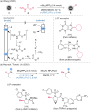
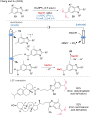
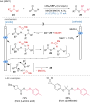
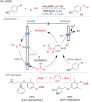
- oxidation strategy to obtain α-chlorosulfoxides from sulfides using hydrochloric acid as a bifunctional reagent [22]. This strategy accommodates a broad range of substrates and offers high diastereoselectivity and regioselectivity. Several LSF modifications of amino acids and pharmaceutical derivatives




























Asymmetric organocatalytic synthesis of chiral homoallylic amines
Beilstein J. Org. Chem. 2024, 20, 2349–2377, doi:10.3762/bjoc.20.201
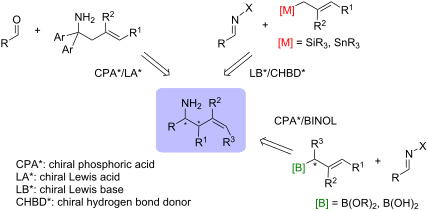
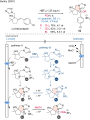
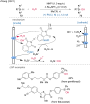
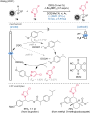
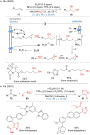
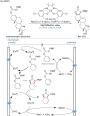
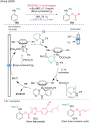
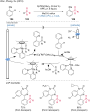
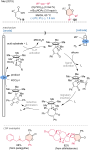
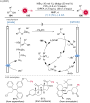
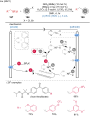
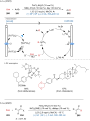
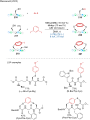
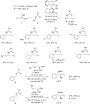
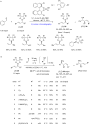
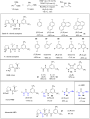
- [39] developed a direct, highly enantioselective three-component reaction between aromatic acetals, BocNH2, and various 2-monosubstituted or 2,3-disubstituted allyltrimethylsilanes in the presence of 10 mol % of triethylsilyl triflate (TESOTf) and 10 mol % of the chiral bifunctional thiourea catalyst
- stereospecific synthesis of γ- and γ,δ-substituted homoallylic amines by a three-component reaction between an aryl acetal, BocNH2 carbamate and a 2,3-disubstituted allylsilane, in presence of the triflate-assisted bifunctional HBD/πAr-Ar catalyst [39]. Catalytic cycle for the three-component allylation with HBD








Stereoselective mechanochemical synthesis of thiomalonate Michael adducts via iminium catalysis by chiral primary amines
Beilstein J. Org. Chem. 2024, 20, 2313–2322, doi:10.3762/bjoc.20.198
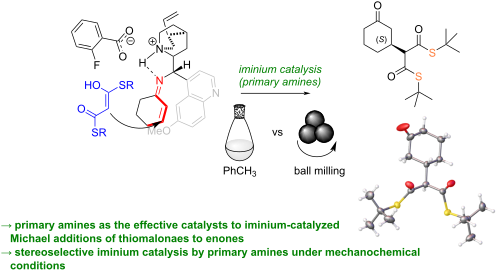
- by extended reaction times, sometimes up to 168 hours. An intriguing example involves the use of a bifunctional primary amine-sulfonamide catalyst, which activates benzylideneacetone towards dibenzyl malonate, with the presence of water accelerating the reaction [25]. An alternative approach, where
- Discussion Based on our previous experiences with low-reactive Michael acceptors [29], initial attempts were carried out using bifunctional squaramides, derivatives of cinchona. However, up to 45% yield of the desired product was obtained with poor enantioselectivity (14%, Scheme 2). Considering the
- product with 93% ee after 24 h, while the bifunctional primary amine-thiourea catalysts (system B) required 4 days to provide an adduct with similar enantioselectivity. Prolonged reaction time is in general the innate nature of organocatalytic reactions employing iminium activation approaches. With the


Catalysing (organo-)catalysis: Trends in the application of machine learning to enantioselective organocatalysis
Beilstein J. Org. Chem. 2024, 20, 2280–2304, doi:10.3762/bjoc.20.196
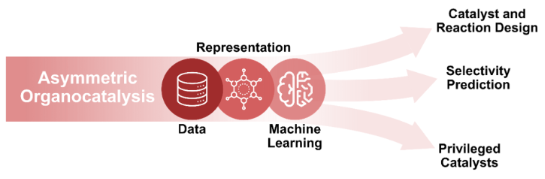
- [107] (Figure 11B). Werth and Sigman [127] investigated multiple nucleophilic additions to nitroalkenes, catalysed by bifunctional hydrogen bond donors, observing good correlations to new bi-functional donors, new nucleophiles, new electrophiles and even similar cascade-type reactions. In the authors




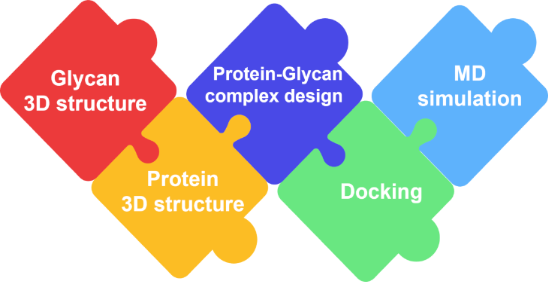
Computational toolbox for the analysis of protein–glycan interactions
Beilstein J. Org. Chem. 2024, 20, 2084–2107, doi:10.3762/bjoc.20.180


Negishi-coupling-enabled synthesis of α-heteroaryl-α-amino acid building blocks for DNA-encoded chemical library applications
Beilstein J. Org. Chem. 2024, 20, 1922–1932, doi:10.3762/bjoc.20.168
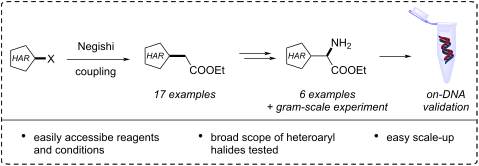
- crucial function in many biological processes. Due to their bifunctional character, they have been also used for combinatorial chemistry purposes, such as the preparation of DNA-encoded chemical libraries. We developed a practical synthesis for α-heteroaryl-α-amino acids starting from an array of small
- bifunctional building blocks (BBs) can quickly increase the diversity of these molecular libraries [6]. Hence, DEL practitioners constantly seek access to novel building blocks [7]. Amino acids (AAs) are vital motifs in the domain of biochemistry, serving as the foundational unit for peptides and proteins
- , while also holding a crucial function in many biological processes [8]. Non-canonical amino acids (NCAs) are widely used in medicinal chemistry [9]. Not surprisingly, they also find broad use as bifunctional building blocks (BBs) for DELs. In an early example, an 800-million-members DEL utilized Fmoc




The Groebke–Blackburn–Bienaymé reaction in its maturity: innovation and improvements since its 21st birthday (2019–2023)
Beilstein J. Org. Chem. 2024, 20, 1839–1879, doi:10.3762/bjoc.20.162
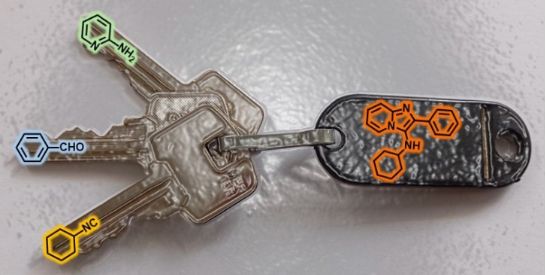
- excellent yields (71–89%). Dömling et al. have used glyoxal dimethyl acetal as orthogonal bifunctional monoprotected aldehyde to synthetize GBB dimers as potential fluorophores. More details are given in chapter 5 [43]. The GBB reaction can be exploited also in the late-stage functionalization of natural
- provide the ammonium 77. The intermediate 77 underwent Steven rearrangement to give a bridged polyheterocycle 78 in 28% yield. Unlike the previous examples, Jeong et al. [60] developed a cascade reaction by installing the additional ring prior to the GBB reaction (Scheme 26). The bifunctional 2-(2






Chiral bifunctional sulfide-catalyzed enantioselective bromolactonizations of α- and β-substituted 5-hexenoic acids
Beilstein J. Org. Chem. 2024, 20, 1794–1799, doi:10.3762/bjoc.20.158
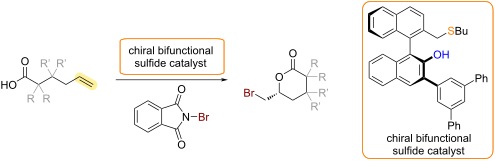
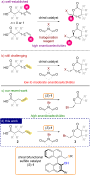
- without substituents on the carbon–carbon double bond have remained a formidable challenge. To address this limitation, we report herein the asymmetric bromolactonization of 5-hexenoic acid derivatives catalyzed by a BINOL-derived chiral bifunctional sulfide. Keywords: asymmetric catalysis
- remained a formidable challenge in the field of catalytic asymmetric synthesis (Scheme 1b) [23][24][25]. To address this limitation, we have investigated the use of BINOL-derived chiral bifunctional sulfide catalysts, which were developed by our group [10], in asymmetric bromolactonizations of α
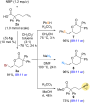
- bifunctional sulfide (S)-1 [26][27][28][29][30][31]. To further demonstrate the utility of our chiral bifunctional sulfide catalysts in challenging halolactonizations, we next turned our attention to the asymmetric bromolactonizations of 5-hexenoic acid derivatives 2 for the synthesis of optically active δ



Primary amine-catalyzed enantioselective 1,4-Michael addition reaction of pyrazolin-5-ones to α,β-unsaturated ketones
Beilstein J. Org. Chem. 2024, 20, 1518–1526, doi:10.3762/bjoc.20.136
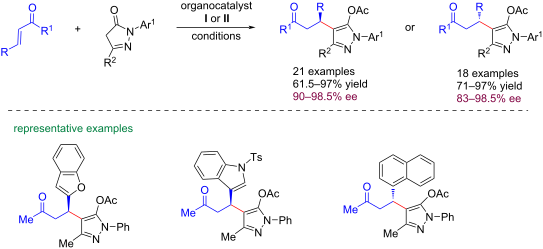
- -covalent catalysis via bifunctional hydrogen-bonding organocatalysts. The C-4 nucleophilicity of pyrazolin-5-ones was also explored in enantioselective reactions with α,β-unsaturated carbonyl compounds through covalent catalysis with chiral amine-based catalysts; however, it has achieved limited success




Challenge N- versus O-six-membered annulation: FeCl3-catalyzed synthesis of heterocyclic N,O-aminals
Beilstein J. Org. Chem. 2024, 20, 1412–1420, doi:10.3762/bjoc.20.123
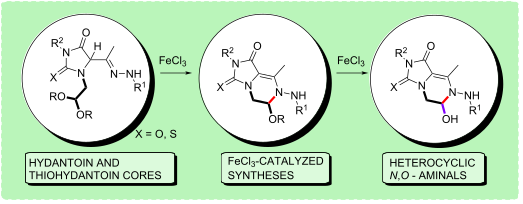
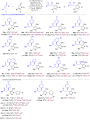
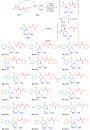
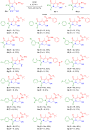
- of diversity-oriented synthesis of N-heterocycles via sequential multicomponent approaches, we envisioned that α-aminoacetals could act as bifunctional building blocks along with 1,2-diaza-1,3-diene (DD) coupling partners [22][23], in obtaining functionalized N-aminohydrazones as key intermediates




Hypervalent iodine-catalyzed amide and alkene coupling enabled by lithium salt activation
Beilstein J. Org. Chem. 2024, 20, 1405–1411, doi:10.3762/bjoc.20.122

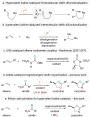
- , which then partitions into an ion pair suitable for olefin activation, followed by the addition of the bifunctional anionic carbamate (Scheme 1c). Our hypothesis here aims to directly access the reactivity of the cationic hypervalent iodine catalyst through an initial activation first, which we reason
- hypervalent iodine catalyst. The cationic hypervalent iodine catalyst could then activate the olefin to allow the addition of bifunctional nucleophiles such as an amide to achieve an overall olefin oxyamination process. We have previously reported a series of iodide-catalyzed processes, in which the
- bifunctional amide nucleophiles (Scheme 1e). Results and Discussion Our studies here focused on the development of hypervalent iodine-catalyzed amide and alkene coupling reaction [53][54][55]. In this case, we started with styrene (1) and benzamide (2) as the standard substrates. Using iodotoluene A as the



Cofactor-independent C–C bond cleavage reactions catalyzed by the AlpJ family of oxygenases in atypical angucycline biosynthesis
Beilstein J. Org. Chem. 2024, 20, 1198–1206, doi:10.3762/bjoc.20.102
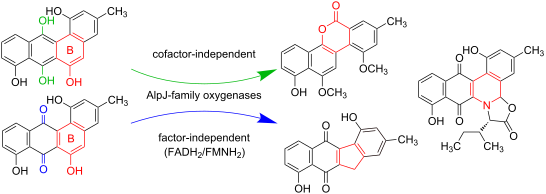
- quinone structure. Consequently, we redirected our focus towards alternative, more electron-rich substrates. In a preceding investigation, we identified that the bifunctional enzyme JadH proficiently converted prejadomycin (9) to 8, a compound demonstrated to spontaneously oxidize to 1 under aerobic
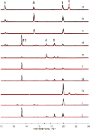
- biosynthetic intermediate in kinamycin biosynthesis, establishing AlpG as a bifunctional hydroxylase/dehydratase same to JadH (Figure 1, trace c) [25]. Next, employing the AlpG-catalyzed reaction of 9 as an in situ generation system of 8, we introduced AlpJ (in the absence of Fre) to the reaction. Apart from




Enhancing structural diversity of terpenoids by multisubstrate terpene synthases
Beilstein J. Org. Chem. 2024, 20, 959–972, doi:10.3762/bjoc.20.86
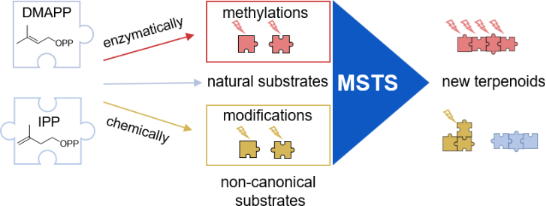
- ][20], and C15 and C20 [18]. For instance, PamTps1 from Plectranthus amboinicus (Lour.) Spreng has been characterized as bifunctional in converting compounds 3 and 4, respectively, to 6 and 7 both in vivo and in vitro (Table 1) [17]. In addition to the bifunctional plant TSs, a few plant MSTSs have







(Bio)isosteres of ortho- and meta-substituted benzenes
Beilstein J. Org. Chem. 2024, 20, 859–890, doi:10.3762/bjoc.20.78
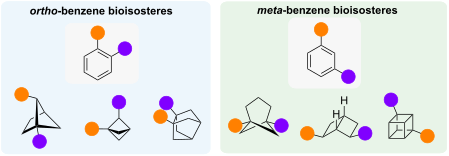
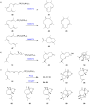
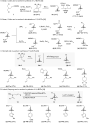
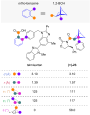
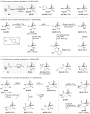
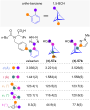
- itself accessible in good yields from allyl chloride 1 using a route based on that reported by Schlüter [28]. Bifunctional 1,2-BCP (±)-4 bearing orthogonally protected alcohol functionalities was obtained from 3a through a three-step sequence of strain-release radical ring-opening with iodochloromethane
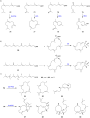
- alkenes including acrylates, vinyl sulfones, and acrylamides could all be incorporated and the number of accessible bifunctional 1,2-BCHs was increased further by chemical transformation (Scheme 3D) [35]. Among the reported transformations were reduction of the ketone (to (±)-34), hydrolysis of the
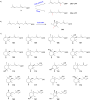
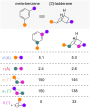
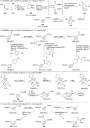
- transformations. Additional bifunctional [2]-ladderanes were accessible by further synthetic manipulations (Scheme 16C) [63]. Acid 152 could be transformed into protected amine 153 by Curtius rearrangement and alcohol 155 through reduction. The [2]-ladderane scaffold was also shown to be tolerant of oxidising

















Ortho-ester-substituted diaryliodonium salts enabled regioselective arylocyclization of naphthols toward 3,4-benzocoumarins
Beilstein J. Org. Chem. 2024, 20, 841–851, doi:10.3762/bjoc.20.76
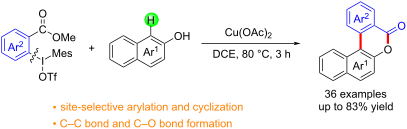
- -trifluoroborate-substituted diaryliodonium salts furnished iodonium zwitterions as bifunctional reagents [22][23][24][25]. Additionally, ortho-trifluoromethanesulfonate, N-sulfonyl, or tosylmethylene-substituted diaryliodonium salts can undergo intramolecular aryl migrations [26][27][28]. More recently, we


Chemoenzymatic synthesis of macrocyclic peptides and polyketides via thioesterase-catalyzed macrocyclization
Beilstein J. Org. Chem. 2024, 20, 721–733, doi:10.3762/bjoc.20.66
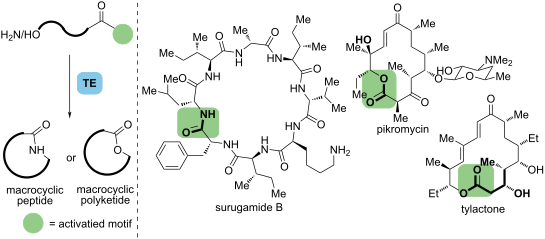
- manner catalyzed by homolog WolJ [63] and SurE G235L (Scheme 5b). Additionally, the above mentioned type I TE, TycC TE, can also tolerate ethylene glycol as a leaving group and gave tyrocidine A (1) in 70% yield, indicating that this convenient bifunctional linker may have a comparable applied range to N


Genome mining of labdane-related diterpenoids: Discovery of the two-enzyme pathway leading to (−)-sandaracopimaradiene in the fungus Arthrinium sacchari
Beilstein J. Org. Chem. 2024, 20, 714–720, doi:10.3762/bjoc.20.65
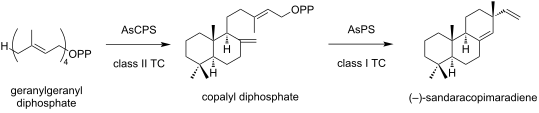
- underexplored family of natural products. In the biosynthesis of fungal LRDs, bifunctional terpene cyclases (TCs) consisting of αβγ domains are generally used to synthesize the polycyclic skeletones of LRDs. Herein, we conducted genome mining of LRDs in our fungal genome database and identified a unique pair of
- TCs subsequently catalyze the second cyclization to construct the polycyclic scaffold of natural products [5]. In plants, two independent αβγ tri-domain TCs, ent-CPP synthase (CPS) and ent-kaurene synthase (KS), are often used for this conversion [6], and a single bifunctional enzyme that successively
- employed [8]. In fungi, only bifunctional enzymes consisting of αβγ tri-domains have been identified to date [9][10][11][12][13]. In the evolutionary aspects, fungal bifunctional TCs are proposed to have been acquired from plants by a horizontal gene transfer event [14] and eukaryotic tri-domain TCs are


Copper-promoted C5-selective bromination of 8-aminoquinoline amides with alkyl bromides
Beilstein J. Org. Chem. 2024, 20, 155–161, doi:10.3762/bjoc.20.14
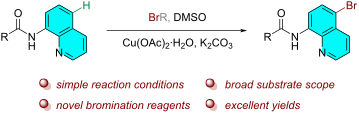
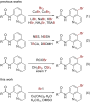
- -scale use. Therefore, novel bromination reagents and simple bromination approaches are still required to be established. Very recently, we reported a copper-catalyzed C5-bromination and difluoromethylation reaction of 8-aminoquinolines using ethyl bromodifluoroacetate as bifunctional reagent [30] and



Biphenylene-containing polycyclic conjugated compounds
Beilstein J. Org. Chem. 2023, 19, 1895–1911, doi:10.3762/bjoc.19.141
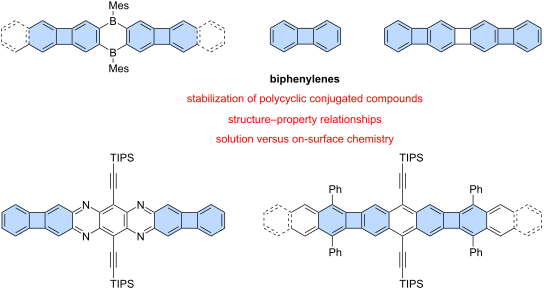
- = 0.07), and compound 64 displayed almost no fluorescence emission (λmax,em = 497 nm, Φem = NA). Naphthazarin–biphenylene hybrid structures Taking the advantage of naphthazarin's bifunctional Diels–Alder reactivity, Swager and his team succeeded in the synthesis of POA-type structures incorporating



N-Sulfenylsuccinimide/phthalimide: an alternative sulfenylating reagent in organic transformations
Beilstein J. Org. Chem. 2023, 19, 1471–1502, doi:10.3762/bjoc.19.106
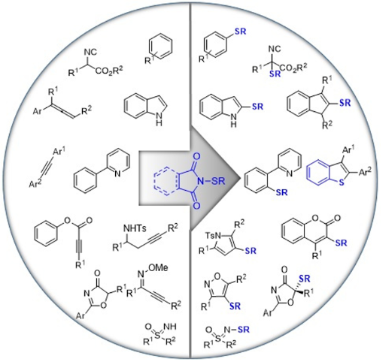
- with N-(arylthio)phthalimide 14 and N-chlorophthalimide (96) under phase-transfer conditions was developed by Maruoka and co-workers (Scheme 39) [74]. The presence of chiral bifunctional catalysts C and D with the amide, or sulfonamide moieties could improve the enantioselectivity. Also, the
- ) [92]. Besides α-fluoro-β-ketoamides, α-chloro-substituted ketoamide was also tolerated well in this transformation. Screening several chiral guanidines as the bifunctional catalyst revealed that these organocatalysts were suitable for the synthesis of α-fluoro/chloro-α-sulfenyl-β-ketoamides 144 and