Search results
Search for "hydrogen bonds" in Full Text gives 455 result(s) in Beilstein Journal of Organic Chemistry. Showing first 200.
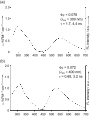
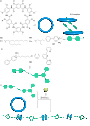
Synthesis of an aza[5]helicene-incorporated macrocyclic heteroarene via oxidation of an o-phenylene-pyrrole-thiophene icosamer
Beilstein J. Org. Chem. 2025, 21, 1561–1567, doi:10.3762/bjoc.21.119
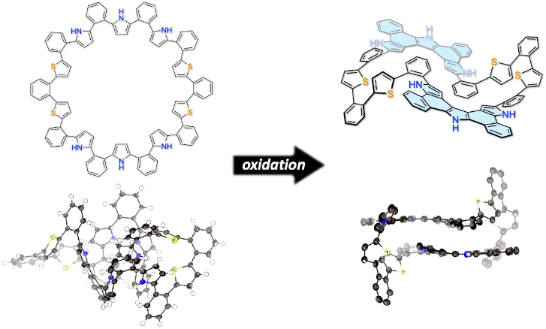
- -phenylene and aza[5]helicene segments, and between the o-phenylene and thiophene segments, were 37.52° and 44.28°, respectively. Four NH sites of the aza[5]helicene moiety formed hydrogen bonds with DMSO molecules in the crystal lattice, as observed in aza[n]helicenes recently reported [28], while the other


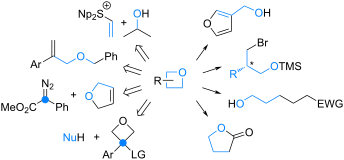
Oxetanes: formation, reactivity and total syntheses of natural products
Beilstein J. Org. Chem. 2025, 21, 1324–1373, doi:10.3762/bjoc.21.101
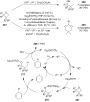
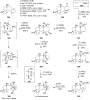
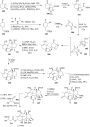
- by the same research group [65][66], the Ir catalyst initially interacts through hydrogen bonds with the quinolone substrate 84, and then upon irradiation, energy transfer occurs to the unbound ketone which enantioselectively reacts with the bound quinolone. Unfortunately, investigations of the


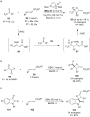


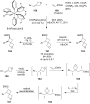






On the photoluminescence in triarylmethyl-centered mono-, di-, and multiradicals
Beilstein J. Org. Chem. 2025, 21, 964–998, doi:10.3762/bjoc.21.80









Dicarboxylate recognition based on ultracycle hosts through cooperative hydrogen bonding and anion–π interactions
Beilstein J. Org. Chem. 2025, 21, 884–889, doi:10.3762/bjoc.21.72
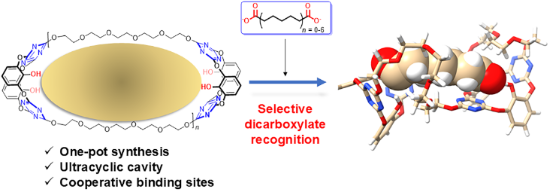
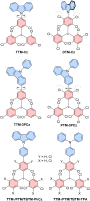
- dicarboxylate C72− is included within the cavity of B4aH. The two subcavities interact synergistically with the included dicarboxylate; the two terminal carboxylate groups are respectively positioned within electron-deficient cavities of the submacrocycles, forming hydrogen bonds (2.49–2.59 Å) with the two
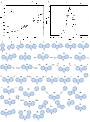
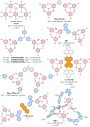
- ) Crystal structure of B4aH (hydrogen atoms are omitted for clarity), and (c) the stacking structure of the crystal of B4aH (the blue dotted lines represent hydrogen bonds). (a) The structures of host and guests, (b) 1H NMR spectra (298 K, 400 MHz, CD3CN) of B4aH upon titration with C62− (c(B4aH) = 1 mM
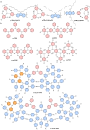
- ), (c) chemical shift changes of Ha versus titration equivalents c(dicarboxylate)/c(B4aH), and (d) association constants of host and guests. (a–c) DFT-optimized structure of the B4aH-C72− complex. The blue dotted lines represent hydrogen bonds and the black dotted lines represent anion–π interactions


Unraveling cooperative interactions between complexed ions in dual-host strategy for cesium salt separation
Beilstein J. Org. Chem. 2025, 21, 845–853, doi:10.3762/bjoc.21.68
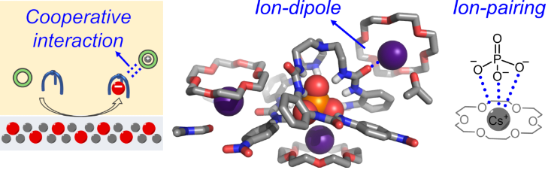
- highly efficient Cs3PO4 extraction. Results and Discussion The tripodal hexaurea receptor L is comprised of a central tren (tris(2-aminoethyl)amine) core and three arms of ortho-phenylene bis(urea) units, which can fold inward to encapsulate an anion inside the cavity through up to 12 hydrogen bonds [30
- %). The cooperative interaction of complexed Cs+ with complexed phosphate is illustrated in single crystal structure (Figure 5). Like other anions, phosphate is also complexed inside the cavity of hexaurea receptor through twelve hydrogen bonds. The average N···O distance is 2.79 ± 0.03 Å, corresponding
- ion-dipole and ion-pairing are shown. Single crystal structure of complexed Cs2SO4 with 18-crown-6 and tripodal receptor L (CCDC: 2411573). One sulfate anion is encapsulated inside the hexaurea cavity through 12 × N–H···O hydrogen bonds. One Cs+ cation is co-stabilized by electrostatic interactions


4-(1-Methylamino)ethylidene-1,5-disubstituted pyrrolidine-2,3-diones: synthesis, anti-inflammatory effect and in silico approaches
Beilstein J. Org. Chem. 2025, 21, 817–829, doi:10.3762/bjoc.21.65
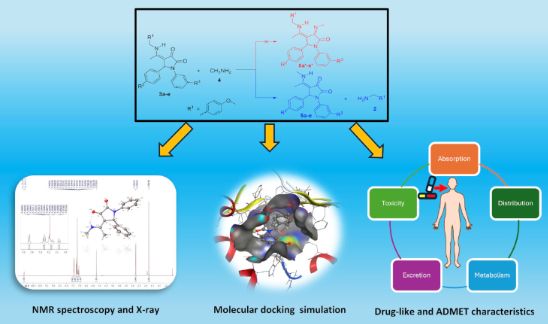
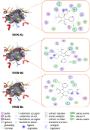
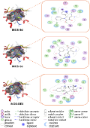
- well as ADMET properties. All compounds satisfied these criteria, indicating favorable oral bioavailability. Molecular docking analysis showed that compounds 5a–e act as ligands for inducible nitric oxide synthase (iNOS), especially with Cys200 and Ser242 via hydrogen bonds. In addition, van der Waals
- π–π stacking is observed in the crystal packing of the complexes, but only C–H···π interactions are present. Two C–H···O hydrogen bonds complete the interactions stabilizing the crystal packing (Figure S1 and Table S2 in Supporting Information File 1). Inhibitory activity of NO production It is
- affinity, with a docking score of −9.51 kcal/mol, outperforming the reference compound dexamethasone (iNOS–DEX, −8.55 kcal/mol). Key hydrogen bonds with residues Cys200 and Ser242, together with extensive van der Waals interactions involving Thr190, Trp194, Gly202, Pro350, Phe369, and Tyr489, further


Orthogonal photoswitching of heterobivalent azobenzene glycoclusters: the effect of glycoligand orientation in bacterial adhesion
Beilstein J. Org. Chem. 2025, 21, 736–748, doi:10.3762/bjoc.21.57
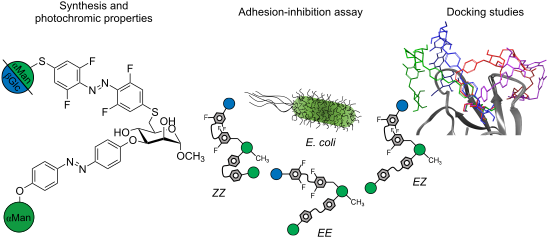
- of hydrogen bonds (cf. Supporting Information File 1, Figures S20 and S21 for 1 and Figures S23 and S24 for 2). Apparently, secondary interactions at the periphery of the FimH CRD, which can be exerted by the scaffold mannoside and the second antenna in 1 or 2, respectively, can be quite different
- with FimH (Supporting Information File 1, Figures S19–S21). In addition to the π–π interaction of the CRD-bound mannose-projecting antenna of the EE isomer with Tyr48, the complex is stabilized by hydrogen bonds of the scaffold mannoside to Tyr48 and in case of the glucose moiety to Thr51, Ile52, and
- Thr53. The high binding energy of the ZZ isomer, on the other hand, can be explained by additional hydrogen bonds of the scaffold mannoside to Asn138 and Ser139 (but not to Tyr48) and furthermore, the glucose moiety interacts with Arg92, Asn135, Asn138, and Asp140. The binding energies predicted for the


Vinylogous functionalization of 4-alkylidene-5-aminopyrazoles with methyl trifluoropyruvates
Beilstein J. Org. Chem. 2025, 21, 533–540, doi:10.3762/bjoc.21.41
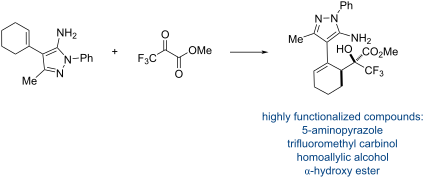
- the double bond to the carbonyl in a relative re-si approach, generating intermediate I, which undergoes a tautomerization to recover the aromatic pyrazole ring. The increased yield observed in some cases with SQ-1 may be attributed to the formation of additional hydrogen bonds that enhance



Unprecedented visible light-initiated topochemical [2 + 2] cycloaddition in a functionalized bimane dye
Beilstein J. Org. Chem. 2025, 21, 500–509, doi:10.3762/bjoc.21.37
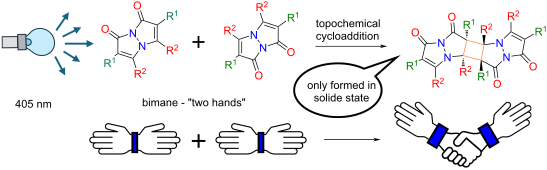
- groups play a role by increasing the number of hydrogen bonds (C–H···O, 3.18(5)–3.62(6) Å) The intermolecular distances between the C–H groups and the chlorine atoms in Cl2B (A) are C13A–H13···Cl1A, 3.69(5), and C18A–H18C···Cl2A, 3.69(3) Å, indicating further molecular attraction [22]. A previously


Photomechanochemistry: harnessing mechanical forces to enhance photochemical reactions
Beilstein J. Org. Chem. 2025, 21, 458–472, doi:10.3762/bjoc.21.33
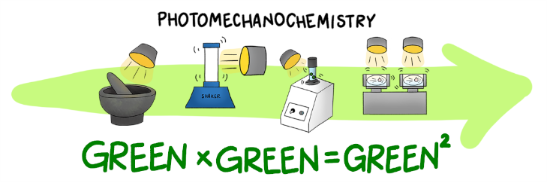
- coordinative bonds on one side and hydrogen bonds on the other. Surprisingly, when the crystals were manually ground for 5 min before irradiation, the conversion to dimer 1.2 remarkably increased to 88% in only 4 h of UV irradiation time. Overall, the role of manual grinding was not only to increase the


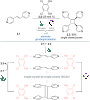


Beyond symmetric self-assembly and effective molarity: unlocking functional enzyme mimics with robust organic cages
Beilstein J. Org. Chem. 2025, 21, 421–443, doi:10.3762/bjoc.21.30
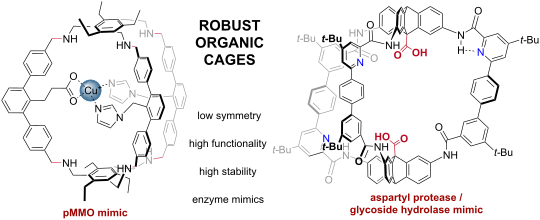
- ]. Chemists thus turned toward scaffolds that were easier to access [36][111]. Self-assembled containers, capsules, nanoreactors In the 1990s, Rebek popularized “softball”/”tennis ball” reactors [112][113][114]. These “capsules” [115][116][117] are two or more molecules that self-assemble via hydrogen bonds
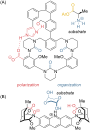
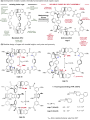
- the cage framework to polarize adjacent aryl–hydrogen bonds in the ligands by enough to coordinate and activate substrates (Figure 5E) [190]. Here, the use of bulky counteranions reinforces the cationic cage interior, which is enhanced further by use of lower polarity solvents, and the pKa of confined




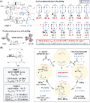
Streamlined modular synthesis of saframycin substructure via copper-catalyzed three-component assembly and gold-promoted 6-endo cyclization
Beilstein J. Org. Chem. 2025, 21, 226–233, doi:10.3762/bjoc.21.14
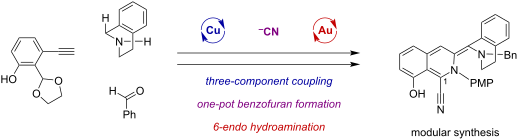
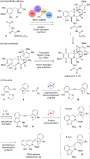
- region of the DNA double helix, leading to the formation of a reversible covalent bond [9][10][11][12]. In this process, the oxygen functional groups at the C8 and C18 positions of the core scaffold interact with the DNA bases through multipoint hydrogen bonds (HBs), allowing recognition of approximately




Hydrogen-bonded macrocycle-mediated dimerization for orthogonal supramolecular polymerization
Beilstein J. Org. Chem. 2025, 21, 179–188, doi:10.3762/bjoc.21.10
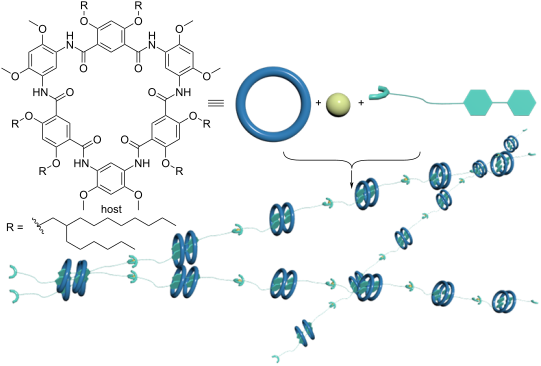
- aromatic amide macrocycles [36][37][38][39][40][41][42], a class of cyclic compounds comprising a number of aromatic residues with consecutive intramolecular hydrogen bonds and amide linkages, stand out as versatile host molecules as their cavity size, peripheral side chains, and recognition sites are



Recent advances in organocatalytic atroposelective reactions
Beilstein J. Org. Chem. 2025, 21, 55–121, doi:10.3762/bjoc.21.6
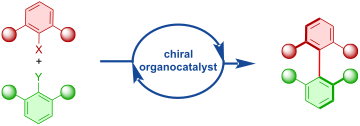
- the azodicarboxylate as crucial to forming hydrogen bonds with the organocatalyst. Benzylation of this nitrogen or substitution of just one of the carboxylate groups led to no product being observed. A series of naphthylindoles 71 was tested for potential biological activity and showed promising
- with key hydrogen bonds between substrates, organocatalyst, and HFIP. Sheng et al. utilized the BINOL-derived organocatalyst C34 in the reaction of benzylindoles 148 and 2-indolylmethanols 149 leading to the bisindoles 150 (Scheme 44) [72]. Very good yields and good to high enantioselectivities were
- racemization process of 161 was observed at 70 °C, and the experimentally determined rotational barrier of 30.5 kcal/mol was observed at 100 °C in toluene. Control experiments gave insights into the potential importance of hydrogen bonds on the nitrogen atoms of the isoindolinone ring in 160 and one indole






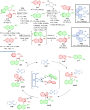


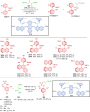

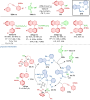


Reactivity of hypervalent iodine(III) reagents bearing a benzylamine with sulfenate salts
Beilstein J. Org. Chem. 2024, 20, 3281–3289, doi:10.3762/bjoc.20.272
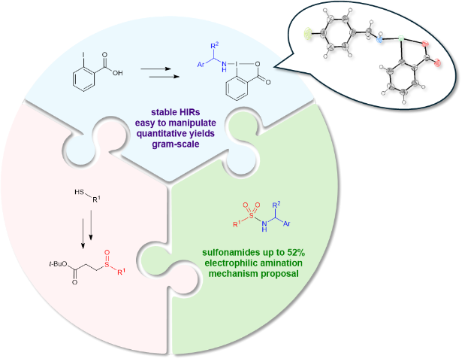
- , commonly referred to as sulfa drugs. These include top seller drugs, e.g., antimicrobials, anti-inflammatories, antihypertensives, and antitumor agents [24][25][26]. Particularly, the sulfonamide motif can act as a bioisostere of carboxylic acids, establishing a set of hydrogen bonds similar to those



Synthesis of extended fluorinated tripeptides based on the tetrahydropyridazine scaffold
Beilstein J. Org. Chem. 2024, 20, 3174–3181, doi:10.3762/bjoc.20.262
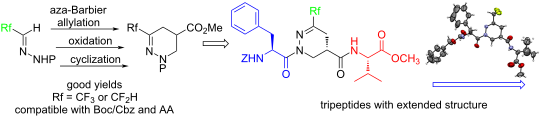
- phenylalanine) indicate that they are not involved in hydrogen bonds. Furthermore, the 2D 1H-1H NOE NMR spectra and the chemical shifts of the NH protons of compounds 8f’, 8e, and 8e’ did not show any significant differences compared to 8f. Overall, the ability of the new fluorinated β-analogs of


Advances in the use of metal-free tetrapyrrolic macrocycles as catalysts
Beilstein J. Org. Chem. 2024, 20, 3085–3112, doi:10.3762/bjoc.20.257
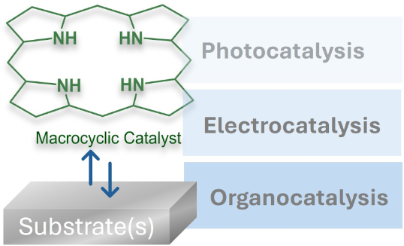
- adopts a 1,3-alternate conformation and binds simultaneously to the epoxide O-atom and iodide anion via (NH···O and NH···I) hydrogen-bonding interactions. The TBA countercation is bound to the O-atom of the epoxide ring with hydrogen bonds and is situated away from the I− anion. This crucial transition
- ) via NH+···O2 hydrogen bonds initiated the ORR, whereas an increase in the HTB concentration inhibited the ORR by blocking NH+ binding sites for O2. Further, the role of the proton source on ORR was confirmed by testing a stronger acid, TFA: in this case, the O2 reduction rate is decreased to almost


Cyclodextrin-based rotaxanes for polymer materials: challenge on simultaneous realization of inexpensive production and defined structures
Beilstein J. Org. Chem. 2024, 20, 3026–3049, doi:10.3762/bjoc.20.252
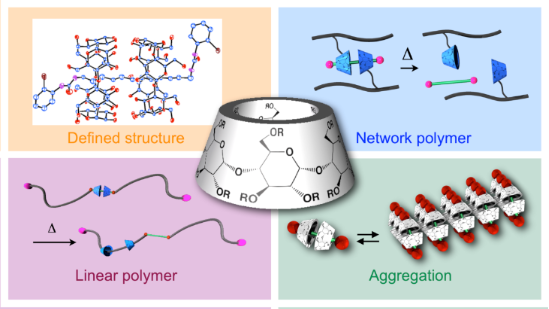
- nature of the rotaxane framework, CD-based polyrotaxane is known to form an aggregation structure by the formation of hydrogen bonds among the CD units [89][90][91][92][93]. Owing to the inclusion structure on the polyrotaxane, it is likely to form a hexagonal packing-type crystalline structure, which is






Photoluminescence color-tuning with polymer-dispersed fluorescent films containing two fluorinated diphenylacetylene-type fluorophores
Beilstein J. Org. Chem. 2024, 20, 2682–2690, doi:10.3762/bjoc.20.225
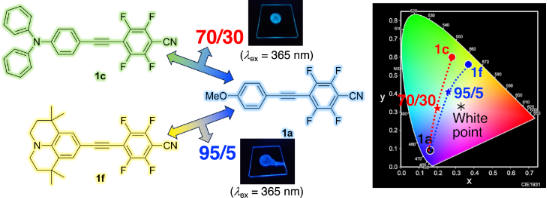
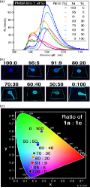
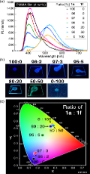
- short-axis direction of the electron-deficient aromatic ring significantly retards the internal conversion via the formation of H···F hydrogen bonds, leading to a marked blue fluorescence in the crystalline state (Figure 1b) [17][18][19][20]. Recently, the introduction of N,N-disubstituted amino groups
- . Judging from the fact that compounds 1a and 1c form a tight molecular packing via intermolecular H···F hydrogen bonds which suppress non-radiative deactivation in the crystalline state [20][21], we speculated that the polymer dispersion state had lost the intermolecular interactions, which accelerated the


Deciphering the mechanism of γ-cyclodextrin’s hydrophobic cavity hydration: an integrated experimental and theoretical study
Beilstein J. Org. Chem. 2024, 20, 2635–2643, doi:10.3762/bjoc.20.221
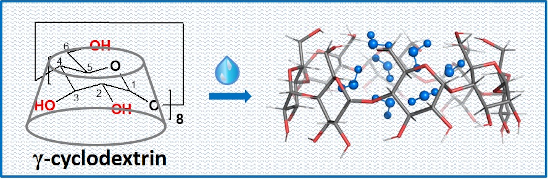
- intramolecular hydrogen bonds between themselves, with water molecules in aqueous solution, or with guest molecules that fit into host’s cavity [20]. The primary hydroxy groups in the nonhydrated γ-CD (located in the upper/narrow rim; O6 side of the truncated cone) can be coordinated (arranged) in two ways
- (Figure 1): (1) facing inward into the cavity, which creates a belt of hydrogen bonds (the so-called “head–tail” arrangement, “closed” conformation). Notably, in this way, the size of the cavity vestibule is significantly reduced and in the second way (2) they are directed outside the cavity, thus
- enlarging the aperture (“open” configuration). In the “open” configuration, the primary hydroxy groups are not involved in the intramolecular hydrogen-bonding interactions with neighboring OH groups. Relatively weak hydrogen bonds are formed between the secondary hydroxy groups at the wider/lower rim of the


Base-promoted cascade recyclization of allomaltol derivatives containing an amide fragment into substituted 3-(1-hydroxyethylidene)tetronic acids
Beilstein J. Org. Chem. 2024, 20, 2585–2591, doi:10.3762/bjoc.20.217
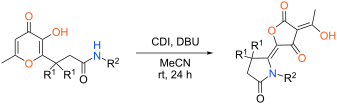
- compound 4t with a cyclohexylamine moiety the final product contains 20% of Z-isomer. At the same time, the considered products are differed by disposition of double and hydrogen bonds in the tetronic acid moiety. So, in the case of hydrazide derivatives the additional nitrogen atom participates in the
- fragments and hydrogen bonds leads to the alteration in chemical behavior. Based on the aforementioned stability of tetronic acids 4 toward action of MeOH we supposed that various derivatives at the hydroxyethylidene group can be synthesized. For example, interaction of compound 4a with hydrazine in
- refluxing EtOH allowed us to obtain substituted enehydrazine 7 (Scheme 5a). The similar condensation with amine 8 led to enamine derivative 9 (Scheme 5b). Based on the data of X-ray analysis compound 7 has the same configuration of double and hydrogen bonds as in the case of starting tetronic acids 4


Synthesis, electrochemical properties, and antioxidant activity of sterically hindered catechols with 1,3,4-oxadiazole, 1,2,4-triazole, thiazole or pyridine fragments
Beilstein J. Org. Chem. 2024, 20, 2378–2391, doi:10.3762/bjoc.20.202
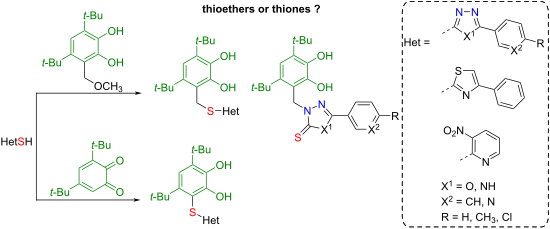
- corresponding thiones. The yield of reaction products ranges from 42 to 80%. The crystal structures of catechols with 3-nitropyridine or 1,3,4-oxadiazole-2(3H)-thione moieties were established by single-crystal X-ray analysis. The possibility of forming intra- and intermolecular hydrogen bonds has been
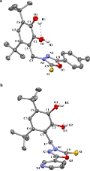
- of neighboring molecules [57][58][59][60][61]. The intra- and intermolecular interactions in crystals 5, 6·0.5CH3CN, and 8 lead to different complex structural motifs in crystals of these compounds. Two intramolecular hydrogen bonds (Figure 1) are observed in the crystal structure of 5: between OH
- heterocycle moiety. The formation of intramolecular hydrogen bonds between the OH group and the pyridine ring facilitates the electrooxidation process (1.,0 V) (Supporting Information File 1, Figure S21) for catechol thioether 5. The second oxidation peak is shifted to the anodic region due to the influence




Factors influencing the performance of organocatalysts immobilised on solid supports: A review
Beilstein J. Org. Chem. 2024, 20, 2129–2142, doi:10.3762/bjoc.20.183
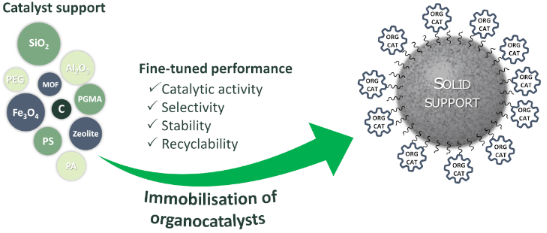
- binding with an electron-withdrawing group. This acidity can result in stronger hydrogen bonds between the substrate and the catalyst C30, which contains a bis(trifluoromethyl)phenyl-modified squaramide moiety. This stronger interaction potentially enhances the catalyst–substrate interaction, allowing for


Computational toolbox for the analysis of protein–glycan interactions
Beilstein J. Org. Chem. 2024, 20, 2084–2107, doi:10.3762/bjoc.20.180
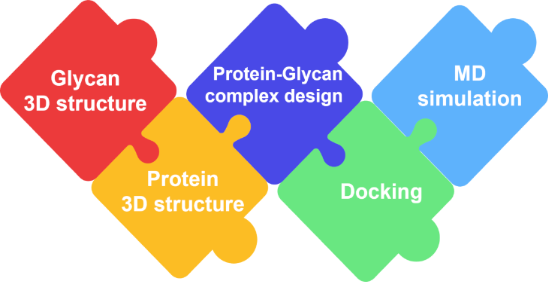
- refinement. Among them, PROCHEK [98] is an open-source program that permits to check the quality of the protein structure by analysing the Ramachandran plots, the planarity of peptide bonds, the bad non-bonded interactions, the distortions of the geometry around the Cα atoms, the energies of hydrogen bonds
- molecular docking method specifically designed to accommodate carbohydrate-like compounds, employing a genetic algorithm that allows for ligand and receptor side-chain flexibility. Designed specifically for protein–carbohydrate interactions, SLICK includes terms that consider CH–π interactions, hydrogen
- bonds, smoothed van der Waals interactions, and electrostatic interactions. The SLICK scoring function, tailored for carbohydrates, enhances the accuracy of predicting binding modes and free binding energies. Compared to other programs such as AutoDock and FlexX (see below), BALLDock/SLICK demonstrates


The Groebke–Blackburn–Bienaymé reaction in its maturity: innovation and improvements since its 21st birthday (2019–2023)
Beilstein J. Org. Chem. 2024, 20, 1839–1879, doi:10.3762/bjoc.20.162
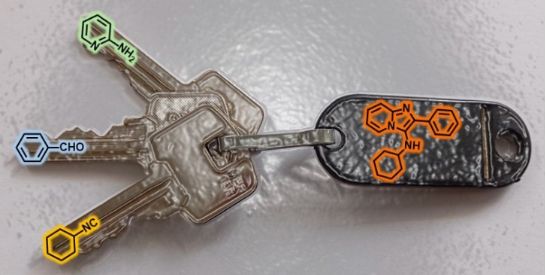
- , albeit with a slow but continuous deterioration of catalytic activity. Preliminary molecular docking and molecular dynamics simulation studies revealed that Thr40 and Ser105 residues played a crucial role in catalyzing the GBB reaction, forming hydrogen bonds with 2-aminopyridine substrate, increasing