


Search results
Search for "pKa" in Full Text gives 252 result(s) in Beilstein Journal of Organic Chemistry. Showing first 200.
Investigation of a bimetallic terbium(III)/copper(II) chemosensor for the detection of aqueous hydrogen sulfide
Beilstein J. Org. Chem. 2024, 20, 2818–2826, doi:10.3762/bjoc.20.237
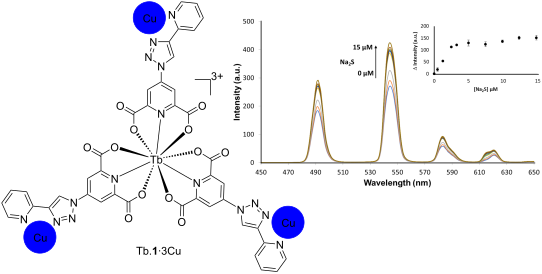
- ). It was interesting to note that neither of the sulfur-containing compounds caused a remarkable increase in luminescence, especially lipoic acid and glutathione which contain an –S–S (pKa = 4.7) and –SH (pKa = 9.65) group respectively similar to HS−(aq) (pKa = 6.9). This demonstrates that the sensors


C–C Coupling in sterically demanding porphyrin environments
Beilstein J. Org. Chem. 2024, 20, 2784–2798, doi:10.3762/bjoc.20.234
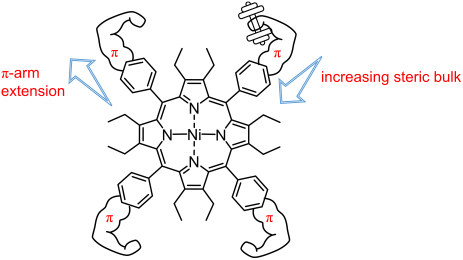
- stability than boronic acids and other employed esters as the four methyl groups protect the boron center from attack of water [44][45], preventing protodeboronation from the hydrolysis route. However, protodeboronation can be complex when it comes to pKa considerations, for example, 3,5
- -dinitrophenylboronic acid has a marginally lower pKa than pentafluorophenyl boronic acid [46]; however, it undergoes protodeboronation, several orders of magnitude slower [47]. The synthesis of porphyrin 31 with a benzothiophene moiety, proved challenging (Table 1, entries 14–19). Use of a microwave-assisted procedure


HFIP as a versatile solvent in resorcin[n]arene synthesis
Beilstein J. Org. Chem. 2024, 20, 2469–2475, doi:10.3762/bjoc.20.211
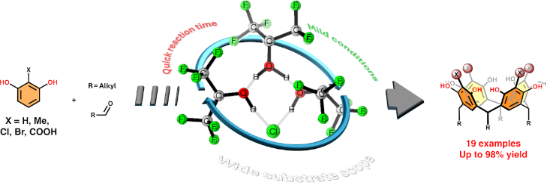
- ][75]. Variations in catalyst nature between a Brønsted and Lewis acid, and the acid’s pKa (Table 1, entries 6–8) did not improve the yield compared to HCl (Table 1, entry 4). Last, further exploration of the conditions using HFIP/HCl revealed that the reaction progress achieves its maximum conversion


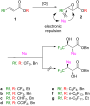
Facile preparation of fluorine-containing 2,3-epoxypropanoates and their epoxy ring-opening reactions with various nucleophiles
Beilstein J. Org. Chem. 2024, 20, 2421–2433, doi:10.3762/bjoc.20.206
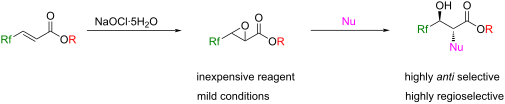
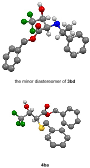
- decreased the chemical yields as well as the diastereomeric ratios (Table 3, entries 1–4). The higher pKa values of the carbonyl α-proton of 4 (for example, the pKa values of the protons of X-CH2C(O)Ph in DMSO were reported to be 17.1 (X: PhS) [45] and 20.3 (X: Ph2N) [46]) would result in the contamination
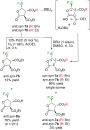
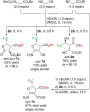
- , allowing to isolate the acyclic hydroxyester anti-9e in 76% yield. Smooth conversion to the dihydrofuran syn-7e was observed from this intermediary compound anti-9e by refluxing the crude solution in AcOEt. Different from these outcomes, other possible nucleophilic candidates like acetylacetone (pKa value





pKalculator: A pKa predictor for C–H bonds
Beilstein J. Org. Chem. 2024, 20, 1614–1622, doi:10.3762/bjoc.20.144
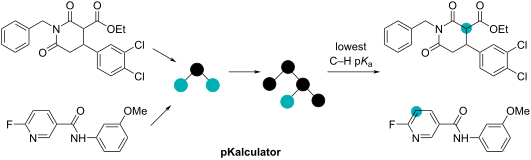
- Rasmus M. Borup Nicolai Ree Jan H. Jensen Department of Chemistry, University of Copenhagen, Copenhagen, DK-2100, Denmark 10.3762/bjoc.20.144 Abstract Determining the pKa values of various C–H sites in organic molecules offers valuable insights for synthetic chemists in predicting reaction sites
- . As molecular complexity increases, this task becomes more challenging. This paper introduces pKalculator, a quantum chemistry (QM)-based workflow for automatic computations of C–H pKa values, which is used to generate a training dataset for a machine learning (ML) model. The QM workflow is
- benchmarked against 695 experimentally determined C–H pKa values in DMSO. The ML model is trained on a diverse dataset of 775 molecules with 3910 C–H sites. Our ML model predicts C–H pKa values with a mean absolute error (MAE) and a root mean squared error (RMSE) of 1.24 and 2.15 pKa units, respectively


![[Graphic 9]](/bjoc/content/inline/1860-5397-20-144-i12.svg?max-width=637&scale=1.3000021)


Electrocatalytic hydrogenation of cyanoarenes, nitroarenes, quinolines, and pyridines under mild conditions with a proton-exchange membrane reactor
Beilstein J. Org. Chem. 2024, 20, 1560–1571, doi:10.3762/bjoc.20.139
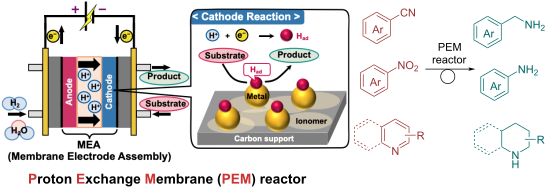
- of 3a. Based on this hypothesis, we examined the reduction of 1a in the presence of several acids (Table 2). First, electrochemical reduction was performed with 0.2 or 1.0 equiv of acetic acid, but the yield of 3a did not decrease, suggesting that 2a could not be trapped by acetic acid (pKa = 4.75
- ). To ensure the capture of 2a, we performed reduction with phosphoric acid (pKa = 2.12). Although the generation of 3a was suppressed, only a trace amount of 2a was obtained, and almost 1a was recovered (Table 2, entry 4). This was probably because the presence of water inhibited the reaction
- . Therefore, it was necessary to perform the reaction under anhydrous conditions. Hence, we used ethyl phosphate (mono- and di-mixture) (pKa = 1.42), which reacts easily under anhydrous conditions. As expected, the generation of 3a was suppressed and 2a was selectively obtained (Table 2, entry 5). With the


Synthesis of 1,4-azaphosphinine nucleosides and evaluation as inhibitors of human cytidine deaminase and APOBEC3A
Beilstein J. Org. Chem. 2024, 20, 1088–1098, doi:10.3762/bjoc.20.96
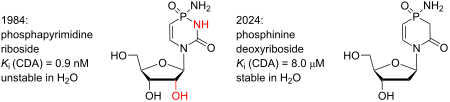
- observed that the β-anomer of charge-neutral nucleoside Vb exhibited similar inhibition of hCDA as the control dZ (IIc). Presence of a negative charge in nucleoside Va led to lack of inhibition at pH 7.4. We assumed that protonation of Va might result in some inhibition of hCDA. However, the pKa of Va was


Novel route to enhance the thermo-optical performance of bicyclic diene photoswitches for solar thermal batteries
Beilstein J. Org. Chem. 2024, 20, 1053–1068, doi:10.3762/bjoc.20.93
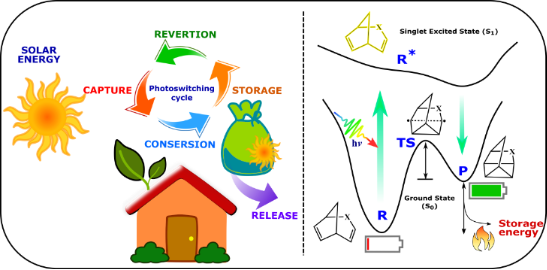
- TBR barrier were accounted at the (8,8)-CASPT2/6-311++G** level. These calculations performed in the presence of solvents were modelled using the continuum solvation model density (SMD) solvation model. The pure implicit SMD solvation model has poor reliability to predict the pKa values, and therefore


Auxiliary strategy for the general and practical synthesis of diaryliodonium(III) salts with diverse organocarboxylate counterions
Beilstein J. Org. Chem. 2024, 20, 1020–1028, doi:10.3762/bjoc.20.90
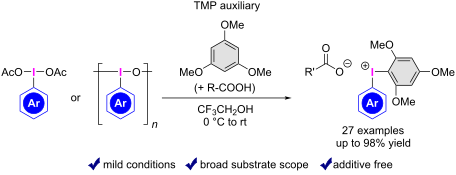
- a cartridge filled with powdered oxone® for in situ generation of bis(trifluoroacetoxyiodo)arenes and their reaction with electron-rich arene or arylboronic acid [19] (Scheme 1B). Carboxylic acids, such as acetic acid and benzoic acid, characterized by substantial difference in pKa values when


Three-component N-alkenylation of azoles with alkynes and iodine(III) electrophile: synthesis of multisubstituted N-vinylazoles
Beilstein J. Org. Chem. 2024, 20, 891–897, doi:10.3762/bjoc.20.79
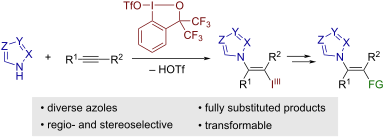
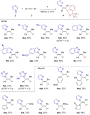
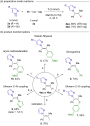
- ) resulted in 4aa as the major adduct, accompanied by the tetrazole adducts 4ja and 4ja’ (the ratio 4aa/4ja/4ja’ = 71:21:8; Scheme 3b). Superficially, these results appear correlated with the acidity of the corresponding azoles (pKa value: pyrazole, 19.8; 1,2,3-triazole, 13.9; tetrazole, 8.2), with the



Activity assays of NnlA homologs suggest the natural product N-nitroglycine is degraded by diverse bacteria
Beilstein J. Org. Chem. 2024, 20, 830–840, doi:10.3762/bjoc.20.75
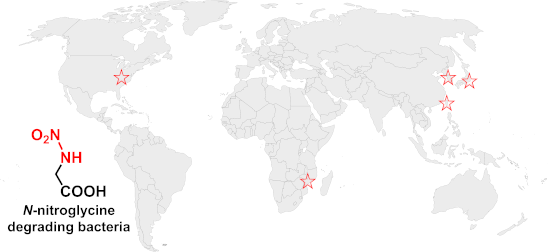
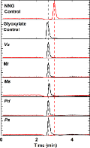
- metabolic enzymes. In addition, it has been shown to irreversibly inhibit isocitrate lyase 1 (ICL1) from Mycobacterium tuberculosis [40], and key metabolic protein for these pathogens [41]. Isocitrate lyases convert isocitrate to glyoxylate and succinate. Deprotonation of 3NP (pKa = 9.0) results in the
- transition analog of carboxylate groups, resulting in nitro compounds also acting as tight-binding reversible inhibitors [42]. Deprotonation of NNG also results in formation of the corresponding nitronate, albeit with a pKa of 6.6 [24], far lower than that for 3-NP (Scheme 2). Therefore, a much larger




Advancements in hydrochlorination of alkenes
Beilstein J. Org. Chem. 2024, 20, 787–814, doi:10.3762/bjoc.20.72
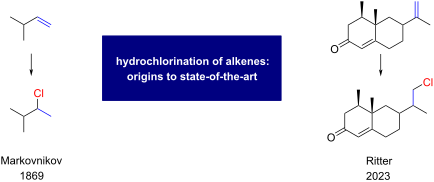
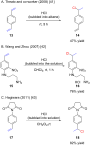
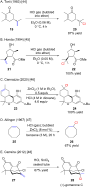
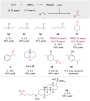
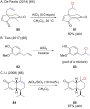
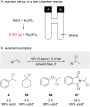
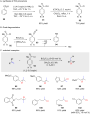
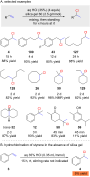
- ) [78]. Another advantage of the MH HAT process is that the α-C–H bond in the corresponding radical is comparatively stable, whereas a carbocation has superacidic α-C–H bonds with a pKa of ≈ −17 [79]. Therefore, polar hydrochlorination reactions are in competition with elimination reactions which is not












Synthesis of 2,2-difluoro-1,3-diketone and 2,2-difluoro-1,3-ketoester derivatives using fluorine gas
Beilstein J. Org. Chem. 2024, 20, 460–469, doi:10.3762/bjoc.20.41
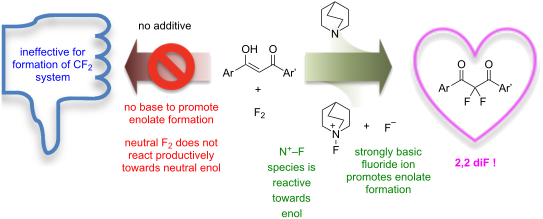
- estimated from pKa differences between acidic species and potential base species. The pKa(MeCN) for dibenzoylmethane (1a) can be estimated from pKa(DMSO) [50], where pKa(MeCN) = pKa(DMSO) + 12.9 = 13.4 + 12.9 = 26.3. Mayr and co-workers have shown the 2-fluoro-substituted species to be only slightly less
- this base that accelerates enolization of 2a–i-keto to allow difluorination to occur. The fluoride ion is a relatively strong base (pKa(MeCN) of HF is ≈25 based on pKa(DMSO) [55][56]), especially when formed in situ under anhydrous conditions, where solvation of fluoride ion is not possible. Since the
- pKa(MeCN) of 1a-keto is ≈26.3, and we expect a pKa(MeCN) of 2a-keto to be similar in value [51][52], we suggest fluoride ion may be sufficiently basic to cause significant acceleration of the deprotonation of 2a–i-keto and allow formation of 2a–i-enolates, which then react rapidly with fluorine gas


Facile approach to N,O,S-heteropentacycles via condensation of sterically crowded 3H-phenoxazin-3-one with ortho-substituted anilines
Beilstein J. Org. Chem. 2024, 20, 336–345, doi:10.3762/bjoc.20.34
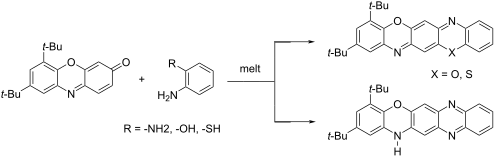
- conditions. The reactions proceed readily in refluxing acidified (pKa = 1–5) ethanol solutions of the amine hydrochlorides to give 2-monosubstituted derivatives of 3H-phenoxazin-3-ones in a moderate yield [10][17]. In the present work, we intended to explore the reaction of 3H-phenoxazin-3-ones with aromatic


Additive-controlled chemoselective inter-/intramolecular hydroamination via electrochemical PCET process
Beilstein J. Org. Chem. 2024, 20, 264–271, doi:10.3762/bjoc.20.27
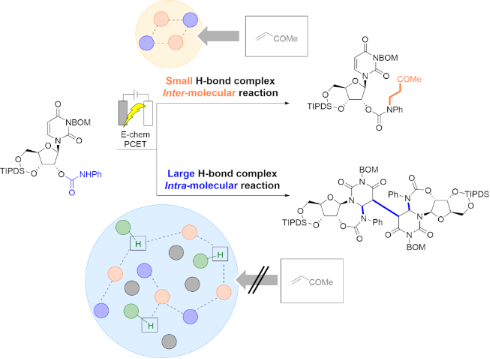
- , entry 3); thus, the phosphate base plays a crucial role in N-alkylation, while its basicity is insufficient to promote aza-Michael addition (pKa of the conjugate acid of the phosphate base is 1.72 in H2O) [12]. Furthermore, N-alkylation proceeded in a divided cell (anodic chamber); thus, the possibility
- current (Figure 2B, blue line). We considered that the inter- and intramolecular chemoselectivities were derived from the pKa of the proton sources. The pre-organization of the amide substrate and phosphate bases is an important process in PCET [13]. Recently, Gschwind et al. published a detailed NMR
- spectroscopic analysis of a PCET-mediated hydroamination reaction, which indicated that the pKa of the proton source (PhSH or PhOH in the study) determines the size of the hydrogen bond complex. PhSH as the more acidic additive (pKa = 6.62 in H2O) provided better results in the PCET-induced intramolecular


Substitution reactions in the acenaphthene analog of quino[7,8-h]quinoline and an unusual synthesis of the corresponding acenaphthylenes by tele-elimination
Beilstein J. Org. Chem. 2024, 20, 243–253, doi:10.3762/bjoc.20.24
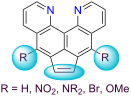
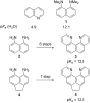
- forced to strongly repel each other in space, can lead to a sharp increase in basicity [8]. Thus, quino[7,8-h]quinoline (3), first obtained in the Staab group [9], already exceeds in basicity not only quinoline itself, but also 1,8-bis(dimethylamino)naphthalene (1, “proton sponge”) (Scheme 1; pKa values
- comparison, in the protonated cation of the starting diazine 5 in CD3CN, the chemical shift of the “acidic” proton is observed at 18.02 ppm [15]. Next, we evaluated the pKa value of base 14 by a competitive method in acetonitrile (NMR transprotonation involving an equivalent amount of "proton sponge" 1 as a
- reference compound) [6]. Additionally, we measured the basicity of unsubstituted compound 5 in acetonitrile for the first time by the same method and the results are given in Figure 7; the pKa values for compounds 1 and 3 are taken from references [24][25]. As can be seen, although diazine 14 turned out to





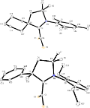
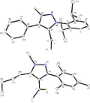
Aldiminium and 1,2,3-triazolium dithiocarboxylate zwitterions derived from cyclic (alkyl)(amino) and mesoionic carbenes
Beilstein J. Org. Chem. 2023, 19, 1947–1956, doi:10.3762/bjoc.19.145
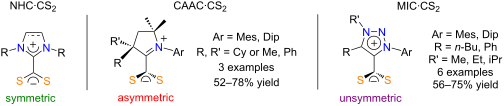
- acetonitrile (Scheme 4). However, all our attempts to purify compounds 6c–f by recrystallization or column chromatography remained unsuccessful. Several studies have shown that metal alkoxides, such as potassium tert-butoxide (pKa = 22), were basic enough to deprotonate 1,2,3-triazolium salts (pKa ≈ 22–23
- ) depending on the nature of their aliphatic or aromatic substituents, and that the use of the stronger base KN(SiMe3)2 (pKa = 26) was not always mandatory [25][69][70]. Grubbs, Bertrand et al. also noticed that treating 1-benzyl-3-methyl-4-phenyl-1H-1,2,3-triazolium iodide with KOt-Bu did not afford the


Selectivity control towards CO versus H2 for photo-driven CO2 reduction with a novel Co(II) catalyst
Beilstein J. Org. Chem. 2023, 19, 1766–1775, doi:10.3762/bjoc.19.129
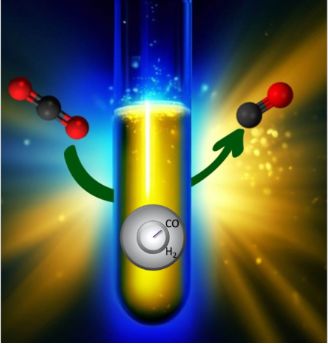
- solvents and with water, it has been used in a large variety of (electro)chemical reactions [53]. The hydroxy group of this alcohol has a pKa of 9.3 [54][55], so we can expect that it is a suitable proton donor for this kind of reaction. We performed the photocatalytic CO2 reduction by dissolving in 5 mL 1


Effects of the aldehyde-derived ring substituent on the properties of two new bioinspired trimethoxybenzoylhydrazones: methyl vs nitro groups
Beilstein J. Org. Chem. 2023, 19, 1713–1727, doi:10.3762/bjoc.19.125
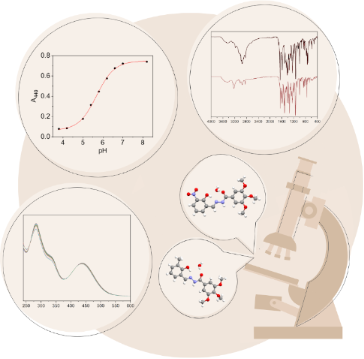
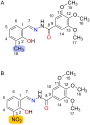
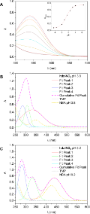
- physiological conditions since the presence of this substituent significantly affects the pKa of the phenol: an apparent value of 5.68 ± 0.02 was obtained. This also impacts the basicity of the azomethine nitrogen and, as a consequence, increases the hydrazone’s susceptibility to hydrolysis. Nevertheless, both
- electron-donating group decreases the compound’s hydrolysis rate and therefore improves its suitability for uses demanding physiological-like conditions. On the other hand, the presence of the –NO2 group has a very pronounced effect on the pKa of the phenol moiety and, to a lesser extent, on the stability
- apparent pKa of 5.68 ± 0.02 was obtained. This is quite lower than the pKa of 2-nitrophenol (around 7.2), but a similar experiment by us demonstrated that it is higher than the one of the precursor 2-hydroxy-3-nitrobenzaldehyde (4.80 ± 0.04), since the aldehyde group has a stronger electron-withdrawing





Morpholine-mediated defluorinative cycloaddition of gem-difluoroalkenes and organic azides
Beilstein J. Org. Chem. 2023, 19, 1545–1554, doi:10.3762/bjoc.19.111
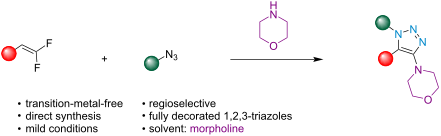
- solvent (morpholine) or molarity of the reaction did not improve the yield (same or within 5%, see Supporting Information File 1, Table S1). We believe that LiHMDS gave the best results primarily because it is more miscible, resulting in a homogenous reaction mixture. LiHMDS being a strong base (pKa
- ≈ 25.8) [34], facilitates the direct deprotonation of morpholine as opposed to acting as a scavenger base. Due to the significant difference in pKa values between the conjugate acids of morpholine (pKa of the conjugate acid is 8.3) [35] and LiHMDS, we posit that LiHMDS directly deprotonates morpholine
- 13). Among the liquid bases that were screened, N,N-diisopropylethylamine (pKa ≈ 9) gave the product in 38% yield, whereas NaHMDS afforded a 24% yield. Since LiHMDS gave the best yield thus far, we wanted to examine if Li+ ions play a role in the reaction. When the reaction was carried out with a


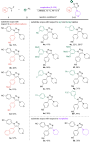


Complexes of resorcin[4]arene with secondary amines: synthesis, solvent influence on “in-out” structure, and theoretical calculations of non-covalent interactions
Beilstein J. Org. Chem. 2023, 19, 1525–1536, doi:10.3762/bjoc.19.109
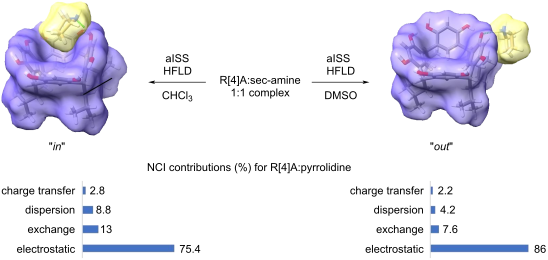
- . The highly ionic structure of these complexes makes them insoluble in non-polar solvents such as CHCl3. To explain the opposite arrangement of the amine molecules in the 1:2 complexes, the pKa of the protons of the hydroxy groups in R[4]A not involved in the formation of hydrogen bonds was calculated
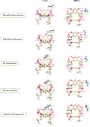
- . The calculations following Equation 1 were performed using the CREST/GFN2-xTB/ALBP(H2O) program [27], which automatically calculates the pKa of the indicated protons. The obtained results are shown in Figure 5. with kdiss = ΔG(aq)/ln(10) RT and c1 = −1656.6999511, c2 = 23.18499947, c3 = −0.11103000
- groups’ protons not involved in the formation of hydrogen bonds in the R[4]A molecule was calculated with the CREST program using the “pKa” command. General method for the synthesis of R[4]A complexes with sec-amines: 0.2 g (0.225 mmol) of R[4]A was weighed into a round-bottomed flask and dissolved in 20




Enabling artificial photosynthesis systems with molecular recycling: A review of photo- and electrochemical methods for regenerating organic sacrificial electron donors
Beilstein J. Org. Chem. 2023, 19, 1198–1215, doi:10.3762/bjoc.19.88
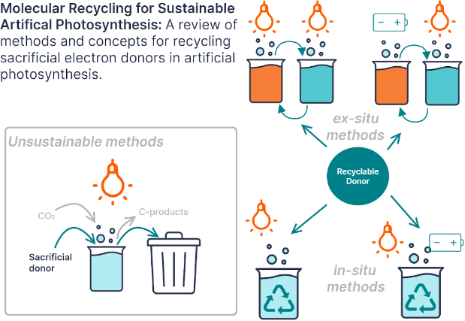
- quenched by a substrate or catalyst and then reduced by the sacrificial donor (oxidative quenching pathway). In the presence of protons, proton donors, or oxidized donor species with a low pKa, a proton-coupled electron transfer (PCET) can take place [14][15]. PCET reactions are important in artificial
- rather than just electrons, as well as by carefully matching the oxidation potential of the donor to the redox potentials of the system. However, one must also carefully calculate the pKa values of the system and choose a donor to match [17][45][49]. Measuring or calculating the redox potentials of


Exploring the role of halogen bonding in iodonium ylides: insights into unexpected reactivity and reaction control
Beilstein J. Org. Chem. 2023, 19, 1171–1190, doi:10.3762/bjoc.19.86
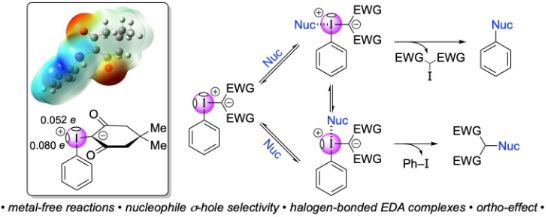
- cycloaddition reactions that occur without transition metal catalysts, the unexpected initiation of single electron transfer (SET) processes or photochemical transformations, and even proton transfers that appear to defy pKa limitations. The reaction pathways followed by iodonium ylides and Lewis basic reaction
- insertion reactions could occur (Scheme 10) [100]. Systematic evaluation of acidic compounds showed that carboxylic acids (pKa ≈ 5; 85–99% yield) and thiophenols (pKa ≈ 7; 50f, 59%) were especially viable, whereas electron-rich phenols (pKa ≈ 10; 50d, <15% yield) were not. Though electron-poor phenols (pKa
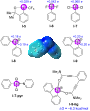
- ≈ 8; 50e, 64–74% yield) were suitable, they were unreactive in the presence of a carboxylic acid (50c). If these insertions proceed via initial protonation of the iodonium ylide to produce 51 (Figure 11), its high acidity (pKa ≈ 0) [131][132] would suggest that only strong acids should undergo this








Clauson–Kaas pyrrole synthesis using diverse catalysts: a transition from conventional to greener approach
Beilstein J. Org. Chem. 2023, 19, 928–955, doi:10.3762/bjoc.19.71
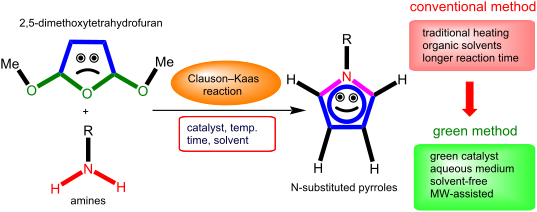
- chose nicotinamide as the catalyst for this study because it has a pKa of 3.43 and could act as a chemical antioxidant. In some cases, aminophenol hydrochloride is the only form of the corresponding aminophenol that can be isolated, so use of aminophenol hydrochloride as the starting material is also an
- of amine nucleophiles were examined in this method. As a result, it was found that nucleophiles with low pKa values, such as sulfonamides, reacted very well, while reactions with nucleophiles with high pKa values, such as benzylamine, did not work well. Compared with other classical methods, this




Eschenmoser coupling reactions starting from primary thioamides. When do they work and when not?
Beilstein J. Org. Chem. 2023, 19, 808–819, doi:10.3762/bjoc.19.61
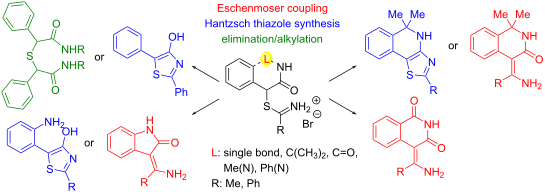
- 70–95%). The presence of a base and the type of solvent seems to be an important factor for the reaction course. In toluene, ionic liquid or in refluxing ethanol without a base [16][19][20] or in the presence of weakly basic pyridine [17][18][21] (pKa = 5.23 in water, 3.4 in DMSO, 3.3 in DMF, and
- 5.44 in MeOH) [22] the formation of thiazole/thiazol-4-one (XI/XIII) is clearly preferred, whereas reactions in common chlorinated solvents (CH2Cl2, CHCl3) containing either an equivalent of strong base (methoxide) or excess of medium base in heterogeneous system (e.g., carbonate with pKa = 9.93 in
- where TEA behaves as a stronger base, the presence of benzonitrile was proved in the 1H NMR spectrum of the crude reaction mixture. On the other hand, the addition of 3 equivalents of a mild base (solid KHCO3; pKa = 6.35 in water [30]) into the DMF solution or MeCN suspension of salt 6a leads to the





