Search results
Search for "platforms" in Full Text gives 111 result(s) in Beilstein Journal of Organic Chemistry.
Improved deconvolution of natural products’ protein targets using diagnostic ions from chemical proteomics linkers
Beilstein J. Org. Chem. 2024, 20, 2323–2341, doi:10.3762/bjoc.20.199
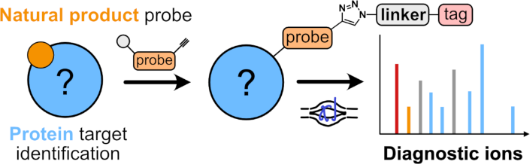
- comprehensively in several reviews [45][46][47][48]. Applications of cleavable linkers, which might be considered as pioneers of MS fragmentation-based platforms to search peptide-linker remainders, were reviewed thoroughly as well [49][50][51]. Recent advances in mass spectrometers technology and analysis




Catalysing (organo-)catalysis: Trends in the application of machine learning to enantioselective organocatalysis
Beilstein J. Org. Chem. 2024, 20, 2280–2304, doi:10.3762/bjoc.20.196
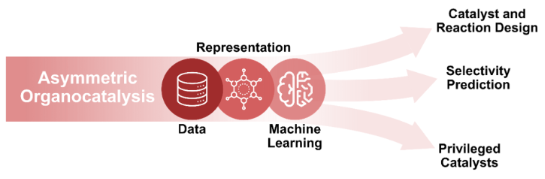
- . With HTE platforms established and due to their importance to ML campaigns, the past few years have seen a trend in creating larger experimental chemical reactivity datasets, in particular for transition metal catalysis [47][48]. 2.2 Increasing data availability in ML for organocatalysis While, to the




Finding the most potent compounds using active learning on molecular pairs
Beilstein J. Org. Chem. 2024, 20, 2152–2162, doi:10.3762/bjoc.20.185
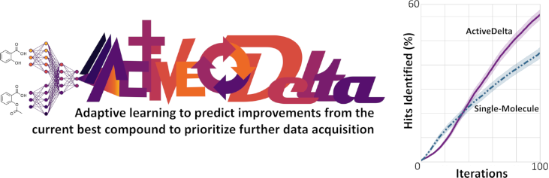
- during medicinal chemistry projects. We believe that ActiveDelta and other pairwise approaches show particular promise for adaptive machine learning when training data hungry neural networks on limited data and can serve as accurate platforms to guide lead optimization and prioritization during drug


Syntheses and medicinal chemistry of spiro heterocyclic steroids
Beilstein J. Org. Chem. 2024, 20, 1713–1745, doi:10.3762/bjoc.20.152
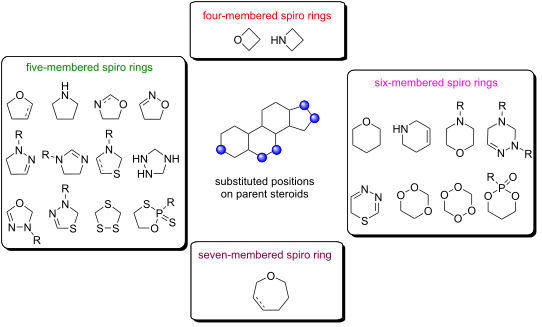
- -ones (spirocarbamates). These spiro heterocycles are commonly obtained in good yields through treatment with triphosgene and DIPEA. In the last decade, Poirier’s group reported a synthetic strategy to produce several spiro derivatives as discovery platforms for new bioactive compounds (Scheme 20) [39


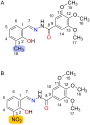
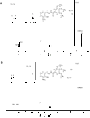
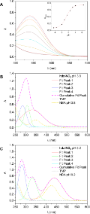
Effects of the aldehyde-derived ring substituent on the properties of two new bioinspired trimethoxybenzoylhydrazones: methyl vs nitro groups
Beilstein J. Org. Chem. 2023, 19, 1713–1727, doi:10.3762/bjoc.19.125
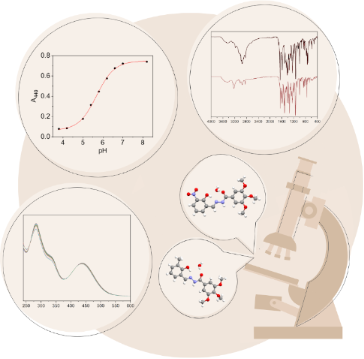
- ]. Absorption correction was conducted with the multi-scan method in SADABAS software (APEX3 system) [52]. The structures were solved with directed methods in ShelxS [53] and refined with full-matrix least-square in ShelxL [53], implemented in WinGX [54] and ShelxLE [55] platforms. Non-hydrogen atoms were





Radical chemistry in polymer science: an overview and recent advances
Beilstein J. Org. Chem. 2023, 19, 1580–1603, doi:10.3762/bjoc.19.116
- functionalization of optically active polymers [106]. Theato and co-workers introduced vinyl/alkyne-bearing poly(vinyl ether)s [107], poly(vinylcyclopropanes) [108], and poly(allyl 2-ylideneacetate) [109] as promising new platforms compatible to thiol–ene chemistry. Atom transfer radical addition (ATRA) is another




Photoredox catalysis harvesting multiple photon or electrochemical energies
Beilstein J. Org. Chem. 2023, 19, 1055–1145, doi:10.3762/bjoc.19.81
- first efforts in this direction [32][33]. Finally, both techniques are amenable to large-scale synthesis and ideally integrated with state-of-the-art reactor technology platforms, such as continuous flow reactors and high throughput screening plates. Various examples of scalability will be highlighted




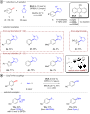
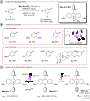
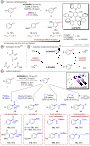
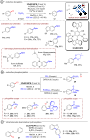








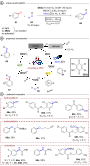

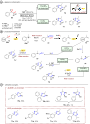
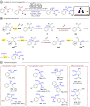


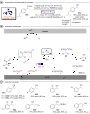




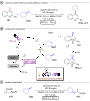


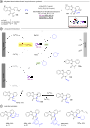


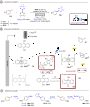
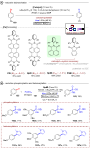


Nucleophile-induced ring contraction in pyrrolo[2,1-c][1,4]benzothiazines: access to pyrrolo[2,1-b][1,3]benzothiazoles
Beilstein J. Org. Chem. 2023, 19, 646–657, doi:10.3762/bjoc.19.46
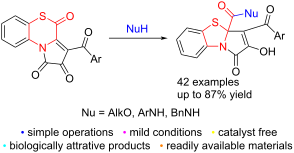
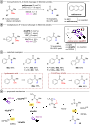
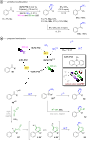
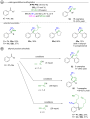
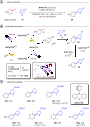
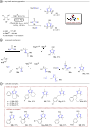
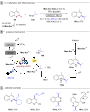
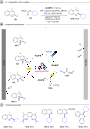
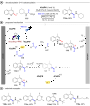
- 4). Results and Discussion It is known that [e]-fused 1H-pyrrole-2,3-diones (FPDs) (Figure 2) are versatile synthetic platforms enabling the synthesis of numerous heterocyclic species [33][34][35][36]. They are polyelectrophilic compounds, bearing five electrophilic centers, whose reactivity




Total synthesis of insect sex pheromones: recent improvements based on iron-mediated cross-coupling chemistry
Beilstein J. Org. Chem. 2023, 19, 158–166, doi:10.3762/bjoc.19.15
- synthetic procedures applied to obtain a variety of insect pheromones. The present report summarizes the recent progresses made in insect sex pheromone synthetic applications in our group, with a particular focus on the quest for non-toxic and sustainable catalytic platforms developed in the iron-catalyzed


Combining the best of both worlds: radical-based divergent total synthesis
Beilstein J. Org. Chem. 2023, 19, 1–26, doi:10.3762/bjoc.19.1
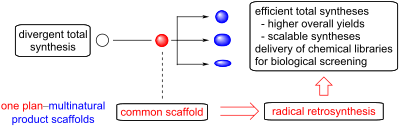
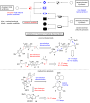
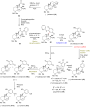
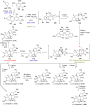
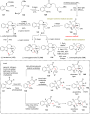
- platforms [66], the group considered a system in which a photoexcited catalyst oxidatively cleaves a siloxycyclopropane with endo selectivity [67], leading to aryl–nickel capture and reductive elimination. Thus, when substrates 121 and 122 were photoirradiated with blue LED light at 45 °C in the presence of











Inline purification in continuous flow synthesis – opportunities and challenges
Beilstein J. Org. Chem. 2022, 18, 1720–1740, doi:10.3762/bjoc.18.182
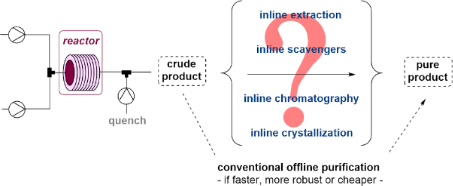
- presented a detailed review on continuous crystallizations of pharmaceutical compounds which discusses these approaches [108]. It is in the field of crystallization where the biggest gap between industry and academia is visible. While industry has large downstream platforms to purify APIs, academia is at a




Navigating and expanding the roadmap of natural product genome mining tools
Beilstein J. Org. Chem. 2022, 18, 1656–1671, doi:10.3762/bjoc.18.178
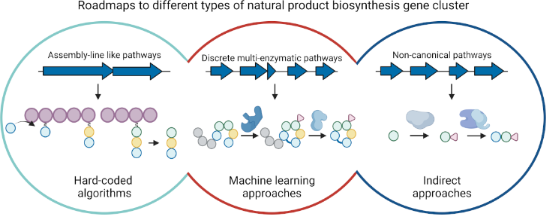
- identify currently overlooked BGCs Genome mining was pivotal for the expansion of NP chemical space in the past two decades. Despite the development of more and more sophisticated genome mining platforms, in many cases where truly novel NP scaffolds were described, the NP was isolated first and only then
- primary or secondary metabolism (both ends of the spectrum) are identified using the strategies listed below the bar and subsequently excluded from further analysis. gcBGC aims at identifying as-of-yet overlooked BGCs that cannot be detected by state-of-the-art bioinformatic platforms, here referred to as




Microelectrode arrays, electrosynthesis, and the optimization of signaling on an inert, stable surface
Beilstein J. Org. Chem. 2022, 18, 1488–1498, doi:10.3762/bjoc.18.156
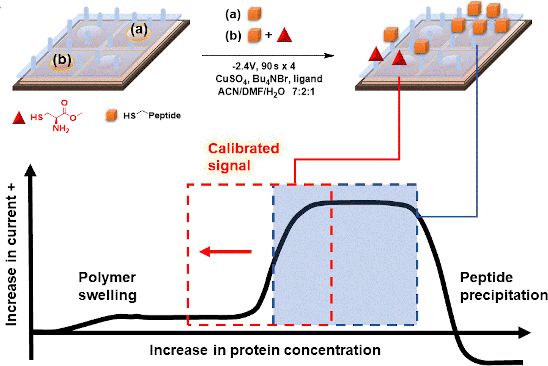
- ; microelectrode array; Introduction Microelectrode arrays composed of collections of electrodes that can each be individually addressed are powerful platforms for monitoring interactions between a protein target and small molecules [1][2][3][4][5][6][7][8]. In these efforts, molecules are either placed or


Design, synthesis, and evaluation of chiral thiophosphorus acids as organocatalysts
Beilstein J. Org. Chem. 2022, 18, 1471–1478, doi:10.3762/bjoc.18.154
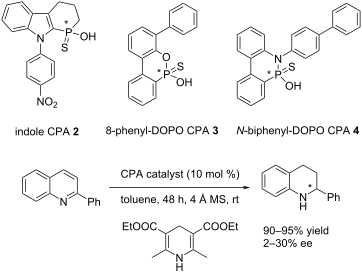
- , however, that the enantiomeric excess increases with an increase in bond length separation between the phosphorus and the R group. From the reaction evaluation we found that dual activation might be required from the catalyst in certain enantioselective reactions. Thus, CPA platforms that reintroduce a


1,4,6,10-Tetraazaadamantanes (TAADs) with N-amino groups: synthesis and formation of boron chelates and host–guest complexes
Beilstein J. Org. Chem. 2022, 18, 1424–1434, doi:10.3762/bjoc.18.148
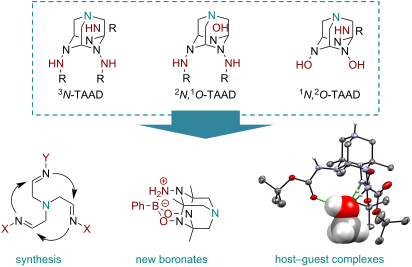
- -TAADs with acylated amino groups are highly stable. In contrast, unprotected N-TAADs are prone to cage opening and hydrolysis, yet quaternization of the bridge-head nitrogen greatly stabilizes their structure. We have showcased that N-TAADs can serve as platforms for the design of chelating ligands and






Modular synthesis of 2-furyl carbinols from 3-benzyldimethylsilylfurfural platforms relying on oxygen-assisted C–Si bond functionalization
Beilstein J. Org. Chem. 2022, 18, 1256–1263, doi:10.3762/bjoc.18.131
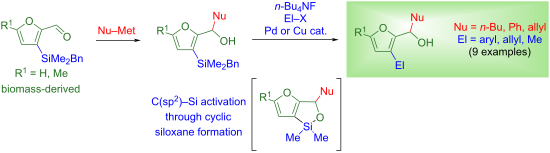
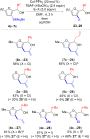
- -catalyzed cross-coupling reactions, such as arylation reactions catalyzed by Pd2(dba)3/CuI, as well as allylation and methylation reactions catalyzed by CuI⋅PPh3. C3-Benzyldimethylsilyl-appended furfurals are thus introduced as versatile platforms, providing a modular access to 3-substituted 2-furyl
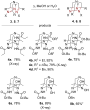
- -based protocol for the catalytic C3–H silylation of furfurylimines [15]. This method allows to install a C–Si bond poised for further functionalization on the furfural unit, and thereby leads to synthetic platforms useful to access elaborated furans. This prospect was demonstrated with platforms relying
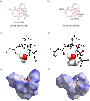
- activation [19]. Thereby, C3-triorganosilyl-substituted furfurals could be suitable platforms to develop a two-step modular approach to 3-substituted 2-furyl carbinols, entailing nucleophilic addition to the aldehyde function and oxygen-assisted electrophilic substitution of the C–Si bond (Scheme 1). Results


Synthesis of α-(perfluoroalkylsulfonyl)propiophenones: a new set of reagents for the light-mediated perfluoroalkylation of aromatics
Beilstein J. Org. Chem. 2022, 18, 788–795, doi:10.3762/bjoc.18.79
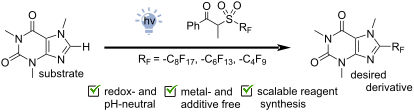
- sophisticated platforms such as metal nanoparticles, all of which have been reviewed thoroughly in the literature [4][5][6][7][8]. However, the methods referenced so far display one or more of the following setbacks: involvement of harsh oxidants or reductants, use of expensive metal catalysts, need for


Flow synthesis of oxadiazoles coupled with sequential in-line extraction and chromatography
Beilstein J. Org. Chem. 2022, 18, 232–239, doi:10.3762/bjoc.18.27
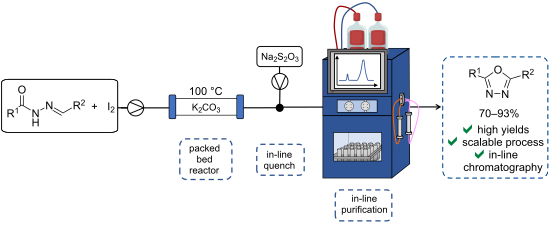
- significant development in continuous flow platforms, particularly in industry [16][17][18][19][20]. 1,3,4-Oxadiazoles are biologically relevant 5-membered heterocyclic compounds with various favourable pharmacokinetic properties and have been investigated as potential candidates for antiviral, antifungal and


Progress and challenges in the synthesis of sequence controlled polysaccharides
Beilstein J. Org. Chem. 2021, 17, 1981–2025, doi:10.3762/bjoc.17.129




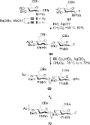
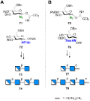


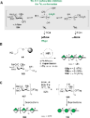
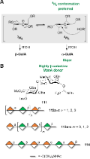






Enhanced target cell specificity and uptake of lipid nanoparticles using RNA aptamers and peptides
Beilstein J. Org. Chem. 2021, 17, 891–907, doi:10.3762/bjoc.17.75
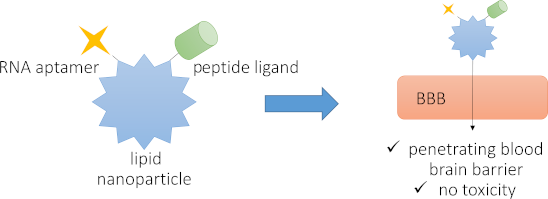
- platforms compatible with antiretroviral drugs. Specifically, a productive CNS delivery of such compounds is expected to reduce HIV-1-associated neurological disorders as well as to reduce HIV-1 replication at this sanctuary site [13][50][51]. We investigated the use of T7 and Tat peptides and evaluated the



Optical detection of di- and triphosphate anions with mixed monolayer-protected gold nanoparticles containing zinc(II)–dipicolylamine complexes
Beilstein J. Org. Chem. 2020, 16, 2687–2700, doi:10.3762/bjoc.16.219
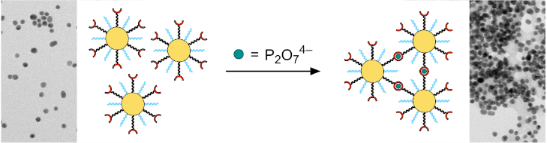
- introducing a method to assess whether certain biologically relevant anions are present in an aqueous solution within a specific concentration range. Keywords: chemosensor; diphosphate; gold nanoparticles; optical sensing; triphosphate; Introduction Gold nanoparticles (AuNPs) are versatile platforms for the


Comparative ligand structural analytics illustrated on variably glycosylated MUC1 antigen–antibody binding
Beilstein J. Org. Chem. 2020, 16, 2540–2550, doi:10.3762/bjoc.16.206
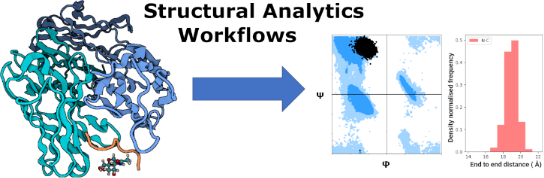
- software available to assist with the building up of glycosylated biomolecular systems. As opposed to manual preparation, there are glycan-specific tools and toolkits such as doGlycans [27], Glycosylator [28], and online platforms such as GLYCAM-WEB [29] and CHARMM-GUI [30]. In this work, the CHARMM-GUI



Leveraging glycomics data in glycoprotein 3D structure validation with Privateer
Beilstein J. Org. Chem. 2020, 16, 2523–2533, doi:10.3762/bjoc.16.204
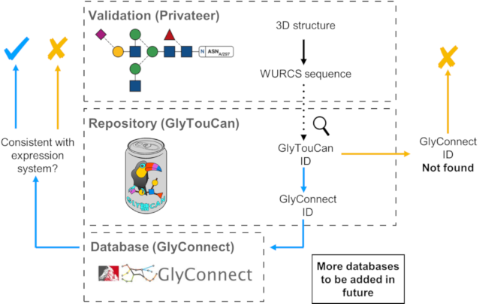
- ] and EuroCarbDB [49] and GlycomeDB [50] used GlycoCT [51] (Table 1). Thankfully, data from discontinued glycomics projects are not lost but were integrated into newer platforms, often with novel notations. One such example is GlyTouCan [53], which uses both GlycoCT [54] and WURCS [53] as notation
- languages. As a result, tools that interconvert between notations were developed to successfully integrate old data into new platforms. Additionally, the introduction of tools such as GlycanFormatConverter [55] to convert WURCS notations into more human-readable formats has eased the interpretation of



Computational tools for drawing, building and displaying carbohydrates: a visual guide
Beilstein J. Org. Chem. 2020, 16, 2448–2468, doi:10.3762/bjoc.16.199

- information, coupled with the emergence of new platforms and technologies, has benefitted glycoscience to the point of enabling the detection and high-resolution determination and representation of complex glycans [1]. Increasing numbers of carbohydrate sequences have accumulated throughout extensive work in
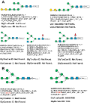
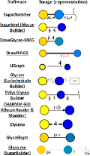
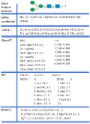
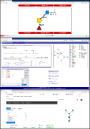
- the tools available for the representation of a simple disaccharide: lactose (β-D-Galp-(1→4)-D-Glcp). Figure 2 shows how different web-available platforms rendered it. On the one hand, thanks to the unified nomenclature, there is no ambiguity regarding the nature of the carbohydrate represented. On
- monosaccharides show striking differences across platforms even though the appropriate colours to be used are strictly defined (https://www.ncbi.nlm.nih.gov/glycans/snfg.html#tab2). The colour discrepancy observed here means that some of the tools do not conform to SNFG standards. For some purposes, this








Hierarchically assembled helicates as reaction platform – from stoichiometric Diels–Alder reactions to enamine catalysis
Beilstein J. Org. Chem. 2020, 16, 2338–2345, doi:10.3762/bjoc.16.195
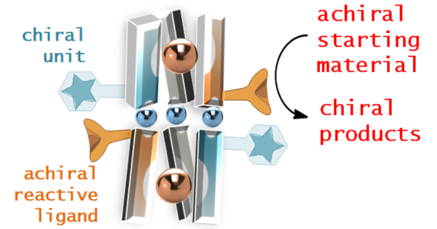
- processes based on the principle to use self-assembled coordination platforms (or as in the present case mixtures thereof) to control stereoselective C–C bond-forming reactions. Stereoinduction usually relies on spatial proximity of the prochiral carbon atoms and a chiral information of, e.g., a chiral
- formed helicates with mixtures of ligands as platforms to control the stereochemistry of C–C bond-forming reactions. However, it would be of great advantage to transfer the findings to catalytic C–C bond-forming reactions which are catalyzed by hierarchical helicates containing chiral ligands for