


Search results
Search for "room temperature" in Full Text gives 2202 result(s) in Beilstein Journal of Organic Chemistry. Showing first 200.
Photoorganocatalytic trifluoromethylation of (het)arenes in green conditions
Beilstein J. Org. Chem. 2026, 22, 662–671, doi:10.3762/bjoc.22.50
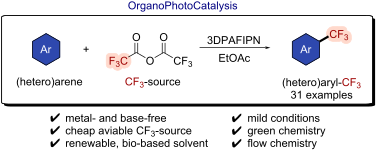
- -trimethoxybenzene (TMB) as the substrate and 3 equivalents of TFAA as the CF3 source, over 6 hours at room temperature (25 °C). Initially, white light irradiation was selected owing to its broad coverage of the visible spectrum (Supporting Information File 1, Figure S6). Screening of various organic photocatalysts
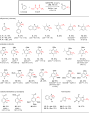
- reaction conditions were established as follows: 2 mol % 3DPAFIPN in EtOAc under blue-light irradiation (450 nm) at room temperature (23 °C) for 6 h under an argon atmosphere. Using the optimized conditions, the scope of the developed protocol was evaluated with a range of arenes and heteroarenes (Scheme 2




Hydrogen production from formic acid catalyzed by NHC–Cu complexes
Beilstein J. Org. Chem. 2026, 22, 620–627, doi:10.3762/bjoc.22.48
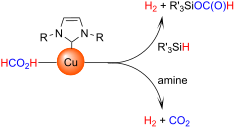
- our delight, upon reacting in toluene equimolar amounts of FA and PhSiH3, efficiency increased (Figure 2). Indeed, by using 1a and its tert-butoxide congener 1c ([Cu] = 10 mol %) a violent evolution of gas was observed at room temperature, resulting into a considerable increase of pressure which
- experiments were carried out (Scheme 2). By reacting FA and PhSiH3 (1:1 molar ratio) in the presence of 10 mol % of 1a, in deuterated toluene at room temperature under D2 atmosphere (1 atm), no H–D scrambling was observed (Scheme 2a). Furthermore, the 1a-catalyzed reaction of FA labeled at the acidic position



Regioselective approach to 5-arylsulfonylisoxazoles and their antimicrobial activity
Beilstein J. Org. Chem. 2026, 22, 592–602, doi:10.3762/bjoc.22.45
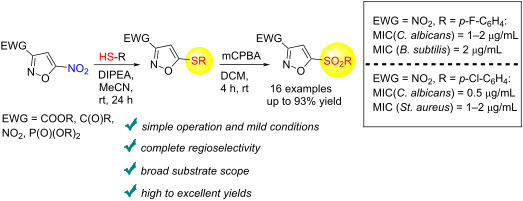
- times (Table 1). It was found that the reaction proceeds completely to give the exhaustive oxidation product 3a, when 2a was treated with 2.5 equivalents of mCPBA at room temperature. Thus, we used these conditions as the standard reaction conditions for our further studies. Additionally, it was found


Continuous-flow carbonyl hydrogenation under subatmospheric to atmospheric hydrogen pressure enabled by robust heterogeneous Pt–Fe catalysts
Beilstein J. Org. Chem. 2026, 22, 575–582, doi:10.3762/bjoc.22.43
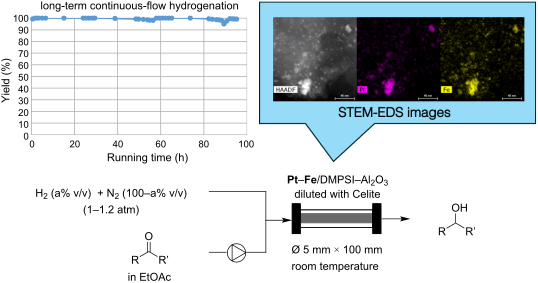
- continuous-flow hydrogenation of a ketone We compared the catalytic performance of the newly prepared bimetallic catalysts to that of commercially available heterogeneous Pt catalysts in the continuous-flow hydrogenation of acetophenone (1a) at room temperature. The heterogeneous catalysts were packed into a
- column with Celite, with the molar amount of Pt adjusted to 0.006 mmol within the column. Both the solution of acetophenone (1a) in ethyl acetate (EtOAc) and hydrogen gas were simultaneously passed through the catalyst-packed column without backpressure control at room temperature (Scheme 1). The powder
- = 0.62‒2.3) (Scheme 2, Figure 1, and Table 2). 4’-Methoxyacetophenone (1b) and 4’-methylacetophenone (1c) were quantitatively hydrogenated to the corresponding alcohols 2b and 2c under continuous-flow conditions at room temperature (Table 2, entries 1 and 2). The bulky substrate 2-acetylnaphthalene (1d


Experimental and DFT studies on the regioselective methanolysis of 5-azido-9-oxabicyclo[6.1.0]nonan-4-yl 4-nitrobenzoate isomers
Beilstein J. Org. Chem. 2026, 22, 547–556, doi:10.3762/bjoc.22.40
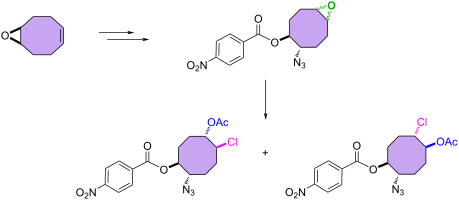
- -(dimethylamino)pyridine (DMAP, 2 mg) were added and the mixture was stirred at room temperature for 24 hours. Then, the solution was cooled to 0 °C and 100 mL of 2 M HCl added and stirred for 5 min. The mixture was extracted with ethyl acetate (4 × 30 mL). The organic phase was washed with saturated NaHCO3 (2
- 0 °C. m-CPBA (77%, 0.73 g, 3.26 mmol) and NaHCO3 (0.282 g, 3.36 mmol) were added and the mixture was stirred at room temperature for 36 hours. Then, the solution was cooled to 0 °C and 100 mL of 3 M NaOH added, and stirring continued for 40 min. The mixture was extracted with CH2Cl2 (4 × 30 mL). The
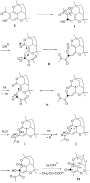
- at room temperature to obtain colourless crystals, mp: 101–102 °C. Compound 11 was recrystallized from the same solvent mixture at 0 °C and obtained as slightly yellow crystals, mp: 117–119 °C. (1S*,2S*,5S*,6S*)-6-Acetoxy-2-azido-5-chlorocyclooctyl 4-nitrobenzoate (10): 1H NMR (400 MHz, CDCl3) δ 8.34


Melifoliox B, a novel phloroglucin derivative isolated from Melicope barbigera (Rutaceae) and synthesis of new oxidation products from melifoliones A and B
Beilstein J. Org. Chem. 2026, 22, 535–546, doi:10.3762/bjoc.22.39
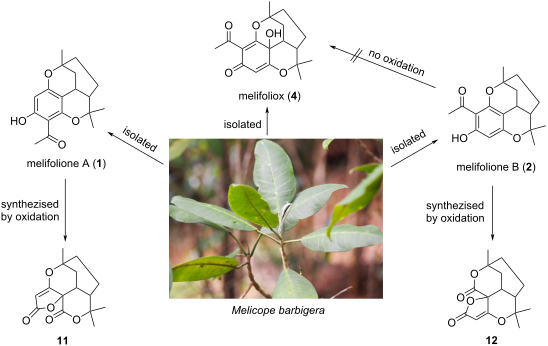
- -toluenesulfonic acid at 80 °C in toluene afforded benzoxocin (7) as the only product. On the other hand, melifolione A (1) was completely decomposed under these conditions. Irradiation of 5 in methanol with UV-light (300 nm) for 3 days at room temperature gave melifolione B (2) with traces of melifolione A (1
- -trihydroxyacetophenone (3.7 g, 20 mmol), citral (3.2 g, 21 mmol) and pyridine (1.6 g, 20 mmol) was heated with stirring in a water bath at max. 60 °C for 8 h. After cooling to room temperature, the reaction mixture was diluted with 200 mL diethyl ether and extracted with 0.1 N H2SO4 (3 × 20 mL) to remove the pyridine
- tube and heated in a microwave apparatus (CEM, model DISCOVER, power 300 Watt) up to 140 °C for 20 minutes. After cooling to room temperature, the reaction mixture was dissolved in 200 mL diethyl ether. This solution was washed with 0.1 N NaOH (3 × 20 mL) and water (1 × 20 mL), dried over MgSO4



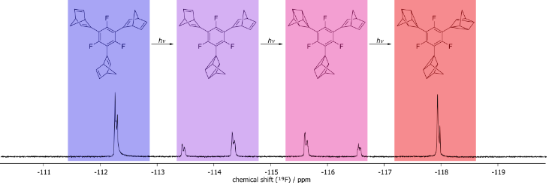
Get a better glimpse on sequential photoreactions of trisnorbornadienes with 19F NMR spectroscopy
Beilstein J. Org. Chem. 2026, 22, 527–534, doi:10.3762/bjoc.22.38
- ]heptadien-2-yl)-1,3,2-dioxaborolane (1e, 501 mg, 2.30 mmol), Pd(PPh3)4 (66.5 mg, 57.5 µmol, 5 mol %), THF (5.0 mL), and aq. NaOH (5.7 mmol, 2.7 M, 2.1 mL) was stirred at 80 °C for 16 h under anaerobic conditions [22]. After cooling the emulsion to room temperature, EtOAc (15 mL) was added and the organic


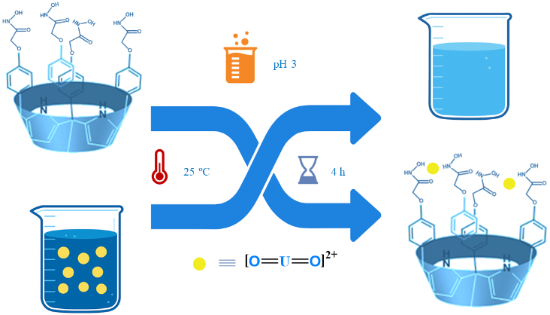
Synthesis and uranyl(VI) extraction performance of a calix[4]pyrrole–tetrahydroxamic acid receptor
Beilstein J. Org. Chem. 2026, 22, 486–494, doi:10.3762/bjoc.22.36
- calixarene tetraethylacetate [53]. In the original procedure, KOH was added at −5 °C, and the mixture was stirred for 5 hours at this temperature, followed by 5 days of stirring at room temperature. In our hands, both the addition of KOH and stirring were performed entirely at room temperature, and 1H NMR


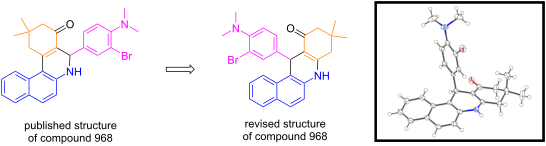
Structural reassignment of compound 968, an allosteric glutaminase inhibitor
Beilstein J. Org. Chem. 2026, 22, 455–460, doi:10.3762/bjoc.22.33
- -dimethylaminobenzaldehyde 4-Dimethylaminobenzaldehyde (4.02 g, 26.9 mmol) was dissolved in 1,4-dioxane (52 mL) and NBS (5.01 g, 28.2 mmol) was added in small portions with stirring over 5 minutes. The reaction mixture was stirred at room temperature for 20 minutes then poured into 50 mL water. The mixture was diluted with
- solution of the test compound in DMSO or DMSO itself was added (1 µL), mixed by gently pipetting up and down, then incubated for seven minutes at room temperature. The glutaminase reaction was initiated by addition of 20 µL of a solution of glutamine (100 mM) and K2HPO4 (500 mM), then mixed by gently
- pipetting up and down and incubated at room temperature for seven minutes. The reactions were quenched by addition of cold 3 M HCl (10 µL). An aliquot (10 µL) of each quenched GAC reaction was added to 190 µL of a glutamate dehydrogenase reaction which consisted of a solution containing Tris-HCl (100 mM, pH


A facile and practical method for the synthesis of trans-(±)-taxifolin and its derivatives via Darzens reaction
Beilstein J. Org. Chem. 2026, 22, 443–450, doi:10.3762/bjoc.22.31
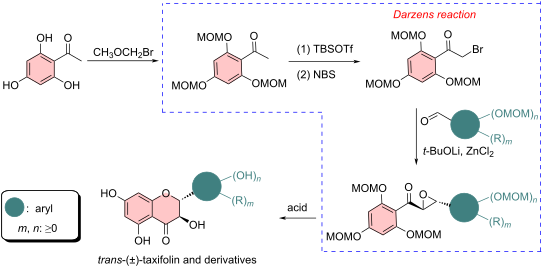
- give protected acetophenone 1 in an excellent yield of 78%. Next, the reaction conditions for the following α-bromination of acetophenone 1 to intermediate 2 were screened (Table S1, Supporting Information File 1). The treatment of compound 1 with CuBr2 in EtOAc at either room temperature or 60 °C
- all the Lewis acids screened, ZnCl2 was associated with best yield of 90%. Overall, the optimal conditions for the Darzens reaction involved treatment of 2 (1.0 equiv) with 3a (1.2 equiv) in MeCN at room temperature, using t-BuOLi (1.2 equiv) as the base and ZnCl2 (0.1 equiv) as Lewis acid catalyst
- mmol, 1.0 equiv), 3 (1.2 equiv), t-BuOLi (1.2 equiv) and ZnCl2 (10 mol %) in CH3CN (4.5 mL), stirred at room temperature for 4–6 h, N2 atmosphere. aZnCl2 was not added and the reaction time was 15 h. Yields are isolated yields. Synthesis of trans-(±)-taxifolin and its derivatives via the approach


Synthesis and anti-cancer activity of naphthalimide–organylselanyl conjugates
Beilstein J. Org. Chem. 2026, 22, 416–435, doi:10.3762/bjoc.22.29
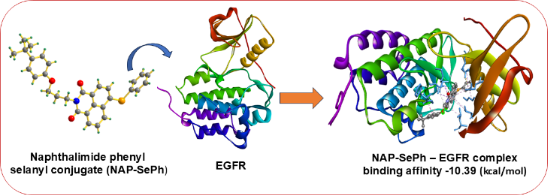
- mmol) was added, and the reaction mixture was refluxed for 48 h. The reaction progress was monitored by TLC upon completion of the reaction. The mixture was allowed to cool to room temperature, and the solvent was removed under reduced pressure. The obtained residue was dissolved in chloroform and
- ethanol, and the reaction mixture was refluxed for 8 hours. The progress of the reaction was monitored by TLC. After completion, the reaction mixture was cooled to room temperature and the solvent was removed under reduced pressure. The resulting residue was dissolved in 30 mL of chloroform and washed
- completion, the reaction mixture was allowed to cool to room temperature, and the resulting precipitate was filtered, washed with ethanol, and dried to afford bromo compound 12 as an off-white powder (1.5 g, 66%). mp: 125 °C; 1H NMR (400 MHz, CDCl3) δ 8.64 (d, J = 7.2 Hz, 1H), 8.56 (d, J = 8.6 Hz, 1H), 8.39


Cone p-aminocalix[4]arenes enriched with ‘clickable’ alkyne or azide functionalities
Beilstein J. Org. Chem. 2026, 22, 399–415, doi:10.3762/bjoc.22.28
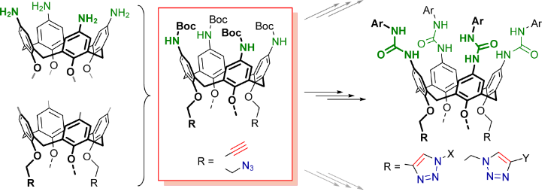
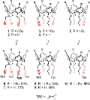
- (to ≈1 M), reducing the content of acetic acid in the mixture (to 1 mol per mol of HNO3) and extending the room-temperature reaction time to 72 h. Yet, under these conditions, the desired calix[4]arene 11 was obtained in only 31% yield (Scheme 2), and further variations in reagent excess/concentration
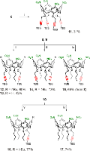
- , the room-temperature nitration of the silylated p-tert-butylcalix[4]arene ether 8 using 2.5 equiv of HNO3 per calixarene aromatic unit resulted in di- or trinitrated macrocycles 12 and 14 as the major products, when ≈0.2 and ≈1 M nitric acid concentrations were used. Similarly, the wide-rim
- desilylated product in the case of calixarene 22) remained in the reaction mixtures even after their stirring at room temperature for 72 h. In the case of calixarene 22, heating of the mixture at 50 °C for 48 h was enough to complete the process and p-aminocalix[4]arene 25 having two propargyl groups at the




Electrosynthetic access to unsymmetrical oxaza[8]helicenes with high chiral stability and strong circularly polarized luminescence (CPL)
Beilstein J. Org. Chem. 2026, 22, 372–382, doi:10.3762/bjoc.22.25
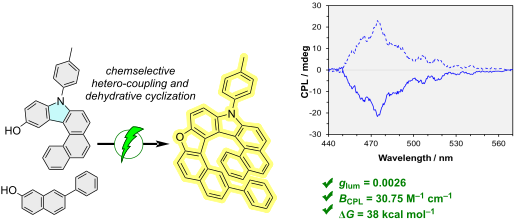
- Supporting Information File 1), we developed a one-pot electrochemical annulation between 3 and β-naphthol derivative 4. Using n-Bu4NPF6 as the electrolyte in CH2Cl2 at room temperature, this protocol furnished oxaza[8]helicenes 5 in good-to-moderate yields with >75% Faradaic efficiency, and no homo-coupling
- mol−1, respectively (Figure 3C and 3D), which leads to rapid enantiomerization within a few hours at room temperature and severely limits their applicability in chiroptical devices despite their favorable CD and CPL properties (vide infra). By comparison, the markedly higher (P/M) enantiomerization




Arene activation via π-bond localization: concepts and opportunities
Beilstein J. Org. Chem. 2026, 22, 257–273, doi:10.3762/bjoc.22.19
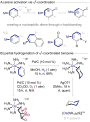
- Taube reported the now famous pentaammineosmium(II) η2-benzene complex: the first system to yield kinetically stable η2-arene complexes that resist ligand exchange at room temperature in solution (Figure 5) [48]. This breakthrough opened the door to the isolation of such complexes and their subsequent




A mild and atom-efficient four-component cascade strategy for the construction of biologically relevant 4-hydroxyquinolin-2(1H)-one derivatives
Beilstein J. Org. Chem. 2026, 22, 244–256, doi:10.3762/bjoc.22.18
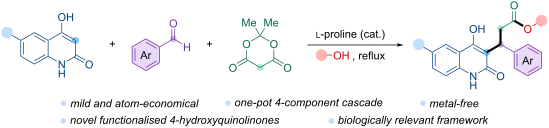
- a related protocol operating at room temperature using the ionic liquid [Bmim]HSO4 as a catalyst, expanding the scope to include aliphatic aldehydes [38]. Later, in 2017, Esmayeel Abbaspour-Gilandeh et al. reported a modified variant of this transformation under solvent-free heating, catalyzed by
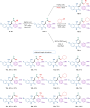
- with α,β-unsaturated esters, such as (E)-3-(3,4-dimethoxyphenyl)acrylic acid esters 3 (see Supporting Information File 1) exemplified by compound 4. Different solvents and catalysts, both acidic and basic, were screened at room temperature, including refluxing in pyridine with piperidine, but the
- -unsaturated malonate 6 with 2a–c, various bases (sodium methoxide, triethylamine, potassium hydroxide) and solvents (ethanol, DMF, pyridine) were tested, mostly at room temperature, with an additional attempt at refluxing in ethanol/DMF. The desired malonate Michael adduct 7 (isolated and fully characterized


Configuration–packing synergy enabling integrated crystalline-state RTP and amorphous-state TADF
Beilstein J. Org. Chem. 2026, 22, 224–236, doi:10.3762/bjoc.22.16
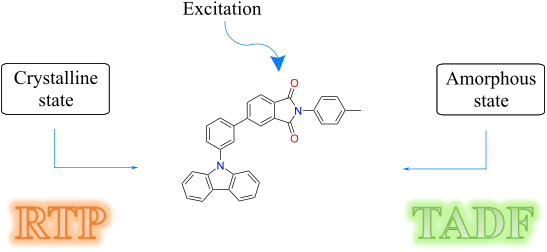
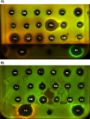
- analysis indicate that the HOMO and LUMO are localized on the carbazole and phthalimide fragments, respectively, affording a small singlet–triplet energy gap. In the solid state, compound 1 exhibits pronounced phase dependence: powder samples display room-temperature delayed emission with principal bands
- at 550/600 nm and a lifetime of ≈0.39 s that undergoes strong thermal quenching, diagnostic of room-temperature phosphorescence. In contrast, amorphous films show no RTP; their delayed component grows with temperature and shares the same peak position as the prompt emission, consistent with thermally
- states, intermolecular interactions enhance spin–orbit coupling and crystallinity suppresses nonradiative decay, thereby activating RTP. This work achieves an integrated “crystalline-state RTP–amorphous-state TADF” regulation within a single molecule. Keywords: imide; π–π stacking; room-temperature


Base-promoted deacylation of 2-acetyl-2,5-dihydrothiophenes and their oxygen-mediated hydroxylation
Beilstein J. Org. Chem. 2026, 22, 192–204, doi:10.3762/bjoc.22.13
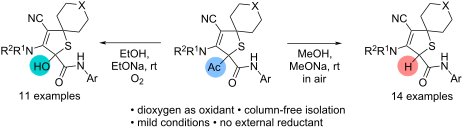
- products (Scheme 1D) or the deacetylated products (Scheme 1E) have been developed. Results and Discussion Dihydrothiophene 1a was selected as a model substrate for our optimization study (Table 1). Initially, this compound was treated in ethanolic solution (2 mL) at room temperature in air for 1 h in the




Improved synthesis and physicochemical characterization of the selective serotonin 2A receptor agonist 25CN-NBOH
Beilstein J. Org. Chem. 2026, 22, 175–184, doi:10.3762/bjoc.22.11
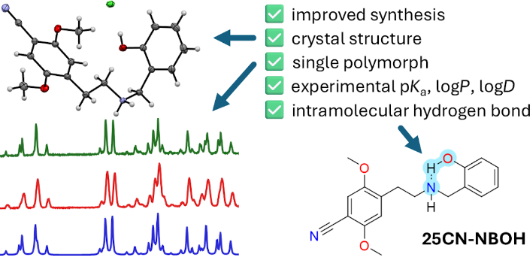
- stable in aqueous solutions at room temperature. Furthermore, we show that an intramolecular hydrogen bond is present in solution, which presumably is a key contributor to the high membrane permeability. Collectively, this physical-chemical profiling of 25CN-NBOH provides guidance to researchers with
- evaluation has not been conducted. The most widely used form of 1 is the corresponding HCl salt (1·HCl) that in our experience is a crystalline, nonhygroscopic and free-flowing solid, and aqueous solutions thereof appear stable for weeks at room temperature. To substantiate these qualitative observations, we
- for 1.5 hours at room temperature. Subsequently, the reaction was cooled in an ice bath before NaBH4 (192 mg, 5.08 mmol, 2.03 equiv) was added in four portions over 15 minutes. The reaction was left to stir at that temperature for an additional 20 minutes before leaving it at room temperature for 35


A new synthesis of Tyrian purple (6,6’-dibromoindigo) and its corresponding sulfonate salts
Beilstein J. Org. Chem. 2026, 22, 167–174, doi:10.3762/bjoc.22.10
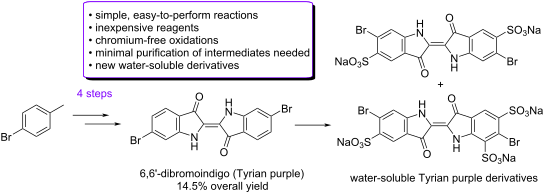
- microcrystalline solid, was observed to be bench-stable for several months when stored in a sealed glass scintillation vial under ambient atmosphere at room temperature. Using the mild Kornblum oxidation, 4-bromo-2-nitrobenzyl bromide (6) was converted into the desired 4-bromo-2-nitrobenzaldehyde (4). As shown in


Circumventing Mukaiyama oxidation: selective S–O bond formation via sulfenamide–alcohol coupling
Beilstein J. Org. Chem. 2026, 22, 158–166, doi:10.3762/bjoc.22.9
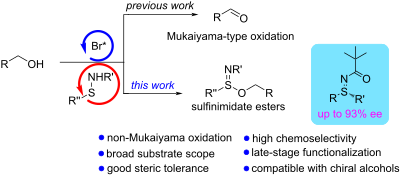
- efficiency of the S(=N)–O bond formation. Under the standard conditions (Table 1, entries 1–10), 1a (0.15 mmol) was treated in MeOH (2a, 1.0 mL, ca. 24.6 mmol; ca. 160 equiv relative to 1a) at room temperature. To improve the compatibility of the protocol with solid or high molecular weight alcohols, we
- moiety. PIDA-mediated approach versus the present NBS-mediated approach to sulfinimidate esters. Substrate scope of sulfenamides derived from various thiophenols and thiols. Reaction conditions: sulfenamide 1 (0.15 mmol), NBS (1.2 equiv), NaHCO3 (1.5 equiv), MeOH (1.5 mL), room temperature, 30 min
- . Yields are of isolated products. Substrate scope of sulfenamides derived from various amides. Reaction conditions: sulfenamide 1 (0.15 mmol), NBS (1.2 equiv), NaHCO3 (1.5 equiv), MeOH (1.5 mL), room temperature, 30 min. Yields are of isolated products. Substrate scope of reactions between sulfenamides 1a


Asymmetric Mannich reaction of aromatic imines with malonates in the presence of multifunctional catalysts
Beilstein J. Org. Chem. 2026, 22, 151–157, doi:10.3762/bjoc.22.8
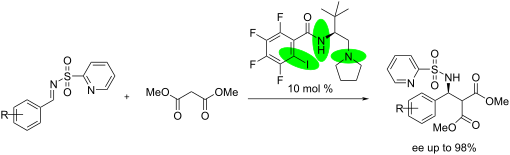
- stirred at room temperature until a suspension was formed (ca 5 min). After that, the reaction mixture was cooled to −20 °C. The malonic ester (0.171 mmol, 3.0 equiv) was added to the reaction vessel via syringe. The reaction was stirred at −20 °C for an appropriate time. The progress of the reaction was


Design and synthesis of an axially chiral platinum(II) complex and its CPL properties in PMMA matrix
Beilstein J. Org. Chem. 2026, 22, 143–150, doi:10.3762/bjoc.22.7
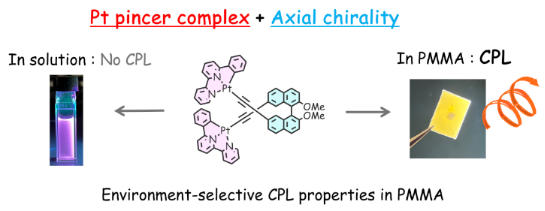
- solutions (1.0 × 10⁻⁵ M) and 1 wt % PMMA matrices were acquired using a JASCO FP-8550 spectrometer at room temperature, at excitation wavelength of 300 nm (both solution and PMMA matrix). CPL spectra of CH2Cl2 solutions (1.0 × 10⁻⁵ M) and 1 wt % PMMA matrices were measured with a JASCO CPL-300
- spectrofluoropolarimeter at room temperature, at a scattering angle of 0° upon excitation with unpolarized, monochromated incident light. Absolute PLQYs of solutions and powder samples were determined using a JASCO FP-8550 spectrometer with an integrating sphere (JASCO ILF-533, diameter 96 mm) at an excitation wavelength
- (112 mg, 0.0962 mmol) and trimethylsilylacetylene (0.40 mL, 2.9 mmol) was added degassed solution of Et3N (2.6 mL, 19 mmol) and toluene (5.2 mL) by argon bubbling. The reaction mixture was refluxed at 90 °C for 21 hours. After cooling to room temperature, the reaction mixture was filtered through


Total synthesis of natural products based on hydrogenation of aromatic rings
Beilstein J. Org. Chem. 2026, 22, 88–122, doi:10.3762/bjoc.22.4
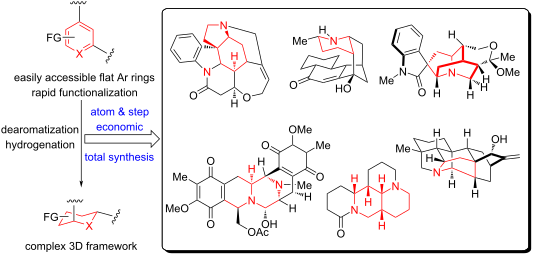
- aromatic rings (Scheme 4) [48]. Using [Rh(nbd)Cl]2 and Pd/C as catalysts, aromatic hydrocarbons with various functional groups can be hydrogenated at room temperature and 1 atmosphere of hydrogen, thus simplifying the reaction operation and cost. Hydrogenation of fused aromatic rings Hydrogenation of the











Advances in Zr-mediated radical transformations and applications to total synthesis
Beilstein J. Org. Chem. 2026, 22, 71–87, doi:10.3762/bjoc.22.3
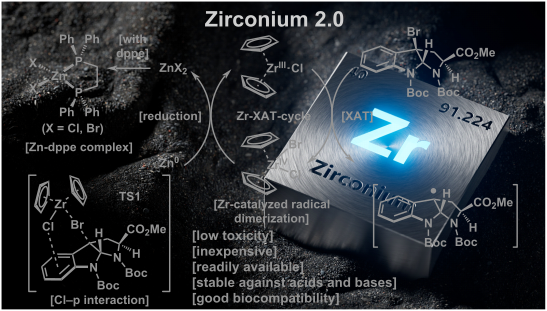
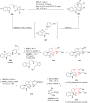
- tryptophan. The resulting radical species underwent fast dimerization to furnish the desired dimer 61. This zirconocene-catalyzed dimerization proceeded smoothly under remarkably mild conditions at room temperature, suggesting broad applicability. Indeed, the reaction was shown to tolerate a wide substrate
- potential and stabilizing the radical pathway. The DFT calculations are shown in Scheme 13A. The activation barrier for the XAT process was calculated to be ΔG‡ = 8.0 kcal/mol, indicating that this process can proceed spontaneously around room temperature. Moreover, the transition state (TS1) suggested the








Reactivity umpolung of the cycloheptatriene core in hexa(methoxycarbonyl)cycloheptatriene
Beilstein J. Org. Chem. 2026, 22, 64–70, doi:10.3762/bjoc.22.2
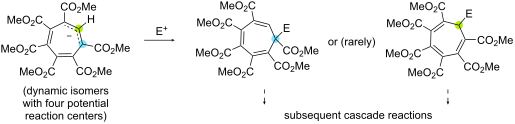
- transition states with an adjacent ester group, not to the stability of the main conformer. Conversely, the reactions with halogens and diazonium salts are immediate at room temperature and the α-selectivity, when observed, can be due to the stability of the main conformer. The transition from iodine to





