Search results
Search for "antimicrobial" in Full Text gives 325 result(s) in Beilstein Journal of Organic Chemistry. Showing first 200.
New variochelins from soil-isolated Variovorax sp. H002
Beilstein J. Org. Chem. 2024, 20, 692–700, doi:10.3762/bjoc.20.63
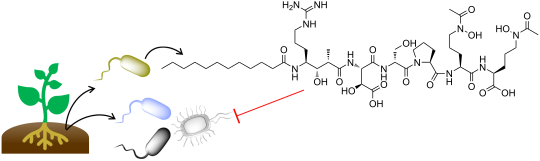
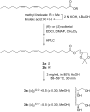
- fatty acyl groups. Furthermore, the variochelin biosynthetic gene cluster was identified through draft genome sequencing and gene knockout experiments. Compounds 1–5 exhibited antimicrobial activities against Gram-negative bacteria, including several soil-isolated plant pathogens. Keywords
- : antimicrobial activity; siderophore; variochelin; Variovorax; Introduction Almost all organisms require iron as a crucial cofactor of enzymes essential for their physiological functions, encompassing primary and secondary metabolisms [1]. However, in an aerobic environment, iron predominantly exists in the
- variochelins [20]. Biological activity The antimicrobial activities of 1–5 were evaluated against several Gram-negative and Gram-positive bacteria (Table 1). As a result, 1–5 inhibited the growth of the Gram-negative bacteria Escherichia coli and Burkholderia multivorans, but lacked activity against Bacillus


Regioselective quinazoline C2 modifications through the azide–tetrazole tautomeric equilibrium
Beilstein J. Org. Chem. 2024, 20, 675–683, doi:10.3762/bjoc.20.61
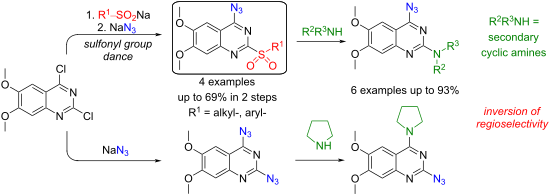
- , finding use as anticancer, antimicrobial, antimalarial, and antiviral agents [1][2]. Furthermore, numerous 2-amino-6,7-dimethoxyquinazoline analogs are extensively employed as α1-adrenoceptor blockers [3][4]. In recent years quinazoline-based OLED materials have also gained attention showing great quantum


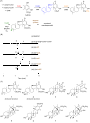
Production of non-natural 5-methylorsellinate-derived meroterpenoids in Aspergillus oryzae
Beilstein J. Org. Chem. 2024, 20, 638–644, doi:10.3762/bjoc.20.56
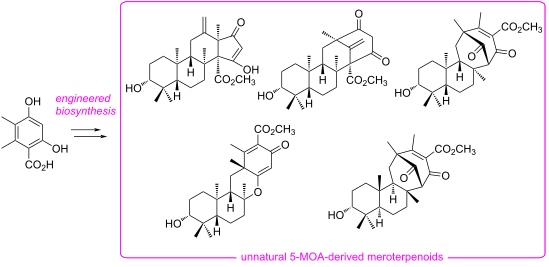
- secondary metabolites, filamentous fungi stand out as the most prolific producers of meroterpenoids [1][2][3]. Representative fungal meroterpenoids of medicinal importance include pyripyropene A, a cholesterol acyltransferase inhibitor [4]; fumagillin, an antimicrobial agent [5]; and mycophenolic acid, a



Chemical and biosynthetic potential of Penicillium shentong XL-F41
Beilstein J. Org. Chem. 2024, 20, 597–606, doi:10.3762/bjoc.20.52
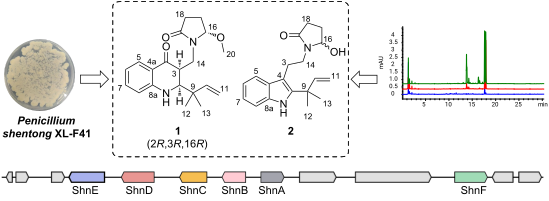
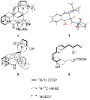
- enzymatic ring-expansion process in their respective fungi. Both shentonins A (1) and B (2) also feature a reduction of a carbonyl to a hydroxy group within the succinimide ring. All isolated compounds were subjected to antimicrobial evaluations, and compound 12 was found to have moderate inhibitory
- quantities of curvularin analogs. Our bioactivity assays identified one compound, 12, with promising antimicrobial properties. Subsequent genome sequencing analysis pinpointed the likely BGCs associated with our isolated compounds and suggested a vast potential for the production of additional compounds
- −1; for 1H NMR (CDCl3, 600 MHz) and 13C NMR (CDCl3, 125 MHz) spectral data, see Table 1; LC–MS (m/z): [M − H]− calcd for 283.2; found, 283.2. Antimicrobial activity evaluation All isolated compounds were dissolved in 1% DMSO and introduced to pathogenic bacteria or fungi in LB or PDB media. The 96




A myo-inositol dehydrogenase involved in aminocyclitol biosynthesis of hygromycin A
Beilstein J. Org. Chem. 2024, 20, 589–596, doi:10.3762/bjoc.20.51
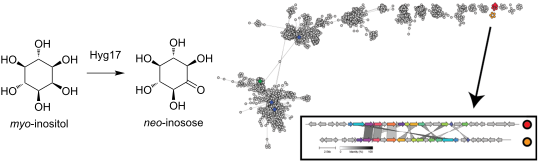
- essential for in vivo antimicrobial activity suggesting a distinct biological function independent of ribosome binding. The hygromycin A biosynthetic gene cluster has been identified and the biosynthesis of the aminocyclitol has been proposed (Figure 1) [8][9]. Starting from glucose-6-phosphate, the pathway
- presence of a resistance gene within a biosynthetic gene cluster can indicate that it produces an antimicrobial compound [27]. We searched for annotated resistance genes in the surrounding genomic neighborhood of PF01408 sequences. We found 1,166 PF01408 sequences were associated with nearby glyoxalase


A new analog of dihydroxybenzoic acid from Saccharopolyspora sp. KR21-0001
Beilstein J. Org. Chem. 2024, 20, 497–503, doi:10.3762/bjoc.20.44
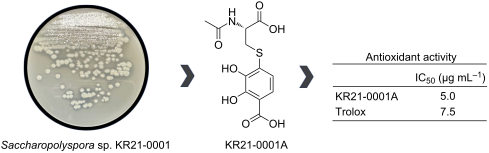
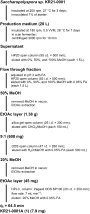
- the presence of a new compound designated KR21-0001A (1). The structure was elucidated by NMR, and the absolute stereochemistry was determined by advanced Marfey’s method. The results indicated that 1 is a new analog of dihydroxybenzoic acid. 1 has no antimicrobial activity against bacteria and fungi
- ). Antioxidant activity of 1 was measured via the DPPH radical. 1 showed potent DPPH radical scavenging activity with an IC50 value of 5.0 μg·mL−1, which is lower than that of trolox (IC50; 7.5 μg·mL−1) (Table 2). In contrast, 1 did not show antimicrobial activity against Gram-positive and Gram-negative bacteria
- [16]. KR21-0001A (1) is a new analog of 2,3-DHBA connected to N-acetylcysteine (Figure 2b). 1 has a stronger antioxidant activity than trolox, which is a water-soluble analog of the free radical scavenger α-tocopherol [17][18]. 1 shows no antimicrobial activity against bacteria and fungi. Conclusion



Pseudallenes A and B, new sulfur-containing ovalicin sesquiterpenoid derivatives with antimicrobial activity from the deep-sea cold seep sediment-derived fungus Pseudallescheria boydii CS-793
Beilstein J. Org. Chem. 2024, 20, 470–478, doi:10.3762/bjoc.20.42
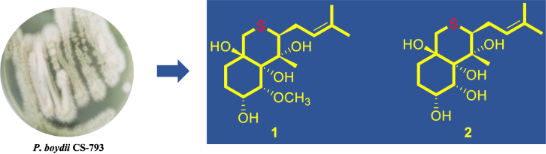
- and mass spectrometric data. X-ray crystallographic analysis confirmed and established the structures and absolute configurations of compounds 1–3, thus providing the first characterized crystal structure of an ovalicin-type sesquiterpenoid. In the antimicrobial assays, compounds 1–3 showed broad
- -spectrum inhibitory activities against several plant pathogens with MIC values ranging from 2 to 16 μg/mL. Keywords: antimicrobial activity; cold seep; Pseudallescheria boydii; sesquiterpenoid; Introduction Marine cold seeps are typical of chemosynthetically driven ecosystems, characterized by methane
- antimicrobial activities [3][4]. As part of our continuing search for bioactive metabolites from deep-sea-derived fungi [3][4][5][6], the fungal strain Pseudallescheria boydii CS-793, which was obtained from sediments collected at the deep-sea cold seep area in the Northeast of the South China Sea, attracted


Development of a chemical scaffold for inhibiting nonribosomal peptide synthetases in live bacterial cells
Beilstein J. Org. Chem. 2024, 20, 445–451, doi:10.3762/bjoc.20.39
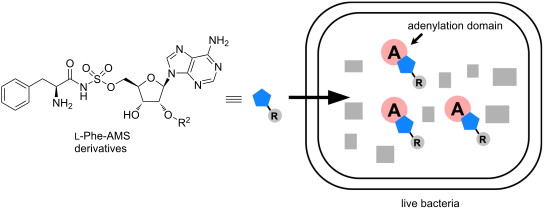
- activities against the A-domain of MbtA, a component of mycobactin synthetase and antimicrobial activities against M. tuberculosis [7]. In addition, aminoacyl (AA)-AMS has been designed to inhibit the amino acid-activating A-domains in NRPSs and has been found to be a tight-binding inhibitor (Figure 2b) [8


Synthesis of spiropyridazine-benzosultams by the [4 + 2] annulation reaction of 3-substituted benzoisothiazole 1,1-dioxides with 1,2-diaza-1,3-dienes
Beilstein J. Org. Chem. 2024, 20, 280–286, doi:10.3762/bjoc.20.29
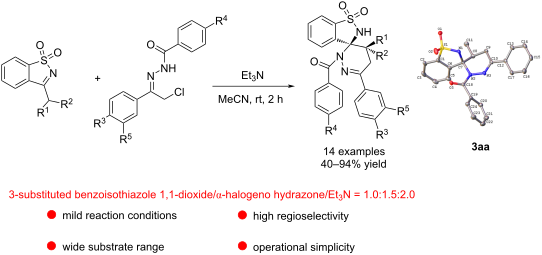
- ] annulation reaction; 1,2-diaza-1,3-dienes; spiro-benzosultams; 3-substituted benzoisothiazole 1,1-dioxides; Introduction Spirobenzosultams have various biological activities [1][2][3] such as antiviral, anticancer, antimicrobial, antimalarial, and antileukemia, and are widely used in the pharmaceutical




Optimizations of lipid II synthesis: an essential glycolipid precursor in bacterial cell wall synthesis and a validated antibiotic target
Beilstein J. Org. Chem. 2024, 20, 220–227, doi:10.3762/bjoc.20.22
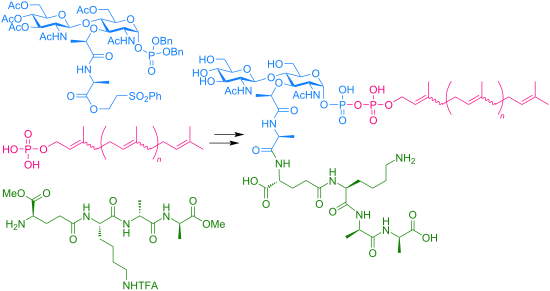
- bacteria. Accessing this valuable cell wall precursor is important both for studying cell wall synthesis and for studying/identifying novel antimicrobial compounds. Herein, we describe optimizations to the modular chemical synthesis of lipid II and unnatural analogues. In particular, the glycosylation step
- study the mechanism of action of antimicrobial peptides that kill bacteria through binding to these polyprenyls [21][28][29][30][31][32][33][34]. Lipid II has been of particular interest, and during our synthesis of multiple different lipid II analogues, we have developed several optimizations, which we
- in red and antimicrobial-binding motifs highlighted with blue arcs. R1 = H or Ac; R2 = H or Ac; R3 = OH, OMe or NH2; R4 = H or COOH; R5 = Gly5, Ala2, Ala-Ser/Ala or ᴅ-Asp; R6 = OH, OMe or NH2. These structural modifications are described in detail by Münch and co-workers [9]. For more details on


Synthetic approach to 2-alkyl-4-quinolones and 2-alkyl-4-quinolone-3-carboxamides based on common β-keto amide precursors
Beilstein J. Org. Chem. 2023, 19, 1804–1810, doi:10.3762/bjoc.19.132
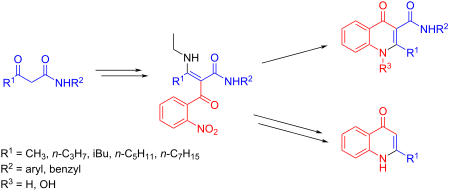
- -quinolone-3-carboxamides 5a–i and some of their N-hydroxy derivatives 4a–e. Compounds of this type with C-2 substitution other than methyl [71] have not been previously described. All of the obtained products were screened for antimicrobial activity at a concentration of 1 mg/mL against S. aureus and E


Effects of the aldehyde-derived ring substituent on the properties of two new bioinspired trimethoxybenzoylhydrazones: methyl vs nitro groups
Beilstein J. Org. Chem. 2023, 19, 1713–1727, doi:10.3762/bjoc.19.125
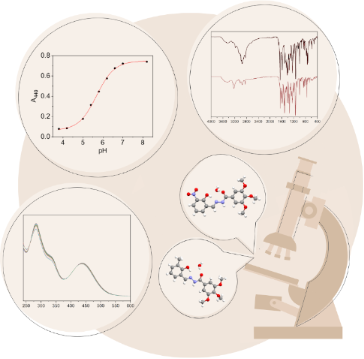
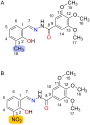
- organic light-emitting diodes (OLEDs) [9][10][11]. Moreover, studies involving N-acylhydrazonic derivatives have highlighted their suitability for the treatment of pathologies associated with infection and/or inflammation [12][13][14][15][16][17]. Antimicrobial activity is one of the most frequently





Secondary metabolites of Diaporthe cameroonensis, isolated from the Cameroonian medicinal plant Trema guineensis
Beilstein J. Org. Chem. 2023, 19, 1555–1561, doi:10.3762/bjoc.19.112
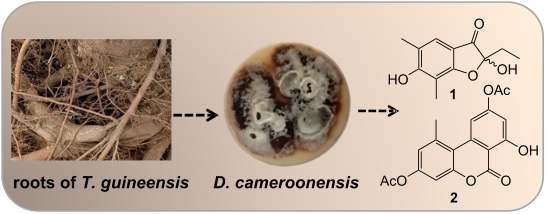
- isolated from Streptomyces [30] and whose antimicrobial activity is probably related to the glutarimide moiety. In compound 1, the lack of this moiety, in addition to the fact that it has been isolated as a racemate could not lead to any beneficial property. As for compound 2, it is a diacetylated


Synthesis and biological evaluation of Argemone mexicana-inspired antimicrobials
Beilstein J. Org. Chem. 2023, 19, 1511–1524, doi:10.3762/bjoc.19.108
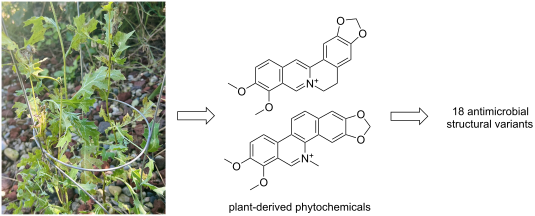
- University, 1610 Campus Dr, Valparaiso, IN 46383, USA Ivy Tech Community College, 410 E Columbus Dr, East Chicago, IN 46312, USA Department of Chemistry and Biochemistry, University of Notre Dame, 251 Nieuwland Hall, Notre Dame, IN 46556, USA 10.3762/bjoc.19.108 Abstract Due to the lack of new antimicrobial
- tumor cytotoxicity effects for a number of the berberine derivatives. Keywords: benzylisoquinoline; berberine; chelerythrine; drug discovery; plant-derived antimicrobials; Introduction The isolation, or creation of novel antimicrobial agents is currently at the forefront of modern healthcare due to
- the stark decrease in antimicrobial drug development in recent years [1] and due to the increasing rise of superbugs, or microorganisms that are resistant to more than one type of antimicrobial treatment, which are predicted by 2050 to cause 10 million deaths/year [2]. Staphylococcus aureus, for


Synthesis of ether lipids: natural compounds and analogues
Beilstein J. Org. Chem. 2023, 19, 1299–1369, doi:10.3762/bjoc.19.96






Unravelling a trichloroacetic acid-catalyzed cascade access to benzo[f]chromeno[2,3-h]quinoxalinoporphyrins
Beilstein J. Org. Chem. 2023, 19, 1216–1224, doi:10.3762/bjoc.19.89
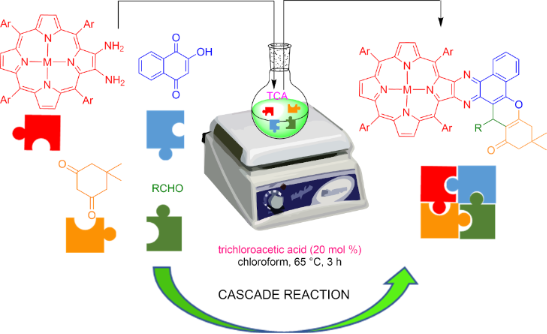
- profiles such as antimicrobial [20][21], antiviral [22][23], anti-inflammatory [24], anticancer [25], antimalarial agents [26] and are also found to be useful in photodynamic therapy applications [27][28][29]. In view of above background and also our interest to device convenient protocols for the


Two new lanostanoid glycosides isolated from a Kenyan polypore Fomitopsis carnea
Beilstein J. Org. Chem. 2023, 19, 1161–1169, doi:10.3762/bjoc.19.84
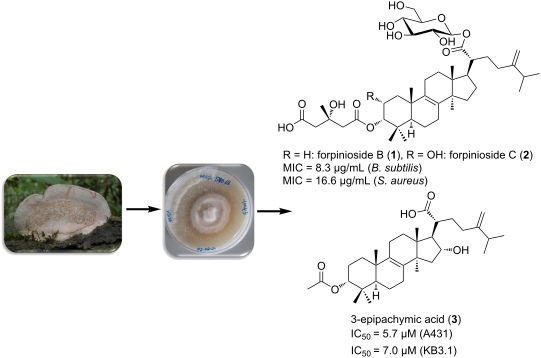
- ). The structures of the isolated compounds were established based on HRESIMS and extensive 1D and 2D NMR experiments. All the isolated compounds were assessed for their antimicrobial and cytotoxic activities. Among the tested compounds, forpinioside B (1) exhibited significant antimicrobial activity
- against Staphylococcus aureus and Bacillus subtilis at MIC values comparable to gentamycin and oxytetracycline (positive controls), respectively. Keywords: antimicrobial activity; Fomitopsis carnea; lanostane glycosides; Polyporales; Introduction Great success was realized on antibiotic discovery
- , compound 2 was identified as 2α-hydroxy,3α-[(3′S)-4′-carboxyl-3′-hydroxy-3′-methylbutanoyloxy]lanosta-8,24(31)-dien-21-oic acid 21-O-β-ᴅ-glucopyranoside that was named as forpinioside C. Biological activities Compounds 1–4 were tested for their antimicrobial effects against fungi and bacteria; where


Synthesis of imidazo[4,5-e][1,3]thiazino[2,3-c][1,2,4]triazines via a base-induced rearrangement of functionalized imidazo[4,5-e]thiazolo[2,3-c][1,2,4]triazines
Beilstein J. Org. Chem. 2023, 19, 1047–1054, doi:10.3762/bjoc.19.80
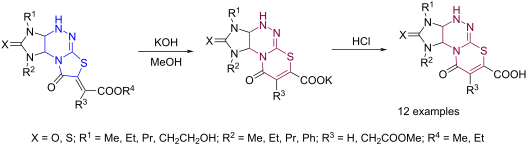
- rearrangement; 1,3-thiazines; thiazolidine-4-ones; Introduction Nitrogen- and sulfur-containing heterocyclic compounds are widely represented in nature and used for the synthesis of biologically active substances. Among the 1,3-thiazine derivatives, promising compounds as antimicrobial and antiviral drugs



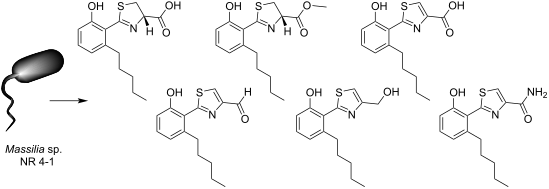
Intermediates and shunt products of massiliachelin biosynthesis in Massilia sp. NR 4-1
Beilstein J. Org. Chem. 2023, 19, 909–917, doi:10.3762/bjoc.19.69
- (TU Dortmund University) for the antimicrobial bioactivity tests.


Non-peptide compounds from Kronopolites svenhedini (Verhoeff) and their antitumor and iNOS inhibitory activities
Beilstein J. Org. Chem. 2023, 19, 789–799, doi:10.3762/bjoc.19.59
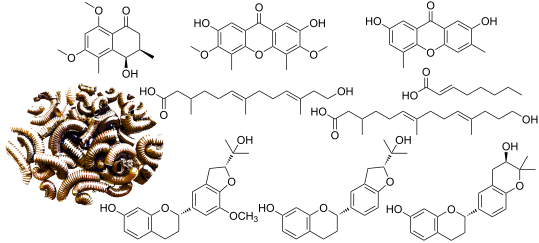
- activity have revealed the presence of antimicrobial peptides [5], defensive alkaloids [6], and defensive long chain alcohol acetates [7]. Historically, in China, numerous records documented the utilization of animals like arthropods for medicinal purposes. Millipedes hereby represent a traditional Chinese


Synthesis of imidazo[1,2-a]pyridine-containing peptidomimetics by tandem of Groebke–Blackburn–Bienaymé and Ugi reactions
Beilstein J. Org. Chem. 2023, 19, 727–735, doi:10.3762/bjoc.19.53
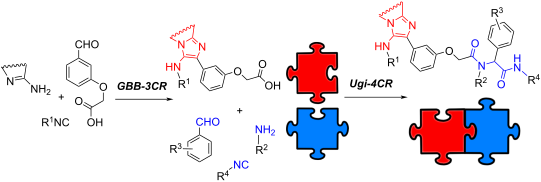
- ), Pseudomonas aeruginosa (strain 1111) (Gram-negative). Compared to the reference substance, nitroxoline, the compounds generally showed lower levels of activity. However, some of the compounds demonstrated weak antimicrobial effects, as evidenced by their ability to inhibit the growth of the test


Combretastatins D series and analogues: from isolation, synthetic challenges and biological activities
Beilstein J. Org. Chem. 2023, 19, 399–427, doi:10.3762/bjoc.19.31
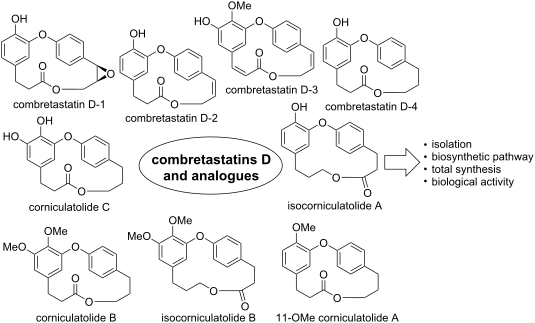
- chromatography on silica gel to yield several fractions. Some of them were tested and the ones that exhibited antimicrobial activity were further fractionated on silica gel chromatographic column eluted with hexane and acetone (8:2) to yield four different fractions. The fractions comprised 11-O




An efficient metal-free and catalyst-free C–S/C–O bond-formation strategy: synthesis of pyrazole-conjugated thioamides and amides
Beilstein J. Org. Chem. 2023, 19, 231–244, doi:10.3762/bjoc.19.22
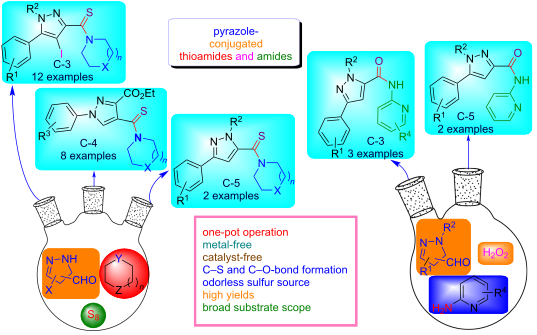
- ], anticancer [13][14][15], antiviral [16], analgesic [17], antioxidants, antimicrobial [18], antidiabetic, anticonvulsant [19], antihelminthic [20], and antiarrhythmic activities. The pyrazole nucleus is a core unit in several FDA-approved marketed drugs such as sildenafil [21][22][23], celebrex [24][25


Investigation of cationic ring-opening polymerization of 2-oxazolines in the “green” solvent dihydrolevoglucosenone
Beilstein J. Org. Chem. 2023, 19, 217–230, doi:10.3762/bjoc.19.21
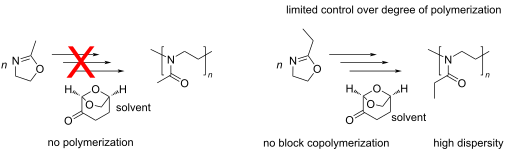
- for most POx, accordingly, it was used successfully only for the polymerization of EtOx [34]. Correia et al. used supercritical carbon dioxide for the synthesis of 2-oxazoline-based oligomers with antimicrobial properties and applied boron trifluoride etherate as the initiator [35]. However, carbamic


Nostochopcerol, a new antibacterial monoacylglycerol from the edible cyanobacterium Nostochopsis lobatus
Beilstein J. Org. Chem. 2023, 19, 133–138, doi:10.3762/bjoc.19.13
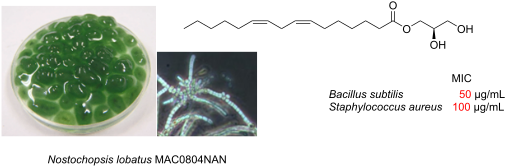
- limited number of attempts include an antifungal lipopeptide nostofungicidine [4] and an antioxidant nostocionone [5] from Nostoc commune, an unusual antibacterial n−1 fatty acid from N. verrucosum [2], and the sacrolides, antimicrobial oxylipin macrolactones from Aphanothece sacrum [6][7]. Nostochopsis
- detected by in vitro testings, which further raised the expectation of its richness as the source of bioactive metabolites. However, at present, only a single drug discovery attempt has been made on this alga [13], which prompted further chemical study. We evaluated the antimicrobial activity of the
- According to a procedure described in [6], the antimicrobial potency of chromatographic fractions was evaluated by a paper disk-agar diffusion method. Fractions at each purification stage were diluted to the same concentration with MeOH, and 10 μL aliquots were impregnated into 6 mm-diameter paper disks