Search results
Search for "kinetic" in Full Text gives 628 result(s) in Beilstein Journal of Organic Chemistry. Showing first 200.
Copper-catalyzed yne-allylic substitutions: concept and recent developments
Beilstein J. Org. Chem. 2024, 20, 2739–2775, doi:10.3762/bjoc.20.232
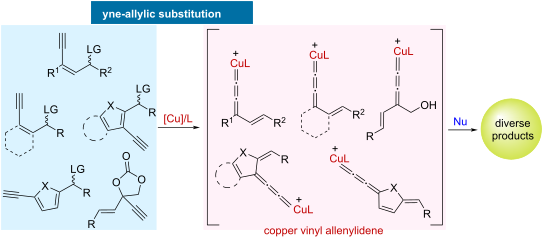
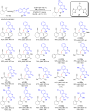
- stereocenter of the product is controlled by the catalyst. A single crystal of Cu(I) was investigated by X-ray and proved to be the dicopper complex, while the Cu(II) catalyst was revealed as mononuclear copper coordinated with two ligands. Further kinetic isotope experiments and nonlinear relationship studies
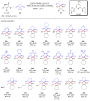
- confirmed that a copper–ligand monomer complex exists in the mechanism through nonlinear relationship experiments and kinetic studies (Scheme 17). He et al. [68] developed the regio- and enantioselective monofluoroalkylation of yne-allylic esters using fluorinated malonates as the starting materials, giving
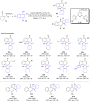
- showed that the reaction exhibits a negative nonlinear effect, while the kinetic experiments indicate that a mono-copper catalyst might be involved in the rate-limiting step. They speculated that the observed nonlinear effect might arise from the existence of both the inactive homo-dimer of ligands and













Computational design for enantioselective CO2 capture: asymmetric frustrated Lewis pairs in epoxide transformations
Beilstein J. Org. Chem. 2024, 20, 2668–2681, doi:10.3762/bjoc.20.224
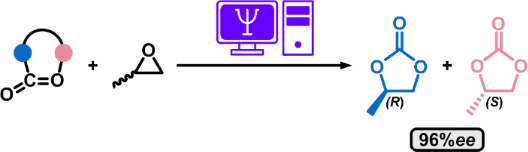
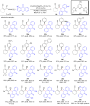
- Boltzmann constant, T is the temperature in Kelvin, h is the Planck constant, and R is the gas constant. The enantiomeric excess (%ee) was calculated using Equation 2 [41]. kfav stands for the kinetic rate constant of the most favourable process, and kdefav stands for the rate constant of the less


Applications of microscopy and small angle scattering techniques for the characterisation of supramolecular gels
Beilstein J. Org. Chem. 2024, 20, 2608–2634, doi:10.3762/bjoc.20.220
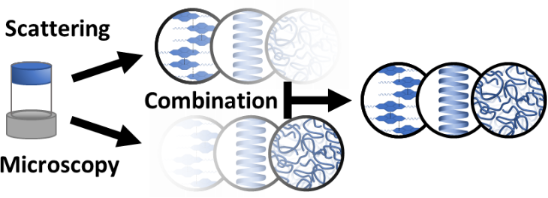
- could CLSM observe the initial kinetic self-sorting of gelators, but it also showed that the homogenous mixture of NFs and CFs can undergo a higher level of self-sorting, resulting in macroscopic phase separation (Figure 4). To gather a three-dimensional surface profile of a material, AFM utilises a
- understanding of the kinetic processes probed by such in situ investigations are essential to understanding the relationship between gel structure and their bulk properties [71]. As discussed previously, scattering provides bulk-averaged information that is a statistical average of the structures across the


Hypervalent iodine-mediated cyclization of bishomoallylamides to prolinols
Beilstein J. Org. Chem. 2024, 20, 2455–2460, doi:10.3762/bjoc.20.209
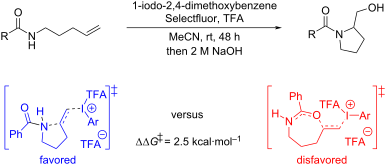
- amide at both the oxygen and the nitrogen, however, the ΔG‡ value for the latter was lower by 2.5 kcal·mol−1. This demonstrates a clear kinetic preference for formation of the five-membered ring over the seven-membered one [19]. Subsequent deprotonation of 11 leads to tertiary amide 12. Upon cyclization
- , the iodane moiety in 12 is eliminated by an intramolecular attack by the amide nitrogen to form the aziridinium 13. Finally, ring-opening by SN2 attack of trifluoroacetate leads to the final product 14 [20]. In this case, the kinetic pyrrolidine product is obtained due to the electron-withdrawing


Phenylseleno trifluoromethoxylation of alkenes
Beilstein J. Org. Chem. 2024, 20, 2434–2441, doi:10.3762/bjoc.20.207
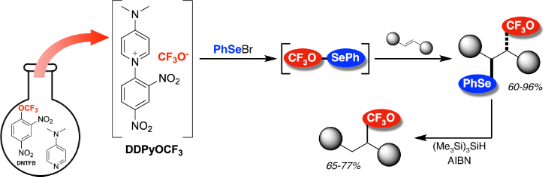
- oxygen atom which disfavors the episelenonium opening with the CF3O− anion in the closest position to the oxygen atom. It is noteworthy that the regioisomeric ratio of terminal alkenes (2e, 2i) evolved with the reaction time. The amount of the kinetic terminal regioisomer (anti-Markovnikov – 2e’, 2i
- ’) decreases with time in favor of the thermodynamic Markovnikov regioisomer (2e, 2i). This phenomenon cannot occur for products 2g and 2h because the kinetic and thermodynamic products are the same. This observation confirms the existence of an equilibrium between the episelenonium and the final products 2



Homogeneous continuous flow nitration of O-methylisouronium sulfate and its optimization by kinetic modeling
Beilstein J. Org. Chem. 2024, 20, 2408–2420, doi:10.3762/bjoc.20.205
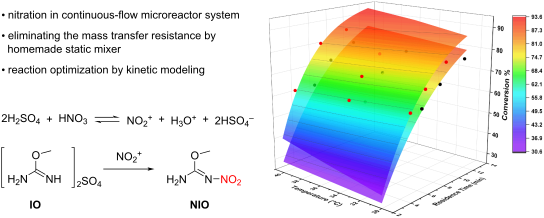
- its control difficult and risky. In this paper, a homogeneous continuous flow microreactor system was developed for the nitration of O-methylisouronium sulfate under high concentrations of mixed acids, with a homemade static mixer eliminating the mass transfer resistance. In addition, the kinetic
- modeling of this reaction was performed based on the theory of NO2+ attack, with the activation energy and pre-exponential factor determined. Finally, based on the response surface generated by the kinetic model, the reaction was optimized with a conversion of 87.4% under a sulfuric acid mass fraction of
- 94%, initial reactant concentration of 0.5 mol/L, reaction temperature of 40 °C, molar ratio of reactants at 4.4:1, and a residence time of 12.36 minutes. Keywords: continuous flow; kinetic modeling; nitration; reaction optimization; static mixer; Introduction The demand for high-quality


![[Graphic 1]](/bjoc/content/inline/1860-5397-20-205-i17.svg?max-width=637&scale=1.18182)


Asymmetric organocatalytic synthesis of chiral homoallylic amines
Beilstein J. Org. Chem. 2024, 20, 2349–2377, doi:10.3762/bjoc.20.201
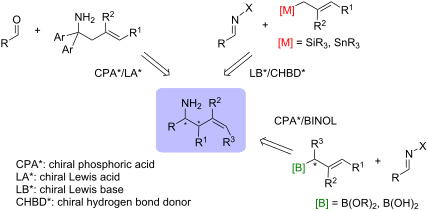
- for the resolution of chiral amines [28]. However, it was not until 2004 that they were recognised as efficient chiral Brønsted acid organocatalysts for asymmetric Mannich reactions [29]. Malkov and co-workers revealed [30] that (R)-TRIP can act as a very efficient catalyst for the kinetic resolution
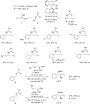
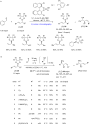
- -substituted aldimines. This was later addressed by the same researchers [15], who developed an organocatalytic kinetic resolution of secondary boronates to furnish bench-stable homochiral (S)-35. The latter were then employed in the asymmetric allylation of in situ-formed primary aldimines 37, leading
- directly to the unprotected chiral (S,Z)-homoallylic amines 38 in high yields and with an excellent retention of the enantiopurity (Scheme 8B). The method remains the only direct Z-selective crotylation to attain enantioenriched unprotected homoallylic amines, and the only example of an effective kinetic








Stereoselective mechanochemical synthesis of thiomalonate Michael adducts via iminium catalysis by chiral primary amines
Beilstein J. Org. Chem. 2024, 20, 2313–2322, doi:10.3762/bjoc.20.198
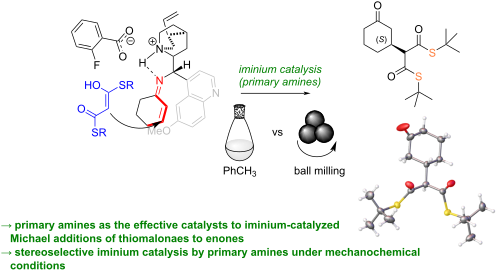
- ][5]. The transient impact of kinetic energy, channeled into the reaction, facilitates overcoming the constraints inherent in equilibrium models. Thus, employing limited substrates could potentially yield diverse products through a simple alteration of conditions, compared to solvent-based methods [6
- for unconventional reaction pathways by exploiting kinetic energy to surpass equilibrium constraints. This methodology presents several advantages over conventional solvent-based approaches, including the potential for diverse product formation with limited substrates and the development of


Catalysing (organo-)catalysis: Trends in the application of machine learning to enantioselective organocatalysis
Beilstein J. Org. Chem. 2024, 20, 2280–2304, doi:10.3762/bjoc.20.196
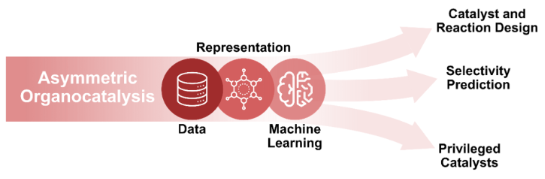
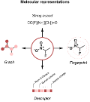
- , the interest to describe the influence of substrate or catalyst structures on the rate or selectivity of a reaction is well-established and led among others to the introduction of Hammett parameters to relate chemical structures to both kinetic and thermodynamic reaction properties [28] (Figure 4). As
- enantioselectivities of a kinetic resolution of benzyl alcohols and an enantiodivergent fluorination of allylic alcohols, observing good correlations for both reactions. Since then, the proposed NCI descriptors have been successfully applied to multiple different reactions, such as an allenoate Claisen rearrangement
- have also been used to predict the Mayr–Patz nucleophilicity parameter N, which estimates the nucleophilicity of a nucleophile based on experimentally measured kinetic data. The MLR models are used to predict N for more than 1200 nucleophiles, enabling the prediction of N for further nucleophiles [98




Deuterated reagents in multicomponent reactions to afford deuterium-labeled products
Beilstein J. Org. Chem. 2024, 20, 2270–2279, doi:10.3762/bjoc.20.195
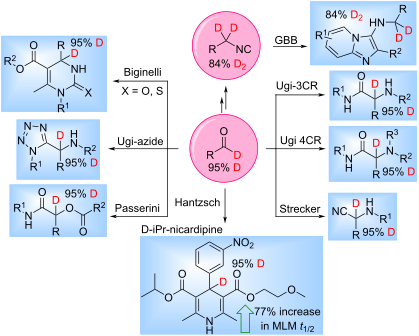
- significantly enhanced metabolic stability, a key parameter for property-based design efforts. Keywords: deuterated aldehydes; deuterated formamides; deuterated isocyanides; DHPs; kinetic isotope effect; Leuckart–Wallach; microsomal stability; multicomponent reactions; Introduction Multicomponent reactions
- drug-like compounds with synthetic ease [5][6]. In recent years use of deuterium in drug discovery has expanded beyond mechanistic and tracer studies to deuterium incorporation in small molecules in attempts to hijack the deuterium kinetic isotope effect to induce longer drug t1/2 and greater systemic
- this position was thought a reasonable approach to extend drug t1/2 through exploitation of the kinetic isotope effect underpinned by the C–D bond being slightly shorter and stronger than a C–H bond. Such site-specific labeling was hypothesized to slow CYP3A4 metabolism. To evaluate the hypothesis


Cell-free protein synthesis with technical additives – expanding the parameter space of in vitro gene expression
Beilstein J. Org. Chem. 2024, 20, 2242–2253, doi:10.3762/bjoc.20.192
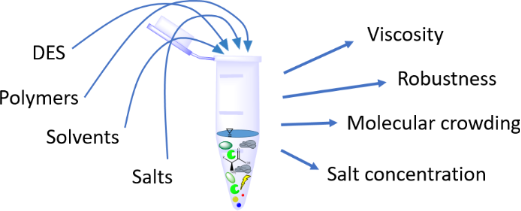
- , batch-to-batch reproducibility, and reliable kinetic modelling of the system [10][11]. Furthermore, the transferability of CFPS screening results to the cells is limited but important, as in vivo production is often required for preparative scale applications [11][12]. To date, the description of CFPS

Metal-free double azide addition to strained alkynes of an octadehydrodibenzo[12]annulene derivative with electron-withdrawing substituents
Beilstein J. Org. Chem. 2024, 20, 2234–2241, doi:10.3762/bjoc.20.191
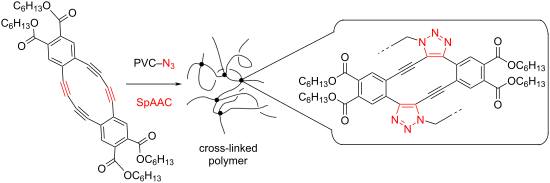
- . Synthesis of DBA 5. Mechanical properties of PVA-N3 before and after crosslinking. Supporting Information Supporting Information File 70: Experimental section and kinetic study of the reaction of compound 5 and benzyl azide. Funding This work was partially supported by NEDO (grant number 23200050-0), the




Factors influencing the performance of organocatalysts immobilised on solid supports: A review
Beilstein J. Org. Chem. 2024, 20, 2129–2142, doi:10.3762/bjoc.20.183
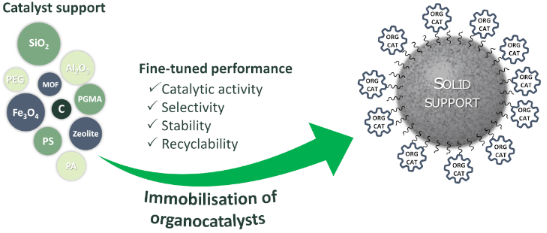
- difficult to synthesise but remains stable, forming the support around it is advisable [67]. Another limitation of the encapsulation method is that the size of the pore openings in the support must be smaller than the kinetic size of the immobilised catalyst [77]. Covalent tethering is a method of bonding


Regioselective alkylation of a versatile indazole: Electrophile scope and mechanistic insights from density functional theory calculations
Beilstein J. Org. Chem. 2024, 20, 1940–1954, doi:10.3762/bjoc.20.170
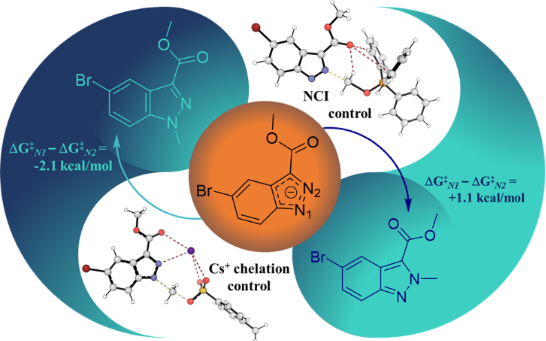
- character of TsO− and triphenylphosphine oxide, precluding any thermodynamic versus kinetic arguments for regioselectivity. Conclusion We have established highly regioselective N1- and N2-alkylations of methyl 5-bromo-1H-indazole-3-carboxylate from diverse commercially available alcohols with excellent


Electrochemical radical cation aza-Wacker cyclizations
Beilstein J. Org. Chem. 2024, 20, 1900–1905, doi:10.3762/bjoc.20.165
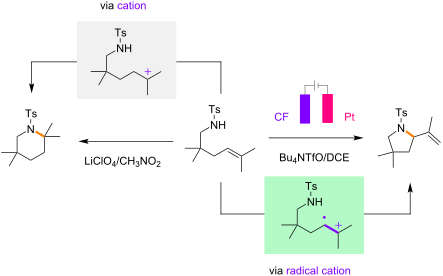
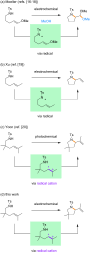
- representative radical cation precursors that are widely used to realize the formation of unique bonds. The respective radical cations are trapped by various nucleophiles under radical and/or ion control, where kinetic and/or thermodynamic effects are expected to be dominant. Typical examples that clearly show




The Groebke–Blackburn–Bienaymé reaction in its maturity: innovation and improvements since its 21st birthday (2019–2023)
Beilstein J. Org. Chem. 2024, 20, 1839–1879, doi:10.3762/bjoc.20.162
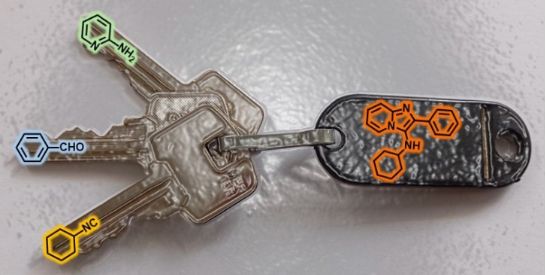
- diaryliodonium triflates such as 8 and 9 [13]. They studied a model reaction with 2-aminopyridine (1), p-tolualdehyde (10) and cyclohexyl isocyanide (11) both experimentally (by binding and kinetic studies) and theoretically (by density functional theory (DFT) calculations) (Scheme 5). Catalyst 8 was found to be
- no loss of activity after 30 days. On the other hand, reusability seemed problematic, as significant decrement in yield was observed after the second cycle. Kinetic target-guided synthesis (KTGS) has emerged as a promising strategy in drug discovery [24]. It relies on a drug target serving as a






A fiber-optic spectroscopic setup for isomerization quantum yield determination
Beilstein J. Org. Chem. 2024, 20, 1684–1692, doi:10.3762/bjoc.20.150
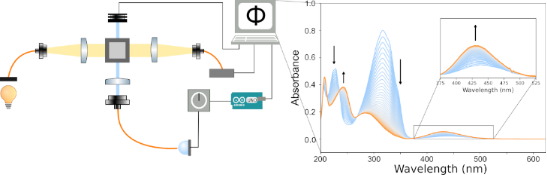
- kinetic model describing the components and the non-negativity constraint on the absorbance, can help to guide the decomposition of the data into chemically meaningful concentration traces and species-associated spectra (SAS) [38]. Global and target analysis is one of the methods employed in recent


pKalculator: A pKa predictor for C–H bonds
Beilstein J. Org. Chem. 2024, 20, 1614–1622, doi:10.3762/bjoc.20.144
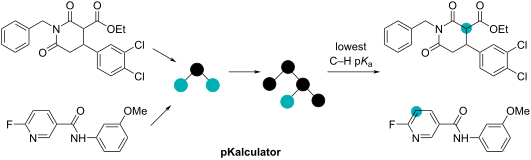
- that the most substituted C–H site next to a ketone will form the more stable carbanion (thermodynamic anion), whereas the least substituted carbanion will be the least stable carbanion (kinetic anion). This can generally be controlled by the type of base used. For the reaction in Scheme 1a, n-BuLi is
- commly used, which is known to lead to the kinetic anion. Because our ML model relies on the principle of lowest energy, it predicts the site with the lowest pKa value as the site of reaction (thermodynamic carbanion) and does not account for the type of base used. Going to Scheme 1b, we look at a


![[Graphic 9]](/bjoc/content/inline/1860-5397-20-144-i12.svg?max-width=637&scale=1.3000021)


Hypervalent iodine-catalyzed amide and alkene coupling enabled by lithium salt activation
Beilstein J. Org. Chem. 2024, 20, 1405–1411, doi:10.3762/bjoc.20.122

- less coordinating counterion is more reactive to activate the olefin. We also conducted kinetic studies on how the olefin and amide structures impacted the overall reaction rate. The more electron-rich olefins generally proceeded faster than the electron-poor ones, suggesting that a significant
- positive charge was likely built up on the olefin prior to the nucleophilic addition. On the other hand, the electronic nature of the para-substituted benzamides had little impact on the overall reaction rate as both electron-rich and electron-deficient benzamides proceeded with similar kinetic profiles
- . All the kinetic plots are shown in Figure 1. With the optimized conditions and kinetic information in hand, we turned our attention to the amide substrate scope. In this case, both electron-rich and -deficient benzamides proceeded to the desired products in reasonable yields and high



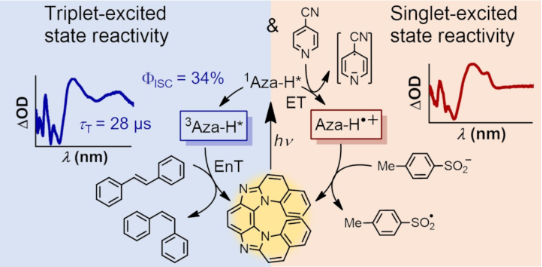
Mechanistic investigations of polyaza[7]helicene in photoredox and energy transfer catalysis
Beilstein J. Org. Chem. 2024, 20, 1236–1245, doi:10.3762/bjoc.20.106
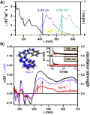
- under otherwise identical conditions gave a completely different spectrum (Figure 1B, red) and we assume that the triplet state of Aza-H is almost fully quenched by oxygen at the selected delay, which is supported by additional kinetic measurements (see below). The second transient species is identified
- transient species in Ar-saturated/air-saturated solution is also reflected in the kinetic traces at 440 nm and 640 nm (Figure 1B, inset). Following the decay of the transient triplet species (³Aza-H), essentially the same signal is reached irrespective of the presence of oxygen or argon in the solution. The
- competes with ionization already during the laser pulse. Kinetic measurements of the radical cation species show multiexponential decay, probably due to recombination of the radical cation and radical anion (Figure 2A, inset). Despite the reported absorption maximum for 4CP•− at 398 nm [72], we were unable




Kinetically stabilized 1,3-diarylisobenzofurans and the possibility of preparing large, persistent isoacenofurans with unusually small HOMO–LUMO gaps
Beilstein J. Org. Chem. 2024, 20, 1099–1110, doi:10.3762/bjoc.20.97
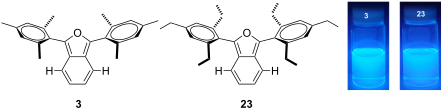
- phenyl substituents, have been synthesized and shown to adopt non-planar conformations with the ortho-alkyl groups located above and below the most reactive 1,3-carbons of the furan ring. These bulky substituents provide a strong measure of kinetic stabilization. Thus, 1,3-dimesitylisobenzofuran and 1,3
- photooxidative resistance, especially along the acene-like segment, plus a strong measure of kinetic stabilization at the 1,3-carbons of the furan ring. As described here, there are compelling reasons to contemplate the synthesis of large, persistent isoacenofurans with unusually small HOMO–LUMO gaps. In this
- isoacenofurans. Thus, unless there is a need for improved kinetic stabilization of the most reactive 1,3-carbons on the furan ring, there appears little benefit of utilizing highly hindered 2’,4’,6’-triisopropyl (compound 24) or 2’,4’,6’-tri-tert-butyl (compound 25) substituents, especially as these compounds


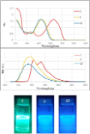


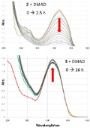
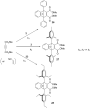


Synthesis of 1,4-azaphosphinine nucleosides and evaluation as inhibitors of human cytidine deaminase and APOBEC3A
Beilstein J. Org. Chem. 2024, 20, 1088–1098, doi:10.3762/bjoc.20.96
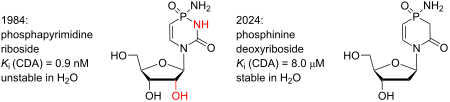
- . Evaluation of 1,4-azaphosphinine derivatives as inhibitors of hCDA, engineered A3B and wild-type A3A Evaluation of hCDA inhibition We monitored the hCDA-catalysed deamination of dC at 286 nm [70] and analysed the kinetic profiles at various inhibitor concentrations using a global regression analysis of the
- kinetic data using Lambert’s W function [71]. This method provides better estimates for the Michaelis–Menten constant (KM) and maximum velocity (Vmax) than nonlinear regression analysis of the initial rate (V0). It is also superior to any of the known linearised transformations of the Michaelis–Menten
- provides the initial velocity of deamination of ssDNA substrates, including the modified ones [56], in the presence of A3 enzymes. Consequently, the Michaelis–Menten kinetic model can be used to characterise substrates and inhibitors of A3. Both anomers of the nucleoside Va were individually incorporated


(Bio)isosteres of ortho- and meta-substituted benzenes
Beilstein J. Org. Chem. 2024, 20, 859–890, doi:10.3762/bjoc.20.78
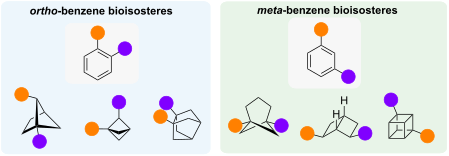
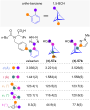
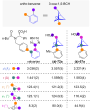
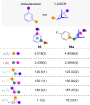
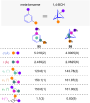
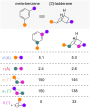
- ) and 3-oxa-1,4-BCHs (123) (Figure 19) [58]. The experimental distribution coefficient (logD) of 2- and 3-oxa-1,4-BCHs 122 and 123 is reduced compared to equivalent para-benzene 121 while the kinetic aqueous solubility (KS) is increased. The intrinsic clearance rate in mouse liver microsomes (CLint) is

















Activity assays of NnlA homologs suggest the natural product N-nitroglycine is degraded by diverse bacteria
Beilstein J. Org. Chem. 2024, 20, 830–840, doi:10.3762/bjoc.20.75
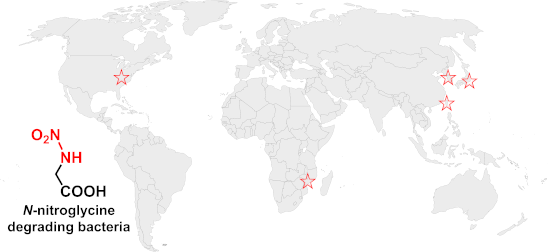
- and kinetic experiments or crystallization of the active homodimer will be required to resolve the catalytic mechanism. If NnlA is specific for NNG as suggested by these results, it is worth speculating about potential functions of NNG and other nitramine natural products. Bacterial natural products




Advancements in hydrochlorination of alkenes
Beilstein J. Org. Chem. 2024, 20, 787–814, doi:10.3762/bjoc.20.72
- a side note, it should be mentioned that Hutchings and colleagues reported the hydrochlorination of ethylene with Lewis acids on solid supports [52]. However, this work solely focuses on kinetic studies and is therefore not discussed in this report. Reactions with in situ-generated HCl HCl gas can