


Search results
Search for "steric hindrance" in Full Text gives 575 result(s) in Beilstein Journal of Organic Chemistry. Showing first 200.
Efficient one-step synthesis of diarylacetic acids by electrochemical direct carboxylation of diarylmethanol compounds in DMSO
Beilstein J. Org. Chem. 2024, 20, 2392–2400, doi:10.3762/bjoc.20.203
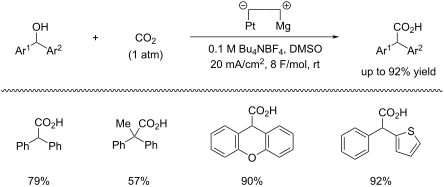
- proton abstraction from DMSO to produce 3 as main product. It was thought that the increase of steric hindrance caused a reduction in nucleophilicity and an increase in basicity in the generated triphenylmethyl anion species, in comparison to the diphenylmethyl anion species. To elucidate the mechanism


Tandem diazotization/cyclization approach for the synthesis of a fused 1,2,3-triazinone-furazan/furoxan heterocyclic system
Beilstein J. Org. Chem. 2024, 20, 2342–2348, doi:10.3762/bjoc.20.200
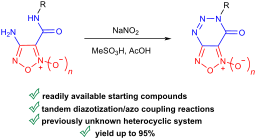
- ][1,2,3]triazin-7(6H)-one 2-oxides 1 (Scheme 2). Note, that triazinones 1a–d bearing aryl substituents at position 6 were obtained in high yields, however, in the case of the 2-methoxyphenyl derivative the yield of target triazinone 1e was somewhat lower arguably due to steric hindrance. To our delight


Improved deconvolution of natural products’ protein targets using diagnostic ions from chemical proteomics linkers
Beilstein J. Org. Chem. 2024, 20, 2323–2341, doi:10.3762/bjoc.20.199
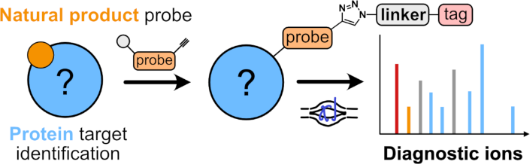
- CuAAC due to its rapid reaction kinetics, robustness, and relatively small steric hindrance of the terminal alkyne, which is usually attached to the probe core scaffold to form an alkyne probe [5][63]. Once the covalent bond between the probe and protein is formed, the cells are lysed, and the probe




Efficacy of radical reactions of isocyanides with heteroatom radicals in organic synthesis
Beilstein J. Org. Chem. 2024, 20, 2114–2128, doi:10.3762/bjoc.20.182
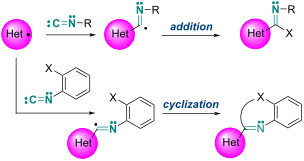
- abstraction reaction from tin hydride or hydrosilane by radical initiators such as AIBN has effectively been used. When tin and silyl radicals generated in this way are reacted with isocyanides, they are more susceptible to steric hindrance than group 16 or 15 heteroatom radicals due to the greater number of
- compounds to isocyanides using imidoyl radicals as key intermediates. However, as the number of substituents on typical elements increases, intermolecular 1,1-addition reactions become more difficult due to the increase in steric hindrance. Therefore, it is expected that intramolecular cyclization of
- -covalent electron pair, making it impossible to generate boron radicals by homolysis via the n–σ* transition. In addition, since boron has an empty orbital, it forms ate complexes when Lewis base compounds coexist. As the result, the boryl groups of the ate complexes are bulky and often cause steric


Multicomponent syntheses of pyrazoles via (3 + 2)-cyclocondensation and (3 + 2)-cycloaddition key steps
Beilstein J. Org. Chem. 2024, 20, 2024–2077, doi:10.3762/bjoc.20.178

- three different regioisomers when employing different isothiocyanates 19. However, easy separation by LC–MS could be achieved, as demonstrated for one-pot process generated pyrazoles 21a–f. The reaction demonstrates high tolerance to steric hindrance and electronic factors, enabling the synthesis of




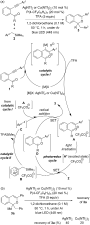
Development of a flow photochemical process for a π-Lewis acidic metal-catalyzed cyclization/radical addition sequence: in situ-generated 2-benzopyrylium as photoredox catalyst and reactive intermediate
Beilstein J. Org. Chem. 2024, 20, 1973–1980, doi:10.3762/bjoc.20.173
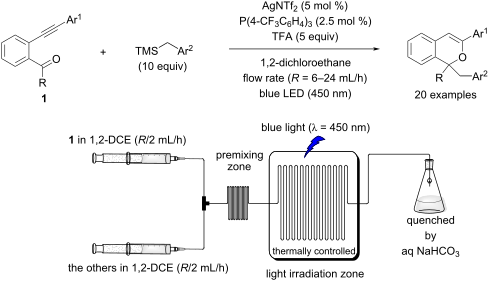
- , respectively, in good yields (Table 2, entries 7–9). The ortho-methyl-substituted substrate 1j was also compatible, affording product 3j in good yield (Table 2, entry 10: 76%). This yield was comparable to that of the substrate having a methyl group at the para- or meta-position, despite the steric hindrance


Radical reactivity of antiaromatic Ni(II) norcorroles with azo radical initiators
Beilstein J. Org. Chem. 2024, 20, 1967–1972, doi:10.3762/bjoc.20.172
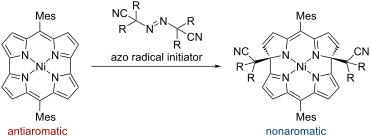
- coefficient of the HOMO indicates that two α-carbon atoms of the pyrrole subunits are the most reactive positions for electrophilic species. In addition, the distal α-carbon atom relative to the meso-position could be more reactive than the proximal α-carbon atom due to the steric hindrance of bulky mesityl


The Groebke–Blackburn–Bienaymé reaction in its maturity: innovation and improvements since its 21st birthday (2019–2023)
Beilstein J. Org. Chem. 2024, 20, 1839–1879, doi:10.3762/bjoc.20.162
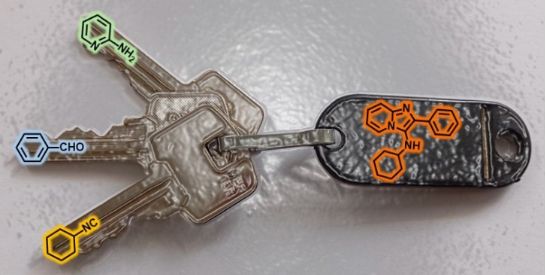
- and the nitrogen atom in imidazoles 65. This interaction increased the steric hindrance around C-2 and allowed the Pictet–Spengler reaction to occur at position of C-4. Indole-4-carbaldehydes were also compatible with this transformation, while indole-2-carbaldehyde (70) surprisingly led to the


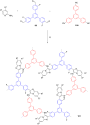




Synthesis of polycyclic aromatic quinones by continuous flow electrochemical oxidation: anodic methoxylation of polycyclic aromatic phenols (PAPs)
Beilstein J. Org. Chem. 2024, 20, 1746–1757, doi:10.3762/bjoc.20.153
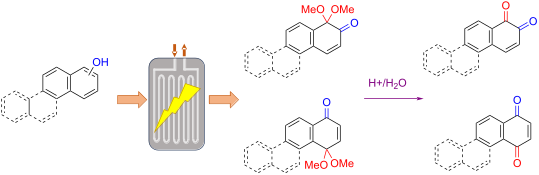
- dimers, which indicates a radical intermediate [36]. Swenton and co-workers [37] established evidence for the phenoxonium ion (Scheme 1), and were further able to divert the reaction into forming ortho-oxidation due to steric hindrance (Scheme 2). Cyclic voltammetry studies of the oxidation of 2-naphthol




pKalculator: A pKa predictor for C–H bonds
Beilstein J. Org. Chem. 2024, 20, 1614–1622, doi:10.3762/bjoc.20.144
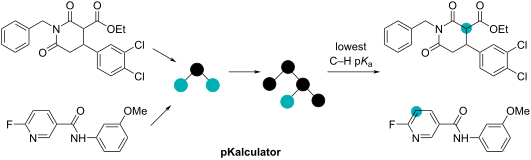
- as steric hindrance and base reactivity, ensuring even more precise predictions for reaction sites. Correlating computed values and experimental pKa values for 695 compounds. r: Pearson correlation coefficient; ρ: Spearman’s rank correlation coefficient; MAE: mean absolute error; RMSE: root mean


![[Graphic 9]](/bjoc/content/inline/1860-5397-20-144-i12.svg?max-width=637&scale=1.3000021)


Electrocatalytic hydrogenation of cyanoarenes, nitroarenes, quinolines, and pyridines under mild conditions with a proton-exchange membrane reactor
Beilstein J. Org. Chem. 2024, 20, 1560–1571, doi:10.3762/bjoc.20.139
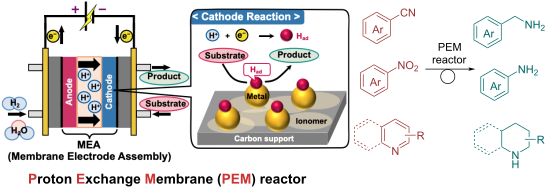
- contrast to quinolines, 4-methylpyridine (8e) gave 4-methylpiperidine (9e) in a moderate yield. 4-Phenylpyridine (8f) afforded a small amount of the target product 9f and 91% of 8f was recovered, probably because of steric hindrance of 8f. 2,6-Disubstituted pyridine such as 2,6-lutidine (8g) was also


Synthesis of substituted triazole–pyrazole hybrids using triazenylpyrazole precursors
Beilstein J. Org. Chem. 2024, 20, 1396–1404, doi:10.3762/bjoc.20.121
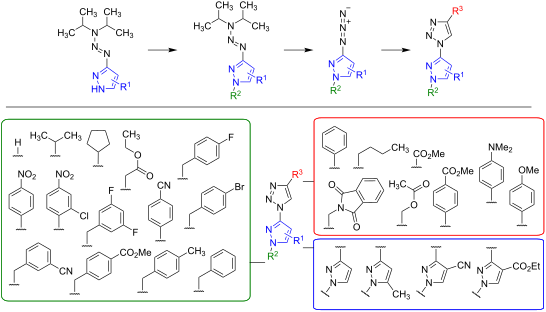
- % could be obtained in some cases (see 17f or 17m), whereas the isomers were isolated in a 1:1 ratio for compounds 17c or 17h. A strong trend towards regioisomer 17 as the main product was observed for substituted phenyl residues, presumably due to the higher steric hindrance (see 17e–g). The results for




Transition-metal-catalyst-free electroreductive alkene hydroarylation with aryl halides under visible-light irradiation
Beilstein J. Org. Chem. 2024, 20, 1327–1333, doi:10.3762/bjoc.20.116
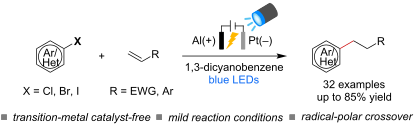
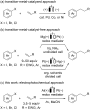
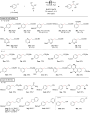
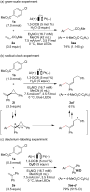
- , 3ca). Products bearing p-methylsulfonyl (3da) and m-methoxycarbonyl (3ea) groups were obtained from the corresponding aryl bromides instead of chlorides under otherwise identical reaction conditions. The steric hindrance of the ortho-substituent did not have a large influence on the reaction


Diameter-selective extraction of single-walled carbon nanotubes by interlocking with Cu-tethered square nanobrackets
Beilstein J. Org. Chem. 2024, 20, 1298–1307, doi:10.3762/bjoc.20.113
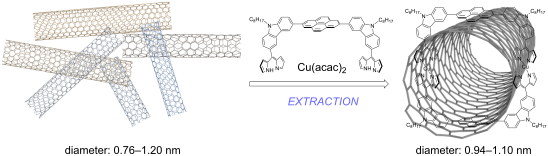
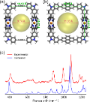
- steric hindrance along the pyrene–carbazole bond than that along the anthracene–carbazole one. To predict the appropriate diameters of SWNTs, the spherical cavity sizes were calculated by considering van der Waals radii of all the atoms. The cavity size of Cu-nanobrackets 1b (11.83 Å) is 2.09 Å larger




Synthesis of indano[60]fullerene thioketone and its application in organic solar cells
Beilstein J. Org. Chem. 2024, 20, 1270–1277, doi:10.3762/bjoc.20.109
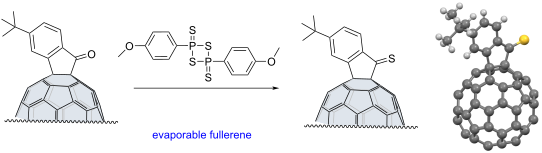
- para-substituents were used and the reaction from FIDO to FIDS was found to tolerate both electron-donating and -withdrawing functional groups as shown in Table 2. It is well known that functional groups with larger steric hindrance can reduce intermolecular forces. Consequently, a tert-butyl
- ) was determined by analyzing the onset of weight loss for these compounds. Tsub was lower for t-Bu-FIDO and t-Bu-FIDS, at 410 °C and 417 °C, respectively, than for C60, which began to sublimate at 460 °C (Table 3). The lower sublimation temperature was attributed to the steric hindrance of the tert


Domino reactions of chromones with activated carbonyl compounds
Beilstein J. Org. Chem. 2024, 20, 1256–1269, doi:10.3762/bjoc.20.108
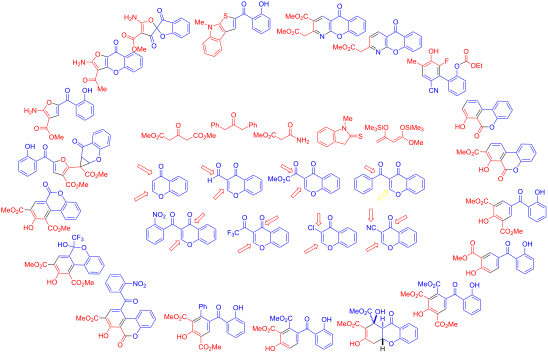
- group which might be explained by the electron-rich nature of the thiophene and, thus, a reduced electrophilicity of the neighboring carbonyl group. Likewise, a poor yield (23%) was observed for a 2-fluorophenyl group, presumably due to steric hindrance because of the ortho-substituent. Excellent yields
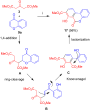
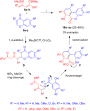
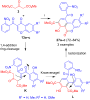
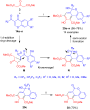
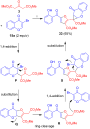
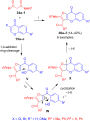
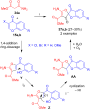
- adjacent to the phenol moiety resulted in formation of intermediate L and lactonization gave the final products. The regioselectivity of the cyclization can be explained by steric hindrance of the carbonyl group adjacent to the 2-nitrophenyl moiety containing an ortho-substituent. Interestingly, in case of
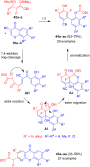
- the chromone moiety was observed for 3-(2-nitrobenzoyl)chromone, presumably due to steric hindrance. The same selectivity was observed also for 3-trifluorochromone and 3-perfluoroalkanoylchromones which might be explained by the fact that the carbonyl adjacent to the perfluoroalkyl group exists as a









Stability trends in carbocation intermediates stemming from germacrene A and hedycaryol
Beilstein J. Org. Chem. 2024, 20, 1189–1197, doi:10.3762/bjoc.20.101
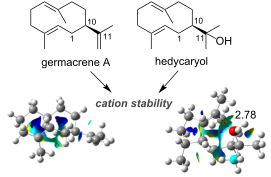
- , with a larger blue isosurface than A, has greater steric hindrance than A (Figure 3). Although this difference is not directly quantified here, this is likely part of the reason behind the greater stability of A over B. A similar analysis can be performed for C and D (Figure S2 in Supporting


Two-fold addition reaction of silylene to C60: structural and electronic properties of a bis-adduct
Beilstein J. Org. Chem. 2024, 20, 1179–1188, doi:10.3762/bjoc.20.100
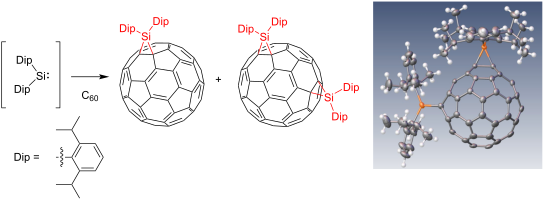
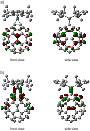
- 3 may involve the interaction of 1 with the LUMO of 2a. The HOMO of 2a is observed mainly around the cis-1 and e′′ bonds among the 6,6-bonds, although the cis-1 bond would not be susceptible to the second silylene addition because of its steric hindrance. Alternatively, the interaction of the LUMO


Light on the sustainable preparation of aryl-cored dibromides
Beilstein J. Org. Chem. 2024, 20, 1076–1087, doi:10.3762/bjoc.20.95
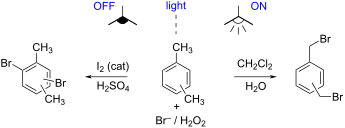
- issues observed during the benzylic bromination of 4. As a result, 4c was obtained from 4 (in a one-pot, two-step process) with an 85% isolated yield. The particular cleanliness of the conversion of 4b into 4c, featuring negligible formation of gem dihalides, could arise from the useful steric hindrance



Synthesis and properties of 6-alkynyl-5-aryluracils
Beilstein J. Org. Chem. 2024, 20, 898–911, doi:10.3762/bjoc.20.80
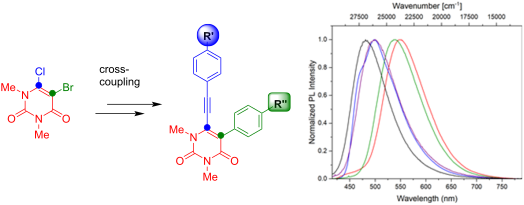
- stronger electron-withdrawing groups, as can be seen in case of product 4d. The yield of 4b was comparatively lower, which may be due to the higher steric hindrance of the used arylacetylene. Product 4f could not be synthesized, due to decomposition during the reaction. Furthermore, no precursor could be
- deactivates the compound for the subsequent Suzuki reaction. Furthermore, lower yields were generally observed when a strong electron-donor or -acceptor was attached to the phenyl group at position 5. Higher yields could be obtained by reducing the steric hindrance at position 5 by introducing a 5-membered
- between the layers varies periodically between 3.373 Å and 3.662 Å. This results in different interactions between the layers, as depicted in Figure 3. Furthermore, the layers are arranged in an anti-parallel face-to-face order to reduce the steric hindrance. Within the shorter distance layers (3.373 Å



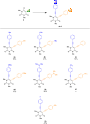


Skeletal rearrangement of 6,8-dioxabicyclo[3.2.1]octan-4-ols promoted by thionyl chloride or Appel conditions
Beilstein J. Org. Chem. 2024, 20, 823–829, doi:10.3762/bjoc.20.74
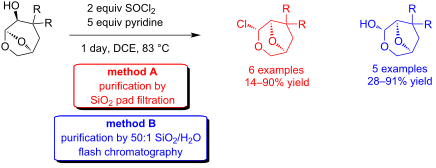
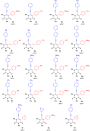
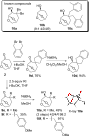
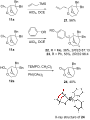
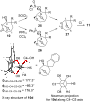
- at C4 determined the resultant ring system, as the σ* orbital is not accessible to external nucleophiles due to steric hindrance and the rigid conformation of the bicyclic ring system. When the C4–OH was equatorial, O8 migrated as it was aligned with the σ* orbital giving a 3,8-dioxabicyclo[3.2.1
- some sulfites 13b,d,e, attributed to the reduced steric hindrance in the chlorosulfite intermediate allowing for the second alcohol to approach prior to rearrangement. The isolation of these materials suggested that dialkyl sulfite formation could compete with the rearrangement if the neighbouring




SOMOphilic alkyne vs radical-polar crossover approaches: The full story of the azido-alkynylation of alkenes
Beilstein J. Org. Chem. 2024, 20, 701–713, doi:10.3762/bjoc.20.64
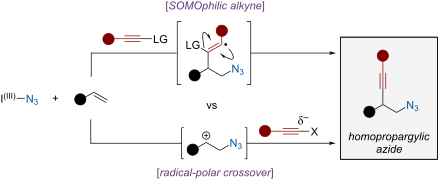
- worked well in the transformation, affording homopropargylic azides 4n–q in 60–77% yield. The reaction appears to be sensitive to the steric hindrance of the nucleophile: addition of a mesitylalkyne only formed 33% of 4r. Pleasingly, heteroaryl substituents were tolerated, 4s bearing a thiophene was


Palladium-catalyzed three-component radical-polar crossover carboamination of 1,3-dienes or allenes with diazo esters and amines
Beilstein J. Org. Chem. 2024, 20, 661–671, doi:10.3762/bjoc.20.59
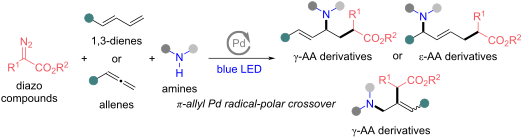
- next turned to evaluate the scope of 1,3-dienes. Although the regioselectivity control of allylic substitution can be attributed to many factors, it is agreed that steric hindrance generally is the primary factor affecting the regioselectivity of nucleophilic attack [54][55][56][57]. Monoalkyl
- , the corresponding 1,2-addition products 4p–t were formed with high selectivity (E/Z > 20:1, 1,2-/1,4-addition >20:1), presumably due to steric hindrance by the phenyl group. Furthermore, the 1,3-diene bearing a 1-furan group with smaller steric hindrance afforded product 4u with moderate



Possible bi-stable structures of pyrenebutanoic acid-linked protein molecules adsorbed on graphene: theoretical study
Beilstein J. Org. Chem. 2024, 20, 570–577, doi:10.3762/bjoc.20.49
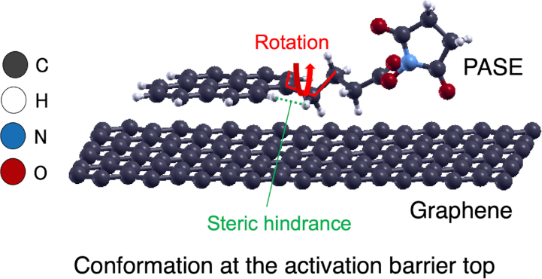
- ) linkers on graphene. The activation barrier between two bi-stable conformations exhibited by PASE is confirmed to be based on the steric hindrance effect between a hydrogen on the pyrene group and a hydrogen on the alkyl group of this molecule. Even after the protein is supplemented, this steric hindrance
- the steric hindrance effect between two hydrogen atoms in the molecule. A discussion on how the activation barrier between possible conformations of a protein immobilized on graphene by linkers appears is also provided. We consider the adsorption of the linker molecule forming a bond with a protein
- about 1.8 Å (Table 1). If we compare this distance with the distance between the same hydrogen pairs in conformation 1 and conformation 2, we can see that 1.8 Å is indeed very short compared with that for the others (about 2.2 Å). Therefore, we conclude that a local steric hindrance occurs at the


Synthesis of photo- and ionochromic N-acylated 2-(aminomethylene)benzo[b]thiophene-3(2Н)-ones with a terminal phenanthroline group
Beilstein J. Org. Chem. 2024, 20, 552–560, doi:10.3762/bjoc.20.47
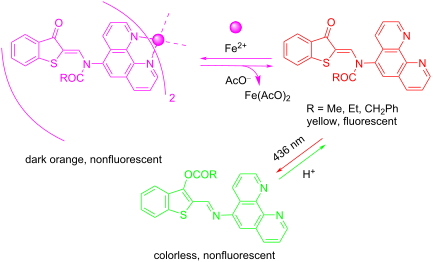
- -wavelength absorption at 458 nm, while acylation led to a hypsochromic shift of the maximum in compounds 2a–c to 423–426 nm (Table 1). The intensity of this absorption band decreased with increasing steric hindrance in the order R = acetyl (i.e., 2a) > propionyl (i.e., 2b) > phenylacetyl (i.e., 2c). N





