Search results
Search for "interaction" in Full Text gives 1290 result(s) in Beilstein Journal of Organic Chemistry. Showing first 200.
Investigation of a bimetallic terbium(III)/copper(II) chemosensor for the detection of aqueous hydrogen sulfide
Beilstein J. Org. Chem. 2024, 20, 2818–2826, doi:10.3762/bjoc.20.237
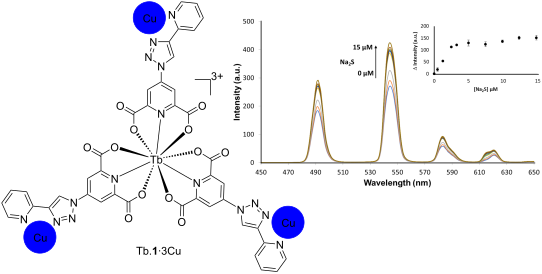
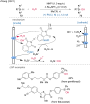
- emission spectrum, unlike that observed with the europium(III) analogue. This result suggests potential variations in the luminescence response among terbium(III) analogues and highlights the complexity of the interaction between lanthanide complexes and gaseous H2S, and understanding the nuances of this
- interaction is the focus of our future research studies. Experimental Synthetic materials and methods The Cu2+ ions were sourced from Cu(NO3)2·5H2O (Cat. #1027900250, Sigma-Aldrich). The synthesis of 4-(2-pyridyl)-1,2,3-triazole dipicolinic acid (L) was conducted as previously described [16]. Proton nuclear
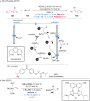
- ), anion/sulfur compound (50 µM) and Na2S (15 µM), n = 3. Chemical structure and mode of action of [Tb(DPA-N3)3]3− for detection of H2S(g) [11]. Synthesis of Tb.1. Binding constant determination for the 1:1 host–guest interaction (Tb.1 + Cu2+ ions), determined using supramolecular.org [18]. Supporting


Copper-catalyzed yne-allylic substitutions: concept and recent developments
Beilstein J. Org. Chem. 2024, 20, 2739–2775, doi:10.3762/bjoc.20.232
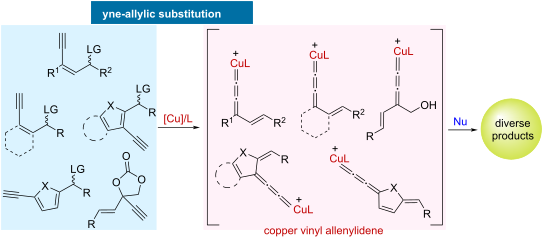
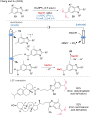
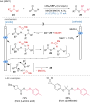
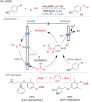
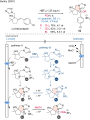
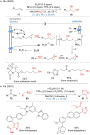
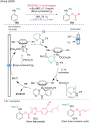
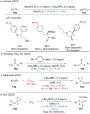
- chelation interaction between the enolate derived from acyclic 1,3-dicarbonyl compounds and copper (Scheme 5, 8a–j). Detailed control experiments indicate that the terminal alkyne moiety is critical and the reaction proceeds through an SN1 mechanism. An outer-sphere nucleophilic attack through copper
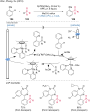
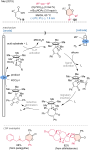
- structure precludes stable copper-carbonyl interaction, favoring attack from a less hindered site. Later, Qi and Xu et al. [75] achieved highly enantioselective copper-catalyzed [4 + 1] cyclization of yne-allylic esters and cyclic 1,3-dicarbonyls, achieving remote stereoselective control through copper











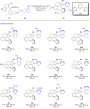


Interaction of a pyrene derivative with cationic [60]fullerene in phospholipid membranes and its effects on photodynamic actions
Beilstein J. Org. Chem. 2024, 20, 2732–2738, doi:10.3762/bjoc.20.231
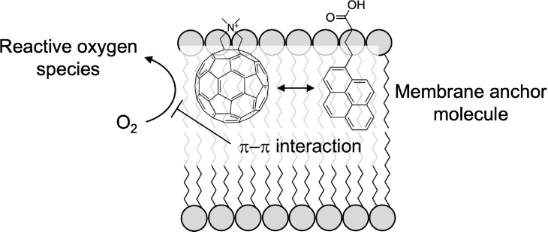
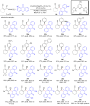
- safer control of Vm. Keywords: liposome; π–π interaction; reactive oxygen species; superoxide radical anion; Introduction The [60]fullerene (C60) is known as an excellent electron acceptor [1][2] and is commonly used in organic solar cell applications [3]. Taking advantage of the fact that C60 can be
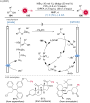
- physiologically relevant media [15]. The interaction between catC60 and PyBA in the liposomes was assessed by the fluorescence spectra of PyBA in catC60-lip [16]. The catC60-lip containing catC60 at 0, 5.4, and 54 µM were mixed with PyBA (50 µM) in PBS(–), and the fluorescence spectra were measured. As shown in
- interaction of catC60 with PyBA in the DMPC liposome membrane. We anticipated some effect of PyBA on the photoinduced generation of ROS by catC60 due to such interaction within the liposome membrane. To investigate such effects, we employed an electron spin resonance (ESR) spin-trapping method to evaluate the


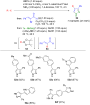
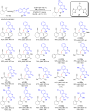
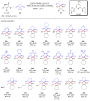
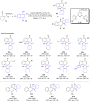
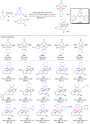
Synthesis of spiroindolenines through a one-pot multistep process mediated by visible light
Beilstein J. Org. Chem. 2024, 20, 2722–2731, doi:10.3762/bjoc.20.230
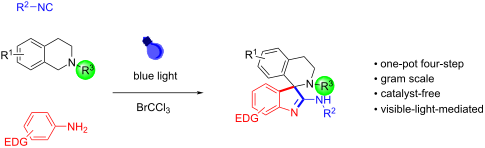
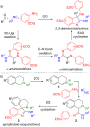
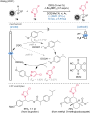
- argon atmosphere to prevent the interaction of oxygen or reactive oxygen intermediates, which are not always compatible with the substrates, as well as the key intermediates. Moreover, BrCCl3 and its reduced form (chloroform) can be easily removed from the reaction mixture thanks to their low boiling




5th International Symposium on Synthesis and Catalysis (ISySyCat2023)
Beilstein J. Org. Chem. 2024, 20, 2704–2707, doi:10.3762/bjoc.20.227
- time-consuming, complex, and expensive. Consequently, it is of utmost interest to immobilize them for reuse but without affecting their catalytic activity. The main factors discussed were the type of support, immobilization, and interaction between the support and the organocatalyst. The particular

Computational design for enantioselective CO2 capture: asymmetric frustrated Lewis pairs in epoxide transformations
Beilstein J. Org. Chem. 2024, 20, 2668–2681, doi:10.3762/bjoc.20.224
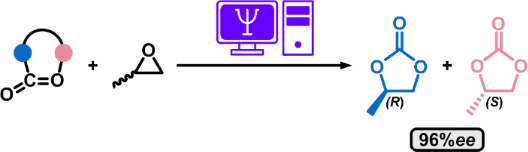
- colleagues [1]. These compounds, which feature a Lewis acid (LA) and a Lewis base (LB), whose interaction is hindered by bulky substituents or chain strain, have garnered significant attention. Initially explored for their ability to trap small molecules [2][3], such as H2 [4], CO2 [5][6][7], N2O [8][9], and
- H2 over CO2 becomes crucial for effective CO2 reduction [7]. Additionally, the strength of the interaction between the catalyst and the resulting system after hydride transfer presents a limitation. The formation of a robust LA–oxygen interaction may impede proton transfer to the basic oxygen atom
- performance, for example, the reaction rate, is displayed as a function of the catalyst–substrate interaction, for example, the adsorption energy when considering a heterogeneous catalyst (Figure 1A). The resulting plot exhibits a volcano-like shape consisting of at least two slopes with the best-performing


Deciphering the mechanism of γ-cyclodextrin’s hydrophobic cavity hydration: an integrated experimental and theoretical study
Beilstein J. Org. Chem. 2024, 20, 2635–2643, doi:10.3762/bjoc.20.221
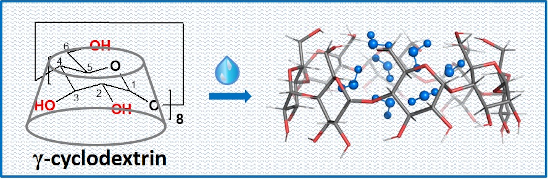
- (Figure 1B and C). Hydrated γ-CD Hydration and interaction with water (sequential binding of water molecules to the CD cavity) The γ-CD cavity was scanned for spots/sites with enhanced binding affinity for the incoming water molecules: γ-CD hydrates containing one to seven water molecules bound at various
- cyclodextrin host, in contrast to β-CD where their interaction with the inner walls of the CD can be neglected and therefore does not contribute to the stabilization of water complexes. As a result of this different bonding, water molecules from γ-CD are released upon annealing in 2–3 successive stages


Applications of microscopy and small angle scattering techniques for the characterisation of supramolecular gels
Beilstein J. Org. Chem. 2024, 20, 2608–2634, doi:10.3762/bjoc.20.220
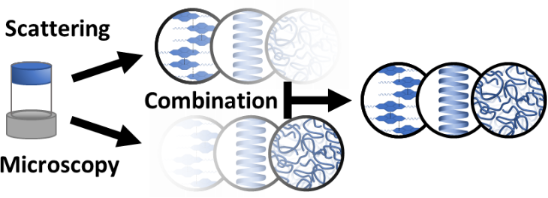
- of interaction available to AFM to probe the surface topology. The simplest is constant-height mode, wherein the sample is scanned with the cantilever at a constant height while measuring the deflection. Constant-height mode may result in large deflections and lead to sample damage by inducing


Efficient modification of peroxydisulfate oxidation reactions of nitrogen-containing heterocycles 6-methyluracil and pyridine
Beilstein J. Org. Chem. 2024, 20, 2599–2607, doi:10.3762/bjoc.20.219
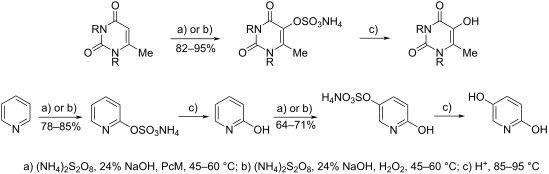
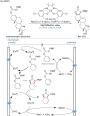
- )sulfate ions, thus enabling activated A or B particles to attack the substrate molecule, resulting in the intermediate σ-complex C. A like particle B [Pc–Me–Oδ−–Oδ+–SO3−] has been previously described in [33]. The formation of particle B is possible via the interaction of the catalyst PcM with the SO52
- generate sulfate anion radicals (SO4•−) [42] during their interaction with sulfate anions. This reaction occurs at a significant rate (k = 3.1∙108 min−1) [43] and leads to the recombination of peroxydisulfate in the reaction mixture. It has been demonstrated that the efficiency of peroxydisulfate


Base-promoted cascade recyclization of allomaltol derivatives containing an amide fragment into substituted 3-(1-hydroxyethylidene)tetronic acids
Beilstein J. Org. Chem. 2024, 20, 2585–2591, doi:10.3762/bjoc.20.217
- nucleophiles and open access to a large array of substituted pyridin-4-ones. Various conditions and reagents employed for these transformations are presented in numerous papers [24][25][26][27][28][29]. Besides that, approaches to the synthesis of pyridazinones and pyrazoles based on the interaction of 3
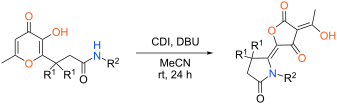
- present communication we have studied the recyclization of amide-containing allomaltol derivatives 3 under action of CDI (Scheme 1B). In this case, the interaction also leads to substituted tetronic acids 4. Wherein, in contrast to related hydrazide derivatives 1 the considered process can be realized
- fragments and hydrogen bonds leads to the alteration in chemical behavior. Based on the aforementioned stability of tetronic acids 4 toward action of MeOH we supposed that various derivatives at the hydroxyethylidene group can be synthesized. For example, interaction of compound 4a with hydrazine in


Anion-dependent ion-pairing assemblies of triazatriangulenium cation that interferes with stacking structures
Beilstein J. Org. Chem. 2024, 20, 2567–2576, doi:10.3762/bjoc.20.215
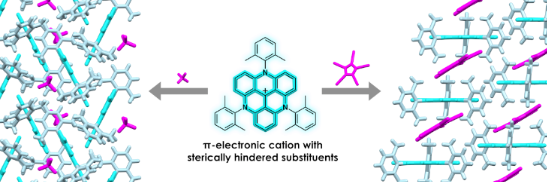
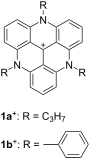
- + plane distances resulted mainly from electrostatic interaction. Closely contacted ion pairs for 2+-Cl−, 2+-BF4−, and 2+-PF6− showed total energies (Etot) of −98.1, −102.2, and −101.9 kcal/mol, respectively, with the main contribution from electrostatic forces (Ees) of −84.6, −75.6, and −71.2 kcal/mol
- , and dispersion forces (Edisp) of −12.5, −29.5, and −34.2 kcal/mol, respectively (Figure 6a–c and Figures S26–28 in Supporting Information File 1). Other sets of the ion pairs in the crystal structures showed smaller interaction energies. For example, the pair of 2+ and BF4− located at the side of TATA
- +-Cl−, (b) 2+-BF4−, and (c) 2+-PF6−. Atom color code: yellow, green, orange, and green (spherical) refer to boron, fluorine, phosphorus, and chlorine, respectively. (i) Single-crystal X-ray structures and (ii) interaction energies for the pairs (a) 2+-Cl−, (b) 2+-BF4−, and (c) 2+-PF6−. In (i), the



A review of recent advances in electrochemical and photoelectrochemical late-stage functionalization classified by anodic oxidation, cathodic reduction, and paired electrolysis
Beilstein J. Org. Chem. 2024, 20, 2500–2566, doi:10.3762/bjoc.20.214
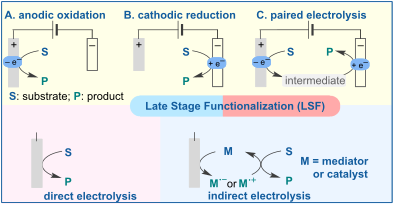
- derived from the interaction of non-activated alkenes with thianthrene [24]. This procedure has the advantage of separating the oxidative activation of the alkenes from the aziridination step, allowing efficient access to a variety of aziridine building blocks containing sensitive functional groups. This




























Hypervalent iodine-mediated cyclization of bishomoallylamides to prolinols
Beilstein J. Org. Chem. 2024, 20, 2455–2460, doi:10.3762/bjoc.20.209
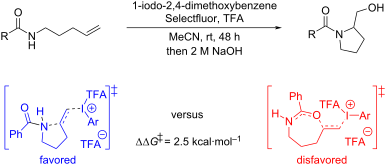
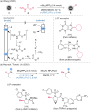
- that the transition state was stabilized by 4.1 kcal·mol−1 by an extra molecule of trifluoroacetic acid. A similar stabilizing interaction was not identified in this case with 3a, despite significant effort, but it cannot be ruled out. The cyclization of 9 was shown to be possible by attack of the


Synthesis and conformational analysis of pyran inter-halide analogues of ᴅ-talose
Beilstein J. Org. Chem. 2024, 20, 2442–2454, doi:10.3762/bjoc.20.208
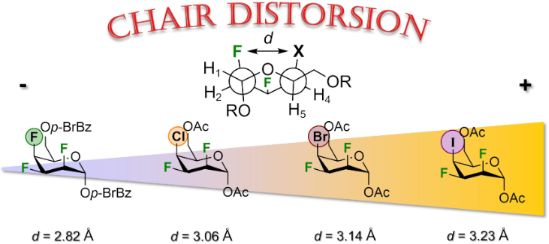
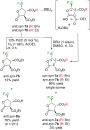
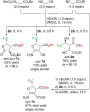
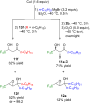
- , halogen bonding is an important interaction in biological systems [12][13][14][15][16][17] and the beneficial effect of the chloro substituent has been reviewed recently [18]. As a result, there is a lack of efficient synthetic strategies to access multivicinal inter-halide stereocenters (i.e., contiguous


Facile preparation of fluorine-containing 2,3-epoxypropanoates and their epoxy ring-opening reactions with various nucleophiles
Beilstein J. Org. Chem. 2024, 20, 2421–2433, doi:10.3762/bjoc.20.206
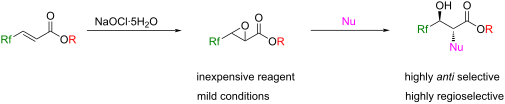
- intramolecular interaction between fluorine and metals would also facilitate the smooth progress of these reactions. Such high potential of 1a allowed us to apply it to nucleophilic epoxidation because the resultant epoxyester 2a is recognized as an intriguing building block (Scheme 1). Another expectation to 2a
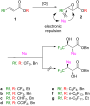
- outcomes would stem from a result of the electronically repulsive interaction between the incoming nucleophiles and an electronically strongly negative CF3 group, and the anticipated clean SN2 mechanism of epoxides in general, respectively. This is interestingly compared with the case of 2a with





Homogeneous continuous flow nitration of O-methylisouronium sulfate and its optimization by kinetic modeling
Beilstein J. Org. Chem. 2024, 20, 2408–2420, doi:10.3762/bjoc.20.205
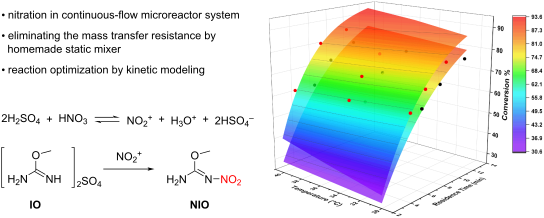
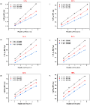
- with increasing H2SO4 mass fraction, which aligns with the findings from previous studies on mixed acid-catalyzed nitration reactions [32][33]. However, the data also reveal a decline in rate constants when the H2SO4 mass fraction exceeds 94%, suggesting a complex interaction at higher acid


![[Graphic 1]](/bjoc/content/inline/1860-5397-20-205-i17.svg?max-width=637&scale=1.18182)


Evaluating the halogen bonding strength of a iodoloisoxazolium(III) salt
Beilstein J. Org. Chem. 2024, 20, 2401–2407, doi:10.3762/bjoc.20.204
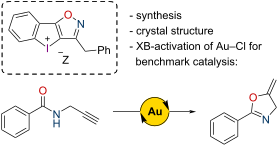
- in a Mannich reaction [4]. In 2018, our group showed in a proof-of-principle study [5] that the Lewis acid catalysis by DAI salts is based on halogen bonding (XB), an interaction between a Lewis base (XB acceptor) and an electrophilic halogen atom in the Lewis acid (XB donor) [6][7][8][9][10]. In
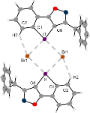
- ) Å, 84% of Σr, and C1–I1···Br1 = 176.08(9)°]. The bond distances indicate that the hydrogen bond is noticeably weaker than the two XBs and thus constitutes merely an assisting interaction. The XB interactions in this crystal structure were compared to the ones in the literature-known co-crystal of




Synthesis, electrochemical properties, and antioxidant activity of sterically hindered catechols with 1,3,4-oxadiazole, 1,2,4-triazole, thiazole or pyridine fragments
Beilstein J. Org. Chem. 2024, 20, 2378–2391, doi:10.3762/bjoc.20.202
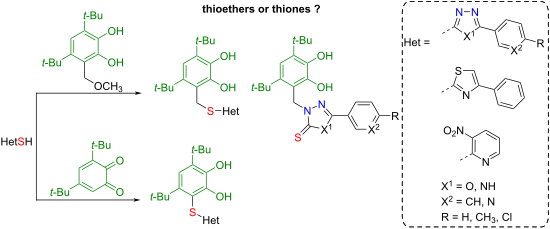
- derivatives are used as ligands in the synthesis of metal complexes (Ni(II), Pd(II), Pt(II), Cu(I), Ag(I) etc.) exhibiting antibacterial and antitumor activity [34]. In most cases, polyfunctional catechol thioethers were obtained by Michael reaction via the interaction of o-, p-benzoquinone and the
- moiety. A feature of heterocyclic thiols used as starting reagents is the possibility of thiol–thione tautomerism which leads to the appearance of two nucleophilic centers: a sulfur or nitrogen atom. Therefore, in the case of their interaction with 3,5-di-tert-butyl-6-methoxymethylcatechol, the
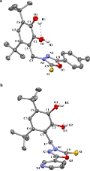
- possibility of alkylation of the nitrogen atom in the heterocycle cannot be excluded. This alternative pathway is similar to the previously described interaction of the aforementioned catechol with 3,5-dimethylpyrazole or benzimidazole [55]. A study of the structure, electrochemical properties, anti




Asymmetric organocatalytic synthesis of chiral homoallylic amines
Beilstein J. Org. Chem. 2024, 20, 2349–2377, doi:10.3762/bjoc.20.201
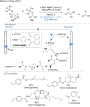
- 78 with a pending 4-pyrenyl group. The catalyst acts as H-bond donor but additionally it controls the chiral environment through π-stacking interaction with the aryl group of the substrate, blocking one of the enantiofaces of the iminium intermediate 79. The reaction proceeds in Et2O at −50 °C and
- interaction between the catalyst and the aryl group of the substrate in the enantio-determining step appears to affect the scope. Other problematic substrates included (Z)-α-methylcinnamyl and (Z)-α-bromocinnamyl acetals giving the respective products with lower ee. Despite some phenyl substrates with 3
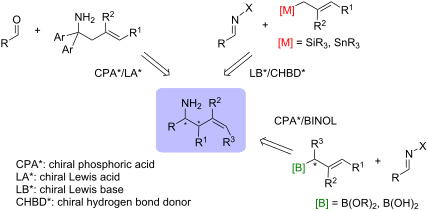
- transfer reagents; (iv) direct metal-free imine carbanion addition to electrophilic alkene. Class (i) underwent an evolution from catalysis by covalent interaction to chiral hydrogen-bonded catalysis, which allowed the expansion of the allyl component scope from simple allyl to substituted allyl groups








Improved deconvolution of natural products’ protein targets using diagnostic ions from chemical proteomics linkers
Beilstein J. Org. Chem. 2024, 20, 2323–2341, doi:10.3762/bjoc.20.199
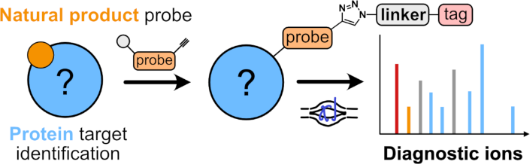
- ][36][37]. A covalent bond between a probe and a protein is needed because of denaturing conditions used during the analysis. In contrast, relying on a noncovalent interaction would result in loss of the probe–protein interaction. The bioorthogonal handle is therefore essential for an enrichment or
- probe–protein interaction in native conditions in living cells. Taken together, the linkers used in chemical proteomics workflows are applied broadly in many research areas including screening of fragment libraries, covalent modifiers, protein PTMs, protein–protein interactions, protein–nucleic acid
- gel and subjected to MS analysis to identify the labeled proteins [77][78]. The in-gel analysis is often used for target validation with corresponding protein mutants or knockout cell lines, with loss of the identified probe–protein interaction leading to disappearance of the fluorescence band from




Hydrogen-bond activation enables aziridination of unactivated olefins with simple iminoiodinanes
Beilstein J. Org. Chem. 2024, 20, 2305–2312, doi:10.3762/bjoc.20.197
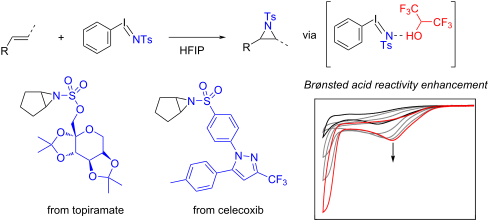
- of HFIP (Scheme 4). First, 1H NMR was employed to examine the interaction between HFIP and iminoiodinane 2c in CD3CN (compound 2c was chosen over 2a due to its increased solubility in nonprotic solvents). In a sample of 2c with 4 equivalents of HFIP, a broad signal for O–H proton of HFIP was observed
- at 5.52 ppm with a FWHM = 56.6 Hz (Scheme 4a). This resonance was broader and more downfield than that of free HFIP in CD3CN (5.41 ppm with FWHM = 5.0 Hz), suggesting a hydrogen bonding interaction between HFIP and 2c, and similar observations were also reported for the hydrogen bonding between HFIP


Catalysing (organo-)catalysis: Trends in the application of machine learning to enantioselective organocatalysis
Beilstein J. Org. Chem. 2024, 20, 2280–2304, doi:10.3762/bjoc.20.196
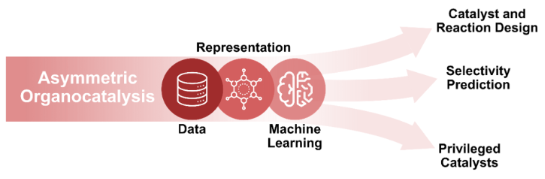
- dispersion interaction between the DABCOnium system and the CPA is governing the exo-selectivity. For the application of the ML techniques discussed above, it is assumed that all studied reactions follow the same mechanism. If that is not the case, models cannot be reliably fit to the data points, similar to
- enantioselectivities (Figure 9B). In their model, molecules were represented as graphs, where local steric and electronic information was added to each node (atom). Additionally, the used graph neural network contains a molecular interaction module that allows the model to learn synergistic effects between molecules




Factors influencing the performance of organocatalysts immobilised on solid supports: A review
Beilstein J. Org. Chem. 2024, 20, 2129–2142, doi:10.3762/bjoc.20.183
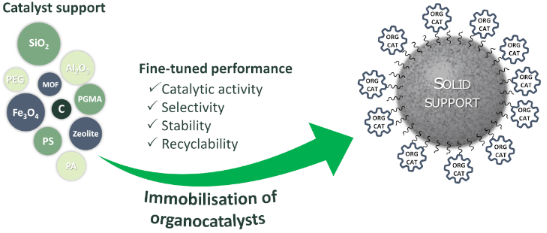
- , the electrostatic interaction between the homogeneous catalyst and the support is robust enough to reduce leaching significantly [67][73]. However, a potential drawback of this technique is that the presence of a charged support can lead to complications, such as distortion of the catalyst structure
- does not require any interaction between the catalyst and the support. Because of this, it is the sole technique which attempts to mimic the homogeneously catalysed reaction process [75]. It typically results in enhanced properties, e.g., augmented morphological stability, tailored physicochemical
- ]. An advantage of dendrimer-supported organocatalysts are their enzyme-like properties [111][112]. Selective binding and cooperative catalysis can give the catalyst high selectivity and activity. Interactions between the support and other components The interaction between the solid support and the


Computational toolbox for the analysis of protein–glycan interactions
Beilstein J. Org. Chem. 2024, 20, 2084–2107, doi:10.3762/bjoc.20.180
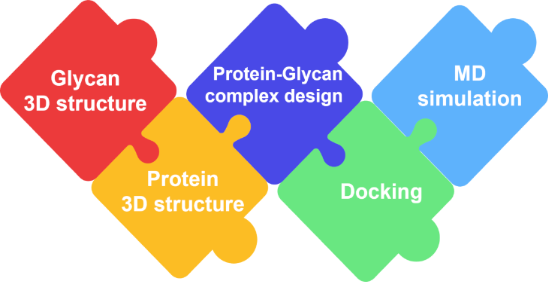
- interaction with host proteins [5][6]. Notably, the complexity of the glycome far surpasses that of the genome, transcriptome, and proteome, not only due to the structural and conformational diversity of glycans, whose synthesis is not template driven, but also due to their dynamic nature [5][6]. Although
- computational tools have been developed to facilitate the prediction of protein binding sites. We report here only the applications related to the protein interaction with glycans: 1. PeSTo-Carbs [105]: it is an extension of Protein Structure Transformer (PeSTo) [106], a deep learning method to predict protein
- interaction interfaces with other proteins, nucleic acids, lipids, small molecules, and ions, starting from a protein structure. PeSTo-Carbs is specifically trained to predict carbohydrate and cyclodextrin binding interfaces on proteins. Two different modules are available: a general model PS-G for a wide


Multicomponent syntheses of pyrazoles via (3 + 2)-cyclocondensation and (3 + 2)-cycloaddition key steps
Beilstein J. Org. Chem. 2024, 20, 2024–2077, doi:10.3762/bjoc.20.178

- , facilitating their cyclization with intermediary formed hydrazones to yield 5-hydroxypyrazolines. After subsequent interaction with atmospheric oxygen, the product 65 is formed. This method exhibits a high degree of substituent tolerance, and aliphatic compounds generally lead to higher yields. A special
- HOMO (diazo compound)–LUMO (alkyne) interaction during the 1,3-dipolar cycloaddition [163], Wu et al. showed that electronic effects in this strategy do not influence the yield. In addition, sterically demanding reactants could be used in the method. Enhanced yields were achieved by using NaOEt and