Search results
Search for "in vivo" in Full Text gives 302 result(s) in Beilstein Journal of Organic Chemistry. Showing first 200.
Solvent-free copper-catalyzed click chemistry for the synthesis of N-heterocyclic hybrids based on quinoline and 1,2,3-triazole
Beilstein J. Org. Chem. 2017, 13, 2352–2363, doi:10.3762/bjoc.13.232
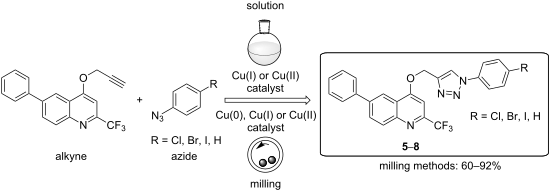
- time, the 1,2,3-triazoles became the heterocycle of choice in drug discovery, due to their favourable pharmacokinetic and safety profiles, hydrogen-bonding capability, moderate dipole moment, rigidity and stability under in vivo conditions [5][6]. Also, the ability of 1,2,3-triazoles to act as amide



Synthesis and application of trifluoroethoxy-substituted phthalocyanines and subphthalocyanines
Beilstein J. Org. Chem. 2017, 13, 2273–2296, doi:10.3762/bjoc.13.224
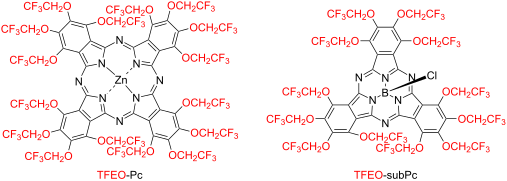
- showed cytotoxicity even in the dark. This result suggests that the trifluoroethoxy group reduces the cytotoxicity of the phthalocyanine. Subsequently, an in vivo investigation was also conducted. Chicken embryos transplanted with cancer cells were treated with PDT by a cyclodextrin conjugate and proved








Phosphonic acid: preparation and applications
Beilstein J. Org. Chem. 2017, 13, 2186–2213, doi:10.3762/bjoc.13.219
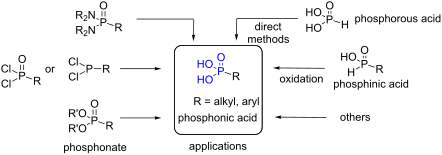
- K26 6) [45] or the anti-osteoporosis compounds alendronate (7) [46] and zoledronate (8) [47] (Figure 3A). In some cases, the bio-active phosphonic acid is generated in vivo from a phosphonate pro-drug [48] as exemplified by the formation of 10 from 9 which permits to improve the pharmacokinetic


Peptide synthesis: ball-milling, in solution, or on solid support, what is the best strategy?
Beilstein J. Org. Chem. 2017, 13, 2087–2093, doi:10.3762/bjoc.13.206
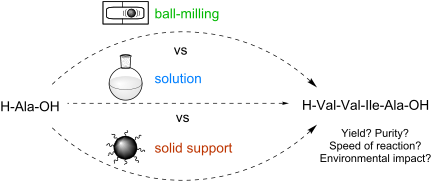
- to improve their in vivo bioavailability and stability. This progresses empowered the potential of therapeutic peptides, suggesting a production surge in the future. Besides this high potential, actual peptide production techniques suffer from major environmental issues [4][5][6]. Indeed, large


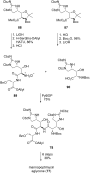
Enzymatic separation of epimeric 4-C-hydroxymethylated furanosugars: Synthesis of bicyclic nucleosides
Beilstein J. Org. Chem. 2017, 13, 2078–2086, doi:10.3762/bjoc.13.205
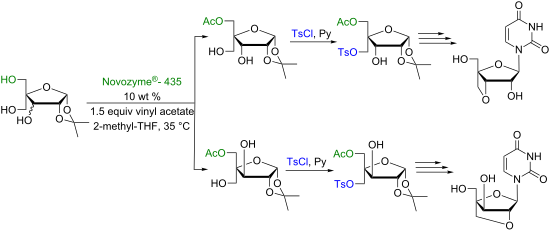
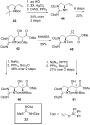
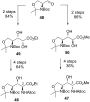
- conformational restriction has led to the enhancement in target selectivity and in vivo stability of the nucleoside-based drug candidates. One of the important precursors for the synthesis of different types of bicyclonucleosides is 4-C-hydroxymethyl-1,2-O-isopropylidene-α-D-ribofuranose. The synthesis of the


The chemistry and biology of mycolactones
Beilstein J. Org. Chem. 2017, 13, 1596–1660, doi:10.3762/bjoc.13.159
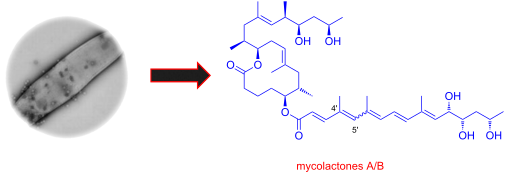
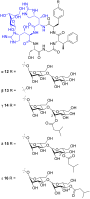
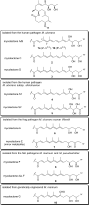
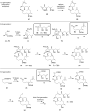
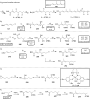
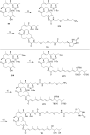
- death, mainly via apoptosis, is observed in vitro and in vivo [32][33][82]. It is worth mentioning that in certain cell types, e.g., adipocytes, cell death via necrosis is dominant over apoptosis [83]. The most commonly used cells to study the cytopathogenicity of mycolactones are murine L929
- 8000 host genes identified the angiotensin type II receptor (AT2R) as the molecular target of mycolactone, which was confirmed by genetic knockout in vitro and in vivo and by chemical inhibition. In a competition binding assay mycolactone was able to displace the potent radiolabeled agonist [125I
- crystallography, would be highly appreciable. Finally, we also demonstrated the key role of mycolactone-triggered Bim-mediated apoptosis in vivo. To this end, the food pads of wild-type (WT) and homozygous Bim and Fas knockout mice (Bim−/− and Fas−/−) were infected with M. ulcerans. Intriguingly, WT and Fas









2-Methyl-2,4-pentanediol (MPD) boosts as detergent-substitute the performance of ß-barrel hybrid catalyst for phenylacetylene polymerization
Beilstein J. Org. Chem. 2017, 13, 1498–1506, doi:10.3762/bjoc.13.148
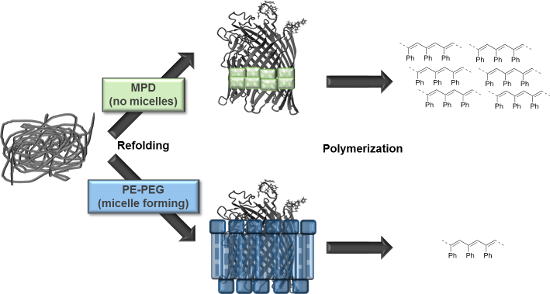
- -cell catalysts. Cells usually show increased stability towards cosolvents, pH and elevated temperatures [22][23]. A recent example in the field of artificial metalloenzymes was shown by Ward and co-workers, who used an artificial metathease in an in vivo approach. These first attempts are promising to


Grip on complexity in chemical reaction networks
Beilstein J. Org. Chem. 2017, 13, 1486–1497, doi:10.3762/bjoc.13.147
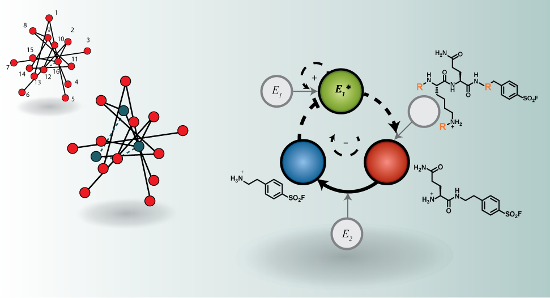
- dynamics could be achieved by transcription and translation processes. Dissipation arises from an approximated constant supply of nucleotides, amino acids, and enzymes among other cellular machinery (see Figure 4d) [92]. Arguably, the ability to rationally assemble test tube CRNs lags behind that for in
- vivo systems due to difficulties faced in mimicking such cellular composition [93]. Consequently, in molecular “circuits” based on DNA as building blocks, certain reaction rates are often not known, cannot be known, or cannot be tuned easily. Blueprint for the construction of chemical complex systems A




An improved preparation of phorbol from croton oil
Beilstein J. Org. Chem. 2017, 13, 1361–1367, doi:10.3762/bjoc.13.133
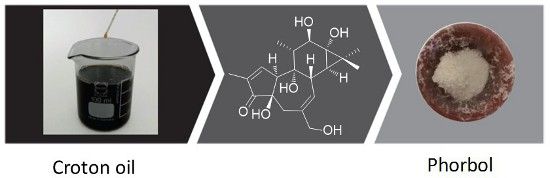
- , Australia 10.3762/bjoc.13.133 Abstract Background: Croton oil is the only commercial source of the diterpenoid phorbol (1a), the starting material for the semi-synthesis of various diesters extensively used in biomedical research to investigate cell function and to evaluate in vivo anti-inflammatory
- this chemotype. Croton oil is used as a reference for in vivo anti-inflammatory assays, like the mouse-ear erythema assay, and it is tempting to suggest that the notoriously poor-reproducibility of the data from this assay [23] might be related also to differences in the composition of croton oil


Synthesis of novel 13α-estrone derivatives by Sonogashira coupling as potential 17β-HSD1 inhibitors
Beilstein J. Org. Chem. 2017, 13, 1303–1309, doi:10.3762/bjoc.13.126

- is the inversion of the configuration at C-13, which is accompanied by drastic conformational change for the overall molecule resulting from the cis junction of rings C and D [2]. The influence of inversion of the configuration at C-13 in 3,17-estradiols on their in vivo and in vitro estrogenic


Biomimetic molecular design tools that learn, evolve, and adapt
Beilstein J. Org. Chem. 2017, 13, 1288–1302, doi:10.3762/bjoc.13.125
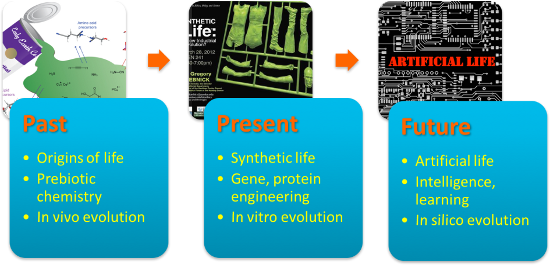
- features in a conceptual landscape are also employed. Sparse feature detection in vivo Detection of important features in the environment is critical for the long-term sustainability of life. For example, the roughly 100 million photoreceptors in a human retina cannot not directly transmit a picture to the




Total syntheses of the archazolids: an emerging class of novel anticancer drugs
Beilstein J. Org. Chem. 2017, 13, 1085–1098, doi:10.3762/bjoc.13.108
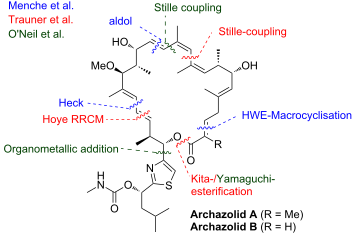
- Stephan Scheeff Dirk Menche Kekulé-Institut für Organische Chemie und Biochemie, Universität Bonn, Gerhard-Domagk-Strasse 1, 53121 Bonn, Germany 10.3762/bjoc.13.108 Abstract V-ATPase has recently emerged as a promising novel anticancer target based on extensive in vitro and in vivo studies with
- to date with activities in the low nanomolar range [24][25], by binding to the functional transmembrane subunit c [26][27], and display highly potent growth-inhibitory activities against a range of cancer cell lines, both in vitro and in vivo [23][28][29][30][31][32][33][34]. In detail, archazolid
- inhibition of V-ATPase abrogates tumor metastasis via repression of endocytic activation [28], leads to impaired cathepsin B activation in vivo [30], modulates anoikis resistance and metastasis of cancer cells [31], overcomes trastuzumab resistance of breast cancers [32], blocks iron metabolism and thereby


Glyco-gold nanoparticles: synthesis and applications
Beilstein J. Org. Chem. 2017, 13, 1008–1021, doi:10.3762/bjoc.13.100
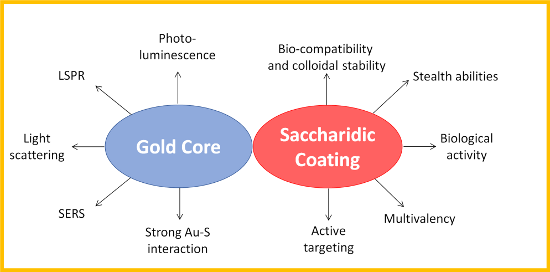
- performing system. Gold core: optical properties AuNPs, widely employed for biomedical applications, are characterized by inert nature, resisting to air oxidation and corrosion [30]. This chemical non-reactivity and inertness make AuNPs an outstanding candidate for the development of in vitro and in vivo
- devices [31][32]. Furthermore, in vitro and in vivo short term reduced toxicity of AuNPs has been widely documented [10][33][34][35][36][37][38]. AuNPs own a number of peculiar optical properties, strongly dependent on the size and the morphology of the metallic core. When AuNP dimension is comparable to
- of the drug from degradation or inactivation in vivo, the opportunity to control the drug release and reduce the systemic toxicity and the exciting chance to selectively target the damaged tissue. Despite the most common carriers are based on nano- and microparticles (i.e., albumin, poly(lactic-co


Use of costic acid, a natural extract from Dittrichia viscosa, for the control of Varroa destructor, a parasite of the European honey bee
Beilstein J. Org. Chem. 2017, 13, 952–959, doi:10.3762/bjoc.13.96

- . Costic acid exhibited potent in vivo acaricidal activity against the parasite. Initial experiments showed that the compound is not toxic for human umbilical vein endothelial cells (HUVEC) at concentrations of up to 230 micromolar (μM), indicating that costic acid could be used as a safe, low-cost and
- ]. However, there are no preceding data on the action of costic acid against varroa. In this publication we report the isolation and structure identification of costic acid as a component of D. viscosa, as well as in vivo and field studies providing strong evidence of the acaricidal action of the acid
- of the column with methanol to remove the polar components. Three fractions were obtained with the following TLC (silica gel 60, F254S) Rf-values: 0.90–0.80 (group A), 0.80–0.60 (group B) and 0.10–0.01 (group C). Each was tested in the in vivo assay. Biological activity was detected in the Rf 0.80


Opportunities and challenges for the sustainable production of structurally complex diterpenoids in recombinant microbial systems
Beilstein J. Org. Chem. 2017, 13, 845–854, doi:10.3762/bjoc.13.85
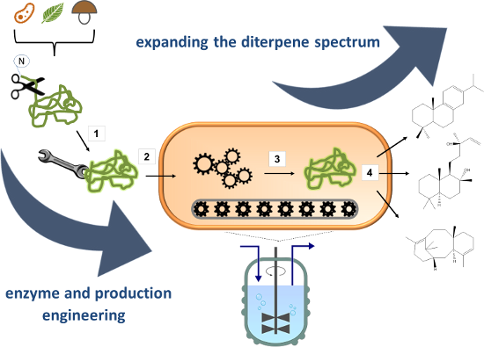
- performed in vivo substrate promiscuity tests following a combinatorial approach [41][66]. The resulting products entailed pimarane- and abietane-type diterpenes as well as the trans-clerodane type diterpene kolavenol, a putative intermediate in the salvinorin A biosynthesis. Other bifunctional diterpene


Fluorescent carbon dots from mono- and polysaccharides: synthesis, properties and applications
Beilstein J. Org. Chem. 2017, 13, 675–693, doi:10.3762/bjoc.13.67
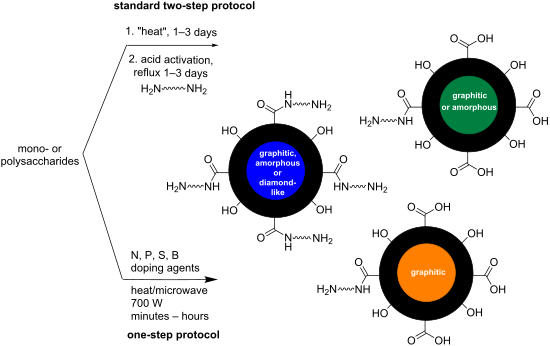
- their in vivo applications are restricted [12]. Therefore, the development of fluorescent nanoparticles that are able to replicate QD fluorescence properties without exhibiting long term toxicity profiles, has become very relevant. The term carbon dots (CDs) has been coined to describe a new class of
- wide range of in vivo applications, which has been the topic of several recent reviews [13][14][15]. Following the serendipitous discovery by Xu et al. during the separation and purification of single-walled carbon nanotubes (SWCNTs) [16], the development of synthetic methodologies to access these


Synthesis of 1-indanones with a broad range of biological activity
Beilstein J. Org. Chem. 2017, 13, 451–494, doi:10.3762/bjoc.13.48
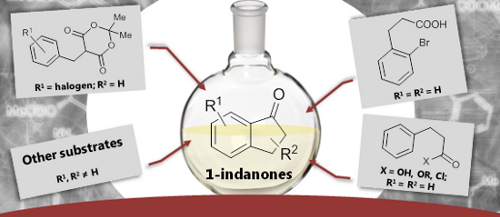
- useless in vivo. However, considering the enormous potential of abicoviromycin, syntheses of its additional analogs are reasonable. 1.3 From alkyl chlorides Radiolabeled tracers can supply precious information about structures of biocatalytic reaction networks. The [14C]1-indanone 175 has been used in the


Polyketide stereocontrol: a study in chemical biology
Beilstein J. Org. Chem. 2017, 13, 348–371, doi:10.3762/bjoc.13.39
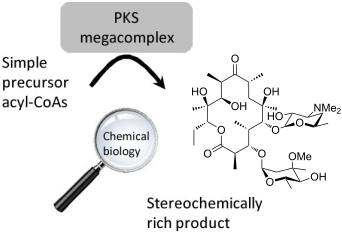
- type behavior, and still others having no effect on the stereochemical outcome. Most importantly, introducing the same Caffrey motifs mutations into DEBS KRs 1 and 2 housed within DEBS 1-TE produced no discernable stereochemical switch in vivo [78]. These results clearly show that within the context of
- is most often valine, but also alanine or phenyalanine. The role of these residues in stereocontrol was evaluated in vivo by site-directed mutagenesis of a derivative of DEBS 1-TE in which the KR domain of module 2 was replaced with the ‘reductive loops’ (DH-KR-ER tridomains) sourced from the DEBS
- hydrophobic interactions with the Tyr while being sterically accommodated by the relatively small Ser (Figure 7b). Finally, stereospecificity for the (2S)-isomer appears to lie in steric clashes that would occur between a (2R)-methyl group and both the Ser and His of the YASH motif. Nonetheless, efforts in




A chemoselective and continuous synthesis of m-sulfamoylbenzamide analogues
Beilstein J. Org. Chem. 2017, 13, 303–312, doi:10.3762/bjoc.13.33
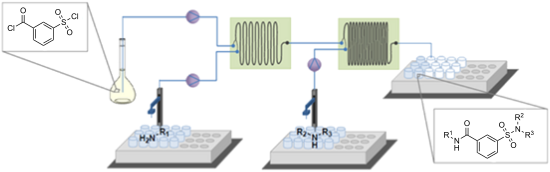
- hit, the synthetic protocol must then be quickly expanded to tens of grams for early in vivo toxicity studies and hundreds of grams for further toxicology studies and clinical trials [1]. These swiftly changing requirements appear throughout the clinical development of active pharmaceutical


Synthesis of multi-lactose-appended β-cyclodextrin and its cholesterol-lowering effects in Niemann–Pick type C disease-like HepG2 cells
Beilstein J. Org. Chem. 2017, 13, 10–18, doi:10.3762/bjoc.13.2
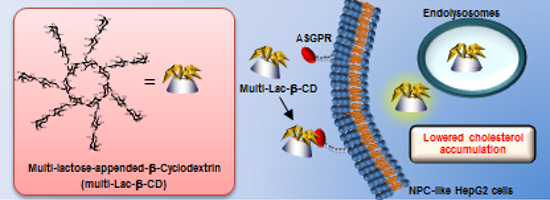
- to the initiation of two human clinical trials, a phase I/IIa trial in 2013 and a phase IIb/III trial in 2015, by the National Institutes of Health (NIH), USA. However, the administration of high doses of HP-β-CD is inevitable to obtain the effects in vivo because HP-β-CD cannot enter the cells owing


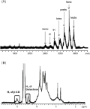


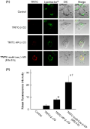

Versatile synthesis of end-reactive polyrotaxanes applicable to fabrication of supramolecular biomaterials
Beilstein J. Org. Chem. 2016, 12, 2883–2892, doi:10.3762/bjoc.12.287

- ) contrast agents and positron emission tomography (PET) probes for in vivo studies. Conclusion In this study, we described a novel preparation method for end-reactive PRXs using 3 as an axle polymer for the PRXs. The terminal 2-amino-3-phenylpropyl groups of 3 prevent the dethreading of α-CDs after end
- click reactions, including ligand molecules for active targeting, radioactive molecules for in vivo imaging, hydrophobic polymers for the surface immobilization of PRXs, and hydrophilic polymers for acquiring water solubility. Accordingly, the azide group-terminated end-reactive 4a and 4b are expected


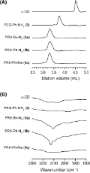


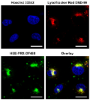
Biochemical and structural characterisation of the second oxidative crosslinking step during the biosynthesis of the glycopeptide antibiotic A47934
Beilstein J. Org. Chem. 2016, 12, 2849–2864, doi:10.3762/bjoc.12.284
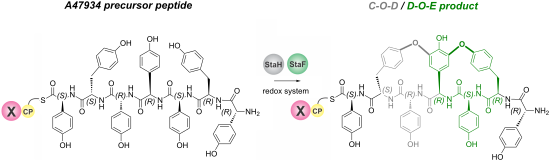
- generation GPAs in clinical use are all entirely derived from in vivo biosynthesis [1][2]. The biosynthesis of GPAs is based around the initial synthesis of the linear heptapeptide by a type-I non-ribosomal peptide synthetase (NRPS) [5][6] and its subsequent modification by cytochrome P450 monooxygenases [7
- ]. The installation of the crosslinks has received significant attention using both in vitro [12][13][14][15][16][17][18][19][20][21][22][23][24][25][26] and in vivo [27][28][29][30][31][32] techniques, largely due to the synthetic challenge that these modifications represent. In vivo studies initially
- by OxyE, which acts between OxyB and OxyA in the cyclisation cascade [27]. In vivo experiments also hinted towards the activity of the Oxy enzymes against the substrate peptides whilst they remain bound to the NRPS [29], and in vitro experiments performed with OxyB from the vancomycin biosynthesis




Synthesis of spiro[isoindole-1,5’-isoxazolidin]-3(2H)-ones as potential inhibitors of the MDM2-p53 interaction
Beilstein J. Org. Chem. 2016, 12, 2793–2807, doi:10.3762/bjoc.12.278
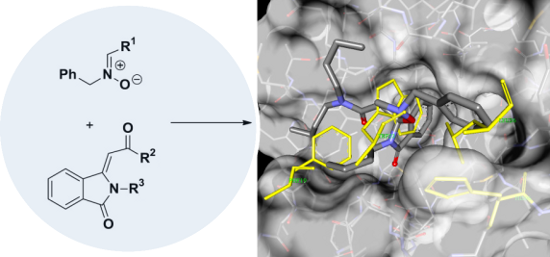
- example MI-63 and MI-219, [15][16][17][18] have demonstrated cellular activity consistent with inhibition of MDM2-p53 binding and have shown in vivo antitumor activity [15][19] (Figure 1). Isoindolinones, belonging to the alkaloids family, are found in many natural products such as vitedoamine A


Interactions between cyclodextrins and cellular components: Towards greener medical applications?
Beilstein J. Org. Chem. 2016, 12, 2644–2662, doi:10.3762/bjoc.12.261
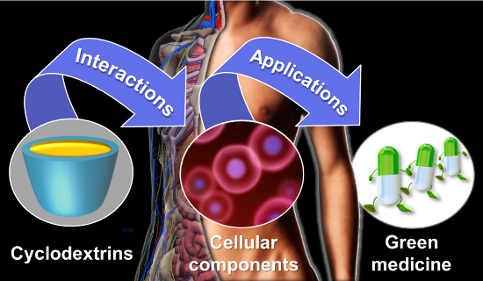
- their hemolytic activities. Indeed, several in vitro studies reported erythrocyte lysis although the toxicological implication in vivo is negligible. The lysis mechanism is related to their capacity to draw phospholipids and cholesterol out of the biological membrane (see below). Based on this, the


Enduracididine, a rare amino acid component of peptide antibiotics: Natural products and synthesis
Beilstein J. Org. Chem. 2016, 12, 2325–2342, doi:10.3762/bjoc.12.226
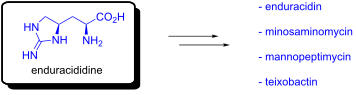
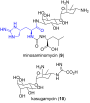
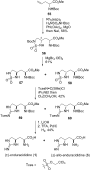
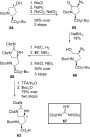
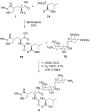
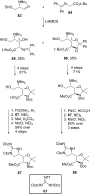
- B Enduracidin A (7) and B (8) were first isolated from Streptomyces fungicidicus B 5477 from a soil sample collected in Nishinomiya, Japan (Figure 2) [1]. Detailed reports of the isolation procedures, in vivo and in vitro antimicrobial activity, physical properties and structure elucidation have