


Search results
Search for "diameter" in Full Text gives 371 result(s) in Beilstein Journal of Organic Chemistry. Showing first 200.
Fluorescent carbon dots from mono- and polysaccharides: synthesis, properties and applications
Beilstein J. Org. Chem. 2017, 13, 675–693, doi:10.3762/bjoc.13.67
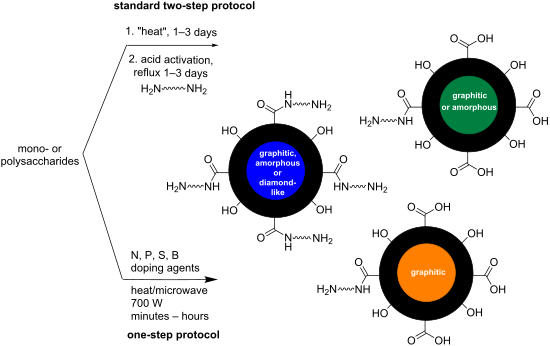
- carbon-based nanomaterials which are typically discrete, quasi-spherical nanoparticles, with sizes usually less than 10 nm in diameter (although bigger sizes have recently been reported). These relatively new nanomaterials have found many applications in the fields of photo- and electrocatalysis
- -dopant/surface passivation agent (Scheme 5) [33]. The resultant CDs had a QY of up to 12% (34-times higher than that of the undoped CDs). Interestingly, the N-doped CDs in this report had a 20 nm diameter, as determined by TEM, which is contrary to the generally held belief that CDs’ particular
- properties are only observed below a diameter of 10 nm, which is not the case here and has since been observed in one other carbohydrate-derived CD synthesis [34]. The team demonstrated the utility of the glucose/tryptophan-derived CDs as a sensor of peroxynitrite anions (NO3−) in solution. The peroxynitrite


Fast and efficient synthesis of microporous polymer nanomembranes via light-induced click reaction
Beilstein J. Org. Chem. 2017, 13, 558–563, doi:10.3762/bjoc.13.54
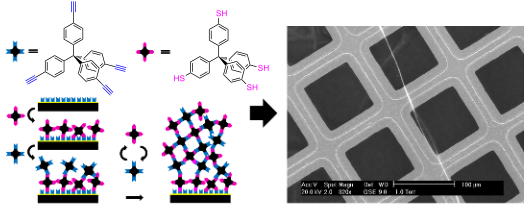
- investigations. The thin films show high mechanical stability as evidenced by the possibility to create feestanding membranes across holes of about 3–5 µm diameter. The rapid and scalable synthetic method for CMP nanomembranes described in this article, along with the possibility to transfer the nanomembranes to


NMR reaction monitoring in flow synthesis
Beilstein J. Org. Chem. 2017, 13, 285–300, doi:10.3762/bjoc.13.31
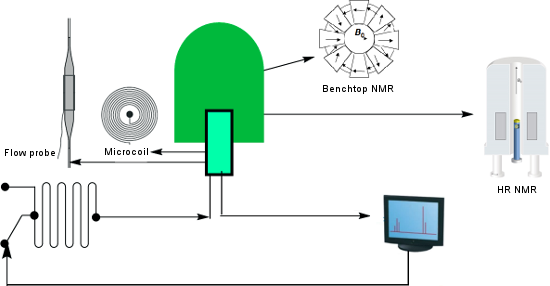
- have a larger inner diameter at the centre than at the ends (Figure 1). The larger central portion of the flow cell is the sample chamber, i.e., the detection zone. The smaller segments at the ends correspond to the inlet and the outlet stems. When designing a flow cell, the total volume of the sample
- breakage of glass sample tubes. Microcoil probes An interesting way to increase the sensitivity of NMR is the use of microcoil probes [15][16]. Based on the reciprocity principle [15], it has been shown that for a constant length-to-diameter ratio, the NMR detector (i.e., coil) sensitivity is inversely
- proportional to its diameter. For a volume-limited sample, the signal is maximized when the coil is scale-down to enclose this volume sample. Although these probes show several advantages, as for instance are the coupling into continuous flow systems and its integration in compact magnets due to their lower


3D printed fluidics with embedded analytic functionality for automated reaction optimisation
Beilstein J. Org. Chem. 2017, 13, 111–119, doi:10.3762/bjoc.13.14
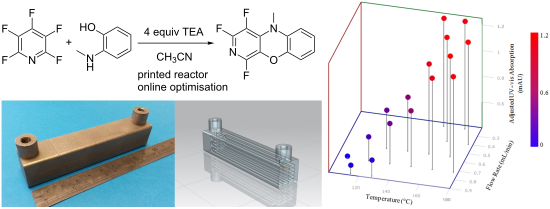
- of 123 × 67 × 42 mm (volume ≈68 cm3), and a continuous cylindrical channel running throughout the part (channel diameter = 1.5 mm, channel length = 1600 mm, reaction volume = 2.8 mL). The external dimensions of the flow cell would match the internal dimensions of the DAD compartment, allowing the
- use of an Ocean optics DH2000 light source (400 micron diameter illumination fibre, 600 micron collection fibre) and an Ocean Optics S2000 variable wavelength detector [27]. It was possible to determine the amount of stray light (predominantly from fluorescent strip lighting within the laboratory
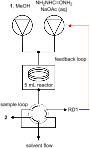
- continuous cylindrical channel running throughout (channel diameter = 2 mm, channel length = 3200 mm, theoretical reaction volume = 10 mL). The titanium alloy used to manufacture the part is thermally stable across a substantial temperature range, and chemically compatible with a wide range of organic




Nucleophilic displacement reactions of 5′-derivatised nucleosides in a vibration ball mill
Beilstein J. Org. Chem. 2017, 13, 87–92, doi:10.3762/bjoc.13.11
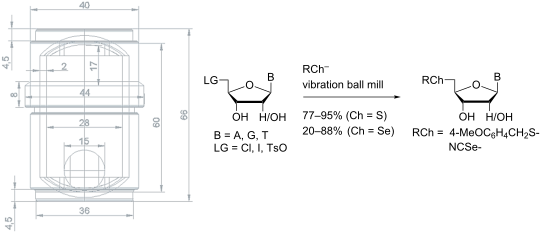
- a single (patent) report of CldA substitution using the Mob-thiolate anion (requiring 12 hours at up to 55 °C to achieve 68% yield) [25]. Optimisation of VBM conditions was performed over several phases using 25 mL vessels and 15 mm diameter balls (both with either steel or zirconia components in


Extrusion – back to the future: Using an established technique to reform automated chemical synthesis
Beilstein J. Org. Chem. 2017, 13, 65–75, doi:10.3762/bjoc.13.9
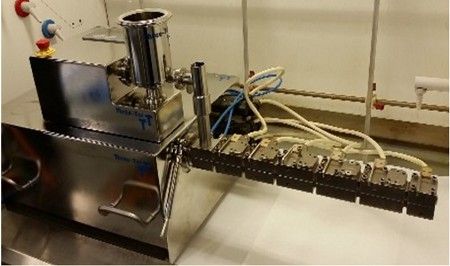
- of material for thorough mixing and processing [5]. The process can be adapted via modulation of the screw, as depicted in Figure 2, to make the process more efficient. An industrial single screw extruder typically has a screw diameter ranging from anywhere between 1 inch and 24 inches. Principally
- , the root diameter (the diameter of the central part of the screw) of the screw increases along its length, this is to i) provide greater free volume at the beginning of the ‘starve-fed’ extruder for maximum feeding of material and ii) to increase the compressive forces at a later stage of the process
- greater mechanical energy may result in a greater amount of frictional heat being produced, particularly in comparison to those segments which provide less vigorous kneading. Both single and twin screw extruders range from 10–443 mm in screw diameter [6] and extrusion processes are scalable to produce


Stabilization of nanosized titanium dioxide by cyclodextrin polymers and its photocatalytic effect on the degradation of wastewater pollutants
Beilstein J. Org. Chem. 2016, 12, 2873–2882, doi:10.3762/bjoc.12.286
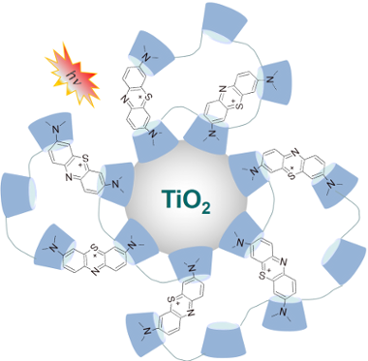
- Based on particle size measurements the aggregation behavior of nanoTiO2 in the presence and absence of polymer was compared in different media. We studied the effect of NaCl and tap water. The applied nanoTiO2 consists of crystallites of 10–20 nm diameter as evidenced by scanning electron micrographs



Characterization of the synthetic cannabinoid MDMB-CHMCZCA
Beilstein J. Org. Chem. 2016, 12, 2808–2815, doi:10.3762/bjoc.12.279

- and water (with 0.1% formic acid) were used as eluents at a total flow rate of 1.0 mL min−1 with the following gradient method: acetonitrile/water (+ 0.1% formic acid) = 10:90 (0–0.2 min), 10:90 to 90:10 (0.2–4.0 min), and 90:10 (4.0–6.0 min). An Ascentis Express C18 column (length: 3 cm, diameter
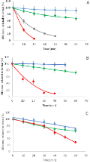
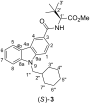
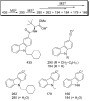
- Chiralpak IA-3 column (length: 25 cm, diameter: 4.6 mm, particle size: 3 μm; Daicel) was used at a temperature of 40 °C. Synthetic cannabinoids JWH-018 (1), MDMB-CHMICA (2), MDMB-CHMCZCA (3), and EG-018 (4). Molecular structure of (S)-MDMB-CHMCZCA (3) with numbering scheme. ESI-MSn pattern of 3 (m/z values




The digital code driven autonomous synthesis of ibuprofen automated in a 3D-printer-based robot
Beilstein J. Org. Chem. 2016, 12, 2776–2783, doi:10.3762/bjoc.12.276
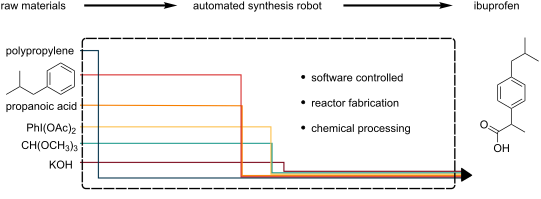
- 1 for further details). These needles were connected by PTFE tubing (internal diameter 0.8 mm) to a number of automatable syringe pumps which have been developed by our group. These pumps were controlled individually by dedicated Arduino control boards and were coordinated via the process-control



Electron-transfer-initiated benzoin- and Stetter-like reactions in packed-bed reactors for process intensification
Beilstein J. Org. Chem. 2016, 12, 2719–2730, doi:10.3762/bjoc.12.268
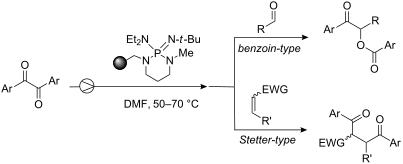
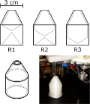
- was then fabricated by packing a stainless steel column (10 cm length, 4.6 mm internal diameter) with PS-BEMP 5. Pycnometer measurements provided the hold-up volume Vo and the total porosity εtot of R5 [31], whereas the loaded amount of 5 was determined by weighing the filled and empty column. The
- pump (Agilent 1100 micro series), an in-line pressure transducer, a thermostated microreactor holder (Peltier unit), a system to collect fractions and a data acquisition system (Agilent ChemStation). The units were connected by peek tubing (internal diameter 0.01 inch from Upchurch Scientific). The


Interactions between cyclodextrins and cellular components: Towards greener medical applications?
Beilstein J. Org. Chem. 2016, 12, 2644–2662, doi:10.3762/bjoc.12.261
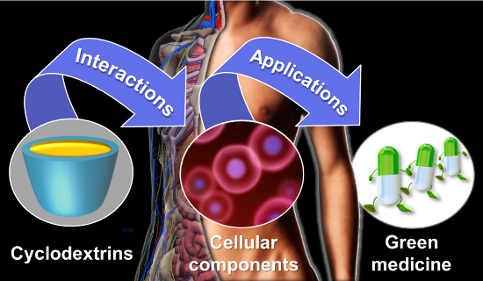
- inclusion complex because of the driving force of complexation: hydrophobic interaction. Despite there is no information on the binding constant observed for the inclusion of cholesterol in γ-CD, the cavity internal diameter of the β-CD and its derivatives perfectly matches the size of the sterol molecules
- the diameter of its internal cavity that matches the size of this molecule. Finally, it is noteworthy that all CDs lose their abilities to induce hemolysis, when their cavities are occupied with guest molecules due to a reduced interaction with the erythrocyte membranes [71]. All these observations


Towards the development of continuous, organocatalytic, and stereoselective reactions in deep eutectic solvents
Beilstein J. Org. Chem. 2016, 12, 2620–2626, doi:10.3762/bjoc.12.258
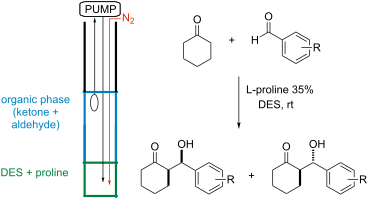
- using a test tube of reduced diameter (green color in the picture) containing the DES and L-proline, surrounded by an external, larger cylinder filled with a solution of cyclohexanone and 4-nitrobenzaldehyde. The organic solution, fluxed by a HPLC pump onto the bottom of the internal smaller tube, went


Continuous-flow synthesis of primary amines: Metal-free reduction of aliphatic and aromatic nitro derivatives with trichlorosilane
Beilstein J. Org. Chem. 2016, 12, 2614–2619, doi:10.3762/bjoc.12.257
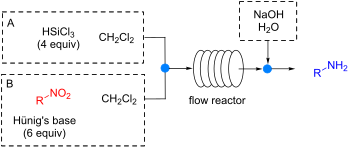
- illustrated in Scheme 1, a residence time of 50 minutes was necessary to reach a full conversion of the starting material (Table 1, entry 5). This is mainly due to the bigger internal diameter of the reactor (2.54 mm vs 0.58 mm) which affects the mixing of the reagents [27][28]. Lowering the residence time


Effects of solvent additive on “s-shaped” curves in solution-processed small molecule solar cells
Beilstein J. Org. Chem. 2016, 12, 2543–2555, doi:10.3762/bjoc.12.249
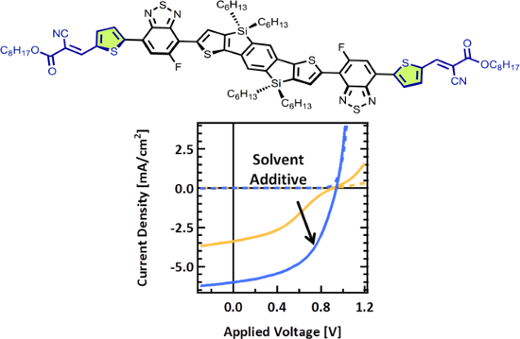
- images are shown in Figure S8 (Supporting Information File 1). The film cast without DIO has a relatively smooth featureless surface while the film cast with DIO has a rougher surface with relatively large (>100 nm diameter) features. This is consistent with phase separation and the crystallinity seen by


Efficient mechanochemical synthesis of regioselective persubstituted cyclodextrins
Beilstein J. Org. Chem. 2016, 12, 2364–2371, doi:10.3762/bjoc.12.230
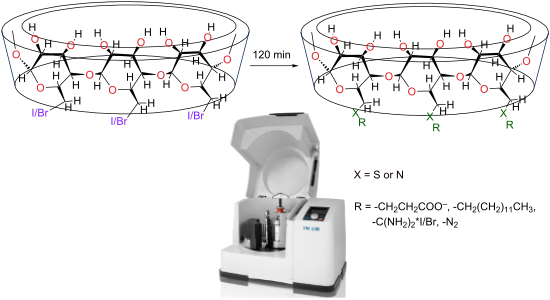
- , 3b, 4a, 4b, 5b and 6 were carried out in a Retsch PM100 High Speed Planetary Ball Mill. 1500 steel balls of 1 mm diameter (44.94 g) and 50 steel balls of 5 mm diameter (25.54 g, total weight of balls = 70.5 g, V = 15 mL), were placed in a stainless steel jar of 50 mL, with a sun wheel speed of 650
- measurements were made at each point and the values were averaged. Synthesis of per-6-derivatized CDs. Ball milling conditions: 1500 steel balls of 1 mm diameter and 50 steel balls of 5 mm diameter, sun wheel speed 650 min−1, 2 h grinding. Comparison of classic and green methods for the preparation of CD


Solvent-free, visible-light photocatalytic alcohol oxidations applying an organic photocatalyst
Beilstein J. Org. Chem. 2016, 12, 2358–2363, doi:10.3762/bjoc.12.229

- 4-methoxyphenyl methyl carbinol from Fluorochem. Riboflavin tetraacetate was synthesized from riboflavin (Acros Organics) according to a procedure reported in the literature [17]. Technical data of the rod mill apparatus: 4 LEDs (455 nm, 700 mA) on a square aluminium frame (inner diameter 35 mm) and
- one LED below the test tube were used. The distance of each LED to the test tube was 10 mm. The diameter of the glass rod was 8 mm and the inner diameter of the test tube was 9 mm. Synthesis General procedure: The substrate and riboflavin tetraacetate were weighed into a mortar in stoichiometric




A detailed view on 1,8-cineol biosynthesis by Streptomyces clavuligerus
Beilstein J. Org. Chem. 2016, 12, 2317–2324, doi:10.3762/bjoc.12.225
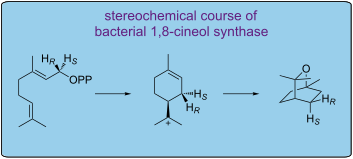
- NMR: (2H6)benzene δ = 128.06) [40]. GC–MS analysis An Agilent 7890B gas chromatograph equipped with a HP5-MS silica column (30 m, 0.25 mm inner diameter, 0.50 μm film) connected to an Agilent 5977A inert mass selective detector was used to acquire GC–MS data. Instrumental settings were: (1) inlet


Tunable microwave-assisted method for the solvent-free and catalyst-free peracetylation of natural products
Beilstein J. Org. Chem. 2016, 12, 2222–2233, doi:10.3762/bjoc.12.214
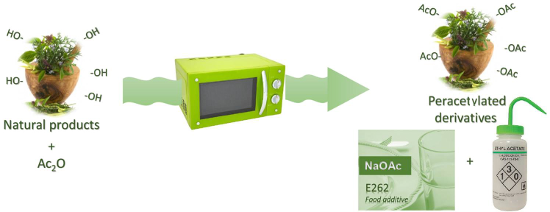
- seal. Reactions were monitored by TLC using silica plates 60-F264 on alumina, commercially available from Merk. GC–MS spectra were recorded on a GC–MS Thermo Scientific workstation, formed by a Focus GC (30-m VARIAN-VF-5ms, 0.25 mm diameter capillary column, working on spitless mode, 1.2 mL/min He as


Diels–Alder reactions in confined spaces: the influence of catalyst structure and the nature of active sites for the retro-Diels–Alder reaction
Beilstein J. Org. Chem. 2016, 12, 2181–2188, doi:10.3762/bjoc.12.208

- with 2.0 nm. There is then a unique occasion to compare the catalytic behavior of an amorphous and a crystalline molecular sieve with practically the same pore diameter (Figure 5a,b). As observed in Figure 5a,b, the crystalline structure of zeolites ITQ-33 and ITQ-37 do not favor neither the Diels
- further prove the effect of the structure, the reaction was carried out in presence of MCM-41 materials with different Si/Al ratios, and similar pore diameter. The results are collected in Figure 6a,b. As it could be expected no differences were found in the conversion. Meanwhile, in the case of the


Solvent-free synthesis of novel para-menthane-3,8-diol ester derivatives from citronellal using a polymer-supported scandium triflate catalyst
Beilstein J. Org. Chem. 2016, 12, 2046–2054, doi:10.3762/bjoc.12.193
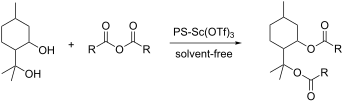
- a flame ionization detector, Econocap-5 column (film thickness 0.25 µm; internal diameter 0.25 mm; length 30 m) and ultra-high purity nitrogen (99.999%) carrier gas. The samples were analysed by using the following method; injector temperature 270 °C, nitrogen flow rate 0.5 mL·min−1, oven
- distillation (Agilent SimDis FAST2887) instrument fitted with a CAP. EXT. 2887/AC column (film thickness 0.88 µm; internal diameter 0.53 mm; length 10 m). Experimental procedures Synthesis of para-menthane-3,8-diol from citronellal Citronellal (30.08 g, 0.193 mol) was added into stirred dilute sulphuric acid


The in situ generation and reactive quench of diazonium compounds in the synthesis of azo compounds in microreactors
Beilstein J. Org. Chem. 2016, 12, 1987–2004, doi:10.3762/bjoc.12.186
- reagents used for the reaction, amount of solvent added to facilitate quick dissolution of particulates as they are formed as well as the output of the reaction, i.e., conversion, yield and or even selectivity. The scaled-up synthesis of these compounds in PTFE tubing of 1.5 mm internal diameter is herein
- reactor systems being quite different. It should also be noted that the PTFE tubing is much cheaper than the glass LTF-MS and at the internal diameter of the PTFE tubing used there were no occurrences of blockages witnessed due to precipitate formation. This is particularly important since the amount of
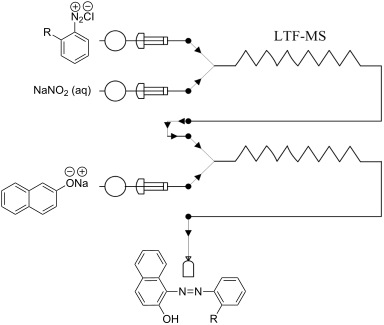
- azo compounds Using two (1 mL) SGE glass syringes and PTFE tubing of 0.5 mm internal diameter, the reactants (diazonium salt and azo coupling component solutions) were fed to an LTF-MS (Volume: 0.2 mL, channel size: 1 mm, geometry: 115 × 60 × 6 mm) microreactor plate (Figure 6). The microreactor plate


Cross-linked cyclodextrin-based material for treatment of metals and organic substances present in industrial discharge waters
Beilstein J. Org. Chem. 2016, 12, 1826–1838, doi:10.3762/bjoc.12.172
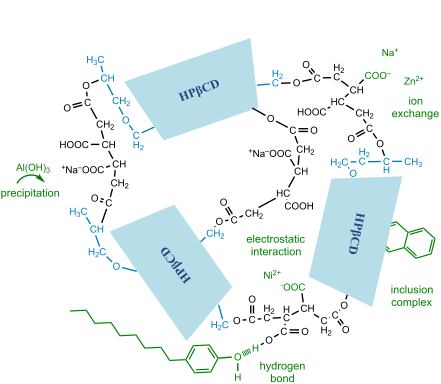
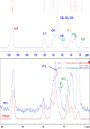
- such as cross polarization magic angle spinning (CP MAS) and MAS. The spectra were recorded with a Bruker spectrometer operating at 75.47 MHz and 303 K. The compounds were placed in a zirconium rotor, 4 mm in diameter and 21 mm high. The chemical shifts were recorded relative to tetramethylsilane with




Synthesis and properties of fluorescent 4′-azulenyl-functionalized 2,2′:6′,2″-terpyridines
Beilstein J. Org. Chem. 2016, 12, 1812–1825, doi:10.3762/bjoc.12.171
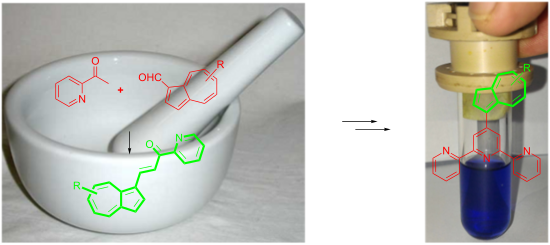
- (Metrohm, 3 mm in diameter) served as working electrode. The counter electrode was a Pt wire of large area. All experimental potentials were referred to Ag wire (Metrohm), used as quasi-reference electrode. The electrochemical measurements were carried out in anhydrous dimethylformamide containing 0.1 M


A flow reactor setup for photochemistry of biphasic gas/liquid reactions
Beilstein J. Org. Chem. 2016, 12, 1798–1811, doi:10.3762/bjoc.12.170
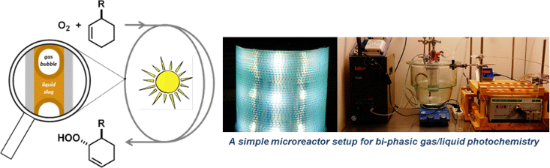
- solutions with high attenuation coefficients can be prevented by low-diameter reactor dimensions and flow conditions that favour the formation of thin films along the reactor walls. Energy-saving light bulbs and light-emitting diodes (LEDs) of different wavelengths (red, green, blue, white) were used for
- and gas phase occurs upstream in a T mixer, while the tubular reactor should provide a high surface area for maximum exposure to the light source. For reaction times in the range of 10 s to 20 min, commercial fluorinated ethylene-propylene (FEP)-capillaries with an internal diameter of less than 1 mm
- (here 0.79 mm) were used and coiled around a glass cylinder containing the light source. It is again important to note that the tubing diameter can significantly influence the formation of the slug flow, the magnitude of light absorption, and the back-pressure build-up, which is again dependent on the


Biradical vs singlet oxygen photogeneration in suprofen–cholesterol systems
Beilstein J. Org. Chem. 2016, 12, 1196–1202, doi:10.3762/bjoc.12.115

- photolysis cell in right-angle geometry. An excimer laser (LEXTRA50 Lambda Physik) was used for the excitation at 308 nm (laser excitation at 5 low-pulse energies for each molecule). A 5 mm thick (5 cm in diameter) 1050 nm cut-off silicon filter and a 1270 nm interference filter were placed between the diode





