


Search results
Search for "polymers" in Full Text gives 587 result(s) in Beilstein Journal of Organic Chemistry. Showing first 200.
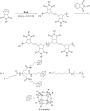
Ugi reaction-derived prolyl peptide catalysts grafted on the renewable polymer polyfurfuryl alcohol for applications in heterogeneous enamine catalysis
Beilstein J. Org. Chem. 2019, 15, 1210–1216, doi:10.3762/bjoc.15.118
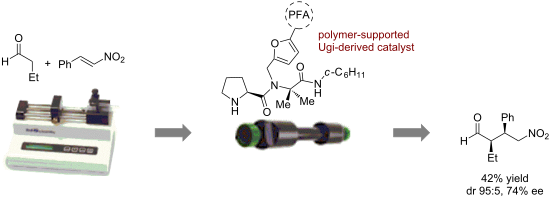
- ; multicomponent reactions; organocatalysis; polyfurfuryl alcohol; Introduction The immobilization of secondary amine-based catalysts onto organic polymers and silica gel has emerged as an effective strategy that combines the power of heterogeneous and organocatalysis [1][2][3]. Asymmetric catalysis using polymer
- high reaction yields and reduction of waste – aspects recognized as compatible with the principles of green chemistry [1][2][3][4][5].. However, almost all polymers used in the development of supported organocatalysts are made from non-renewable sources and composed of non-biodegradable materials (e.g
- a well-established industry of furfural production from corncobs and sugarcane pentoses, making polymers derived from this material among the most versatile and promising due to their renewable character and easy exploitation of such biomasses [12][13]. As depicted in Scheme 1, we envisioned the


Self-assembly behaviors of perylene- and naphthalene-crown macrocycle conjugates in aqueous medium
Beilstein J. Org. Chem. 2019, 15, 1203–1209, doi:10.3762/bjoc.15.117
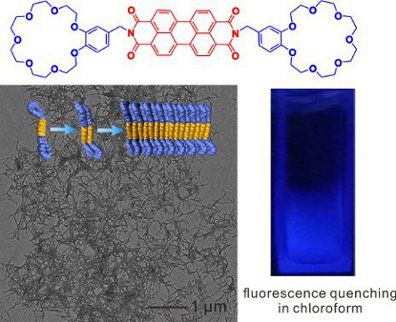
- water-soluble crown macrocycle 3 was synthesized according to reported protocols, by using potassium cations as template [86][87]. The primary amine group in 3 offers diverse reaction pathways to design crown ethers appended LMW gelators, dendrimers and polymers [88][89][90][91][92]. In order to


Insertion of [1.1.1]propellane into aromatic disulfides
Beilstein J. Org. Chem. 2019, 15, 1172–1180, doi:10.3762/bjoc.15.114
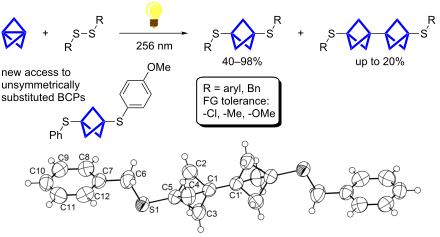
- ] the compound and its reactions were intensely investigated [10]. Michl et al. synthesized terminally functionalized polymers derived from 1, so-called [n]staffanes, and discussed their application as rigid tectones [11][12]. The characteristic reactivity of 1 emerges from the strained central bond


Mechanochemical synthesis of hyper-crosslinked polymers: influences on their pore structure and adsorption behaviour for organic vapors
Beilstein J. Org. Chem. 2019, 15, 1154–1161, doi:10.3762/bjoc.15.112
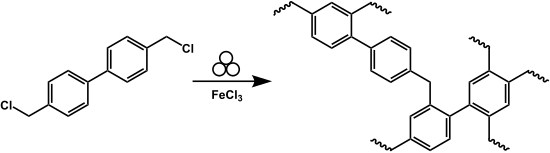
- sorption experiments with benzene and cyclohexane. Keywords: hyper-crosslinked polymers; mechanochemistry; microporous; solvent-free; vapor sorption; Introduction The widespread use of microporous materials in areas like gas storage, gas separation, and catalysis has led to the development of a wide
- POPs (porous organic polymers) [4] are currently in the focus of research. The modular bottom-up building concept of these organic materials allows for tailoring of materials properties towards desired applications. POPs synthesis can be achieved by a huge variety of reactions ranging from Friedel
- -Crafts alkylations [5], cross-coupling reactions [6] and cyclotrimerizations [7], to amine-based chemistry with Schiff base reactions [8], imidisation, and amidisation reactions [9]. In the recent past, a strong focus was also set on the development of HCPs (hyper-crosslinked polymers) [10]. Typically


Unexpected polymorphism during a catalyzed mechanochemical Knoevenagel condensation
Beilstein J. Org. Chem. 2019, 15, 1141–1148, doi:10.3762/bjoc.15.110
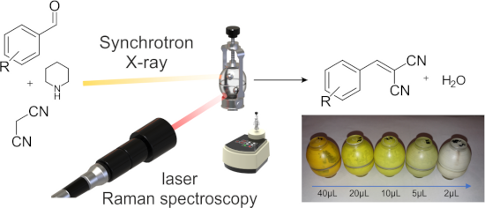
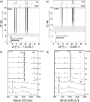
- materials [1]. Interest in these methods stems largely from the fact that they are efficient and more environmentally friendly as compared to traditional approaches [2][3]. Mechanochemistry is a well-established method for the synthesis of coordination polymers, the formation of cocrystals, and in C–C




Fabrication, characterization and adsorption properties of cucurbit[7]uril-functionalized polycaprolactone electrospun nanofibrous membranes
Beilstein J. Org. Chem. 2019, 15, 992–999, doi:10.3762/bjoc.15.97
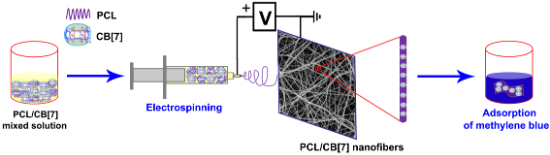
- isotherm model. Keywords: adsorption; cucurbit[7]uril; electrospinning; macrocycles; methylene blue; nanofiber; Introduction Electrospinning is recognized as the most simple and versatile method to fabricate multifunctional nanofibers from the solution or melt of polymers, polymer/nanoparticle mixtures
- /nanoreactor and supramolecular polymers, etc. [25][27][28][29][30][31][32]. Unlike other hosts such as CDs, calix[n]arenes, or pillar[n]arenes, the fabrication of CB[n]-functionalized nanofibers by electrospinning is a challenging task due to the poor solubility of CB[n] in common solvents. To develop CB[n


Mechanochemical synthesis of poly(trimethylene carbonate)s: an example of rate acceleration
Beilstein J. Org. Chem. 2019, 15, 963–970, doi:10.3762/bjoc.15.93
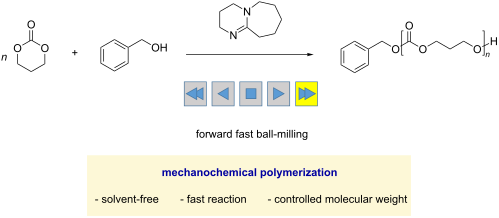
- important for chain-length control. Liquid-assisted grinding was applied for the synthesis of high molecular weight polymers, but it failed to protect the polymer chain from mechanical degradation. Keywords: aliphatic polycarbonate; green polymerization; mechanochemistry; organocatalyst; poly(trimethylene
- polymerization of cyclic carbonates, such as trimethylene carbonate (TMC) and its derivatives have been used for the controlled synthesis of high-molecular weight polymers. Among many catalysts, organocatalysts have attracted considerable attention, since the use of nontoxic catalysts warrants a safe use in


Towards the preparation of synthetic outer membrane vesicle models with micromolar affinity to wheat germ agglutinin using a dialkyl thioglycoside
Beilstein J. Org. Chem. 2019, 15, 937–946, doi:10.3762/bjoc.15.90
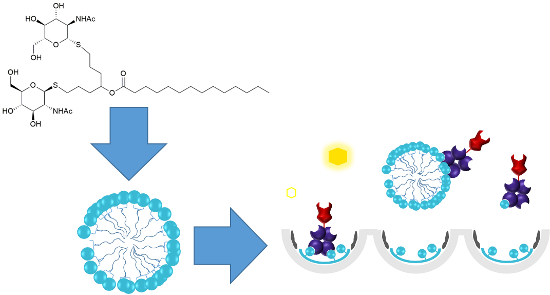
- compounds similar to other efficient multivalent glycoconjugates obtained by TEC of sugar thiols with different multivalent scaffolds such as octasilsesquioxanes [35], cyclopeptides [36][37] and polymers [38]. Both compounds 5 and 8 showed low IC50 values (a tenth to some hundreds of micromolars) where the





![[Graphic 2]](/bjoc/content/inline/1860-5397-15-90-i4.svg?max-width=637&scale=0.472728) ) and (○) ...
) and (○) ...
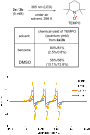
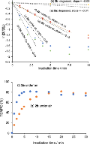
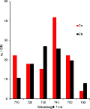
Photochemical generation of the 2,2,6,6-tetramethylpiperidine-1-oxyl (TEMPO) radical from caged nitroxides by near-infrared two-photon irradiation and its cytocidal effect on lung cancer cells
Beilstein J. Org. Chem. 2019, 15, 863–873, doi:10.3762/bjoc.15.84
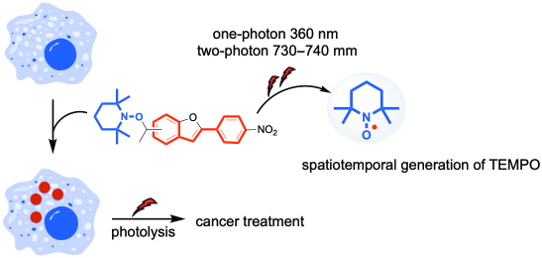
- polymers with narrow molecular mass distributions has been accomplished using nitroxides as a mediator, i.e., so-called nitroxide-mediated polymerization (NMP) [16][17][18][19][20], and the nitroxide-mediated synthesis of ketones from alcohols is also well utilized in organic synthesis [21][22][23][24][25






Synthesis of acylglycerol derivatives by mechanochemistry
Beilstein J. Org. Chem. 2019, 15, 811–817, doi:10.3762/bjoc.15.78
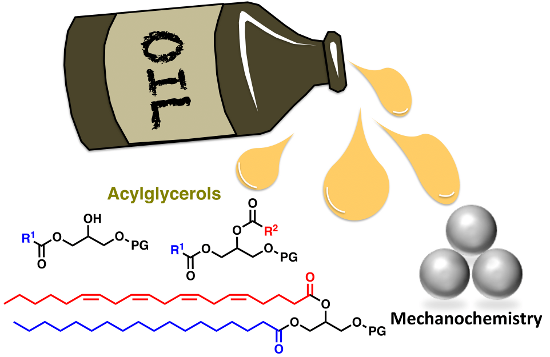
- Karen J. Ardila-Fierro Andrij Pich Marc Spehr Jose G. Hernandez Carsten Bolm Institute of Organic Chemistry, RWTH Aachen University, Landoltweg 1, D-52074 Aachen, Germany Functional and Interactive Polymers, Institute of Technical and Macromolecular Chemistry, RWTH Aachen University, Worringerweg


Hoveyda–Grubbs catalysts with an N→Ru coordinate bond in a six-membered ring. Synthesis of stable, industrially scalable, highly efficient ruthenium metathesis catalysts and 2-vinylbenzylamine ligands as their precursors
Beilstein J. Org. Chem. 2019, 15, 769–779, doi:10.3762/bjoc.15.73
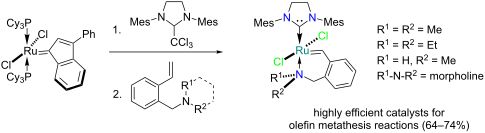
- the presence of 1.0 mol % of catalyst 11a,c,d as compared with 0.1 mol % of catalyst (cf. Table 3, entries 9/10, 12/13). Obviously, a high concentration of the catalysts accelerates the formation of undesirable products (oligomers and polymers of styrene). At 40 °C in dichloromethane, excellent yields


Synthesis of polydicyclopentadiene using the Cp2TiCl2/Et2AlCl catalytic system and thin-layer oxidation of the polymer in air
Beilstein J. Org. Chem. 2019, 15, 733–745, doi:10.3762/bjoc.15.69
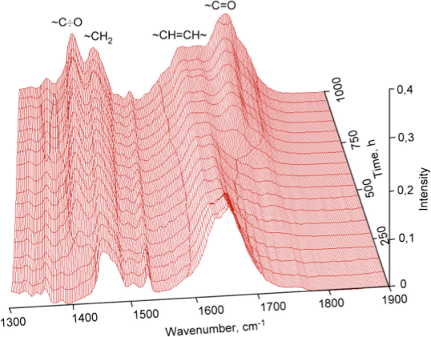
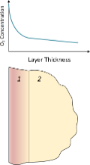
- and can be determined by the increase of carbonyl and hydroxyl adsorption bands in infrared spectra. Along with oxidation, cross-linking processes occur in polymers, which lead to a change in physical parameters of the layers, and more precisely to a decrease in the permeability of atmospheric oxygen
- hardness of the systems and contributes to the generation of products having a linear structure. To realize this, the usage of a catalyst component bearing already organic ligands in its structure – bis(cyclopentadienyl)titanium dichloride (Cp2TiCl2) is proposed. Polymers based on DCPD, obtained by
- cationic polymerization, are characterized by certain disadvantages. They have a low molecular weight, a fairly rigid structure of the polymer chains due to crosslinking processes occurring during polymerization. In addition, DCPD polymers obtained from "hard" catalytic systems, such as TiCl4, SnCl4, etc




Synthesis of functionalized diazocines for application as building blocks in photo- and mechanoresponsive materials
Beilstein J. Org. Chem. 2019, 15, 727–732, doi:10.3762/bjoc.15.68
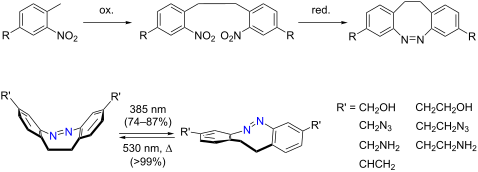
- , diazocines are stable over several thousand switching cycles under air [19][24][26][27]. Notwithstanding their excellent properties, to date only 3,3’- and 4,4’- functionalized diazocine 2 and 3 have been implemented in polymers [19] and proteins [28]. Unfortunately, similar to azobenzenes, aminosubstitution
- mechanoresponsive polymers such as polyurethanes, polyesters, polyamides, polyureas and polyolefines. (a) Isomerization of parent diazocine 1. Distances of carbon atoms para to the ethylene bridge were determined at the B3LYP/6-31g* level of DFT [23]. (b) UV–vis spectra of parent diazocine 1 (left), 3,3


Efficient synthesis of 4-substituted-ortho-phthalaldehyde analogues: toward the emergence of new building blocks
Beilstein J. Org. Chem. 2019, 15, 721–726, doi:10.3762/bjoc.15.67

- ], thioether macrocycles [11], macrocyclic Schiff bases [12] or even poly(phthalaldehyde) polymers [13]; taking into account that few studies were carried out with modified OPA on position 3 or 4. This could probably be due to the fact that the synthesis of 4-substituted OPA was, to the best of our knowledge


Polyaminoazide mixtures for the synthesis of pH-responsive calixarene nanosponges
Beilstein J. Org. Chem. 2019, 15, 633–641, doi:10.3762/bjoc.15.59

- nanosponge materials with tunable properties. Nanosponges (NSs) [7][8][9][10][11][12][13][14] are hyper-cross-linked polymers or copolymers obtained by reacting supramolecular host species as the monomer units with suitable reticulating agents. Of course, the structural, physical and chemical features of the
- -nitroaniline guests 6, 8 and 9 shows only a fair dependence on pH. By contrast, inclusion of the charged guests 7 and 10 presents remarkable variations with pH, which are not mirrored by analogous non-aminated calixarene polymers examined in our previous work [22]. More in detail, inclusion of anionic 7


Back to the future: Why we need enzymology to build a synthetic metabolism of the future
Beilstein J. Org. Chem. 2019, 15, 551–557, doi:10.3762/bjoc.15.49
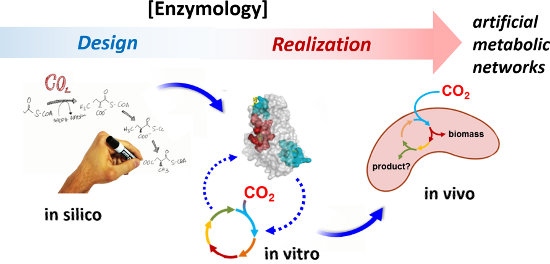
- the nature and reactivity of the chemical bond enabled chemists to use their knowledge to create new molecules and materials [3][4]. This development provided humankind with new chemical compounds, such as color dyes, pharmaceuticals, as well as polymers and plastics. Given its transforming nature, it


Selectivity in multiple multicomponent reactions: types and synthetic applications
Beilstein J. Org. Chem. 2019, 15, 521–534, doi:10.3762/bjoc.15.46
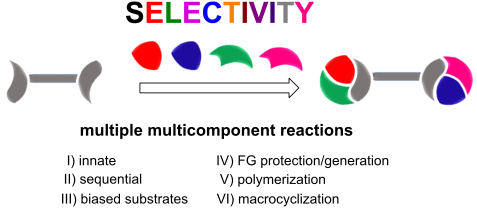
- , symmetrical adducts or polymers; ii) structurally preorganized systems allowing the generation of macrocycles and iii) selective processes in which a determined combination arises in a sequential manner, either directly or indirectly, through functional group deprotection/generation. Stereoselectivity (where
- ; V) generation of new functional groups; VI) polymerization; VII) macrocyclization; FG = functional group. Indiscriminate double Ugi MCR upon pyridine-2,6-dicarboxylic acid. Representative examples of MCR-polymer synthesis. A) Biginelli HTS of polymers; B) Passerini;- C) Ugi-; D) metal-catalyzed MCR




Aqueous olefin metathesis: recent developments and applications
Beilstein J. Org. Chem. 2019, 15, 445–468, doi:10.3762/bjoc.15.39
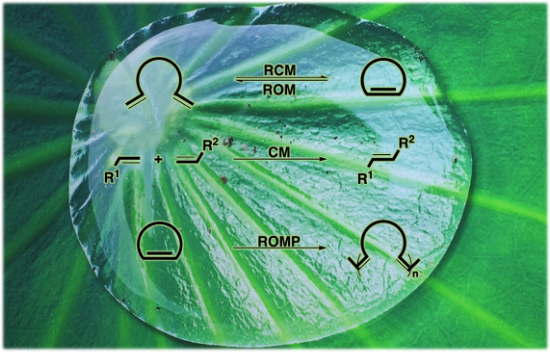
- and co-workers led to several biological applications [79][80]. Kiessling and co-workers were the first to use ROMP for the synthesis of biologically active polymers and for the synthesis of multivalent antigens to probe signaling pathways in vivo [81][82]. In 2008, Davis and co-workers performed site


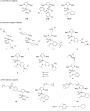


Synthesis of C3-symmetric star-shaped molecules containing α-amino acids and dipeptides via Negishi coupling as a key step
Beilstein J. Org. Chem. 2019, 15, 371–377, doi:10.3762/bjoc.15.33
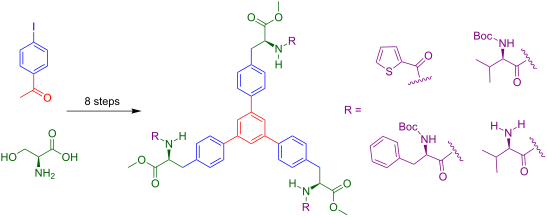
- peptide dendrimers. Keywords: amino acids; cyclotrimerization; Negishi coupling; peptide; Introduction Optically active C3-symmetric molecules are valuable synthons to design dendrimers, chiral ligands, polymers, and supramolecules [1][2][3][4]. In this regard, 1,3,5-triarylbenzene derivatives are


Application of olefin metathesis in the synthesis of functionalized polyhedral oligomeric silsesquioxanes (POSS) and POSS-containing polymeric materials
Beilstein J. Org. Chem. 2019, 15, 310–332, doi:10.3762/bjoc.15.28
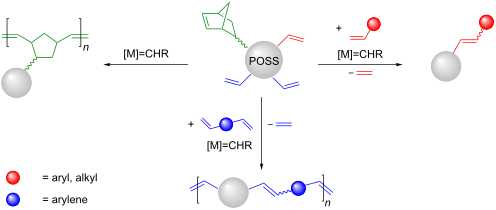
- of 1.5 nm (Figure 1). The synthesis, structure and properties of POSS have been extensively reviewed [1][2][3]. Proper selection of organic substituents R allows the modification of solubility of POSS in reaction media, its compatibility with polymers, biological systems, or surfaces. The
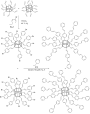
- proposed synthetic method based on the gradual development of the organic part can be used for the synthesis of new star polymers, dendrimers or hyperbranched molecules. Further examples of the use of cross metathesis of OVS with styrenes in order to form functionalizable dendrimer cores have been reported
- the application of ADMET in the synthesis of oligomers or polymers containing a POSS unit in the main chain. Marciniec disclosed ADMET copolymerization of DDSQ-2SiVi with dienes in the stereoselective synthesis of a new class of vinylene–arylene copolymers containing double-decker silsesquioxanes in






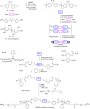
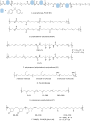
Olefin metathesis in multiblock copolymer synthesis
Beilstein J. Org. Chem. 2019, 15, 218–235, doi:10.3762/bjoc.15.21

- nanomaterials that combine various functional properties with durability and enhanced mechanical characteristics. Our mini-review addresses synthetic approaches to the design of multiblock copolymers from unsaturated monomers and polymers using olefin metathesis reactions and other ways of chemical modification
- across double C=C bonds. The main techniques, actively developed during the last decade and discussed here, are the coupling of end-functionalized blocks, sequential ring-opening metathesis polymerization, and cross metathesis between unsaturated polymers, or macromolecular cross metathesis. The last
- polymerization in a living fashion turned it into a powerful tool of polymer design [1]. Hundreds of linear, comb-like, graft-, bottle-brush, ladder, and other homopolymers and copolymers were synthesized [2][3][4][5][6][7]. Block copolymers combining properties of two or more individual polymers in one material






Catalysis of linear alkene metathesis by Grubbs-type ruthenium alkylidene complexes containing hemilabile α,α-diphenyl-(monosubstituted-pyridin-2-yl)methanolato ligands
Beilstein J. Org. Chem. 2019, 15, 194–209, doi:10.3762/bjoc.15.19
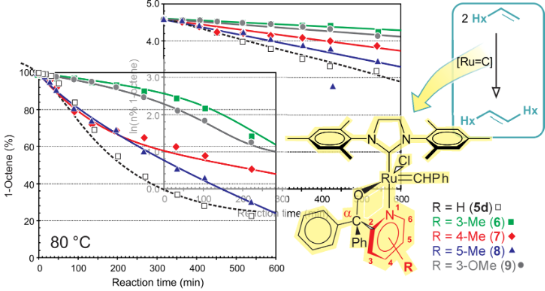
- temperatures in the ROMP of norbornene and cyclooctene. Oligomers were obtained at room temperature in the presence of 4a and 4d, while 4b and 4c yielded polymers. At 60 °C, ROMP was observed with norbornene (98–100%) and cyclooctene (72–80%) in the presence of 4. We investigated a number of Grubbs 1- and


Fabrication of supramolecular cyclodextrin–fullerene nonwovens by electrospinning
Beilstein J. Org. Chem. 2019, 15, 89–95, doi:10.3762/bjoc.15.10
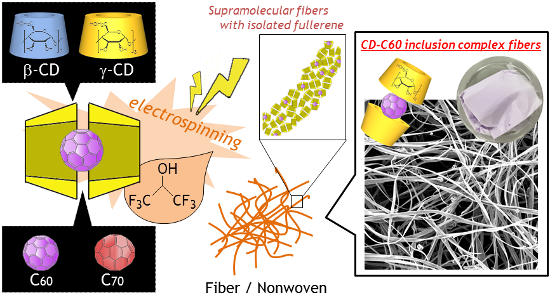
- can be assembled into fibers/nonwovens by electrospinning. This result supports the notion that even small molecules (low-molecular weight compounds) with relatively weak inter/intramolecular interactions can be spun similar to the case of polymers. Since then, several small molecules, including


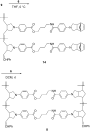
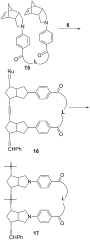
Selective ring-opening metathesis polymerization (ROMP) of cyclobutenes. Unsymmetrical ladderphane containing polycyclobutene and polynorbornene strands
Beilstein J. Org. Chem. 2019, 15, 44–51, doi:10.3762/bjoc.15.4
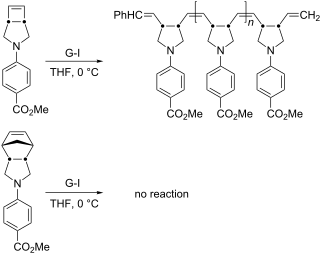
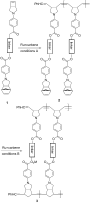
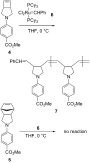
- corresponding soluble acetate. Both polymers are well characterized by spectroscopic means. No norbornene moiety is found to be incorporated into polycyclobutene strand at all. The double bonds in the polycyclobutene strand are mainly in cis configuration (ca 70%), whereas the E/Z ratio for polynorbornene
- strand is 8:1. Keywords: cyclobutene; hydrolysis; linker; metathesis; norbornene; ROMP; selectivity; unsymmetrical ladderphane; Introduction Ring-opening metathesis polymerizations (ROMP) of strained cycloalkenes offer a powerful arsenal for the synthesis of polymers having a variety of fascinating
- . Cyclopolymerization of 15 with a flexible linker. Methanolysis of unsymmetrical ladderphane 8. Supporting Information Supporting Information File 10: 1H and 13C NMR spectra of both monomers and polymers, as well as GPC and kinetic investigation results. Acknowledgement We thank the Ministry of Science and




Lectins of Mycobacterium tuberculosis – rarely studied proteins
Beilstein J. Org. Chem. 2019, 15, 1–15, doi:10.3762/bjoc.15.1
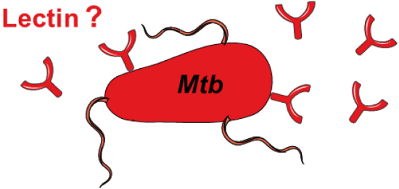
- )-branched α-D-arabinofuranoside-containing polymers [52]. LAM can further be peripherally modified, also known as ”capping“, the nature of which differs between mycobacterial species. In pathogenic mycobacteria, such as Mtb, LAM is capped to various degrees with one to three α-D-mannopyranosides [53], while





