Search results
Search for "NMR" in Full Text gives 3269 result(s) in Beilstein Journal of Organic Chemistry. Showing first 200.
A cascade synthesis of 2-aminothiochromones from 2-fluorophenyl ketone and thiocarbonyldiimidazole
Beilstein J. Org. Chem. 2026, 22, 1151–1159, doi:10.3762/bjoc.22.92
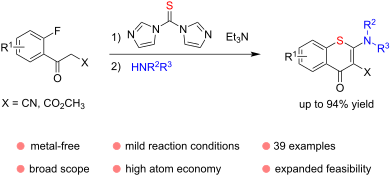
- characterizations of the prepared compounds were performed by 1H NMR and 13C NMR spectroscopy and high-resolution mass spectrometry (HRMS). 1H NMR spectra were obtained on an ECZ-400 spectrometer (JEOL, Tokyo, Japan) at 400 MHz and a Bruker AVANCE 500 (Bruker, Rheinstetten, Germany) at 500 MHz. 13C NMR spectra were
- was used as the standard NMR solvent. The following multiplicity abbreviations were used: (s) singlet, (d) doublet, (t) triplet, (q) quartet, (m) multiplet and (brs) broad singlet. HRESIMS data were measured on a Thermo Exactive Orbitrap plus spectrometer. If necessary, the target compounds were



Discovery of sugarnitriles A and B, and structural reassignment of SF-2140, from a sugarcane endophytic actinomycete Amycolatopsis sp. JS-O27
Beilstein J. Org. Chem. 2026, 22, 1114–1121, doi:10.3762/bjoc.22.90
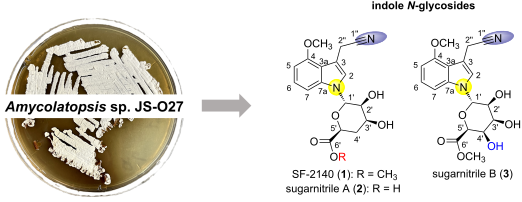
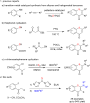
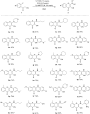
- (2) and B (3), were isolated from a sugarcane endophytic actinomycete Amycolatopsis sp. JS-O27. The planar structures of 1–3 were established by HRESIMS data and detailed 1D/2D NMR spectroscopic analysis, and the conformations of the sugar moieties were deduced by the analysis of 3JH-H coupling
- bioactivity studies indicated that SF-2140 exhibits weak antibacterial activity against Gram-positive and Gram-negative bacteria and antiviral activity [19]. Although the chemical structure of SF-2140 has been assigned through total synthesis and X-ray crystallography [19], the lack of 13C and 2D NMR data
- anomeric carbon (C-1') was connected to the indole ring through a heteroatom, revealing that compound 1 is an indole N-glycoside (Figure 2a). Further detailed analysis of the 2D NMR data of 1 indicated that the planar structure of 1 was identical to that of SF-2140 (Tables S1 and S2, Supporting Information


Rhodopyran, a carboxylated hexahydrocyclopenta[b]pyran from Rhodococcus
Beilstein J. Org. Chem. 2026, 22, 1107–1113, doi:10.3762/bjoc.22.89
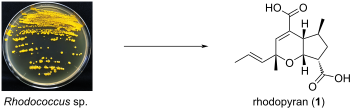
- Rhodococcus sp. strain RD066637. The planar structure was elucidated by 1D/2D NMR analyses and HRMS spectrometry, and the relative configuration was assigned from vicinal coupling constants and NOESY correlations, while the absolute configuration remains undetermined. Rhodopyran represents a structurally
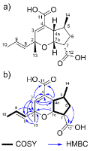
- 0.01, MeOH)). The molecular formula of 1 was determined to be C15H20O5 based on HRESIQTOFMS data in the negative-ion mode: m/z 279.1237 [M − H]− (calcd for C15H19O5−, 279.1238; Δ −0.4 ppm). The IR spectrum showed a strong band at 1688 cm−1, consistent with carboxyl carbonyl groups. The 1H NMR spectrum
- . The 13C NMR spectrum exhibited 14 signals, including two carbonyl carbons (δC 176.1, 170.6), four olefinic carbons (δC 142.9, 135.5, 130.2, 125.0), an oxygenated quaternary carbon (δC 75.6), an oxygenated methine (δC 77.2), and three methyl carbons (δC 24.3, 21.1, 17.9) (Table 1). The remaining carbon


Controlled supramolecular assemblies of luminescent tridentate cyclometalated alkynylgold(III) amphiphiles in aqueous media
Beilstein J. Org. Chem. 2026, 22, 1097–1106, doi:10.3762/bjoc.22.88
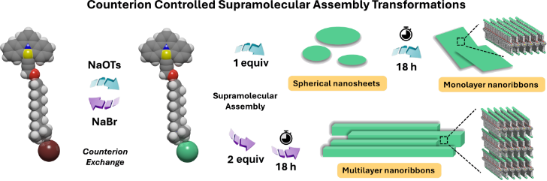
- all newly synthesized compounds and GA were unambiguously characterized by 1H , 13C NMR spectroscopy and high-resolution mass spectrometry (HRMS) (Supporting Information File 1, Figures S8–S13). Photophysical properties and assembly of GA A freshly prepared aqueous solution of GA (13.4 mM, 1.0 wt
- subjected to column chromatography on silica gel (hexane/ethyl acetate 10:1 (v/v, Rf = 0.5) to afford compound 1 as pale-yellow liquid (284 mg, 1.09 mmol) in 50% yield. 1H NMR (600 MHz, CDCl3) δ 4.08 (s, 2H), 3.46 (t, J = 6.6 Hz, 2H), 3.36 (t, J = 7.0 Hz, 2H), 2.39 (s, 1H), 1.80 (q, J = 7.3 Hz, 2H), 1.54 (t
- , J = 6.4 Hz, 2H), 1.37 (t, J = 7.4 Hz, 2H), 1.31–1.25 (m, 8H); HRMS–ESI+ (m/z): [M + H]+ calcd for C12H22BrO, 261.0849; found, 261.0848. Compound 2: Synthesis according to the modification of a reported procedure [62]. 1H NMR (600 MHz, CD3SOCD3) δ 8.19 (t, J = 8.0 Hz, 1H), 8.01–7.97 (m, 2H), 7.89 (d


Synthesis and acaricidal activity against Varroa destructor of α- and γ-costic acid dimers
Beilstein J. Org. Chem. 2026, 22, 1088–1096, doi:10.3762/bjoc.22.87
- otherwise stated. Flash chromatography was performed using 60–200 mesh silica gel. 1H NMR and 13C NMR spectra were recorded on Varian (Palo Alto, CA, USA) 400 MHz and 500 MHz and 100 MHz and 125 MHz spectrometers, respectively, at ambient temperature in CDCl3, unless otherwise noted, using the same solvent
- as internal standard at δ (ppm) 7.26 and 77.0. Chemical shifts are given in δ (ppm). Data for 1H NMR are reported as follows: chemical shift, multiplicity (s = singlet, brs = broad singlet, d = doublet, brd = broad doublet, brdd = broad double doublet, m = multiplet), coupling constants (in hertz
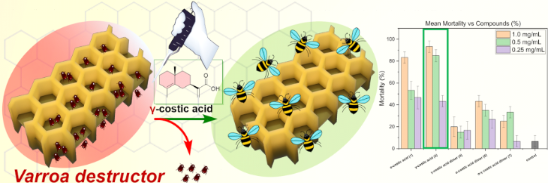
- acid diester (4) (16%) and γ-costic acid (3) (46%). Compound 3: 1H NMR (400 MHz) δ 6.33 (s, 1H), 5.69 (s, 1H), 2.66 (d, J = 13.6 Hz, 1H), 2.37 (d, J = 16.4 Hz, 1H), 2.01–1.85 (m, 2H), 1.75 (m, 1H), 1.69 (m, 1H), 1.64–1.46 (m, 7H), 1.42–1.23 (m, 3H), 1.05 (s, 3H). Compound 4: 1H NMR (400 MHz) δ 6.19 (s


Synthesis of functionalized, 13-alkyl-substituted coralyne derivatives and investigation of their interactions with duplex and abasic site-containing DNA
Beilstein J. Org. Chem. 2026, 22, 1057–1066, doi:10.3762/bjoc.22.84
- ). Subsequent nucleophilic substitution of 3b with KCN furnished the nitrile-functionalized papaverine 3d in 56% yield. However, attempts to hydrolyze the nitrile 3d to the corresponding carboxylic acid failed both under mild and harsh alkaline conditions as well as under acidic conditions, as TLC and 1H NMR
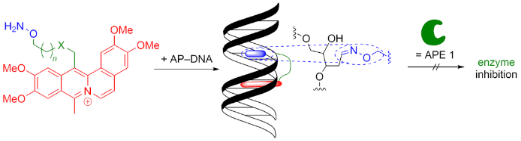
- the hydroxyalkyl-substituted product 3f in 45% yield (over the two reaction steps). All novel compounds were identified and characterized by 1H and 13C NMR spectroscopy (2D, COSY, HSQC, HMBC), mass spectrometry, and elemental analysis (if necessary as hydrochloride salts). Additionally, IR
- ). Under these conditions, the azide 3e decomposed, as indicated by 1H NMR-spectroscopic analysis of the reaction mixture, whereas the bromoalkyl-substituted papaverine 3b gave the coralyne derivative 2b, albeit in a very low yield of 1%. The product 2b was identified by NMR spectroscopy, mass spectrometry


One-pot four-component sequential synthesis of S-alkyl dithiocarbamates using lipase as a biocatalyst
Beilstein J. Org. Chem. 2026, 22, 1048–1056, doi:10.3762/bjoc.22.83
- prepared 20 × 20 cm silica plates) using a mixture of ethyl acetate and n-hexane as a mobile phase. 1H and 13C NMR spectra were recorded at 300 (75) MHz on a Bruker Avance spectrometer using CDCl3 as a solvent. The chemical shifts were referenced to the solvent signals at δH/C 7.26/77 ppm (chloroform-d
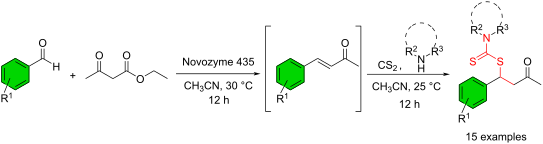
- ), Novozyme 435 (30 mg), aniline (0.05 mmol), CH3CN (1 mL), 30 °C, 12 h; then, CS2 (4, 0.4 mmol), amine 5c,d (0.2 mmol), 25 °C, 12 h. Control reactions. Proposed mechanism. Optimization of model reaction.a Supporting Information Supporting Information File 8: Product characterization data and copies of NMR


Synthesis of novel 1,2,4-oxadiazole-isoxazoline hybrids and their in silico potential with adenosine receptors
Beilstein J. Org. Chem. 2026, 22, 1033–1047, doi:10.3762/bjoc.22.82
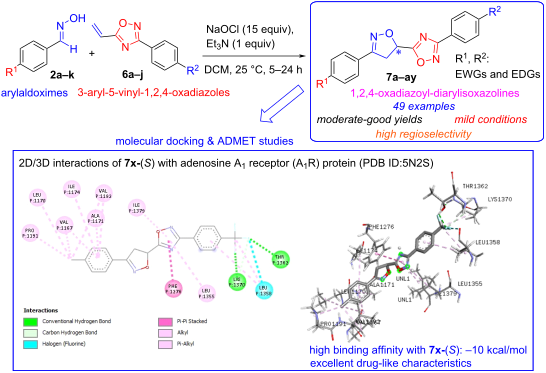
- –97%) and fully characterized by IR, NMR, and HRMS analyses. The reactions exhibited high regioselectivity, exclusively affording 5-isoxazoline derivatives, while substituent effects played a decisive role in modulating reaction efficiency. In silico studies revealed that all hybrids 7a–ay display
- vinylic proton signals at around 6.5, 5.9, and 6.7 ppm and aromatic proton resonances in the range of 7.0–8.5 ppm in the ¹H NMR spectra, as well as characteristic oxadiazole ring C=N carbon signals at approximately 168 and 175 ppm in the ¹³C NMR spectra. Furthermore, it was found that the obtained
- contribute to the observed low yields. The structures of all synthesized products 7a–ay were fully determined using IR, NMR, mass spectrometry, and relevant physical data. In the IR spectra of compounds 7a–ay, characteristic absorption bands were observed at approximately 3050, 2900, 1600, 1250, and 830 cm−1


Semisynthesis, characterisation, and antibacterial evaluation of a novel lecanoric acid-derived amide library
Beilstein J. Org. Chem. 2026, 22, 1023–1032, doi:10.3762/bjoc.22.81
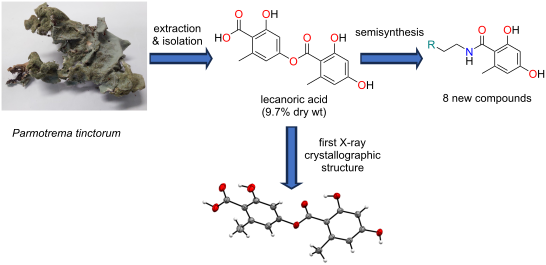
- new semisynthetic compounds were fully characterised following 1D/2D NMR, MS and UV data analysis. Crystalline lecanoric acid was obtained during the chemical investigations of the lichen extract, enabling the first X-ray crystallographic analysis to be undertaken on this depside. Compounds 1–13 were
- investigations. Initial assessment (1H NMR spectroscopy and UHPLC–MS) of the crude CH2Cl2/MeOH extracts of P. tinctorum revealed the presence of a highly abundant natural product previously described as the depside, lecanoric acid (1, Figure 1). Several publications have outlined the antibiotic [3], anticancer
- TLC, with fractions showing a similar profile combined to afford five fractions. These fractions were subsequently purified by semipreparative reversed-phase HPLC (RP-HPLC) using a linear gradient of MeOH/H2O/0.1% TFA. The resulting fractions were analysed by 1H NMR and UHPLC–MS, affording the known


Z-Selective semihydrogenation of alkynes via Ni/Lewis acid synergistic catalyzed system using DMF as hydrogen source and solvent
Beilstein J. Org. Chem. 2026, 22, 1004–1012, doi:10.3762/bjoc.22.79
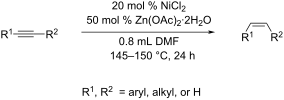
- conditions and both substrates were fully consumed. (Scheme 3) Compound 5a was quantitatively converted to (Z)-1-phenyl-1-propene (6a), as confirmed by GC–MS, while 7a delivered (Z)-5-decene (8a) within 24 h (based on the crude ¹H NMR spectrum; see Supporting Information File 1, Figure S3). No E-isomer was



Rh(III)-catalyzed chelation-assisted C–H activation/annulation of 2-arylimidazolines with cyclic diazo-1,3-dicarbonyl compounds: a novel approach to tetracyclic annulated derivatives of 2,3-dihydroimidazo[2,1-a]isoquinoline
Beilstein J. Org. Chem. 2026, 22, 997–1003, doi:10.3762/bjoc.22.78
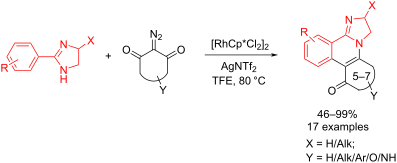
- reaction mixtures by NMR, none of them could be isolated in pure form by column chromatography. The following reaction mechanism can be proposed according to the literature data [18] (Figure 3a). The catalytic cycle begins with the formation of monomeric Rh(III)-catalyst A from the reaction of [RhCp*Cl2]2
- –g): Published examples of chelation-assisted C–H activation/annulation of other five-membered heterocycles. Structures of products from unsuccessful reactions of 2-arylimidazolines with diazo 1,3-dicarbonyl compounds. aTrace amounts were detected by 1H NMR of crude reaction mixtures. bNot observed
- by 1H NMR of crude reaction mixtures. a) Proposed reaction mechanism; b) Experimental isolation of intermediate B (compound 5) from equimolar reaction of substrate 2a and the catalyst. C–H activation/annulation of 2-arylimidazolines with diazo-1,3-dicarbonyl compounds. aReaction conditions


The role of spacer length and flexibility in peptide self-assembly
Beilstein J. Org. Chem. 2026, 22, 986–996, doi:10.3762/bjoc.22.77
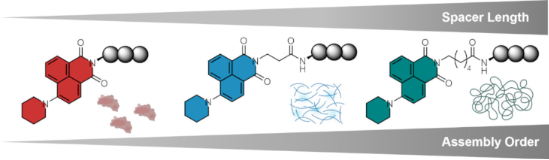
- -assembly. The peptides have been analyzed with respect to their assembly properties using assembly conversion determinations, fluorescence microscopy, transmission electron microscopy (TEM), atomic force microscopy (AFM), circular dichroism (CD) spectroscopy, and nuclear magnetic resonance (NMR
- spectrometry (LC–MS) and NMR spectroscopy (Supporting Information File 1, Figures S7–S24). The target tripeptide (ICA) was synthesized in a microwave-assisted peptide synthesizer using the fluorenylmethyloxycarbonyl (Fmoc) solid-phase peptide synthesis strategy [37], synthesizing the peptide from the C- to N
- using PyBOP® and N,N’-DIPEA. All peptides were purified via high performance liquid chromatography (HPLC) and subsequently characterized using LC–MS and NMR spectroscopy revealing high purities (>95%) with overall yields between 25–37% (Supporting Information File 1, Figures S25–S33). Supramolecular


Electrochemical reduction of unsaturated carbon–carbon bonds via 3d transition-metal catalysis
Beilstein J. Org. Chem. 2026, 22, 955–981, doi:10.3762/bjoc.22.75
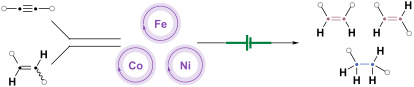
- substrates were subjected to the electroreductive conditions in the absence of the nickel complex. Under these conditions, both a ring-opening product and a hydrogenation product were detected by NMR spectroscopy. These observations provide compelling experimental evidence that Fe–H species, formed in situ








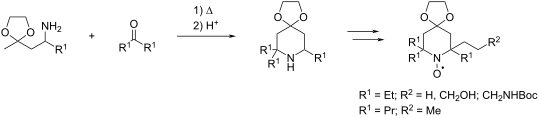
Synthesis of sterically shielded piperidine nitroxides via acid-catalyzed heterocyclization of β-aminoketone derivatives with ketones
Beilstein J. Org. Chem. 2026, 22, 948–954, doi:10.3762/bjoc.22.74
- proteins by the PELDOR method at room temperature [2]. Piperidine nitroxyl biradicals form the basis of the most efficient commercial agents for dynamic nuclear polarization (DNP) in NMR studies of biomolecules and solid samples [3]. They are also employed as contrast agents for magnetic resonance imaging
- formation, and hydrazinolysis (Scheme 1). The target 2-(2-aminoalkyl)-1,3-dioxolanes 4a,b were obtained in pure form after vacuum distillation. Conversion of α,β-unsaturated ketones 1a,b to aminodioxolanes 4a,b proceeded in 49% and 69% overall yield, respectively. In the 1H NMR spectrum of 4a
- -tripropyl-substituted piperidines 5a,b were isolated in approximately 50% yield (Scheme 2). The full-line shape analysis of the 1H NMR spectrum of piperidine 5a was simulated using the gNMR software (version 5.0) [32] and the extracted spin-system parameters were consistent with the proposed structure (see


Recent advances in copper-catalyzed direct hydroamination of alkenes with (hetero)aromatic amines
Beilstein J. Org. Chem. 2026, 22, 925–947, doi:10.3762/bjoc.22.73
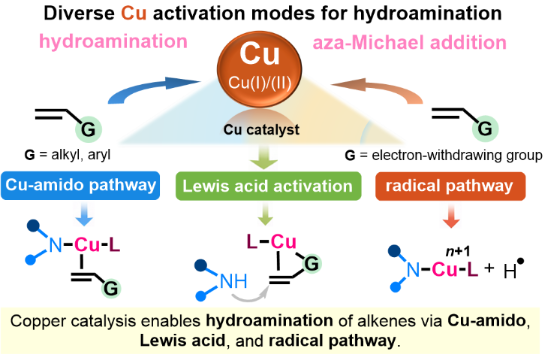
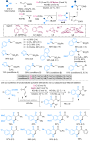
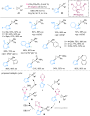
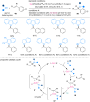
- ). In particular, NMR analysis indicated the formation of the organocopper species (IPr)Cu(N(Ph)CH2CH2CN) (VII), a key intermediate consistent with the nucleophilic addition mechanism. These early mechanistic studies established that copper-bound amido species act as key nucleophilic intermediates in







A practical CO2-mediated synthesis of 5,6-carboxylated silicon-rhodamines for targeted probe development
Beilstein J. Org. Chem. 2026, 22, 915–924, doi:10.3762/bjoc.22.72
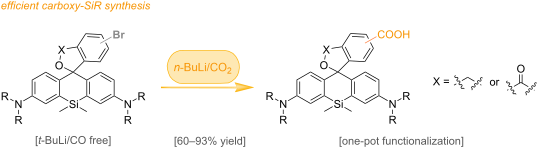
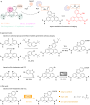
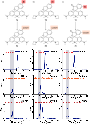
- carboxylated SiR derivatives while delivering good to excellent yields. Sequential one-pot functionalization of brominated silicon-rhodamine In the carboxylation of 1b, a prominent side peak was observed in addition to the desired product peak (Figure 3b). NMR (Supporting Information File 1, Figure S17) and
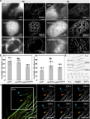
- with 4c in live HeLa cells. Scale bars: 5.0 μm. Supporting Information Supporting Information File 8: Experimental details and characterization of compounds by NMR and ESIMS. Funding This work is supported by the National Natural Science Foundation of China (22541705, U25A20620, 22225806, 22522816



Palladium-catalyzed benzocyclization reactions of quinoline-2-carboxamides via sequential C–H/N–H functionalization
Beilstein J. Org. Chem. 2026, 22, 905–914, doi:10.3762/bjoc.22.71
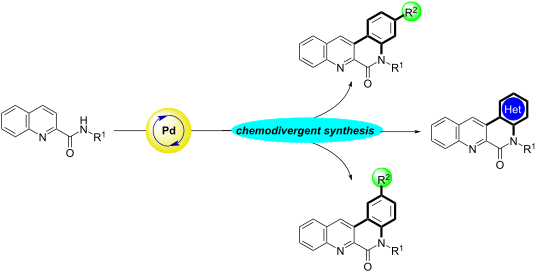
- confirmed by 1H NMR and mass spectra (Scheme 3; see also Supporting Information File 1). This result indicated that the C–C bond was formed first in the reaction. The structures of other products were inferred from their 1H NMR spectra, while the structures of products 3aj and 3ak were also determined by
- for the C–H/N–H functionalization reaction. Supporting Information Supporting Information File 6: Experimental details and copies of 1H and 13C{1H} NMR spectra. Acknowledgements We thank Suzanne Adam, Ph.D, from Edanz (https://jp.edanz.com/ac) for editing a draft of the manuscript. Funding This




Cascade transformation of 2-(diazoacetyl)-2H-azirines to 2-aroyl-3-hydroxy-1H-pyrroles via condensation with aromatic aldehydes
Beilstein J. Org. Chem. 2026, 22, 897–904, doi:10.3762/bjoc.22.70
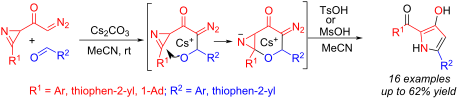
- -methoxyphenyl)-2H-azirine 1b with 4-iodobenzaldehyde (2b) turned out to be well crystallized and precipitated from the reaction medium as a solid (Scheme 2). Although it was also unstable, it was possible to record 1H,1H 2D NOESY and 13C NMR spectra, an IR spectrum in KBr as well as to obtain the accurate mass
- of the molecular ion by HRMS for this crude product. The IR spectrum of the compound contains a band of the diazo group at 2087 cm−1. According to the 1H NMR spectrum, the product consists of more than 90% of one diastereoisomer, the spatial structure of which was established using a 2D NOESY
- Information File 1). In the 1H NMR spectrum of the crude compound 4b, in addition to the signals of the main isomer 4b, there is a set of low-intensity proton signals: 1.34 (d), 2.59 (d), 3.27 (s), 5.16 (s), formally corresponding to the set of signals of the main diastereoisomer 4b: (1.26 (d), 2.85 (d), 3.24


Chiral cyclopropenimine-catalyzed enantioselective Michael reactions of phenol and benzofuran-derived α,β-unsaturated pyrazolamides with benzophenone-imine of glycine esters
Beilstein J. Org. Chem. 2026, 22, 888–896, doi:10.3762/bjoc.22.69
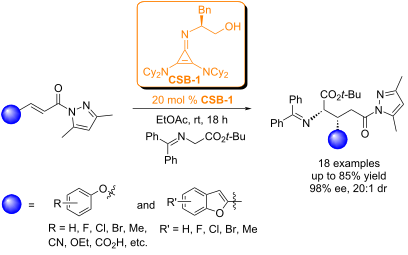
- Supporting Information File 42: Detailed experimental procedures, characterization data of all new compounds with NMR, HRMS, HPLC charts, and X-ray single crystal diffraction data. Funding The authors thank the National Science Foundation of China (no. 21372259) for providing financial support for this work.






The trans-influence in gold chemistry from a catalytic perspective
Beilstein J. Org. Chem. 2026, 22, 838–856, doi:10.3762/bjoc.22.66
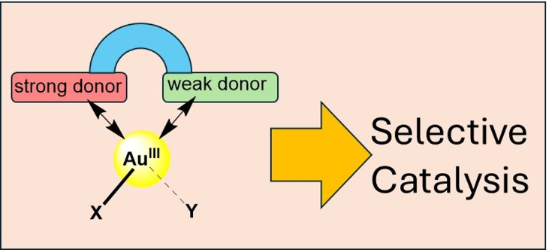
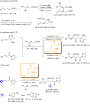
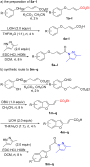
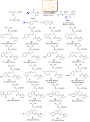
- applications based on gold(III) bidentate and tridentate cyclometallated ligands have developed into a large field which has recently been comprehensively reviewed [44][45]. Ligand effects and the route to gold hydrides Given the ease of recording 1H NMR data and the absence of steric effects on the Au–H bond
- , the hydride ligand is an ideal system for assessing the influence of a trans-ligand. Likewise, 1H NMR chemical shifts are amenable to high-level computations, which provide evidence for the molecular orbital changes that underly the observed chemical shifts. Kaupp and co-workers employed quasi
- -relativistic computations on hydride complexes of heavy metals with 5d10 and 5d8 electron configuration to show that the 1H NMR chemical shift is dominated by relativistic spin–orbit (SO) effects. Weak trans-influence ligands, such as NO3−, Cl− or pyridine are strongly shielding, leading to negative values on


Unsymmetrical sulfoxides with sterically hindered catechol fragment: synthesis, structure, electrochemical properties, and antiradical activity
Beilstein J. Org. Chem. 2026, 22, 828–837, doi:10.3762/bjoc.22.65
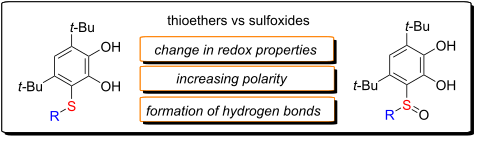
- catechol moiety were detected. The yields of the target sulfoxides ranged from 42% to 89%. Compounds 3–6 were prepared and characterized as described previously (3, 4, and 6 [23], 5 [42]). The structures of new thioethers 1, 2, 7 and sulfoxides 1a–7a were confirmed by the spectral methods IR-, 1H NMR, 13C
- {1H} NMR spectroscopy (Figures S1–S20), HRMS (Figures S21–S26) in Supporting Information File 1, and elemental analysis. X-ray data The X-ray suitable crystals of 1a, 4a–7a were grown by slow recrystallization of the compounds from acetonitrile or chloroform (for 7a) solutions at room temperature. The
- distance, indicating the formation of π contacts (Cg···Cg 3.676(9)–3.769(9) Å). In the 1H NMR spectra of all synthesized sulfoxides, the signal corresponding to the proton of the hydroxy group at position 1 of the aromatic ring is significantly shifted downfield relative to that in the corresponding


Total synthesis of the capsular polysaccharide repeating unit towards the development of a glycoconjugate vaccine against Klebsiella pneumoniae ST512
Beilstein J. Org. Chem. 2026, 22, 821–827, doi:10.3762/bjoc.22.64
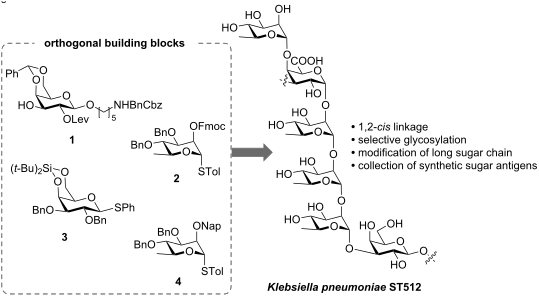
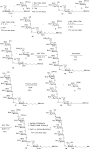
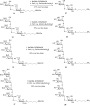
- repeating unit 20. Synthesis of the analogues 21–24. Supporting Information Supporting Information File 34: Experimental procedures and NMR spectra. Funding We gratefully acknowledge the Max-Planck Society for generous financial support. Conflict of Interest The authors declare no conflicts of interest.


Synthesis and structural elucidation of a novel bis-spirooxindole from isatin and ethylenediamine
Beilstein J. Org. Chem. 2026, 22, 813–820, doi:10.3762/bjoc.22.63

- :1 isatin-to-diamine ratio provides the diiminoisatin, whereas a 1:2 ratio leads to the formation of a highly symmetric bis-spirooxindole scaffold. The new spirocyclic product was fully characterized by HRMS, IR and extensive 1D/2D NMR analysis, and its structure was unequivocally established by
- -diamine ratio (Scheme 4a,b). When isatin was reacted with ethylenediamine in a 2:1 molar ratio in methanol, the expected diiminoisatin 24 was obtained in 66% yield. The ¹H NMR spectrum displayed a diagnostic singlet at δ 4.45 ppm (4H) corresponding to the two =NCH₂ groups, together with the characteristic
- aromatic pattern of the isatin core. The IR spectrum showed a strong imine C=N band at 1610 cm−1, and the absence of the C-3 carbonyl stretching band confirmed complete condensation. The 13C NMR spectrum revealed multiple sets of closely related signals, consistent with the presence of three C=N


Knoevenagel condensation of 4,5- and 1,8-diazafluorenes
Beilstein J. Org. Chem. 2026, 22, 803–812, doi:10.3762/bjoc.22.62
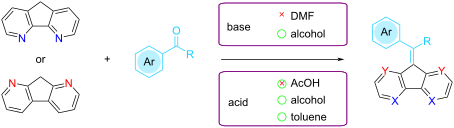
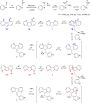
- 2A/2A’) and the iminium cation can be considered, and this effect should be stronger for 1,8-diazafluorene (2) because the nitrogen atoms are located near the reaction center. To evaluate the possible protonation effect of 1,8- and 4,5-diazafluorenes we utilized 1H NMR experiments performed
- diazafluorenylidenes were characterized by NMR, HRMS, elemental analysis, cyclic voltammetry (CV), UV–vis spectroscopy (Figure 1) and X-ray data (Figure 2 and Figure S4 in Supporting Information File 1). Figure 1a demonstrates the cyclic voltammograms of DPDAFs in CH2Cl2 solution. Both compounds demonstrated
- -diazafluorene may be carried out in pure acetic acid. According to NMR studies, 4,5-diazafluorene has a lower nitrogen basicity as compared to 1,8-diazafluorene. This basicity plays a key role in the reaction of 1,8-diazafluorene condensation because of electrostatic repulsion of the protonated tautomer and the




Synthetic study of vic-bromination of diarylacetylenes, easy purification and separation
Beilstein J. Org. Chem. 2026, 22, 795–802, doi:10.3762/bjoc.22.61
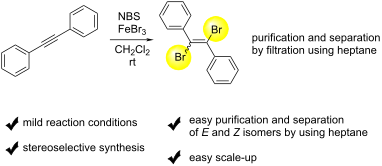
- crude product was purified three times with heptane to obtain (E)-1,2-dibromo-1,2-diphenylethylene (E-2a, 132.6 mg, 0.392 mmol, 78% yield) of high-purity. (E)-1,2-Dibromo-1,2-diphenylethylene (E-2a) [4]: White solid. 1H NMR (400 MHz, CDCl3) δ 7.34–7.46 (m, 6H), 7.50–7.57 (m, 4H) ppm; 13C NMR (100 MHz
- CDCl3) δ 118.0, 128.4, 128.9, 129.1, 140.7 ppm; HRMS (ESI) m/z: [M + Na]+ calcd for C14H10Br2Na, 358.9041; found, 358.9028. (Z)-1,2-Dibromo-1,2-diphenylethylene (Z-2a) [7]: Yellow solid. 1H NMR (300 MHz, CDCl3) δ 7.10–7.22 (m, 10H) ppm; 13C NMR (75 MHz, CDCl3) δ 125.7, 128.0, 128.3, 129.8, 139.4 ppm
- of compounds, and copies of 1H and 13C NMR spectra. Acknowledgements We appreciate Kazuki Miyamoto, Junya Kikuzawa and Ryoichi Tomiyama at Kindai University for useful advice and the cooperation related to this paper. We also thank Akiko Kuwabara and Dr. Masafumi Kobayashi at Kanto Denka Kogyo Co