Search results
Search for "chiral ligands" in Full Text gives 103 result(s) in Beilstein Journal of Organic Chemistry.
Synthesis and optical resolution of 4,5-diaminohomoadamantane: a promising scaffold for chiral ligands and bioactive compounds
Beilstein J. Org. Chem. 2026, 22, 1013–1022, doi:10.3762/bjoc.22.80
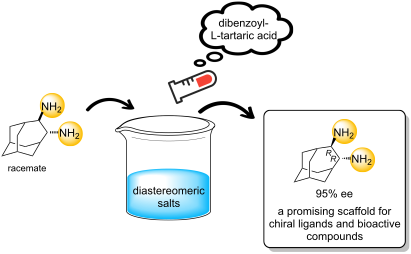
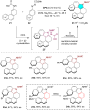
- route for the synthesis of trans-4,5-diaminohomoadamantane and its subsequent optical resolution has been proposed. This compound is a valuable chiral scaffold for the construction of bioactive molecules and chiral ligands. In this work, chiral imine and amine ligands based on trans-4,5


Experimental and DFT studies on the regioselective methanolysis of 5-azido-9-oxabicyclo[6.1.0]nonan-4-yl 4-nitrobenzoate isomers
Beilstein J. Org. Chem. 2026, 22, 547–556, doi:10.3762/bjoc.22.40
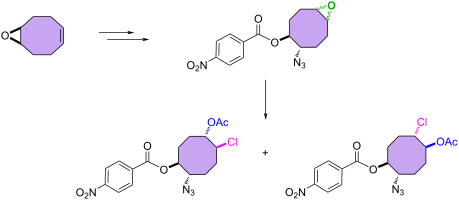
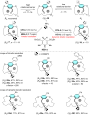
- , pharmaceutical compounds, and chiral ligands. The Lewis acid-catalyzed ring-opening reaction of cyclohexene oxide by MeZH (Z = O, S, and NH) is well known [20]. However, studies on large-sized bicyclic epoxides remain relatively limited in the published literature. In our previous study, we performed the ring


Recent advances in the stereoselective synthesis of distal biaxially chiral molecules
Beilstein J. Org. Chem. 2026, 22, 461–479, doi:10.3762/bjoc.22.34
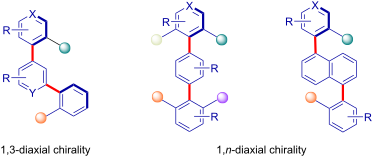
- distal axial chiralities are widely applied in chiral ligands, natural products, and anticancer agents, with their unique spatial configurations endowing them with distinctive functions and values. Although significant progress has been made in the asymmetric synthesis of distal biaxial chirality
- chiral scaffolds, which arise from hindered rotation between two planes connected by a single bond, have attracted increasing attention due to their widespread applications in chiral ligands, organocatalysts [1], and functional materials [2], making them highly valuable molecular frameworks in organic
- remote biaxial chiral ligands 21 (Scheme 4) [45]. These ligands were successfully applied in asymmetric hydrogenation, revealing dual asymmetric induction effects and enriching the design principles for chiral catalytic systems. In addition, Yan’s group developed an organocatalytic strategy for the


Screwing the helical chirality through terminal peri-functionalization
Beilstein J. Org. Chem. 2026, 22, 205–212, doi:10.3762/bjoc.22.14
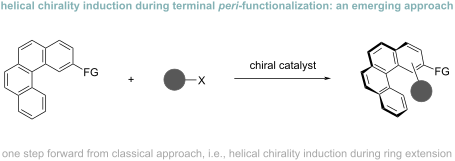
- another important type of chirality, where the chirality is controlled by restricted rotation among an axis. These types of molecules play an important role as chiral ligands in organic synthesis, i.e., BINOL, BINAP, etc. [9][10][11]. Another form of chirality, where chirality depends on a constrained
- asymmetric synthesis, where they serve as chiral ligands and organocatalysts, delivering high enantioselectivities [17][18]. Their tunable HOMO–LUMO gaps and controlled π–π interactions, is key to the use of helicenes in molecular electronics and organic semiconductors as well. Helicenes function as active


Catalytic enantioselective synthesis of selenium-containing atropisomers via C–Se bond formations
Beilstein J. Org. Chem. 2025, 21, 2447–2455, doi:10.3762/bjoc.21.186
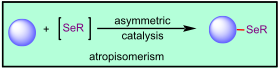
- compounds can participate in asymmetric synthesis reactions and construct chiral molecules with specific stereoconfiguration, which is particularly critical for drug synthesis [9]. In the field of organic catalysis, chiral organic selenium-containing compounds can be used as chiral ligands or catalysts to


Enantioselective radical chemistry: a bright future ahead
Beilstein J. Org. Chem. 2025, 21, 2283–2296, doi:10.3762/bjoc.21.174
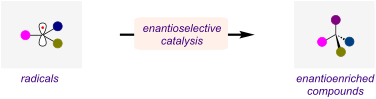
- catalysis affords the dual advantages of introducing stereochemical discrimination on both the radical and the trap via chiral ligands. Early research on parameters governing stereoselectivity in radical reactions was achieved with the help of radicals or radical traps appended with chiral auxiliaries. The


Electrochemical cyclization of alkynes to construct five-membered nitrogen-heterocyclic rings
Beilstein J. Org. Chem. 2025, 21, 2173–2201, doi:10.3762/bjoc.21.166
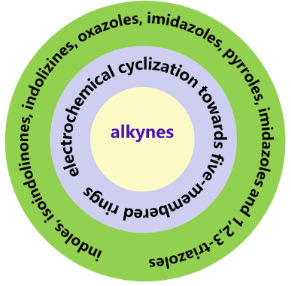
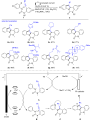
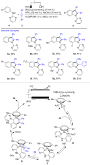
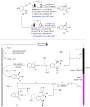
- , this protocol was an efficient and sustainable approach to synthesize 2,3′-biindolyl atropisomers and could be potentially applied in manufacture of functional materials, bioactive molecules and chiral ligands. Construction of isoindolinones and indolizines An electrochemical and copper-catalyzed






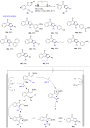


Enantioselective desymmetrization strategy of prochiral 1,3-diols in natural product synthesis
Beilstein J. Org. Chem. 2025, 21, 1932–1963, doi:10.3762/bjoc.21.151

- reactions, chemists have developed a series of catalysts composed of transition-metal cores and chiral ligands, which have been applied to various asymmetric reactions [50][51][52]. Compared to the enzymatic methods, the transition-metal-catalyzed approach may provide an advantage to access both enantiomers
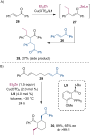
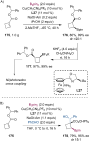
- enantioselective desymmetrization of prochiral 1,3-diols within complex structures can be realized using organometallic catalysts composed of copper or zinc salts and different types of chiral ligands. In general, the ability to control the stereoselectivity of the product by using the enantiomer of the ligand in


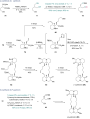

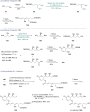


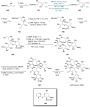







Stereoselective electrochemical intramolecular imino-pinacol reaction: a straightforward entry to enantiopure piperazines
Beilstein J. Org. Chem. 2025, 21, 1897–1908, doi:10.3762/bjoc.21.147
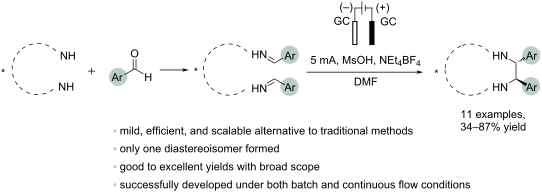
- applications in the preparation of chiral ligands. Keywords: chiral piperazines; electrosynthesis; flow chemistry; green chemistry; imino-pinacol coupling; Introduction Vicinal diamines represent a highly valuable class of compounds that, over the past decades, have found widespread application in natural
- scaffolds that are commonly used as chiral ligands. In this context we report the development of a more sustainable method – which avoids the use of lead bromide or lead electrodes – employing an undivided cell with two glassy carbon electrodes for the electroreductive intramolecular coupling of aromatic





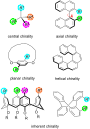
Chiral phosphoric acid-catalyzed asymmetric synthesis of helically chiral, planarly chiral and inherently chiral molecules
Beilstein J. Org. Chem. 2025, 21, 1864–1889, doi:10.3762/bjoc.21.145
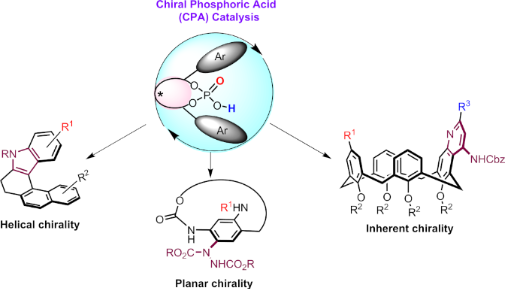
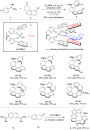
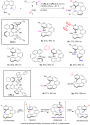
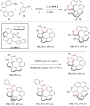
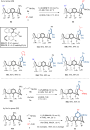
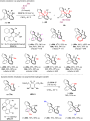
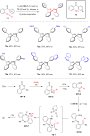
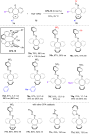
- DDD products 64e. Moreover, the authors showcased the facile derivatization of dimethoxy-substituted chiral DDD 64f into various DDD-based chiral ligands, such as the phosphoramidites 65, phosphoric acid as well as monophosphine ligands and diphosphine ligands 66. Notably, the applications of these
- novel inherently chiral ligands have been explored. For example, they demonstrated excellent enantioselectivity control in some asymmetric reactions, such as the Rh/diphosphine ligand 66-catalyzed asymmetric addition reaction between cyclic enone and arylboronic acid. In 2024, our group reported the











Synthesis of chiral cyclohexane-linked bisimidazolines
Beilstein J. Org. Chem. 2025, 21, 1786–1790, doi:10.3762/bjoc.21.140
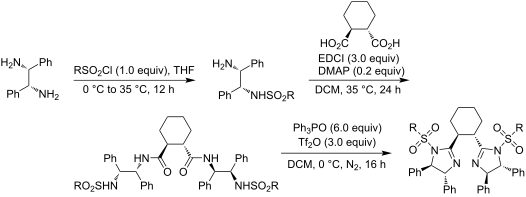
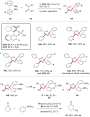
- bisimidazolines are efficient chiral ligands in metal-catalyzed asymmetric organic transformations. Chiral cyclohexane-linked bisimidazolines were prepared from optically active cyclohexane-1,2-dicarboxylic acid and 1,2-diphenylethane-1,2-diamines via the monosulfonylation of 1,2-diphenylethane-1,2-diamines
- bisoxazolines [1][2][3][4][5][6][7][8][9] and bisimidazolines [10][11][12][13][14][15] are efficient chiral ligands and have been widely applied in various metal-catalyzed asymmetric organic transformations. Various chiral bisoxazoline ligands have been prepared from diacids and enantiopure vicinal amino
- nucleophilic attack. Intermediate C further transforms to imidazoline product 5 by loss of triphenylphosphine oxide and triflic acid. Conclusion Both chiral bisoxazolines and bisimidazolines are efficient and widely applied chiral ligands in metal-catalyzed asymmetric organic reactions. Several chiral


Synthesis of optically active folded cyclic dimers and trimers
Beilstein J. Org. Chem. 2025, 21, 1603–1612, doi:10.3762/bjoc.21.124

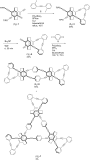
- substituent(s) at appropriate position(s) on the benzene rings [8]. Enantiopure planar chiral [2.2]paracyclophanes have been used as chiral auxiliaries and chiral ligands for transition metals in the fields of organic and organometallic chemistry [9][10][11][12][13][14][15][16][17][18][19][20]. In 2012



Pd-Catalyzed asymmetric allylic amination with isatin using a P,olefin-type chiral ligand with C–N bond axial chirality
Beilstein J. Org. Chem. 2025, 21, 1018–1023, doi:10.3762/bjoc.21.83
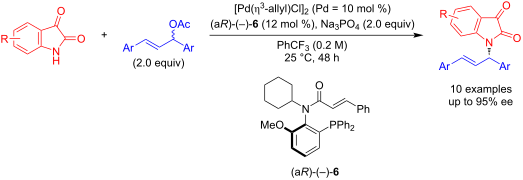
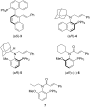
- amination of allyl esters using isatin as a nucleophile. In this reaction, bisphosphine-type ligands such as BINAP and SEGPHOS derivatives, as well as P,N-type ligands like oxazoline-type ligands, were utilized as chiral ligands [26]. On the other hand, several groups have recently reported new chiral
- ligands with axial chirality for Pd-catalyzed asymmetric allylic substitution reactions. For example, the Zhou group reported a P,olefin-type chiral ligand 3 with C–C bond axial chirality for this reaction (Figure 2) [27]. Additionally, we have recently reported chiral ligands with C–N bond axial
- chirality, such as N-alkyl-N-cinnamyl-type chiral ligands 4 [28][29] and 5 [30], and a P,olefin-type chiral ligand 6 [31] with a cinnamoyl group instead of a cinnamyl group. In particular, the chiral ligand 6 is effective in the Pd-catalyzed asymmetric allylic substitution reaction of allylic esters with




Recent advances in allylation of chiral secondary alkylcopper species
Beilstein J. Org. Chem. 2025, 21, 639–658, doi:10.3762/bjoc.21.51
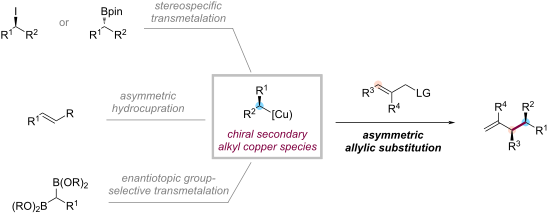
- their exploration of phosphoramidite ligands with various organometallic nucleophiles [24][25]. The field was further advanced by the research group of Hoveyda, who made substantial contributions by introducing bidentate N-heterocyclic carbene (NHC)-based chiral ligands, achieving high selectivity with





Recent advances in organocatalytic atroposelective reactions
Beilstein J. Org. Chem. 2025, 21, 55–121, doi:10.3762/bjoc.21.6
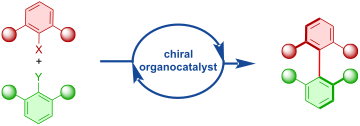
- compounds comprising a stereogenic plane or axis is much less developed. Axially chiral compounds are well known as chiral ligands in asymmetric catalysis, with notable examples of binaphthyl-based derivatives such as BINAP, SEGPHOS, or binaphthyl-based phosphoric acid derivatives, which are among the
- purities, solid yields and very good diastereomeric ratios. The hydroxy group present in products 156 and 158 could be transformed to provide axially chiral phosphines that could be utilized as chiral ligands in transition-metal-catalyzed reactions. Testing both substrates 156 and 158 for conformational











Enantioselective synthesis of β-aryl-γ-lactam derivatives via Heck–Matsuda desymmetrization of N-protected 2,5-dihydro-1H-pyrroles
Beilstein J. Org. Chem. 2024, 20, 940–949, doi:10.3762/bjoc.20.84
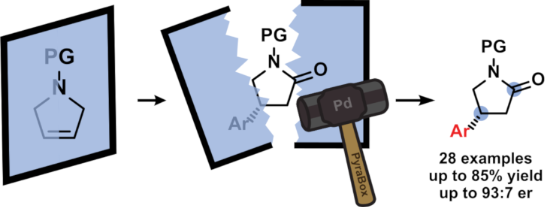
- preclude chirality as in the transformation of a prochiral molecular entity into a chiral one [1]. It is a powerful and elegant strategy in asymmetric synthesis [2], which combined with the use of chiral ligands and transition-metal catalysts enabled many valuable transformations to increase molecular




Evaluation of the enantioselectivity of new chiral ligands based on imidazolidin-4-one derivatives
Beilstein J. Org. Chem. 2024, 20, 684–691, doi:10.3762/bjoc.20.62
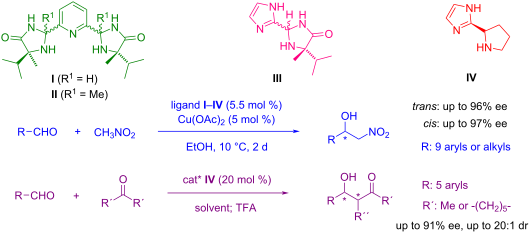
- Jan Bartacek Karel Chlumsky Jan Mrkvicka Lucie Palousova Milos Sedlak Pavel Drabina Institute of Organic Chemistry and Technology, Faculty of Chemical Technology, University of Pardubice, Studentská 573, 532 10 Pardubice, Czech Republic 10.3762/bjoc.20.62 Abstract The new chiral ligands I–III
- also tested in asymmetric aldol reactions. Under the optimised reaction conditions, aldol products with enantioselectivities of up to 91% ee were obtained. Keywords: asymmetric aldol reaction; asymmetric Henry reaction; chiral ligands; enantioselective catalysis; imidazolidine derivatives
- itself constitutes a stereocentre [4]. The specific pairing of a chiral ligand and a metal ion is essential for the catalytic characteristics and its effectiveness of the complex in asymmetric syntheses [1][2][3]. In recent years, our research group has synthesised a series of chiral ligands based on 2


Ligand effects, solvent cooperation, and large kinetic solvent deuterium isotope effects in gold(I)-catalyzed intramolecular alkene hydroamination
Beilstein J. Org. Chem. 2024, 20, 479–496, doi:10.3762/bjoc.20.43
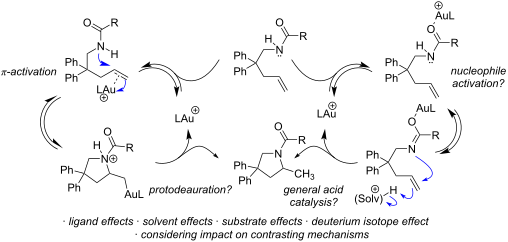
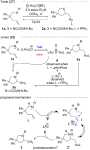
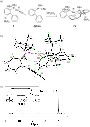
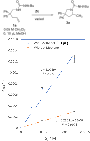
- without sacrificing stability, while future design of chiral ligands may depend on a better understanding of the chiral space generated when gold is coordinated to carbonyl functionality, rather than the alkene. Key observations include the following: • Mixed solvent effects support the involvement of






Aromatic C–H bond functionalization through organocatalyzed asymmetric intermolecular aza-Friedel–Crafts reaction: a recent update
Beilstein J. Org. Chem. 2023, 19, 956–981, doi:10.3762/bjoc.19.72

- reactions include mild reaction conditions and the use of a sole catalyst without the need of other chiral ligands [4][5]. In these reactions, stereoinduction in the products is achieved by the chiral environment present in the catalyst itself. Depending upon the reactivities, organocatalysts can be




Synthesis of medium and large phostams, phostones, and phostines
Beilstein J. Org. Chem. 2023, 19, 687–699, doi:10.3762/bjoc.19.50
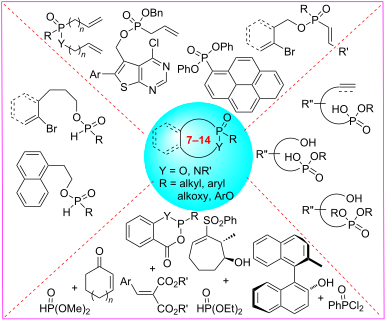
- the catalytic antibody [24]. They are also potential chiral ligands in asymmetric catalysis [25] (Figure 1). Cyclizations and annulations are two major strategies for the synthesis of medium and large phostam, phostone, and phostine derivatives. The cyclizations have been applied in the construction
- because the P–O bond is more stable than the corresponding P–N bond. Much attention should be paid to the synthesis of different ring size phostams in the future. Biologically active agents and chiral ligands containing medium and large phostams, phostones, and phostines. Synthetic strategies for the




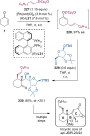
Enolates ambushed – asymmetric tandem conjugate addition and subsequent enolate trapping with conventional and less traditional electrophiles
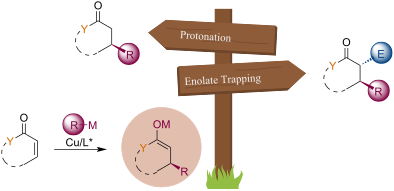
Beilstein J. Org. Chem. 2023, 19, 593–634, doi:10.3762/bjoc.19.44







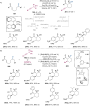


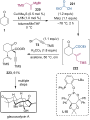
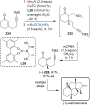
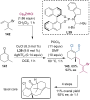
A new oxidatively stable ligand for the chiral functionalization of amino acids in Ni(II)–Schiff base complexes
Beilstein J. Org. Chem. 2023, 19, 566–574, doi:10.3762/bjoc.19.41
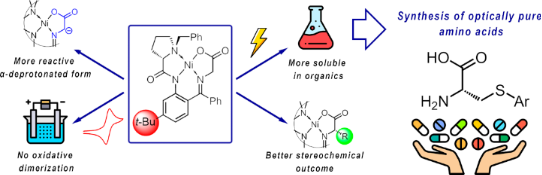
- complexes derived from various chiral ligands. The oxidation potential can be determined from the voltammetry curve measured for the quantitatively deprotonated complex. The electrochemical deprotonation using an electro-generated base is the most convenient approach [37][44]. Comparison with the Eox values
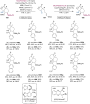
- )L1 is given for comparison. Selected examples of the chiral ligands used for synthesis of the Ni(II)–Schiff base complexes. Synthesis of the chiral ligand L7 and its Ni(II) complexes with glycine, serine, dehydroalanine, and cysteine derivatives. The yields and the thermodynamically controlled



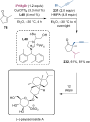
Total synthesis of grayanane natural products
Beilstein J. Org. Chem. 2022, 18, 1707–1719, doi:10.3762/bjoc.18.181
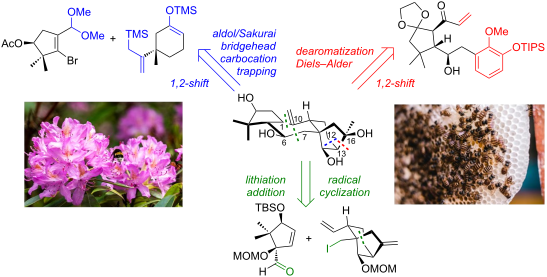
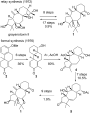
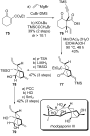
- to be tackled. A highly enantioselective synthesis is still desirable, as the only synthesis offering >90% ee relies on the combination of chiral ligands and chiral auxiliary. Moreover, to date only 6 natural products from the grayanane family were synthesized, out of the more than 160 compounds





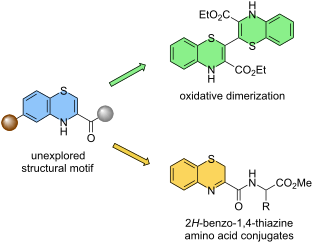
Derivatives of benzo-1,4-thiazine-3-carboxylic acid and the corresponding amino acid conjugates
Beilstein J. Org. Chem. 2022, 18, 1195–1202, doi:10.3762/bjoc.18.124
- (BINAP)-assisted hydrogenation with H2 pressure up to 50 bar was also found to be ineffective. By changing the metal complex to Rh(COD)2BF4, we successfully realized the saturation of the double bond. Chiral ligands (R)-BINAP (L1) and (R,R)-phenyl-BPE (L4) gave unsatisfactory selectivity (Table 2
Electrochemical formal homocoupling of sec-alcohols
Beilstein J. Org. Chem. 2022, 18, 1062–1069, doi:10.3762/bjoc.18.108
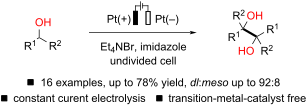
- ]. Such scaffolds are widely utilized as versatile building blocks in the synthesis of biologically active compounds [3][4][5][6][7], chiral auxiliaries [8][9], and chiral ligands [10][11][12][13]. Traditional pinacol coupling reactions are performed with a stoichiometric or even excess amount of low