Search results
Search for "condensation" in Full Text gives 881 result(s) in Beilstein Journal of Organic Chemistry. Showing first 200.
A cascade synthesis of 2-aminothiochromones from 2-fluorophenyl ketone and thiocarbonyldiimidazole
Beilstein J. Org. Chem. 2026, 22, 1151–1159, doi:10.3762/bjoc.22.92
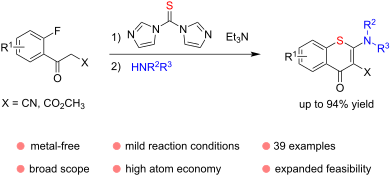
- thiophenol derivatives (Scheme 1b). A classic example is the condensation of substituted thiophenols with β-keto esters in the presence of polyphosphoric acid [22]. A gentle route was developed by Simon, which involved the reaction of thiosalicylic acids with 2-substituted N,N-dialkylacetamides in the



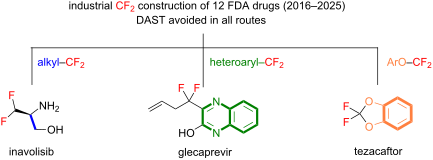
Construction of CF2 moieties in FDA-approved drugs (2016–2025): industrial routes, mechanisms, and scale-up considerations
Beilstein J. Org. Chem. 2026, 22, 1122–1150, doi:10.3762/bjoc.22.91
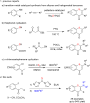
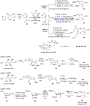
- the product, which is unfavorable for the subsequent cyclopropane ring formation. Attempts to use chiral auxiliaries used to promote E-olefin formation gave extremely low yields in the synthesis of 26. In route d, during the Knoevenagel condensation in the first step, due to the exceptionally
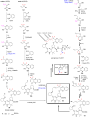
- of powdered indium, followed by condensation with ethyl glyoxylate to give 102 [49]. Subsequent oxidation and ring closure afford the aryl–CF2 intermediate 104 which was then converted to 105 in four steps with 74% yield. Next, intermediate 105 underwent ring-closing metathesis (RCM) to form the






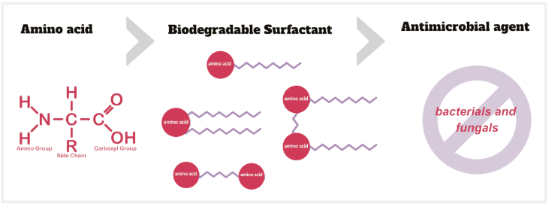
Amino acid-based surfactants: sustainable synthesis and antimicrobial mechanisms
Beilstein J. Org. Chem. 2026, 22, 1067–1085, doi:10.3762/bjoc.22.85


One-pot four-component sequential synthesis of S-alkyl dithiocarbamates using lipase as a biocatalyst
Beilstein J. Org. Chem. 2026, 22, 1048–1056, doi:10.3762/bjoc.22.83
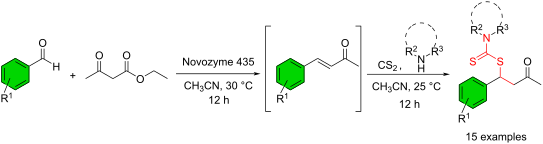
- (Scheme 1b) [26]. Although several methodologies for the synthesis of S-alkyl dithiocarbamates have been reported, the integration of biocatalysis with sequential multicomponent synthesis remains unexplored. In the present work, a lipase-catalyzed Knoevenagel condensation/decarboxylation is used to
- reactions, including Michael [33] and Mannich [34] reactions. In 2009, Feng et al. demonstrated the use of this promiscuity in the Knoevenagel condensation/decarboxylation reaction to synthesize α,β-unsaturated compounds with ketone groups [35]. These compounds are valuable as Michael acceptors in the
- , the first step of the selected model reaction, involving the condensation of 0.1 mmol benzaldehyde (1a) with 0.15 mmol of ethyl acetoacetate (2a), followed by decarboxylation was conducted based on previous studies [35][36]. Acetonitrile was selected as the solvent, and aniline was used as an additive


Rh(III)-catalyzed chelation-assisted C–H activation/annulation of 2-arylimidazolines with cyclic diazo-1,3-dicarbonyl compounds: a novel approach to tetracyclic annulated derivatives of 2,3-dihydroimidazo[2,1-a]isoquinoline
Beilstein J. Org. Chem. 2026, 22, 997–1003, doi:10.3762/bjoc.22.78
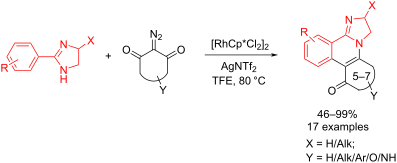
- immunosuppressive activity. The latter was used to develop antiasthmatic, pulmonary, and anti-allergy agents acting as platelet-activating factor receptor (PAF-R) antagonists [12][13]. Derivatives with X = H were accessed only via lithiation of 2-(o-tolyl)imidazolines followed by condensation with aromatic esters
- azides, while 2-arylimidazolines 2 were prepared via condensation of aromatic aldehydes with ethylenediamine in the presence of N-bromosuccinimide [25]. We began our investigation with the model reaction of 2-(4-chlorophenyl)imidazoline (2a) with 2-diazodimedone (3a), which resulted in the formation of
- protodemetallation that delivers CAr-alkylated intermediate F and regenerates the active catalytic species. The target tetraheterocyclic product 4 is formed after intramolecular condensation between the carbonyl group and the imidazoline nitrogen of intermediate F. To support this mechanism experimentally, we have


Recent advances in copper-catalyzed direct hydroamination of alkenes with (hetero)aromatic amines
Beilstein J. Org. Chem. 2026, 22, 925–947, doi:10.3762/bjoc.22.73
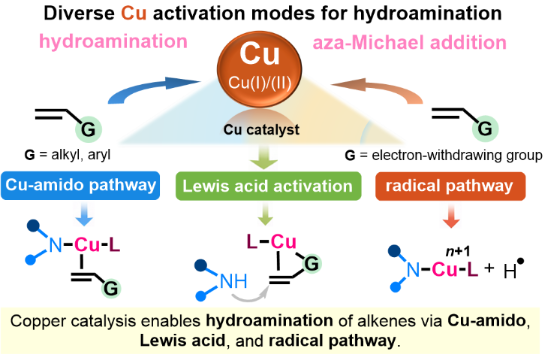
- presence of CuI (3 mol %), affording the corresponding isoindolinone products 28 in good to excellent yields (79–92%). Mechanistically, the transformation involves a Cu(I)-promoted oxidative amidation followed by intramolecular aza-Michael cyclization. Initially, the condensation of amine with the aldehyde







Cascade transformation of 2-(diazoacetyl)-2H-azirines to 2-aroyl-3-hydroxy-1H-pyrroles via condensation with aromatic aldehydes
Beilstein J. Org. Chem. 2026, 22, 897–904, doi:10.3762/bjoc.22.70
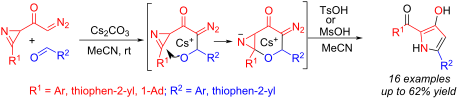
- Timur O. Zanakhov Ekaterina E. Galenko Mikhail S. Novikov Alexander F. Khlebnikov Saint Petersburg State University, Institute of Chemistry, 7/9 Universitetskaya Naberezhnaya, St. Petersburg 199034, Russia 10.3762/bjoc.22.70 Abstract The Cs2CO3-induced condensation of 2-(diazoacetyl)-2H-azirines
- [4.1.0]heptan-5-one derivative. The acid-catalyzed transformation of which leads to 2-aroyl-3-hydroxy-1H-pyrroles. Keywords: azirines; condensation; cyclization; diazo compounds; pyrroles; Introduction Diazo compounds play a significant role in the synthesis of heterocyclic compounds, which explains
- . Considering that the condensation of acyldiazomethanes to aldehydes leads to the β-hydroxy-α-diazo carbonyl compound [20][21][22], we hypothesized that such condensation of aldehydes with 2-(diazoacetyl)-2H-azirines could yield the corresponding azirinyl-substituted diazo compounds. This paper describes the


Site-specific labelling of native peptides and proteins: chemical and enzymatic strategies
Beilstein J. Org. Chem. 2026, 22, 857–881, doi:10.3762/bjoc.22.67
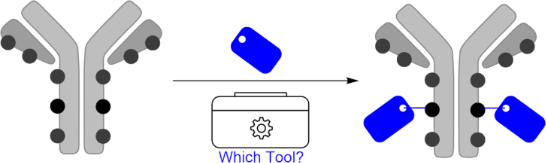
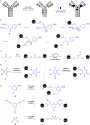
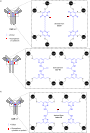
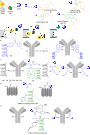
- cysteine [15]. These intermediates enable downstream chemical conjugations such as Pictet–Spengler condensation [16][17][18] and Horner–Wadsworth–Emmons (HWE) olefination [19] (Scheme 2c). With respect to C-terminal modification, one of the earliest strategies involved the use of intein-mediated protein









Synthesis and structural elucidation of a novel bis-spirooxindole from isatin and ethylenediamine
Beilstein J. Org. Chem. 2026, 22, 813–820, doi:10.3762/bjoc.22.63

- complexity and, in some cases, unexpected reaction outcomes. In reactions involving amino acids or diamines, the coexistence of multiple nucleophilic and electrophilic sites can give rise to competing pathways and polycyclic architectures. A well-documented example is the condensation of isatin (1) with ʟ
- may proceed beyond simple imine formation and generate highly condensed frameworks. A related behavior has been observed in reactions of isatin with diamines. Whereas condensation with propan-1,3-diamine (10) under controlled stoichiometry affords the corresponding diiminoisatin 11 (Scheme 2) [18
- aromatic pattern of the isatin core. The IR spectrum showed a strong imine C=N band at 1610 cm−1, and the absence of the C-3 carbonyl stretching band confirmed complete condensation. The 13C NMR spectrum revealed multiple sets of closely related signals, consistent with the presence of three C=N


Knoevenagel condensation of 4,5- and 1,8-diazafluorenes
Beilstein J. Org. Chem. 2026, 22, 803–812, doi:10.3762/bjoc.22.62
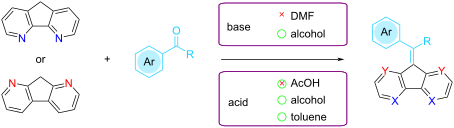
- . However, there are currently only limited methods for their synthesis, which are complicated and typically based on modifications of 4,5-diazafluorenone. Herein, we systematically studied the Knoevenagel condensation of both 4,5- and 1,8-diazafluorenes with aromatic aldehydes and evaluated the
- diazafluorenes’ nature and solvent influence on the mechanism and reactivity. We also identified conditions allowing the preparation of both 4,5- and 1,8-diazafluorenylidenes in yields up to 85% minimizing complicated synthetic or experimental workup procedures. Additionally, the condensation of diazafluorenes
- with ketones resulted in unique di(pyridin-2-yl)methylene)-9H-diazafluorenes being electron-deficient ligands and functional materials. Keywords: acidic conditions; diazafluorene; diazafluorenylidene; Knoevenagel condensation; protonation; Introduction Diazafluorenylidene derivatives were reported to




Design, synthesis, and biological evaluation of FXR/ASK1 dual-target modulators
Beilstein J. Org. Chem. 2026, 22, 771–781, doi:10.3762/bjoc.22.59
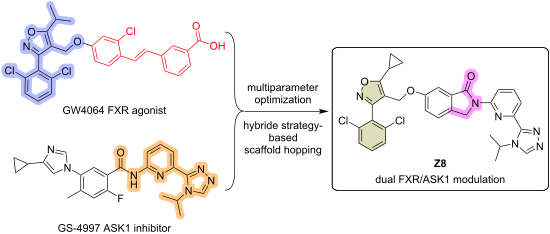
- MASH. Results and Discussion Chemistry The synthetic routes to the target compounds are outlined in Schemes 4–8. The synthesis of isoxazole intermediate 2 commenced with the condensation of commercially available benzaldehyde I with hydroxylamine to afford oxime intermediate II. Subsequent treatment of


Synthesis of heterocycles based on azomethine ylides from α-amino acids (or amines) and carbonyl compounds
Beilstein J. Org. Chem. 2026, 22, 705–741, doi:10.3762/bjoc.22.55
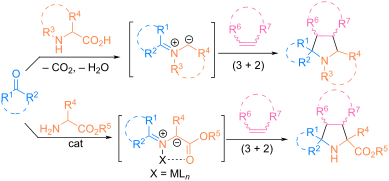
- acid or its ester (Scheme 1). In both cases, condensation of amino acids with carbonyl compounds occurs; however, in the first case, decarboxylation occurs with the in situ formation of azomethine ylides, which subsequently undergo cycloaddition to unsaturated substrates. The advantage of the first
- iminoester 1 with tert-butyl acrylic acid ester 4 occurs first. This is followed by condensation of pyrrolidine 9 with cinnamic aldehyde (10) to form azomethine ylide B, which enters into a second diastereoselective 1,3-DC with various electrophilic alkenes. The authors used acrylic acid esters, vinylphenyl
- azomethine ylides Formation of azomethine ylides via decarboxylative condensation of amino acids and aldehydes Ronald Grigg and colleagues were the first to describe the generation of azomethine ylides by condensation and decarboxylation of primary or secondary α-amino acids with various aldehydes. Early


Synthesis of depressin, cryptomeridiol and 4-epi-cryptomeridiol enabled by a terpenoid chiral pool-producing platform
Beilstein J. Org. Chem. 2026, 22, 683–690, doi:10.3762/bjoc.22.53
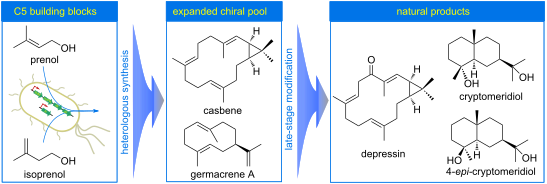
- condensation of dimethylallyl pyrophosphate (DMAPP) with different numbers of isopentenyl pyrophosphate (IPP) [6]. Two naturally existing pathways, i.e., the methylerythritol phosphate (MEP) pathway and mevalonic acid (MVA) pathway, as well as artificially designed pathways, such as the isopentenol utilization
- and 3 was reported in 1988 starting from 3-vinyl-2-cyclohexen-1-one featuring a key intramolecular aldol condensation reaction [33]. On the other hand, semisyntheses of 2 were achieved starting from related terpene products, including elemol (featuring a Hg(OAc)2-mediated oxymetallation) [34], β


Synthesis and uranyl(VI) extraction performance of a calix[4]pyrrole–tetrahydroxamic acid receptor
Beilstein J. Org. Chem. 2026, 22, 486–494, doi:10.3762/bjoc.22.36
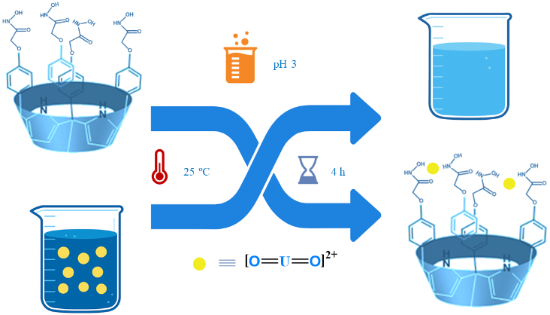
- -hydroxyphenyl)calix[4]pyrrole, commonly referred to as phenoxycalix[4]pyrrole (PCP). It was first reported in 1999 by two independent research groups, Floriani et al. and Sessler et al., via the acid-catalyzed condensation of pyrrole with p-hydroxyacetophenone [17][18]. PCP and its derivatives were first known
- methanesulfonic acid as first reported by Floriani et al. [17] and Sessler et al. [18]. This condensation reaction produces several PCP isomers, including the targeted pre-organized α,α,α,α-isomer, which is isolated by crystallization from glacial acetic acid, followed by removal of the acetic acid using a


Structural reassignment of compound 968, an allosteric glutaminase inhibitor
Beilstein J. Org. Chem. 2026, 22, 455–460, doi:10.3762/bjoc.22.33
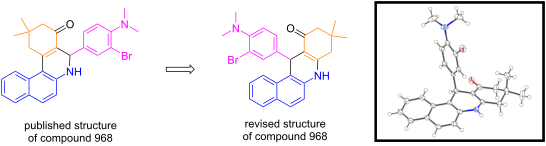
- unrealized. This result places the cyclocondensation reaction that generates compound 968 within a family of three-component reactions of 1,3 dicarbonyl compounds, an aryl aldehyde, and various 1,3 di-nucleophiles (Figure 4). These reactions proceed by an aldol condensation between the dicarbonyl and
- aldehyde, followed by conjugate addition and cyclo-condensation with a 1,3 dinucleophile. Members of this reaction family are variations on the Biginelli and Hantzch reactions, where the dinucleophile is urea and the ammonia adduct of a second equivalent of the dicarbonyl, respectively [31]. A similar


Ring contraction and ring expansion reactions in terpenoid biosynthesis and their application to total synthesis
Beilstein J. Org. Chem. 2026, 22, 289–343, doi:10.3762/bjoc.22.21
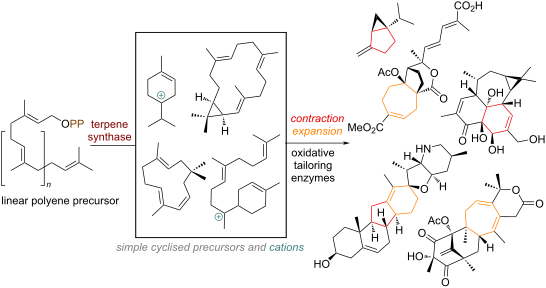
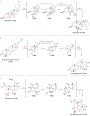
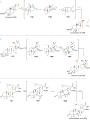
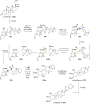
- undergo semi-pinacol rearrangement, resulting in the desired 1,2-alkyl shift to form the 5-membered ring in intermediate 134b. Alternatively, an isomerised compound with olefins in positions 7/8 and 14/15 instead of 6/7 and 8/14 could be oxidatively cleaved and undergo aldol condensation. In any case the






Spirobarbiturates with a pyrrolizidine moiety: synthesis, structure and biological evaluation
Beilstein J. Org. Chem. 2026, 22, 274–288, doi:10.3762/bjoc.22.20
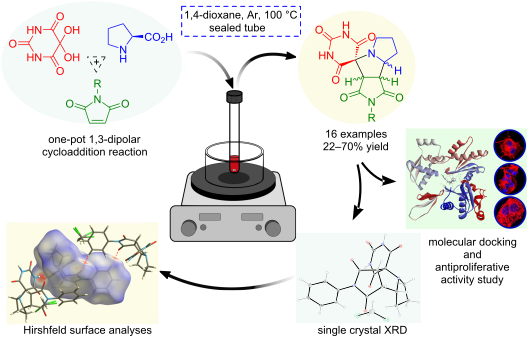
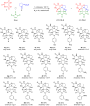
- ylide, which is generated in situ by condensation of alloxan and ʟ-proline, can react with maleimides to give spirobarbiturate-pyrrolo[3,4-a]pyrrolizidine-1,3-diones in moderate to good yields. We have demonstrated the possibility of using a wide range of N-substituted maleimides as dipolarophiles. All




A mild and atom-efficient four-component cascade strategy for the construction of biologically relevant 4-hydroxyquinolin-2(1H)-one derivatives
Beilstein J. Org. Chem. 2026, 22, 244–256, doi:10.3762/bjoc.22.18
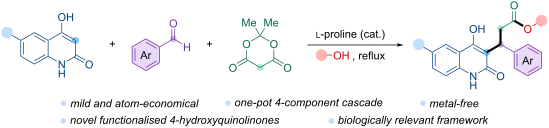
- 1,4-addition. No condensation products were obtained and the reaction mixtures consisted solely of starting materials. It is likely that under these conditions, the nucleophilicity of 4-hydroxyquinolinones was insufficient to attack the aldehyde carbonyl, preventing product formation (Scheme 4F
- presumably proceed through in situ formation of the Michael acceptor from the condensation of an aromatic aldehyde with Meldrum’s acid, followed by decarboxylation and lactonization to yield the pyranoquinolinedione products (Scheme 1). We hypothesized that employing an alcohol as solvent could induce


Synthesis of diaryl phosphates using phytic acid as a phosphorus source
Beilstein J. Org. Chem. 2026, 22, 213–223, doi:10.3762/bjoc.22.15
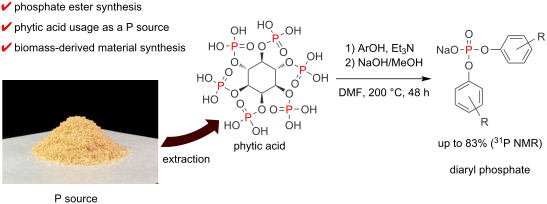
- elimination of H2O. Then, two MPP molecules undergo a dehydration condensation reaction to form DPpyP [56]. Finally, the phenoxy anion undergoes a nucleophilic attack on the phosphorus atom of DPpyP, and DPP is formed through the elimination of MPP. In the absence of triethylamine, the esterification reaction




A new synthesis of Tyrian purple (6,6’-dibromoindigo) and its corresponding sulfonate salts
Beilstein J. Org. Chem. 2026, 22, 167–174, doi:10.3762/bjoc.22.10
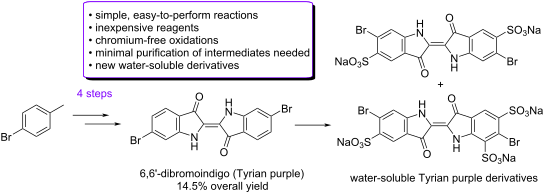
- complex methods of oxidation. Condensation using established methods would then allow the synthesis of compound 1 in four steps overall, as shown in Scheme 2 [8][18]. To begin this synthesis, we needed to selectively nitrate p-bromotoluene (5), ortho to the methyl group, to yield 3. Adapting the
- with yields ranging from 18 to 60.5% yield relative to starting 3 [8][9][11][12]. Chromium-free oxidation of 3 to 4 has been reported via the condensation of 3 with an alkyl nitrate to yield an oxime. Subsequent hydrolysis of the oxime yields the desired aldehyde 4, but only in low yield [6][7
- reaction pathway most consistent with our goals. Condensation of 4-bromo-2-nitrobenzaldehyde (4) to 6,6’-dibromoindigo (1) was accomplished via the Baeyer–Drewson process initially developed for the synthesis of indigo [8][18][24]. As shown in Scheme 6, treatment of 4 with sodium hydroxide in aqueous


Advances in Zr-mediated radical transformations and applications to total synthesis
Beilstein J. Org. Chem. 2026, 22, 71–87, doi:10.3762/bjoc.22.3
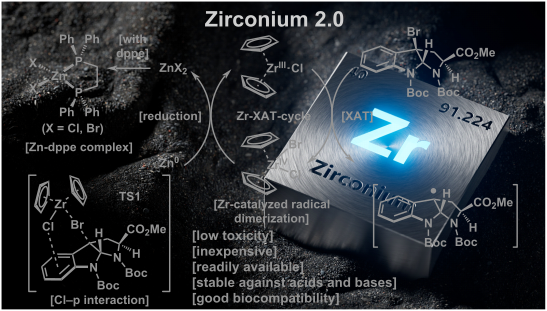
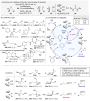
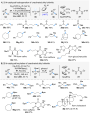
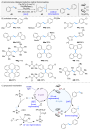
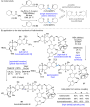
- . Heating these precursors under flash vacuum pyrolysis conditions at 230 °C led to the removal of the Boc group and intramolecular dehydration–condensation, thereby constructing the diketopiperazine core and enabling the total syntheses of ditryptophenaline (70), dibrevianamide F (71), and tetratryptomycin








Total synthesis of asperdinones B, C, D, E and terezine D
Beilstein J. Org. Chem. 2025, 21, 2730–2738, doi:10.3762/bjoc.21.210
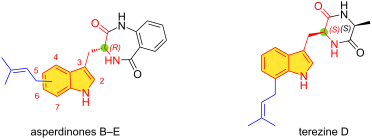
- metabolite. Historically, (3S)-3-indolylbenzodiazepine-2,5-dione ent-5 was isolated for the first time as a natural metabolite from the fungal culture extract of Aspergillus flavipes by Barrow and Sun [15] and synthesized by the condensation of isatoic anhydride and ʟ-tryptophan as previously reported by


Competitive cyclization of ethyl trifluoroacetoacetate and methyl ketones with 1,3-diamino-2-propanol into hydrogenated oxazolo- and pyrimido-condensed pyridones
Beilstein J. Org. Chem. 2025, 21, 2716–2729, doi:10.3762/bjoc.21.209
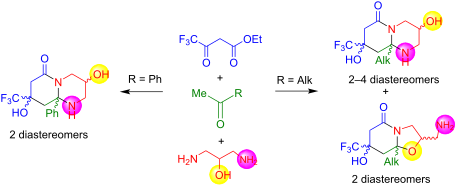
- -1-yl)ethane-1,2-dione [57], or 4-(4-phenyl-2-(trifluoromethyl)oxazolidin-2-yl)butanoic acid under acidic conditions [58], and condensation of 6,6,6-trifluoro-5-oxohexanoic acid with (S)-(+)-phenylglycine [59]. The data on the multicomponent synthesis of fluoroalkyl-containing pyrido[1,2-a


Recent advancements in the synthesis of Veratrum alkaloids
Beilstein J. Org. Chem. 2025, 21, 2657–2693, doi:10.3762/bjoc.21.206
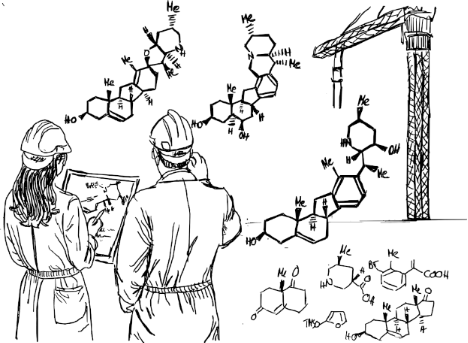
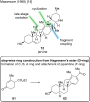
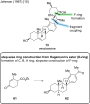
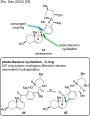
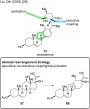
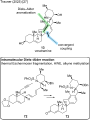
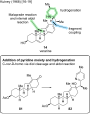
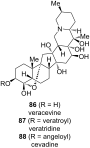
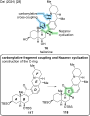
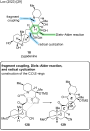
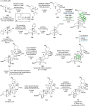
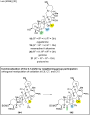
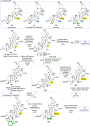
- , vinylogous Mannich reaction of the in situ-generated aldimine condensation product of 49 and amine 50 with trimethylsiloxyfuran 51 generated secondary amine 52 in a diastereomeric ratio of 10:1. To close the piperidine, which is to become the F-ring, six steps were carried out: 1,4-reduction of the
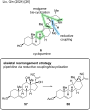
- saturation, resulting in a spirocyclization, which we have seen in strategies toward cyclopamine before. As already stated, the synthesis commenced with the sequential construction of the ABCD-ring system in 25 steps to arrive at ketone 62 (Scheme 14). The F-ring was attached via condensation with piperidine
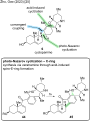
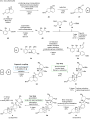
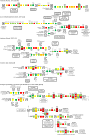
- the semisynthesis of Liu/Qin [26] 15 years later. The only non-green transformations displayed at the start were a protecting group installation (red) and a condensation (yellow), which was needed for the C–H activation (light green). All other transformations connect either C–C or C–heteroatom bonds
















Thiazolidinones: novel insights from microwave synthesis, computational studies, and potentially bioactive hybrids
Beilstein J. Org. Chem. 2025, 21, 2618–2636, doi:10.3762/bjoc.21.203
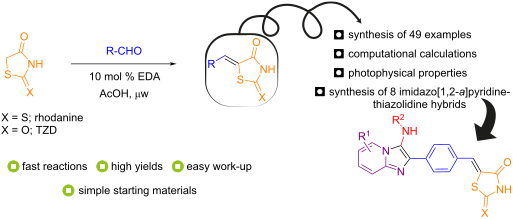
- 10.3762/bjoc.21.203 Abstract Various 5-arylidene derivatives were prepared via a Knoevenagel condensation-type reaction of aromatic/heteroaromatic aldehydes with rhodanine or thiazolidine-2,4-dione (TZD) catalyzed by EDA/AcOH under microwave heating. This convenient methodology is broad in scope (49
- condensation-type reaction between aromatic aldehydes with rhodanine or thiazolidine-2,4-dione [39]. Various protocols have been reported employing diverse catalyst systems and reaction conditions. Common catalysts include inorganic bases such as sodium acetate (NaOAc) [40], urea/thiourea [41], NaOH [42
- condensation-type reaction using ethylenediamine (EDA) as catalyst in AcOH under microwave (μw) heating. This convenient methodology is broad in scope, provides the condensation products in high yields (up to 99%), with a reasonable catalyst loading (10 mol %) in only 30 minutes. This approach also enabled the