Search results
Search for "electrochemistry" in Full Text gives 132 result(s) in Beilstein Journal of Organic Chemistry.
Electrochemical reduction of unsaturated carbon–carbon bonds via 3d transition-metal catalysis
Beilstein J. Org. Chem. 2026, 22, 955–981, doi:10.3762/bjoc.22.75
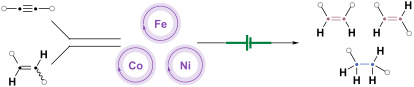
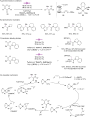
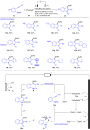
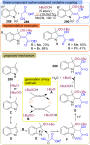
- achievable reactivity and selectivity [29]. A design for electroorganic synthesis Chemical transformations are inherently governed by the movement of electrons. Consequently, electrochemistry offers a platform in which an applied potential directly controls the electron flow, enable redox processes without
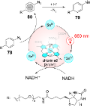
- the use of stoichiometric reagents. In this context, when electrochemistry is employed as a synthetic tool in organic chemistry, several critical parameters must be taken into account, including (a) electrode, (b) electrolysis mode, and (c) cell configuration (Figure 1). Among these, the choice of








Halogenated azobenzene acrylates: from efficient solution photoswitching to stable solid-state photochromic materials
Beilstein J. Org. Chem. 2026, 22, 782–794, doi:10.3762/bjoc.22.60
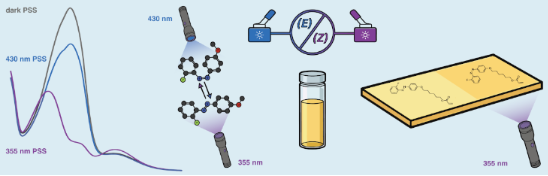
- 1a vs 1b, 1c vs 1d; except for the bromine derivatives 1e and 1f where Ti is almost equal). The most pronounced difference was recorded for the chloro-substituted pair 1c and 1d (ΔTi = 41 °C). Electrochemistry The electrochemical behavior of azo-compounds 1a–f was investigated in 1,2-dichloroethane


Electrosynthetic access to unsymmetrical oxaza[8]helicenes with high chiral stability and strong circularly polarized luminescence (CPL)
Beilstein J. Org. Chem. 2026, 22, 372–382, doi:10.3762/bjoc.22.25
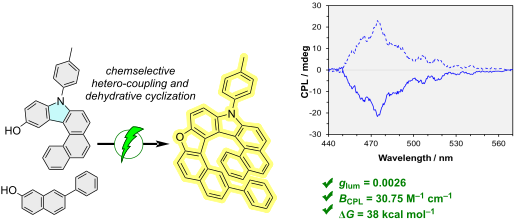
- ; electrochemistry; emission; helical elongation; helicene; photophysical; Introduction Chirality is a pervasive feature of natural and artificial systems, and chiral small molecules continue to underpin advances in chemistry and materials science [1][2]. Among them, helicenes – ortho-condensed polycyclic aromatic




Total synthesis of natural products based on hydrogenation of aromatic rings
Beilstein J. Org. Chem. 2026, 22, 88–122, doi:10.3762/bjoc.22.4
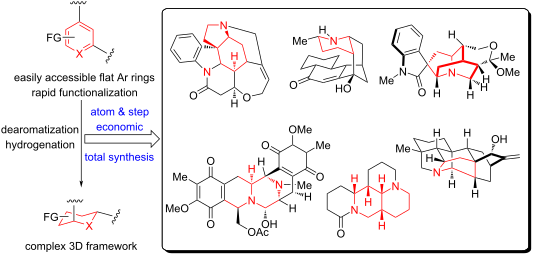
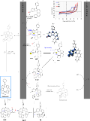
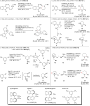
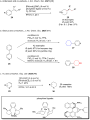
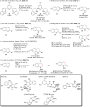
- strategies. The integration of photochemistry [13] and electrochemistry [14] into total synthesis has further extended the realm. Synthesis of complex natural product structures can promote the discovery of new reactions and the generation of new strategies [15]. However, despite careful design, the primary











Enantioselective radical chemistry: a bright future ahead
Beilstein J. Org. Chem. 2025, 21, 2283–2296, doi:10.3762/bjoc.21.174
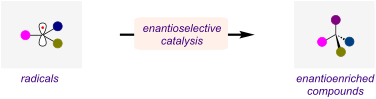
- describes several important catalytic asymmetric strategies applied to enantioselective radical reactions, including chiral Lewis acid catalysis, organocatalysis, photoredox catalysis, chiral transition-metal catalysis and photoenzymatic catalysis. The application of electrochemistry to asymmetric radical
- transformations is also discussed. Keywords: chiral Lewis acid; electrochemistry; enantioselective radical reaction; organocatalysis; photoenzymatic catalysis; photoredox; Introduction Asymmetric catalysis plays an integral role in the enantioselective synthesis of organic compounds. A wide variety of
- catalysis is discussed initially. This is followed by the recently emerging areas of transition-metal catalysis, photoenzymatic catalysis, and electrochemistry. Perspective Radical generation and reactions Synthetic methods based on free radical chemistry are some of the most efficient and powerful tools


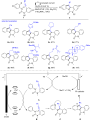
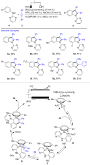
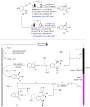
Electrochemical cyclization of alkynes to construct five-membered nitrogen-heterocyclic rings
Beilstein J. Org. Chem. 2025, 21, 2173–2201, doi:10.3762/bjoc.21.166
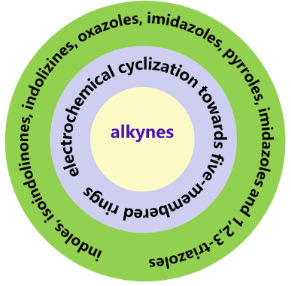
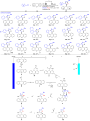
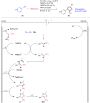
- reaction mechanisms are disclosed if available. Keywords: alkyne; catalysis; cyclization; electrochemistry; five-membered ring; Introduction Organic five-membered rings, an essential class of organic compounds, not only are frequently used as important starting materials, intermediates or ligands in








Synthesis, biological and electrochemical evaluation of glycidyl esters of phosphorus acids as potential anticancer drugs
Beilstein J. Org. Chem. 2025, 21, 1909–1916, doi:10.3762/bjoc.21.148

- measured at 590 nm using an Infinite M200 microplate reader (Tecan, Switzerland). Cell viability was calculated relative to the untreated control (set at 100%). Data were processed and analyzed using GraphPad Prism 10 software. Electrochemistry. Linear sweep voltammograms were recorded using a BASi Epsilon


Stereoselective electrochemical intramolecular imino-pinacol reaction: a straightforward entry to enantiopure piperazines
Beilstein J. Org. Chem. 2025, 21, 1897–1908, doi:10.3762/bjoc.21.147
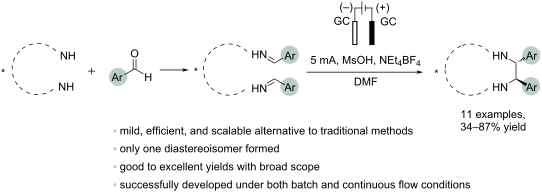
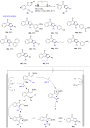
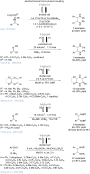
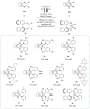
- photocatalysts (Scheme 2). The combination of photoredox catalysis with imine activation enabled the reductive coupling of imines under mild reaction conditions, providing direct access to benzyl and aryl vicinal diamines with good to excellent yields. Organic electrochemistry represents an attractive and





Copper catalysis: a constantly evolving field
Beilstein J. Org. Chem. 2025, 21, 1477–1479, doi:10.3762/bjoc.21.109

- straightforward reactions. Complementarily, the Review article by Jang and Kim provides a deep understanding of recent advances in the combination of electrochemistry and copper catalysis for various organic transformations [3]. Their contribution elaborates various C–H functionalizations, olefin additions
- , decarboxylative functionalizations, and Chan–Lam coupling reactions. In doing so, the authors point out the combination of transition-metal catalysis and electrochemistry as an efficient, sustainable method for the oftentimes challenging formation of C–C and C–heteroatom bonds in complex molecules. Another Review
Carbon-rich materials: from polyaromatic molecules to fullerenes and other carbon allotropes
Beilstein J. Org. Chem. 2025, 21, 798–799, doi:10.3762/bjoc.21.62
- chemistry, computational chemistry, physics, electrochemistry, polymer chemistry, supramolecular chemistry, and biochemistry. All are working on fascinating topics associated with these exciting molecules. Furthermore, the authors come from all over the world, not only from Switzerland and Japan but also
Recent advances in the electrochemical synthesis of organophosphorus compounds
Beilstein J. Org. Chem. 2025, 21, 770–797, doi:10.3762/bjoc.21.61
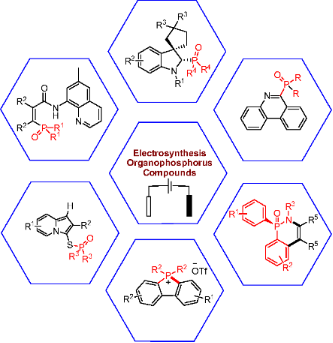
- . Electricity can perform the oxidation and reduction process by exchanging electrons on the electrode surface in a region called the double layer (DL) [12]. Unlike traditional methods that require high temperature, pressure, and external oxidants, electrochemistry is an efficient and energy-saving approach


Electrochemical synthesis of cyclic biaryl λ3-bromanes from 2,2’-dibromobiphenyls
Beilstein J. Org. Chem. 2025, 21, 451–457, doi:10.3762/bjoc.21.32
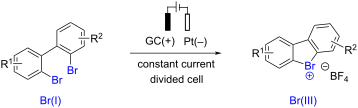
- ; electrochemistry; hypervalent bromine; Introduction Chemistry of hypervalent bromine(III) species has experienced rapid advancements during the recent years [1][2]. The remarkable nucleofugality of aryl bromides in hypervalent bromine(III) compounds has been exploited in the generation of arynes from cyclic


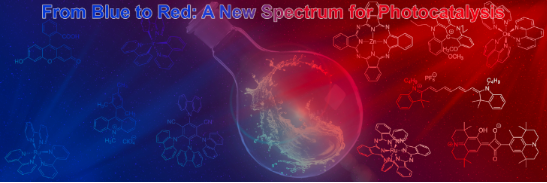
Red light excitation: illuminating photocatalysis in a new spectrum
Beilstein J. Org. Chem. 2025, 21, 296–326, doi:10.3762/bjoc.21.22




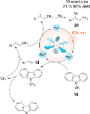
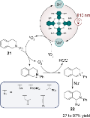
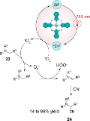

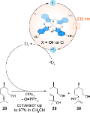


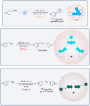


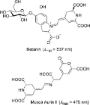


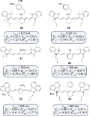
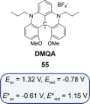





Oxidation of [3]naphthylenes to cations and dications converts local paratropicity into global diatropicity
Beilstein J. Org. Chem. 2025, 21, 277–285, doi:10.3762/bjoc.21.20
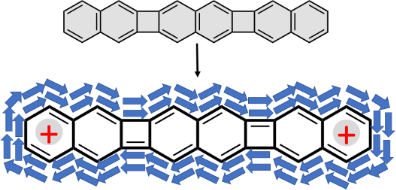
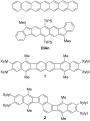
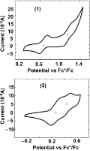
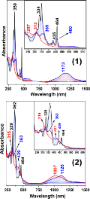
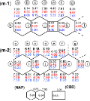
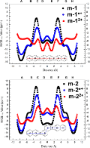
- stabilization of such redox states. Results and Discussion Electrochemistry Figure 2 shows the electrochemical cyclic voltammograms of 1 and 2, in which two reversible oxidation processes can be observed. By considering the half-wave potential values obtained from the cyclic voltammograms, two one-electron
- Electrochemistry Cyclic voltammetry experiments were conducted with a three-electrode geometry operating with a glassy carbon as the working electrode. A Pt-coil counter electrode. and an Ag wire, as the pseudo-reference, were used. Potential values are given with respect to the ferrocene/ferrocenium (Fc/Fc


Recent advances in electrochemical copper catalysis for modern organic synthesis
Beilstein J. Org. Chem. 2025, 21, 155–178, doi:10.3762/bjoc.21.9
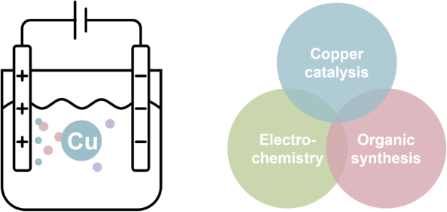
- chemistry. Combining electrochemistry with transition-metal catalysis is a promising and rapidly growing methodology for effectively forming challenging C–C and C–heteroatom bonds in complex molecules in a sustainable manner. In this review, we summarize the recent advances in the combination of
- electrochemistry and copper catalysis for various organic transformations. Keywords: copper; electrochemistry; radical chemistry; single-electron transfer; sustainable catalysis; Introduction Transition-metal-catalyzed cross-coupling has emerged as an effective method for forming carbon–carbon (C–C) and carbon
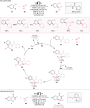
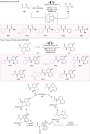
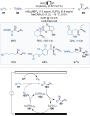
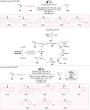
- ’ and Fu’s asymmetric C–N bond cross-coupling reactions by merging photoredox catalysis with copper catalysis [29][30]. Building on the success of photoredox catalysis, electrochemistry has emerged as a complementary and attractive strategy for promoting sustainability of organic synthesis. By offering








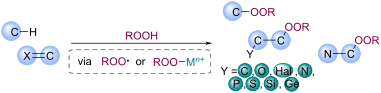
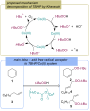
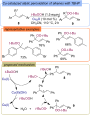
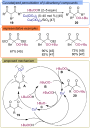
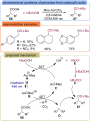
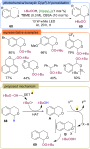
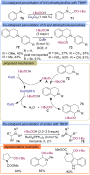
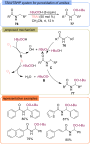
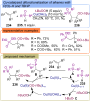
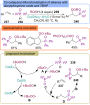
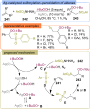
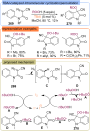
Advances in radical peroxidation with hydroperoxides
Beilstein J. Org. Chem. 2024, 20, 2959–3006, doi:10.3762/bjoc.20.249





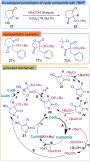


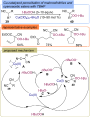


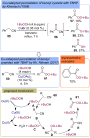
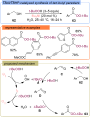

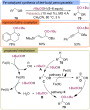


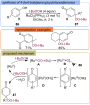


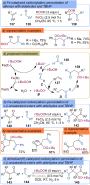


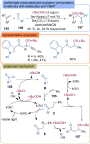
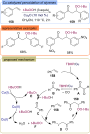


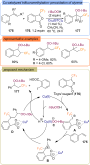
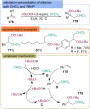

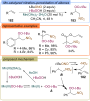
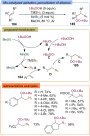


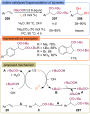
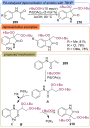

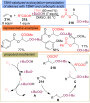







Applications of microscopy and small angle scattering techniques for the characterisation of supramolecular gels
Beilstein J. Org. Chem. 2024, 20, 2608–2634, doi:10.3762/bjoc.20.220
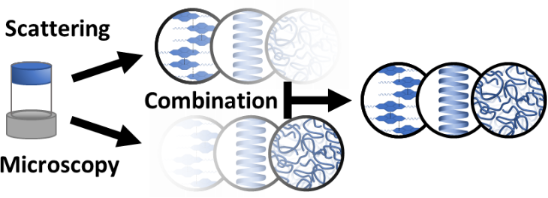
- , cells that allow for the coupling of SAS with non-X-ray techniques continue to be developed; these include spectroscopy, rheology, and electrochemistry [62][63][64]. Ascribing changes in properties of interest directly to changes in the structure further elucidates the interesting properties of self


A review of recent advances in electrochemical and photoelectrochemical late-stage functionalization classified by anodic oxidation, cathodic reduction, and paired electrolysis
Beilstein J. Org. Chem. 2024, 20, 2500–2566, doi:10.3762/bjoc.20.214
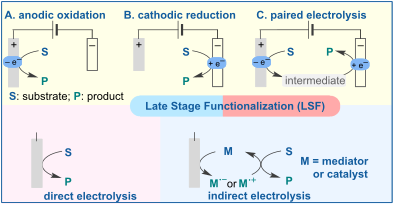
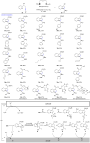
- representative examples to illustrate the potential of electrochemistry or photoelectrochemistry for the LSF of valuable molecular scaffolds. Keywords: electrochemistry; late-stage functionalization; paired electrolysis; pharmaceutical drugs; photoelectrochemistry; Introduction Organic electrochemistry is
- [3]. Transition-metal-catalyzed LSF strategies have been well-established over the past decades. More recently, with the vigorous development of photochemistry and electrochemistry, numerous innovative reports on LSF using photo-, electro-, and photoelectrochemistry have emerged. These areas have
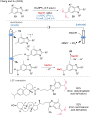
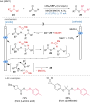
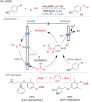
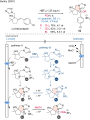
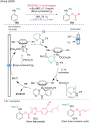
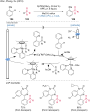
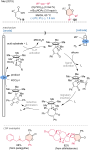
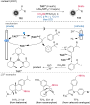
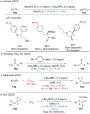
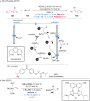
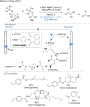
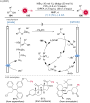
- , which reported the merger of electrochemistry and bioconjugation in 2018 (Scheme 4b) [11]. In 2020, Zheng and coworkers developed an interesting iodoamination of indoles using unactivated amines and benzotriazoles [12]. This difunctionalization reaction was carried out in an undivided cell with an RVC




























Hydrogen-bond activation enables aziridination of unactivated olefins with simple iminoiodinanes
Beilstein J. Org. Chem. 2024, 20, 2305–2312, doi:10.3762/bjoc.20.197
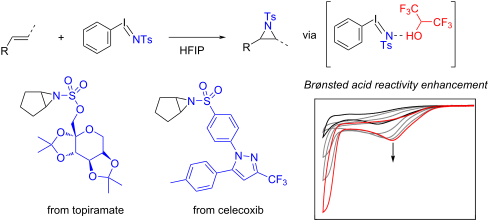
- the potential for chemical non-innocence of fluorinated alcohol solvents in NGT catalysis. Keywords: aziridination; electrochemistry; H-bond activation; hypervalent iodine; nitrene transfer; Introduction Hypervalent iodine reagents find widespread application in selective oxidation chemistry due to


gem-Difluorination of carbon–carbon triple bonds using Brønsted acid/Bu4NBF4 or electrogenerated acid
Beilstein J. Org. Chem. 2024, 20, 2261–2269, doi:10.3762/bjoc.20.194
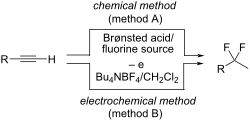
- containing alkyne substrates could also give the corresponding gem-difluorinated compounds (in-cell method). The ex-cell electrolysis method was also applicable for gem-difluorination of alkynes. Keywords: carbon–carbon triple bonds; chemical method; electrochemistry; gem-difluorination; Introduction
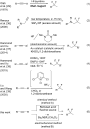
- solution of Bu4NBF4/CH2Cl2 containing substrates might also promote the same reactions (Figure 1, reaction 6, electrochemical method). Currently, electrochemistry can be regarded as a promising technique in organic synthesis, because heavy-metal reagents can be avoided for the oxidation or reduction of



Electrochemical allylations in a deep eutectic solvent
Beilstein J. Org. Chem. 2024, 20, 2217–2224, doi:10.3762/bjoc.20.189
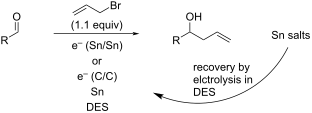
- time, electrosynthesis requires a solvent and a supporting electrolyte in order for current to pass through the reaction. These are effectively consumable reagents unless a convenient means of recycling can be developed. As part of our interest in unusual solvents and electrochemistry, we explored the
- used, offering an interesting new option for electrochemical allylations. Keywords: allylation; electrosynthesis; eutectic solvent; recycling; tin; Introduction The last several years have witnessed a tremendous resurgence of interest in electrochemistry in the area of organic synthesis [1]. While
- , however, RTILs are expensive compared to conventional solvents. Most of them are also quite viscous, which severely limits their use in synthetic electrochemistry [16]. These same expense and viscosity issues plague the application of RTILs in any area. Driven by this limitation, deep eutectic solvents

Factors influencing the performance of organocatalysts immobilised on solid supports: A review
Beilstein J. Org. Chem. 2024, 20, 2129–2142, doi:10.3762/bjoc.20.183
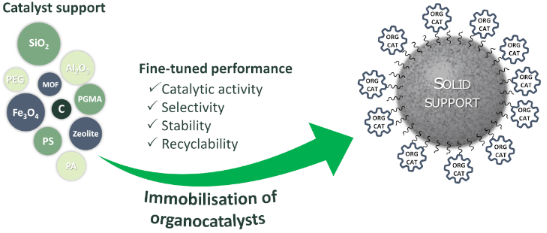
- their place among the efficient and robust catalysts on numerous occasions since the two seminal works [1][2] published in 2000. Since then, organocatalysis has been combined with many other areas of research, such as photocatalysis, electrochemistry and mechanochemistry [3][4][5], while List and


Electrochemical radical cation aza-Wacker cyclizations
Beilstein J. Org. Chem. 2024, 20, 1900–1905, doi:10.3762/bjoc.20.165
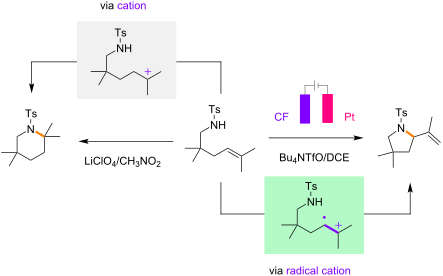
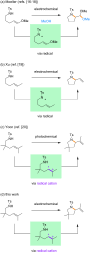
- aza-Wacker cyclizations under acidic conditions, which are expected to proceed via radical cations generated by single-electron oxidation of alkenes. Keywords: alkene; aza-Wacker cyclization; electrochemistry; radical cation; sulfonamide; Introduction Activating bench-stable substrates is the first




Synthesis of polycyclic aromatic quinones by continuous flow electrochemical oxidation: anodic methoxylation of polycyclic aromatic phenols (PAPs)
Beilstein J. Org. Chem. 2024, 20, 1746–1757, doi:10.3762/bjoc.20.153
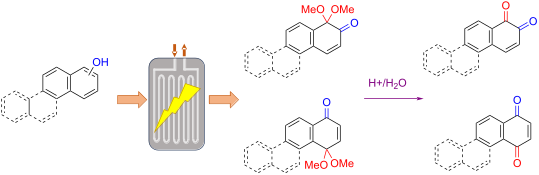
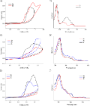
- estitmation of the HOMO/LUMO energies to shed more light on this transformation. The easy separation of the supporting electrolyte from the product will allow recycling and makes this a green transformation. Keywords: acetal formation; cyclic voltammetry; flow electrochemistry; green oxidation; polycyclic




Benzylic C(sp3)–H fluorination
Beilstein J. Org. Chem. 2024, 20, 1527–1547, doi:10.3762/bjoc.20.137

- mechanistic strategies, namely, electrophilic, radical and nucleophilic approaches, and highlighted when emerging technologies, such as photo- and electrochemistry effect the desired transformation [22][27]. Review Electrophilic benzylic C(sp3)–H fluorination Base mediated Electrophilic fluorinating reagents
- and oxidation potentials. Electrochemical methods Synthetic electrochemistry is a powerful tool offering excellent control over reaction kinetics and selectivity [86]. Electrochemical oxidation has been demonstrated as an efficient means for generating benzylic cations, allowing for the introduction
- under the cell potentials required to initiate the first single-electron transfer, resulting in benzylic cation IV [89][90]. This species can then be captured by fluoride to give benzylic fluoride product V. HF·amine ionic liquids are a popular choice of fluoride source in organic electrochemistry as