Search results
Search for "oxidant" in Full Text gives 391 result(s) in Beilstein Journal of Organic Chemistry. Showing first 200.
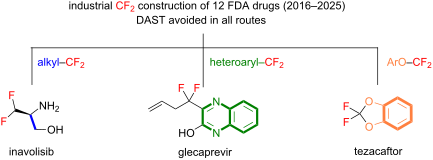
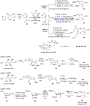
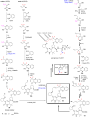
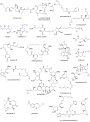
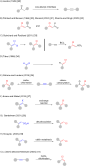
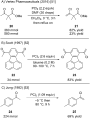
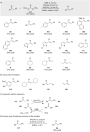
Construction of CF2 moieties in FDA-approved drugs (2016–2025): industrial routes, mechanisms, and scale-up considerations
Beilstein J. Org. Chem. 2026, 22, 1122–1150, doi:10.3762/bjoc.22.91






Synthesis of sterically shielded piperidine nitroxides via acid-catalyzed heterocyclization of β-aminoketone derivatives with ketones
Beilstein J. Org. Chem. 2026, 22, 948–954, doi:10.3762/bjoc.22.74
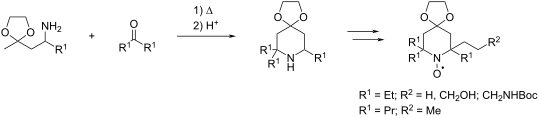
- from the electron-withdrawing character of the proximal ethynyl group, which renders the nitroxide moiety a stronger oxidant and enables its reduction by glutathione (Table 1). Conclusion Here we provided yet another demonstration of the synthetic advantages of a previously proposed general approach to


Recent advances in copper-catalyzed direct hydroamination of alkenes with (hetero)aromatic amines
Beilstein J. Org. Chem. 2026, 22, 925–947, doi:10.3762/bjoc.22.73
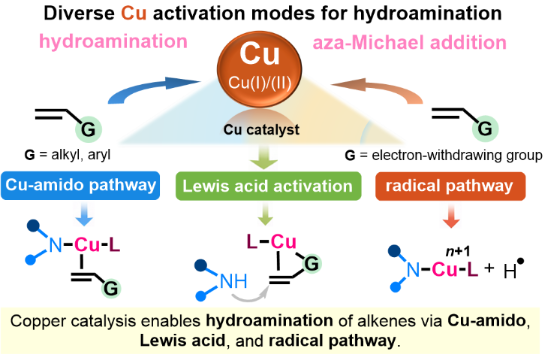
- (OTf)2 and the chiral bis(oxazoline) ligand (R,R)-Ph-box, the cyclization of N-sulfonyl-2-allylaniline derivatives 47 proceeded efficiently in the presence of 1,4-cyclohexadiene as a hydrogen atom donor and MnO2 as a stoichiometric oxidant. Various substituted substrates underwent intramolecular







Unsymmetrical sulfoxides with sterically hindered catechol fragment: synthesis, structure, electrochemical properties, and antiradical activity
Beilstein J. Org. Chem. 2026, 22, 828–837, doi:10.3762/bjoc.22.65
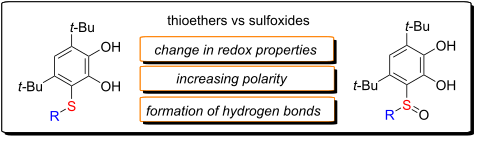
- reaction (Scheme 1) [23][42]. When converting these thioethers into sulfoxides using hydrogen peroxide as the oxidant, there is a risk of concurrent oxidation of the catechol moiety. The oxidation of 3,5-di-tert-butylcatechol (3,5-DTBC) by hydrogen peroxide is a classic reaction in bioinorganic chemistry
- , frequently employed as a model system to study the activity of catechol oxidase and tyrosinase. Although hydrogen peroxide is a strong oxidant, its reaction with 3,5-DTBC is often slow at room temperature in the absence of a catalyst, typically requiring metal ions such as Cu2+, Fe3+, or Co2+ [43]. Moreover


A facile and practical method for the synthesis of trans-(±)-taxifolin and its derivatives via Darzens reaction
Beilstein J. Org. Chem. 2026, 22, 443–450, doi:10.3762/bjoc.22.31
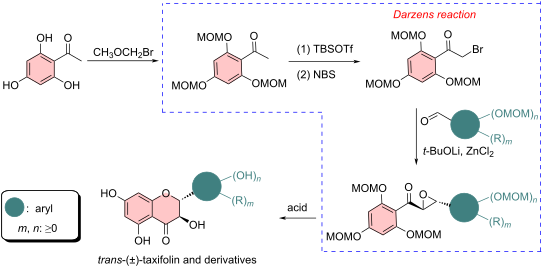
- yields (20–41%) and proceeds without the use of explosive peroxides (such as H2O2), which are commonly employed in methods reported earlier. The avoidance of explosive peroxides in the present method enables safe operation, easy scale-up, and also the synthesis of taxifolin derivatives with oxidant
- expanded synthesis of taxifolin derivatives with oxidant-sensitive substituents. Results and Discussion 2,4,6-Trihydroxyacetophenone was used as starting material, and its hydroxy groups were protected as methoxymethyl (MOM) ether by treatment with MOMBr (6.0 equiv) in the presence of NaH (4.0 equiv) to
- (±)-4 with yields in the range of 58–92% when the aromatic aldehyde was substituted with either electron-withdrawing (NO2) or electron-donating (alkoxy) groups. It is worth noting that aldehydes bearing oxidant-sensitive substituents, which are incompatible with peroxide-based approaches commonly


Electrosynthetic access to unsymmetrical oxaza[8]helicenes with high chiral stability and strong circularly polarized luminescence (CPL)
Beilstein J. Org. Chem. 2026, 22, 372–382, doi:10.3762/bjoc.22.25
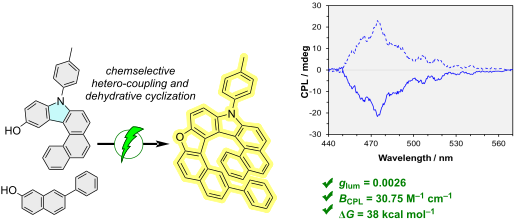
- enables selective oxidative hetero-coupling followed by dehydrative cyclization, furnishing the extended [8]helical scaffold efficiently under mild, oxidant-free conditions. Structural analyses show retained aromaticity, increased helical distortion, and higher configurational stability (≈38 kcal/mol
- designed coupling partners to control both chemo- and regioselectivity. A finely tuned anodic sequence enables selective oxidative hetero-coupling followed by dehydrative cyclization, delivering extended [8]helical scaffolds efficiently under mild, oxidant-free conditions. Combined experimental and DFT




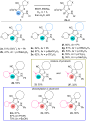
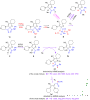
Base-promoted deacylation of 2-acetyl-2,5-dihydrothiophenes and their oxygen-mediated hydroxylation
Beilstein J. Org. Chem. 2026, 22, 192–204, doi:10.3762/bjoc.22.13
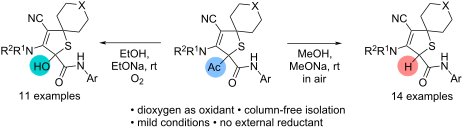
- ]. Bernini et al. have developed a catalytic system, containing hydrogen peroxide/methyltrioxorhenium and an ionic liquid, to oxidize acetophenones to afford phenols [20]. Junjappat et al. found that hydrogen peroxide activated by boric acid can act as oxidant for the direct conversion of aromatic ketones to




A new synthesis of Tyrian purple (6,6’-dibromoindigo) and its corresponding sulfonate salts
Beilstein J. Org. Chem. 2026, 22, 167–174, doi:10.3762/bjoc.22.10
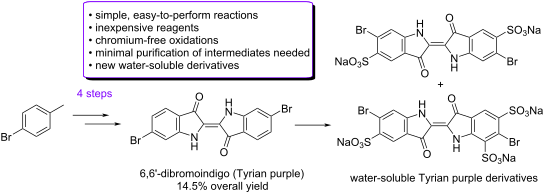
- sulfonation. In line with developing a shortened synthetic scheme, we chose p-bromotoluene (5), as a starting material, as nitration would yield 3 in a single step. Benzylic bromination followed by a Kornblum oxidation would then yield 4 in three steps from 5 without the use of a chromium(VI) oxidant or


Total synthesis of natural products based on hydrogenation of aromatic rings
Beilstein J. Org. Chem. 2026, 22, 88–122, doi:10.3762/bjoc.22.4
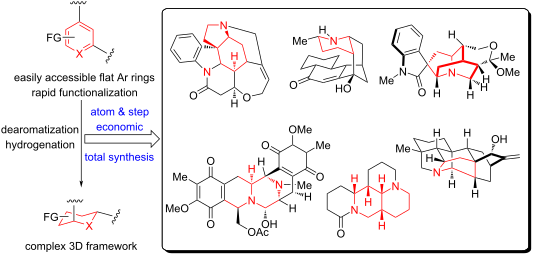
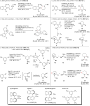
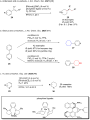
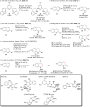
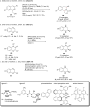
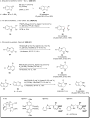
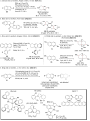
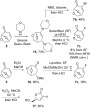
- (Scheme 31) [102]. In the presence of NBS as the oxidant, precursor 206 undergoes an aza-Achmatowicz rearrangement to give the monobrominated intermediate 207, which upon treatment with NaHCO3 furnishes the spirocyclic scaffold 208. From this versatile intermediate, a range of oxindole natural products











Synthesis and applications of alkenyl chlorides (vinyl chlorides): a review
Beilstein J. Org. Chem. 2026, 22, 1–63, doi:10.3762/bjoc.22.1
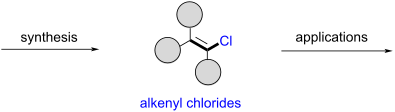
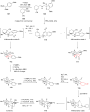
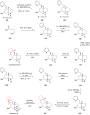
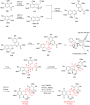
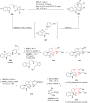
- similar procedure, employing K2S2O8 as the oxidant, was recently reported by Wang and Yu (Scheme 35B) [136]. In their approach, the enamine substrate neutralizes the generated HCl, therefore eliminating the need for an external base such as NEt₃. Similar products can also be accessed via a tandem







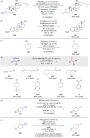










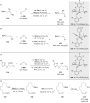


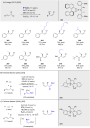


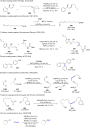


Sustainable electrochemical synthesis of aliphatic nitro-NNO-azoxy compounds employing ammonium dinitramide and their in vitro evaluation as potential nitric oxide donors and fungicides
Beilstein J. Org. Chem. 2025, 21, 2739–2754, doi:10.3762/bjoc.21.211
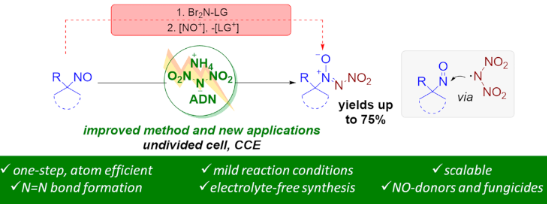
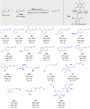
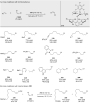
- , Russian Federation 10.3762/bjoc.21.211 Abstract An atom- and step-economical electrochemical method for the synthesis of aliphatic nitro-NNO-azoxy compounds from the corresponding nitroso compounds was developed employing ammonium dinitramide, a prospective green oxidant for aerospace propulsion
- group developed a one-step electrochemical approach to the synthesis of nitro-NNO-azoxy arenes employing ammonium dinitramide (ADN) [87]. The achieved use of ADN, known as prospective chlorine-free green oxidant for aerospace propulsion applications [89][90][91], as both a reagent and an electrolyte is





Visible-light-driven NHC and organophotoredox dual catalysis for the synthesis of carbonyl compounds
Beilstein J. Org. Chem. 2025, 21, 2584–2603, doi:10.3762/bjoc.21.200
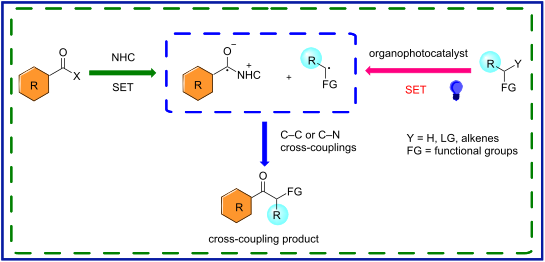
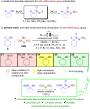
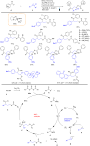
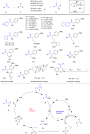
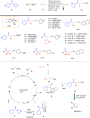
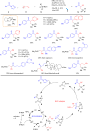
- presence of NHC (20 mol %), 4CzIPN (2 mol %) under mild conditions, producing corresponding unsymmetrical ketone derivatives 8 in up to 95% yield. An Ir-based photocatalyst was initially selected because its excited state is a strong oxidant (E1/2[Ir*III/II] = +1.21 V). Although 4-ethylanisole exhibits a
- /organophotocatalyzed oxidative Smiles rearrangement of O-aryl aldehydes 26 has been developed using oxygen as the terminal oxidant under visible-light dual catalysis. This approach afforded highly functionalized 2-hydroxyarylbenzoates 27, tolerating electron-deficient and electron-rich substituents. The C–O bond




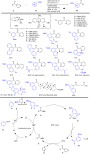

Recent advances in total synthesis of illisimonin A
Beilstein J. Org. Chem. 2025, 21, 2571–2583, doi:10.3762/bjoc.21.199
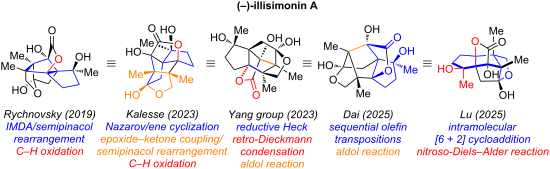
- ]dec-5-ene)-catalyzed intramolecular aldol reaction connected C6 and C8, assembling the trans-pentalene ring and affording the core carbon framework of illisimonin A. The C1 hydroxy group was initially introduced by a Mukaiyama hydration reaction using O2 as the stoichiometric oxidant; however


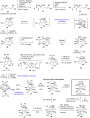


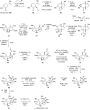


Palladium-catalyzed regioselective C1-selective nitration of carbazoles
Beilstein J. Org. Chem. 2025, 21, 2479–2488, doi:10.3762/bjoc.21.190
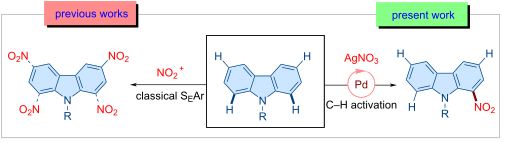
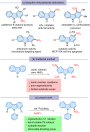
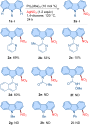
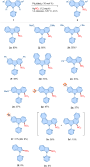
- and copper salts were examined as an oxidant to enhance the yield. Surprisingly, none of the tested silver salts afforded the desired product, while copper salts resulted in either trace amounts or a lower yield of 2a (Table 1, entries 4 and 5). We also evaluated inorganic oxidants, but these oxidants


Halogenated butyrolactones from the biomass-derived synthon levoglucosenone
Beilstein J. Org. Chem. 2025, 21, 2297–2301, doi:10.3762/bjoc.21.175
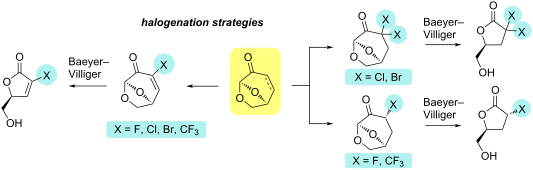
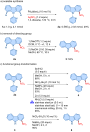
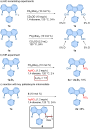
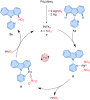
- of alkenyl halides 7a and 7b with the green oxidant H2O2 gave trace conversion after 3 days; however, the reaction using m-CPBA catalyzed with p-TSA was complete in 24 hours and afforded the halogenated lactones 8a and 8b in 33% and 34% yield, respectively (Scheme 1). We have recently reported the C3
- epoxidations of 5 are highly stereoselective [44]. Unambiguous assignment of configuration for the diastereomers was not possible on the basis of the selective 1D NOE spectra due to the lack of informative crosspeaks. Limiting the amount of oxidant (H2O2 or peracetic acid) resulted in mixtures, suggesting that




Enantioselective radical chemistry: a bright future ahead
Beilstein J. Org. Chem. 2025, 21, 2283–2296, doi:10.3762/bjoc.21.174
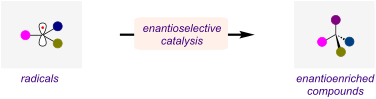
- applied in the development of enantioselective polyene cyclizations, which demonstrated the power of the catalytic strategy. In the presence of a chiral amine catalyst 16 (Scheme 3) and the mild oxidant Cu(OTf)2, polyenes with a terminal aldehyde group underwent intramolecular cyclizations affording
- chemical oxidant or reductant [80][85], thereby reducing toxicity and waste. With these advantages, organic electrochemistry holds significant promise for improving efficiency and sustainability while enabling the development of new transformations. Meggers and co-workers developed an electrochemical


Pd-catalyzed dehydrogenative arylation of arylhydrazines to access non-symmetric azobenzenes, including tetra-ortho derivatives
Beilstein J. Org. Chem. 2025, 21, 2234–2242, doi:10.3762/bjoc.21.170
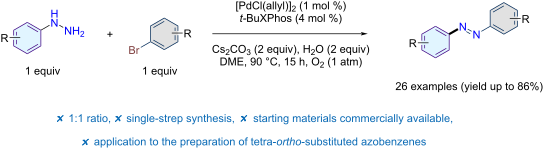
- as an oxidant, combined with NaH as the base, increased the formation of 3a, achieving GC yields of up to 65% (Table 1, entry 3). Control experiments demonstrated that palladium, phosphine, and base were all essential for this reaction (Table S4 in Supporting Information File 1). However, under
- addition of 2 equivalents of water (Table 1, entries 12 and 13). Finally, the oxidant t-Bu-OO-t-Bu could be replaced by O2, yielding compound 3a with GC yields of up to 79% (Table 1, entry 14, 75% isolated yield). In reactions giving <70% isolated yield, no single side-product dominates; the missing mass


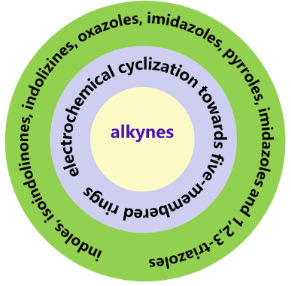
Electrochemical cyclization of alkynes to construct five-membered nitrogen-heterocyclic rings
Beilstein J. Org. Chem. 2025, 21, 2173–2201, doi:10.3762/bjoc.21.166
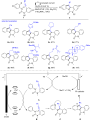
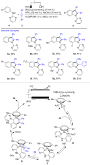
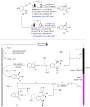
- -metal catalyst and oxidant, was an economic and efficient protocol compared with the previous method [174][175][176][177][178][179][180][181][182][183][184]. The ruthenium-accelerated electrochemical dehydrogenative annulation of alkyne with an aniline derivative was also an efficient method to build
- , oxidant, and base-free conditions. An electrochemical enantioselective tandem C–H indolization of 2-alkynylanilines with 3-functionalized indoles towards 2,3′-biindolyl atropisomers was achieved by Zeng in 2025 (Scheme 7) [204]. After screening the reaction carefully, the optimal conditions were gained as
- nucleophilic substitution of D afforded target indeno[1,2-c]pyrrole 40a along with eliminating I. Notably, this oxidant-free and catalyst-free approach could be potentially applied in the pharmaceutical manufacture. A Rh-promoted synthesis of pyrroles through annulation of alkynes and enamides was demonstrated








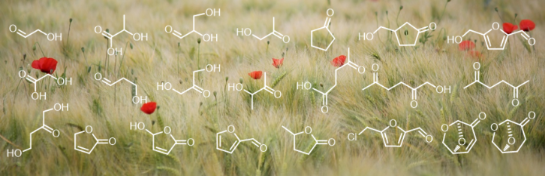
C2 to C6 biobased carbonyl platforms for fine chemistry
Beilstein J. Org. Chem. 2025, 21, 2103–2172, doi:10.3762/bjoc.21.165
- a C1 building block for the N-formylation of secondary amines to formamides under catalyst-free conditions and air as oxidant. This method was applied to different aromatic and aliphatic (both cyclic and acyclic) amines (Scheme 3) [31]. Already in 1955, Parham and Reiff reported the synthesis and
- simulated solar light and molecular O2 as the oxidant, and mesoporous carbon nitride (SGCN) as the photocatalyst. The latter showed excellent photoconversion (>95%) of furfural with 33% and 42% selectivity of HFO and MAN, respectively (Scheme 35). Xiao et al. developed this method and suggested that the
- Fe2B2 can be used as electrocatalyst for the production of furanoic acid and HFO with potentials of −0.15 V and −0.93 V, respectively [117]. Chavan et al. reported a simple and efficient method for the synthesis of HFO from furan by using oxone as oxidant (Scheme 36a) [118]. Before this study Kumar et


Bioinspired total syntheses of natural products: a personal adventure
Beilstein J. Org. Chem. 2025, 21, 2048–2061, doi:10.3762/bjoc.21.160
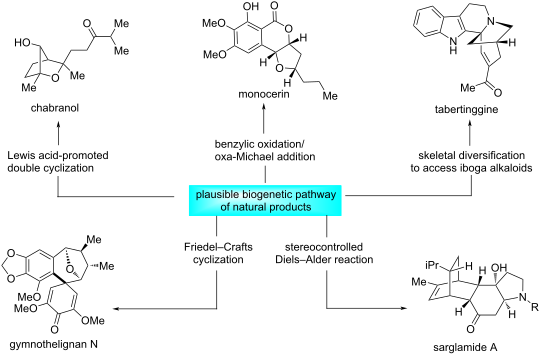
- transformation was successfully achieved by using PhI(OAc)2 as oxidant, providing 7-O-demethylmonocerin, containing the cis-substituted THF ring with sole diastereoselectivity. Site-selective mono-methylation gave rise to monocerin. The bioinspired approach successfully found applications in the total synthesis



Asymmetric total synthesis of tricyclic prostaglandin D2 metabolite methyl ester via oxidative radical cyclization
Beilstein J. Org. Chem. 2025, 21, 1964–1972, doi:10.3762/bjoc.21.152
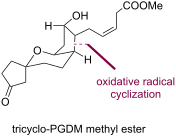
- transition-metal-mediated oxidative radical cyclization for constructing cyclopentanone 14. First, we used Mn(OAc)3·2H2O/Cu(OAc)2·H2O [21] as the oxidant system to perform oxidative annulation of β-keto ester 15 in MeCN as solvent. However, only 9% of the desired product 14 was obtained after conducting the



Chiral phosphoric acid-catalyzed asymmetric synthesis of helically chiral, planarly chiral and inherently chiral molecules
Beilstein J. Org. Chem. 2025, 21, 1864–1889, doi:10.3762/bjoc.21.145
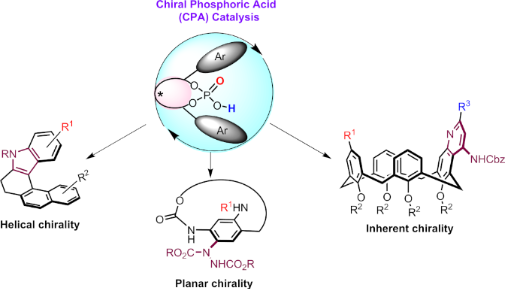
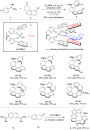
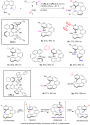
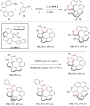
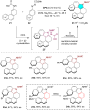
- good yield and excellent enantioselectivity (Scheme 5). Notably, two distinct oxidative aromatization methods have been developed to yield diverse heterohelicene products. For instance, using DDQ as an oxidant selectively delivered hetero[7]helicenes 19 with monoamido substitution at the peri-positions
- , while utilizing MnO2 as an oxidant selectively yielded heterohelicenes 20 with bisamido substitution at the peri-positions. In 2024, Zhou, Chen and co-workers disclosed an efficient method for the asymmetric synthesis of indolohelicenoids through a sequential enantioselective annulation, followed by an










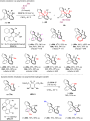
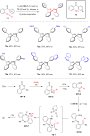
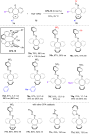
Fe-catalyzed efficient synthesis of 2,4- and 4-substituted quinolines via C(sp2)–C(sp2) bond scission of styrenes
Beilstein J. Org. Chem. 2025, 21, 1799–1807, doi:10.3762/bjoc.21.142
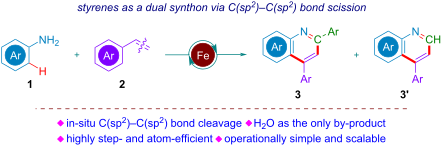
- features of this protocol include the use of O2 as an ideal, green oxidant, operational simplicity and scalability, high atom- and step-economy, and cost-effectiveness, collectively enabling the single-step synthesis of two medicinally relevant N-heterocycles in excellent combined yields. Keywords: C–C
- biocatalysts, as well as enzymatic processes. Among these, molecular oxygen stands out as a greener and more sustainable oxidant due to its natural abundance, low cost, and environmentally friendly properties, making it an appealing option for both academic research and industrial applications. Recently, some
- [53]. In this work, the authors used a stoichiometric amount of Zn(OTf)3 as a Lewis acid catalyst and air as the oxidant for the reaction. Jana and colleagues demonstrated an atom-efficient pseudo-three-component C–H annulation reaction catalyzed by Yb and Cu, which involved nitrosoarenes and styrene


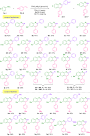


Continuous-flow-enabled intensification in nitration processes: a review of technological developments and practical applications over the past decade
Beilstein J. Org. Chem. 2025, 21, 1678–1699, doi:10.3762/bjoc.21.132
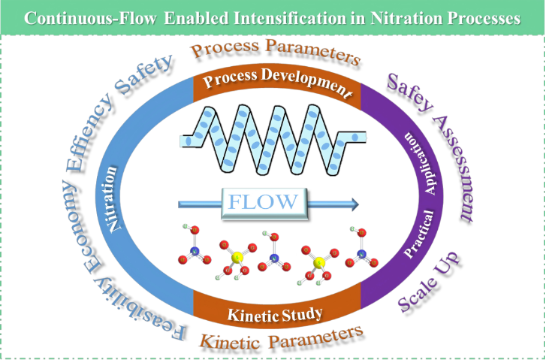
- the material [70]. Oxygen balance (OB), a critical parameter quantifying how well an explosive provides its own oxidant, reveals potential safety risks when OB values exceed the threshold of −200. Since the energy release predominantly originates from oxidation reactions, the available oxygen content



Photocatalysis and photochemistry in organic synthesis
Beilstein J. Org. Chem. 2025, 21, 1645–1647, doi:10.3762/bjoc.21.128
- ) transition, resulting in a long-lived charge-separated species. In this excited state, [Ru(bpy)3]Cl2 is both a more potent oxidant and reductant than in its ground state. This reactivity, in combination with the reversible redox behavior of the metal complex, enables reductive or oxidative quenching cycles