


Search results
Search for "calculations" in Full Text gives 792 result(s) in Beilstein Journal of Nanotechnology. Showing first 200.
Mechanical property measurements enabled by short-term Fourier-transform of atomic force microscopy thermal deflection analysis
Beilstein J. Nanotechnol. 2025, 16, 1952–1962, doi:10.3762/bjnano.16.136
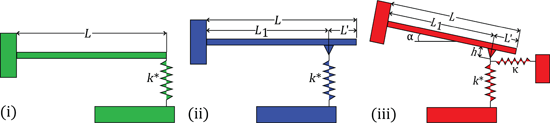
- damping from the ambient environment is not accounted for in Equation 1 and may also be responsible for a small percentage of the difference between the two calculations of the spring constants. However, our results highlight that the measurement of the cantilever’s plan-view dimensions and using these
- dimensions in the determination of the Sader spring constant or other calculations of the normal spring constant are important. Finally, it has been demonstrated that the Sader method can consistently show a difference compared with the thermal noise method used above, particularly for soft cantilevers as
- used in this study [25]. We take the Sader spring constant, which has been widely used in other studies and is less sensitive to variations in the calculated cantilever sensitivity [25], as the spring constant of all cantilevers in the calculations in subsequent sections of this manuscript. Figure 2d




Further insights into the thermodynamics of linear carbon chains for temperatures ranging from 13 to 300 K
Beilstein J. Nanotechnol. 2025, 16, 1818–1825, doi:10.3762/bjnano.16.125
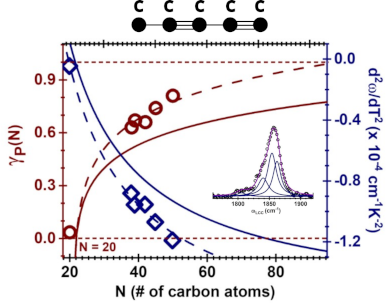
- data. The inset shows a representative case at T = 700 K for , as discussed in the text and in [30]. Supporting Information Supporting Information File 12: Additional figures and calculations. Funding This material is based upon work supported by the National Science Foundation under Grant No


![[Graphic 23]](/bjnano/content/inline/2190-4286-16-125-i25.svg?max-width=637&scale=1.18182)
Multifunctional anionic nanoemulsion with linseed oil and lecithin: a preliminary approach for dry eye disease
Beilstein J. Nanotechnol. 2025, 16, 1711–1733, doi:10.3762/bjnano.16.120

- determined by electrophoretic mobility using the same instrument at 25 °C. Calculations were based on the Smoluchowski model. All measurements were performed in triplicate and expressed as mean ± standard deviation. pH Value The pH value of the pre-formulation and nanoformulations was measured using a



Ambient pressure XPS at MAX IV
Beilstein J. Nanotechnol. 2025, 16, 1677–1694, doi:10.3762/bjnano.16.118

- = 660 eV) core levels corresponding to the same conditions as in (a); red vertical lines indicate the binding energies obtained for the optimized O2H–H2O complex on CoTPyP/GR from ab initio DFT calculations for different O 1s core levels, as labeled in (e): 1 − physisorbed/ wetting water, 2 − OOH, 3





Energy spectrum and quantum phase transition of the coupled single spin and an infinitely coordinated Ising chain
Beilstein J. Nanotechnol. 2025, 16, 1668–1676, doi:10.3762/bjnano.16.117
- and off-diagonal, so its contribution will be of fourth order in . Thus, up to the second order in , the energy E of the whole system is defined by the following equation: from which follows Also, from these calculations follows that the eigenstates are . One might wonder why there is no contribution
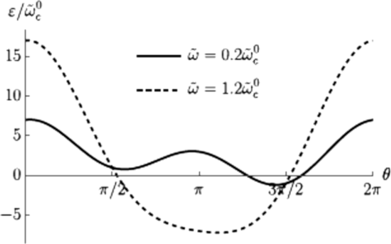
- = 0 extremum is a minimum in the θ direction, and the second derivative of ε+(θ,φ) with respect to θ is positive. Otherwise, the said extremum is a maximum and the stable phase is the broken symmetry one. When carrying out the calculations, we should choose the θ = π solution of the equation sinθ = 0
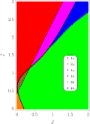
- calculations. In Figure 5, the phase diagram, obtained numerically, is presented on the plane for fixed values of the rest of the parameters. Results and Discussion We have theoretically studied the infinitely coordinated Ising chain, coupled to a single external spin. We have written down the effective

![[Graphic 39]](/bjnano/content/inline/2190-4286-16-117-i63.svg?max-width=637&scale=1.18182)


![[Graphic 51]](/bjnano/content/inline/2190-4286-16-117-i75.svg?max-width=637&scale=1.18182)
Modeling magnetic properties of cobalt nanofilms used as a component of spin hybrid superconductor–ferromagnetic structures
Beilstein J. Nanotechnol. 2025, 16, 1557–1566, doi:10.3762/bjnano.16.110
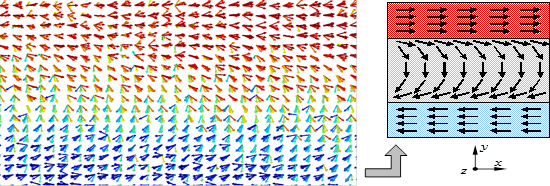
- small nanoscale system (500 atoms) consisting of cobalt atoms was solved. The purpose of this stage of computational experiment was to check the convergence of the solution and compare the obtained data with the results of other studies. The performed calculations and satisfactory correspondence to the
- are known. Analysis of magnetic moments of atoms mutually ordered as a result of modeling has shown that, for some cases of calculations for thin films of cobalt, the formation of Neel domain walls is typical [32][33][34]. An illustration of the resulting Neel domain wall is given in Figure 7, which


Influence of laser beam profile on morphology and optical properties of silicon nanoparticles formed by laser ablation in liquid
Beilstein J. Nanotechnol. 2025, 16, 1533–1544, doi:10.3762/bjnano.16.108
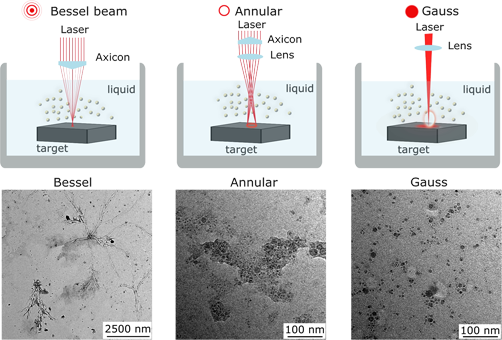
- peak fluence in the central lobe can be calculated as [31][32]: where Ein is the incident Gaussian pulse energy (80 mJ per pulse) and ω0 is e−2 radius of the incident Gaussian beam (3 mm). Following these calculations, the fluence was calculated to be 84.9 J·cm−2. Morphology, phase composition, and


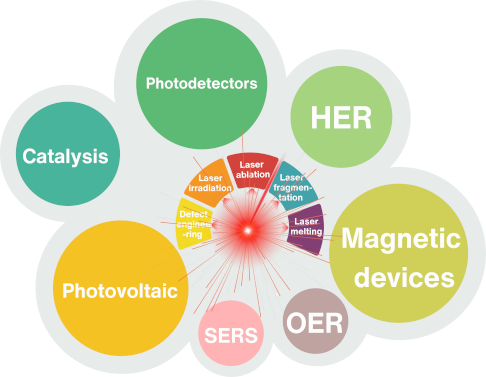
Laser processing in liquids: insights into nanocolloid generation and thin film integration for energy, photonic, and sensing applications
Beilstein J. Nanotechnol. 2025, 16, 1428–1498, doi:10.3762/bjnano.16.104






The role of biochar in combating microplastic pollution: a bibliometric analysis in environmental contexts
Beilstein J. Nanotechnol. 2025, 16, 1401–1416, doi:10.3762/bjnano.16.102
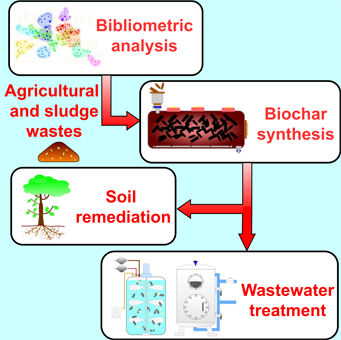
- interactions in soil [31]. Biochar properties The physical and chemical properties of biochar depend significantly on the composition of its feedstock [46]. Molecular model calculations and quantum chemistry analyses suggest that biochar derived from wood exhibits superior physical properties, such as porosity


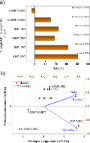

Chitosan nanocomposite containing rotenoids: an alternative bioinsecticidal approach for the management of Aedes aegypti
Beilstein J. Nanotechnol. 2025, 16, 1197–1208, doi:10.3762/bjnano.16.88
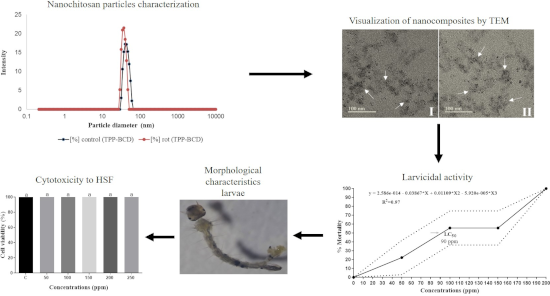
- for concentration calculations. Larvicidal activity assay The larvicidal assay was conducted according to the standards established by the World Health Organization [39] with adaptations [14]. Starting from an initial stock solution (10 mg nanoparticles/mL in water-diluted vinegar [to reach a 0.08
- % acetic acid concentration]), the nanoparticles were further diluted in ultrapure water to prepare concentrations of 50, 100, and 200 ppm of rotenoids, based on calculations obtained by HPLC. Vinegar, an easily accessible source of acetic acid, was employed because chitosan is a water-insoluble

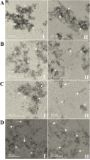


Electronic and optical properties of chloropicrin adsorbed ZnS nanotubes: first principle analysis
Beilstein J. Nanotechnol. 2025, 16, 1184–1196, doi:10.3762/bjnano.16.87
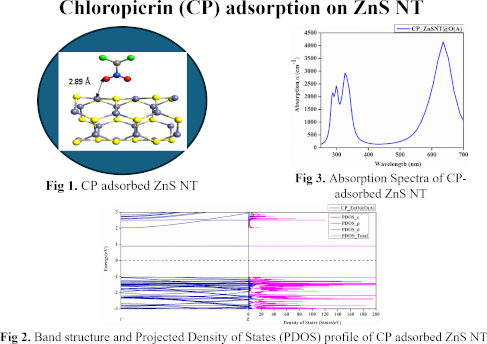
- the axis of the nanotube. A density mesh cutoff of 150 Rydberg was applied to define the real-space grid for energy calculations. The ZnS NT model, consisting of 36 atoms periodically arranged along the Z-direction, was structurally optimized to achieve geometric and energetic stability. Optimization
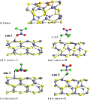
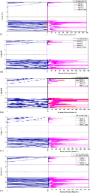
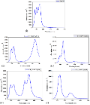
- , and projected density of states (DOS) calculations. This analysis provides critical insights into how the adsorption of CP molecules affects the electronic behavior of the NT. The band structure and DOS profile for pristine ZnS NT and CP-adsorbed ZnS NT in orientations A, B, C, and D are shown in



Transfer function of an asymmetric superconducting Gauss neuron
Beilstein J. Nanotechnol. 2025, 16, 1160–1170, doi:10.3762/bjnano.16.85
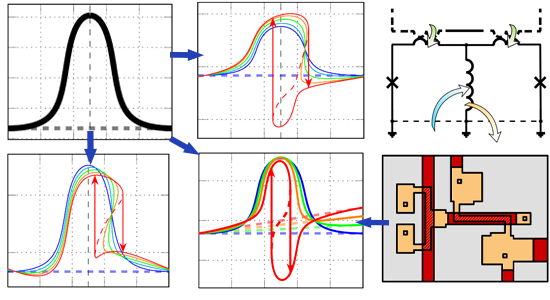
- [17][18], we get t = 0.2. Calculations based on Equation 52 give a similar shape of the TF (compared to Figure 6a) at ϕb = 0.3π. Thus, experimental results correspond to the expected ones, and a quantitative analysis shall be the subject of our subsequent publications. The problem with cross-talk
- ). Some methods of suppressing this interaction are discussed in [26]. The simplest ones include increasing the size of the screen and creating a reverse CL that is not coupled to the neuron (except screen-mediated coupling) and carries the control current in the opposite direction. Calculations show that



Crystalline and amorphous structure selectivity of ignoble high-entropy alloy nanoparticles during laser ablation in organic liquids is set by pulse duration
Beilstein J. Nanotechnol. 2025, 16, 1141–1159, doi:10.3762/bjnano.16.84
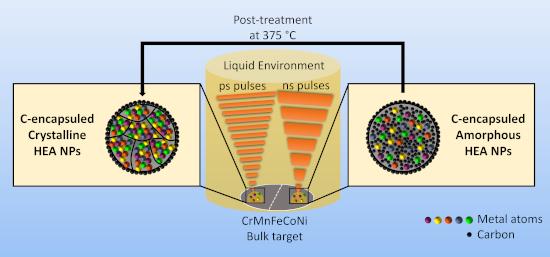
- on density functional theory calculations of binding energies and machine learning algorithms for an efficient catalyst design [15][17][19]. The synthesis of HEA NPs has been realized by many methods, including carbothermal shock synthesis (CTS) [20][21], chemical reduction [22][23], fast-moving bed




Towards a quantitative theory for transmission X-ray microscopy
Beilstein J. Nanotechnol. 2025, 16, 1113–1128, doi:10.3762/bjnano.16.82
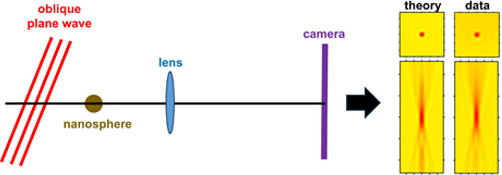
- . Supporting Information File 1 contains detailed descriptions for all other model calculations. We validated the code for computing the fields and for the pc-Mie model Equations 12 and 13 by comparing results for several approaches including numerical integration by the trapezoidal rule, numerical



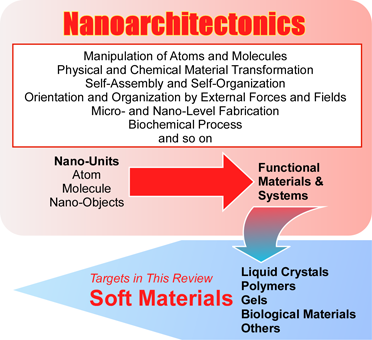
Soft materials nanoarchitectonics: liquid crystals, polymers, gels, biomaterials, and others
Beilstein J. Nanotechnol. 2025, 16, 1025–1067, doi:10.3762/bjnano.16.77






Time-resolved probing of laser-induced nanostructuring processes in liquids
Beilstein J. Nanotechnol. 2025, 16, 968–1002, doi:10.3762/bjnano.16.74
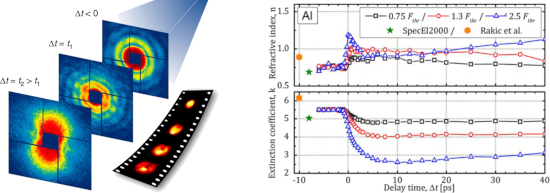
- melting point, melting sets in. The amount of molten material is given by the additional available energy beyond the heat capacity in the solid state to account for latent heat of melting [47][105], see calculations shown in Figure 6B. After full melting, the temperature of the particle will increase
- transient absorption, first through plasmon dampening and with increasing bubble size through the increase in scattering once the bubble reaches some 100 nm in diameter. A quantitative analysis of the change of the TAS signal as compared to Mie calculations can in some cases even reproduce the bubble


Shape, membrane morphology, and morphodynamic response of metabolically active human mitochondria revealed by scanning ion conductance microscopy
Beilstein J. Nanotechnol. 2025, 16, 951–967, doi:10.3762/bjnano.16.73
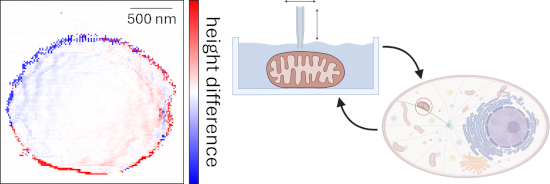
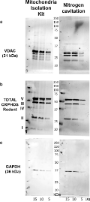
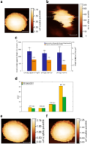
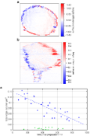
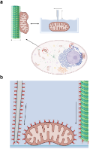
- mitochondria; S3: Calculated difference images of a MG-63 osteoblast, metabolically active, isolated mitochondria, and a 3 μm microsphere, as well as further calculations to visualise the edge memory effect; S4: Additional observations at metabolically active mitochondria; S5: Connection of ζ-potential and



Characterization of ion track-etched conical nanopores in thermal and PECVD SiO2 using small angle X-ray scattering
Beilstein J. Nanotechnol. 2025, 16, 899–909, doi:10.3762/bjnano.16.68
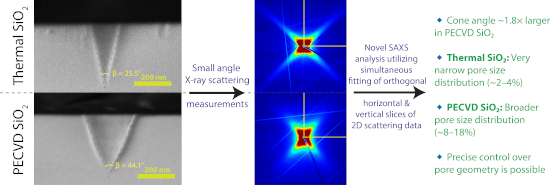
- calculations for PECVD SiO2 thin films used values for the density and composition from our previous study [47]. In both layers, the projected ranges when irradiated with 185 and 89 MeV Au ions were ≈20 μm and ≈14 μm, respectively, whereas the projected ranges for thermal and PECVD SiO2 irradiated with 1.6 GeV


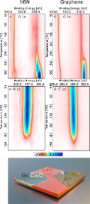
Synchrotron X-ray photoelectron spectroscopy study of sodium adsorption on vertically arranged MoS2 layers coated with pyrolytic carbon
Beilstein J. Nanotechnol. 2025, 16, 847–859, doi:10.3762/bjnano.16.64
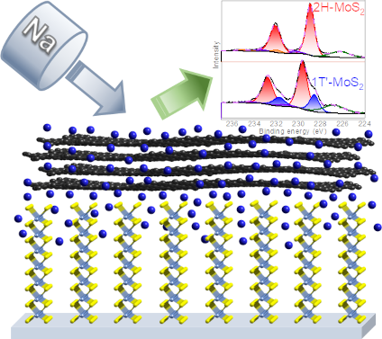
- (according to calculations above 1.75 Na per unit MoS2), the intercalate decomposes into amorphous Na2S and Mo; this reaction occurs at potentials below 0.8 V vs Na/Na+ [3]. The reaction products cannot be converted back to MoS2 due to the strong Na–S bonding [5]. The irreversible conversion reaction
- carbon component to MoS2, as shown by density functional theory (DFT) calculations for the MoS2/graphene heterostructure [44][45]. According to the DFT calculations, the changes observed in the PyC-MoS2 spectrum between the π* and σ* resonances may result from the interaction of the π electrons of carbon


Supramolecular hydration structure of graphene-based hydrogels: density functional theory, green chemistry and interface application
Beilstein J. Nanotechnol. 2025, 16, 806–822, doi:10.3762/bjnano.16.61
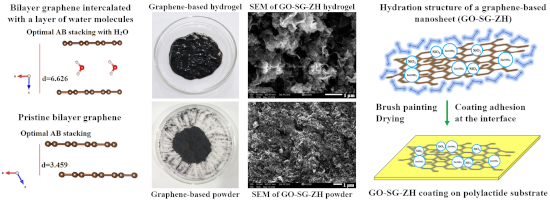
- theory modeling (DFT) and dispersion energy correction functional (DFT-D3). The theoretical work aimed to elucidate the relationship between water intercalation and intersheet binding energy in quantum mechanical level. The computational calculations quantified intersheet distance, van der Waals force
- described in the results and discussion. Methods Computation method of density functional theory First-principles calculations based on DFT were conducted using the Vienna ab initio simulation software (VASP) and a high-performance computing system (HPC). The projector-augmented wave method (PAW) was
- implemented in electronic structure calculations. Generalized gradient approximation of Perdew–Burke–Ernzerhof (GGA-PBE) was used for describing exchange-correlation energy of electron–electron interactions. The correction of van der Waals dispersion energy was applied using the DFT-D3 method proposed by


Thickness dependent oxidation in CrCl3: a scanning X-ray photoemission and Kelvin probe microscopies study
Beilstein J. Nanotechnol. 2025, 16, 749–761, doi:10.3762/bjnano.16.58
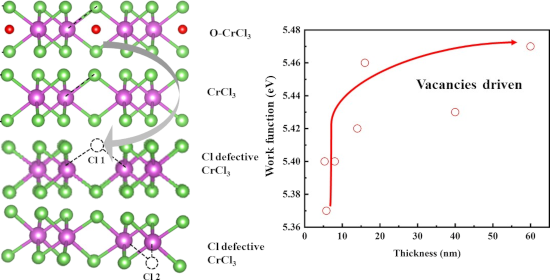
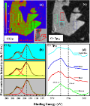
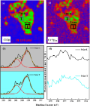
- the halides. This has been supported by self-consistent band structure calculations by Antoci and Mihich [7], which introduced spin degeneracy, demonstrating that CrCl3 and CrBr3 behave as metallic system because of the prominent role of the 3d states near Fermi level. In our previous publications [8
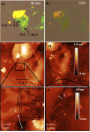
- confirmed by the high energy of Cl vacancies found by total energy calculations [9]. Kelvin probe force microscopy (KPFM) measurements One look at the surface potential of the samples could complement our analysis. Figure 8a,c shows topographic maps and the corresponding thickness profiles of CrCl3 flakes





Efficiency of single-pulse laser fragmentation of organic nutraceutical dispersions in a circular jet flow-through reactor
Beilstein J. Nanotechnol. 2025, 16, 711–727, doi:10.3762/bjnano.16.55
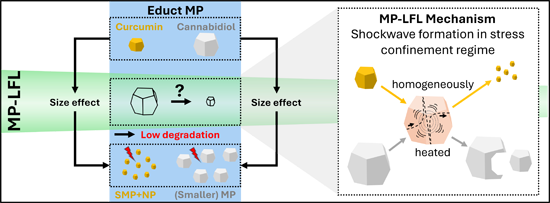
- . Moreover, the created surface area is also a descriptor highly relevant for application (as the solubility of hydrophobic particle dispersions in water is proportional to the surface [67][68]). For simplified calculations of the total surface created by LFL, we assumed all particles to be ideal spheres
- of 309 and 59 m−1, respectively (assuming the same ratio of absorption of curcumin and CBD, Figure S14, Supporting Information File 1), were experimentally determined by Beer–Lambert calculations of the attenuation of the laser light and the measured ratio of absorption in the double integrating
- concentration effects attenuating the laser beam, which will be considered in the discussion. Details on the calculations of fluence, PPV, and Reynolds numbers can be found in Supporting Information File 1 (Equations S1–S7), while values used in these calculations are listed in Tables S1 and S2, Supporting


Nanoscale capacitance spectroscopy based on multifrequency electrostatic force microscopy
Beilstein J. Nanotechnol. 2025, 16, 637–651, doi:10.3762/bjnano.16.49
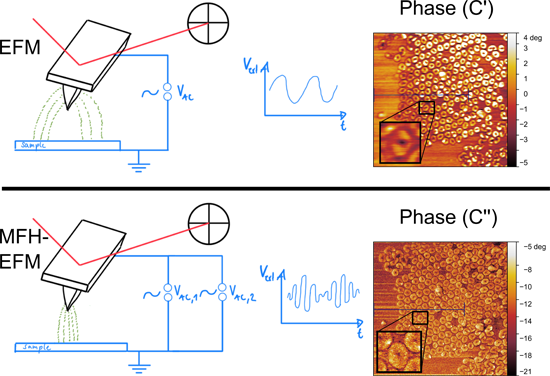
- generate structures with a defined dielectric response, we prepared a series of microcapacitors. We used these structures to compare the C′ and C″ distance dependencies from several force–distance curves with model calculations using tip–sample models from the literature, as well as for dielectric
- MFH-EFM as compared to conventional methods, we calculate the distance dependence of the first- and second-order capacitance gradients in an ideal cantilever. We compare our calculations to experimentally obtained force–distance curves. We then show the first practical examples of high-frequency
- 21 and Figure 10 below). In Figure 4, we compare the respective contributions to the first and second capacitance gradients together with the corresponding electrostatic forces during a typical AFM experiment as functions of tip–sample distance z. For the force calculations, we used Equation 12




Focused ion and electron beams for synthesis and characterization of nanomaterials
Beilstein J. Nanotechnol. 2025, 16, 613–616, doi:10.3762/bjnano.16.47
- by Oddur Ingólfsson’s group [6], supported by quantum chemical calculations, revealed that chlorine removal during focused electron beam induced deposition (FEBID) was nearly complete, in contrast to the limited chlorine loss observed in gas-phase experiments. Previous studies have shown that gas

Retrieval of B1 phase from high-pressure B2 phase for CdO nanoparticles by electronic excitations in CdxZn1−xO composite thin films
Beilstein J. Nanotechnol. 2025, 16, 551–560, doi:10.3762/bjnano.16.43
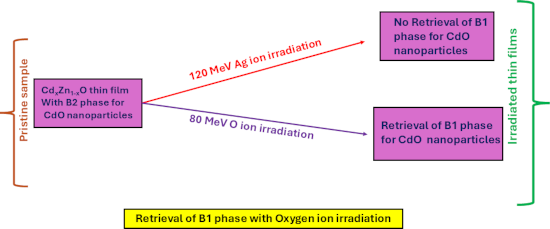
- be irreversible, our findings suggest that with the appropriate choice of irradiating ions and energies, the recovery of the B1 phase is possible. Complementary to this experimental investigation, we conducted thermal spike calculations with 120 MeV Ag ions in rock salt CdO. Experimental Thin films





