Search results
Search for "CM" in Full Text gives 1163 result(s) in Beilstein Journal of Organic Chemistry. Showing first 200.
Controlled supramolecular assemblies of luminescent tridentate cyclometalated alkynylgold(III) amphiphiles in aqueous media
Beilstein J. Org. Chem. 2026, 22, 1097–1106, doi:10.3762/bjoc.22.88
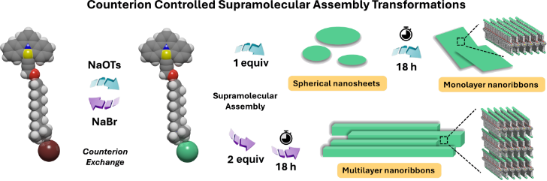
- rate of 1.0 °C/min. The UV–vis absorption spectrum of the solution shows an intense absorption band at 304–318 nm and a moderately intense vibronic-structured absorption band at 360–405 nm at 20.0 °C (Figure 1a, black line). The vibrational progressional spacings of 1300–1310 cm−1 in the lower energy
- performed on an Agilent Cary 60 UV–vis spectrophotometer with a 1 cm path length quartz cuvette. A Luma 40/8453 temperature-controlled cuvette holder with four optical ports was mounted in the sample compartment of the Agilent Cary 60 UV–vis spectrophotometer. Time-dependent UV–vis adsorption measurements
- specified. Fluorescence spectroscopy: Fluorescence measurements were performed on an Agilent G9800A Cary Eclipse fluorescence spectrophotometer with a 1 cm path length quartz cuvette. A Luma 40/8453 temperature-controlled cuvette holder with four optical ports was mounted in the sample compartment of the


Synthesis and acaricidal activity against Varroa destructor of α- and γ-costic acid dimers
Beilstein J. Org. Chem. 2026, 22, 1088–1096, doi:10.3762/bjoc.22.87
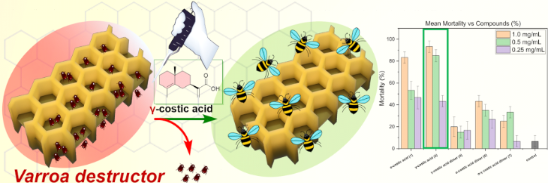
- modifications. The tests were conducted in Petri dishes (diameter 3.5 cm) with a 4 cm diameter filter paper disc (Whatman 1) placed at the bottom and along the vertical side for 0.25 cm. For each replication, 200 microliters of tested solutions and control were used, and the mites were gently placed on the


Synthesis of functionalized, 13-alkyl-substituted coralyne derivatives and investigation of their interactions with duplex and abasic site-containing DNA
Beilstein J. Org. Chem. 2026, 22, 1057–1066, doi:10.3762/bjoc.22.84
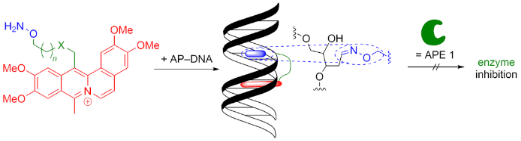
- -spectroscopic analysis of the azide 3e revealed characteristic bands for the azide group at 2094 cm−1. The papaverine derivatives 3b and 3e were firstly transformed to their corresponding hydrochloride salts, which were subsequently treated with acetic anhydride in the presence of conc. H2SO4 at 90 °C (Scheme 3
- biochemistry-grade chemicals and E-Pure® water (18 MΩ cm). They were filtered through a membrane filter (pore size 0.45 μM; Carl Roth GmbH, Karlsruhe) prior to use and stored at 4 °C. BPE buffer: c(Na2HPO4) = 6.0 mM, c(NaH2PO4) = 2.0 mM, c(Na2EDTA) = 1.0 mM, pH 7.0. TBE buffer (10×): c(tris(hydroxymethyl
- 0.45 μM; Carl Roth GmbH, Karlsruhe). The concentration (in base pairs, bp) was determined photometrically (λmax = 260 nm, ε = 12824 cm−1 M−1) [25]. Oligonucleotides for biochemical assay: Complementary strands end-labeled with carboxyfluorescein (FAM) and 4-((4-(dimethylamino)phenyl)azo)benzene (DAB


One-pot four-component sequential synthesis of S-alkyl dithiocarbamates using lipase as a biocatalyst
Beilstein J. Org. Chem. 2026, 22, 1048–1056, doi:10.3762/bjoc.22.83
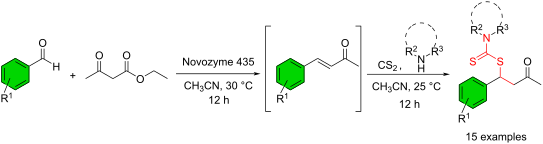
- prepared 20 × 20 cm silica plates) using a mixture of ethyl acetate and n-hexane as a mobile phase. 1H and 13C NMR spectra were recorded at 300 (75) MHz on a Bruker Avance spectrometer using CDCl3 as a solvent. The chemical shifts were referenced to the solvent signals at δH/C 7.26/77 ppm (chloroform-d


Synthesis of novel 1,2,4-oxadiazole-isoxazoline hybrids and their in silico potential with adenosine receptors
Beilstein J. Org. Chem. 2026, 22, 1033–1047, doi:10.3762/bjoc.22.82
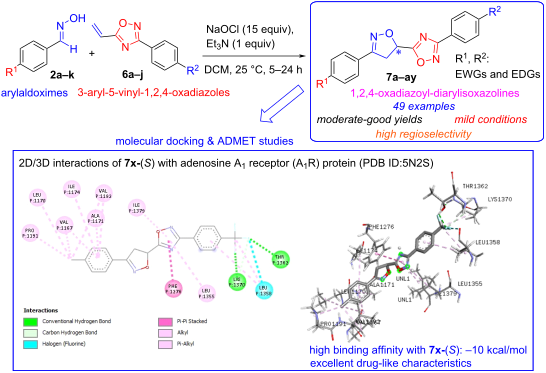
- , may also contribute to reduced yields for compounds 6a–j. The structures of benzaldoximes 2a–k were simply characterized by IR stretching peaks corresponding to O–H, C=N, aromatic C=C, aromatic C–H, oxime C–H, and N–O groups (approximately 3250, 1600, 1500, 3040, and 1005 cm−1) (see Experimental
- section). Similarly, the structures of p-substituted phenyl vinyl 1,2,4-oxadiazoles 6a–j were established primarily through IR absorptions attributed to C=N, C–O, and N–O stretching vibrations (approximately 1646, 1250, and 830 cm−1). Structural confirmation was further supported by the observation of
- contribute to the observed low yields. The structures of all synthesized products 7a–ay were fully determined using IR, NMR, mass spectrometry, and relevant physical data. In the IR spectra of compounds 7a–ay, characteristic absorption bands were observed at approximately 3050, 2900, 1600, 1250, and 830 cm−1


Semisynthesis, characterisation, and antibacterial evaluation of a novel lecanoric acid-derived amide library
Beilstein J. Org. Chem. 2026, 22, 1023–1032, doi:10.3762/bjoc.22.81
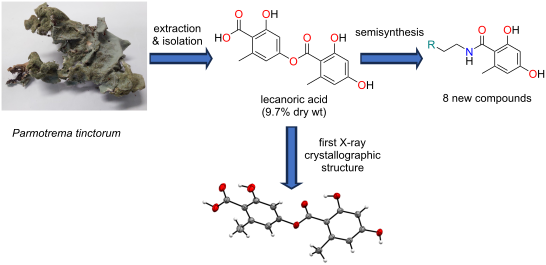
- ) λmax, nm (log ε): 221 (3.58), 270 (3.40), 306 (3.16); UV (MeOH + 1 drop of 1 M NaOH) λmax , nm (log ε): 220 (3.76), 240 (3.30), 311 (3.65); IR (UATR) νmax: 3180, 2937, 1661, 1600, 1460, 1414, 1347, 1297, 1266, 1203, 1139, 1069, 901, 820, 692 cm−1; see Supporting Information File 1, pp S5–S12 for 1D/2D
- 13%); UV (MeOH) λmax, nm (log ε): 220 (3.38), 246 (2.99), 282 (2.76); UV (MeOH + 1 drop of 1 M NaOH) λmax, nm (log ε): 230 (3.60), 278 (3.34), 310 (3.24); IR (UATR) νmax: 3292, 2960, 1606, 1544, 1270, 1170, 1024, 845, 724 cm−1; see Supporting Information File 1, pp S25–S32 for 1D/2D NMR data in DMSO
- ) λmax, nm (log ε): 230 (3.52), 279 (3.29), 312 (3.16); IR (UATR) νmax: 3288, 2967, 1606, 1544, 1463, 1271, 1171, 842 cm−1; see Supporting Information File 1, pp S34–S40 for 1D/2D NMR data in DMSO-d6; LRMS–ESI(+) (m/z) 210 [M + H]+, 232 [M + Na]+; HRMS–ESI(+) (m/z): [M + Na]+ calcd for C11H15NNaO3


Synthesis of sterically shielded piperidine nitroxides via acid-catalyzed heterocyclization of β-aminoketone derivatives with ketones
Beilstein J. Org. Chem. 2026, 22, 948–954, doi:10.3762/bjoc.22.74
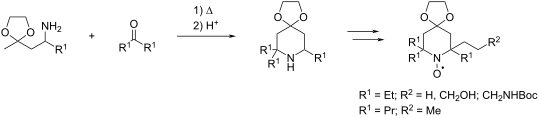
- spectrum of the nitroxide 9a (TEEPONE) was identical to that reported in the literature [21], and the IR spectrum of 9d was similar, with a strong absorption band at 1716 cm−1, characteristic of the carbonyl (C=O) stretching vibrations. The 1H NMR spectra of the reduced derivatives of 9a,d showed no


Cascade transformation of 2-(diazoacetyl)-2H-azirines to 2-aroyl-3-hydroxy-1H-pyrroles via condensation with aromatic aldehydes
Beilstein J. Org. Chem. 2026, 22, 897–904, doi:10.3762/bjoc.22.70
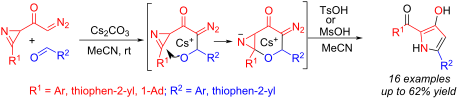
- of the molecular ion by HRMS for this crude product. The IR spectrum of the compound contains a band of the diazo group at 2087 cm−1. According to the 1H NMR spectrum, the product consists of more than 90% of one diastereoisomer, the spatial structure of which was established using a 2D NOESY


The trans-influence in gold chemistry from a catalytic perspective
Beilstein J. Org. Chem. 2026, 22, 838–856, doi:10.3762/bjoc.22.66
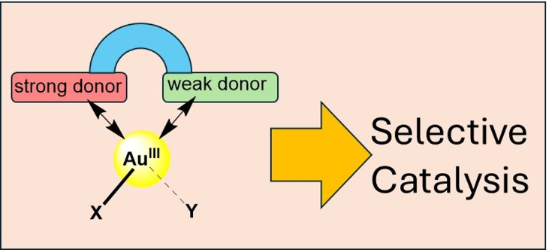
- isolated as a microcrystalline yellow solid that decomposes >−10 °C. The CO stretching frequency of 2167 cm−1 is 24 cm−1 higher than that of free 12CO and substantially higher than that of [(C^N^N)Pt–CO]+ (2094 cm−1). The calculated Au–CO bond enthalpy of −45.5 kcal/mol is about 7 kcal/mol less than that


Unsymmetrical sulfoxides with sterically hindered catechol fragment: synthesis, structure, electrochemical properties, and antiradical activity
Beilstein J. Org. Chem. 2026, 22, 828–837, doi:10.3762/bjoc.22.65
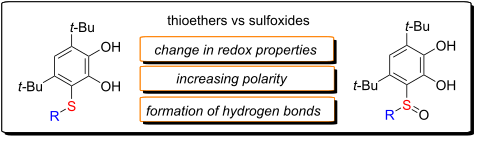
- spectroscopic data. In the IR spectra of the sulfoxides, bands corresponding to the stretching vibrations of hydrogen-bonded OH groups are observed. For compounds 2a–4a, 6a, and 7a, a single broad band appears in the region of 3223–3465 cm−1, whereas for 1a and 5a, two bands are fixed at 3418/3368 cm−1 and 3276
- /3509 cm−1, respectively. For most compounds, these bands are slightly shifted to lower wavenumbers by 22–62 cm−1 relative to the corresponding thioethers. The largest shifts, ranging from 146 to 180 cm−1, are registered for compounds 6a and 7a, which contain benzyl and naphthyl substituents
- , respectively. A notable feature of the IR spectrum of sulfoxide 5a is the smallest shift of the OH bands (6–13 cm−1) relative to the corresponding thioether, which is attributed to the bulky adamantyl substituent. Consequently, differences in the strength of hydrogen bonding among the synthesized compounds are


Synthesis and structural elucidation of a novel bis-spirooxindole from isatin and ethylenediamine
Beilstein J. Org. Chem. 2026, 22, 813–820, doi:10.3762/bjoc.22.63

- aromatic pattern of the isatin core. The IR spectrum showed a strong imine C=N band at 1610 cm−1, and the absence of the C-3 carbonyl stretching band confirmed complete condensation. The 13C NMR spectrum revealed multiple sets of closely related signals, consistent with the presence of three C=N
- give 25 as yellow crystals (1.06 g, 6.62 mmol, 67%). Mp = 169.5–170.4 °C; HRMS m/z: [M + H]+ calcd. for [C18H17N4O2 + H]+, 321.1352; found, 321.1358; IR (ATR) ν (cm−1): 3276, 1710, 1619, 1472, 744; 1H NMR (600 MHz, CD3OD) δ (ppm) 7.32 (ddd, J = 7.7, 1.1, 0.6 Hz, 2H, H4’, H4’’), 7.08 (td, J = 7.7, 1.2
- precipitation of the product. The orange precipitate was collected by filtration, washed with cold MeOH, and dried under vacuum to give 24 (1.05 g, 3.3 mmol, 66%). HRMS m/z: [M + H]+ calcd. for [C18H14N4O2 + H]+, 319.1190; found, 319.1188; IR (ATR) ν (cm−1): 3270, 2890, 1740, 1707, 1652, 1610, 1464, 1342, 1205


Knoevenagel condensation of 4,5- and 1,8-diazafluorenes
Beilstein J. Org. Chem. 2026, 22, 803–812, doi:10.3762/bjoc.22.62
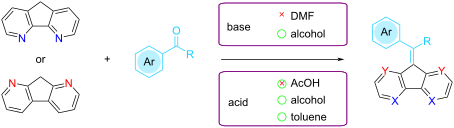
- M) THF in 1 × 1 cm quartz cuvettes using a Varian Cary 5000 UV-VIS-NIR spectrometer. Cyclic voltammetry measurements were performed in CH2Cl2 solution by computer-controlled P-20x potentiostat (SmartStat, Russia) in combination with a three-electrode cell (Gamry); 0.1 M tetrabutylammonium




Anti-invasive and cytotoxic evaluation of a (+)-pinoresinol-based semisynthetic library against glioblastoma
Beilstein J. Org. Chem. 2026, 22, 691–704, doi:10.3762/bjoc.22.54
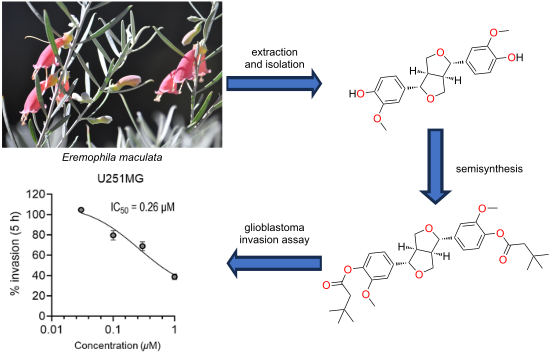
- using a silica flash column (3 × 6 cm) and a 10% stepwise gradient from 100% n–hexane to 100% EtOAc (100 mL washes) followed by a 10% MeOH/90% CH2Cl2 flush (100 mL) to afford 100 fractions that were analyzed by TLC and UHPLC–MS. These data enabled the combining (or discarding) of several fractions



Experimental and DFT studies on the regioselective methanolysis of 5-azido-9-oxabicyclo[6.1.0]nonan-4-yl 4-nitrobenzoate isomers
Beilstein J. Org. Chem. 2026, 22, 547–556, doi:10.3762/bjoc.22.40
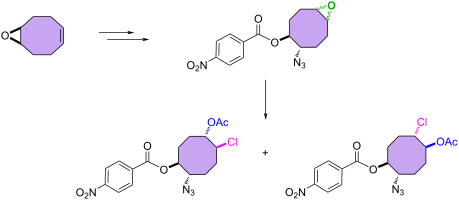
- , 30.7, 30.3, 23.8, 23.3; IR (cm−1): 3013, 2940, 2621, 2515, 2099, 1725, 1527, 1272, 1117, 1103; HRESIMS (m/z): [M+ + Na] calcd for C15H16N4O4, 339.1069; found, 339.1063. Epoxidation of the azidobenzoate 8 with m-CPBA The azidobenzoate 8 (1.00 g, 3.16 mmol) was dissolved in CH2Cl2 (70 mL) and cooled to


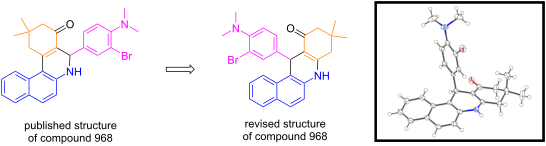
Structural reassignment of compound 968, an allosteric glutaminase inhibitor
Beilstein J. Org. Chem. 2026, 22, 455–460, doi:10.3762/bjoc.22.33
- 9.4), NAD+ (2 mM), glutamate dehydrogenase (1 µL of a 50% glycerol solution, 15 mg/mL), and hydrazine (0.5 µL) and incubated at room temperature for 40 min. The absorbance at 340 nm was measured and converted to glutamate concentration using the extinction coefficient for NADH of 6220 M−1 cm−1. The


Synthesis and anti-cancer activity of naphthalimide–organylselanyl conjugates
Beilstein J. Org. Chem. 2026, 22, 416–435, doi:10.3762/bjoc.22.29
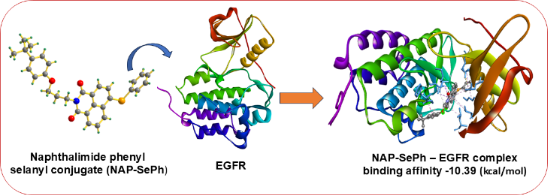
- , 143.4, 133.9, 132.2, 126.2, 123.3, 113.9, 65.6, 35.6, 34.1, 31.5, 28.4 ppm; FTIR (KBr): 2950, 2860, 1770, 1704, 1606, 1510, 1389, 1240, 1183, 1042, 931, 826, 716 cm−l. Synthetic procedure of compound 11 Compound 10 (0.4 g, 1.1 mmol) and 80% hydrazine hydrate (0.4 mL, 6.6 mmol) were added to 15 mL of
- , 1182, 1060, 941, 823, 545 cm−1. Synthetic procedure of compound 12 Bromonaphthalic anhydride (1.3 g, 4.8 mmol) was added to a stirred solution of amine 11 (1.0 g, 4.8 mmol) in ethanol (25 mL). The reaction mixture was refluxed for 2 h, and the progress of the reaction was monitored by TLC. After
- , 130.3, 129.0, 128.1, 126.1, 123.1, 122.2, 113.9, 66.1, 38.2, 34.0, 31.5, 28.1 ppm; FTIR (KBr): 2959, 2867, 1705, 1659, 1581, 1508, 1357, 1233, 1169, 1068, 945, 835, 780, 661, 555 cm−1. Synthetic procedure of compound 7 NaBH₄ (100 mg, 2.6 mmol) was added to a stirred solution of diphenyl diselenide (234


Design, synthesis and biological evaluation of 2,5-diaryloxazolo[4,5-d]pyrimidin-7-ylamines as selective cytotoxic agents against HeLa cells
Beilstein J. Org. Chem. 2026, 22, 390–398, doi:10.3762/bjoc.22.27

- spectroscopy, LC–MS and elemental analysis (Supporting Information File 1, Figures S1–S36). The IR spectra of compounds 1–5 showed the presence of NH absorption bands in the range 3381–2936 cm−1, OH at 3396 cm−1 (compound 9), and C=O at 1601–1610 cm−1 (compounds 6-8). Cytotoxic potency of the compounds 1–9


Electrosynthetic access to unsymmetrical oxaza[8]helicenes with high chiral stability and strong circularly polarized luminescence (CPL)
Beilstein J. Org. Chem. 2026, 22, 372–382, doi:10.3762/bjoc.22.25
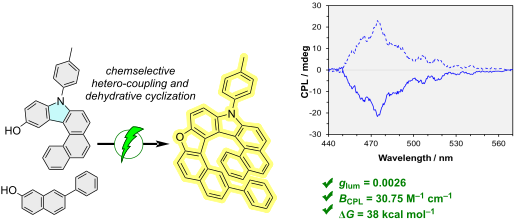
- ) relative to their oxaza[7]helicene analogues (<25 kcal/mol). After chiral HPLC separation, the enantiomers display mirror-image CD and strong solution CPL, with |glum| up to 2.6 × 10⁻³ and fluorescence brightness up to 30.75 M−1 cm−1. Keywords: chemoselectivity; chiroptical; circular dichroism
- . In chloroform, 5a shows a pronounced higher absorption peak at 426 nm (ε = 8.23 × 10⁴ M−1 cm−1) with an optical indirect bandgap (Eg) of 2.78 eV. Similarly, 5b, 6a, and 6b exhibit their higher absorption peaks at 433 nm (ε = 5.59 × 10⁴ M−1 cm−1), 407 nm (ε = 6.43 × 10⁴ M−1 cm−1), and 414 nm (ε = 9.02
- × 104 M−1 cm−1), with corresponding optical indirect bandgaps Eg of 2.70, 2.93, and 2.85 eV, respectively (see Supporting Information File 1). The photoluminescence (PL) spectra in chloroform display emission maxima at 459 and 468 nm for 5a and 5b, compared to 439 and 447 nm for 6a and 6b. To gain


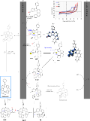


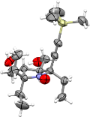
Synthesis of tricyclic fused pyrrolidine nitroxides from 2-alkynylpyrrolidine-1-oxyls
Beilstein J. Org. Chem. 2026, 22, 344–351, doi:10.3762/bjoc.22.22

- presence of DIPEA in chloroform under reflux (Scheme 2). These conditions ensured complete conversion in 30 minutes. The IR spectra of nitroxides 3a–f exhibit intense absorption bands in the ranges of 1354–1358 cm−1 and 1174–1178 cm−1, corresponding to the asymmetric and symmetric vibrations of the
- isolated from the reaction mixtures in each case. The IR spectra of the isolated compounds 4a–f showed characteristic absorption bands to the azido group vibrations at 2100–2116 cm−1. Absorption bands in the ranges of 1410–1420 cm−1 and 1170–1190 cm−1 were also observed, which can be assigned to the out-of
- catalytic system comprising PPh3, CuI, and Pd(PPh3)2Cl2. This procedure afforded alkynones 6a,b in the yields of 75% and 44%, respectively (Scheme 3). In the IR spectra of 6a,b intense bands were observed at 2212–2214 and 1645–1647 cm−1, assigned to vibrations of the triple bond, and the conjugated carbonyl




Streptoquinolines A and B, new antibacterial meroterpenoids produced by Streptomyces sp. TMPU-A0679
Beilstein J. Org. Chem. 2026, 22, 185–191, doi:10.3762/bjoc.22.12
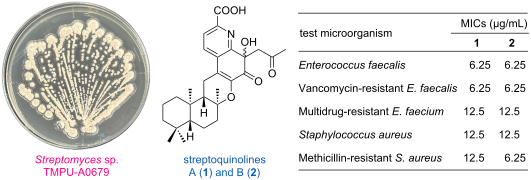
- and 1620–1680 cm−1 indicated the presence of hydroxy and carbonyl groups, respectively. Streptoquinoline A (1): The molecular formula of 1 was elucidated as C28H35NO6 based on HRESIMS measurements. The 13C NMR spectrum (in DMSO-d6) showed 28 signals, which were classified into five methyl carbons


Improved synthesis and physicochemical characterization of the selective serotonin 2A receptor agonist 25CN-NBOH
Beilstein J. Org. Chem. 2026, 22, 175–184, doi:10.3762/bjoc.22.11
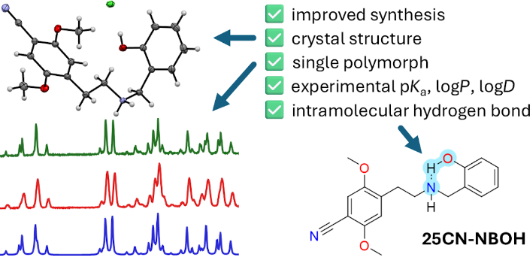
- relatively high solubility. Intramolecular hydrogen bonding Previous pharmacokinetic investigations showed that 1 displays high permeability in the MDCK assay (apical–basal 29 × 10−6 cm/s and basal–apical 20 × 10−6 cm/s) [6], a well-established in vitro model for assessing blood–brain barrier (BBB


Design and synthesis of an axially chiral platinum(II) complex and its CPL properties in PMMA matrix
Beilstein J. Org. Chem. 2026, 22, 143–150, doi:10.3762/bjoc.22.7
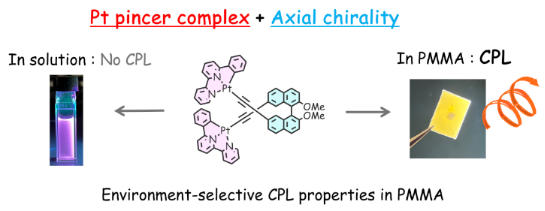
- of 300 nm. Fluorescence lifetimes were measured for solutions and powder samples with a HORIBA DeltaFlex spectrometer with a 370 nm LED light source for excitation. For the lifetime measurements of solution, a conventional 1 cm quartz cell was used. Optical rotation values were measured with a JASCO
- Hz, 2H), 7.45 (d, J = 8.8 Hz, 2H), 7.36 (dd, J = 1.6, 8.4 Hz, 2H), 7.202–7.198 (m, 2H), 3.74 (s, 6H), 0.17 (s, 18H); 13C NMR (100 MHz, CDCl3) δ 155.5, 133.7, 129.4, 128.9, 128.7, 128, 126.7, 121, 119.1, 114.7, 106.1, 94.2, 56.6, 0.05; IR (KBr) νmax: 3058, 1774, 1409, 1191, 1152, 969, 698, 553, 431 cm
- , 961, 882, 597, 530, 432 cm−1. The R-isomer was synthesized using a similar procedure to that of the S-isomer, except that compound R-2 (208 mg, 0.41 mmol) and TBAF (1.7 mL) in THF (17 mL) were used. The yield was 81%. Synthesis of S/R-Pt The synthesis of platinum(II) complex describe the R-enantiomer


Symmetrical D–π–A–π–D indanone dyes: a new design for nonlinear optics and cyanide detection
Beilstein J. Org. Chem. 2026, 22, 131–142, doi:10.3762/bjoc.22.6
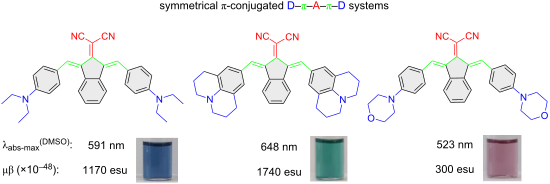
- method (CM)) (Scheme 1, Table 1). All syntheses were also carried out with microwave irradiation (MWI), which had a short reaction time; however, no improvement in yield was achieved (see Supporting Information File 1). The structural analyses of the compounds were performed using 1H/13C NMR and mass


Highly electrophilic, gem- and spiro-activated trichloromethylnitrocyclopropanes: synthesis and structure
Beilstein J. Org. Chem. 2026, 22, 123–130, doi:10.3762/bjoc.22.5
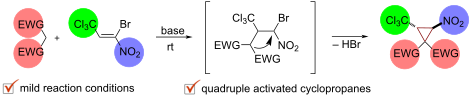
- independent molecules. Note that crystals 2, 3, 9a and 9b have a relatively high density (dcalc/g cm−3 1.739, 1.748, 1.595 and 1.567) for crystals that do not contain heavy atoms. In the absence of hydrogen bonds in the crystals of 2, 3, 9a and 9b, multiple specific interactions of the types such as lone
- (1H), 100.53 MHz (13C) in CDCl3 using residual signals of the nondeuterated solvent (δH 7.26, δC 77.16) as the references. The vibrational spectra were measured on a Shimadzu IR-Prestige-21 Fourier-transform IR spectrometer in KBr pellets over 400–4000 cm−1 range (resolution was 2 cm−1). Mass spectra


Synthesis and applications of alkenyl chlorides (vinyl chlorides): a review
Beilstein J. Org. Chem. 2026, 22, 1–63, doi:10.3762/bjoc.22.1
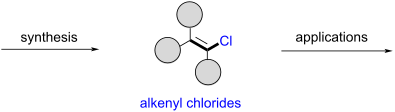
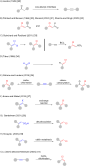
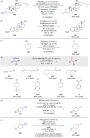
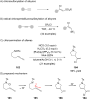
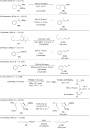
- chlorides (not shown) [185][186]. 1.8 Alkenyl chloride synthesis via olefin metathesis Johnson and co-workers investigated complex 287, which forms as a product of an initial metathesis cycle in the cross-metathesis (CM) with alkenyl chlorides (Scheme 55) [187][188]. The authors observed that complex 287