


Search results
Search for "epimerization" in Full Text gives 148 result(s) in Beilstein Journal of Organic Chemistry.
Modern synthetic pathways towards eribulin and its subunits
Beilstein J. Org. Chem. 2026, 22, 495–526, doi:10.3762/bjoc.22.37
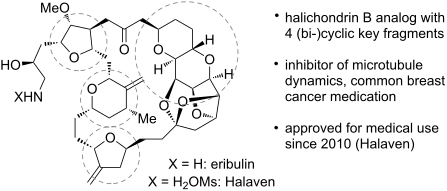
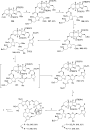
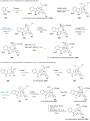
- reduction [85], epimerization of the secondary alcohol was effected via DMP-oxidation, and stereospecific reduction with Li(t-BuO)3AlH yielded 92. In comparison to the current pathway from 85 to 92, which involves the use of heavy metals adding considerable amounts of cost [19][66], this technique stands
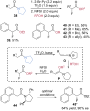
- )-235 and (S)-235), which epimerized upon the addition of ᴅ-proline. The subsequent stereoselective aldol reaction with tetrahydrothiopyran-4-one went significantly slower than the epimerization and was directed as well by the amino acid. Therefore, 236 was produced diastereoselectively via dynamic








Recent advances in the stereoselective synthesis of distal biaxially chiral molecules
Beilstein J. Org. Chem. 2026, 22, 461–479, doi:10.3762/bjoc.22.34
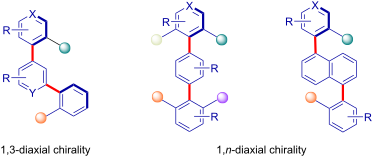
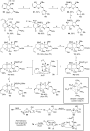
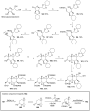
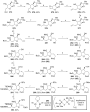
- prioritizing the construction of axially chiral diastereomers with the highest energy barriers to reduce the venture of subsequent epimerization. At the same time, the higher barrier diastereomer served as a chiral template for building the stereoconfiguration of axial chiral bonds. Remarkably, this strategy


Recent advances in the cleavage of non-activated amides
Beilstein J. Org. Chem. 2026, 22, 352–369, doi:10.3762/bjoc.22.23
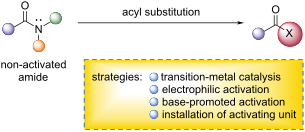
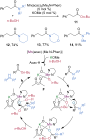
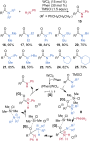
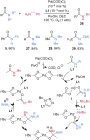
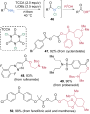
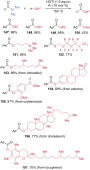
- epimerization. Notably, the chemoselective esterification of a complex peptide, containing four distinct amide bonds and the tert-butyl nicotinate directing group, delivered the ester product 193 in 58% yield. The p-methoxybenzyl (PMB) group was recognized as an efficient activating unit for the selective










Advances in Zr-mediated radical transformations and applications to total synthesis
Beilstein J. Org. Chem. 2026, 22, 71–87, doi:10.3762/bjoc.22.3
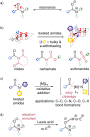
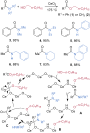
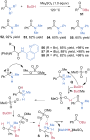
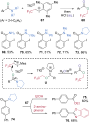
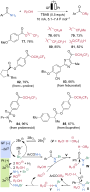
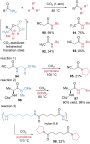
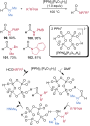
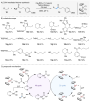
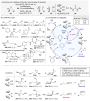
- total synthesis of the halichondrin family of natural products (Scheme 11) [37][38]. Ketone 57, an intermediate in the synthesis of halichondrins, bears a β-alkoxy substituent, which raises concerns about potential epimerization via a retro-oxa-Michael/oxa-Michael pathway (Scheme 11A). To address this
- issue, the authors first examined a model system. When β-alkoxythioesters (S)-52 were coupled with chiral alkyl iodides (S)-53 and (R)-53 under the developed conditions, the desired β-alkoxy ketones 54 were obtained in good yields without epimerization, affording optically pure products. These results
- % yield. No epimerization at the β-position was observed, and 57 was obtained as a single product. Subsequent removal of the silyl protecting group under PivOH buffer/TBAF conditions, followed by PPTS treatment, enabled spiroketal formation. Finally, epimerization at C38 with TMSOTf completed the total








Total synthesis of asperdinones B, C, D, E and terezine D
Beilstein J. Org. Chem. 2025, 21, 2730–2738, doi:10.3762/bjoc.21.210
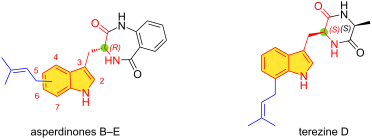
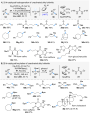
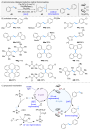
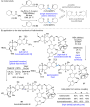
- tryptophan were explored. Different approaches were adopted for the functionalization of C4–C7 prenylindoles at C-3 using Negishi cross-coupling methods. The asperdinones are among the rare tryptophan-derived indole alkaloids which appear to have undergone epimerization due to genetic alteration of specific
- Bock in 1987 [16]. It is of interest that although the biosynthesis of 3-indolylbenzoquinone-2,5-dione ent-5 is initiated with ʟ-tryptophan and anthranilic acid [17], the resulting natural products 1–4 possess a (3R) configuration. This is because of an epimerization mediated by the non-ribosomal
- ), members of a new class of prenylated 3-indolyl-2,5-benzodiazepine-1,4-diones and diketopiperazine alkaloids, respectively, through Negishi cross-coupling and related C–H functionalization strategies. Importantly, no epimerization was observed during the Negishi coupling or throughout the subsequent steps


Recent advancements in the synthesis of Veratrum alkaloids
Beilstein J. Org. Chem. 2025, 21, 2657–2693, doi:10.3762/bjoc.21.206


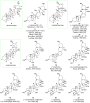
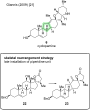

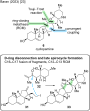

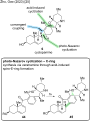









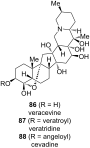


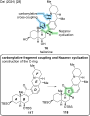

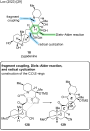
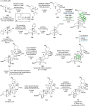
Recent advances in total synthesis of illisimonin A
Beilstein J. Org. Chem. 2025, 21, 2571–2583, doi:10.3762/bjoc.21.199
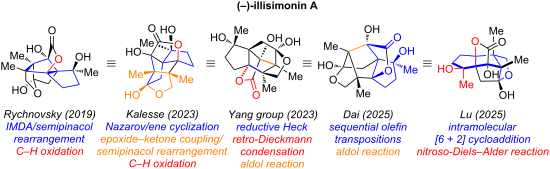
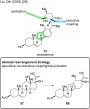
- transpositions [31]. Starting from (S)-carvone (67), reaction with allyl bromide introduced an allyl group to give 68, which was then converted to the bicyclic compound 69 via a ring-closing metathesis (RCM) reaction followed by one-pot epimerization at the α-position of the carbonyl group (Scheme 7






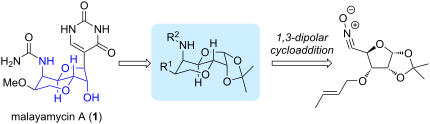
Rapid access to the core of malayamycin A by intramolecular dipolar cycloaddition
Beilstein J. Org. Chem. 2025, 21, 2542–2547, doi:10.3762/bjoc.21.196
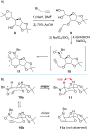
- undesired stereochemistry at C3 due to a possible chair-like transition state like 10a (Scheme 2B). This phenomenon is consistent with the observations from previous syntheses [31][35][36]. We anticipated that late-stage epimerization might invert the configuration once the acyl group is revealed at the C2




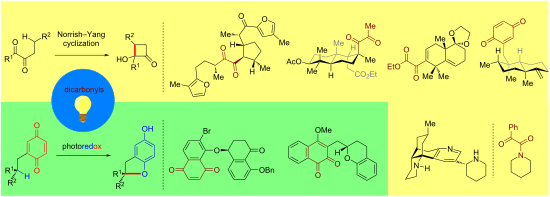
Recent advances in Norrish–Yang cyclization and dicarbonyl photoredox reactions for natural product synthesis
Beilstein J. Org. Chem. 2025, 21, 2315–2333, doi:10.3762/bjoc.21.177
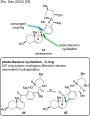
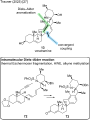
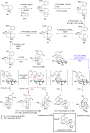
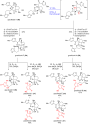
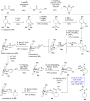
- (C6F5)3B triggered a Meinwald rearrangement, generating aldehyde 66. Nucleophilic addition, oxidation of the resulting alcohol, and base-promoted epimerization at C6 of 67' delivered 67. Subsequent dihydroxylation of the alkene in 67 and protection of the resulting 1,2-diol as a cyclic carbonate







Halogenated butyrolactones from the biomass-derived synthon levoglucosenone
Beilstein J. Org. Chem. 2025, 21, 2297–2301, doi:10.3762/bjoc.21.175
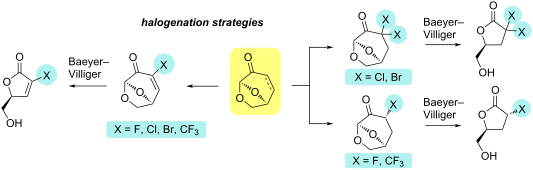
- enamine 9b, which was completely consumed in 6 hours at room temperature. Following acidic hydrolysis of the enamine, a mixture of α-trifluoromethylated ketone diastereomers was obtained, and subsequent epimerization with K2CO3 afforded 19 as a single stereoisomer in 48% yield. The equatorial position of




Enantioselective radical chemistry: a bright future ahead
Beilstein J. Org. Chem. 2025, 21, 2283–2296, doi:10.3762/bjoc.21.174
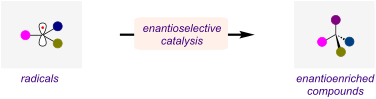
- for the construction of carbon–carbon and carbon–heteroatom bonds. Unlike many ionic reactions, radical reactions are often functional group tolerant and carried out under mild, neutral conditions, avoiding harsh acidic or basic conditions that can promote epimerization or decomposition of the product


Further elaboration of the stereodivergent approach to chaetominine-type alkaloids: synthesis of the reported structures of aspera chaetominines A and B and revised structure of aspera chaetominine B
Beilstein J. Org. Chem. 2025, 21, 2072–2081, doi:10.3762/bjoc.21.162
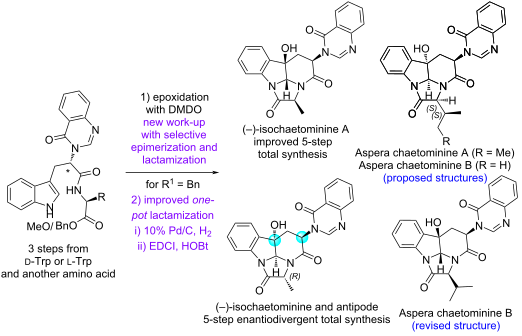
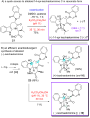
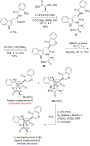
- synthesis of (–)-isochaetominine A was increased from 25.4% to 30.8% over five steps. Secondly, a new protocol featuring the use of an aged solution of K2CO3/MeOH to quench the DMDO epoxidation-triggered cascade reaction was developed, which allowed the in situ selective mono- or double epimerization at C11
- /C14 as shown by the diastereodivergent synthesis of a pair of diastereomers of versiquinazoline H from its tripeptide precursor. This double epimerization at the last-step allowed the enantiodivergent synthesis of two enantiomers in either racemate form or two pure enantiomers from the same precursor
- aspera chaetominine B. Keywords: epoxidation; selective epimerization; stereodivergent synthesis; structural revision; tandem reaction; Introduction In contemporary organic chemistry, due to the widespread application of modern separation and analytical techniques, the structural elucidation and



Enantioselective desymmetrization strategy of prochiral 1,3-diols in natural product synthesis
Beilstein J. Org. Chem. 2025, 21, 1932–1963, doi:10.3762/bjoc.21.151

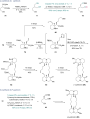
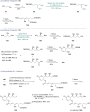
- with the desired C6 chiral center was constructed via intermediate 229, where the sulfinyl group induced K+–oxygen chelation to form a six-membered transition state prior to protonation from the less hindered face. Acid-mediated epimerization at C9 of 230 yielded compound 231, which was transformed












Structural analysis of stereoselective galactose pyruvylation toward the synthesis of bacterial capsular polysaccharides
Beilstein J. Org. Chem. 2025, 21, 1671–1677, doi:10.3762/bjoc.21.131

- undesired anomeric epimerization, leading to the production of two stereoisomers in a ratio of α/β = 1:1.6 [28][29]. To increase the yield and minimize anomeric epimerization, we employed the more reactive reagent, methyl 2,2-dimethoxypropanoate, which contains a hemiketal moiety. As expected, the reaction
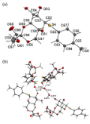
- In conclusion, we could successfully synthesize the pure R-isomer of pyruvated galactose, simultaneously avoiding anomeric epimerization. The crystal structure of pyruvylated galactose, potentially stabilized by hydrogen bonding, provided direct evidence confirming the diastereochemistry of the


Synthetic approach to borrelidin fragments: focus on key intermediates
Beilstein J. Org. Chem. 2025, 21, 1135–1160, doi:10.3762/bjoc.21.91
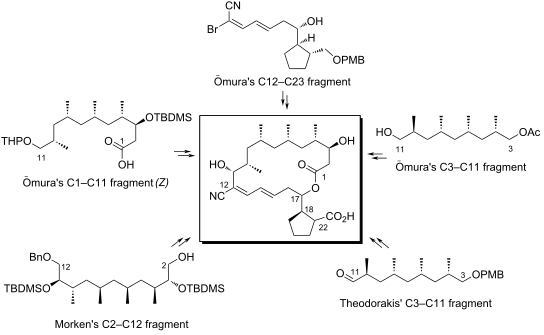
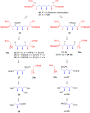
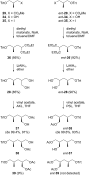
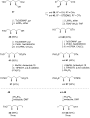
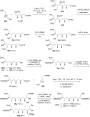
- as a PMB ether. Compound 84 could be obtained from the all-syn isomer 85 through an epimerization process. In route B, compound 86 was proposed to be synthesized from methyl ester 87. The transformation involved reduction of 87 to a primary alcohol, conversion of the alcohol into the corresponding
- iodide, and subsequent nucleophilic substitution with deprotonated (R,R)-91. The introduction of the OPMB functionality in compound 88 could then be achieved by following the steps employed in the transformation of 84 to 83. The synthesis via route A began with efforts to optimize the epimerization of








A convergent synthetic approach to the tetracyclic core framework of khayanolide-type limonoids
Beilstein J. Org. Chem. 2025, 21, 926–934, doi:10.3762/bjoc.21.75
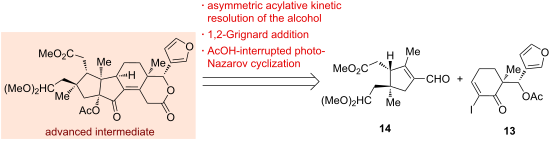
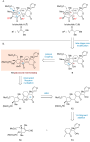
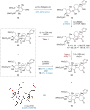
- .) of 24 led only to epimerization at C10 or slow decomposition of the starting material (see Supporting Information File 1, Table S1). Pleasingly, treating 24 with HMDS and TMSI regioselectively generated the expected TMS enol ether [46], which underwent a Li/Si exchange in the presence of MeLi




Silver(I) triflate-catalyzed post-Ugi synthesis of pyrazolodiazepines
Beilstein J. Org. Chem. 2025, 21, 915–925, doi:10.3762/bjoc.21.74
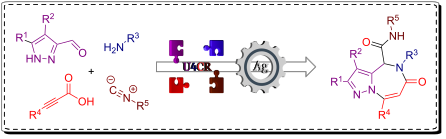
- reduction with LiAlH₄, which led to a further decrease in the degree of unsaturation of the pyrazolodiazepine core, while the more sterically hindered exocyclic amide moiety remained intact. However, both reactions were accompanied by partial epimerization, and careful kinetic control was therefore required




Organocatalytic kinetic resolution of 1,5-dicarbonyl compounds through a retro-Michael reaction
Beilstein J. Org. Chem. 2025, 21, 473–482, doi:10.3762/bjoc.21.34
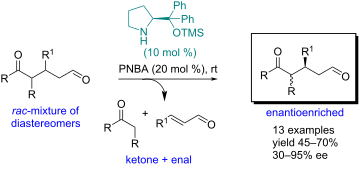
- mixture with its epimer. An epimerization process was observed when a 0.014 M solution of racemic anti-1 in toluene was stirred at room temperature in the presence of the prolinol derivative A (20 mol %). This process led to a mixture of syn/anti epimers that changed over time and reached a ratio of 1:7
- resulted in a slight decrease in enantioselectivity compared to the result obtained when starting from a 1:2 mixture of syn/anti-1. Scheme 6 presents a possible explanation for the epimerization of the pure rac-anti-1 adduct. The reaction of the more reactive enantiomer anti-(3R,4S)-1 with catalyst A leads
- to enamine E, which epimerizes at C-4 and, after hydrolysis, provides the adduct syn-(3R,4R)-1 with an initial er of 4:96. This diastereoselective epimerization phenomenon promoted by an organocatalyst has not been previously described. The study emphasizes the reversibility of some organocatalyzed


N-Glycosides of indigo, indirubin, and isoindigo: blue, red, and yellow sugars and their cancerostatic activity
Beilstein J. Org. Chem. 2024, 20, 2840–2869, doi:10.3762/bjoc.20.240
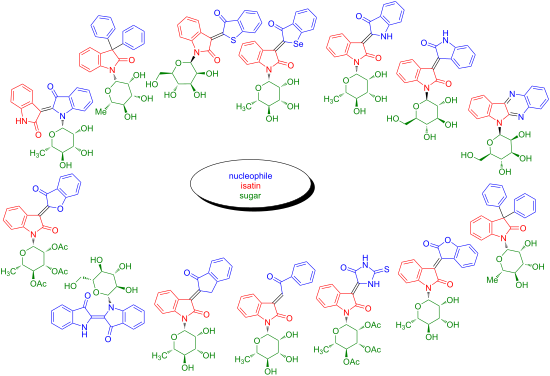
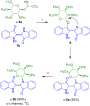
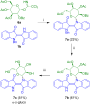
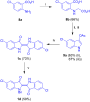
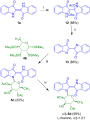
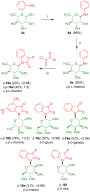
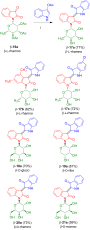
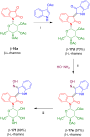
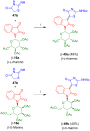
- -glycosides had to be employed in order to obtain anomerically pure indirubin-N-glycosides. As expected, no epimerization was observed during the base-mediated condensation as no aqueous acid was employed. All products were isolated as the pure Z-configured isomers (determination by NMR, the other isomer was











The scent gland composition of the Mangshan pit viper, Protobothrops mangshanensis
Beilstein J. Org. Chem. 2024, 20, 2644–2654, doi:10.3762/bjoc.20.222
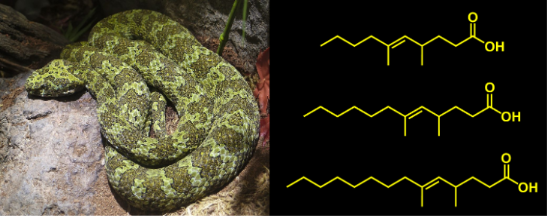
- occurring DKPs usually consist only of the ʟ,ʟ-diastereomer, here both syn- and anti-diastereomers were observed. This may be due to slow epimerization due to enolization within the gland or during sample preparation and storage, as the ᴅ,ʟ-diastereomers of proline DKPs are more stable than the ʟ,ʟ


Bioinformatic prediction of the stereoselectivity of modular polyketide synthase: an update of the sequence motifs in ketoreductase domain
Beilstein J. Org. Chem. 2024, 20, 1476–1485, doi:10.3762/bjoc.20.131
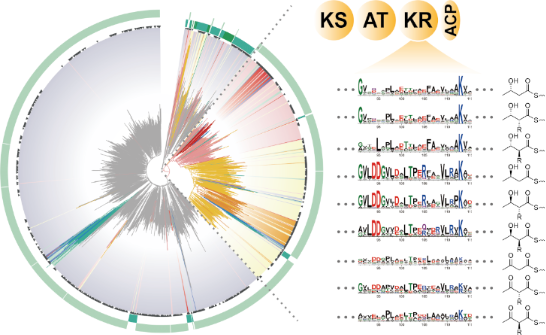
- epimerization of α-substituted intermediates. The lack of the conserved GM (11) motif preceding the αFG helix, which is highly conserved in other types of reductase-competent KRs, was also observed in A2-type KRs. The absence of this region in the electron density map of the A2-type AmpKR11 [30] may indicate a


Synthetic applications of the Cannizzaro reaction
Beilstein J. Org. Chem. 2024, 20, 1376–1395, doi:10.3762/bjoc.20.120
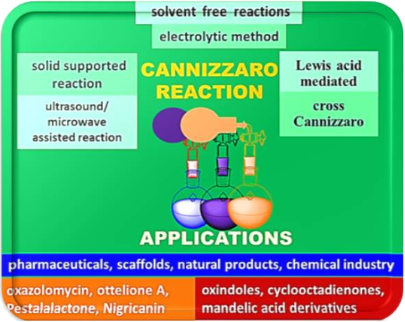
- numerous modified techniques, which established the greener side of the reaction. The use of Lewis acid catalysis in this regard [34][35][36][37][38][39] played a significant role, which also suppressed the epimerization in the case of chiral molecules. Among the various Lewis acid catalysts such as





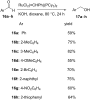


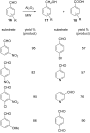
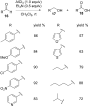


Sustainable tandem acylation/Diels–Alder reaction toward versatile tricyclic epoxyisoindole-7-carboxylic acids in renewable green solvents
Beilstein J. Org. Chem. 2024, 20, 1308–1319, doi:10.3762/bjoc.20.114
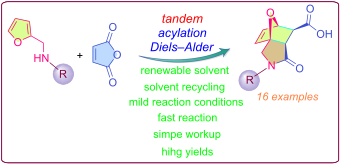
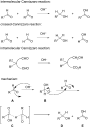
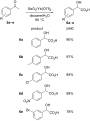
- conventional Diels–Alder reactions [95][118][119][120][121][122][123][124]. On the other hand, the initially exo carboxylic acid substituent in the oxanorbornene ring is converted to its endo isomer by epimerization upon heating the cycloadduct in a mixture of pyridine–glacial acetic acid (1:1). In the process


Confirmation of the stereochemistry of spiroviolene
Beilstein J. Org. Chem. 2024, 20, 852–858, doi:10.3762/bjoc.20.77
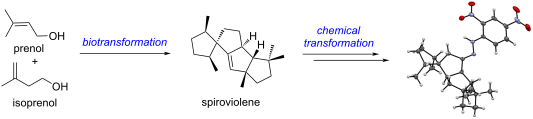
- amount of the C-9 epimerization product 11 might be explained by a competing radical oxidation of the organoborane intermediate IM-16 by oxygen when the oxidation step is opened to air [32][33]. On the other hand, an alternative mechanism for the formation of 11 involving the oxidation of the 9-epi-IM-16




Chemoenzymatic synthesis of macrocyclic peptides and polyketides via thioesterase-catalyzed macrocyclization
Beilstein J. Org. Chem. 2024, 20, 721–733, doi:10.3762/bjoc.20.66
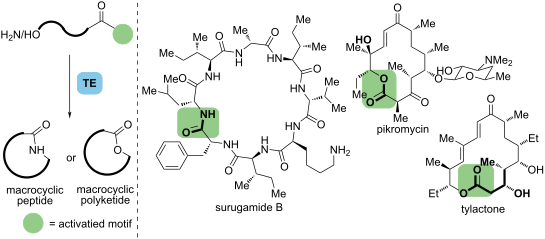
- the other hand, the chemoenzymatic process using purified Sgd TE from its biosynthesis and a linear peptide SNAC substrate gave the macrocycle in an acceptable yield without epimerization (Scheme 3). Although NAC-containing thioesters were widely employed, as described above, it had several
- limitations, such as possible Cα epimerization [45] during SNAC coupling and essential HPLC purification, which was generally difficult and time-consuming. Developing other different methods, exceptionally more straightforward approaches to access activated substrates, would solve this inevitable bottleneck
- at the biomimetic position (17a), which not only alleviated the epimerization in the macrolactamization process compared to other positions, but also enabled investigation of its biosynthetic pathway [60]. They also identified a stand-alone enzyme known as SurE, which is classified as a penicillin





