Search results
Search for "halogen" in Full Text gives 495 result(s) in Beilstein Journal of Organic Chemistry. Showing first 200.
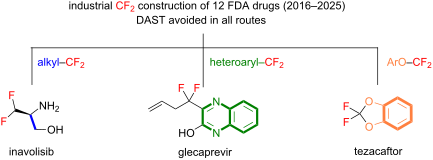
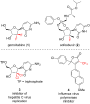
Construction of CF2 moieties in FDA-approved drugs (2016–2025): industrial routes, mechanisms, and scale-up considerations
Beilstein J. Org. Chem. 2026, 22, 1122–1150, doi:10.3762/bjoc.22.91






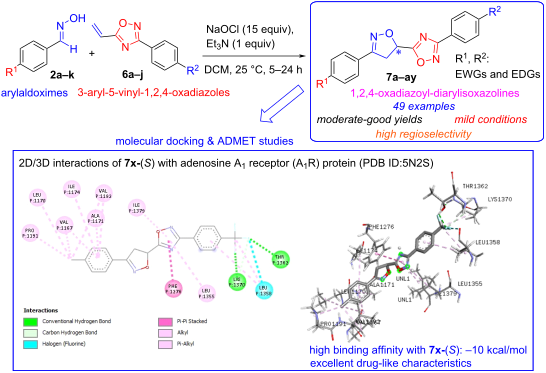
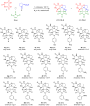
Synthesis of novel 1,2,4-oxadiazole-isoxazoline hybrids and their in silico potential with adenosine receptors
Beilstein J. Org. Chem. 2026, 22, 1033–1047, doi:10.3762/bjoc.22.82
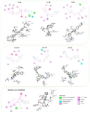
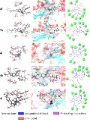
- alkyl and π-alkyl interactions were observed with Ile1174, Val1192, Val1167, Pro1191, and Leu1355 within hydrophobic regions of the binding pocket (Figure 3). Moreover, the S-enantiomer of 7aw formed a halogen bond with Leu1358 and displayed π-alkyl interactions with Ala1171, Val1192, Ile1174, and
- Val1167. Its oxadiazole ring also participated in π–π stacking with Tyr1376 and alkyl interactions with Ile1379. Similarly, the CF3 group on the benzene ring of the R-enantiomer of 7aw established a halogen bond with Ser1340, together with alkyl interactions involving Ile1153, Ile1206, and Ile1344, and π
- compounds (7x-(S), 7x-(R), 7j-(S), 7aw-(S), 7aw-(R), 7ah-(S)) and reference (co-crystallized) ligand with A1 adenosine receptor. Green arrows: conventional hydrogen bonds; pink region: alkyl connections; light pink region: pi-alkyl connections; blue region: halogen interactions; light green region: carbon


Z-Selective semihydrogenation of alkynes via Ni/Lewis acid synergistic catalyzed system using DMF as hydrogen source and solvent
Beilstein J. Org. Chem. 2026, 22, 1004–1012, doi:10.3762/bjoc.22.79
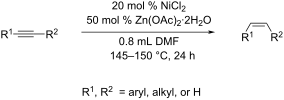
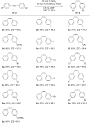
- tolerance. Ethers, halides (C–Cl, C–Br, C–F), and amides remained intact under the reaction conditions. Notably, substrates with strong electron-withdrawing substituents (e.g., –CF3 in 2f) or multiple halogen atoms (2i, 2o) were also well tolerated, affording the products in good yields and highlighting the
- mol % Zn(OAc)2·2H2O, DMF, 150 °C, 24 h), substrates bearing methyl (4b), methoxy (4c), and halogen (F for 4d, Cl for 4e, Br for 4f) substituents were smoothly converted to the corresponding styrene derivatives in 64–68% yields. Both electron-donating groups (methyl, methoxy) and halogen functional



Recent advances in copper-catalyzed direct hydroamination of alkenes with (hetero)aromatic amines
Beilstein J. Org. Chem. 2026, 22, 925–947, doi:10.3762/bjoc.22.73
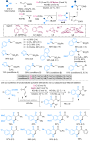
- functional group tolerance, including that for halogen-, ester-, and aryl-substituted pyrazoles, and provided hydroaminated bicyclic product 40 with high chemo- and stereoselectivity. In addition, oxa- and azabenzonorbornadiene substrates bearing diverse substituents on the aromatic ring were compatible
- exhibited a broad substrate scope with respect to the pyrazole and cyclopropene components. Symmetrical pyrazoles bearing alkyl, halogen, or electron-withdrawing substituents afforded the desired products in 40–94% yield with excellent enantioselectivity. Unsymmetrical pyrazoles also reacted efficiently







A practical CO2-mediated synthesis of 5,6-carboxylated silicon-rhodamines for targeted probe development
Beilstein J. Org. Chem. 2026, 22, 915–924, doi:10.3762/bjoc.22.72
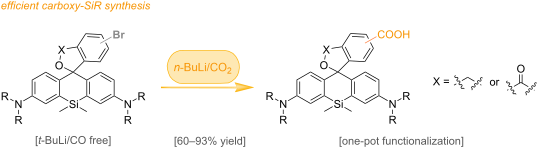
- challenging synthesis of 5,6-carboxylated SiR derivatives, which are essential intermediates for bioconjugation. Here, we report a practical CO2-mediated strategy for the synthesis of 5,6-carboxylated SiRs from brominated SiR precursors via lithium–halogen exchange and direct carboxylation. Using n-BuLi and
- HRMS (Figure S24) analysis identified this side product as the uncarboxylated rhodamine formed by lithium–halogen exchange followed by protonation. This byproduct likely arises from protonation of the aryllithium intermediate before efficient trapping by CO2, possibly due to trace moisture or other
- -carboxylated silicon-rhodamine (SiR) derivatives from brominated SiR precursors via lithium–halogen exchange and direct carboxylation. This method enables efficient access to carboxylated SiRs under mild conditions while avoiding the use of t-BuLi, toxic CO, and expensive palladium catalysts. The crude



Palladium-catalyzed benzocyclization reactions of quinoline-2-carboxamides via sequential C–H/N–H functionalization
Beilstein J. Org. Chem. 2026, 22, 905–914, doi:10.3762/bjoc.22.71
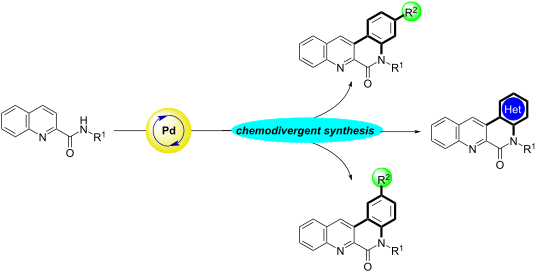
- carbon–heteroatom bonds. The classical coupling reactions, such as Kumada–Tamao–Corriu coupling [11][12][13], Sonogashira coupling [14][15], Negishi coupling [16][17], Migita–Kosugi–Stille coupling [18][19][20], Suzuki–Miyaura coupling [21][22], and Hiyama coupling [23][24] involve carbon–halogen and
- reactions of aryl carboxamides offer a method for synthesizing chemodivergent products from a single substrate. Importantly, these reactions are controlled by the different reactivities of the halogen atoms in the reagent structures. Several carbocycle C–H/N–H activated benzocyclizations have already been




Unsymmetrical sulfoxides with sterically hindered catechol fragment: synthesis, structure, electrochemical properties, and antiradical activity
Beilstein J. Org. Chem. 2026, 22, 828–837, doi:10.3762/bjoc.22.65
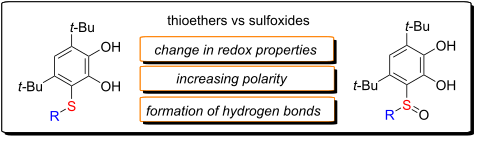
- -benzoquinones (−0.41 to −0.37) V [23]) and halogen-substituted 3,6-di-tert-butyl-4-chloro-o-benzoquinone (−0.44 V [50]), due to the electron-withdrawing effect of the sulfinyl group. This allows the electrogenerated o-benzoquinones to be considered as fairly strong electron acceptors. During electrolysis, the


Halogenated azobenzene acrylates: from efficient solution photoswitching to stable solid-state photochromic materials
Beilstein J. Org. Chem. 2026, 22, 782–794, doi:10.3762/bjoc.22.60
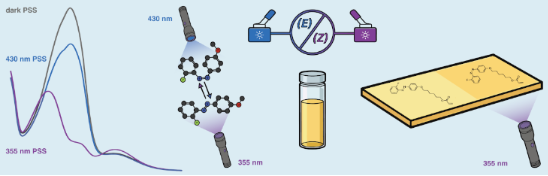
- halogenated azobenzene acrylate monomers bearing fluorine, chlorine or bromine substituents is reported. The monomers were prepared via a facile three-step synthetic route involving azo-coupling, O-alkylation and O-acylation. Apart from the steady electrochemical properties, halogen substitution proved to be
- for over 90 days. These findings demonstrate that ortho-halogenation is a powerful tool for tuning the properties of photoresponsive materials for potential applications in colorimetric thermal sensing and light-controlled functional systems. Keywords: azobenzene; E/Z isomerization; halogen
- diverse properties of various solid azobenzene polymeric systems. As an extension of these studies, we report herein a series of six novel azobenzene acrylate monomers 1a–f (Figure 1) structurally differing in the attached halogen atoms (F, Cl, and Br) at the positions 2 and 6. The described substitution


Preparation of 3-(alkylamino)imidazo[1,2-a]pyridine-2-carbaldehydes via Kornblum oxidation and unexpected ring-opening reactions of the corresponding alcohols under oxidative conditions
Beilstein J. Org. Chem. 2026, 22, 763–770, doi:10.3762/bjoc.22.58
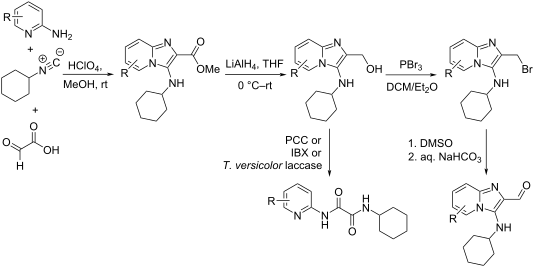
- 7 could be accessed from the corresponding 2-bromo derivative as shown in Figure 2 (top). Halogen substituents or a cyano group were planned at positions 5 and 6 of the imidazo[1,2-a]pyridine ring and the ortho-chloroaniline moiety was envisaged to be appended directly to position 2 because our


Spirobarbiturates with a pyrrolizidine moiety: synthesis, structure and biological evaluation
Beilstein J. Org. Chem. 2026, 22, 274–288, doi:10.3762/bjoc.22.20
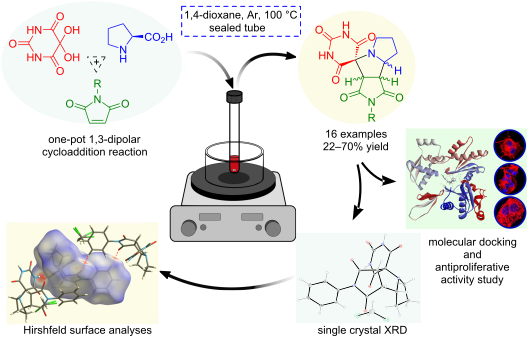
- -halogen substitution in aromatic maleimides was found to preferentially direct the cycloaddition toward the formation of exo-isomers. The structures of all obtained diastereomers were thoroughly characterized by 1H and 13C NMR spectroscopy. Single crystal XRD analysis of two representative compounds




A mild and atom-efficient four-component cascade strategy for the construction of biologically relevant 4-hydroxyquinolin-2(1H)-one derivatives
Beilstein J. Org. Chem. 2026, 22, 244–256, doi:10.3762/bjoc.22.18
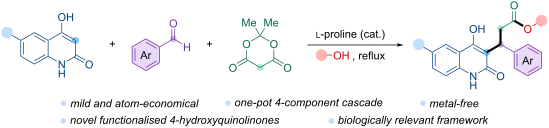
- -hydroxyquinoline scaffolds bearing both C6-halogen and γ-(3,4-dimethoxyphenyl)propanoic acid motifs. Existing approaches to such derivatives comprise typically multiple steps, are limited in scope, or require harsh reaction conditions, restricting their application in rapid analogue generation. The combination of
- activity [33]. Halogen substituents in this position have been shown to modulate antibacterial, antiviral, and antiproliferative activities, likely through electronic effects and improved target binding. The C3 position was functionalized with a propanoic acid moiety, explored in both its open-chain (acid
- , cyanoacrylates, and others. The second approach consists of the Michael 1,4-addition of the corresponding acetate or malonate anion to 3-arylidenequinolinedione. Both strategies were evaluated in subsequent studies. To implement these routes, 6-halogen-4-hydroxyquinoline-2-ones 2a–c were prepared. The synthesis


Synthesis of diaryl phosphates using phytic acid as a phosphorus source
Beilstein J. Org. Chem. 2026, 22, 213–223, doi:10.3762/bjoc.22.15
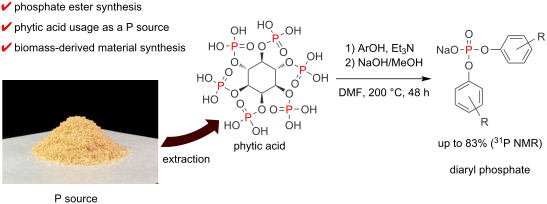
- methods for phosphorus chemicals that do not depend on white phosphorus or phosphorus chloride have been developed to reduce energy consumption and environmental hazards. For example, Montchamp’s group and Yang’s group have focused on using sodium phosphinate as an alternative to PCl3, and various halogen




A new synthesis of Tyrian purple (6,6’-dibromoindigo) and its corresponding sulfonate salts
Beilstein J. Org. Chem. 2026, 22, 167–174, doi:10.3762/bjoc.22.10
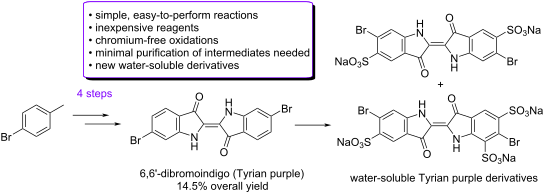
- color to be retained in its sulfonated derivatives [27][28][29]. As shown in Table 1, the pKa values of 9 and 10 each have first pKa values about 0.4 pK units below their non-brominated derivatives, indicating the impact of the electron-withdrawing halogen substituents [30]. Conclusion Overall, the


Circumventing Mukaiyama oxidation: selective S–O bond formation via sulfenamide–alcohol coupling
Beilstein J. Org. Chem. 2026, 22, 158–166, doi:10.3762/bjoc.22.9
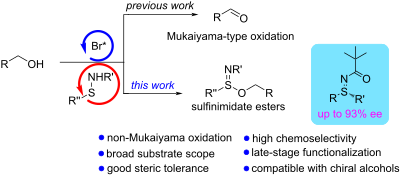
- diminished yields (68% and 88%, respectively; Table 1, entries 9 and 10). We tentatively attribute the inferior performance of NCS to its lower halogen-transfer efficiency and oxidation potential under the present conditions, which likely result in a less efficient generation of the key electrophilic sulfur
- species and in increased competitive decomposition. In contrast, the more strongly oxidizing TCCA tends to promote non-productive overoxidation pathways, thus also failing to match the efficiency of NBS. These results underscore the critical role of halogen source and oxidative strength in modulating the


Asymmetric Mannich reaction of aromatic imines with malonates in the presence of multifunctional catalysts
Beilstein J. Org. Chem. 2026, 22, 151–157, doi:10.3762/bjoc.22.8
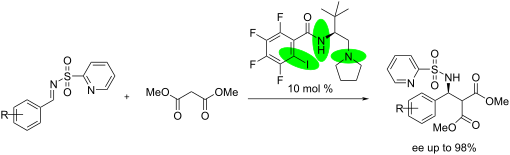
- synthesized and screened in asymmetric Mannich reaction. The reaction of aromatic imines with malonates in the presence of amino acid-derived catalysts gave Mannich adducts in very high enantiomeric purities (up to 98% ee). It is proposed that a network of hydrogen and halogen bonds with Lewis bases, together
- efficient in Mannich reactions, as demonstrated by our studies [18] and those of others [19][20][21]. Halogen bonding has also been introduced to further broaden the field of noncovalent interactions. Despite the limited number of asymmetric transformations driven solely by halogen-bond activation [22
- ], halogen bonding is more frequently employed as a component of multifunctional catalytic systems [23][24][25]. Multifunctionality of the catalyst is essential to intensify weak noncovalent interactions. Results and Discussion As a continuation of our previous studies [18][24], we now report an asymmetric


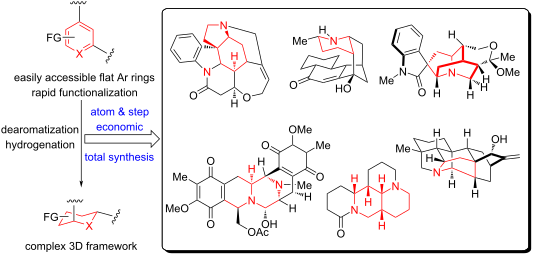
Total synthesis of natural products based on hydrogenation of aromatic rings
Beilstein J. Org. Chem. 2026, 22, 88–122, doi:10.3762/bjoc.22.4
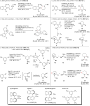
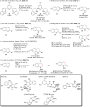
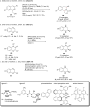
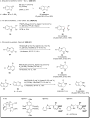
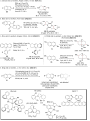
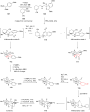
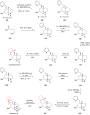
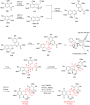
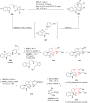
- (±)-dihydrolysergic acid (Scheme 11). Smith and co-workers recently reported a six-step synthesis of (±)-lysergic acid [77]. In contrast to previous approaches, the pyridine was introduced via a magnesium–halogen exchange of pyridyl iodide 93, followed by addition to aldehyde 94. Subsequent reduction of the resulting











Advances in Zr-mediated radical transformations and applications to total synthesis
Beilstein J. Org. Chem. 2026, 22, 71–87, doi:10.3762/bjoc.22.3
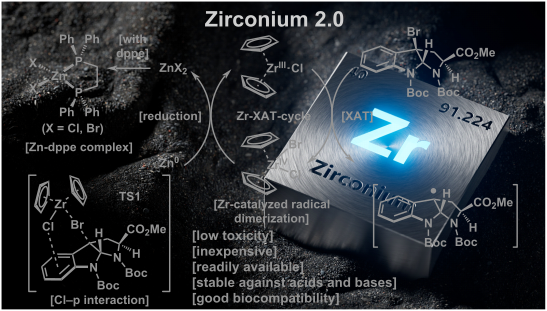
- for future development. Keywords: halogen atom transfer; photoredox; radical; total synthesis; zirconium; Introduction Zirconium, a transition metal in the same group as titanium, has been employed across research fields and in medical applications owing to its distinctive physical and chemical
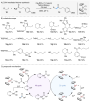
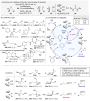
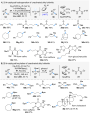
- Schwartz’s reagent (Scheme 1) [7][8]. When compound 2, bearing an alkyl halide and an olefin moiety, was treated with triethylborane and Schwartz’s reagent in tetrahydrofuran, a halogen atom transfer (XAT) occurred at the alkyl halide, generating alkyl radical 3. This radical subsequently underwent
- , Schwartz’s reagent reacts with triethylborane to generate a low-valent zirconium complex 5. This complex abstracts the halogen atom from the alkyl halide, forming alkyl radical 8. The radical then cyclizes onto the olefin, and the resulting radical intermediate undergoes hydrogen atom transfer (HAT) from








Reactivity umpolung of the cycloheptatriene core in hexa(methoxycarbonyl)cycloheptatriene
Beilstein J. Org. Chem. 2026, 22, 64–70, doi:10.3762/bjoc.22.2
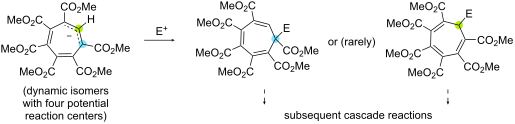
- chlorine is associated with an increase in energy of the lowest unoccupied molecular orbital of halogen molecules and a decrease in their electrophilicity. Therefore, if an electrophilic mechanism takes place, iodine apparently reacts with the main conformer faster than a transition to conformer 2' may
- possibility of i-halogenation via a chain radical mechanism (Scheme 3). The initiation stage includes an oxidation of anion 2 into the corresponding radical 13 which in turn reacts with halogens to form products 4a,b and a halogen atom which can also oxidize the anion. Quantum chemical calculations revealed


Synthesis and applications of alkenyl chlorides (vinyl chlorides): a review
Beilstein J. Org. Chem. 2026, 22, 1–63, doi:10.3762/bjoc.22.1
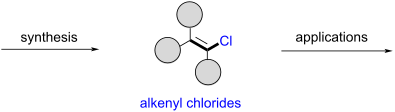
- -catalyzed C–halogen bond formation (Figure 3E) [36]. Exchange reactions were reviewed by Evano and Nitelet in 2018 (Figure 3F) [37]. In 2020, Gandelman and co-workers provided an overview of decarboxylative chlorination reactions of carboxylic acids (Figure 3G) [38]. Hoveyda’s 2023 review highlights
- reported the use of (PhO)3P–halogen-based reagents for the synthesis of alkenyl halides (Scheme 12) [64]. A variety of alkenyl chlorides was obtained in good yields, with functional groups such as esters and boronates well tolerated. When camphor was treated with (PhO)3P·Cl2 (TPPCl2), the two
- Finkelstein-type halide exchange reaction (Scheme 23). This strategy leverages the decreasing bond-dissociation energies across the halogen series – C–Cl (D298(C−Cl) = 395 kJ mol−1) and C–Br (D298(C–Br) = 318 kJ mol−1) bonds compared to the C–I bond (D298(C–I) = 253 kJ mol−1) to drive the substitution of























Recent advancements in the synthesis of Veratrum alkaloids
Beilstein J. Org. Chem. 2025, 21, 2657–2693, doi:10.3762/bjoc.21.206
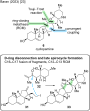
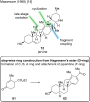
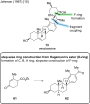
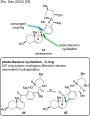
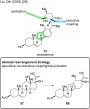
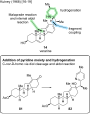
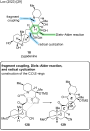
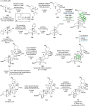
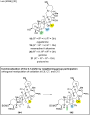
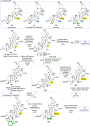
- –halogen exchange in the ABC-fragment 38 followed by 1,2-addition to the ketone moiety in the F-ring fragment 42. Protection group manipulations allowed for the union of both fragments to advanced intermediate 43 in three steps in 42%, setting the stage for the key cyclization reactions in this sequence
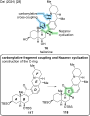
- butenolide moiety, selective α-methylation, formation of a lactam, reduction of the former to an amine, and installation of two different protecting groups. Aryl bromide 53 (fragment B) was then ready for coupling. Lithium–halogen exchange in fragment B 53 and subsequent 1,2-addition to fragment A 47
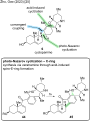
- coupling was carried out via lithium–halogen exchange, 1,2-addition, and subsequent oxidation to give ketone 48. Photoinduced excited-state Nazarov cyclization installed the cyclopentenone C-ring with correct stereoconfiguration at C9 and C10 in excellent yield. Ketone reduction and global deprotection
















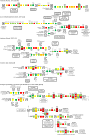
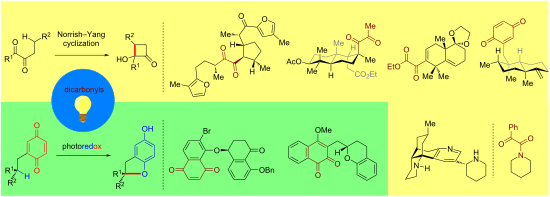
Recent advances in Norrish–Yang cyclization and dicarbonyl photoredox reactions for natural product synthesis
Beilstein J. Org. Chem. 2025, 21, 2315–2333, doi:10.3762/bjoc.21.177
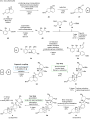
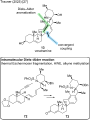
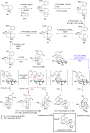
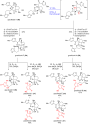
- ; and subsequent conversion of the ketone in 20 to the vinyl iodide in 21 – via hydrazone formation, lithium–halogen exchange, and final nucleophilic substitution – secured the Norrish–Yang cyclization precursor 22. Following systematic optimization of reaction conditions, irradiation of 22 with 100 W







Halogenated butyrolactones from the biomass-derived synthon levoglucosenone
Beilstein J. Org. Chem. 2025, 21, 2297–2301, doi:10.3762/bjoc.21.175
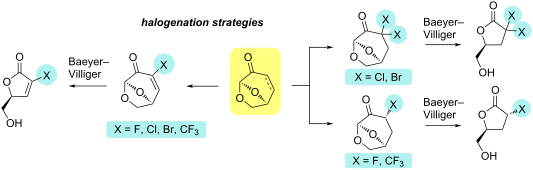
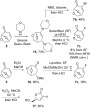
- monochlorination and bromination of ketone 6 via enamine 9a [31], and it was envisaged that 9a would be a suitable substrate to achieve the double halogenation using an excess of electrophilic halogen. When enamine 9a was treated with 1.0 mol equivalent of trichloroisocyanouric acid (TCCA), a reagent which can
- chiral halogenated lactones, which could be useful in the enantioselective synthesis of valuable drug precursors. The syntheses feature the use of readily available and cheap starting materials, and we have also demonstrated some of these transformations on a gram scale. Halogen-containing butyrolactone




Enantioselective radical chemistry: a bright future ahead
Beilstein J. Org. Chem. 2025, 21, 2283–2296, doi:10.3762/bjoc.21.174
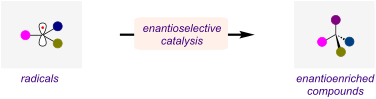
- transferred to the radical. Important processes of this kind are hydrogen atom transfer (HAT) and halogen atom abstraction. An intramolecular group transfer reaction can result in the net migration of a functional group. Addition of a radical to a π-bond (carbon–carbon or carbon–heteroatom) is another common


Research towards selective inhibition of the CLK3 kinase
Beilstein J. Org. Chem. 2025, 21, 2250–2259, doi:10.3762/bjoc.21.172
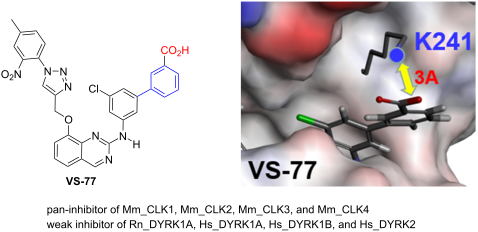
- decided to prepare also the same molecules with hydrogen instead of the chlorine in meta position of the anilino group. Our previous work on DB18 suggested indeed that the chlorine atom is implicated in intramolecular halogen–π interaction, ending in a conformational constraint and ligand rigidity [24


The application of desymmetric enantioselective reduction of cyclic 1,3-dicarbonyl compounds in the total synthesis of terpenoid and alkaloid natural products
Beilstein J. Org. Chem. 2025, 21, 2085–2102, doi:10.3762/bjoc.21.164
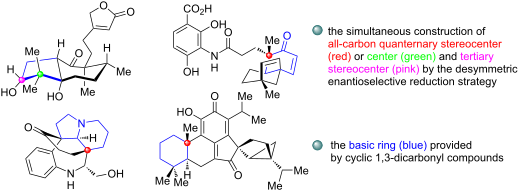
- transformations of 121 generated bromodiene 122. Next, the metal–halogen exchange/intermolecular addition of 122 with aldehyde (+)-123 and in situ PtCl2-promoted hydrolysis and hydration gave tricyclic product 124. The BnMe3NOH-mediated intramolecular Michael/aldol cascade reaction of 124 constructed the C/D