


Search results
Search for "hydrazine" in Full Text gives 218 result(s) in Beilstein Journal of Organic Chemistry. Showing first 200.
Synthesis of sterically shielded piperidine nitroxides via acid-catalyzed heterocyclization of β-aminoketone derivatives with ketones
Beilstein J. Org. Chem. 2026, 22, 948–954, doi:10.3762/bjoc.22.74
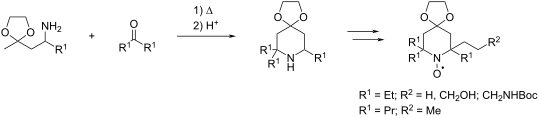
- bonds afforded the corresponding saturated derivatives 8a–d. Specifically, alkynyl derivatives 7a–c were hydrogenated with H2 over a palladium catalyst, while the allyl derivative 7d was reduced with hydrazine over Raney nickel (Scheme 4). The absence of signals corresponding to alkene protons in the 1H


Design, synthesis, and biological evaluation of FXR/ASK1 dual-target modulators
Beilstein J. Org. Chem. 2026, 22, 771–781, doi:10.3762/bjoc.22.59
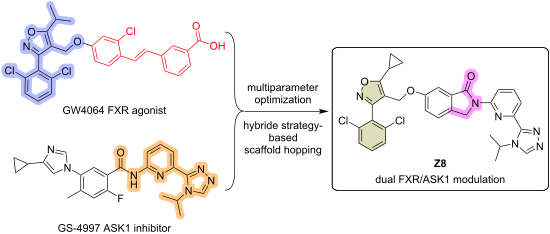
- preparation of triazole intermediates IXa–d is shown in Scheme 5. Firstly, compound VI was reacted with hydrazine hydrate in methanol to obtain hydrazide VII which was mixed with DMF/DMA and heated to provide intermediate VIII. The obtained VIII was not purified and directly reacted with different amines to


Structural reassignment of compound 968, an allosteric glutaminase inhibitor
Beilstein J. Org. Chem. 2026, 22, 455–460, doi:10.3762/bjoc.22.33
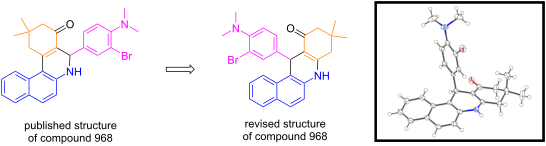
- 9.4), NAD+ (2 mM), glutamate dehydrogenase (1 µL of a 50% glycerol solution, 15 mg/mL), and hydrazine (0.5 µL) and incubated at room temperature for 40 min. The absorbance at 340 nm was measured and converted to glutamate concentration using the extinction coefficient for NADH of 6220 M−1 cm−1. The


Synthesis and anti-cancer activity of naphthalimide–organylselanyl conjugates
Beilstein J. Org. Chem. 2026, 22, 416–435, doi:10.3762/bjoc.22.29
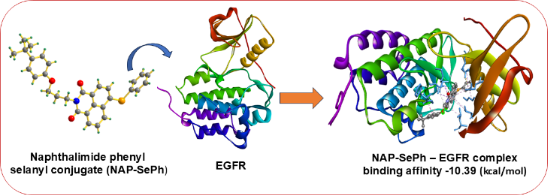
- , 143.4, 133.9, 132.2, 126.2, 123.3, 113.9, 65.6, 35.6, 34.1, 31.5, 28.4 ppm; FTIR (KBr): 2950, 2860, 1770, 1704, 1606, 1510, 1389, 1240, 1183, 1042, 931, 826, 716 cm−l. Synthetic procedure of compound 11 Compound 10 (0.4 g, 1.1 mmol) and 80% hydrazine hydrate (0.4 mL, 6.6 mmol) were added to 15 mL of
- synthesis of diorganyl monoselenides 7 and 8: (a) N-(3-bromopropyl) phthalimide, K2CO3, CH3CN, reflux 48 h, yield 53%; (b) hydrazine hydrate, ethanol, reflux 8 h, yield 48%; (c) 4-bromo-1,8-naphthalic anhydride, ethanol, reflux 2 h, yield 66%; (d) diphenyl diselenide, NaBH4, DMSO and THF, rt, 1.5 h, yield


Synthesis of tricyclic fused pyrrolidine nitroxides from 2-alkynylpyrrolidine-1-oxyls
Beilstein J. Org. Chem. 2026, 22, 344–351, doi:10.3762/bjoc.22.22

- -alkynyl-substituted pyrrolidine nitroxides was studied. These nitroxides have been prepared via intramolecular Huisgen cycloaddition or intramolecular alkylation in 2-pyrazolyl derivatives prepared by Michael addition–cyclocondensation of the corresponding alkynones with hydrazine. The reduction kinetics
- Huisgen cycloaddition or via one-pot Michael addition–cyclocondensation reaction with hydrazine with subsequent intramolecular alkylation of the resulting pyrazoles. Results and Discussion Synthesis We have earlier reported on the synthesis of 2-alkynylpyrrolidine-1-oxyls 2a–c via addition of the
- rigid condensed systems can be constructed on the basis of pyrazole ring. The reaction of conjugated alkynones with hydrazine is a common pathway to pyrazoles [29]. Alkynones, in turn, can be prepared by Sonogashira acylation of terminal alkynes [30]. To prevent formation of mixtures due to incomplete




Sustainable electrochemical synthesis of aliphatic nitro-NNO-azoxy compounds employing ammonium dinitramide and their in vitro evaluation as potential nitric oxide donors and fungicides
Beilstein J. Org. Chem. 2025, 21, 2739–2754, doi:10.3762/bjoc.21.211
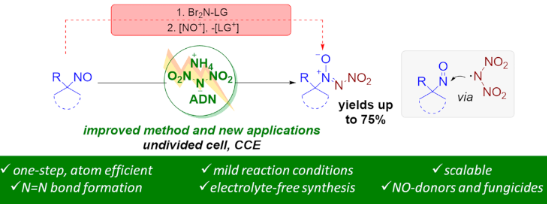
- ][31][32][33][34][35] coupling is very limited. In most existing approaches, the N–N and N–O moieties are derived from hydrazine or hydroxylamine synthons, respectively. The development of novel synthetic methodologies based on non-traditional retrosynthetic disconnections offers a potential pathway to

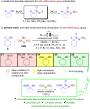


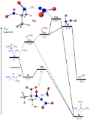


Recent advances in total synthesis of illisimonin A
Beilstein J. Org. Chem. 2025, 21, 2571–2583, doi:10.3762/bjoc.21.199
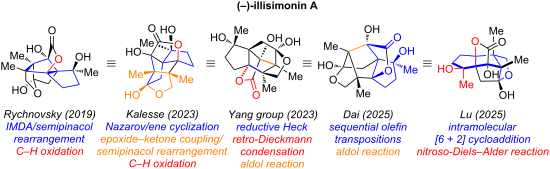
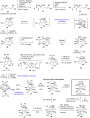
- then converted to vinyl iodide 26 via hydrazine formation followed by iodination using Barton’s method. Subsequent Bouvealt aldehyde synthesis and in situ reduction delivered allylic alcohol 27. Epoxidation of 27 with m-CPBA afforded the rearrangement precursor 28. Protonic acid-promoted semipinacol






Pd-catalyzed dehydrogenative arylation of arylhydrazines to access non-symmetric azobenzenes, including tetra-ortho derivatives
Beilstein J. Org. Chem. 2025, 21, 2234–2242, doi:10.3762/bjoc.21.170
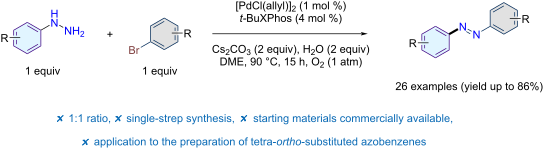
- identical conditions with other aryl bromides like 4-bromotoluene, the reaction failed to form azobenzene 3b, instead yielding 1-phenyl-1-(p-tolyl)hydrazine, resulting from arylation of the central nitrogen (Table 1, entry 4 and Supporting Information File 1). This unexpected result prompted us to further


Thiadiazino-indole, thiadiazino-carbazole and benzothiadiazino-carbazole dioxides: synthesis, physicochemical and early ADME characterization of representatives of new tri-, tetra- and pentacyclic ring systems and their intermediates
Beilstein J. Org. Chem. 2025, 21, 2220–2233, doi:10.3762/bjoc.21.169
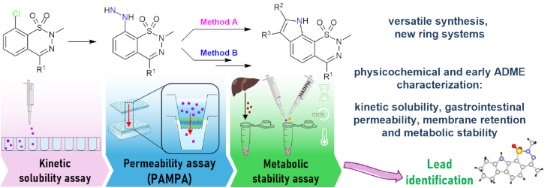
- -1,2,3-benzothiadiazine 1,1-dioxide (4b), both described in our earlier publication [8]. Treatment of compounds 4a,b with hydrazine monohydrate afforded 8-hydrazino derivatives 5a,b as suitable starting materials for the construction of the indole structural element of compounds 3 by Fischer indole
- 8-chloro-2,4-dimethyl-2H-benzo[e][1,2,3]thiadiazine 1,1-dioxide (4a, 7.10 g, 29.0 mmol) and pyridine (80 mL), hydrazine monohydrate (14.1 mL, 14.5 g, 290 mmol) was added dropwise. After refluxing for 26 h, the reaction mixture was evaporated to dryness, the residue was triturated with water
- , 20.5; IR (KBr) ν̃: 3407, 3360, 1477, 1302, 1151, 1106 cm−1; HREIMS (m/z): [M•]+ calcd for C9H12N4O2S, 240.0675; found, 240.0677. 8-Hydrazino-2-methyl-4-phenyl-2H-1,2,3-benzothiadiazine 1,1-dioxide (5b). To a mixture of 4b (4.00 g, 13.0 mmol) and pyridine (36 mL), hydrazine monohydrate (6.30 mL, 6.50 g


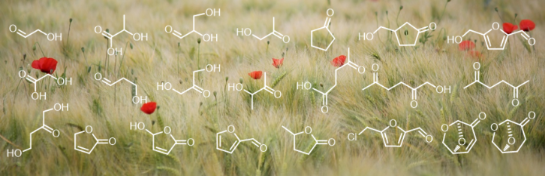
C2 to C6 biobased carbonyl platforms for fine chemistry
Beilstein J. Org. Chem. 2025, 21, 2103–2172, doi:10.3762/bjoc.21.165


Chiral phosphoric acid-catalyzed asymmetric synthesis of helically chiral, planarly chiral and inherently chiral molecules
Beilstein J. Org. Chem. 2025, 21, 1864–1889, doi:10.3762/bjoc.21.145
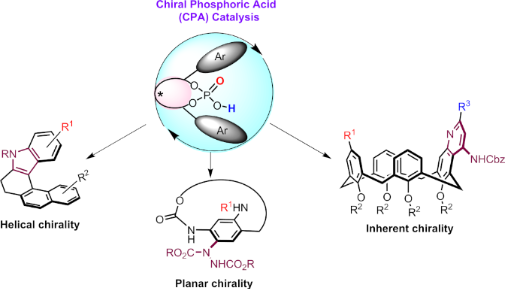
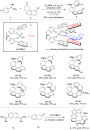
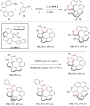
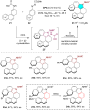
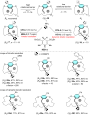
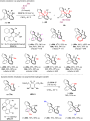
- approaches [20]. In 2014, List and co-workers reported the pioneering CPA-catalyzed asymmetric synthesis of helically chiral molecules, which also marked the first organocatalyzed asymmetric synthesis of such compounds [12]. By employing a CPA-catalyzed asymmetric Fischer indolization reaction of hydrazine 1
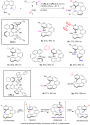
- stereoselectivity for the more sterically demanding aza[5]helicene 3c and aza[7]helicenes 3d–f. Furthermore, the authors expanded this methodology to a double Fischer indolization reaction between hydrazine 1i and ketone 2i, which yielded diaza[8]helicene 4 with moderate yield and high enantioselectivity after
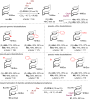
- electrophilic amination reaction of the aniline moiety with azodicarboxylates [37][38], the introduction of a bulky hydrazine group restricted the free flipping of the benzene ring, leading to the formation of planar chiral macrocycle 33 with high enantioselectivity (Scheme 9). Substrate scope studies










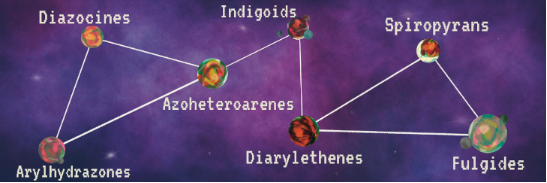
Photoswitches beyond azobenzene: a beginner’s guide
Beilstein J. Org. Chem. 2025, 21, 1808–1853, doi:10.3762/bjoc.21.143
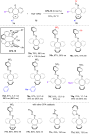
- reductive cross-coupling of benzyl halides when substituents prone to reduction (CN, esters) are present (Scheme 12C). The Ullman–Goldberg coupling of 41b with Boc-hydrazine followed by deprotection and oxidation then affords 35 [55]. Asymmetric diazocines can be synthesised by Sonogashira cross-coupling
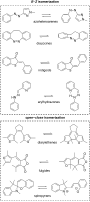
- acylhydrazones are accessible with comparatively low synthetic effort, especially compared to diarylethenes and fulgides. The synthesis of arylhydrazones is usually performed through condensation between a carbonyl 112 and a hydrazine 111 (Scheme 35A) [109]. Alternatively, one can perform an azo-coupling between
- a diazonium salt 113 and a nucleophile 114 (Scheme 35B) [113] or a Grignard/aryllithium reagent 115 and a diazo compound 116 (Scheme 35C) [108]. Acylhydrazones 110 can be synthesised by reaction of hydrazine with 118 and subsequent acid-catalysed condensation of 119 with carbonyl 120 (Scheme 36






High-pressure activation for the solvent- and catalyst-free syntheses of heterocycles, pharmaceuticals and esters
Beilstein J. Org. Chem. 2025, 21, 1374–1387, doi:10.3762/bjoc.21.102
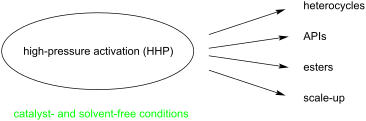
- pressure, the originally liquid mixture turns to a semisolid, viscous oily product, as shown in Figure 2. The numerical values are presented in Table 2. The data shows that using excess hydrazine under pressure of 3.8 kbar resulted in the best performance. Based on the optimized data several compounds were
- yields. Although the reactions do occur at ambient pressure, the pressurized reactions generally provide higher yields under the otherwise same conditions. It also appears that the reactivity of the hydrazine plays a significant role. In the case of the highly reactive hydrazine, the positive effect of
- numbers in parentheses represent the yields of the respective control reactions at 1 bar pressure. In the case of the unsubstituted hydrazine (NH2–NH2), the non-aromatic product, dihydropyrazole, formed. High pressure-initiated synthesis of the active pharmaceutical ingredients in Tylenol® and Aspirin


Substituent effects in N-acetylated phenylazopyrazole photoswitches
Beilstein J. Org. Chem. 2025, 21, 830–838, doi:10.3762/bjoc.21.66
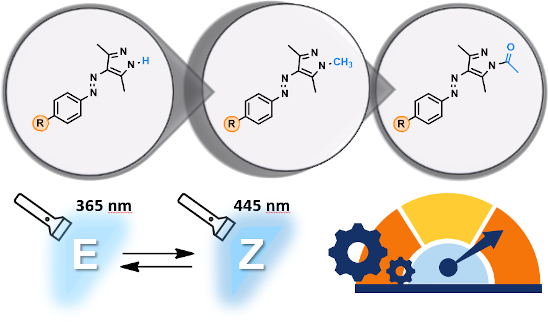
- hydrazine or methylhydrazine to yield NH-PAPs or NMe-PAPs, respectively, in high to quantitative yields. The NAc-PAPs were synthesized via an acetylation reaction of NH-PAPs with acyl chloride, forming the novel NAc-PAPs. While the molecules could be extracted and purified by column chromatography without


Study of the interaction of 2H-furo[3,2-b]pyran-2-ones with nitrogen-containing nucleophiles
Beilstein J. Org. Chem. 2025, 21, 556–563, doi:10.3762/bjoc.21.44
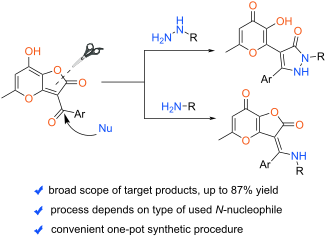
- ][9]. Wherein, the wide variety of easily available starting butenolides and amines allows one to create a huge array of practically useful products. At the same time, the application of hydrazine derivatives expands the range of formed heterocycles. So, along with the aforementioned N-substituted
- process with hydrazine derivatives is known in the literature. Therefore, the study of recyclizations of heterocyclic systems containing the 3-acylfuran-2(5H)-one core under action of various hydrazines is of a great interest. Ongoing our research in the field of allomaltol chemistry in the present
- amines and 2H-furo[3,2-b]pyran-2-ones 1 without electron-donating units at the aryl fragment (Scheme 3). Further, we investigated the interaction of furanones 1 with various hydrazine derivatives 6. For this purpose, we tested the model reaction of furanone 1a with phenylhydrazine 6a under various


Unprecedented visible light-initiated topochemical [2 + 2] cycloaddition in a functionalized bimane dye
Beilstein J. Org. Chem. 2025, 21, 500–509, doi:10.3762/bjoc.21.37
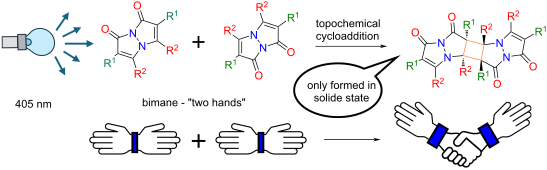
- reacts with hydrazine hydrate and is heated to reflux, forming a pyrazolinone 2. This product is then chlorinated at the α-carbon, introducing a leaving group, to yield 3. The parent pyrazolinone 3 is subsequently treated with a base (either K2CO3 or N,N-diisopropylethylamine) to form the bimane 4. For


The effect of neighbouring group participation and possible long range remote group participation in O-glycosylation
Beilstein J. Org. Chem. 2025, 21, 369–406, doi:10.3762/bjoc.21.27
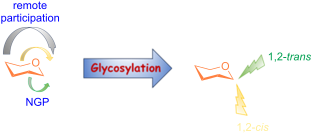
- . Levulinoyl protection: Levulinic acid (Lev, 27) as protecting group which can be cleaved using hydrazine hydrate in AcOH, also yields highly selective 1,2-trans glycosides [95][96] and was implemented as a substitute for acetyl or benzoyl protection [97][98]. van Boom et al. also showed the use of a masked
- ] or hydrazine dithiocarbonate [116][117]. Owing to its versatile selectivity, it has been widely used in oligosaccharide synthesis [118][119][120][121][122] to implement the neighbouring group participation protocol, thereby producing 1,2-trans glycosides in high yield and selectivity without




Synthesis, characterization, antimicrobial, cytotoxic and carbonic anhydrase inhibition activities of multifunctional pyrazolo-1,2-benzothiazine acetamides
Beilstein J. Org. Chem. 2025, 21, 348–357, doi:10.3762/bjoc.21.25
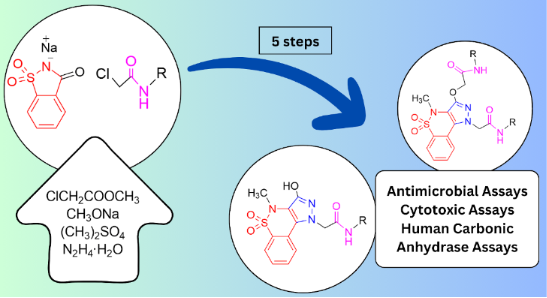
- the derivative of 1,2-benzothiazine-3-carboxylate 4. Compound 4 was reacted with an excess of hydrazine monohydrate to introduce the pyrazole moiety into the benzothiazine scaffold. Subsequently, pyrazolobenzothiazine 5 was elaborated with alkylating agents 6a–h to give N-alkylated (monoalkylated
- of pyrazolo-1,2-benzothiazine derivative 5 A solution of compound 4 (269 mg, 1 mmol) in ethanol (10 mL) was refluxed with excess of hydrazine monohydrate for 24 hours. After the completion of reaction, unreacted hydrazine was removed under vacuum. Cold acidified water was poured into the residue

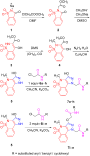

Synthesis of disulfides and 3-sulfenylchromones from sodium sulfinates catalyzed by TBAI
Beilstein J. Org. Chem. 2025, 21, 253–261, doi:10.3762/bjoc.21.17
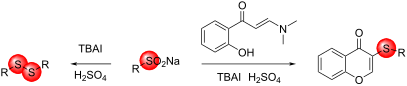
- prevented their widespread use on a large scale. Recently, research efforts have focused on exploring alternative reagents that offer the advantages of being odorless and more stable than thiols. These alternatives include sulfonyl chloride [26], sulfonyl hydrazine [27], carbon disulfide [28], and sodium



Cu(OTf)2-catalyzed multicomponent reactions
Beilstein J. Org. Chem. 2025, 21, 122–145, doi:10.3762/bjoc.21.7

- begins with a nucleophilic attack of hydrazine on the aldehyde, activated by the copper salt, to give the corresponding hydrazone XXVIII. Subsequently, the formation of a Mannich-type intermediate XXIX was hypothesized by interaction between the hydrazone and the alkene mediated by Cu(OTf)2 coordination










Non-covalent organocatalyzed enantioselective cyclization reactions of α,β-unsaturated imines
Beilstein J. Org. Chem. 2024, 20, 3221–3255, doi:10.3762/bjoc.20.268
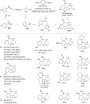
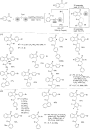
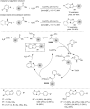
- enantioselectivities (87–99% ee) [49]. Furthermore, to demonstrate the synthetic potential of the methodology, further transformations were carried out. Firstly, the N-alkylation of 78e with ethyl bromoacetate led to the synthesis of tetrasubstituted hydrazine 79 in an excellent yield. This derivative has a newly
- formed N–N axis conducting to the origin of diastereoselectivity in the reaction. The treatment of 79 with base afforded the pyrrolinone 80 in 82% yield. On the other hand, the deprotection of derivative 78f led to the hydrazine 81 in an excellent yield. All the derivatizations occurred with the











Synthesis of extended fluorinated tripeptides based on the tetrahydropyridazine scaffold
Beilstein J. Org. Chem. 2024, 20, 3174–3181, doi:10.3762/bjoc.20.262
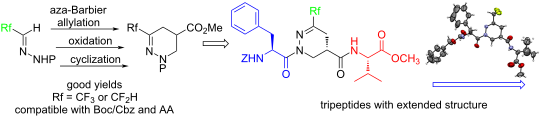
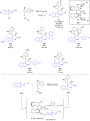
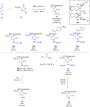
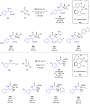
- hydrazine [36], allowed the expected compounds 6e and 6f to be obtained in good yields. This methodology was applied to the previous hydrazides 5a–d giving the corresponding compounds 6a–d in similar yields. As expected, no isomerization occurred during the oxidation, leading exclusively to the imine and


N-Glycosides of indigo, indirubin, and isoindigo: blue, red, and yellow sugars and their cancerostatic activity
Beilstein J. Org. Chem. 2024, 20, 2840–2869, doi:10.3762/bjoc.20.240
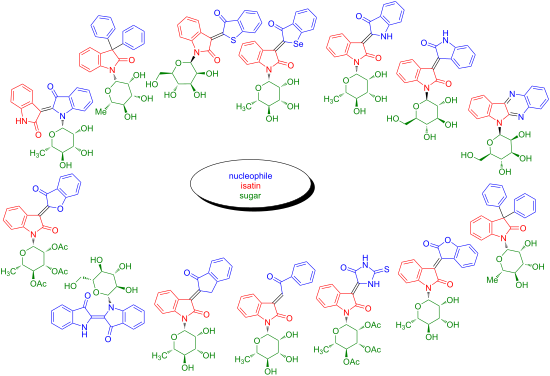
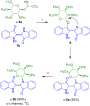
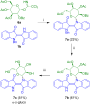
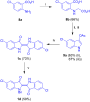
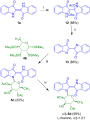
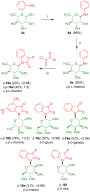
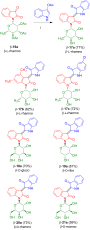
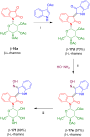
- trichloroacetimidate 10e by reaction with hydrazine and subsequent treatment with trichloroacetonitrile. The same synthesis was carried out also with the β-configured analogue of 10a. However, employment of the α-anomer 10a proved to be advantageous in terms of yield. The reaction of 1d with 10e afforded indigo-N











Base-promoted cascade recyclization of allomaltol derivatives containing an amide fragment into substituted 3-(1-hydroxyethylidene)tetronic acids
Beilstein J. Org. Chem. 2024, 20, 2585–2591, doi:10.3762/bjoc.20.217
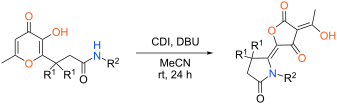
- -hydroxypyran-4-ones with hydrazine are known [30][31]. At the same time all considered recyclizations proceed under action of additional components and the intramolecular variant of this reaction is not described in the literature. It can be supposed that in the case of a substrate containing an allomaltol
- fragments and hydrogen bonds leads to the alteration in chemical behavior. Based on the aforementioned stability of tetronic acids 4 toward action of MeOH we supposed that various derivatives at the hydroxyethylidene group can be synthesized. For example, interaction of compound 4a with hydrazine in
- . Experimental procedure for the synthesis of compound 7 The mixture of tetronic acid 4a (0.37 g, 1 mmol) and hydrazine hydrate (0.1 g, 2 mmol) in EtOH (5 mL) was refluxed for 2 h. The resulting precipitate was filtered off and washed with EtOH (3 × 5 mL). (3E,5E)-3-(1-Hydrazinylethylidene)-5-(3-oxo-2-phenethyl


Efficacy of radical reactions of isocyanides with heteroatom radicals in organic synthesis
Beilstein J. Org. Chem. 2024, 20, 2114–2128, doi:10.3762/bjoc.20.182
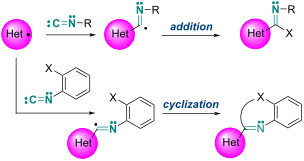
- )hydrazine ((Me3Si)2N–N(SiMe3)2, 10) undergoes ultraviolet light-induced homolysis of the N–N single bond of 10 to form bis(trimethylsilyl)aminyl radical ((Me3Si)2N•, 11). The aminyl radical 11 adds to tert-butyl isocyanide to form the corresponding imidoyl radical 2 (R = t-Bu, E = (Me3Si)2N), as confirmed





