Search results
Search for "methodology" in Full Text gives 1033 result(s) in Beilstein Journal of Organic Chemistry. Showing first 200.
Intermolecular water attack to alkenylgold carbenes derived from 3-propargylindoles
Beilstein J. Org. Chem. 2026, 22, 1221–1228, doi:10.3762/bjoc.22.98
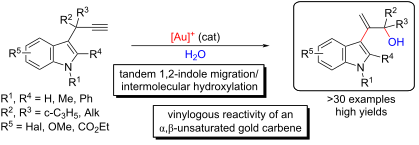
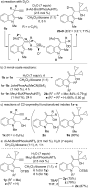
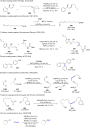
- carbene species and the preferential vinylogous attack of water. Furthermore, the practicality of the methodology was demonstrated through gram-scale reactions. a) Intra- and intermolecular reactivity of α-indolylalkenylgold carbenes from 3-propargylindoles. b) Proposed work. Proof of concept. Further



Amino acid-based surfactants: sustainable synthesis and antimicrobial mechanisms
Beilstein J. Org. Chem. 2026, 22, 1067–1085, doi:10.3762/bjoc.22.85
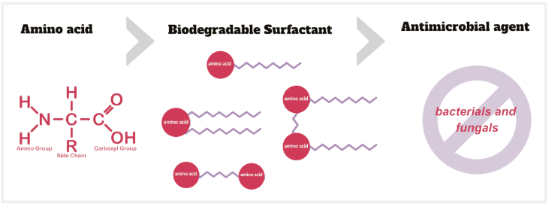
- related to their antimicrobial activity; b) To describe their possible mechanisms of action in the interaction with microorganisms; and c) To present the novel approaches and perspectives on the use of these innovative molecules. Materials and Methods The methodology for this integrative review was


One-pot four-component sequential synthesis of S-alkyl dithiocarbamates using lipase as a biocatalyst
Beilstein J. Org. Chem. 2026, 22, 1048–1056, doi:10.3762/bjoc.22.83
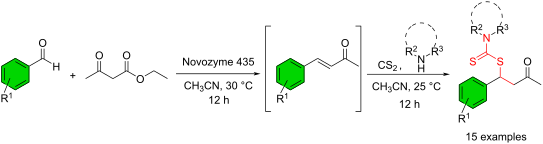
- were treated with various Michael acceptors to yield products 6k–o (Scheme 4). Aldehydes bearing electron-withdrawing substituents, such as 4-chloro (6l, 85%) and 3-NO2 (6o, 76%) also afforded the desired products in good to excellent yields. These results indicate that the methodology is compatible
- methodology was developed for the synthesis of S-alkyl dithiocarbamates using Novozym 435 as a biocatalyst. The protocol enables the in situ generation of the Michael acceptor through a lipase-catalyzed Knoevenagel condensation/decarboxylation reaction, followed by addition of a dithiocarbamate nucleophile


Synthesis of novel 1,2,4-oxadiazole-isoxazoline hybrids and their in silico potential with adenosine receptors
Beilstein J. Org. Chem. 2026, 22, 1033–1047, doi:10.3762/bjoc.22.82
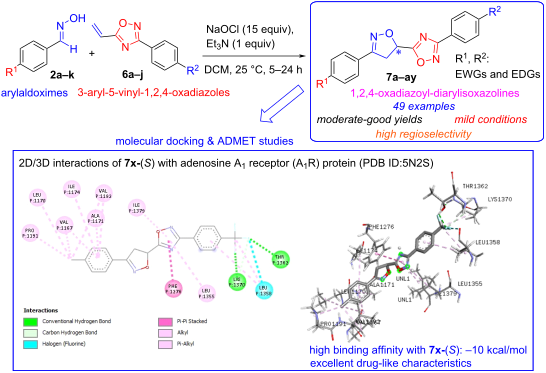
- regulation. However, it is important to emphasize that these results are based on theoretical in silico predictions. While the synthetic methodology demonstrates efficiency and regioselectivity, and the computational results indicate promising bioactivity and drug-likeness, experimental validation remains


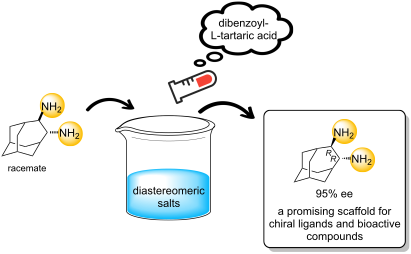
Synthesis and optical resolution of 4,5-diaminohomoadamantane: a promising scaffold for chiral ligands and bioactive compounds
Beilstein J. Org. Chem. 2026, 22, 1013–1022, doi:10.3762/bjoc.22.80
- methodology that considers optical rotation of conformations that differ from the stable ones by no more than 10 kJ/mol [103]. All calculations were performed with the Gaussian 09 software [104]. Optimization of the molecule’s geometry by DFT was performed using the CAM-B3LYP functional and the 6-311G++(2d,2p


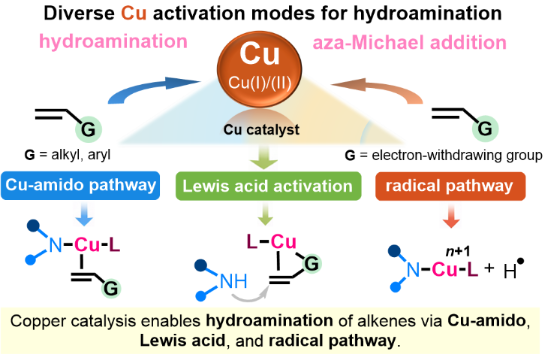
Recent advances in copper-catalyzed direct hydroamination of alkenes with (hetero)aromatic amines
Beilstein J. Org. Chem. 2026, 22, 925–947, doi:10.3762/bjoc.22.73
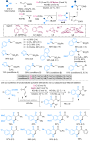
- methodology is demonstrated via a one-pot sequence consisting of copper-catalyzed aza-Michael addition followed by base-mediated cyclization and acid-promoted aerobic oxidation to afford quinolinone derivatives (Scheme 4) [38][39]. In this sequence, 2-aminobenzoate derivatives 4 reacted with α,β-unsaturated







Diastereodivergent electrophilic trapping of α-boryl lithium derivatives
Beilstein J. Org. Chem. 2026, 22, 882–887, doi:10.3762/bjoc.22.68
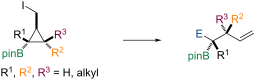
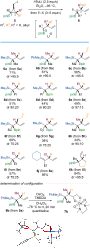
- methodology [35][36][37] (Figure 1). When the substrate 5a (R1 = R3 = Me, R2 = H) was subjected to the standard reaction conditions, the ring-opening process and trapping with Me3SiCl occurred selectively, affording 6a in an excellent diastereomeric ratio (Scheme 3). Replacing Me3SiCl with the bulkier




Synthesis of heterocycles based on azomethine ylides from α-amino acids (or amines) and carbonyl compounds
Beilstein J. Org. Chem. 2026, 22, 705–741, doi:10.3762/bjoc.22.55
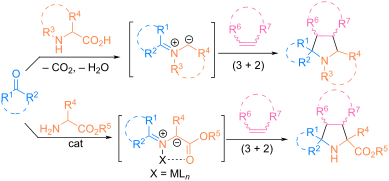
- . The authors used this methodology to modify peptides and functionalize several natural products. Thus, aldimine dipeptides Gly–Gly, Gly–Ala, as well as iminoesters in combination with natural ʟ-borneol, ʟ-menthol, cholesterol, or lactate scaffolds proved to be suitable precursors of azomethine ylides


Photoorganocatalytic trifluoromethylation of (het)arenes in green conditions
Beilstein J. Org. Chem. 2026, 22, 662–671, doi:10.3762/bjoc.22.50
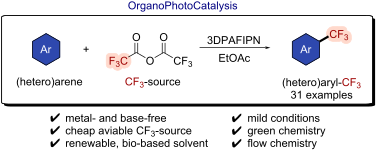
- ; however, this 2.5-fold increase in catalyst loading did not provide a commensurate improvement in efficiency. Moreover, owing to the high molecular weight of 3DPAFIPN, a 5 mol % loading cannot be considered compatible with the development of a green methodology. Consequently, 2 mol % 3DPAFIPN under blue




Computational prediction of C–H hydricities and their use in predicting the regioselectivity of electron-rich C–H functionalisation reactions
Beilstein J. Org. Chem. 2026, 22, 603–610, doi:10.3762/bjoc.22.46
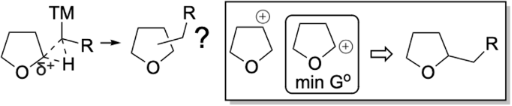
- . These properties encompass the site of metabolism [25][27], the strengths of hydrogen bond donors and acceptors [28][29][30], the regioselectivity of electrophilic aromatic substitution reactions [10], C–H pKa values [3], and electro- and nucleophilicity [31]. Building on the methodology from Finkelmann
- . Refer to section 4 in Supporting Information File 1 for more details. The percentages of buried volumes of the C atoms are computed using MORFEUS [34]. Data preparation and hyperparameter optimization Following the methodology by Ree et al. and our previous work [3][10], we use the Optuna framework (v


![[Graphic 6]](/bjoc/content/inline/1860-5397-22-46-i8.svg?max-width=637&scale=1.18182)


Regioselective approach to 5-arylsulfonylisoxazoles and their antimicrobial activity
Beilstein J. Org. Chem. 2026, 22, 592–602, doi:10.3762/bjoc.22.45
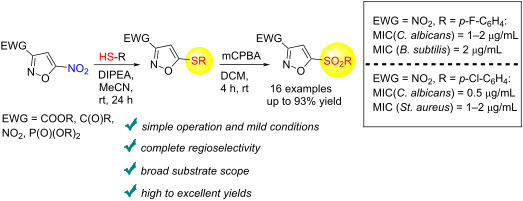
- analysis of all synthesized compounds. Funding This study was performed within the framework of the State research program “Molecular design, synthesis, and study of physiologically active compounds, advancing the methodology of medicinal chemistry, chemoinformatics, and targeted chemical synthesis” (No


Recent advances in the stereoselective synthesis of distal biaxially chiral molecules
Beilstein J. Org. Chem. 2026, 22, 461–479, doi:10.3762/bjoc.22.34
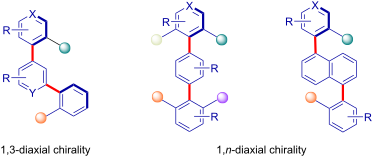
- stereoselectivity of remote biaxial chiral molecules and providing greater flexibility in the design and synthesis of complex multiaxial systems. Building on the one-step strategies discussed above, sequential formation of chiral axes has thus emerged as another important methodology for the synthesis of remote


Concept-driven strategies in target-oriented synthesis
Beilstein J. Org. Chem. 2026, 22, 451–454, doi:10.3762/bjoc.22.32
- A (review, Mingji Dai and co-worker), ryania diterpenoids (review, Jin-Bao Qiao, Yu-Ming Zhao and co-worker), illisimonin A (review, Ming Yang and co-worker)]; and (iii) methodology towards target-oriented synthesis [oxidative dearomatization (simonsol C, Hong-Bo Qin et al.), reductive
- computational methodology are poised to enhance both accuracy and efficiency, thereby opening new opportunities across various branches of chemical and data sciences. However, while these achievements exemplify the collaborative spirit of scientific inquiry, it is essential to recognize that the primary focus


Dialkylaminoalkylation of β-ketosulfones via ring-opening of 3-sulfonylpyrrolidines
Beilstein J. Org. Chem. 2026, 22, 383–389, doi:10.3762/bjoc.22.26
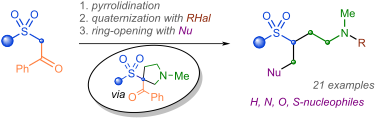
- , sarcosine, and paraformaldehyde in PhMe/MTBE, followed by treatment of the reaction mixture with an alkyl halide, and subsequent heating of the precipitated quaternary ammonium salt in the presence of Cs₂CO₃ and a nucleophile – we proceeded to apply this methodology to other β-ketosulfones. Next, we


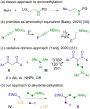


Recent advances in the cleavage of non-activated amides
Beilstein J. Org. Chem. 2026, 22, 352–369, doi:10.3762/bjoc.22.23
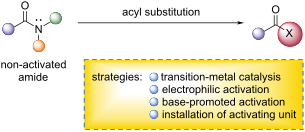
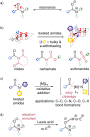
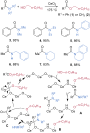
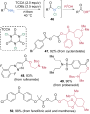
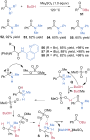
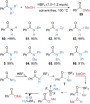
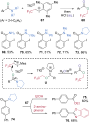
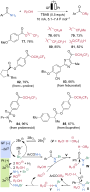
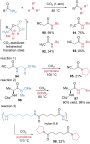
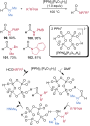
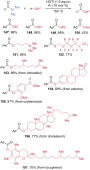
- under increasingly mild and practical conditions. In this review, we summarize key advances from the past decade in the activation, cleavage, and transformation of non-twisted, non-activated amides. Each class of methodology is discussed in terms of its underlying activation concept, representative








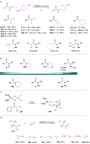


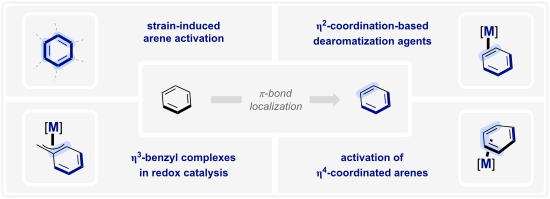
Arene activation via π-bond localization: concepts and opportunities
Beilstein J. Org. Chem. 2026, 22, 257–273, doi:10.3762/bjoc.22.19
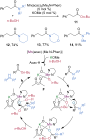
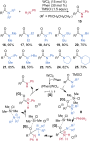
- cyclohexene derivatives beyond sulfone and sulfonamide motifs. By combining ester enolate and amine addition sequences, this methodology was subsequently extended to the synthesis of architecturally complex polyheterocyclic frameworks (Scheme 3B) [62]. Such scaffolds are scarcely represented in contemporary
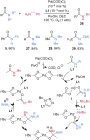
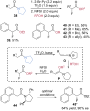
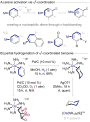
- rare yet remarkably versatile intermediates in synthetic methodology, offering unique opportunities for the development of dearomatization chemistry. In analogy to dihapto coordination (see previous section), the selective engagement of a transition metal with one C–C double bond of an arene π-system




A new synthesis of Tyrian purple (6,6’-dibromoindigo) and its corresponding sulfonate salts
Beilstein J. Org. Chem. 2026, 22, 167–174, doi:10.3762/bjoc.22.10
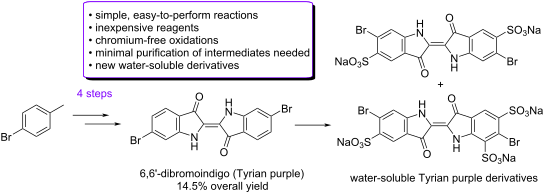
- methodology of Keinan et al. [12], compound 5 was nitrated with fuming nitric acid in a mixture of glacial acetic acid and sulfuric acid. As shown in Scheme 3, this reaction yielded a mixture of 3 and 4-bromo-3-nitrotoluene (7) in a ≈3:1 ratio. Purification via column chromatography was successful in removing


Circumventing Mukaiyama oxidation: selective S–O bond formation via sulfenamide–alcohol coupling
Beilstein J. Org. Chem. 2026, 22, 158–166, doi:10.3762/bjoc.22.9
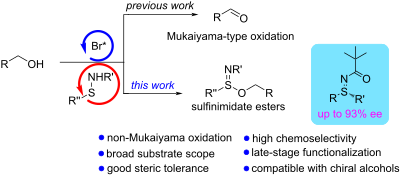
- methodology, we carried out a scale-up reaction and applied the protocol to the late-stage modification of a complex alcohol (Scheme 5). The transformation between sulfenamide 1a and methanol was successfully scaled up to a 3 mmol scale, affording the desired sulfilimidate ester 3a in an excellent isolated


Total synthesis of natural products based on hydrogenation of aromatic rings
Beilstein J. Org. Chem. 2026, 22, 88–122, doi:10.3762/bjoc.22.4
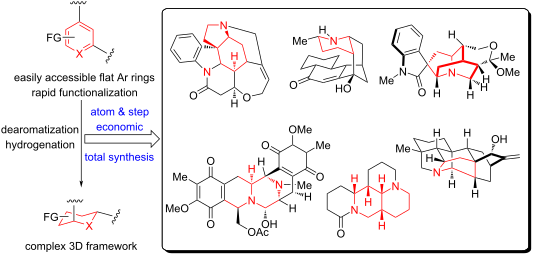
- one-pot reaction featuring a double oxidative rearrangement cascade of furans and indoles followed by nucleophilic cyclization. This methodology was applied to the formal synthesis of rhynchophylline/isorhynchophylline and the first total syntheses of (±)-(7R)- and (±)-(7S)-geissoschizol oxindoles










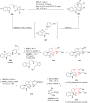

Advances in Zr-mediated radical transformations and applications to total synthesis
Beilstein J. Org. Chem. 2026, 22, 71–87, doi:10.3762/bjoc.22.3
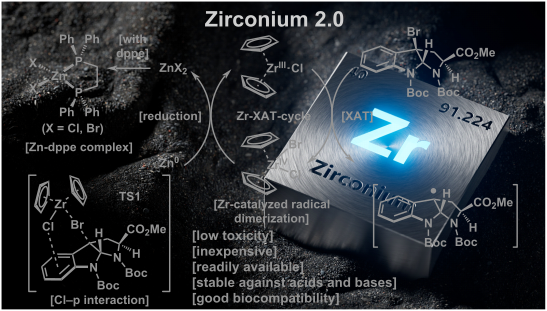
- alkyl radicals 46. When γ-terpinene was employed as a hydrogen donor, the radicals were reduced to the corresponding alkanes 47. Alternatively, in the presence of olefins, radical addition proceeded smoothly to furnish functionalized products 48. This methodology proved broadly applicable to a wide








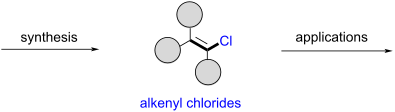
Synthesis and applications of alkenyl chlorides (vinyl chlorides): a review
Beilstein J. Org. Chem. 2026, 22, 1–63, doi:10.3762/bjoc.22.1
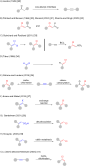
- review by Evano should be consulted [37]. In 2010, Buchwald and co-workers reported a palladium-catalyzed transformation of vinyl triflates to alkenyl chlorides (Scheme 22A) [78]. An improved variant of this methodology was published the following year (Scheme 22B) [79]. Independently, in 2009, Hayashi
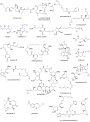
- precursor 372. More recently, the same group extended this methodology to the use of acetylene as a highly useful C2-building block, further broadening the synthetic utility of this approach (Scheme 65C) [205]. It is worth noting that allylic substitution of allylic gem-dichlorides has recently been























Mechanistic insights into hydroxy(tosyloxy)iodobenzene-mediated ditosyloxylation of chalcones: a DFT study
Beilstein J. Org. Chem. 2025, 21, 2703–2715, doi:10.3762/bjoc.21.208
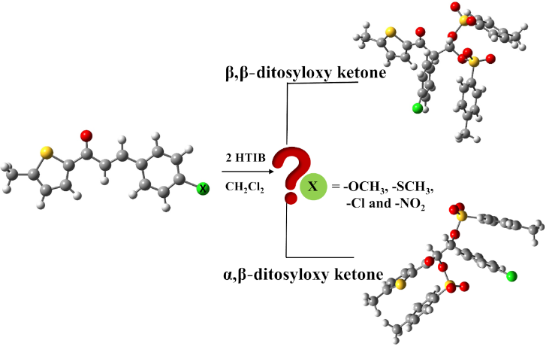
- computationally. The results obtained for chalcones are in qualitative agreement with results reported for substituted styrenes [31]. Computational Methodology Quantum chemical calculations were carried out using Gaussian 09 package [37]. The hybrid exchange-correlation functional B3LYP-D3 (including dispersion


Recent advancements in the synthesis of Veratrum alkaloids
Beilstein J. Org. Chem. 2025, 21, 2657–2693, doi:10.3762/bjoc.21.206
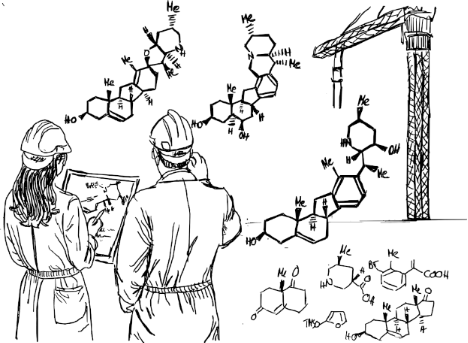
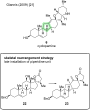
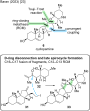
- effect of today’s methods in comparing to this strategy, while the Masamune group had to choose from much more limited methodology, resulting in tedious protecting group strategies, several reprotections, and redox manipulations [14]. Comparison of strategies for the jervanine-type In total, cyclopamine
- successfully tackled cyclopamine as their target, and both elegantly showcase the use of modern synthetic methodology and convergence in retrosynthetic analysis. Synthesis in the veratramine subclass In the veratramine-type class of Veratrum alkaloids, two structures have been revisited for total synthesis
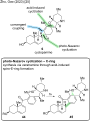
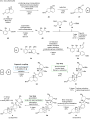
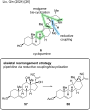
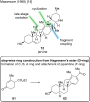
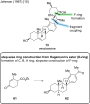
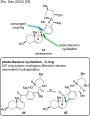
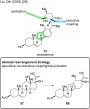
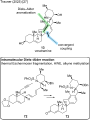
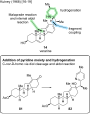
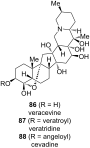
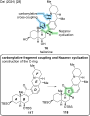
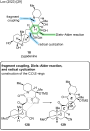
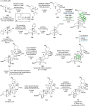
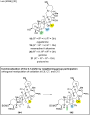
- veratramine. Shortly published one after another, we can witness a disconnection through the C-ring (Zhu/Gao) [25], a rearrangement strategy (Liu/Qin) [26] and a cross-D-ring disconnection (Trauner) [27], leading to a short and concise synthesis with state-of-the-art methodology. Synthesis in the cevanine
















Thiazolidinones: novel insights from microwave synthesis, computational studies, and potentially bioactive hybrids
Beilstein J. Org. Chem. 2025, 21, 2618–2636, doi:10.3762/bjoc.21.203
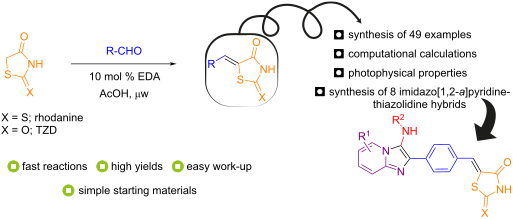
- 10.3762/bjoc.21.203 Abstract Various 5-arylidene derivatives were prepared via a Knoevenagel condensation-type reaction of aromatic/heteroaromatic aldehydes with rhodanine or thiazolidine-2,4-dione (TZD) catalyzed by EDA/AcOH under microwave heating. This convenient methodology is broad in scope (49
- -arylidene derivatives (5-arylidene-2-thioxothiazolidin-4-one or 5-arylidenethiazolidine-2,4-dione), which have attracted the attention of medicinal chemists, and, consequently, several strategies have been created to synthesize these molecules [38]. The main methodology comes from the Knoevenagel
- condensation-type reaction using ethylenediamine (EDA) as catalyst in AcOH under microwave (μw) heating. This convenient methodology is broad in scope, provides the condensation products in high yields (up to 99%), with a reasonable catalyst loading (10 mol %) in only 30 minutes. This approach also enabled the






Efficient solid-phase synthesis and structural characterization of segetalins A–H, J and K
Beilstein J. Org. Chem. 2025, 21, 2612–2617, doi:10.3762/bjoc.21.202

- scalable methodology overcomes limitations of prior syntheses, enabling biological evaluation. Keywords: Fmoc-solid-phase peptide synthesis (Fmoc-SPPS); head-to-tail cyclization; plant cyclopeptides; Vaccaria segetalis; Introduction Cyclopeptides have garnered significant research interest owing to their
- purity of the synthetic segetalins. CD spectroscopy provided insights into their secondary structural preferences. This robust and scalable methodology overcomes significant limitations of previous synthetic approaches, providing ample quantities of these bioactive cyclopeptides for detailed biological