


Search results
Search for "reaction mechanism" in Full Text gives 585 result(s) in Beilstein Journal of Organic Chemistry. Showing first 200.
Construction of CF2 moieties in FDA-approved drugs (2016–2025): industrial routes, mechanisms, and scale-up considerations
Beilstein J. Org. Chem. 2026, 22, 1122–1150, doi:10.3762/bjoc.22.91
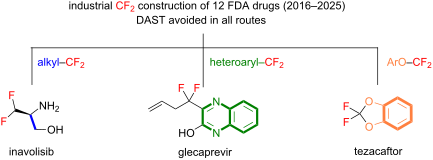
- -ring CF2 fragments, as reviewed in 2024 [4]. In 2025, Sun et al. [5] systematically reviewed recent methods for constructing CF2 groups, categorizing them by reaction mechanism (radical difluoromethylation, transition-metal-catalyzed difluoromethylation, nucleophilic and electrophilic






One-pot four-component sequential synthesis of S-alkyl dithiocarbamates using lipase as a biocatalyst
Beilstein J. Org. Chem. 2026, 22, 1048–1056, doi:10.3762/bjoc.22.83
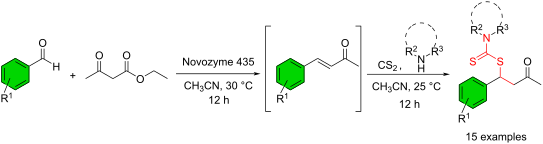
- , in previously reported lipase-catalyzed promiscuous reactions, significant stereochemical induction has generally not been observed or discussed [36][37][38]. To investigate the reaction mechanism and the catalytic role of the enzyme in enhancing the efficiency of the second step, control reactions


Synthesis of novel 1,2,4-oxadiazole-isoxazoline hybrids and their in silico potential with adenosine receptors
Beilstein J. Org. Chem. 2026, 22, 1033–1047, doi:10.3762/bjoc.22.82
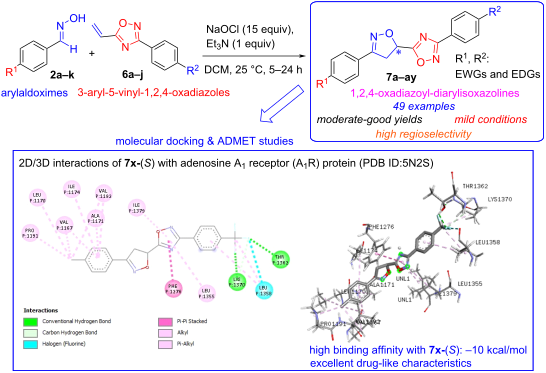
- spectra of all products in Supporting Information File 1). A plausible reaction mechanism for the formation of products 7 via 1,3-dipolar cycloaddition of nitrile oxides 2 with vinyl-1,2,4-oxadiazoles 6 is outlined in Scheme 4. In this process, the nitrile oxide dipole is generated in situ in the presence


Rh(III)-catalyzed chelation-assisted C–H activation/annulation of 2-arylimidazolines with cyclic diazo-1,3-dicarbonyl compounds: a novel approach to tetracyclic annulated derivatives of 2,3-dihydroimidazo[2,1-a]isoquinoline
Beilstein J. Org. Chem. 2026, 22, 997–1003, doi:10.3762/bjoc.22.78
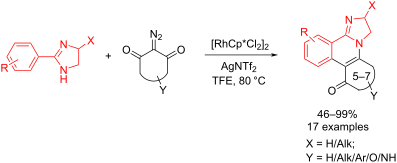
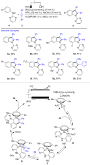
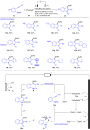
- reaction mixtures by NMR, none of them could be isolated in pure form by column chromatography. The following reaction mechanism can be proposed according to the literature data [18] (Figure 3a). The catalytic cycle begins with the formation of monomeric Rh(III)-catalyst A from the reaction of [RhCp*Cl2]2
- by 1H NMR of crude reaction mixtures. a) Proposed reaction mechanism; b) Experimental isolation of intermediate B (compound 5) from equimolar reaction of substrate 2a and the catalyst. C–H activation/annulation of 2-arylimidazolines with diazo-1,3-dicarbonyl compounds. aReaction conditions


Electrochemical reduction of unsaturated carbon–carbon bonds via 3d transition-metal catalysis
Beilstein J. Org. Chem. 2026, 22, 955–981, doi:10.3762/bjoc.22.75
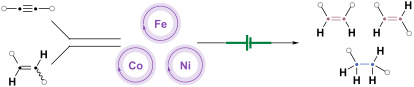
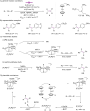
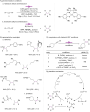
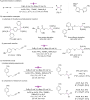
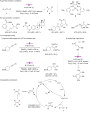
- ; electroorganic synthesis; reaction mechanism; 3d transition metals; unsaturated C–C bonds; Introduction Reductions of unsaturated C–C bonds Reduction of unsaturated C–C bonds, most notably, alkynes and alkenes, is a synthetic method that has been widely and extensively discussed with a long and rich history








Recent advances in copper-catalyzed direct hydroamination of alkenes with (hetero)aromatic amines
Beilstein J. Org. Chem. 2026, 22, 925–947, doi:10.3762/bjoc.22.73
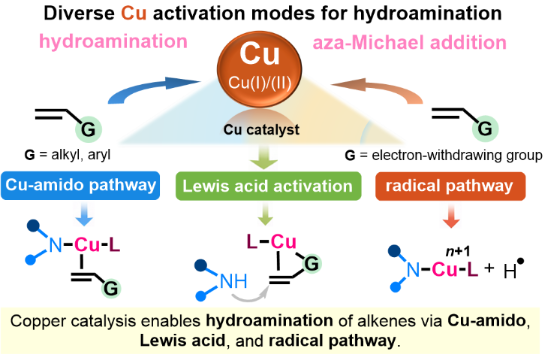
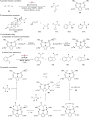
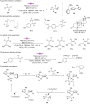
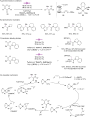
- products, providing strong evidence for the involvement of alkyl radical intermediates. Based on these observations, we proposed a plausible reaction mechanism (Scheme 20). Initially, Cu(OTf)2 activated the N–H bond of isatin to generate copper complex I and a hydrogen radical. The hydrogen radical







Palladium-catalyzed benzocyclization reactions of quinoline-2-carboxamides via sequential C–H/N–H functionalization
Beilstein J. Org. Chem. 2026, 22, 905–914, doi:10.3762/bjoc.22.71
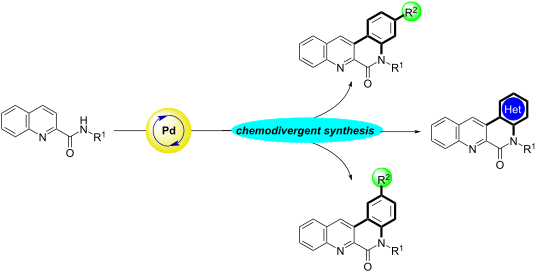
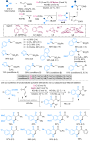
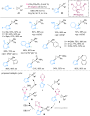
- reported [44][45][46][47][48][49][50][51][52][53][54], although the reaction mechanism with π-deficient N-heteroaromatics has not been elucidated (Scheme 2b). It is therefore valuable to investigate the differences in reactivity between C–H and N–H for intermolecular arylation in the presence of transition
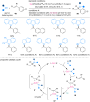
- NOESY (Figure 1d and e). These results suggested that the carbon–iodine bond in 1-bromo-2-iodobenzene was involved in the formation of the C–C bond, while the carbon–bromine bond was involved in the formation of the C–N bond (Scheme 4). Accordingly, a plausible reaction mechanism is proposed in Scheme 5
- -catalyzed coupling reactions involving aryl halides. Synthetic strategy for preparing fused lactams. Detection of the intermediate Int-1ad in the annulation reaction of 1a with 1-bromo-5-tert-butyl-2-iodobenzene (2d). Stepwise formation of C–C and C–N bonds during the annulation reaction. Plausible reaction


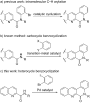


Chiral cyclopropenimine-catalyzed enantioselective Michael reactions of phenol and benzofuran-derived α,β-unsaturated pyrazolamides with benzophenone-imine of glycine esters
Beilstein J. Org. Chem. 2026, 22, 888–896, doi:10.3762/bjoc.22.69
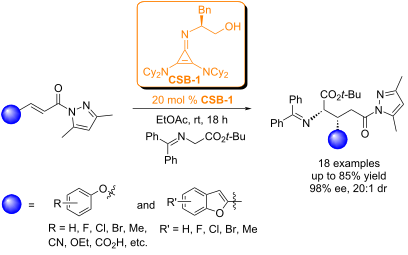
- experimental facts and the studies of the Lambert group [13]. This proposed reaction mechanism is demonstrated in Figure 5. At the beginning of the reaction, the chiral organosuperbase catalyst CSB-1 can deprotonate benzophenone-imine of glycine ester 2a to form the (E)-enolate of 2a and a cyclopropenium as
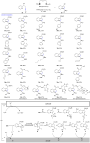
- benzophenone-imine esters. The catalysts used in the screening of Michael reaction conditions. The proposed attack modes of Michael addition of 2a and 5a. A proposed reaction mechanism of CSB-1 catalyzed Michael reaction between 2a and 5a. Configuration of 7d’ determined by X-ray diffraction analysis. Chiral






The trans-influence in gold chemistry from a catalytic perspective
Beilstein J. Org. Chem. 2026, 22, 838–856, doi:10.3762/bjoc.22.66
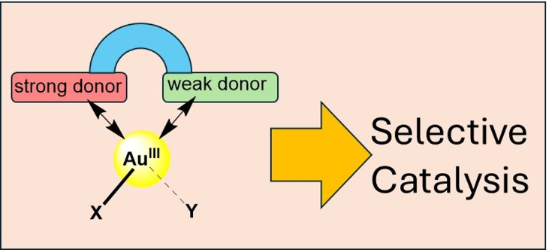
- recent mechanistic insights. Keywords: catalysis; gold; ligands; reaction mechanism; trans-influence; Introduction Gold catalysts have emerged as catalysts of choice in a multitude of organic transformations, not least due to their high functional group tolerance. Their applications have been widely


Synthetic study of vic-bromination of diarylacetylenes, easy purification and separation
Beilstein J. Org. Chem. 2026, 22, 795–802, doi:10.3762/bjoc.22.61
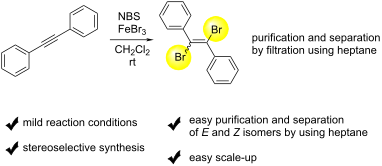
- make scale-up very easy. The E-selectivity was dropped in gram-scale synthesis, although the reason is unclear at present. For the understanding of the reaction mechanism, some control experiments were carried out. The reaction of 1a with NBS and n-Bu4NBr without FeBr3 gave trace amount of E-2a (Scheme
- FeBr3 might be important and in situ Br2 might be generated and formed. FeBr3 might react with Br2 to form [FeBr4]− and "Br+", which can react with 1a. As for the reaction mechanism, the plausible pathway might be the following (Scheme 3). The reaction of NBS and FeBr3 might generate Br2 or "Br+", which
- ; HRMS (ESI) m/z: [M + Na]+ calcd for C14H11Br2, 336.9222; found, 336.9215. Selected and previous reports for bromination of diphenylacetylenes (a–c), and this work (d). Gram-scale synthesis of (a), and control experiments of (b), (c) and (d). n.r. = no reaction. Plausible reaction mechanism of the



Synthesis of heterocycles based on azomethine ylides from α-amino acids (or amines) and carbonyl compounds
Beilstein J. Org. Chem. 2026, 22, 705–741, doi:10.3762/bjoc.22.55
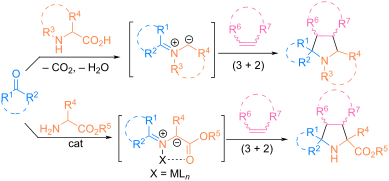
- reaction proceeded with complete regioselectivity and very high diastereo- and enantioselectivity, affording stereoisomerically pure highly functionalized polysubstituted pyrrolidines in excellent yields (Scheme 25). Considering the probable reaction mechanism, the authors suggest that the effective
- spiro-fused heterocycles 116–122 in high yields (Scheme 42). When examining the reaction mechanism, the authors proposed that the first step involves the condensation of phenylenediamine and ninhydrin to form indenoquinoxalin-11-one, which then reacts with proline to yield azomethine ylide. The latter


Photoorganocatalytic trifluoromethylation of (het)arenes in green conditions
Beilstein J. Org. Chem. 2026, 22, 662–671, doi:10.3762/bjoc.22.50
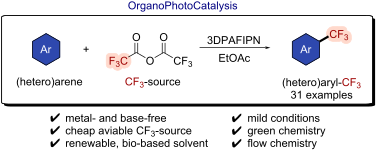
- , entries 3 and 4). A comparison of the space–time yield highlights the significant advantage of the flow technique (Table 3, entry 4), which was almost 30-fold higher than that achieved in the most efficient batch reaction (entry 3). Next, we investigated the reaction mechanism. As a first approach




Melifoliox B, a novel phloroglucin derivative isolated from Melicope barbigera (Rutaceae) and synthesis of new oxidation products from melifoliones A and B
Beilstein J. Org. Chem. 2026, 22, 535–546, doi:10.3762/bjoc.22.39
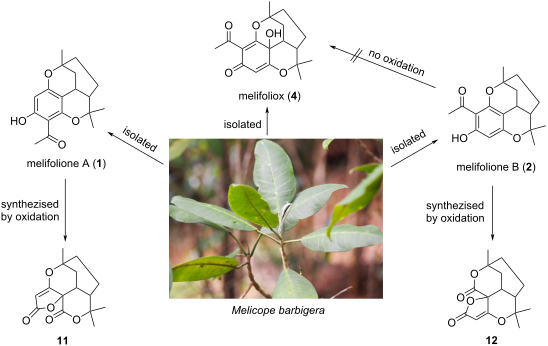
- the elucidation of the reaction mechanism and the synthesis of new compounds with possible biological activity. Experimental General Detailed experimental procedures are described in [1]. Instrumentation NMR spectra were recorded on Bruker ARX 300 or AVANCE DMX 600 NMR spectrometers (Bruker, Karlsruhe


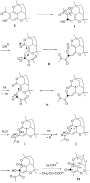

Electrosynthetic access to unsymmetrical oxaza[8]helicenes with high chiral stability and strong circularly polarized luminescence (CPL)
Beilstein J. Org. Chem. 2026, 22, 372–382, doi:10.3762/bjoc.22.25
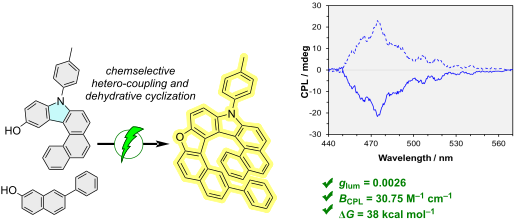
- intense chiroptical responses, including mirror-image CD and strong CPL with |glum| values up to 0.0026 and CPL brightness approaching 30.8 M−1 cm−1. A plausible reaction mechanism: cyclic voltammetry (CV) analyses of hydroxycarbazole derivative 3 and 2-naphthol derivatives 4; DFT-based calculations of




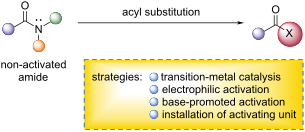
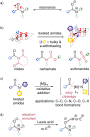
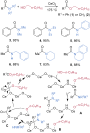
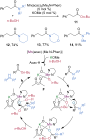
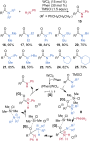
Recent advances in the cleavage of non-activated amides
Beilstein J. Org. Chem. 2026, 22, 352–369, doi:10.3762/bjoc.22.23
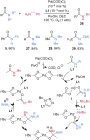
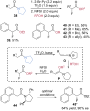
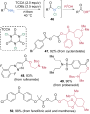
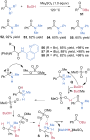
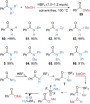
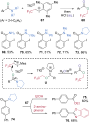
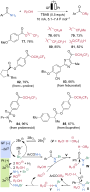
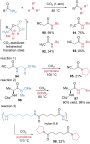
- bioactive compounds underwent smooth esterification with TFE to give the corresponding 2,2,2-trifluoroethyl esters 82–85 in high yields. To elucidate the reaction mechanism, cyclic voltammetry experiments, control reactions, and DFT calculations were conducted. At the anode, bromide ions are oxidized to










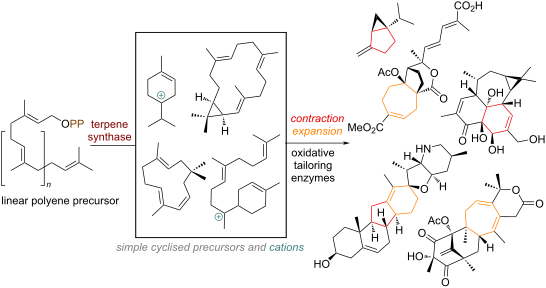
Ring contraction and ring expansion reactions in terpenoid biosynthesis and their application to total synthesis
Beilstein J. Org. Chem. 2026, 22, 289–343, doi:10.3762/bjoc.22.21






Spirobarbiturates with a pyrrolizidine moiety: synthesis, structure and biological evaluation
Beilstein J. Org. Chem. 2026, 22, 274–288, doi:10.3762/bjoc.22.20
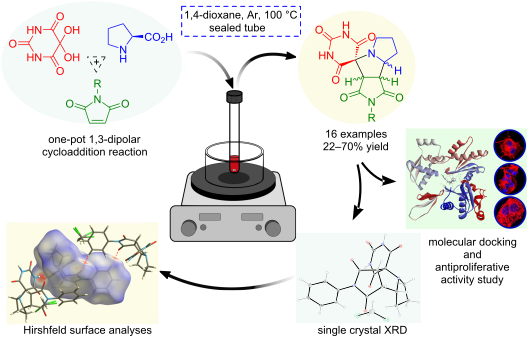
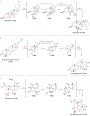
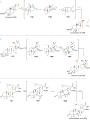
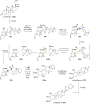
- unable to isolate individual products either by chromatography or by recrystallization. The proposed reaction mechanism is shown in Scheme 5, where it can be seen that the intermediate azomethine ylide, acting as a 1,3-dipole, undergoes a [3 + 2] cycloaddition with N-substituted maleimides 3a–p. The




Advances in Zr-mediated radical transformations and applications to total synthesis
Beilstein J. Org. Chem. 2026, 22, 71–87, doi:10.3762/bjoc.22.3
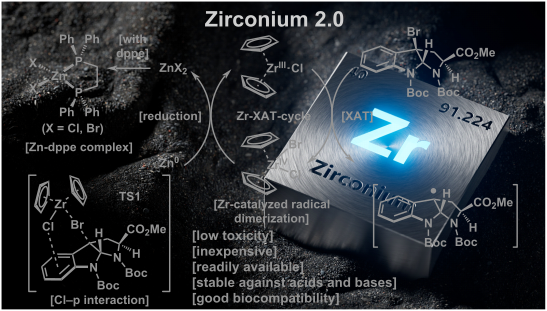
- method applied to secondary alkyl chlorides, both acyclic (44h) and cyclic (44i and 44j), as well as to benzyl chlorides derived from bioactive molecules such as fenofibrate (44k) and celestoride (44l), all of which furnished the corresponding dimers in excellent yields. The proposed reaction mechanism








Sustainable electrochemical synthesis of aliphatic nitro-NNO-azoxy compounds employing ammonium dinitramide and their in vitro evaluation as potential nitric oxide donors and fungicides
Beilstein J. Org. Chem. 2025, 21, 2739–2754, doi:10.3762/bjoc.21.211
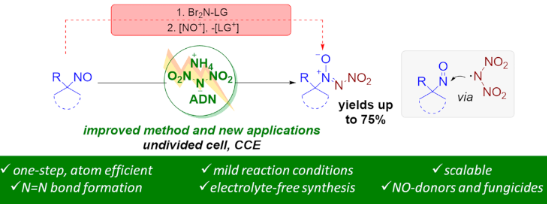
- nucleophilic substitution of –ONO2 groups. To clarify the reaction mechanism, cyclic voltammetry (CV) studies were conducted. CV curves of cyclohexanone oxime (S1), 1-bromo-1-nitrosocyclohexane (S2), 1-chloro-1-nitrosocyclohexane (S3), 1-nitrosocyclohexyl acetate (S4), 1-nitro-1-nitrosocyclohexane (1c), 1
- product nitro-NNO-azoxy propane 2a exhibits an oxidation peak at +1.68 V (Figure 2, pink curve). Despite the lower oxidation potential of 2a, we speculate that an excess of ADN suppresses competitive oxidation of the reaction product. To gain insight into the reaction mechanism, control experiments were
- studied reaction was also carried out under controlled potential conditions (Scheme 4, reaction 2) at E ≈ 1.8 V for 2.0 F per mol 1a. In this case, the formation of 2a was observed in a 68% yield. To gain insight into the reaction mechanism of the discovered nitro-NNO-azoxylation process quantum chemical

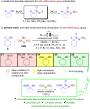


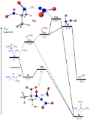


Mechanistic insights into hydroxy(tosyloxy)iodobenzene-mediated ditosyloxylation of chalcones: a DFT study
Beilstein J. Org. Chem. 2025, 21, 2703–2715, doi:10.3762/bjoc.21.208
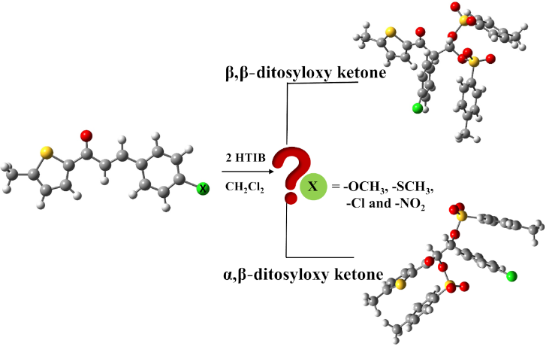
- nature of para-substituents on the reaction mechanism. The substituents considered in the study include -OCH3, -SCH3, -Cl and -NO2 groups. For these chalcones, different possible pathways at various steps during the reaction are investigated leading to formation of α,β-ditosyloxy ketones and β,β
- -substituted carbonyl compound (compound C – vicinal product). By systematically varying the substituent (-X) on para-position of the aryl group, the influence of different electron-donating and electron-withdrawing groups on the reaction mechanism of these modified chalcone compounds is studied
- , the detailed calculated reaction mechanism differs. Scheme 2 and Scheme 3 depicts the reaction mechanism for these two possible cases, i.e., when X is electron-donating and electron-withdrawing, respectively. Figure 1 depicts the free energy reaction profile for the chalcone with X = -SCH3. The


Tandem hydrothiocyanation/cyclization of CF3-iminopropargyl alcohols with NaSCN in the presence of AcOH
Beilstein J. Org. Chem. 2025, 21, 2694–2702, doi:10.3762/bjoc.21.207
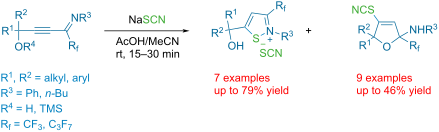
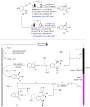
- (c, d) reaction mixtures in MeCN. Examples of hydrothiocyanation/cyclization of alkynes. Plausible reaction mechanism. Oxidation of isothiazolium thiocyanate 2a. Screening of reaction conditions. Scope of iminopropargyl alcohols 1. Supporting Information Supporting Information File 10: Full

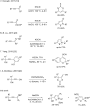


Thiazolidinones: novel insights from microwave synthesis, computational studies, and potentially bioactive hybrids
Beilstein J. Org. Chem. 2025, 21, 2618–2636, doi:10.3762/bjoc.21.203
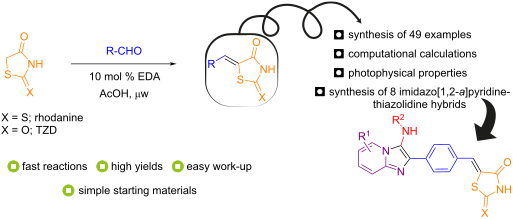
- decrease in yields (Table 1, entries 19–21). To confirm the critical role of ethylenediamine in the reaction mechanism, an experiment without its presence was conducted, resulting in only 2% of the desired product (Table 1, entry 22). With the optimized reaction conditions established, this methodology was
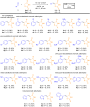
- analyses. Limitations of the EDA-catalyzed Knoevenagel reactions for the synthesis of rhodanine or thiazolidine-2,4-dione derivatives. Plausible reaction mechanism for the EDA-catalyzed Knoevenagel condensation reactions. Substrate scope of the HPW-catalyzed GBB reactions. Synthesis of imidazo[1,2-a






Assembly strategy for thieno[3,2-b]thiophenes via a disulfide intermediate derived from 3-nitrothiophene-2,5-dicarboxylate
Beilstein J. Org. Chem. 2025, 21, 2489–2497, doi:10.3762/bjoc.21.191
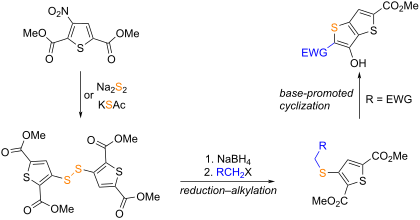
- thiophene, promoting further study of these structures and reaction mechanism. 1H NMR spectroscopy of the obtained mixture provided the first key information about its nature, namely the presence of two major products 2 and 3, both of which showed three characteristic singlets with signal integration 1:3:3
- , necessitates consideration of a reaction mechanism beyond straightforward nucleophilic substitution of the nitro group in ester 1. Although the initial reaction probably involves a nucleophilic attack by the S-nucleophile on the activated thiophene ring, resulting in displacement of the nitro group, the
- subsequent fate of the intermediate appears to be critical. Based on our observations and literature data, a probable reaction mechanism was proposed. The initial nucleophilic substitution of the nitro group in ester 1 by the AcS− anion yields the S-acetyl derivative (intermediate A) and NO2− anion. The key



Electrochemical cyclization of alkynes to construct five-membered nitrogen-heterocyclic rings
Beilstein J. Org. Chem. 2025, 21, 2173–2201, doi:10.3762/bjoc.21.166
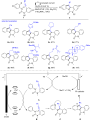
- in 89% and 63% yield, respectively. Based on the results of control experiments and the previous reports [186], a plausible reaction mechanism was deduced. Firstly, treatment of [RuCl2(p-cymene)]2 with NaOAc afforded the ruthenium diacetate species A, which underwent complexation with 4 and
- ][194][195][196][197][198][199][200], the authors proposed a possible reaction mechanism. For the synthesis of 11a in Pt plate electrodes, two-electron anodic oxidation of I− formed I+. Addition of I+ to C≡C in 10 resulted in the production of A. Meanwhile, continuous reduction of H2O at the cathode
- oxidative cyclization of 2-alkynylaniline 16 and diselenide 17 occurred to form desired 3-selenylindole 18 in satisfactory yields with wide substance scope. Based on control experiments and previous references [203], a possible reaction mechanism was outlined. Firstly, the anodic oxidation of 17a formed








C2 to C6 biobased carbonyl platforms for fine chemistry
Beilstein J. Org. Chem. 2025, 21, 2103–2172, doi:10.3762/bjoc.21.165
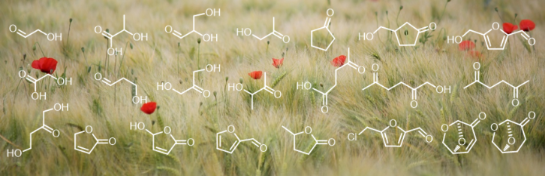
- ) [71]. The Bobleter and Feather groups investigated the reaction mechanism of the conversion of these C3 compounds. The acid-catalyzed equilibrium between 1,3-dihydroxy-2-propane and 2,3-dihydroxypropanal involves an ene-triol intermediate which leads to methylglyoxal by a dehydration reaction at





