


Search results
Search for "stabilization" in Full Text gives 444 result(s) in Beilstein Journal of Organic Chemistry. Showing first 200.
Electrochemical reduction of unsaturated carbon–carbon bonds via 3d transition-metal catalysis
Beilstein J. Org. Chem. 2026, 22, 955–981, doi:10.3762/bjoc.22.75
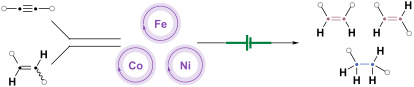
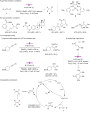
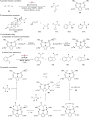
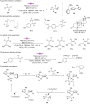
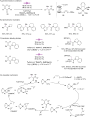
- governed primarily by bond dissociation free energies, radical stabilization, and cage escape or recombination kinetics, rather than by inner-sphere insertion chemistry. In addition, in certain systems, hydride transfer can operate as a distinct mechanistic mode, wherein the M–H unit directly delivers a








Recent advances in copper-catalyzed direct hydroamination of alkenes with (hetero)aromatic amines
Beilstein J. Org. Chem. 2026, 22, 925–947, doi:10.3762/bjoc.22.73
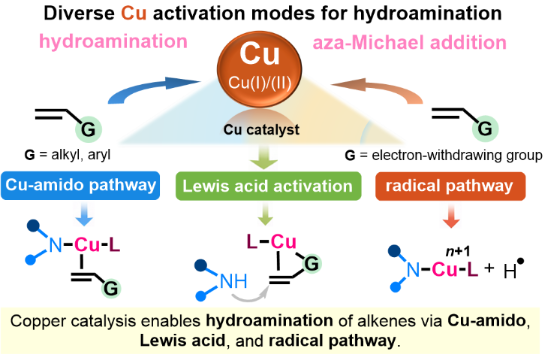
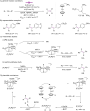
- significantly inhibited in the presence of TEMPO under air atmosphere, supporting the involvement of a radical pathway. In contrast, high yields were obtained under inert conditions, which was consistent with radical stabilization during the catalytic process. Mechanistically, the CuCo2O4 surface enhanced β







Diastereodivergent electrophilic trapping of α-boryl lithium derivatives
Beilstein J. Org. Chem. 2026, 22, 882–887, doi:10.3762/bjoc.22.68
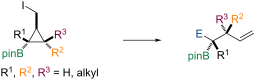
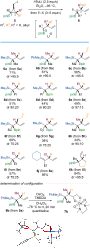
- delocalization leads to the formation of a partial π C–B bond (Scheme 1) [1][2], which provides a unique stabilization to the carbanionic center and affects its reactivity towards electrophiles. In recent years, α-boryl carbanions have attracted significant attention as highly versatile intermediates capable of




Rongalite addition to dienones: diastereoselectivity in cyclic sulfone synthesis; stereochemical rationalization and prospects as a general conjugate nucleophile
Beilstein J. Org. Chem. 2026, 22, 742–752, doi:10.3762/bjoc.22.56

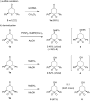
- structure somewhat rotated out of planarity (dihedral angles between aromatic C–C and vinylic CH are 34°). This presumably still allows for some conjugative stabilization from the aromatic rings to the enone π-systems and reduces eclipsing interactions between the ortho-methyl groups and the vinylic H




Experimental and DFT studies on the regioselective methanolysis of 5-azido-9-oxabicyclo[6.1.0]nonan-4-yl 4-nitrobenzoate isomers
Beilstein J. Org. Chem. 2026, 22, 547–556, doi:10.3762/bjoc.22.40
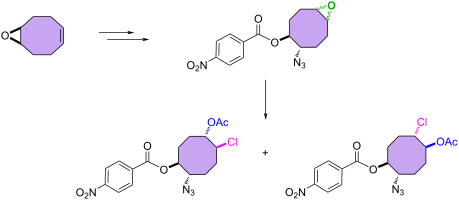
- difference between TS1 and TS2 (4.7 kcal/mol), compared to that between TS3 and TS4 (6.9 kcal/mol), can be attributed to hydrogen-bond stabilization in TS2, indicating that conformational effects play a more dominant role than hydrogen bonding in determining transition-state stability. Mulliken charge


Synthesis and stereochemical analysis of dynamic planar chiral oxa[7]orthocyclophene
Beilstein J. Org. Chem. 2026, 22, 436–442, doi:10.3762/bjoc.22.30

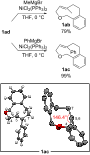
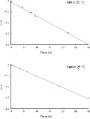
- still observed in the measurement at 5 °C, albeit only slightly. The phenyl-substituent effect on the stereochemical stability can be understood as a destabilization of the ground state due to the transannular repulsion, and a stabilization of the transition state for racemization by a conjugation






Cone p-aminocalix[4]arenes enriched with ‘clickable’ alkyne or azide functionalities
Beilstein J. Org. Chem. 2026, 22, 399–415, doi:10.3762/bjoc.22.28
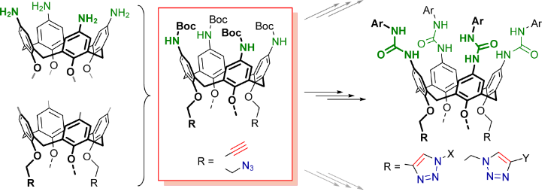
- affect the cycloaddition by, for instance, binding copper cations or counter anions, and thus their presence in the structures of calixarenes at the CuAAC step must be avoided. On the other hand, the unmodified amines may also contribute to undesired Cu(I) stabilization and complicate the CuAAC work up




Non-central chirality in organic chemistry
Beilstein J. Org. Chem. 2026, 22, 370–371, doi:10.3762/bjoc.22.24
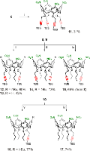
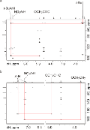
- very existence of a chiral architecture constitutes a discovery in itself. The identification and stabilization of unconventional stereogenic elements expand the accessible chemical space, prompting us to reconsider what forms of molecular asymmetry are possible, meaningful, and exploitable
Recent advances in the cleavage of non-activated amides
Beilstein J. Org. Chem. 2026, 22, 352–369, doi:10.3762/bjoc.22.23
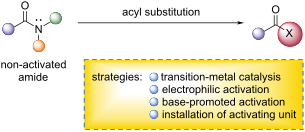
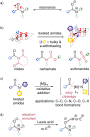
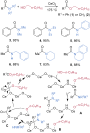
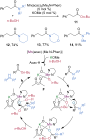
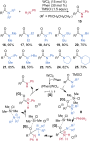
- , bioactive molecules, and advanced materials. However, its exceptional resonance stabilization renders the C–N bond highly inert, posing a persistent synthetic challenge for its transformation. While twisted amides with distorted C–N bonds have offered useful reactivity enhancements, the selective activation
- . Conclusion This review has highlighted major advances from the past decade in the activation, cleavage, and transformation of non-activated amides. Although the amide bond is fundamental to chemistry and biology, its exceptional resonance stabilization renders it remarkably resistant to nucleophilic acyl










Spirobarbiturates with a pyrrolizidine moiety: synthesis, structure and biological evaluation
Beilstein J. Org. Chem. 2026, 22, 274–288, doi:10.3762/bjoc.22.20
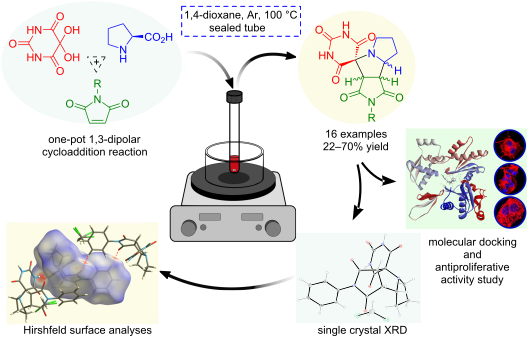
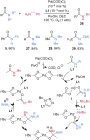
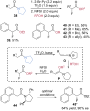
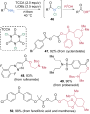
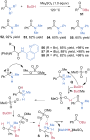
- preferential formation of the endo-adduct (upper pathway). The predominance of exo-isomers in some cases probably reflects insufficient stabilization due to secondary orbital interactions in the transition state [43]. It should be noted separately that secondary cyclic amino acids such as azetidine-2


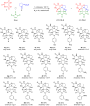


Arene activation via π-bond localization: concepts and opportunities
Beilstein J. Org. Chem. 2026, 22, 257–273, doi:10.3762/bjoc.22.19
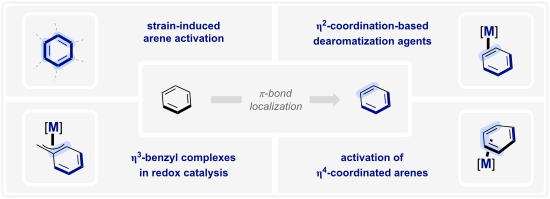
- arene activation offers powerful opportunities in reactivity design. Notably, the small-ring annelation exerts a dual influence: it lowers kinetic barriers and enhances regioselectivity, with strain-release providing the key thermodynamic driving force to overcome aromatic stabilization. Synthetic
- principal platforms. Distinct from their η3-allyl counterparts, which readily isomerize between σ (η1) and π (η3) coordination, the η3-benzyl motif demands partial disruption of aromatic stabilization – an energetic penalty that must be compensated by the metal–ligand interaction (Scheme 5A). This challenge


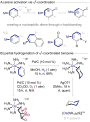


Conformational analysis of difluoromethylornithine: factors influencing its gas-phase and bioactive conformations
Beilstein J. Org. Chem. 2026, 22, 237–243, doi:10.3762/bjoc.22.17
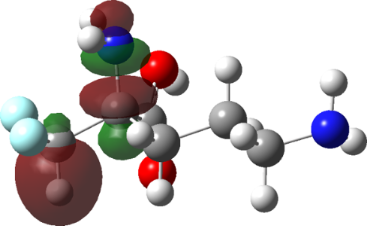
- preference arises primarily from hyperconjugative stabilization, particularly the σCH → σ*CN interaction, while steric effects modulate the relative stability among low-energy conformers. The gauche effect is intensified in the zwitterionic form due to electrostatic interactions. In contrast, the
- geometry, gain less than 500 kcal mol−1 from delocalization, whereas the most stable structure (1) is stabilized by 502.6 kcal mol−1. Notably, structure 5 (type II) is also strongly stabilized by delocalization (ENL = −501.7 kcal mol−1), while structure 2 shows weaker stabilization (−496.2 kcal mol−1
- ). These results indicate that the gauche effect in DFMO arises from a balance between strong non-Lewis stabilization and only moderate Lewis-type destabilization. Further insight was obtained by examining specific hyperconjugative interactions through second-order perturbation analysis. In 1,2




Configuration–packing synergy enabling integrated crystalline-state RTP and amorphous-state TADF
Beilstein J. Org. Chem. 2026, 22, 224–236, doi:10.3762/bjoc.22.16
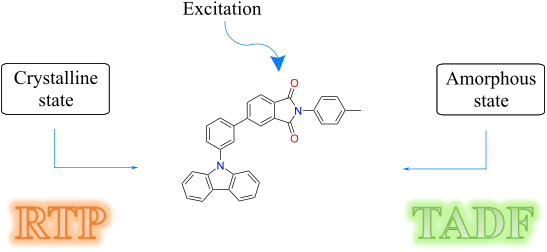
- the presence of a specific crystalline packing motif that allows for effective intermolecular interactions and the stabilization of triplet excitons, which are necessary for phosphorescence to occur at room temperature. To investigate the packing arrangement necessary for the manifestation of RTP in 1
- , facilitated by the π–π interactions between adjacent molecules, plays a key role in the stabilization of the triplet state, which in turn contributes to the observed room-temperature phosphorescence. This finding underscores the critical role that molecular arrangement and packing have in governing the


Total synthesis of natural products based on hydrogenation of aromatic rings
Beilstein J. Org. Chem. 2026, 22, 88–122, doi:10.3762/bjoc.22.4
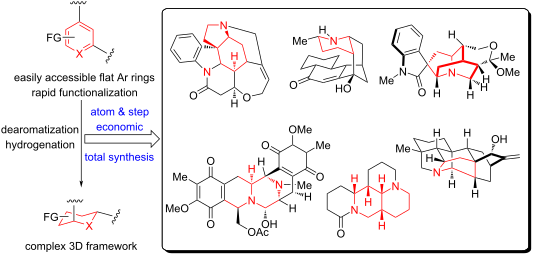
- catalyst–ligand systems to overcome higher aromatic stabilization energies. Thus, chemoselectively distinguishing between partial and complete reduction is crucial: depending on the substrate, the catalyst must either halt the process at a defined stage or drive it to full saturation without affecting











Reactivity umpolung of the cycloheptatriene core in hexa(methoxycarbonyl)cycloheptatriene
Beilstein J. Org. Chem. 2026, 22, 64–70, doi:10.3762/bjoc.22.2
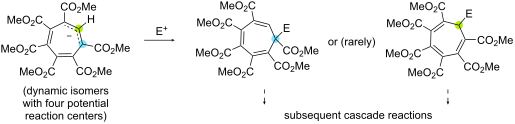
- principle [38]. At least, the reaction times and conditions required for the alkylation reactions investigated, which proceed through an α-attack, indicate relatively high barriers. This in turn indicates that the selectivity observed in alkylation reactions (α-attack) is due to some stabilization of the


Mechanistic insights into hydroxy(tosyloxy)iodobenzene-mediated ditosyloxylation of chalcones: a DFT study
Beilstein J. Org. Chem. 2025, 21, 2703–2715, doi:10.3762/bjoc.21.208
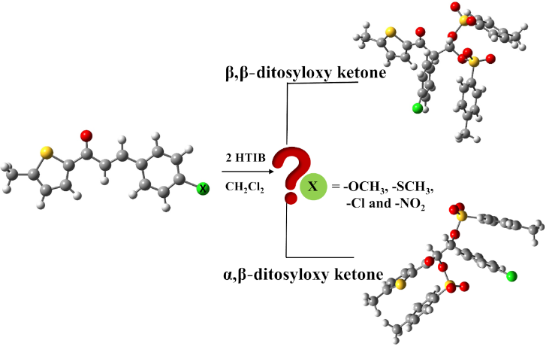
- which leads to the formation and stabilization of the three-membered cyclic carbocation (Int4). The electron-donating group provides electron density to the carbocation, which stabilizes the positive charge. As a result, Int4 is observed when electron-donating groups are present (Scheme 2). In Int4, the


Thiazolidinones: novel insights from microwave synthesis, computational studies, and potentially bioactive hybrids
Beilstein J. Org. Chem. 2025, 21, 2618–2636, doi:10.3762/bjoc.21.203
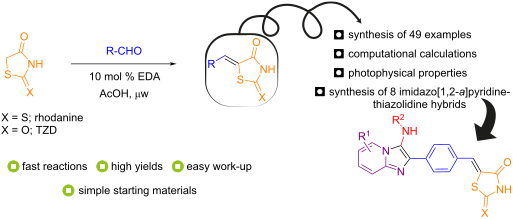
- observed, however, with an increase in fluorescence emission. Interestingly, in DMSO, a bathochromic effect was observed alongside a significant increase in fluorescence intensity. In aqueous medium, a pronounced red shift was verified, likely due to stabilization of the excited state by water molecules
- Figure 7d and Figure S251d in Supporting Information File 1 provide data on the stabilization mechanism in the excited state in relation to the ICT process and the polarity of the solvent [90][91]. The graphs were generally linear, demonstrating that ICT-type mechanisms were favored for these compounds






Isoorotamide-based peptide nucleic acid nucleobases with extended linkers aimed at distal base recognition of adenosine in double helical RNA
Beilstein J. Org. Chem. 2025, 21, 2513–2523, doi:10.3762/bjoc.21.193
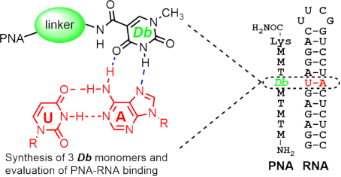
- containing functional groups in the linker including an amine (Db1), an amide based on the V linker (Db2), and an aniline (Db3). In the case of Db1, physiological conditions would afford a protonated amine functionality that may allow for stabilization of the triplex through electrostatic interactions


The intramolecular stabilizing effects of O-benzoyl substituents as a driving force of the acid-promoted pyranoside-into-furanoside rearrangement
Beilstein J. Org. Chem. 2025, 21, 2456–2464, doi:10.3762/bjoc.21.187
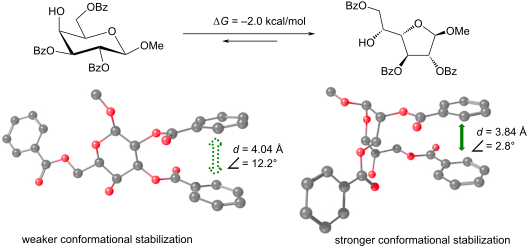
- van-der-Waals interactions between phenyl rings of the benzoate substituents are crucial for the stabilization of the furanoside isomer. This outcome could not be rationalized within the framework of conventional carbohydrate chemistry, as the key intramolecular interactions determining the
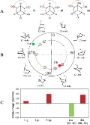
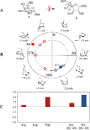
- possible similar transformations for glucosides and mannosides [28]. The stabilization of the furanose form was facilitated by the bulky and charged sulfate groups, leading to repulsive interactions (Figure 2B) [24]. This effect was observed across various configurations, such as galacto-, gluco-, fuco
- -, arabino-, and xylo-. However, for both α- and β-mannosides, pyranoside form remains the favorable one. In another study [26] the presence of two bulky silyl substituents (TIPS or TBDPS) at the O2 and O3 positions of galactose also resulted in stabilization of the furanoside product (Figure 2C). Another




Transformation of the cyclohexane ring to the cyclopentane fragment of biologically active compounds
Beilstein J. Org. Chem. 2025, 21, 2416–2446, doi:10.3762/bjoc.21.185
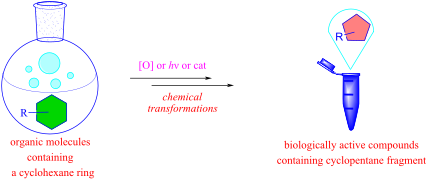
- form three possible products: ketone 191, olefin 192, and cyclopentane 193 (Scheme 33). At the first stage, the epoxy ring was opened to form intermediate A. According to the authors [87], there are three possible ways of carbocation stabilization. The 1,2-shift of a proton at C3 to C4 led to the
- in the stabilization of cationic reaction intermediates [91][92]. Yokoshima and co-workers [93][94] developed an elegant approach to the total synthesis of the alkaloid huperzine Q (206) in racemic form (Scheme 37). In the process of synthesis, a cis-hydrindane core was prepared from the known


Recent advances in Norrish–Yang cyclization and dicarbonyl photoredox reactions for natural product synthesis
Beilstein J. Org. Chem. 2025, 21, 2315–2333, doi:10.3762/bjoc.21.177
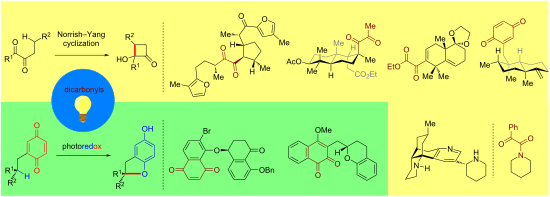
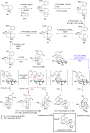
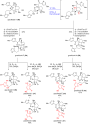
- electron transfer for zwitterionic intermediate (e.g., (−)-106b or (+)-106b) formation; (2) protic solvents (e.g., MeOH) improve ee values through H-bonding stabilization, which reduces intermediate flexibility; (3) low temperatures enhance the optical purity by slowing conformational changes without




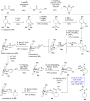


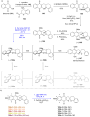

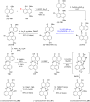
Pathway economy in cyclization of 1,n-enynes
Beilstein J. Org. Chem. 2025, 21, 2260–2282, doi:10.3762/bjoc.21.173
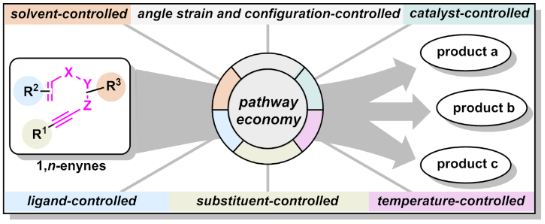
- regulatory role in chemical transformations, exerting kinetic modulation through solvation effects on activation barriers and reaction rates, dictating thermodynamic equilibria that govern product distribution, and enabling precise reaction pathway regulation via selective stabilization of critical
- assembled the pentacyclic spiroindole framework 61 (Scheme 13, path b). The controllability of this cyclization process arose from the steric and electronic effects of the aryl group, where the π–π interactions and rigid structure of the aryl group facilitated the stabilization of the five-membered spiro
- cyclization, yielding a six-membered ring product 72 (Scheme 15, path b). This observed selectivity arose from differential stabilization of transition states by ligands, thereby enabling the Au(I)-catalyzed cyclization to directly access bioactive heterocyclic frameworks commonly encountered in natural


Photochemical reduction of acylimidazolium salts
Beilstein J. Org. Chem. 2025, 21, 1973–1983, doi:10.3762/bjoc.21.153
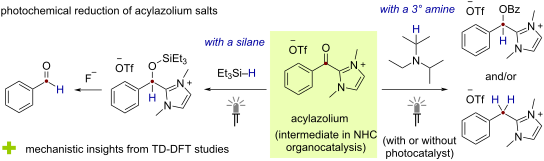
- species C benefitting from additional stabilization by virtue of electron delocalization onto the NHC-derived azolium ring [17][18][19][20]. Similarly, the cationic azolium fragment in acylazolium salts can effectively lower the carbonyl reduction potential relative to the starting material with single


Thermodynamics and polarity-driven properties of fluorinated cyclopropanes
Beilstein J. Org. Chem. 2025, 21, 1742–1747, doi:10.3762/bjoc.21.137
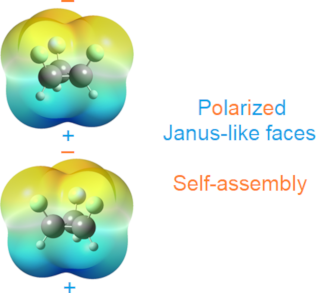
- stabilizing due to the presence of two anomeric-like interactions, nF → σ*CF [16]. According to a natural bond orbital (NBO) analysis, this electron delocalization accounts for a stabilization energy of 14.3 kcal mol−1 per interaction in compound 1.1. Similar stabilization values are observed in other
- dipolar repulsion compared to 1.2-t. and receives less stabilization from electron delocalization. The electron delocalization interactions in these systems are primarily syn- and antiperiplanar σCH → σ*CF interactions. Although the latter is more stabilizing and more prevalent in 1.2-c, the overall ENL
- stable than 1.2.3-c.t., this is not due to a higher EL term but rather to less effective stabilization from electron delocalization interactions. This finding is somewhat surprising, as one might expect 1.2.3-c.c. to exhibit greater steric and dipolar repulsion involving the polar C–F bonds. Finally, a


Approaches to stereoselective 1,1'-glycosylation
Beilstein J. Org. Chem. 2025, 21, 1700–1718, doi:10.3762/bjoc.21.133
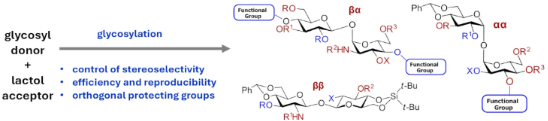
- donors [65][66], care must be taken, and glycosylation conditions optimized to avoid the formation of oxocarbenium ions from TMS-glycosides intended to function as glycosyl acceptors. In this case, the ketoses 49 and 52 formed the oxocarbenium ions more readily due to stabilization by their alkyl





