Search results
Search for "Cyclization" in Full Text gives 1141 result(s) in Beilstein Journal of Organic Chemistry. Showing first 200.
A mild and atom-efficient four-component cascade strategy for the construction of biologically relevant 4-hydroxyquinolin-2(1H)-one derivatives
Beilstein J. Org. Chem. 2026, 22, 244–256, doi:10.3762/bjoc.22.18
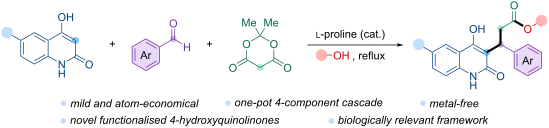
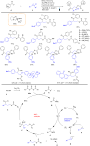
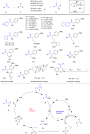
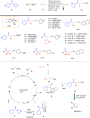
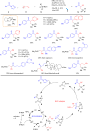
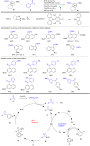
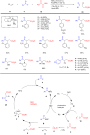
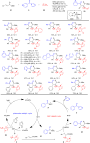
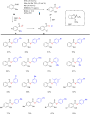
- formation of the cyclic lactone, which predominated under such conditions. These findings suggest that intramolecular attack by the quinolinone OH group, leading to cyclization and formation of pyranoquinolinone, proceeds faster than nucleophilic attack by the external alcohol. Thus, under mild or brief


Highly electrophilic, gem- and spiro-activated trichloromethylnitrocyclopropanes: synthesis and structure
Beilstein J. Org. Chem. 2026, 22, 123–130, doi:10.3762/bjoc.22.5
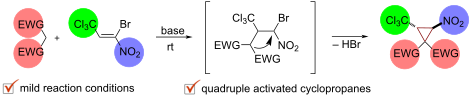
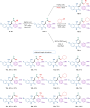
- bromine. The cyclization step from this conformation leads to trans-cyclopropanes. X-ray diffraction analysis data for compounds 2, 3, 9a, and 9b convincingly confirm the accepted structures, the position of cyclopropane protons, and the relative configurations of asymmetric atoms (Figures 2–5). It should


Total synthesis of natural products based on hydrogenation of aromatic rings
Beilstein J. Org. Chem. 2026, 22, 88–122, doi:10.3762/bjoc.22.4
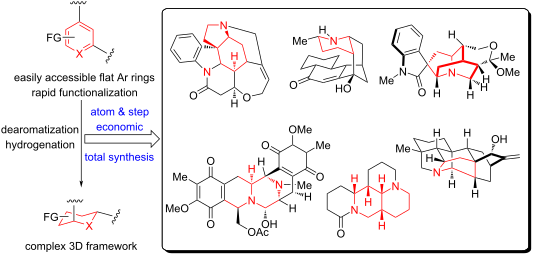
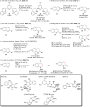
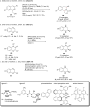
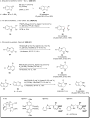
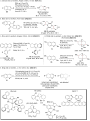
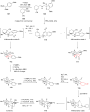
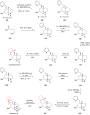
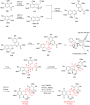
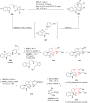
- rearrangement and Lewis acid-promoted acetal–ene reaction provided the tetracyclic skeleton 101. With 101 in hands, a 6 step transformation afforded the alkyne 102 in an overall yield of 45%. After obtaining 102, the authors used a free radical reaction to initiate a one-step 6-exo-trig cyclization
- addition to indirectly reduce the heteroaromatic ring of the isoquinoline to yield compound 118. This was followed by desilylation with TBAF and spontaneous intramolecular cyclization to yield the tricyclic 119. With 119 in hand, the double bond was diastereoselectively hydrogenated using Et3SiH and TFA
- sustained interest from synthetic chemists worldwide due to their pronounced antibacterial and anticancer properties. Since their discovery, bis-THIQ scaffolds have been constructed primarily through the Pictet–Spengler reaction, a cyclization strategy that continues to be widely employed in total synthesis











Advances in Zr-mediated radical transformations and applications to total synthesis
Beilstein J. Org. Chem. 2026, 22, 71–87, doi:10.3762/bjoc.22.3
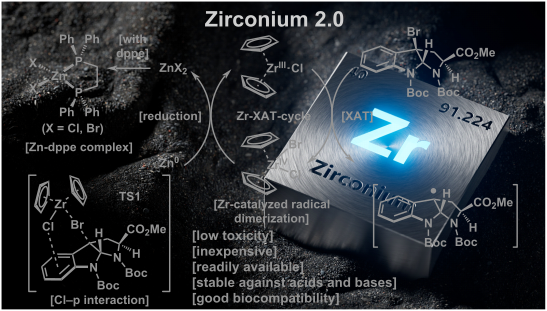
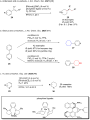
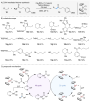
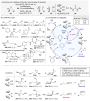
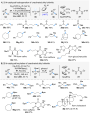
- -mediated stoichiometric radical reactions Traditionally, the use of Zr complexes in organic reactions had been limited to two-electron processes; however, the first example of a Zr-mediated radical reaction was reported by Oshima et al. in 2001. They reported an intramolecular radical cyclization using
- background of zirconium and its physical properties. Image depicted in the background of Figure 1 was purchased from iStock.com/Just_Super. This content is not subject to CC BY 4.0. Zr-mediated radical cyclization. Ni/Zr-mediated one-pot ketone synthesis. Zirconocene-catalyzed alkylative dimerization of 2








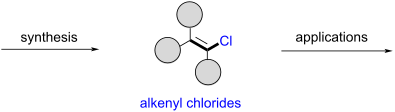
Synthesis and applications of alkenyl chlorides (vinyl chlorides): a review
Beilstein J. Org. Chem. 2026, 22, 1–63, doi:10.3762/bjoc.22.1
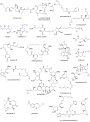
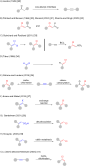
- anion). Generation of tertiary aliphatic cations and intramolecular trapping with alkenes or alkynes is well known in the context of polyene cyclizations [155]. Building on Johnson’s earlier work (Scheme 48A) [156], Fañanás and Rodríguez developed an intramolecular cationic cyclization strategy to
- systems, with no successful extension to other ring sizes. The proposed mechanism involves initial generation of a tertiary or benzylic carbocation, followed by intramolecular cyclization with a pendant alkyne to furnish a vinyl cation intermediate. This species is postulated to be trapped by the solvent
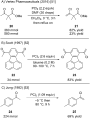
- , potentially forming a transient chloronium ion (CH2Cl+). Reaction of this electrophilic intermediate with the BF4− counterion would be expected to yield CH2FCl and BF3; however, the authors did not investigate or confirm the formation of these by-products. In 2006, Cook reported a related cyclization























Total synthesis of asperdinones B, C, D, E and terezine D
Beilstein J. Org. Chem. 2025, 21, 2730–2738, doi:10.3762/bjoc.21.210
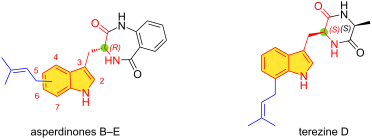
- relatively simple structures, we considered two basic approaches to 4-, 5-, 6-, and 7-prenylated tryptophans as synthetic precursors which could be converted to the intended natural products by cyclization to benzodiazepine-2,5-diones or diketopiperazines. First, is the evident use of tryptophan as a


Competitive cyclization of ethyl trifluoroacetoacetate and methyl ketones with 1,3-diamino-2-propanol into hydrogenated oxazolo- and pyrimido-condensed pyridones
Beilstein J. Org. Chem. 2025, 21, 2716–2729, doi:10.3762/bjoc.21.209
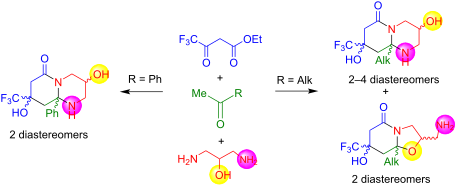
- , 620066 Ekaterinburg, Russian Federation Saint-Petersburg Pasteur Institute, Mira St. 14, 197101 Saint-Petersburg, Russian Federation 10.3762/bjoc.21.209 Abstract The use of 1,3-diamino-2-propanol with competitive N- and O-nucleophilic centers in a three-component cyclization with ethyl 4,4,4
- methyl ketones increases the regioselectivity in the synthesis of octahydropyrido[1,2-a]pyrimidinones. The cyclization with acetophenone is characterized by the regiospecific generation of these bicycles. The presence of three chiral centers in the synthesized bicycles, depending on the alkyl substituent
- -component cyclization; Introduction The modern strategy of organic synthesis is aimed at conforming to the "green chemistry" principles based on PASE (pot, atom, step, economic) methods. These principles serve as the foundation for multicomponent processes that allow various structurally complex molecules


Tandem hydrothiocyanation/cyclization of CF3-iminopropargyl alcohols with NaSCN in the presence of AcOH
Beilstein J. Org. Chem. 2025, 21, 2694–2702, doi:10.3762/bjoc.21.207
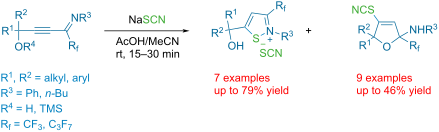
- trifluoromethylated isothiazolium thiocyanates and 4-thiocyanato-2,5-dihydrofurans is presented through hydrothiocyanation/cyclization of CF3-iminopropargyl alcohols using NaSCN in AcOH/MeCN. The formation of the two products can be explained by different directions of cyclization of the primary adducts of thiocyanic
- , thioethers, disulfides, phosphonothioates, and trifluoromethyl sulfides. Additionally, due to the presence of two electrophilic sites (the sulfur atom and the carbon of the nitrile function), thiocyanates can readily undergo domino-type intramolecular cyclization reactions to form heterocycles. So, if a
- thiocyanate group is introduced into a molecule bearing a nucleophile in a suitable position, cyclization can readily occur. In recent years, several methods for the hydrothiocyanation of alkynes bearing functional groups, primarily alkynoates, have been developed. Thus, thiocyano enoates were synthesized via



Recent advancements in the synthesis of Veratrum alkaloids
Beilstein J. Org. Chem. 2025, 21, 2657–2693, doi:10.3762/bjoc.21.206
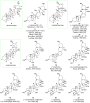
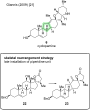
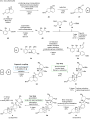
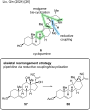
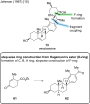
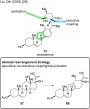
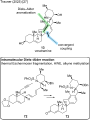
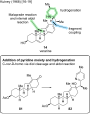
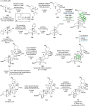
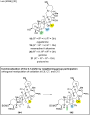
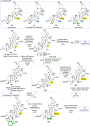
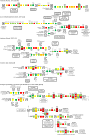
- , hydroboration/oxidation, and an oxidative cyclization protocol. The diastereomers were separable by column chromatography, leading to this faster and more scalable procedure to be performed preferentially over a six-step diastereoselective sequence. After silyl ether deprotection, the Wagner–Meerwein-type
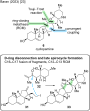
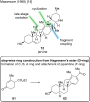
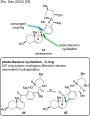
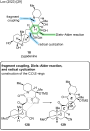
- –halogen exchange in the ABC-fragment 38 followed by 1,2-addition to the ketone moiety in the F-ring fragment 42. Protection group manipulations allowed for the union of both fragments to advanced intermediate 43 in three steps in 42%, setting the stage for the key cyclization reactions in this sequence
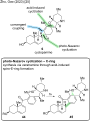
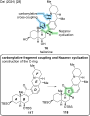
- . Compound 44 could then be subjected to a Nazarov cyclization, which was performed in a photochemical fashion, to close ring C. Further reduction and hydrogenation in ring D and an acid-induced spirocyclization of Nazarov-product 45 concluded the synthesis of cyclopamine. Notably, this total synthesis of
















Synthesis of new tetra- and pentacyclic, methylenedioxy- and ethylenedioxy-substituted derivatives of the dibenzo[c,f][1,2]thiazepine ring system
Beilstein J. Org. Chem. 2025, 21, 2645–2656, doi:10.3762/bjoc.21.205
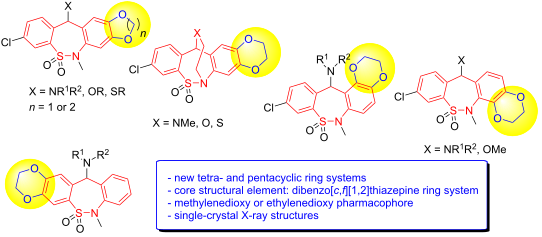
- step for the construction of the ring systems has been implemented by an intramolecular Friedel–Crafts cyclization. Altogether eight new ring systems are described here, five of them are also characterized by single-crystal X-ray diffraction. Keywords: acylation; bridged derivatives; cyclization
- followed by basic hydrolysis afforded carboxylic acids 14 and 15. Ring closure of the latter compounds to tetracyclic derivatives 6 and 7 was carried out in one pot by SnCl4-catalyzed Friedel–Crafts cyclization of the acid chlorides obtained via reaction of 14 and 15 with phosphorus pentachloride. In the
- reaction of compound 15, regioisomer 8 was also isolated in 2% yield, which represents a new ring system, too. It is interesting to mention that the formation of a similar isomer was not observed in the cyclization reaction of compound 14. The same disparity was observed in the studies of electrophilic


Efficient solid-phase synthesis and structural characterization of segetalins A–H, J and K
Beilstein J. Org. Chem. 2025, 21, 2612–2617, doi:10.3762/bjoc.21.202

- strategy for the total synthesis of segetalins A–H, J and K (1–10), bioactive cyclopeptides isolated from Vaccaria segetalis. Linear precursors were assembled on cost-effective 2-chlorotrityl chloride resin via Fmoc-SPPS, followed by PyBOP-mediated head-to-tail cyclization in DMF (10−3 M). After RP-HPLC
- scalable methodology overcomes limitations of prior syntheses, enabling biological evaluation. Keywords: Fmoc-solid-phase peptide synthesis (Fmoc-SPPS); head-to-tail cyclization; plant cyclopeptides; Vaccaria segetalis; Introduction Cyclopeptides have garnered significant research interest owing to their
- unique conformational constraints imposed by cyclization and diverse biological activities [1][2][3]. Specifically, plant-derived cyclopeptides represent a valuable source of potential lead compounds for drug discovery [4]. Segetalins A–H, J and K (1–10), isolated from the seeds of Vaccaria segetalis


Visible-light-driven NHC and organophotoredox dual catalysis for the synthesis of carbonyl compounds
Beilstein J. Org. Chem. 2025, 21, 2584–2603, doi:10.3762/bjoc.21.200
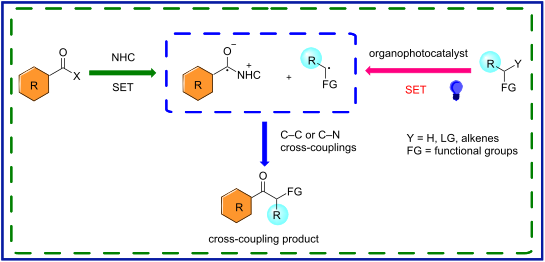
- -attached ketyl radical B are generated under photoredox NHC catalysis under visible-light irradiation. The 5-exo-trig radical cyclization of the alkene-tethered iminyl radicals A furnished a dihydropyrrole-derived radical coupled with the NHC group attached ketyl radical B. This approach features readily




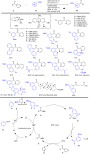

Recent advances in total synthesis of illisimonin A
Beilstein J. Org. Chem. 2025, 21, 2571–2583, doi:10.3762/bjoc.21.199
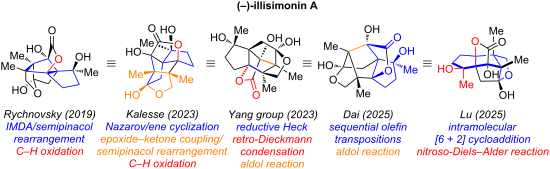
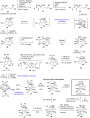
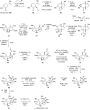
- substructure hidden inside the natural product’s cage-like ring system, Kalesse’s group chose to construct this architecture first using a tandem Nazarov/ene cyclization [36]. The cis-pentalene was subsequently assembled via a Ti(III)-mediated epoxide–ketone coupling reaction. Starting from the known
- deprotection and oxidation of the secondary alcohol, yielded the cyclization precursor 35. A B(C6F5)3-catalyzed tandem Nazarov/ene cyclization of 35 provided the key spirocyclic intermediate 37. The tertiary alcohol was protected in situ with TESOTf to suppress retro-aldol side reactions. Notably, prior TES
- deprotection of the cyclization precursor was essential, as the TES-protected analogue of 35 failed to deliver the desired spirocycle 38 under the Nazarov cyclization conditions. α-Oxidation of 38 with molecular oxygen afforded 39, which was then converted to 40 via formation of a chloromethyl silyl ether






Total syntheses of highly oxidative Ryania diterpenoids facilitated by innovations in synthetic strategies
Beilstein J. Org. Chem. 2025, 21, 2553–2570, doi:10.3762/bjoc.21.198
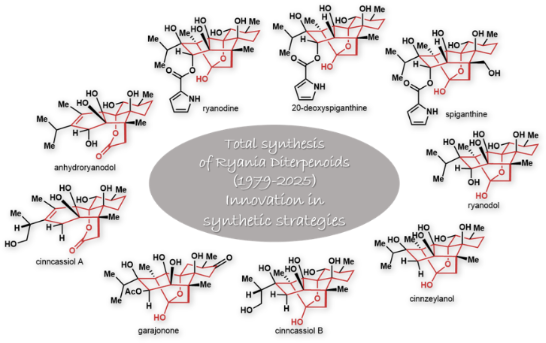
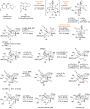
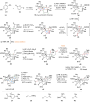
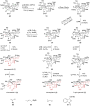
- intermediate 21, thereby completing the construction of the D ring. Adjustments of functional groups and oxidation states at multiple sites then afford anhydroryanodol (10). Finally, epoxidation of the C1–C2 double bond followed by Li/NH3-promoted reductive cyclization constructs the E ring of the molecular
- conditions induces the first intramolecular reductive cyclization, affording hemiacetal 27. This intermediate is then transformed via a one-pot sequence involving epoxidation, fragmentation, and re-epoxidation to give epoxide 29. A second intramolecular reductive cyclization of 29 under Li/NH3 forms the
- of (+)-ryanodol (4) in just 15 steps, highlighting the Pauson–Khand cyclization and a selenium dioxide-mediated selective oxidation as key transformations [48] (Scheme 7). To construct the multi-substituted five-membered ring in the target molecule, the authors strategically employed the Pauson–Khand







Ni-promoted reductive cyclization cascade enables a total synthesis of (+)-aglacin B
Beilstein J. Org. Chem. 2025, 21, 2548–2552, doi:10.3762/bjoc.21.197
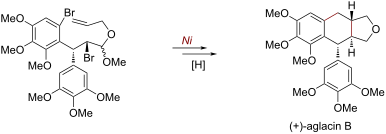
- Abstract The total synthesis of bioactive (+)-aglacin B was achieved. The key steps include an asymmetric conjugate addition reaction induced by a chiral auxiliary and a nickel-promoted reductive tandem cyclization of the elaborated β-bromo acetal, which led to the efficient construction of the
- synthesis of both enantiomers of aglacins A (1), B (2), and E (4) by asymmetric photoenolization/Diels–Alder reactions as the key steps for the construction of the C7–C8 and C7′–C8′ bonds [8]. During the past decade, we had developed nickel-catalyzed or -promoted reductive coupling/cyclization reactions for
- cyclization, and a subsequent acetal reduction under acidic conditions then can complete the total synthesis of this molecule. The cyclization precursor 5 could be prepared from the primary alcohol 6 through transforming functional groups of the alkyl chain and installing an allyl group. It was envisioned


Isoorotamide-based peptide nucleic acid nucleobases with extended linkers aimed at distal base recognition of adenosine in double helical RNA
Beilstein J. Org. Chem. 2025, 21, 2513–2523, doi:10.3762/bjoc.21.193
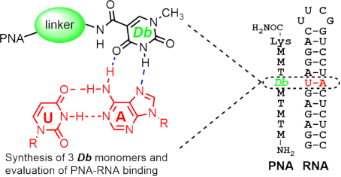
- microwave reactor with LCMS analysis, selecting for high conversion and minimal reaction time (Table 1). While high heat was originally feared to cause side reactions due to possible lability of the Fmoc and internal cyclization to form a piperazinone [39], it was discovered that the monomer was stable up


Assembly strategy for thieno[3,2-b]thiophenes via a disulfide intermediate derived from 3-nitrothiophene-2,5-dicarboxylate
Beilstein J. Org. Chem. 2025, 21, 2489–2497, doi:10.3762/bjoc.21.191
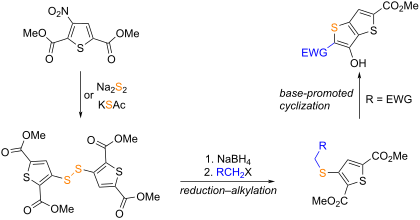
- -dicarboxylates by its one-pot reduction–alkylation using NaBH4 in DMF followed by an alkylating agent. Base-promoted cyclization of electron-deficient 3-alkylthio derivatives furnished 2-aryl-, 2-aroyl-, and 2-cyano-substituted thieno[3,2-b]thiophenes, bearing a 3-hydroxy group. This protocol broadens access to
- cyclization to furnish the TT framework [2][23][24]. Despite the wide structural diversity of TT derivatives, 3-hydroxy-substituted analogues remain rare, with only a few synthetic strategies described for their preparation, as illustrated in Scheme 1. One such route involves sulfur insertion into a thiophen
- -3-yl lithium derivative, followed by electrophilic trapping of the thiolate and base-induced cyclization to afford the 3-hydroxy-TT [25]. Route II is represented by the single example of a one-pot reaction of 2-methylquinoline and 3-bromothiophene-2-carbaldehyde in the presence of elemental S and


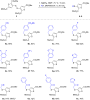

Palladium-catalyzed regioselective C1-selective nitration of carbazoles
Beilstein J. Org. Chem. 2025, 21, 2479–2488, doi:10.3762/bjoc.21.190
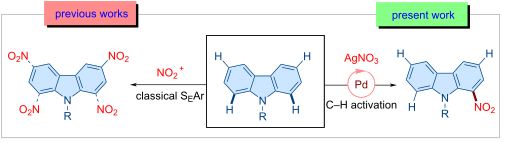
- ) functionalization of the carbazole core. Traditional approaches for constructing diversified carbazoles and derivatives are Fischer–Borsche synthesis [15][16], Graebe–Ullmann synthesis [17][18], cyclization of biaryl nitrenes–Cadogan synthesis [19], electrocyclic reactions [20][21], and others [22][23][24]. These
- addition to cross-coupling reactions, transition metal-catalyzed cyclization involving C–H activation approaches have also been reported [29][30][31][32][33][34][35][36]. Despite the significant advances in carbazole core constructions, the established protocols significantly lack access to selectively C1


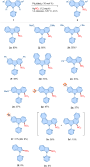
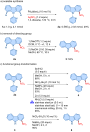
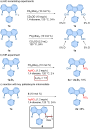
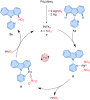
Synthesis of the tetracyclic skeleton of Aspidosperma alkaloids via PET-initiated cationic radical-derived interrupted [2 + 2]/retro-Mannich reaction
Beilstein J. Org. Chem. 2025, 21, 2470–2478, doi:10.3762/bjoc.21.189
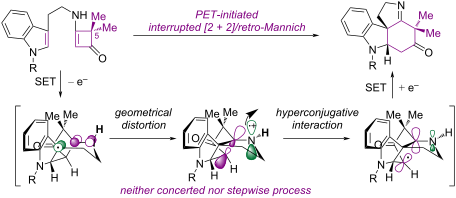
- formation of unique radical intermediates [9][10]. We previously demonstrated the Ir-catalyzed [2 + 2] cyclization/retro-Mannich reaction of a tryptamine-substituted cyclopentenone F, which led to the formation of indoline J (Figure 1b) [15]. Unlike other reported methods [16][17][18], the PET reaction of F
- -initiated [2 + 2] cyclization of the tryptamine-substituted cyclobutenone K to form the radical cation L, which has a highly functionalized and rigid bicyclo[2.2.0]hexane core. Fragmentation of the C3–C19 bond would afford a redox-active intermediate which upon further reductive quenching would lead to the
- proceeds via an unusual 1,3-C shift to afford M, i.e. through an interrupted [2 + 2] cyclization/retro-Mannich reaction. Results and Discussion Conditions optimization Our study commenced with the evaluation of the proposed PET-based tandem [2 + 2] cyclization/retro-Mannich reaction. We selected compound


Catalytic enantioselective synthesis of selenium-containing atropisomers via C–Se bond formations
Beilstein J. Org. Chem. 2025, 21, 2447–2455, doi:10.3762/bjoc.21.186
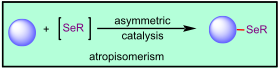
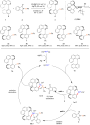
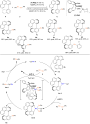
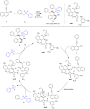
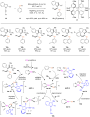
- efficiently constructed by catalytic asymmetric hydroselenation, catalytic asymmetric allyl substitution, catalytic asymmetric electrophilic selenylation/cyclization, etc. The research content of this part has already been covered by relevant reviews [15][16][17], so it is not within the scope of discussion


Transformation of the cyclohexane ring to the cyclopentane fragment of biologically active compounds
Beilstein J. Org. Chem. 2025, 21, 2416–2446, doi:10.3762/bjoc.21.185
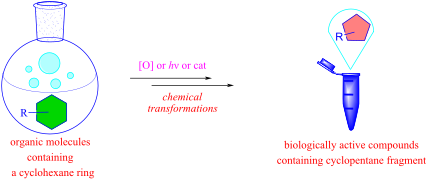
- [7]. Syntheses of cyclopentanoids usually are based on cyclopentaannelation reactions: transformations accompanied by cyclization [8]; transformation of compounds containing a cyclopentane ring [9]; contraction of large cycles to cyclopentane derivatives. Ring contraction reactions are among the most
- aldol condensation of the resulting dialdehyde. This strategy is widely used at the key stage in the formation of a cyclopentane ring in the synthesis of various building blocks, including echinopine A (3) [10][11][12] (Scheme 1). The ozonolysis–cyclization sequence was used by Alvarez-Manzaneda et al
- . as a method for ring contraction of the cyclohexene ring to produce cytostatic taiwaniaquinoids [13][14][15]. Compound 4, derived from (–)-abietic acid, was subjected to an oxidative cleavage reaction to produce ketoaldehyde 5. Subsequent intramolecular aldol cyclization using 1,8-diazobicyclo[5.4.0


An Fe(II)-catalyzed synthesis of spiro[indoline-3,2'-pyrrolidine] derivatives
Beilstein J. Org. Chem. 2025, 21, 2383–2388, doi:10.3762/bjoc.21.183
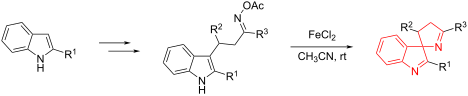
- cyclization. Subsequently Zhong et al. reported a catalytic asymmetric variant, affording spirooxindoles in high yields with excellent enantioselectivity [8]. An alternative approach employing vinyl azides involves a Rh(II)-catalyzed olefination of diazo compounds, followed by annulation with vinyl azides to
- yield substituted spiropyrrolidines (Scheme 1, path b) [9]. Additionally, an organocatalytic, enantioselective Michael addition/cyclization sequence of 3-aminooxindole Schiff bases with terminal vinyl ketones, catalyzed by a cinchona-derived base, has been reported to afford chiral spiroindolylpyrroles
- in high yields (Scheme 1, path c) [10]. Further expanding the scope of enantioselective approaches, a Michael/cyclization cascade reaction between 3-aminooxindoles and 2-enoylpyridines, catalyzed by a cinchonidine-based thiourea organocatalyst, was developed. Subsequent treatment with HCl in methanol




Synthetic study toward vibralactone
Beilstein J. Org. Chem. 2025, 21, 2376–2382, doi:10.3762/bjoc.21.182

- co-workers investigated the biosynthetic pathway of vibralactone (6). They established that 4-hydroxybenzoate serves as the direct ring precursor of vibralactone and the β-lactone moiety was formed via vibralactone cyclase (VibC)-catalyzed cyclization [31][32][33][34]. This is a fascinating
- cyclization as the all-carbon quaternary center is formed in the last step. Given that the β-lactone moiety may act as a potential covalent inhibitor toward target proteins and that the sterically congested bicyclic skeleton presents a significant synthetic challenge, we herein report our synthetic study


Comparative analysis of complanadine A total syntheses
Beilstein J. Org. Chem. 2025, 21, 2334–2344, doi:10.3762/bjoc.21.178
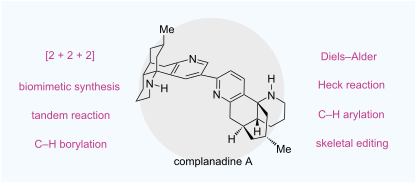
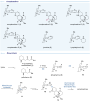
- these lycopodium alkaloids [12]. Lysine could be advanced to 4-(2-piperidyl)acetoacetate (7) and pelletierine (8), which would react with each other to deliver phlegmarine (9). Double oxidation of 9 would give 10 for a subsequent intramolecular Mannich-type cyclization to forge the C4–C13 bond and
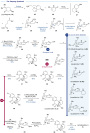
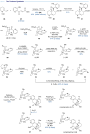
- intramolecular cyclization to afford alkyne–nitrile 19 for the first [2 + 2 + 2] cycloaddition with bis(trimethylsilyl)butadiyne (20). This transformation proceeded smoothly under thermal conditions with CpCo(CO)2 to afford 21 as the major regioisomer (rr = 25:1) [22]. Removal of the two TMS groups and
- underwent ketone release and amine-ketone condensation to form iminium ion 27. Under the same acidic conditions, enamide 26 underwent hydrolysis and tautomerization to form enol 28. Conjugate addition of enol 28 to iminium ion 27 gave 29 for the subsequent intramolecular Mannich cyclization to deliver 30



Recent advances in Norrish–Yang cyclization and dicarbonyl photoredox reactions for natural product synthesis
Beilstein J. Org. Chem. 2025, 21, 2315–2333, doi:10.3762/bjoc.21.177
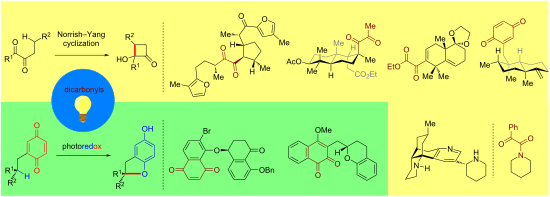
- Peng-Xi Luo Jin-Xuan Yang Shao-Min Fu Bo Liu College of Chemistry, Sichuan University, 29 Wangjiang Rd., Chengdu, Sichuan 610064, China 10.3762/bjoc.21.177 Abstract In recent years, the Norrish–Yang cyclization and related photoredox reactions of dicarbonyls have been extensively utilized in
- natural product synthesis. This review summarizes the latest advancements in these reactions for constructing terpenoids, alkaloids, and antibiotics. Through Norrish–Yang cyclization, dicarbonyls (e.g., 1,2-diketones and α-keto amides) can efficiently construct sterically hindered ring structures, which
- synthesis of natural products but also establish a solid foundation for subsequent pharmaceutical investigations. Keywords: dicarbonyls; natural product; Norrish–Yang cyclization; photoredox; total synthesis; Introduction In the 1930s, Norrish documented the photodecomposition of aldehydes and ketones [1