Search results
Search for "conformations" in Full Text gives 404 result(s) in Beilstein Journal of Organic Chemistry. Showing first 200.
Development and mechanistic studies of calcium–BINOL phosphate-catalyzed hydrocyanation of hydrazones
Beilstein J. Org. Chem. 2025, 21, 755–765, doi:10.3762/bjoc.21.59
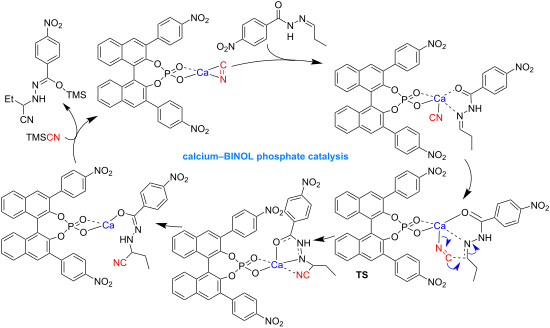
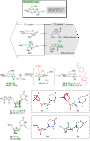
- with a sizable barrier of 15.0 kcal·mol−1 via TS 8 (Figure 4), interchanging two almost equienergetic conformations of 11 (11Z, with an N–N–C–CEt torsion angle of 32°, and 11E, with an torsion angle of 111°), which have a strong reminiscence of their predecessors' former geometric isomerism, an effect


Orthogonal photoswitching of heterobivalent azobenzene glycoclusters: the effect of glycoligand orientation in bacterial adhesion
Beilstein J. Org. Chem. 2025, 21, 736–748, doi:10.3762/bjoc.21.57
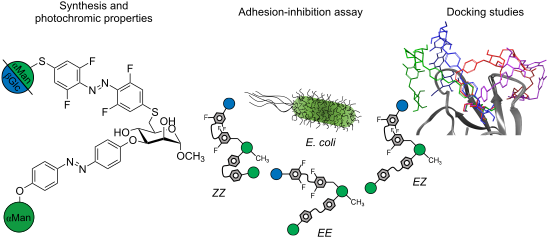
- results were submitted to a MM-GBSA calculation (molecular mechanics with generalized Born and surface-area solvation) [50] leading to the binding energies of the different isomers of 1, 2, 4, and 5 for both protein conformations (Table 3 and Supporting Information File 1, Tables S13–S18). The determined


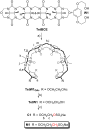
Acyclic cucurbit[n]uril bearing alkyl sulfate ionic groups
Beilstein J. Org. Chem. 2025, 21, 717–726, doi:10.3762/bjoc.21.55
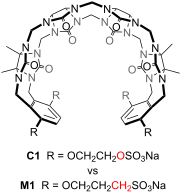
- is flexible and the two senses of helicity – and other conformations – undergo rapid equilibrium rendering the C1 and the C1·Me6CHDA complex achiral. The centroids of the aromatic sidewall are 0.9698 Å (1.1193 Å) above and 1.3090 Å (1.4832 Å) below the mean plane of the glycoluril methine and




Origami with small molecules: exploiting the C–F bond as a conformational tool
Beilstein J. Org. Chem. 2025, 21, 680–716, doi:10.3762/bjoc.21.54
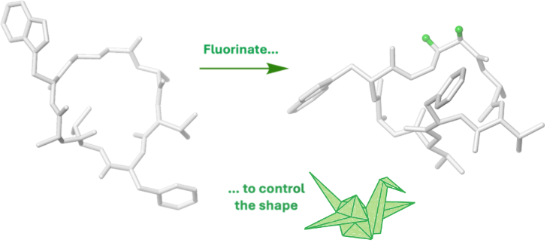
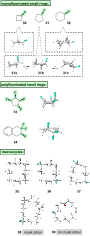
- target binding will incur little entropic cost) and high selectivity (since off-target interactions will be minimised) [1]. There are several methods by which the conformations of small molecules can be controlled, but in this review we will focus upon one particular method, which is the installation of
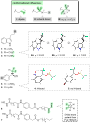
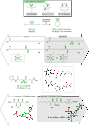
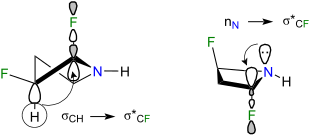
- compared to the non-fluorinated stearic acid 12 (Figure 3) [26]. If two fluorines are introduced into the middle of an alkyl chain in a 1,2-pattern, several competing factors arise that can influence the molecular conformation [27]. One factor is hyperconjugation: conformations in which the σ*C–F orbitals
- are aligned with either σC–H orbitals (II, Figure 3), or, to a lesser extent, σC–C orbitals, will be favoured. Another factor is simple sterics: conformations in which the flanking alkyl moieties are further apart from one another will be favoured. A third factor is polarity: for example


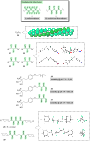

Deep-blue emitting 9,10-bis(perfluorobenzyl)anthracene
Beilstein J. Org. Chem. 2025, 21, 515–525, doi:10.3762/bjoc.21.39
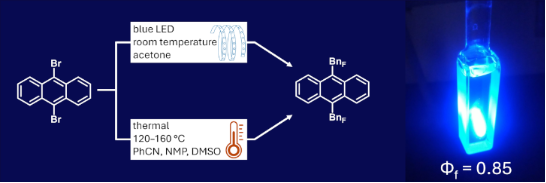
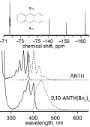
- , whereas 9,10-ANTH(BnF)2 loses vibronic structure in the emission spectrum. This may be the result of different conformations upon relaxation [31]. The HOMO–LUMO gap (Eg) decreases from ANTH (3.28 eV) to 9,10-ANTH(BnF)2 (3.05 eV). A decrease in Eg is regarded as one of the methods for improving the





Beyond symmetric self-assembly and effective molarity: unlocking functional enzyme mimics with robust organic cages
Beilstein J. Org. Chem. 2025, 21, 421–443, doi:10.3762/bjoc.21.30
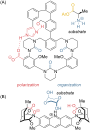
- rare example of a cavity-promoting catalysis via both “organization and polarization” (Figure 4C), including dual activation [105], albeit with vague directionality (the substrate can be productively oriented in many conformations). This directionality might be advanced by new capsule types. For
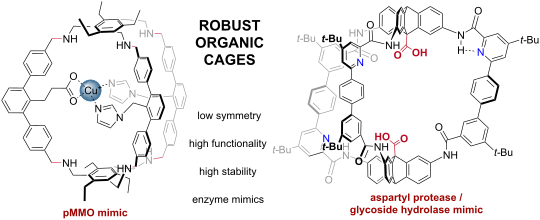
- reductive amination to stabilize imine cages, and the resulting amine cages gain solubility from increased flexibility at the cost of losing some structural rigidity [42][43][44]. Metastable conformations – programming cavity shape and symmetry: Unlike non-covalent/dative assemblies, covalently linked cages
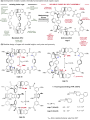
- ]. In this approach, symmetric topologies undergo a natural symmetry-lowering process when the restricted angles possible in a polymacrocycle environment lead to non-symmetric conformations in the pursuit of equal strain distribution. In the case of cage 3e, the mixed pyridyl/aryl system results in a




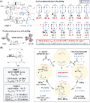
The effect of neighbouring group participation and possible long range remote group participation in O-glycosylation
Beilstein J. Org. Chem. 2025, 21, 369–406, doi:10.3762/bjoc.21.27
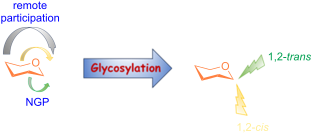
- pathway. The benchmark for the SN1 spectrum of the mechanistic continuum has been elaborately illustrated and supported by Codee et al. by mapping full ensemble of conformations that the glycosyl oxocarbenium ions can adopt by a complete conformational energy landscape (CEL) study in a quantitative manner




Synthesis, structure and π-expansion of tris(4,5-dehydro-2,3:6,7-dibenzotropone)
Beilstein J. Org. Chem. 2025, 21, 1–7, doi:10.3762/bjoc.21.1
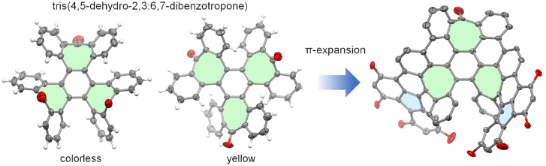
- analysis of it with X-ray crystallography. Interestingly, it is observed that tris(4,5-dehydro-2,3:6,7-dibenzotropone) crystallized from its solution in hexane resulting in colorless and yellow crystal polymorphs, where it adopts conformations of approximate Cs and C2 symmetry, respectively. Furthermore
- conformations of approximate Cs and C2 symmetry, respectively. Furthermore, the expansion of the π-skeleton of 1 through the Barton–Kellogg and Scholl reactions enabled the synthesis of compound 3, whose curved polycyclic skeleton containing three heptagons and two pentagons was identified with X-ray


Advances in the use of metal-free tetrapyrrolic macrocycles as catalysts
Beilstein J. Org. Chem. 2024, 20, 3085–3112, doi:10.3762/bjoc.20.257
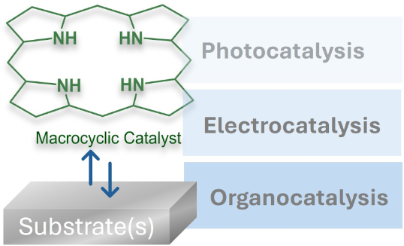
- conformational flexibility, allowing them to adopt four key conformations: 1,3-alternate, cone, partial cone, and 1,2-alternate [1][2]. Calix[4]pyrroles are one of the most studied hosts in supramolecular chemistry, finding use in applications of molecular recognition and extraction, drug delivery, ion transport
- calix[4]pyrroles as catalysts may be related to their conformational flexibility, that leads to less preorganized binding and catalytic sites. Calix[4]pyrroles in solution exist in four-different conformations (cone, partial cone, 1,3-alternate, and 1,2-alternate); this macrocyclic flexibility arises


Synthesis and antimycotic activity of new derivatives of imidazo[1,2-a]pyrimidines
Beilstein J. Org. Chem. 2024, 20, 2806–2817, doi:10.3762/bjoc.20.236
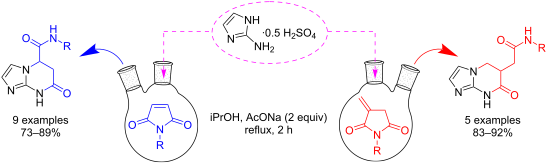
- the formation of a coordination bond; the benzene moiety is located in a hydrophobic pocket. bThe conformations of compounds 4a–e are identical, whereas the position of compound 5e (red) is significantly different. Reaction of 2-aminoimidazole (1) with N-substituted maleimides (2) and N


Applications of microscopy and small angle scattering techniques for the characterisation of supramolecular gels
Beilstein J. Org. Chem. 2024, 20, 2608–2634, doi:10.3762/bjoc.20.220


Synthesis and conformational analysis of pyran inter-halide analogues of ᴅ-talose
Beilstein J. Org. Chem. 2024, 20, 2442–2454, doi:10.3762/bjoc.20.208
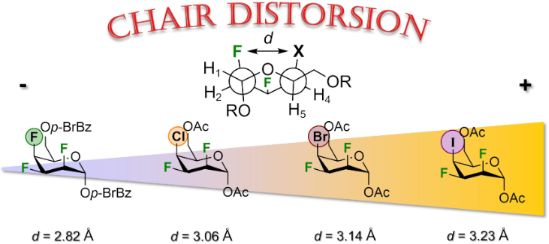
- halo-divergent strategy from known 1,6-anhydro-2,3-dideoxy-2,3-difluoro-β-ᴅ-mannopyranose. In solution and in the solid-state, all analogues adopt standard 4C1-like conformations despite 1,3-diaxial repulsion between the F2 and the C4 halogen. Moreover, the solid-state conformational analysis of
- order to decipher the key physical properties of complex pyran inter-halides, we performed 19F NMR analysis of halogenated talose analogues 12–15 (Figure 2). First, all analogues adopt standard 4C1-like conformations. Comparison of the vicinal and geminal coupling constants for each organohalogen
- suggests that there is little change in the conformations (although there is an increasing chair distortion for larger halogens, see below). Because F3 is adjacent to the C4 halogen, 19F resonance of F3 occurs at lower field than F2 for analogues 13–15. There is a strong increase in chemical shift of F3


Computational toolbox for the analysis of protein–glycan interactions
Beilstein J. Org. Chem. 2024, 20, 2084–2107, doi:10.3762/bjoc.20.180
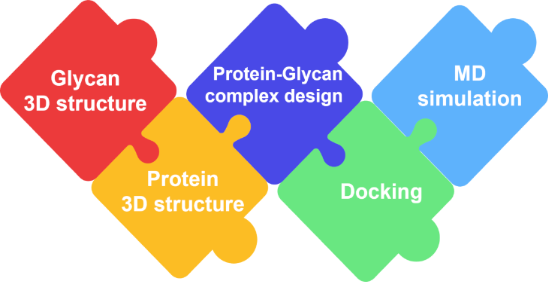
- of different and particular structures [7][8]. Additionally, glycans can adopt a wide variety of different shapes; five-membered ring sugars can exhibit envelope and twist conformations usually represented on a pseudo-rotational wheel; while six-membered ring structures can adopt chair (C), boat (B
- ), skew (S), and half-chair (H) conformations (Figure 1). Among them, chair’ shapes typically have the lowest energy and are thus preferred, except few cases in which different conformations can exist in a dynamic equilibrium, as for the iduronic acid that can adopt three low-energy solution conformations
- files of the minimised resulting structures but also files for input to an AMBER simulation (https://glycam.org/). Notably, among the currently available interfaces for modelling oligosaccharide conformations on glycam website, one is dedicated to GAG modelling [51] (https://glycam.org/gag/). 3. CHARMM


Regioselective alkylation of a versatile indazole: Electrophile scope and mechanistic insights from density functional theory calculations
Beilstein J. Org. Chem. 2024, 20, 1940–1954, doi:10.3762/bjoc.20.170
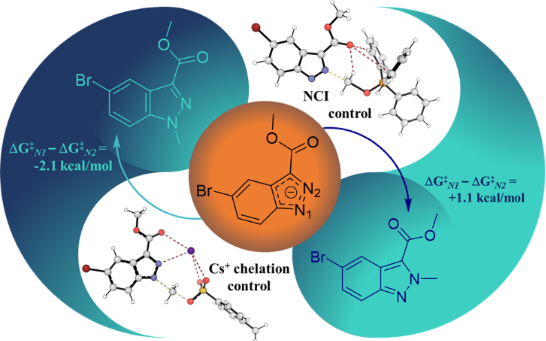
- subsequently set to 0 kcal/mol leading to the energy diagram in Figure 5. Two TSs leading to each product were found, all four of which utilized a coordinating Cs+ cation. The N1-s-cis and N1-s-trans TSs were the lowest in energy (27.5 kcal/mol and 29.1 kcal/mol, respectively), leading to two conformations of


Syntheses and medicinal chemistry of spiro heterocyclic steroids
Beilstein J. Org. Chem. 2024, 20, 1713–1745, doi:10.3762/bjoc.20.152
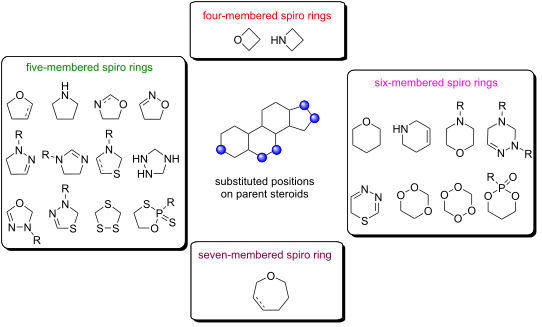
- of a new chiral centre. Advances in understanding ligand–receptor interactions have facilitated the determination of optimal molecular conformations to enhance binding affinity, which can be achieved, in part, by introducing a spiro annelated ring to impart rigidity to the molecule. From a medicinal


Regio- and stereochemical stability induced by anomeric and gauche effects in difluorinated pyrrolidines
Beilstein J. Org. Chem. 2024, 20, 1572–1579, doi:10.3762/bjoc.20.140
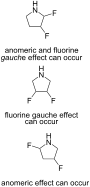
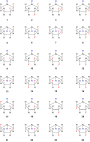
- crystallographic data using the 3-fluoropyrrolidinium cation and 3-fluoropyrrolidine. Subsequently, we explored the relative energy of all favored conformations of all different stereoisomers of 2,3-, 2,4-, and 3,4-difluoropyrrolidines at the B3LYP-D3BJ/6-311++G** level. A generalized anomeric effect, arising from
- -fluoroalkylamines and the respective cations [6]. Intramolecular hydrogen bonds involving either the carboxy or hydroxy group of 4R- and 4S-hydroxyproline have been identified as key factors in stabilizing the favored conformations in the gas phase. Therein, the contribution of a gauche effect due to electron
- pyrrolidinium salt [11] with the CCSD/DGTZVP geometry of the pyrrolidinium cation (with an exclusively axial C–F bond) and the energy of 3-fluoropyrrolidine conformations. Various combinations of DFT methods (B3LYP-D3BJ, ωB97XD, and PBEPBE) and basis sets (DGTZVP and 6-311++G**) were evaluated. The selection of





Photoswitchable glycoligands targeting Pseudomonas aeruginosa LecA
Beilstein J. Org. Chem. 2024, 20, 1486–1496, doi:10.3762/bjoc.20.132
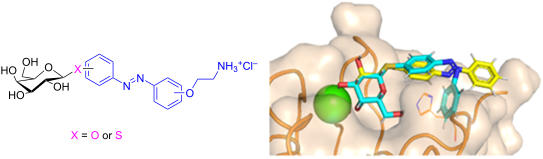
- rather similar Kd values. In order to rationalize this difference in binding mechanism, molecular models were obtained for selected low-energy conformations of E- and Z-isomers of a “model” scaffold of the para-azobenzene derivative in the binding site of LecA (Figure 5), by simple superpositioning of
- represents a ΔG value of −30 kJ/mol, corresponding to a Kd of approx 5 μM in the experimental conditions. (B) Manual docking of scaffold for compound 3 with selected low energy conformations of the E-isomer (yellow sticks) and Z-isomer (cyan sticks) superimposed on conserved position of galactose in all LecA


Computation-guided scaffold exploration of 2E,6E-1,10-trans/cis-eunicellanes
Beilstein J. Org. Chem. 2024, 20, 1320–1326, doi:10.3762/bjoc.20.115

- activation energy may allow for oxy-Cope rearrangement at 28 °C. DFT calculations (in toluene) of 5-hydroxyalbireticulene for both the pseudo-axial and pseudo-equatorial conformations of the C5 hydroxy moiety suggest that there is not a significant difference in the free energy barriers for the oxy-Cope


Sustainable tandem acylation/Diels–Alder reaction toward versatile tricyclic epoxyisoindole-7-carboxylic acids in renewable green solvents
Beilstein J. Org. Chem. 2024, 20, 1308–1319, doi:10.3762/bjoc.20.114
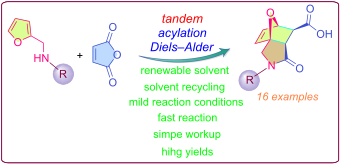
- case of compound 2p, unlike the other two compounds, the equilibrium is largely in favor of the product of interest and the NMR spectra confirm this. From the mechanistic point of view of the IMDAF reaction, the presence of both s-cis and s-trans conformations of maleamic acid intermediates in the


Kinetically stabilized 1,3-diarylisobenzofurans and the possibility of preparing large, persistent isoacenofurans with unusually small HOMO–LUMO gaps
Beilstein J. Org. Chem. 2024, 20, 1099–1110, doi:10.3762/bjoc.20.97
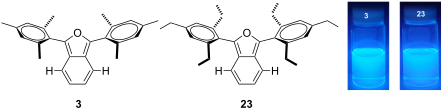
- phenyl substituents, have been synthesized and shown to adopt non-planar conformations with the ortho-alkyl groups located above and below the most reactive 1,3-carbons of the furan ring. These bulky substituents provide a strong measure of kinetic stabilization. Thus, 1,3-dimesitylisobenzofuran and 1,3
- semiconductors. However, such syntheses must account for the projected lack of stability associated with isoacenofurans. We demonstrated that sterically congesting ortho groups on 1,3-diarylisobenzofurans like 3 and 23 force the molecules to adopt non-planar conformations in which the aryl groups rotate out-of
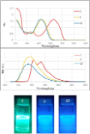
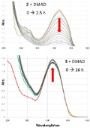
- -plane. The out-of-plane rotations provide for enhanced steric congestion both above and below the most reactive 1,3-carbons of the furan ring, dramatically reducing their reactivity with dienophiles including DMAD, acrylonitrile and singlet oxygen. Due to these non-planar conformations, the HOMO and




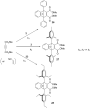


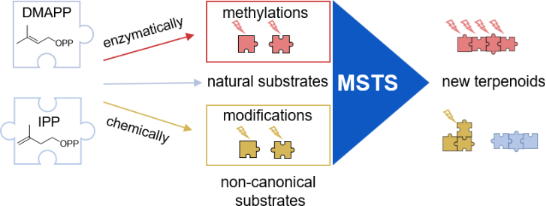
Enhancing structural diversity of terpenoids by multisubstrate terpene synthases
Beilstein J. Org. Chem. 2024, 20, 959–972, doi:10.3762/bjoc.20.86
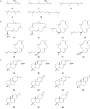
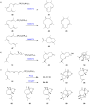
- properties (Figure 4c) [45]. Notably, one tetrahydrofuranoterpenoid 59 is also formed as a major product in the BcBoT2 reaction, despite the low sequence similarity between these sesqui-TSs, which could be explained by similar active-site conformations to stabilize prenyl substrates. Similarly, limonene







Monitoring carbohydrate 3D structure quality with the Privateer database
Beilstein J. Org. Chem. 2024, 20, 931–939, doi:10.3762/bjoc.20.83

- and, therefore, poorly resolved density regions, whereas in electron cryo-microscopy different conformations and compositions are averaged out during image classification and volume reconstruction [5]. Owing to these difficulties, it is not uncommon to find problematic carbohydrate structures in the
- glycoprotein as pointed out by Crispin and collaborators [8], and more recently the realisation that high-energy ring conformations, a rare event in six-membered pyranosides, were present in ca. 15% of the N-glycan components of glycoproteins in the PDB [3]. Many of these findings originated the development of
- filtering by linkage type is also possible, allowing niche glycosylation targets to be obtained. For example, filtering for C-glycans with a ‘BMA-1,1-TRP’ (the correct pair would be ‘MAN-1,1-TRP’, as the linkage in the modification is an alpha linkage) returns nine instances of incorrect sugar conformations


Recent developments in the engineered biosynthesis of fungal meroterpenoids
Beilstein J. Org. Chem. 2024, 20, 578–588, doi:10.3762/bjoc.20.50
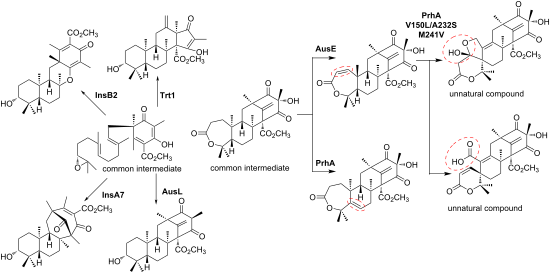
- cyclizations and post-cyclization modifications are especially important in fungal meroterpenoid biosynthesis, contributing to the structural diversity of this class of compounds. Fungal meroterpenoid cyclases (CYCs) are seven-membrane-spanning transporter-like enzymes that regulate the conformations of
- approach led to the discovery of new CYCs, InsA7 (32% identity with Trt1) and InsB2 (40% identity with Trt1) from Aspergillus insuetus [13]. These enzymes catalyze the formation of the terpenoid skeleton from 6, adopting chair–boat and chair–chair conformations to create two distinct 6-6-6-6-membered ring






Possible bi-stable structures of pyrenebutanoic acid-linked protein molecules adsorbed on graphene: theoretical study
Beilstein J. Org. Chem. 2024, 20, 570–577, doi:10.3762/bjoc.20.49
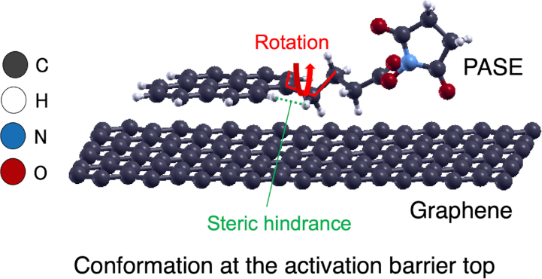
- Yasuhiro Oishi Motoharu Kitatani Koichi Kusakabe Graduate School of Science, University of Hyogo, Kamigori, Hyogo 678-1297, Japan 10.3762/bjoc.20.49 Abstract We theoretically analyze possible multiple conformations of protein molecules immobilized by 1-pyrenebutanoic acid succinimidyl ester (PASE
- ) linkers on graphene. The activation barrier between two bi-stable conformations exhibited by PASE is confirmed to be based on the steric hindrance effect between a hydrogen on the pyrene group and a hydrogen on the alkyl group of this molecule. Even after the protein is supplemented, this steric hindrance
- effect remains if the local structure of the linker consisting of an alkyl group and a pyrene group is maintained. Therefore, it is likely that the kinetic behavior of a protein immobilized with a single PASE linker exhibits an activation barrier-type energy surface between the bi-stable conformations on


Switchable molecular tweezers: design and applications
Beilstein J. Org. Chem. 2024, 20, 504–539, doi:10.3762/bjoc.20.45
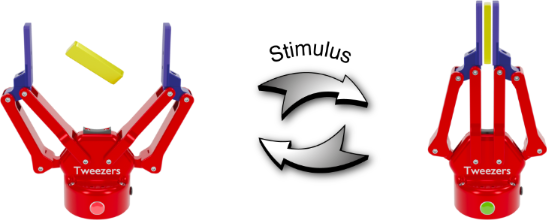
- , conformational analysis performed by variable temperature NMR led to the conclusion that the open and closed conformations have similar energies and are in fast exchange at ambient temperature. This fluxionality resulted in a relatively low affinity for the electron-poor aromatic guest 2,4,7-trinitro-9
- electrostatic repulsion between the doubly charged redox-active units. Thus, it can be concluded that, although the tweezers exhibit different conformations in neutral and oxidized states, at room temperature