Search results
Search for "inhibitors" in Full Text gives 498 result(s) in Beilstein Journal of Organic Chemistry. Showing first 200.
Approaches to stereoselective 1,1'-glycosylation
Beilstein J. Org. Chem. 2025, 21, 1700–1718, doi:10.3762/bjoc.21.133
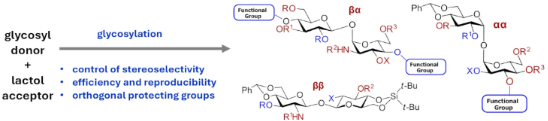
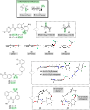
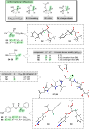
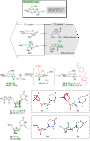
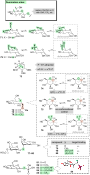
- , the chemical synthesis of thiotrehalose analogs [116][117] provides a versatile tool for the construction of therapeutically relevant ligands or inhibitors of carbohydrate-specific innate immune receptors. Synthetic thiodigalactosides and their derivatives have been identified as selective inhibitors


A multicomponent reaction-initiated synthesis of imidazopyridine-fused isoquinolinones
Beilstein J. Org. Chem. 2025, 21, 1161–1169, doi:10.3762/bjoc.21.92
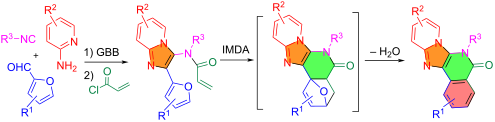
- as HIV inhibitors [14]. The imidazo[1,2-a]pyridine ring can be readily synthesized by the GBB reaction [10][15], while the isoquinolinone ring is commonly generated by a cyclative lactamization process. Performing a GBB reaction followed by an intramolecular amidation is a good approach for making




A versatile route towards 6-arylpipecolic acids
Beilstein J. Org. Chem. 2025, 21, 1104–1115, doi:10.3762/bjoc.21.88
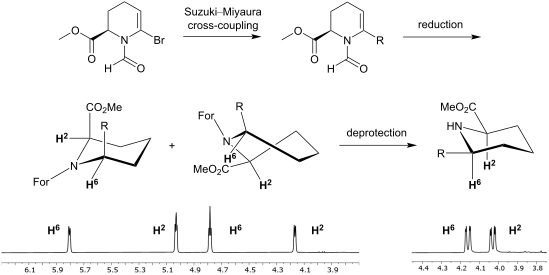
- important role as building blocks for peptide synthesis [1][2][3][4][5], as organocatalysts [6][7][8][9][10] and as enzyme inhibitors [4][11][12][13]. The incorporation of such amino acids into peptides can, for example, influence peptide conformation, the binding affinity to receptors [14], as well as




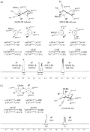

Silver(I) triflate-catalyzed post-Ugi synthesis of pyrazolodiazepines
Beilstein J. Org. Chem. 2025, 21, 915–925, doi:10.3762/bjoc.21.74
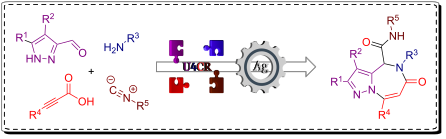
- anesthesia [14]. The imidazo[4,5-d][1,3]diazepine core is present in pentostatin and coformycin, which are naturally occurring N-nucleoside inhibitors of adenosine deaminase, known for their antibiotic and anticancer properties [15][16][17]. These examples highlight the importance of developing novel


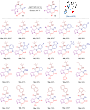


4-(1-Methylamino)ethylidene-1,5-disubstituted pyrrolidine-2,3-diones: synthesis, anti-inflammatory effect and in silico approaches
Beilstein J. Org. Chem. 2025, 21, 817–829, doi:10.3762/bjoc.21.65
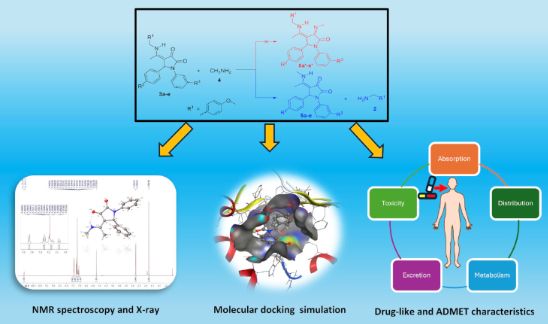
- Table 3 indicate that none of the candidates acted as substrates or inhibitors of CYP2D6, even though all were substrates for CYP3A4, suggesting potential metabolism via this pathway without any inhibitory effects. Excretion was assessed by examining total clearance, which is considered high when the


Orthogonal photoswitching of heterobivalent azobenzene glycoclusters: the effect of glycoligand orientation in bacterial adhesion
Beilstein J. Org. Chem. 2025, 21, 736–748, doi:10.3762/bjoc.21.57
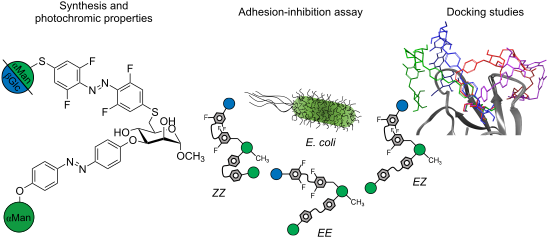
- –inhibition assay. The measured results were systematically contextualized employing new reference compounds such as the respective homobivalent Man/Man glycocluster. An in-depth study comprising the analysis of the photochromic properties and the potential as inhibitors of bacterial adhesion of the synthetic
- UV–vis spectra of the two photoswitchable units. This design laid the basis for a robust switching cycle comprising the EManEGlc, the EManZGlc, and the ZManZGlc isomer of 1 [24]. In this contribution, we address the question of how the different isomers of 1 perform as inhibitors of bacterial
- potency as inhibitors of Man-specific bacterial adhesion investigated. Results and Discussion Synthesis For the preparation of the homobivalent glycocluster 6αMan3αMan 2, the known mannosyl thioacetate 7 [31] was prepared from the trichloroacetimidate 6 [32] and thioacetic acid in an α-selective reaction


Origami with small molecules: exploiting the C–F bond as a conformational tool
Beilstein J. Org. Chem. 2025, 21, 680–716, doi:10.3762/bjoc.21.54
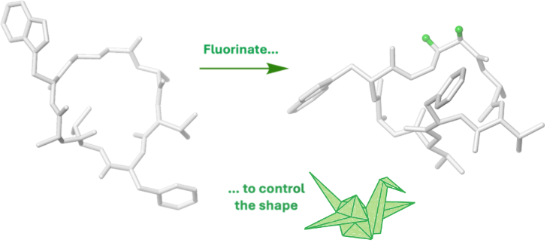
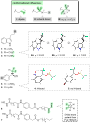
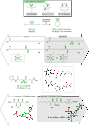
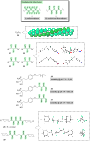
- motif has been exploited in the design of bioactive molecules [22][23] such as the histone deacetylase (HDAC) inhibitors 6 and 7 (Figure 2). The presence of the 1,2-difluoro moiety in 6 leads to greater potency and selectivity for certain HDAC isoforms, attributable to the higher polarity of the
- this was attributed to the partial tendency of this stereoisomer to adopt a bent alkyl chain. Another example of the use of the 1,2-difluoro moiety to influence the shape of an alkyl chain is seen in the HDAC inhibitors 16 and 17 (Figure 3) [29]. The threo-isomer 16 is found to be consistently more
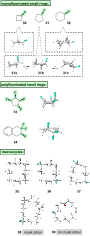
- ][79]. For example, consider the diastereoisomeric BACE-1 inhibitors 40 and 41 (Figure 6). The preferred ring pucker for each of 40, 41 positions the C–F bond in an axial position, allowing nO → σ*C–F hyperconjugation. The shape adopted by diastereoisomer 41, with a pseudoaxial orientation of the



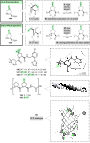
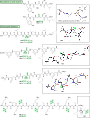
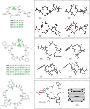
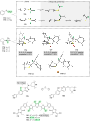
Synthesis, characterization, antimicrobial, cytotoxic and carbonic anhydrase inhibition activities of multifunctional pyrazolo-1,2-benzothiazine acetamides
Beilstein J. Org. Chem. 2025, 21, 348–357, doi:10.3762/bjoc.21.25
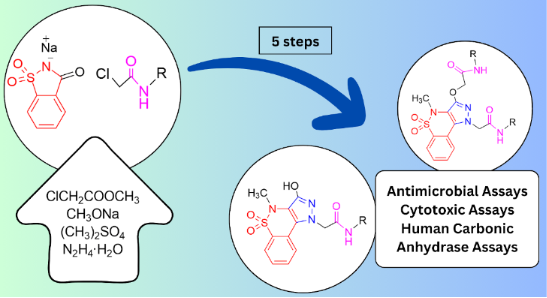
- [9]. Pyrazolobenzothiazines have also been synthesized and explored as p38α MAPK inhibitors [35]. In 2015, Sabatini and co-workers synthesized a novel series of pyrazolobenzothiazines and identified as new generation anti-inflammatory agents. Two of these compounds are reported with an IC50 of 0.5 µM
- complex as the amide coupling agent with thionyl chloride [38] (Figure 1C). Recently, benzothiazine scaffolds of phenyl acetamides were synthesized as potent inhibitors for ureolytic infections [39] (Figure 1D). Saccharine (a sweetener) was reported to be a potent carbonic anhydrase inhibitor (CAI) by
- /cancer and other CAs (I, II). Non-selective inhibitors may have certain adverse effects so selective CAIs are worthier and more valuable [57]. Results of hCA inhibition assays are listed in Table 3. It was observed that the dialkylated pyrazolobenzothiazines 7i–n failed to inhibit any of the four


Antibiofilm and cytotoxic metabolites from the entomopathogenic fungus Samsoniella aurantia
Beilstein J. Org. Chem. 2025, 21, 327–339, doi:10.3762/bjoc.21.23
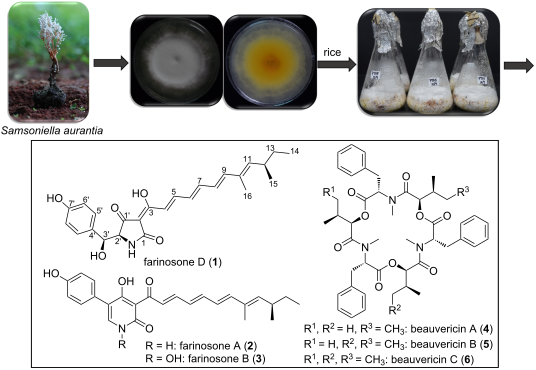
- reasonably concluded that farinosones D (1) and A (2) hold significant potential as biofilm inhibitors because of their ability to inhibit biofilm formation at very low concentrations, suggesting their value in early-stage therapeutic applications against S. aureus infections. Experimental General


Synthesis of disulfides and 3-sulfenylchromones from sodium sulfinates catalyzed by TBAI
Beilstein J. Org. Chem. 2025, 21, 253–261, doi:10.3762/bjoc.21.17
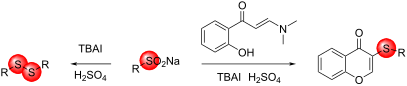
- whether the reaction proceeded through a free radical mechanism, different free radical inhibitors were added to the reaction (reaction 7, Scheme 5). The addition of TEMPO ((2,2,6,6-tetramethylpiperidin-1-yl)oxyl) resulted in complete inhibition of the reaction, while BHT (2,6-di-tert-butyl-4-methylphenol



Discovery of ianthelliformisamines D–G from the sponge Suberea ianthelliformis and the total synthesis of ianthelliformisamine D
Beilstein J. Org. Chem. 2024, 20, 3205–3214, doi:10.3762/bjoc.20.266
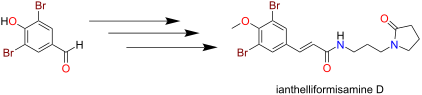
- aeruginosa biofilm inhibitors and antibiotic enhancers. Large-scale extraction and isolation studies resulted in the discovery of four new and minor natural products, ianthelliformisamines D–G (4–7) and the known steroid, aplysterol (8). Compounds 4–7 were fully characterised following 1D/2D NMR, MS and UV


![[Graphic 1]](/bjoc/content/inline/1860-5397-20-266-i2.svg?max-width=637&scale=1.18182)
![[Graphic 2]](/bjoc/content/inline/1860-5397-20-266-i3.svg?max-width=637&scale=1.18182)
![[Graphic 3]](/bjoc/content/inline/1860-5397-20-266-i4.svg?max-width=637&scale=1.18182)

![[Graphic 4]](/bjoc/content/inline/1860-5397-20-266-i5.svg?max-width=637&scale=1.18182)
![[Graphic 5]](/bjoc/content/inline/1860-5397-20-266-i6.svg?max-width=637&scale=1.18182)

Synthesis of extended fluorinated tripeptides based on the tetrahydropyridazine scaffold
Beilstein J. Org. Chem. 2024, 20, 3174–3181, doi:10.3762/bjoc.20.262
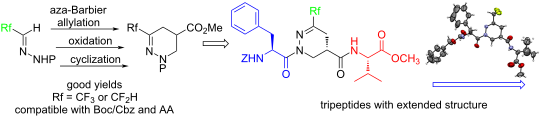
- , the tetrahydropyridazines, six-atom nitrogenous heterocycles, are found in various bioactive molecules such as influenza virus neuraminidase inhibitors, GABA type A receptor modulators, and regulators of progesterone receptor or cannabinoid CB1 receptor antagonists (Figure 1) [6][7][8][9]. This


Multicomponent reactions driving the discovery and optimization of agents targeting central nervous system pathologies
Beilstein J. Org. Chem. 2024, 20, 3151–3173, doi:10.3762/bjoc.20.261
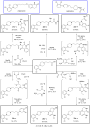
- inhibitors, and their effects were investigated using the Amplex-Red® kit in C. elegans. Individuals exposed to compounds 2a, 2b, 2c, 2d, 2e, and 2f at a concentration of 1 mM were analyzed for AChE activity in their extracts. The results revealed significant inhibition of AChE levels, with compound 2e
- a multicomponent reaction to obtain SIRT2 inhibitors (Scheme 12). The authors suggest a Knoevenagel condensation approach between isatin derivatives and ethyl cyanoacetate, followed by a Michael addition with C–H activated carbonyl compounds and intramolecular cyclization [50]. They synthesized 45
- ]. The most potential β-amiloyd aggregation inhibitors generated by Galante et al. [37]. Best pyrazine-based MTDLs synthesized by Madhav et al. [40]. Most active 1,4-dihydropyridines developed by Malek et al. [43]. Best CDH-based MTDLs as AChE inhibitors synthesized by Malek et al. [46]. SIRT2 activity




Recent advances in transition-metal-free arylation reactions involving hypervalent iodine salts
Beilstein J. Org. Chem. 2024, 20, 2891–2920, doi:10.3762/bjoc.20.243

- assessed as inhibitors of galectin-9 and were found to exhibit selectivity and potency against galectin-9. In 2021, Chen and colleagues developed a method to synthesize naproxen-containing diaryliodonium salts 67 using naproxen methyl ester 65 and ArI(OH)OTs 66, activated by trimethylsilyl


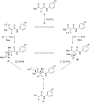


N-Glycosides of indigo, indirubin, and isoindigo: blue, red, and yellow sugars and their cancerostatic activity
Beilstein J. Org. Chem. 2024, 20, 2840–2869, doi:10.3762/bjoc.20.240
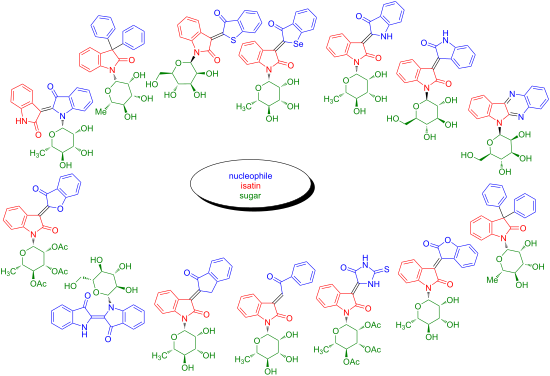
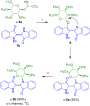
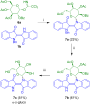
- myelocytic leukemia [5][6][7]. Indirubin, a red isomer of indigo, is an ingredient of indigo naturalis active against various cancers. Since the 1990s, we are witnessing a renaissance of the chemistry of indirubins because of their activity as potent inhibitors of several kinases, such as GSK-3β and CDK’s [8


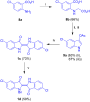


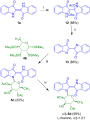


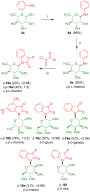
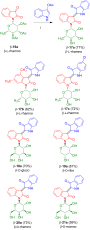





Synthesis and antimycotic activity of new derivatives of imidazo[1,2-a]pyrimidines
Beilstein J. Org. Chem. 2024, 20, 2806–2817, doi:10.3762/bjoc.20.236
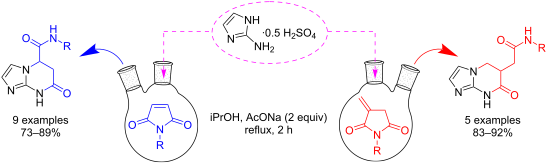
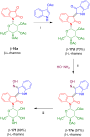
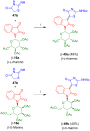
- compounds 4a–e and 5a–e to CYP51 and to evaluate which of these molecules could act as inhibitors of the enzyme. As mentioned above, CYP51 inhibitors contain a heterocyclic nitrogen atom that forms a coordination bond with haem iron. Therefore, only those compounds that could form such a bond according to
- tetrahydroimidazo[1,2-a]pyrimidine favors the inhibitory activity of this class of compounds, whereas the position of the substituent on the C-6 atom disrupts it. Furthermore, only the (S)-isomers of the compounds under consideration are expected to be potent inhibitors of CYP51. The analysis of the interaction
- probable reaction path of the interaction was suggested. Based on the docking data, N-aryl(alkyl)-7-oxo-5,6,7,8-tetrahydroimidazo[1,2-a]pyrimidin-5-carboxamides as (S)-isomers were shown to be potent inhibitors of CYP51. These results allow us to consider these compounds as potential CYP51 inhibitor


5th International Symposium on Synthesis and Catalysis (ISySyCat2023)
Beilstein J. Org. Chem. 2024, 20, 2704–2707, doi:10.3762/bjoc.20.227
- pyridone and thiazolopyridone derivatives. This work is interesting from the point of view that it involved the emerging technique of “chemical editing”. The pyridone and thiazolopyridone derivatives were the most promising inhibitors, with IC50 values below 90 µM. Marques et al. described the synthesis of

Synthesis of fluoroalkenes and fluoroenynes via cross-coupling reactions using novel multihalogenated vinyl ethers
Beilstein J. Org. Chem. 2024, 20, 2691–2703, doi:10.3762/bjoc.20.226

- fact, several inhibitors of the β-site amyloyd β A4 precursor protein cleaving enzyme (BACE1), which is involved in the production of β-amyloid, and fluoroalkene analogs of dipeptidyl peptidase-4 inhibitors have previously been reported [2][3]. These inhibitors possess higher drug efficacies than their


Synthesis and cytotoxicity studies of novel N-arylbenzo[h]quinazolin-2-amines
Beilstein J. Org. Chem. 2024, 20, 2592–2598, doi:10.3762/bjoc.20.218
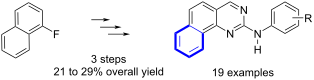
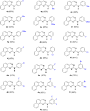
- dihydropteridinone derivatives were found as potent inhibitors of vaccinia-related kinase 1 and casein kinase 1δ/ε [5]. In addition, it is worth mentioning that closely related compounds like 2-(arylamino)benzo[h]quinazolin-4-ones [6][7][8] and N2-arylbenzo[h]quinazoline-2,4-diamines [9][10][11] are well identified


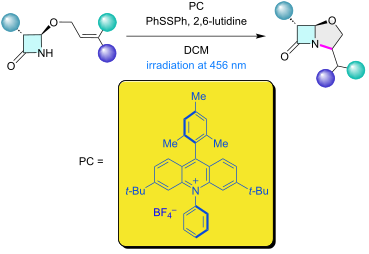
Photoredox-catalyzed intramolecular nucleophilic amidation of alkenes with β-lactams
Beilstein J. Org. Chem. 2024, 20, 2461–2468, doi:10.3762/bjoc.20.210
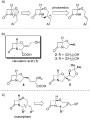
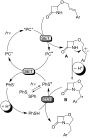
- ][41][42][43]. The inhibitory activity of β-lactamases is exhibited by those congeners with a (3R,5R)-configuration, such as clavulanic acid (1), whereas clavams with other configurations are not lactamase inhibitors, although some of these have antifungal or antibacterial properties [35]. In the




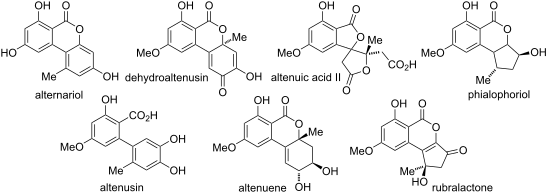
Natural resorcylic lactones derived from alternariol
Beilstein J. Org. Chem. 2024, 20, 2171–2207, doi:10.3762/bjoc.20.187
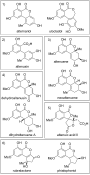
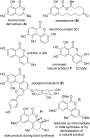
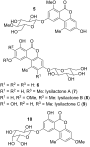
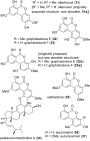
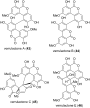
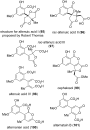
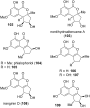
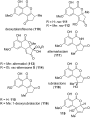
- been stated, that verrulactone E was not isolated as the racemate since an optical activity was given in the respective report [187]. Verrulactones A–C and E are inhibitors of Staphylococcus aureus enoyl-ACP reductase with IC50 values of 0.92, 1.41, 16.1, and 24.1 µM, respectively, and verrulactones A










Finding the most potent compounds using active learning on molecular pairs
Beilstein J. Org. Chem. 2024, 20, 2152–2162, doi:10.3762/bjoc.20.185
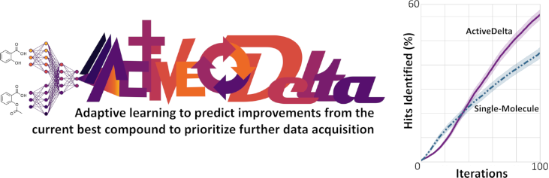
- at identifying more potent inhibitors compared to the standard exploitative active learning implementations of Chemprop, XGBoost, and Random Forest. The ActiveDelta approach is also able to identify more chemically diverse inhibitors in terms of their Murcko scaffolds. Finally, deep models such as
- Chemprop trained on data selected through ActiveDelta approaches can more accurately identify inhibitors in test data created through simulated time-splits. Overall, this study highlights the large potential for molecular pairing approaches to further improve popular active learning strategies in low data
- through the pairing of molecules [12][13]. Based on these findings, we hypothesized that we could implement exploitative active learning campaigns based on a molecular pairing approach (‘ActiveDelta’) to support rapid identification of the most potent inhibitors across a wide range of benchmark drug


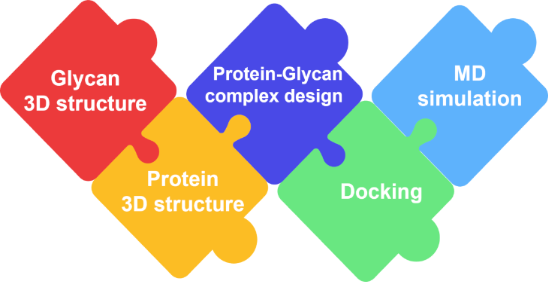
Computational toolbox for the analysis of protein–glycan interactions
Beilstein J. Org. Chem. 2024, 20, 2084–2107, doi:10.3762/bjoc.20.180


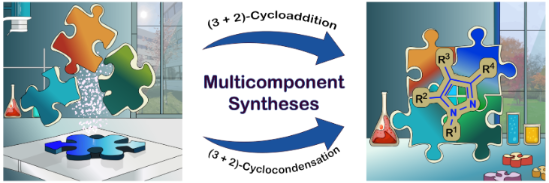
Multicomponent syntheses of pyrazoles via (3 + 2)-cyclocondensation and (3 + 2)-cycloaddition key steps
Beilstein J. Org. Chem. 2024, 20, 2024–2077, doi:10.3762/bjoc.20.178
- ][5][6]. For instance, pyrazoles serve as monoamine oxidase A and B inhibitors [7] and as COX-II inhibitors [8], making them valuable analgesics [9]. Furthermore, several blockbuster drugs, such as VIAGRA® [10], Celecoxib® [11], and Rimonabant [12], contain pyrazole cores. In addition, extensive




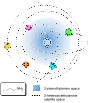
2-Heteroarylethylamines in medicinal chemistry: a review of 2-phenethylamine satellite chemical space
Beilstein J. Org. Chem. 2024, 20, 1880–1893, doi:10.3762/bjoc.20.163
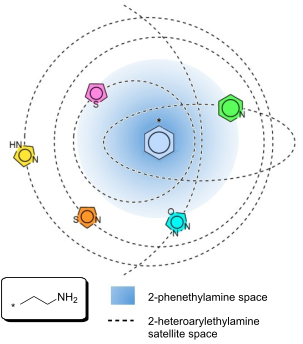
- rings Furans: Racemic heteroarylisopropylamines were described as MAO inhibitors (monoamine oxidase) by Vallejos et al. [14] as a natural extension of their previous QSAR studies using phenylisopropylamines [15]. The authors supported their aryl-to-heteroaryl group hopping due to the success of similar
- better inhibitory data than for the aforementioned furyl analogues (Scheme 4). The authors suggested the replacement of furyl by a more polarizable aromatic ring such as thienyl as prospective origin of the observed IC50 downward shift. Berthelot et al. [23][24] expanded their studies on GABAB inhibitors