


Search results
Search for "perspective" in Full Text gives 253 result(s) in Beilstein Journal of Organic Chemistry. Showing first 200.
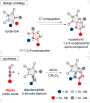
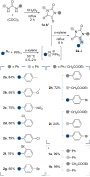
Facile synthesis of hydantoin/1,2,4-oxadiazoline spiro-compounds via 1,3-dipolar cycloaddition of nitrile oxides to 5-iminohydantoins
Beilstein J. Org. Chem. 2025, 21, 1552–1560, doi:10.3762/bjoc.21.118

- determined by the configuration of the spiro-core, while still allowing for the possibility of relative rotation to facilitate better binding to the targets. Furthermore, it appears to be as exceedingly advantageous from a synthesis perspective, as it enables the application of methods that have been



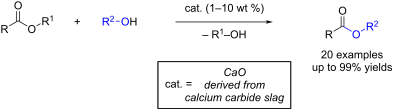
Calcium waste as a catalyst in the transesterification for demanding esters: scalability perspective
Beilstein J. Org. Chem. 2025, 21, 1520–1527, doi:10.3762/bjoc.21.114


Copper catalysis: a constantly evolving field
Beilstein J. Org. Chem. 2025, 21, 1477–1479, doi:10.3762/bjoc.21.109

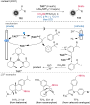
- hydride catalysis, and enantiotopic group-selective allylations of 1,1-diborylalkanes as core strategies. At the same time, the authors provide detailed mechanistic insights into the stereocontrol and provide a perspective on currently unresolved challenges in the field. Concerning Full Research Papers
Tautomerism and switching in 7-hydroxy-8-(azophenyl)quinoline and similar compounds
Beilstein J. Org. Chem. 2025, 21, 1404–1421, doi:10.3762/bjoc.21.105
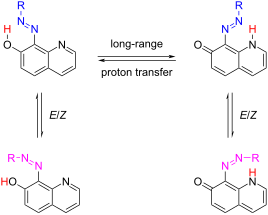
- -acceptor sites are given in red and blue, respectively. The axle of intramolecular rotation is given in green. The twisting angles α and β are indicated in magenta. Perspective switching compounds, generated by the computational quantum chemistry calculations. Relative stability (M06-2X/TZVP) and spectral




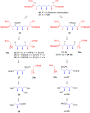
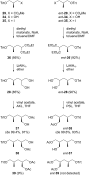
Synthetic approach to borrelidin fragments: focus on key intermediates
Beilstein J. Org. Chem. 2025, 21, 1135–1160, doi:10.3762/bjoc.21.91
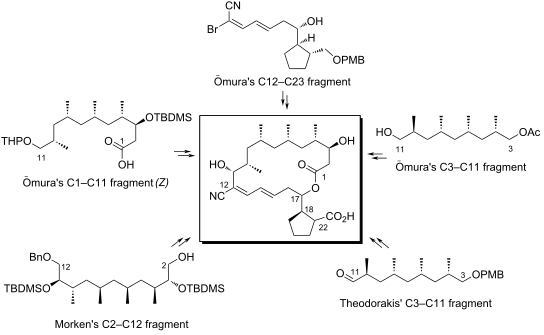
- into fragment synthesis, providing a more holistic perspective on borrelidin’s chemical synthesis and biological relevance [50]. However, in-depth works focusing on key fragment optimizations remain limited. Hence, this review aims to address this gap. Review Syntheses of borrelidin fragments Uguen’s


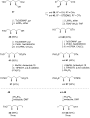


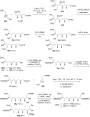


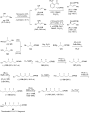


Study of tribenzo[b,d,f]azepine as donor in D–A photocatalysts
Beilstein J. Org. Chem. 2025, 21, 935–944, doi:10.3762/bjoc.21.76
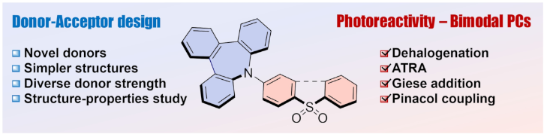
- antiaromatic compound as an acceptor was previously reported (Figure 2) [31]. The dibenzo[b,d]thiophene 5,5-dioxide (5) was chosen for further investigation because of its red-shifted absorption. From a photochemical perspective, this characteristic can facilitate the use of less energetic light sources



New advances in asymmetric organocatalysis II
Beilstein J. Org. Chem. 2025, 21, 766–769, doi:10.3762/bjoc.21.60
- already been described by Seebach et al. in 1982 [15]. From this perspective, organocatalysis is more than 100 years old, building on a long thread of illustrious past discoveries. Asymmetric organocatalysis is now considered one of the three main pillars of asymmetric catalysis, along with metal

Orthogonal photoswitching of heterobivalent azobenzene glycoclusters: the effect of glycoligand orientation in bacterial adhesion
Beilstein J. Org. Chem. 2025, 21, 736–748, doi:10.3762/bjoc.21.57
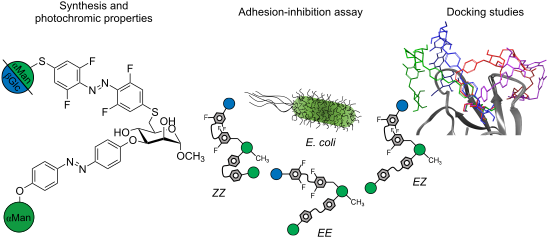
- states of the bis-azobenzene glycocluster 6βGlc3αMan 1 representing different relative Man/Glc orientations. In order to put the biological properties of the previously described photoswitchable heterobivalent cluster glycoside 6βGlc3αMan 1 [24] into perspective, several relevant analogs were synthesized


Photocatalyzed elaboration of antibody-based bioconjugates
Beilstein J. Org. Chem. 2025, 21, 616–629, doi:10.3762/bjoc.21.49
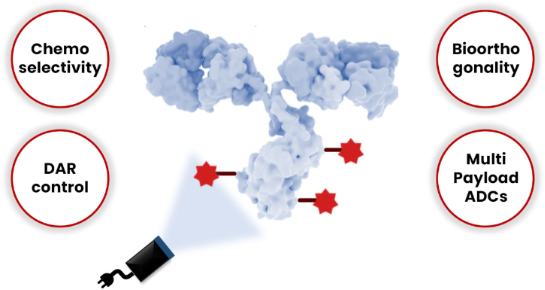
- proteins. By harnessing light to drive chemical transformations, photoredox techniques can facilitate the synthesis of antibody bioconjugates. This perspective will discuss the drive to develop and empower photoredox methods applied to antibody functionalization. Keywords: antibodies; bioconjugation
- functionalized antibodies. Perspective In this perspective, how light-driven chemistry can enhance the development of innovative methods for accessing antibody–drug conjugates (ADCs) will be outlined. A brief introduction to photoredox chemistry as it relates to bioconjugation in proteins is followed by a
- photochemistry continues to evolve, these strategies may pave the way for the creation of more homogeneous and optimized ADCs, enhancing their therapeutic outcomes and minimizing off-target effects. This perspective highlights the exciting future of photoredox methods in the development of next-generation ADCs


Binding of tryptophan and tryptophan-containing peptides in water by a glucose naphtho crown ether
Beilstein J. Org. Chem. 2025, 21, 541–546, doi:10.3762/bjoc.21.42
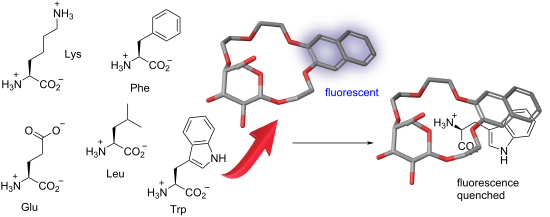
- peptides [4][5]. Tryptophan also serves as a substrate to produce hormones such as serotonin or melatonin [6][7]. Due to the biological relevance of tryptophan synthetic receptors for this amino acid are highly sought after [8]. From a biological perspective it is especially desirable to achieve selective


Photomechanochemistry: harnessing mechanical forces to enhance photochemical reactions
Beilstein J. Org. Chem. 2025, 21, 458–472, doi:10.3762/bjoc.21.33
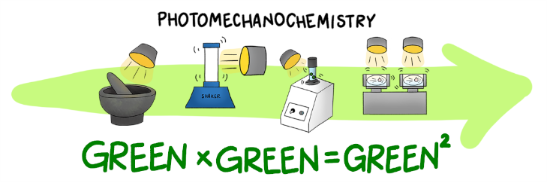
- -minimized conditions. Despite its transformative potential, the field faces significant technological challenges that must be addressed to unlock its full capabilities. In this Perspective, we analyze selected examples to showcase the available technologies to combine light and mechanical forces, including
- side, typical reactors used for classical mechanochemical synthesis are made of non-transparent materials such as stainless steel (SS), zirconia, or polytetrafluoroethylene (PTFE), making the use of photons operationally difficult. In this Perspective, we gathered selected examples to showcase how
- of the current technological advancement in the field. This Perspective is organized into four sections based on the adopted setup for photomechanochemistry: manual grinding, vortex mixing, rod milling methods, and ball milling (Figure 2, bottom). One final note is about the solvent adopted: in some




Beyond symmetric self-assembly and effective molarity: unlocking functional enzyme mimics with robust organic cages
Beilstein J. Org. Chem. 2025, 21, 421–443, doi:10.3762/bjoc.21.30
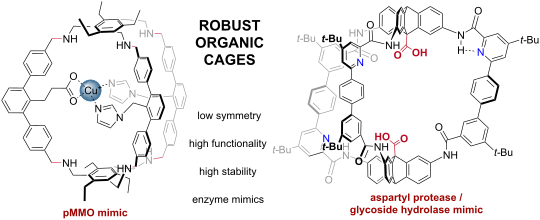
- demonstrating enzyme-like rate accelerations remain rare. This perspective will briefly highlight some of the key advances in traditional cavity catalysis, by cavity type, in order to contextualize the recent development of robust organic cage catalysts, which can exploit stability, functionality, and reduced
- precision. In this perspective, I identify three clear areas for increased focus to achieve this ambition: (1) the development of modular cavities featuring sub-Ångstrom-confined bifunctionality (including frustrated charges); (2) improved access to stable cavities with reduced symmetry via self-assembly by
- that an underexplored cavity type, robust organic cages [38][39][40][41][42][43][44][45][46][47], are uniquely positioned to facilitate these advances. Outline and Overview The aim of this perspective is twofold: (1) to briefly review the state of the art of cavity catalysis, highlighting the catalytic




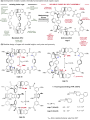
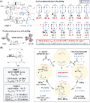
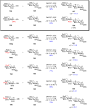
The effect of neighbouring group participation and possible long range remote group participation in O-glycosylation
Beilstein J. Org. Chem. 2025, 21, 369–406, doi:10.3762/bjoc.21.27
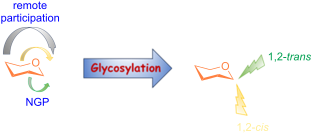
- intricate details of glycosylation reactions [67][68] and different protecting groups employed in glycosylation [69]. In this review, we have compiled and critically analysed the contribution of protecting groups in glycosylation reactions both from the perspective of neighbouring group in the vicinal




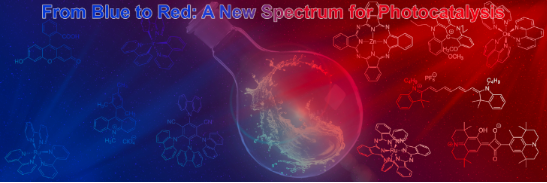
Red light excitation: illuminating photocatalysis in a new spectrum
Beilstein J. Org. Chem. 2025, 21, 296–326, doi:10.3762/bjoc.21.22
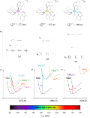
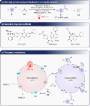
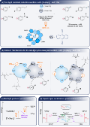
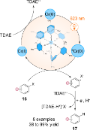
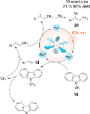
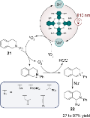
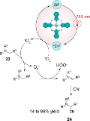
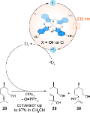
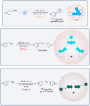
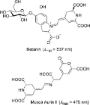
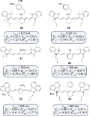
- irradiation apparatus, e.g., UV radiation sources. Secondly, from a synthetic perspective, a broader range of substrates and catalysts can be considered as in most cases, they are incapable of absorbing red light and, consequently, cannot initiate a photocatalytic transformation, thereby minimizing the risk
















Emerging trends in the optimization of organic synthesis through high-throughput tools and machine learning
Beilstein J. Org. Chem. 2025, 21, 10–38, doi:10.3762/bjoc.21.3
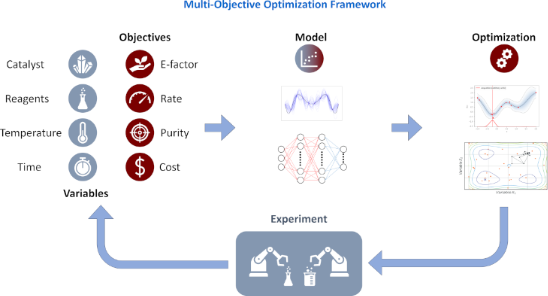
- of suggested optimization results. Through an examination of methodologies, algorithms, and various case studies, this article offers our perspective on the state-of-the-art techniques for optimizing the synthesis of organic molecules, highlighting both challenges and prospects. The structure of this


Multicomponent reactions driving the discovery and optimization of agents targeting central nervous system pathologies
Beilstein J. Org. Chem. 2024, 20, 3151–3173, doi:10.3762/bjoc.20.261

- to the authors whose important contributions may not be included. By concentrating on these pivotal studies, we strive to offer a clear and concise perspective on current research trends and breakthroughs in this field. Keywords: Alzheimer; depression; epilepsy; multicomponent reactions; Parkinson




Surprising acidity for the methylene of 1,3-indenocorannulenes?
Beilstein J. Org. Chem. 2024, 20, 3144–3150, doi:10.3762/bjoc.20.260
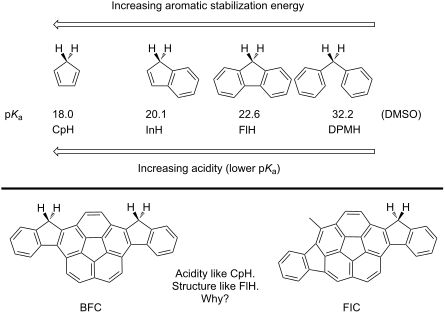
- -perfluorophenylfluorene (28.14 in CH3CN). This work reports quantitative pKa values of BFC and FIC, places those values in a broadened context of CpH-cognate hydrocarbon acidity and presents a Clar–Loschmidt graph perspective to help understand the “surprises”. Keywords: acidity; aromatic hydrocarbon; Clar sextet
- and BFC in DMSO, respectively, so to the extent that these values are surprising, the problem must mostly come from a distortion of our perspective, and not from any dispute between theory and experiment. If that is the case, then what might be a better perspective to investigate CpH-PAH structures
- like BIC and FIC? Let us consider a perspective based on the teachings of Clar and Loschmidt. Clar held the electron sextet as the paragon of aromaticity [14] and Loschmidt considered benzene a "group element" [15]. Combining these perspectives, one can view PAH networks as graphs comprised of Clar


Chemical structure metagenomics of microbial natural products: surveying nonribosomal peptides and beyond
Beilstein J. Org. Chem. 2024, 20, 3050–3060, doi:10.3762/bjoc.20.253
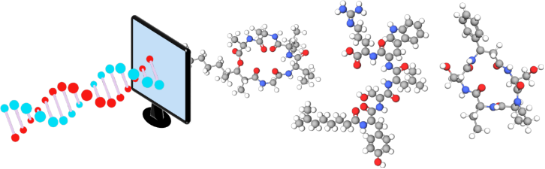
- recent years and new methods capable of exploring the natural product chemical space more broadly and more efficiently is in urgent need. Chemical structure metagenomics as one such method is the theme of this Perspective. It emphasizes a chemical-structure-centered viewpoint toward natural product
- of almost any bioactivity of interest that originate from plants, fungi, and even animals (such as sponges and corals). Perspective BGF can access only a fraction of the natural product chemical space For nearly a century, BGF has been the method of choice and identified the vast majority of natural
- morphology of the host, etc. [25]. Sequence and function metagenomic approaches have been reviewed elsewhere and will not be covered herein [26][27][28]. This Perspective focuses on chemical structure metagenomics (Figure 2c), an emerging field that integrates bioinformatics, chemical synthesis, molecular


Photoluminescence color-tuning with polymer-dispersed fluorescent films containing two fluorinated diphenylacetylene-type fluorophores
Beilstein J. Org. Chem. 2024, 20, 2682–2690, doi:10.3762/bjoc.20.225
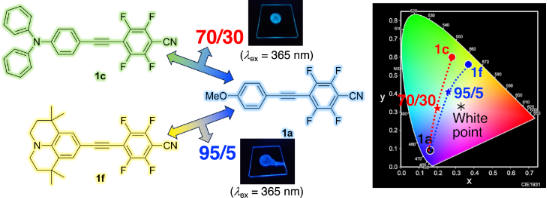
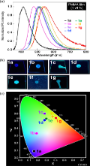
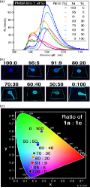
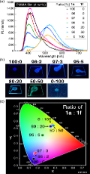
- could be developed by precisely controlling the two-component mixture system of blue- and yellow-fluorescent molecules. From the perspective of both the PL color and ΦPL, we selected the methoxy-substituted compound 1a as an effective blue-fluorescent molecule for use in a two-component mixing system


A review of recent advances in electrochemical and photoelectrochemical late-stage functionalization classified by anodic oxidation, cathodic reduction, and paired electrolysis
Beilstein J. Org. Chem. 2024, 20, 2500–2566, doi:10.3762/bjoc.20.214
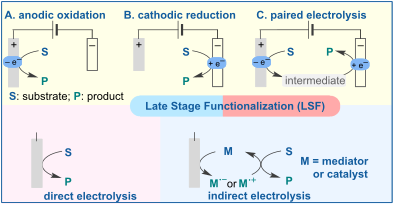
- . Subsequently, the generated intermediate 29 is oxidized at the anode, then attacked by the acid to obtain the final product (Scheme 10). C–H bond sulfur functionalization: The direct formation of the CS bond is an attractive way to prepare aryl sulfides. From this perspective, Wu and coworkers developed a




























HFIP as a versatile solvent in resorcin[n]arene synthesis
Beilstein J. Org. Chem. 2024, 20, 2469–2475, doi:10.3762/bjoc.20.211
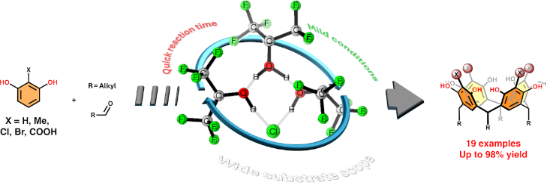
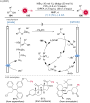
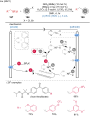
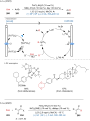
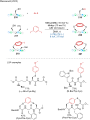
- reported herein may impact the synthesis of other macrocyclic arene species, e.g., calix[n]arenes, calix[4]pyrroles, pillar[n]arenes, and cucurbit[n]urils [90][91][92]. Perspective Supramolecular chemistry is a mature field that has crossed boundaries into many other scientific areas. However, the work


Improved deconvolution of natural products’ protein targets using diagnostic ions from chemical proteomics linkers
Beilstein J. Org. Chem. 2024, 20, 2323–2341, doi:10.3762/bjoc.20.199
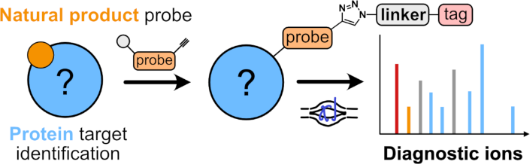
- compounds. Furthermore, from this perspective, the formed probe–protein covalent conjugate shares many features with naturally occurring protein post-translational modifications (PTMs) offering productive exchange of the techniques and experimental setups used in both fields (Figure 2B) [33][34]. The second




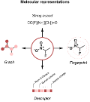
Catalysing (organo-)catalysis: Trends in the application of machine learning to enantioselective organocatalysis
Beilstein J. Org. Chem. 2024, 20, 2280–2304, doi:10.3762/bjoc.20.196
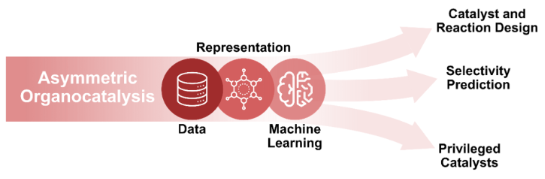
- ’ perspective, the exploitation of the concept of mechanistic transferability is a promising avenue for the application of ML in enantioselective organocatalysis, as combining data from multiple reactions enlarges datasets. As such, it is an important stepping stone towards the development of more generally




Factors influencing the performance of organocatalysts immobilised on solid supports: A review
Beilstein J. Org. Chem. 2024, 20, 2129–2142, doi:10.3762/bjoc.20.183
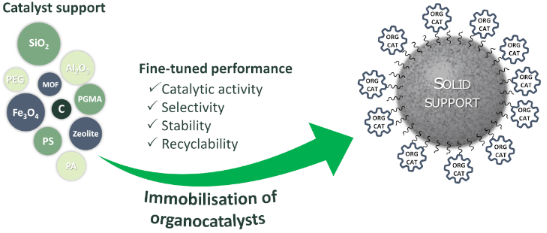
- and an environmental perspective. An efficient catalytic process is characterised by the fact that the catalyst can be easily and, if possible, completely separated from the reaction mixture. Catalysts can be classified into homogeneous and heterogeneous catalysts. In homogeneous catalysis, the


Efficacy of radical reactions of isocyanides with heteroatom radicals in organic synthesis
Beilstein J. Org. Chem. 2024, 20, 2114–2128, doi:10.3762/bjoc.20.182
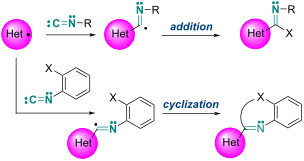
- with a variety of heteroatoms. In this Perspective, we review the addition and cyclization reactions of heteroatom radicals with isocyanides and discuss the synthetic prospects of the reaction of isocyanides with heteroatom radicals. Keywords: aza-Bergman cyclization; heteroatom-mixed system; imidoyl
- , systematic studies of addition reactions of heteroatom radicals to isocyanides are still limited. In this perspective paper, we systematically review the addition reactions of heteroatom radicals to isocyanides and discuss prospects. Discussion 1,1-Addition of heteroatom radicals to isocyanides Generation of
- understand the conditions for the generation of heteroatom radicals. In addition, from the perspective of recent green chemistry, the development of environmentally friendly synthetic methods is strongly demanded. In other words, a new synthetic method should have excellent atom economy, produce no waste, be





