Search results
Search for "representation" in Full Text gives 355 result(s) in Beilstein Journal of Organic Chemistry. Showing first 200.
Computational design for enantioselective CO2 capture: asymmetric frustrated Lewis pairs in epoxide transformations
Beilstein J. Org. Chem. 2024, 20, 2668–2681, doi:10.3762/bjoc.20.224
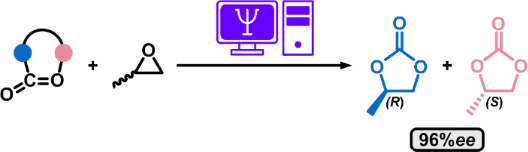
- remarkable 96%ee yielded by the catalyst. Schematic representation of an (A) 2D and a (B) 3D volcano plot. The abbreviation “cat.” stands for catalyst. (A) Structure of PO annotated with the C–O bond distances and electron densities at the BCPs. BCPs are indicated by green spheres and the ring critical point
- by a red sphere. (B) Schematic representation of the two possible ring-opening reactions of PO in the presence of activated CO2. Symmetric FLP scaffolds considered in the first study. X denotes N or P. Subset of FLP scaffolds considered in the catalyst optimisation study. Substituents and labels are


Deciphering the mechanism of γ-cyclodextrin’s hydrophobic cavity hydration: an integrated experimental and theoretical study
Beilstein J. Org. Chem. 2024, 20, 2635–2643, doi:10.3762/bjoc.20.221
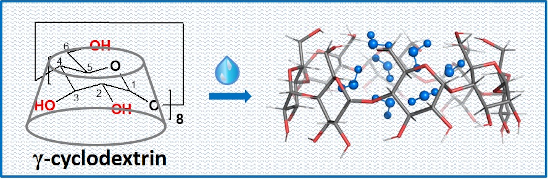
- (CCW). Schematic representation of γ-CD–nH2O complexes (where n = 1–7) with water molecules/clusters located at different positions, and M062X/6-311++G(d,p)//M062X/6-31G(d,p) calculated relative enthalpies (ΔH78) of the respective complexes, in kcal mol−1. M062X/6-31G(d,p) optimized structures of the


Applications of microscopy and small angle scattering techniques for the characterisation of supramolecular gels
Beilstein J. Org. Chem. 2024, 20, 2608–2634, doi:10.3762/bjoc.20.220
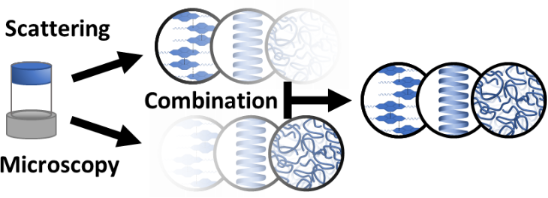
- change in the self-assembly, meaning a true representation of the supramolecular material may not be investigated which is rarely confirmed when applied to the characterisation of such systems. To identify such changes in structure, other characterisation techniques that probe the structures without the


Machine learning-guided strategies for reaction conditions design and optimization
Beilstein J. Org. Chem. 2024, 20, 2476–2492, doi:10.3762/bjoc.20.212
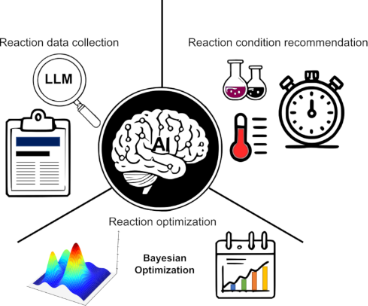
- efficiency and effectiveness of reaction conditions design, and enable novel discoveries in synthetic chemistry. Keywords: data preprocessing; reaction conditions prediction; reaction data mining; reaction optimization; reaction representation; Introduction Machine learning (ML) techniques have been widely
- schematic representation of the workflow in Figure 1. One approach to remove erroneous reactions is based on the concept of “catastrophic forgetting”, which refers to the model’s tendency to forget previously learned events during the training process. Toniato et al. [83] proposed to use this idea as a
- for reaction modeling The choice of featurization strategy for chemical reactions is crucial for building predictive models for reaction conditions. Compared to the extensive research on molecular representation learning, the development of reaction encoding methods is relatively less explored [93


Catalysing (organo-)catalysis: Trends in the application of machine learning to enantioselective organocatalysis
Beilstein J. Org. Chem. 2024, 20, 2280–2304, doi:10.3762/bjoc.20.196
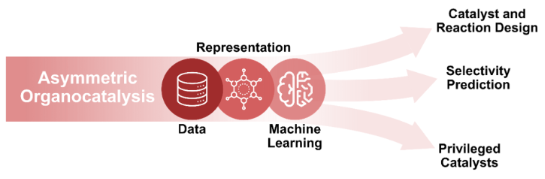
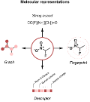
- transition metal catalysis [46][47][48] and biocatalysis [49][50][51], they are however not common for organocatalysis. Therefore, much research has been devoted to develop models that perform well on the available small data sets [52][53]. 1.2 Representation In order to be processed by any ML model, the
- data needs to be provided in a machine-readable way. Unlike chemists who typically use drawings of Lewis structures to represent molecules, computers require a numerical representation of the molecular structure. Since the information that describes the input directly influences what relationships a
- when describing coordination compounds as commonly found in transition metal catalysis for example [57]. Another kind of representation that has found considerable application for ML in organocatalysis, is the use of descriptors. These are sets of numerical or categorical values to encode a molecule. A




Finding the most potent compounds using active learning on molecular pairs
Beilstein J. Org. Chem. 2024, 20, 2152–2162, doi:10.3762/bjoc.20.185
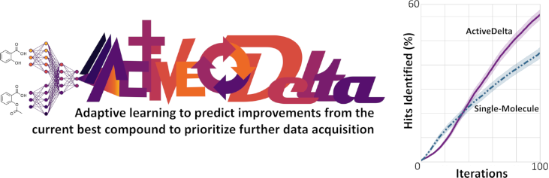
- such, each molecule was processed individually, and predictions were made solely upon the representation of a single molecule. The datapoint with highest predicted potency was then added to the training set for the next iteration of active learning (Figure 1A). Conversely, during ActiveDelta learning
- algorithm (CHEMBL232-1, Alpha-1b adrenergic receptor). Admittedly, chemical selection trends across datasets are variable, and, as such, the following discussion is not universal but instead is a representation of the overall expected behavior of the algorithms. In the first learning iterations, AD-CP


Computational toolbox for the analysis of protein–glycan interactions
Beilstein J. Org. Chem. 2024, 20, 2084–2107, doi:10.3762/bjoc.20.180
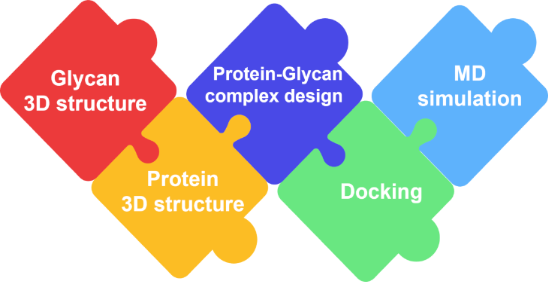
- web services and software to build 2D and 3D models of carbohydrate structures is reported here. Notably, despite the existence of several encoding formats for glycans (Figure 3), significant efforts have been made in the years to enable a simple and standardised glycan representation, which would
- simplify the transmission and efficiency of the communication within the scientific community. This led to the extensive use of the symbol nomenclature for glycans (SNFG) representation that is used in all the tools described below (Figure 3) [11][45]. Numerous computer applications have been developed to
- a cartoon representation of glycans according to the symbol nomenclature for glycans (see Figure 3) (https://glycam.org/docs/othertoolsservice/downloads/downloads-software/index.html). Choosing the most appropriate simulation software package With the aim to accurately prepare glycans for MD


Methyltransferases from RiPP pathways: shaping the landscape of natural product chemistry
Beilstein J. Org. Chem. 2024, 20, 1652–1670, doi:10.3762/bjoc.20.147
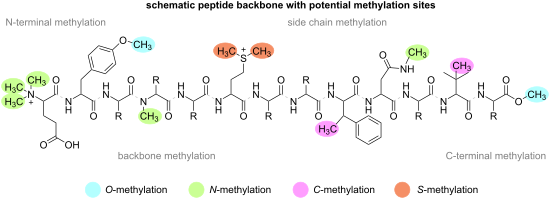
- will be a useful tool for drug development; it will be intriguing to observe what the future holds. Schematic representation of the different acceptor regions for the methylation of RiPPs discussed in this article. Schematic overview of different methylation strategies for amino acids and peptides
- /aspartimide to isoaspartate. The methyl group is highlighted in blue. The reverse reaction with isoaspartate as substrate of PAMTs is also known. Structural organisation of the OphMA homodimer. A) Schematic representation. The MT domain is coloured in blue; the leader peptide is coloured in yellow, and the





pKalculator: A pKa predictor for C–H bonds
Beilstein J. Org. Chem. 2024, 20, 1614–1622, doi:10.3762/bjoc.20.144
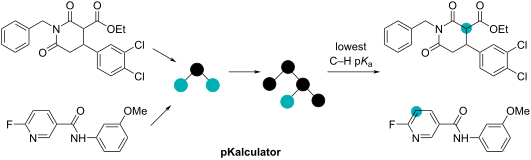
- values for all deprotonated C–H sites using Equation 2: Machine learning The feature descriptor Recent research shows that the atomic descriptors introduced by Finkelmann et al. [30][31], using charge model 5 (CM5) atomic charges [32], are a great representation of atoms in molecules that can be used in


![[Graphic 9]](/bjoc/content/inline/1860-5397-20-144-i12.svg?max-width=637&scale=1.3000021)


Novel route to enhance the thermo-optical performance of bicyclic diene photoswitches for solar thermal batteries
Beilstein J. Org. Chem. 2024, 20, 1053–1068, doi:10.3762/bjoc.20.93
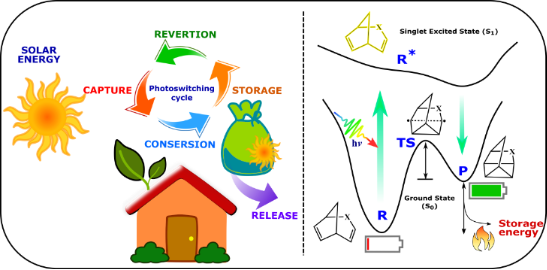
- . A schematic representation of the photoswitching mechanism operating in the studied BBD-based switches for MOST application is illustrated in Figure 1d. The parent BBD molecules absorb incoming photons from solar radiation and undergo photoinduced electronic excitation. The excited diene thereafter
- present work, (d) schematic representation of the photoswitching mechanism in the studied BBD-based photoswitches for molecular solar thermal energy storage applications. Energy storage capacities and barrier for back conversion of the photoproduct to the diene in the gas phase. (a) Storage energy, (b


Novel analogues of a nonnucleoside SARS-CoV-2 RdRp inhibitor as potential antivirotics
Beilstein J. Org. Chem. 2024, 20, 1029–1036, doi:10.3762/bjoc.20.91
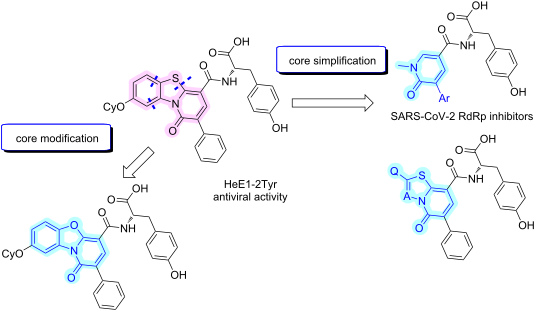
- ) Graphical representation of the inhibitory activity of selected compounds evaluated from the gels obtained in the primer extension assay. The percentage of inhibition (against control) was plotted against the logarithm of the concentration of compounds. The results were fitted to sigmoidal dose–response


Monitoring carbohydrate 3D structure quality with the Privateer database
Beilstein J. Org. Chem. 2024, 20, 931–939, doi:10.3762/bjoc.20.83
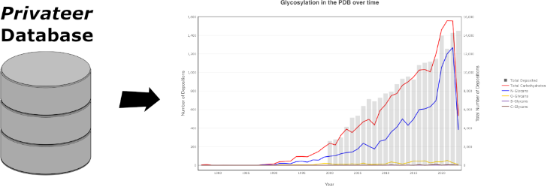
- of the tree is the glycan information, separated into glycan types. Each glycan also contains a list of sugars, with a range of validation information and a list of linkage with torsion angle information. Tree visualisation was created with jsoncrack.com. Left: Graphical representation of the


(Bio)isosteres of ortho- and meta-substituted benzenes
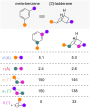
Beilstein J. Org. Chem. 2024, 20, 859–890, doi:10.3762/bjoc.20.78


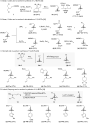


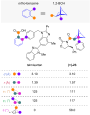
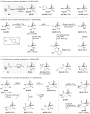


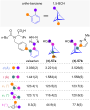











Elucidating the glycan-binding specificity and structure of Cucumis melo agglutinin, a new R-type lectin
Beilstein J. Org. Chem. 2024, 20, 306–320, doi:10.3762/bjoc.20.31
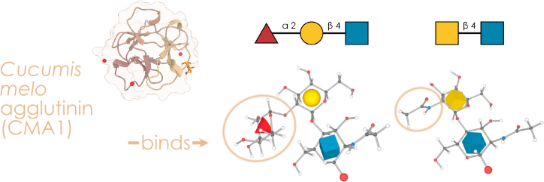
- equilibrium, n = 2. Structural insights into the binding mechanism of CMA1. (a, b) Overall representation of the N-terminal domain of CMA1 in complex with (a) LacNAc (Galβ1-4GlcNAc) [29] or (b) GalNAc [30]. Trefoil repeats are colored differently, and cadmium ions are represented as red spheres. (c, d) Close



Photochromic derivatives of indigo: historical overview of development, challenges and applications
Beilstein J. Org. Chem. 2024, 20, 228–242, doi:10.3762/bjoc.20.23
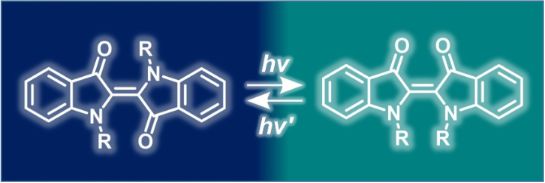
- ; irradiated with orange light (λirr > 520 nm): dash-dotted line. In all cases irradiation time t = 5 min. Reprinted with permission from ref. [38]. Copyright (1965) American Chemical Society. Photoisomerization of compound 18c upon irradiation with red light and schematic representation of the complexation of
- the Z-isomer with metal cations. Schematic representation of indigo-type (left) and amide-type (right) resonances in N,N'-acetylindigo (9a). Suggested intermediates for the double bond cleavage for the thermal relaxation of N,N'-diacylindigos: (A) a biradical transient species, (B) a dipolar transient





Using the phospha-Michael reaction for making phosphonium phenolate zwitterions
Beilstein J. Org. Chem. 2024, 20, 41–51, doi:10.3762/bjoc.20.6
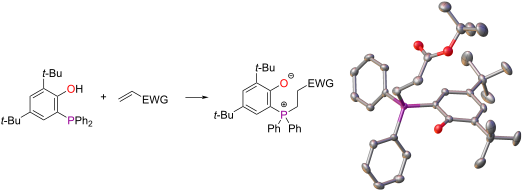
- in these cases (Supporting Information File 1, Figures S54 and S74). Crystal structures The solid-state structures of 2a and 2f were determined by single-crystal X-ray diffraction. The crystals were grown from concentrated solutions in toluene. A representation of the molecular structure of 2a is


NMRium: Teaching nuclear magnetic resonance spectra interpretation in an online platform
Beilstein J. Org. Chem. 2024, 20, 25–31, doi:10.3762/bjoc.20.4
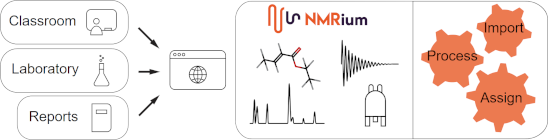
- platform for specialized data handling applications. This trend has not been withheld from science: With the advent of web tools for the online representation and manipulation of scientific data [14][15][16][17] and the development of software for spectroscopy visualization [18][19][20][21][22][23][24][25


Identification of the p-coumaric acid biosynthetic gene cluster in Kutzneria albida: insights into the diazotization-dependent deamination pathway
Beilstein J. Org. Chem. 2024, 20, 1–11, doi:10.3762/bjoc.20.1
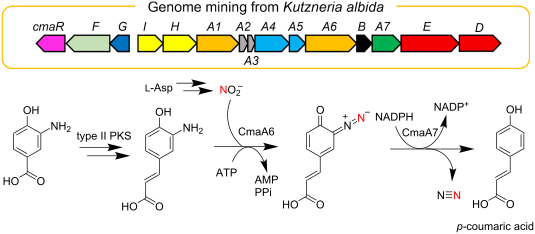
- µM and adding AvaA7 (final concentration: 0.2 µM) and NADPH (final concentration: 800 µM). Comparison of ava and cma clusters and the biosynthetic pathway of p-coumaric acid. A) Schematic representation of ava and cma clusters from Streptomyces sp. RI-77 and Kutzneria albida, respectively. They
- harbor similar gene components except for the genes encoding oxidoreductases (avaA8 and cmaG), transporter (avaC), and regulator (cmaR). B) The proposed biosynthetic pathway of p-coumaric acid by the cma cluster. Heterologous expression of the cma cluster in S. albus. A) Schematic representation of the


Studying specificity in protein–glycosaminoglycan recognition with umbrella sampling
Beilstein J. Org. Chem. 2023, 19, 1933–1946, doi:10.3762/bjoc.19.144
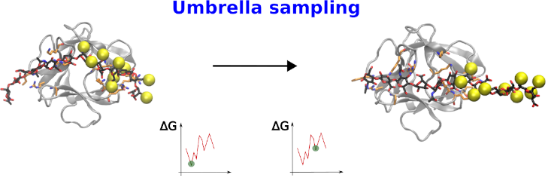
- would be significantly smaller. Data analysis and its graphical representation were done with the R-package [49] and VMD [50]. Results In total, 14 US simulations were performed to investigate the specificity of GAG–protein interactions, capabilities of US simulations to dissociate and reassociate
- to relax the system and to check if the final pose was energetically stable or if it changed during the relaxation step. The data depicted in the graphs result from the analysis of merged US trajectories. While this representation is not entirely physically sound, as the outcomes for each US window
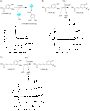
- to analyze them. Graphical representation of ligands (in licorice, hydrogen atoms not shown) used in this study. Ligands 1, 2, and 3 were used in complexes with basic fibroblast factor (as modifications of the 1BFC PDB structure) and acidic fibroblast factor (as modifications of the 2AXM PDB




Effects of the aldehyde-derived ring substituent on the properties of two new bioinspired trimethoxybenzoylhydrazones: methyl vs nitro groups
Beilstein J. Org. Chem. 2023, 19, 1713–1727, doi:10.3762/bjoc.19.125
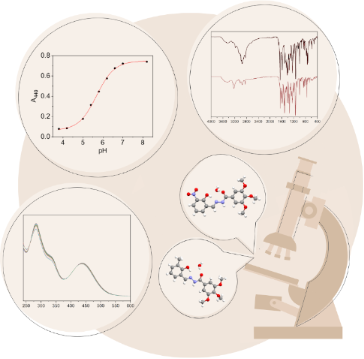
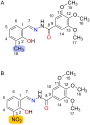
- structure was calculated with the Pymol tool [66]. ORTEP representation of the new N-acylhydrazones synthesized in the present work, drawn with thermal ellipsoids at 30% probability. Left: hdz-CH3 and right: hdz-NO2. (A) Superposition of molecular structures and stacked motifs of (B) hdz-CH3 and (C) hdz-NO2





Cyclodextrins permeabilize DPPC liposome membranes: a focus on cholesterol content, cyclodextrin type, and concentration
Beilstein J. Org. Chem. 2023, 19, 1570–1579, doi:10.3762/bjoc.19.115
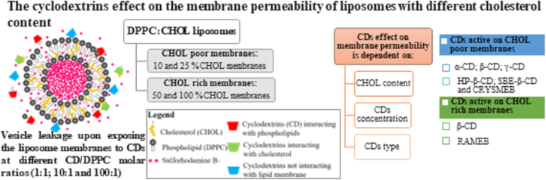
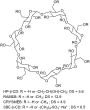
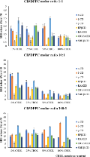
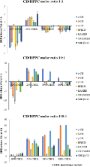
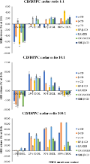
- methylated-β-CD (CRYSMEB), the hydroxypropyl-β-CD (HP-β-CD), and the sulfobutyl ether-β-CD (SBE-β-CD). A schematic representation of the chemical structure of the native CDs and their dimensions is depicted in Figure 1, reprinted with permission from [21]. The structures of β-CD derivatives and their degrees


Exploring the role of halogen bonding in iodonium ylides: insights into unexpected reactivity and reaction control
Beilstein J. Org. Chem. 2023, 19, 1171–1190, doi:10.3762/bjoc.19.86
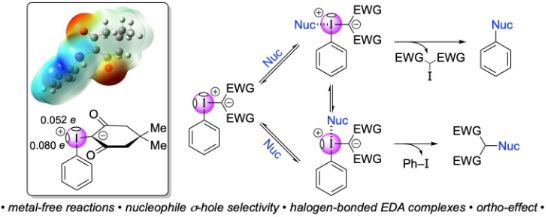
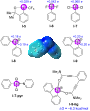
- representation of halogen bonding. Quantitative evaluation of σ-holes in monovalent iodine-containing compounds; and, qualitative molecular electrostatic potential (MEP) of I-3 from −0.052 to 0.052 e showing a single σ-hole (dark blue) [86]. Quantitative evaluation of σ-holes in hypervalent iodine-containing








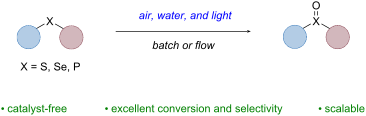
Selective and scalable oxygenation of heteroatoms using the elements of nature: air, water, and light
Beilstein J. Org. Chem. 2023, 19, 1146–1154, doi:10.3762/bjoc.19.82
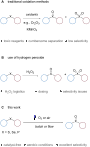
- . A) Effect of the addition of 1 equiv of various acids and bases to the standard solution. B) Effect of the addition of 1 equiv of various salts to the standard solution. Oxidation of heteroatoms. Graphical representation comparing A electrochemistry and B photoredox catalysis using a semiconductor





Synthesis of imidazo[4,5-e][1,3]thiazino[2,3-c][1,2,4]triazines via a base-induced rearrangement of functionalized imidazo[4,5-e]thiazolo[2,3-c][1,2,4]triazines
Beilstein J. Org. Chem. 2023, 19, 1047–1054, doi:10.3762/bjoc.19.80
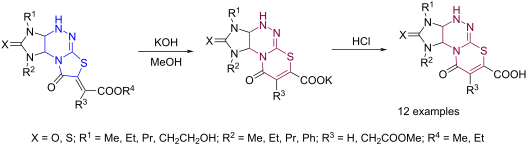
- spectra of compounds 4a and 5a in DMSO-d6 in the region of 4.3–9.0 ppm. 13C NMR GATED spectra of compounds 4a and 5a in DMSO-d6 in the region of 156.0–168.0 ppm. General view of 5a in the crystal in thermal ellipsoid representation (p = 80%). Base-induced transformations and rearrangements of



Linker, loading, and reaction scale influence automated glycan assembly
Beilstein J. Org. Chem. 2023, 19, 1015–1020, doi:10.3762/bjoc.19.77
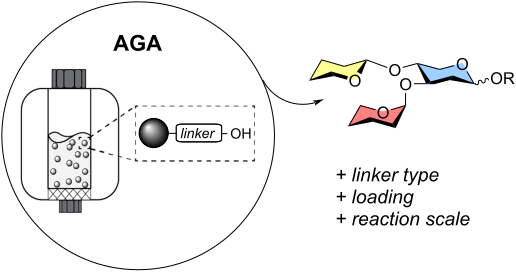
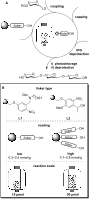
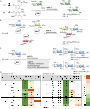
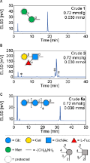
- of new linkers, more efficient cleaving procedures [34], and the implementation of post-AGA manipulation steps on resin. Schematic representation of the AGA process (A). Variables that can affect the AGA outcome investigated in this study (B). AGA of model glycan sequences analyzed in this study: α