


Search results
Search for "structural features" in Full Text gives 232 result(s) in Beilstein Journal of Organic Chemistry. Showing first 200.
Regioselective formal hydrocyanation of allenes: synthesis of β,γ-unsaturated nitriles with α-all-carbon quaternary centers
Beilstein J. Org. Chem. 2025, 21, 800–806, doi:10.3762/bjoc.21.63
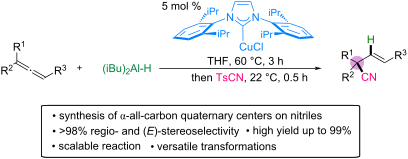
- bonds is one of the most efficient and atom-economical approaches for synthesizing alkyl nitriles [15][16]. Among the potential substrates, allenes have attracted significant attention because of their unique structural features, which consist of two orthogonal and contiguous C=C bonds. This dual π




Acyclic cucurbit[n]uril bearing alkyl sulfate ionic groups
Beilstein J. Org. Chem. 2025, 21, 717–726, doi:10.3762/bjoc.21.55
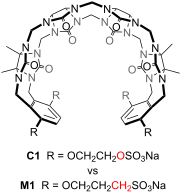
- , two aromatic o-xylylene walls, and four sulfonates as solubilizing ionic groups. In accord with these structural features, M1 binds a variety of hydrophobic and cationic guest molecules by the hydrophobic effect, π–π interactions, and electrostatic (ion–dipole and ion–ion) interactions. Although


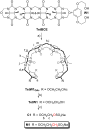


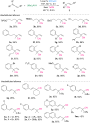
Recent advances in allylation of chiral secondary alkylcopper species
Beilstein J. Org. Chem. 2025, 21, 639–658, doi:10.3762/bjoc.21.51
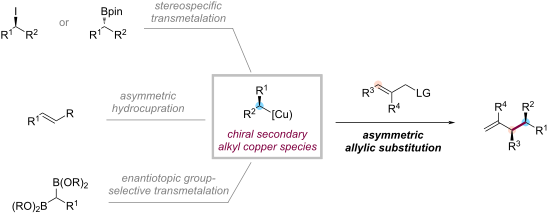
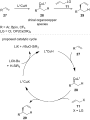
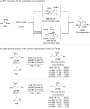
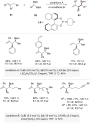
- transfer (TS2). The structural features of the tert-butyl group allow more efficient pyramidalization compared to the rigid adamantyl framework, suggesting that the flexibility of the transferring group plays a crucial role in facilitating transmetalation. Copper hydride chemistry for enantioselective





Deep-blue emitting 9,10-bis(perfluorobenzyl)anthracene
Beilstein J. Org. Chem. 2025, 21, 515–525, doi:10.3762/bjoc.21.39
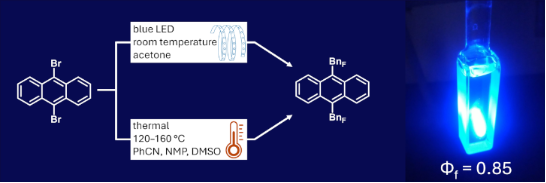
- for material scientists [12][13][14]. One of the structural features favorable for an efficient anthracene-based blue emitter is the introduction of bulky substituents in the 9 and 10 positions, which results in a solid-state packing with limited π–π intermolecular interactions, which, in turn, tends





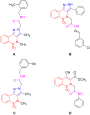
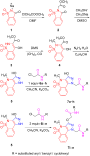
Synthesis, characterization, antimicrobial, cytotoxic and carbonic anhydrase inhibition activities of multifunctional pyrazolo-1,2-benzothiazine acetamides
Beilstein J. Org. Chem. 2025, 21, 348–357, doi:10.3762/bjoc.21.25
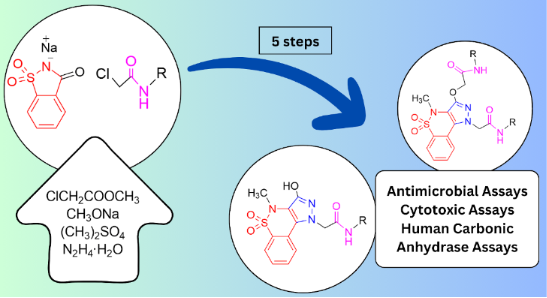
- moiety was beneficial to optimize therapeutic activity of different analogs with lesser adverse effects [32]. Amide linkages are a common drug feature that comprises about 25% of the most prescribed and vended medication [33]. Mimicking biologically relevant structural features of proteins and enzymes


Antibiofilm and cytotoxic metabolites from the entomopathogenic fungus Samsoniella aurantia
Beilstein J. Org. Chem. 2025, 21, 327–339, doi:10.3762/bjoc.21.23
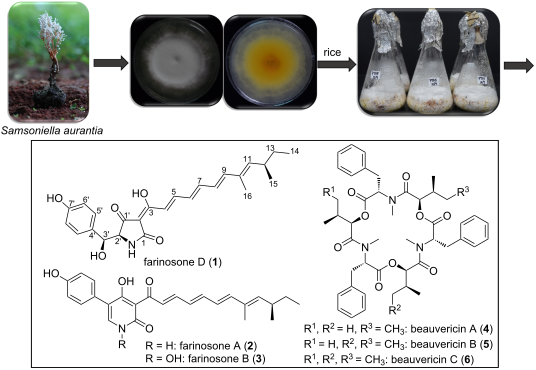
- characteristic spin system between two pairs of electromagnetically equivalent aromatic protons at δH 6.60 (d, J = 8.4 Hz, H-6'/8') and δH 7.01 (d, J = 8.4 Hz, H-5'/9') suggesting the presence of a 1,4-disubstituted aromatic ring in 1. A literature search of 1 based on the deduced structural features revealed


Synthesis of acenaphthylene-fused heteroarenes and polyoxygenated benzo[j]fluoranthenes via a Pd-catalyzed Suzuki–Miyaura/C–H arylation cascade
Beilstein J. Org. Chem. 2024, 20, 3290–3298, doi:10.3762/bjoc.20.273
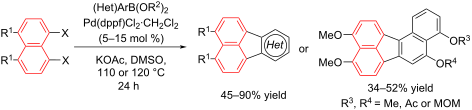
- focus of extensive research within the past two decades due to their interesting structural features, attractive photophysical properties, and diverse applications [2]. Indeed, fluoranthenes are particularly useful in supramolecular chemistry, organic electronics, and materials science [3] as
- ). Finally, due to our interest in the structural features and chemistry of 1,8-dihydroxynaphthalene (1,8-DHN) [48][49], we were curious to check the reactivity of the previously unknown boronic ester 17d, which was prepared in one step from thiophene-3-ylboronic acid (17a) and 1,8-DHN [50]. Note that




Chemical structure metagenomics of microbial natural products: surveying nonribosomal peptides and beyond
Beilstein J. Org. Chem. 2024, 20, 3050–3060, doi:10.3762/bjoc.20.253
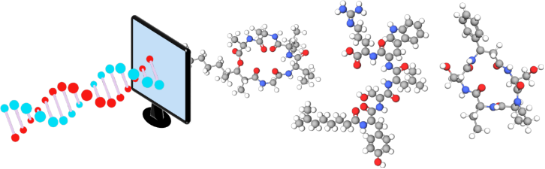
- to fully understand the determinant(s) of NRP topology. There are many ways to classify NRPs when topology and chemical structural features are considered simultaneously. For example, a macrocycle may be a lactam or a lactone depending on whether the internal nucleophile is an amine or an alcohol


Tunable full-color dual-state (solution and solid) emission of push–pull molecules containing the 1-pyrindane moiety
Beilstein J. Org. Chem. 2024, 20, 3016–3025, doi:10.3762/bjoc.20.251
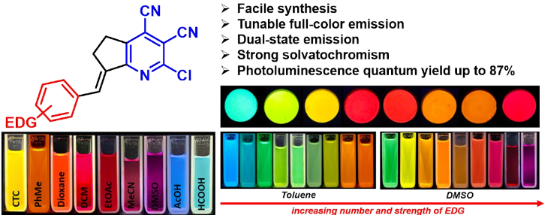
- able to emit in two different states (solution and solid state). This makes them more versatile and allows them to be used for the creation of fluorescent materials with different characteristics. Molecules exhibiting DSE are required to have certain structural features. First, they often contain donor


Structure and thermal stability of phosphorus-iodonium ylids
Beilstein J. Org. Chem. 2024, 20, 2931–2939, doi:10.3762/bjoc.20.245
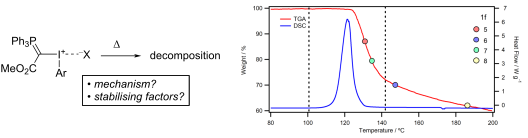
- 2) and two highly unstable compounds (1d: 88 °C, 671 J/g; 1k: 74 °C, 70.2 J/g; Table 2). We were interested to investigate whether we could identify structural features that could explain these outliers. We observed a quantifiable anion (X) effect, with acyclic tetrafluoroborate 1a showing greater


The charge transport properties of dicyanomethylene-functionalised violanthrone derivatives
Beilstein J. Org. Chem. 2024, 20, 2921–2930, doi:10.3762/bjoc.20.244
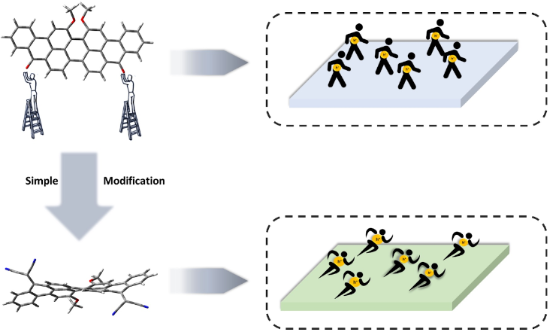
- structural features of violanthrones suggest that these materials may possess similar charge transport, optical and electrochemical properties to those of PDIs. However, the larger π-conjugated system of violanthrone, along with the two carbonyl groups, increases the possibility of stronger π–π


Applications of microscopy and small angle scattering techniques for the characterisation of supramolecular gels
Beilstein J. Org. Chem. 2024, 20, 2608–2634, doi:10.3762/bjoc.20.220
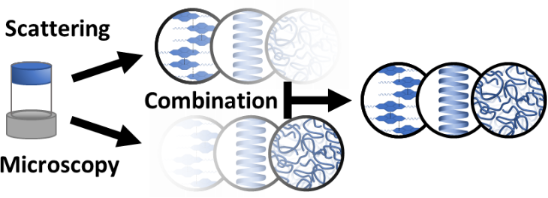
- number of structural features, but the sample preparation required can lead to significant changes in the materials morphology. EM requires many preparative steps to allow structures to be imaged including the application of an ultrathin coating of carbon, gold, or platinum. These are applied to conduct
- the quantification of structural features of the larger network by changing the morphology resulting in statistics which are not representative of the structures in situ [31]. Mears et al. have shown that when the fibres are hydrophobic and not heavily charged, microscopy techniques which require


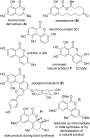
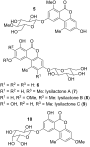
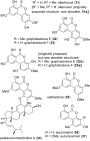
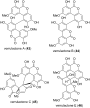
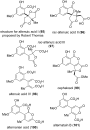
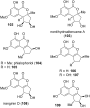
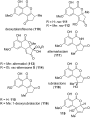
Natural resorcylic lactones derived from alternariol
Beilstein J. Org. Chem. 2024, 20, 2171–2207, doi:10.3762/bjoc.20.187










Computational toolbox for the analysis of protein–glycan interactions
Beilstein J. Org. Chem. 2024, 20, 2084–2107, doi:10.3762/bjoc.20.180
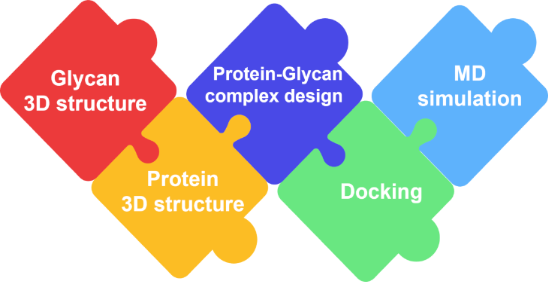
- crucial for comprehending their roles and biological activities and for correlating their structural features with their activity [3][13]. Given the plethora of remarkable biological roles played by complex glycans, this knowledge is essential for their potential applications in promoting health benefits
- docking algorithms. Unlike other docking programs such as AutoDock, AutoDock Vina, DOCK, FlexX, Glide, and GOLD, which are primarily designed for small, rigid ligands, GlycanDock is specifically optimized to address the flexibility and complex structural features of glycans. The carbohydrate chains are


Cage-like microstructures via sequential Ugi reactions in aqueous emulsions
Beilstein J. Org. Chem. 2024, 20, 2078–2083, doi:10.3762/bjoc.20.179
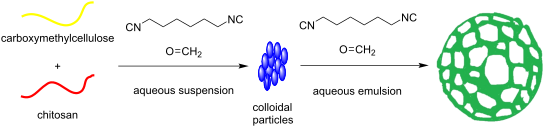
- approached low-molecular-weight substances. We used AFM to identify the structural features of the original colloidal particles. For this, colloidal particles were adsorbed on the substrate surface and then analyzed without complete drying, which made it possible to reveal the initial microgel structure


2-Heteroarylethylamines in medicinal chemistry: a review of 2-phenethylamine satellite chemical space
Beilstein J. Org. Chem. 2024, 20, 1880–1893, doi:10.3762/bjoc.20.163
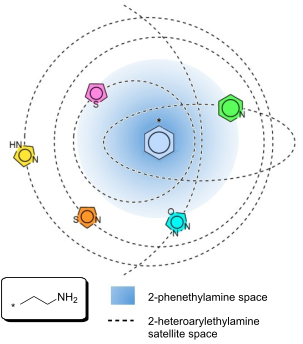
- from furanyl derivatives to thienyl-substituted compounds 17–23 in the search to elucidate structural features for accessing this receptor (Scheme 4). The chloride- and bromide-substituted thienyl derivatives encompassed micromolar to submicromolar activities in radioligand binding assays based on (R
- envisaged by Heffernan et al. [40], including human TAAR1 agonist activity and structural evaluation via homology model development followed by molecular docking and molecular dynamics studies (Scheme 6). Structural features like sulfur location and ring opening of the aminoethyl section were investigated


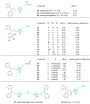


The Groebke–Blackburn–Bienaymé reaction in its maturity: innovation and improvements since its 21st birthday (2019–2023)
Beilstein J. Org. Chem. 2024, 20, 1839–1879, doi:10.3762/bjoc.20.162
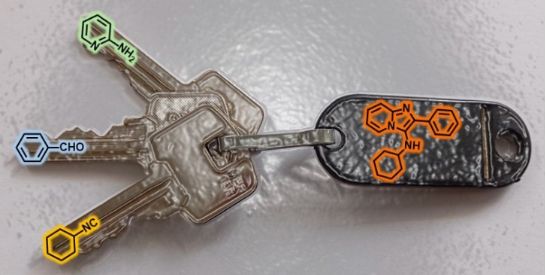
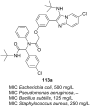
- cyclophanyl-imidazole-based library of ligands. The synthesis of ligands based on the [2.2]paracyclophane (PCP) moiety, thanks to its structural features and inherent planar chirality upon selective substitution, has been recently reviewed by the same author [46]. Starting from 4-formylcyclophane 37, a GBB






Hetero-polycyclic aromatic systems: A data-driven investigation of structure–property relationships
Beilstein J. Org. Chem. 2024, 20, 1817–1830, doi:10.3762/bjoc.20.160
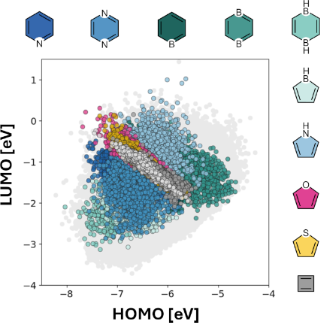
- analyze the structure–property relationships of the cc-hPASs. Results and Discussion At first glance, the chemical space of PASs may appear to be quite homogenous. After all, the molecules share certain structural features, such as their multi-ring structures, rigidity, and π-conjugation. Nevertheless
- , simply by changing the combination of the individual building blocks (i.e., rings), we obtain molecules with varying sizes, geometries, atomic compositions, and aromatic character. In such multi-faceted data, it can be difficult to ascertain which structural features determine the different molecular
- of building block affects the properties, and whether these effects are due solely to the presence of the heteroatoms or to the aromatic nature of heterocycles are among the questions we aim to answer in the subsequent sections. Influence of global structural features In this section, we investigate



Discovery of antimicrobial peptides clostrisin and cellulosin from Clostridium: insights into their structures, co-localized biosynthetic gene clusters, and antibiotic activity
Beilstein J. Org. Chem. 2024, 20, 1800–1816, doi:10.3762/bjoc.20.159
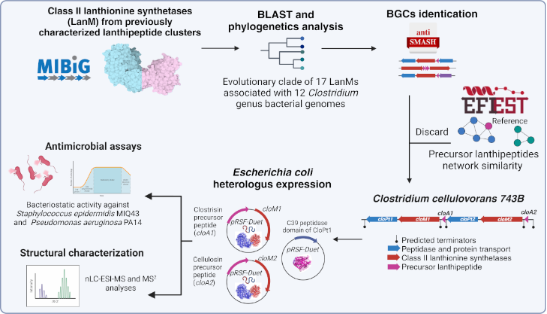
- resulting peptides exhibit unique structural features due to thioether bridges between dehydrated serine or threonine (Dha/Dhb) and cysteine (Cys). These thioether bridges lead to cyclic peptides with the modified amino acid lanthionine (Dha-Cys) or methyllanthionine (Dhb-Cys). The strong antimicrobial




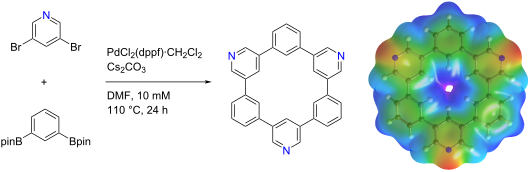
Introduction of peripheral nitrogen atoms to cyclo-meta-phenylenes
Beilstein J. Org. Chem. 2024, 20, 1207–1212, doi:10.3762/bjoc.20.103
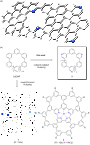
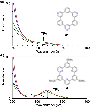
- structural features of nitrogen-doped [n]CMPs. The crystal molecular structures of 3a and 3b are shown in Figure 3. The hexagonal macrocyclic structure of 3a showed a chair-like conformation with alternating biaryl dihedral angles showing +/– values. The octagonal structure of 3b exhibited a saddle-like



Structure–property relationships in dicyanopyrazinoquinoxalines and their hydrogen-bonding-capable dihydropyrazinoquinoxalinedione derivatives
Beilstein J. Org. Chem. 2024, 20, 1037–1052, doi:10.3762/bjoc.20.92
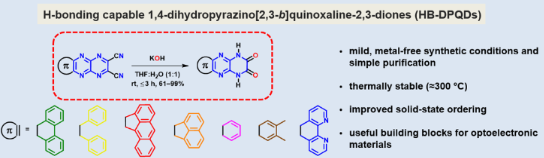
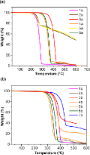
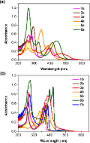
- derivative 2b further revealed that it adopts a favorable herringbone motif characterized by short π–π distances and extensive intermolecular hydrogen bonding. These structural features are anticipated to promote efficient charge transport. Future work will involve device fabrication and comparison of the




Introduction of a human- and keyboard-friendly N-glycan nomenclature
Beilstein J. Org. Chem. 2024, 20, 607–620, doi:10.3762/bjoc.20.53
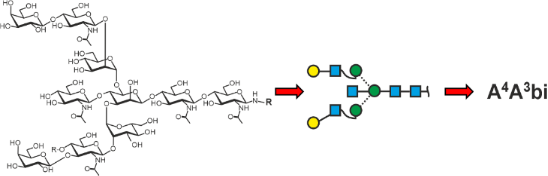
- greatly facilitate keyboard-based mining for glycan substructures in glycan repositories. Keywords: N-glycans; nomenclature; structural features; Introduction Virtually any article on protein glycosylation starts with imposing assurances about the biological significance of the various structures. This
- -vertebrates contain numerous “unusual” and remarkable structural features such as methylation, sulfation, and zwitterionic non-sugar substituents, again glucuronic acid and often unusual architectures such as substituted core-fucose just as an example [44][52]. While the methylated moss glycans are accessible

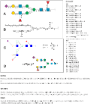


Possible bi-stable structures of pyrenebutanoic acid-linked protein molecules adsorbed on graphene: theoretical study
Beilstein J. Org. Chem. 2024, 20, 570–577, doi:10.3762/bjoc.20.49
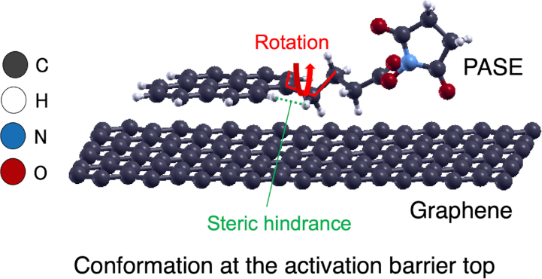
- , where conformation 1 corresponds to a 0 rotation, conformation 2 a 2π/3 rotation, and the conformation at the activation barrier top a π/3 rotation, respectively. To confirm the origin of the activation barrier that appears between conformation 1 and 2, we discuss the structural features of the


Synthesis and biological profile of 2,3-dihydro[1,3]thiazolo[4,5-b]pyridines, a novel class of acyl-ACP thioesterase inhibitors
Beilstein J. Org. Chem. 2024, 20, 540–551, doi:10.3762/bjoc.20.46
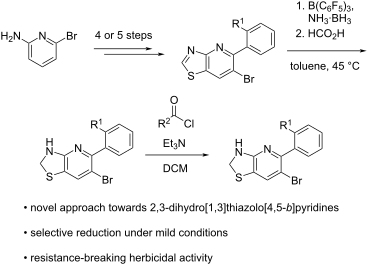
- showed strong efficacy against commercially important weeds, in particular resistant ryegrass (LOLSS_R), combined with promising crop safety. In our view, these results underline that chemical innovation using isostere concepts and addressing unusual structural features is a useful tool to broaden the


NMRium: Teaching nuclear magnetic resonance spectra interpretation in an online platform
Beilstein J. Org. Chem. 2024, 20, 25–31, doi:10.3762/bjoc.20.4

- rapid and comparatively easy deduction of structural features with the only requirement being the molecule's solubility in deuterated solvents. Therefore, NMR spectroscopy is of ubiquitous presence in many disciplines today. At the same time, with the high throughput analysis of samples that has been a





