Search results
Search for "oxygen" in Full Text gives 1359 result(s) in Beilstein Journal of Organic Chemistry. Showing first 200.
Discovery of cytotoxic indolo[1,2-c]quinazoline derivatives through scaffold-based design
Beilstein J. Org. Chem. 2025, 21, 2062–2071, doi:10.3762/bjoc.21.161
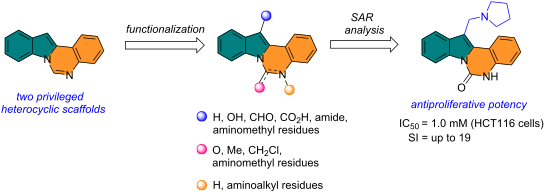
- ]quinazoline (8) [26], was also used in which the carbonyl oxygen at position 6 is replaced by a methyl group. Substitution at position C6 will enable to investigate the influence of electronic and steric changes for target affinity, while retaining the key pharmacophoric features of the indoloquinazolinone


Bioinspired total syntheses of natural products: a personal adventure
Beilstein J. Org. Chem. 2025, 21, 2048–2061, doi:10.3762/bjoc.21.160
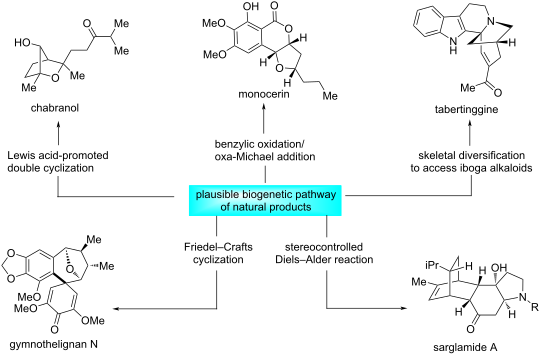
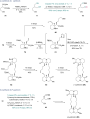
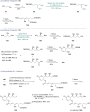
- form a cis-substituted tetrahydrofuran (THF) moiety fused to the lactone with higher oxidation states. Notably, the phenyl ring contains three oxygen substituents in the form of alcohol and methoxy groups at different positions. Biosynthetically, the THF ring was supposed to be formed through a
- [2.2.2] carbocycle fused to CD rings. For sarglamides D and E, another oxygen-bridged E ring shows up at different positions. Overall, sarglamides A–E exhibit unusual unprecedented skeletons as they contain both monoterpenoid and indolidinoid subunits. Such a hybrid structure is rarely found in natural



Switchable pathways of multicomponent heterocyclizations of 5-amino-1,2,4-triazoles with salicylaldehydes and pyruvic acid
Beilstein J. Org. Chem. 2025, 21, 2030–2035, doi:10.3762/bjoc.21.158
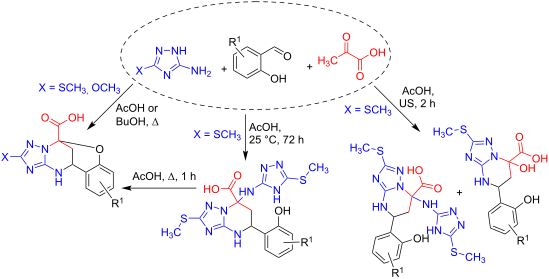
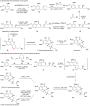
- depending on the conditions, can either be limited to a Biginelli condensation with the formation of hydroxytetrahydropyrimidines or proceed with further post-cyclization to form oxygen-bridged triazolobenzoxadiazocine derivatives. Furthermore, a multicomponent synthesis of oxygen-bridged pyrimidine systems
- at reflux in acetic acid for 3 h for aminotriazole 1a or in n-BuOH for 7 h in case of aminotriazole 1b led to the formation of oxygen-bridged 2-(methylthio or methoxy)-11,12-dihydro-5H-5,11-methanobenzo[g][1,2,4]triazolo[1,5-c][1,3,5]oxadiazocine-5-carboxylic acids 4a–j (Scheme 2, Table 1). It should
- be noted that this MCR involving unsubstituted 5-amino-1H-1,2,4-triazole under various conditions never proceeds towards the formation of oxygen-bridged compounds [18]. Thus, there is indeed a significant influence of the substituent in position 3 of 5-amino-1H-1,2,4-triazoles on their chemical


α-Ketoglutaric acid in Ugi reactions and Ugi/aza-Wittig tandem reactions
Beilstein J. Org. Chem. 2025, 21, 2021–2029, doi:10.3762/bjoc.21.157
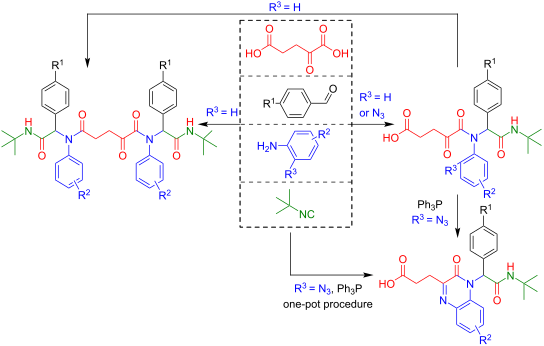
- precipitation from non-polar solvents such as hexane and toluene did not lead to a complete separation of quinoxalinones 9 and Ph3PO. We attribute this to the ability of Ph3PO to form a strong hydrogen bond between the phosphoryl oxygen and a proton from the donor group of the second molecule [56][57][58], in


Aryl iodane-induced cascade arylation–1,2-silyl shift–heterocyclization of propargylsilanes under copper catalysis
Beilstein J. Org. Chem. 2025, 21, 1984–1994, doi:10.3762/bjoc.21.154
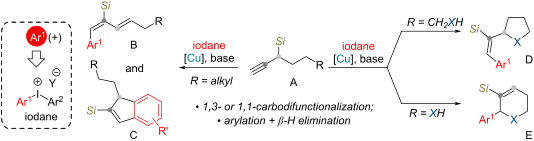
- acid, its sodium salt or the silylated carboxylic acid), the arylation reaction of aliphatic chain-containing propargylsilane 7b (standard conditions; see Scheme 3) only resulted in the arylation of the oxygen nucleophile itself. Next, we proceeded to expand the substrate scope by exploring other


Photochemical reduction of acylimidazolium salts
Beilstein J. Org. Chem. 2025, 21, 1973–1983, doi:10.3762/bjoc.21.153
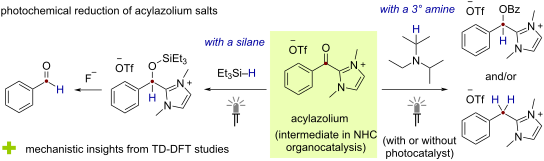
- transfer between these species affording zwitterionic radical E is thermodynamically feasible (for details, see Supporting Information File 1). In an alternative pathway, direct hydrogen atom transfer (HAT) from the silane to the oxygen atom of excited 1* could occur. A similar HAT-step from 1* was very


Enantioselective desymmetrization strategy of prochiral 1,3-diols in natural product synthesis
Beilstein J. Org. Chem. 2025, 21, 1932–1963, doi:10.3762/bjoc.21.151

- with organic reactions, this chemo-enzymatic strategy has been successfully utilized in the synthesis of complex molecules [22][23]. Enzymatic reactions feature a convenient operation due to their relative insensitivity to water and oxygen, as well as a specificity to certain substrates, resulting in
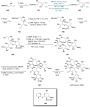
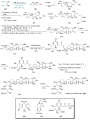
- with the desired C6 chiral center was constructed via intermediate 229, where the sulfinyl group induced K+–oxygen chelation to form a six-membered transition state prior to protonation from the less hindered face. Acid-mediated epimerization at C9 of 230 yielded compound 231, which was transformed












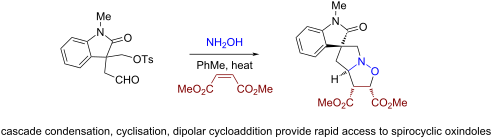
Preparation of spirocyclic oxindoles by cyclisation of an oxime to a nitrone and dipolar cycloaddition
Beilstein J. Org. Chem. 2025, 21, 1890–1896, doi:10.3762/bjoc.21.146
- , 52.7, 39.4, 26.8; HRESIMS (m/z): [M + H]+ calcd for C18H21N2O6, 361.1400, found: 361.1404. Representative oxindole alkaloids. Orientation for the cycloaddition (left) and the crystal structure of the major stereoisomer 5a (right) with the anisotropic displacement parameters drawn at 50% (oxygen – red


Photoswitches beyond azobenzene: a beginner’s guide
Beilstein J. Org. Chem. 2025, 21, 1808–1853, doi:10.3762/bjoc.21.143
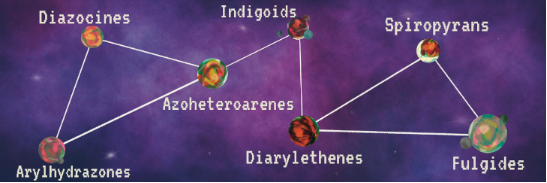
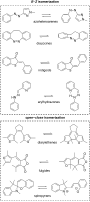
- , pyridine, and indole, alongside with less common oxygen and sulphur-based heterocycles such as thiophene, thiazole, oxazole. At the end of the section, we will also briefly discuss heteroarylimines which, although not being azo-switches, resemble the geometry of azo-compounds and possess similar
- much [55]. Several diazocines with heteroatoms in the bridge have been reported (Figure 10) [50][51][53]. Oxygen-containing heterodiazocine exhibits high PSS in both directions but has a short half-life, whereas the sulphur derivative has a significantly longer half-life but a slightly reduced E-PSS
- interesting results: in the case of derivative 63 containing pyrrole, capable of hydrogen bonding with the carbonyl oxygen (Scheme 20, left) [61][62], the E form is obtained almost quantitatively upon irradiation. In the case of pyridine-containing derivative 64 (Scheme 20, right) no photoswitching is






Fe-catalyzed efficient synthesis of 2,4- and 4-substituted quinolines via C(sp2)–C(sp2) bond scission of styrenes
Beilstein J. Org. Chem. 2025, 21, 1799–1807, doi:10.3762/bjoc.21.142
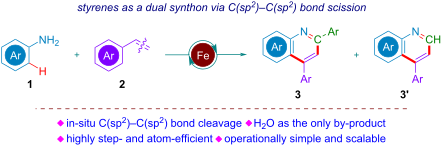
- biocatalysts, as well as enzymatic processes. Among these, molecular oxygen stands out as a greener and more sustainable oxidant due to its natural abundance, low cost, and environmentally friendly properties, making it an appealing option for both academic research and industrial applications. Recently, some
- protocol, a set of control experiments was conducted to gain insight into the reaction mechanism, as depicted in Scheme 4. To clarify the significance of oxidative conditions, the standard reaction was initially conducted under an inert atmosphere by replacing oxygen with nitrogen (reaction 1). Under these




[3 + 2] Cycloaddition of thioformylium methylide with various arylidene-azolones in the synthesis of 7-thia-3-azaspiro[4.4]nonan-4-ones
Beilstein J. Org. Chem. 2025, 21, 1791–1798, doi:10.3762/bjoc.21.141
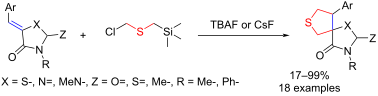
- a single diastereomer with traces or no of the other one (dr >19:1). For the derivative 5e with an oxygen-containing heterocycle, we failed to obtain the corresponding products under any of the proposed conditions. In all cases, we observed only very complex mixtures with traces of the target
- were formed, and the transformation rate was extremely low. This outcome may be attributed to the electron-acceptor properties of the oxygen atom, which likely disrupt the cycloaddition process. NMR analysis confirmed that each heterocyclic ring formed products exclusively as a single diastereomer



Research progress on calixarene/pillararene-based controlled drug release systems
Beilstein J. Org. Chem. 2025, 21, 1757–1785, doi:10.3762/bjoc.21.139
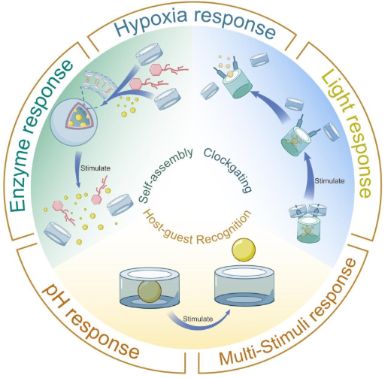
- maintain water solubility. This assembly approach not only suppresses the fluorescence self-quenching of AnPy in the aggregated state (enhancing the yield of singlet oxygen) [115], but also boosts its photo-sensitivity – under light irradiation, the anthracene in the complex can be efficiently converted to
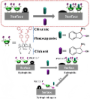
- efficacy. Guo and associates developed hypoxia-responsive molecular carriers, namely carboxylated or sulfonated azo-calix[4/5]arenes [122][123]. These CAs, utilizing their azo groups that are easily reduced in low-oxygen settings, provide the potential for tumor-targeted drug release while reducing side
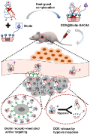
- that of brain tissue. The hydrogel’s hypoxia-responsive properties were validated through three different systems: sodium dithionite (SDT), rat liver microsomes, and the oxygen-glucose deprivation (OGD) model. Under hypoxic conditions, the hydrogel achieved targeted release of cyanine 5-dimethyl (CY5






Unique halogen–π association detected in single crystals of C–N atropisomeric N-(2-halophenyl)quinolin-2-one derivatives and the thione analogue
Beilstein J. Org. Chem. 2025, 21, 1748–1756, doi:10.3762/bjoc.21.138
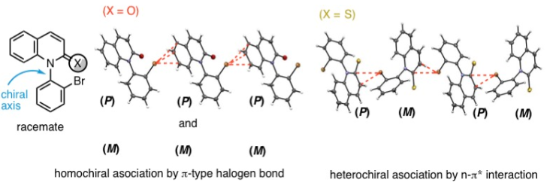
- through a σ-type intermolecular halogen bonding (C–Br···O) between the ortho-bromine atom and the carbonyl oxygen. The formation of similar heterochiral polymers through a σ-type intermolecular halogen bond (C–Br···S) was also found in crystals of the thio-analogue rac-II. On the other hand, in the


Preparation of a furfural-derived enantioenriched vinyloxazoline building block and exploring its reactivity
Beilstein J. Org. Chem. 2025, 21, 1737–1741, doi:10.3762/bjoc.21.136

- attack to the double bond in intermediate A is kinetically preferred from the face forming the R-configured carbon of the C–N bond as a result of a minimized steric interaction of the oxygen in zwitterion with iPr substituent of oxazoline. Conclusion Unsaturated ester obtained by Torii-type ester


Approaches to stereoselective 1,1'-glycosylation
Beilstein J. Org. Chem. 2025, 21, 1700–1718, doi:10.3762/bjoc.21.133
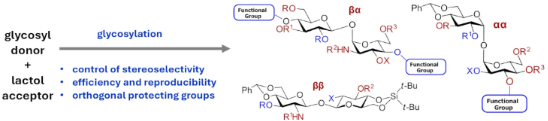
- orientation has proven both efficient and reliable [56][57][58]. The axial C2-OH group in the tribenzylated Man-derived lactol 23 was utilized to trap the anomeric oxygen in the β-configuration via a five-membered stannane ring in 24 (Scheme 3). Subsequent glycosylation with the trichloroacetimidate donor 25


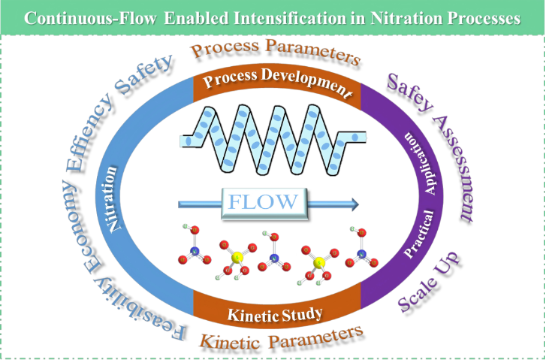
Continuous-flow-enabled intensification in nitration processes: a review of technological developments and practical applications over the past decade
Beilstein J. Org. Chem. 2025, 21, 1678–1699, doi:10.3762/bjoc.21.132
- /explosophores. While a single plosophoric group does not inherently confer explosivity, it suggests thermal instability potential. However, structural dilution (>6 carbons per plosophoric group) typically mitigates explosivity, though thermal instability risks may persist. Indicator 3: oxygen balance (OB) of
- the material [70]. Oxygen balance (OB), a critical parameter quantifying how well an explosive provides its own oxidant, reveals potential safety risks when OB values exceed the threshold of −200. Since the energy release predominantly originates from oxidation reactions, the available oxygen content
- critically dictates explosive performance. The oxygen balance for a chemical reaction is calculated by: using the formula: The development needs of industrial nitration processes have been for many years addressed using batch processes, in which the corresponding equipment is easily assembled and cleaned



On the aromaticity and photophysics of 1-arylbenzo[a]imidazo[5,1,2-cd]indolizines as bicolor fluorescent molecules for barium tagging in the study of double-beta decay of 136Xe
Beilstein J. Org. Chem. 2025, 21, 1627–1638, doi:10.3762/bjoc.21.126
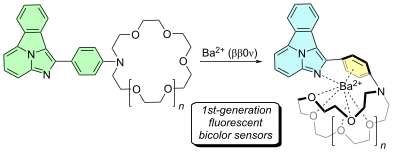
- within the average molecular plane. In addition, the corresponding ΔGiso values increase with the n-values (Figure 4A). Ligand 21-crown-7 15d suggests that this size of the cyclic ligand is less than optimal, since the calculated structure shown a concave-convex topology, in which one oxygen atom
- , highlighted by an asterisk, lies out from the direct coordination perimeter, thus suggesting that this ligand is too big. The relatively lower increase of the ΔGiso(d) with respect to its ΔGiso(c) congener also indicate that the stabilization induced by the additional oxygen atom is lower in magnitude. An
- central position within the concave face. Also in this case, one oxygen atom of the oversized macrocycle does not interact directly with Ba2+, thus resulting in a non-optimal coordination pattern. Therefore, the shape of the ligand and the low positive charge available for the cation result in the largest





Transition-state aromaticity and its relationship with reactivity in pericyclic reactions
Beilstein J. Org. Chem. 2025, 21, 1613–1626, doi:10.3762/bjoc.21.125

- )> molecular orbital overlap (S = 0.13 vs S = 0.07 for the uncatalyzed and catalyzed reactions, respectively). In other words, there occurs a significant polarization of the conjugated π-system away from the C–C double bond when the LA binds the carbonylic oxygen of methyl acrylate, which results in a less


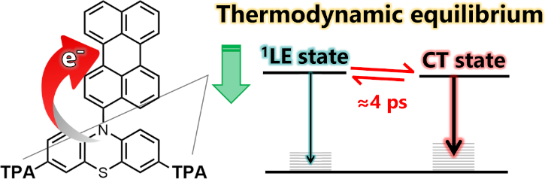
Thermodynamic equilibrium between locally excited and charge transfer states in perylene–phenothiazine dyads
Beilstein J. Org. Chem. 2025, 21, 1577–1586, doi:10.3762/bjoc.21.121
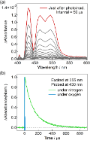
- displayed lifetimes in the order of several microseconds. In contrast, under an oxygen atmosphere, the transient absorption decayed significantly faster, confirming the triplet nature of these states (Figure 5b and Figures S25–S27 in Supporting Information File 1). Under a nitrogen atmosphere, the decay
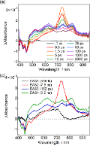
- . Microsecond transient absorption (a) spectra and (b) dynamics of Pe–PTZ(TPA)2 in benzene excited at 355 nm (5 μJ/pulse) and probed at 430 nm under nitrogen and oxygen conditions. Femtosecond-to-nanosecond transient absorption spectra and evolution-associated spectra (EAS) of Pe–PTZ(TPA)2 in benzene excited at




pH-Controlled isomerization kinetics of ortho-disubstituted benzamidines: E/Z isomerism and axial chirality
Beilstein J. Org. Chem. 2025, 21, 1568–1576, doi:10.3762/bjoc.21.120
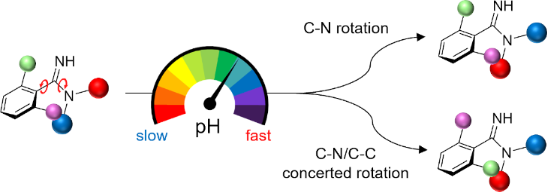
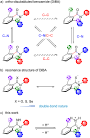
- formal substitution of the carbonyl oxygen atom of DiBA to an NH group, could act as a pH-responsive molecular switch (Figure 1c). Namely, the double-bond nature of an amidine moiety can be altered by the protonation of the amidine nitrogen atom. This suggests the possibility of controlling the rate of C
- usefulness of the single-atom substitution strategy on DiBA. By replacing the oxygen atom of DiBA with a nitrogen atom (and thus NH), which has been shown to be photo-responsive when replaced with sulfur or selenium, the pH-responsive property was acquired. Such minimal changes in physical properties can be



Facile synthesis of hydantoin/1,2,4-oxadiazoline spiro-compounds via 1,3-dipolar cycloaddition of nitrile oxides to 5-iminohydantoins
Beilstein J. Org. Chem. 2025, 21, 1552–1560, doi:10.3762/bjoc.21.118

- more electronegative oxygen or nitrogen atoms, both in the HOMO of dipole and dipolarophile [36][39]. In contrast, the carbon atoms have a significantly higher orbital coefficient than the heteroatoms, both in the LUMOdipolarophile and the LUMOdipole. Thus, nitrile oxide tends to react with an imine to

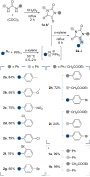


Azobenzene protonation as a tool for temperature sensing
Beilstein J. Org. Chem. 2025, 21, 1528–1534, doi:10.3762/bjoc.21.115
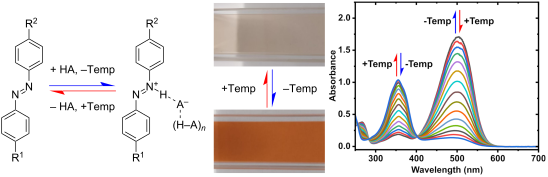
- complexes between 1–3 and MSA (X-MSA and X-(MSA)2, X = 1, 2 or 3). The geometry-optimized structure of 3H+MSA−MSA is shown in Figure 3. In this structure, the second MSA molecule does not bind directly to the azo group but forms a hydrogen bond with the mesylate anion, and one of its oxygen atoms interacts


Photoredox-catalyzed arylation of isonitriles by diaryliodonium salts towards benzamides
Beilstein J. Org. Chem. 2025, 21, 1480–1488, doi:10.3762/bjoc.21.110
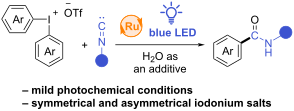
- oxygen significantly inhibited the reaction. Based on these findings and some additional experiments (see Supporting Information File 1, Table S1), the optimal conditions for further studies were established as the use of equimolar amounts of diaryliodonium salt and isonitrile, Na2CO3 as the base, and


Microwave-enhanced additive-free C–H amination of benzoxazoles catalysed by supported copper
Beilstein J. Org. Chem. 2025, 21, 1462–1476, doi:10.3762/bjoc.21.108
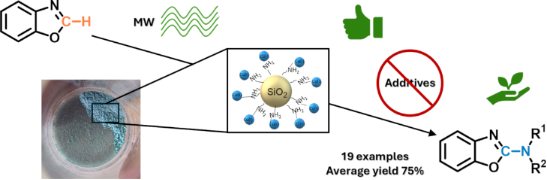
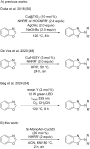
- conditions already reported in the literature for aerobic protocols. As shown in Table 1, entries 1–3, we compared xylene, toluene, and acetonitrile as solvents. According to Bhanage and Wagh [13], Cu(II) catalyses the C–H amination in xylene at 140 °C for 14 hours under oxygen. We tested the reaction in
- demonstrated good product conversion and selectivity without the need to perform the reaction under oxygen, while Cu(OAc)2 was slightly less efficient. When the catalyst loading was reduced to 15 mol %, the reaction yield decreased to approximately 75% for both copper salts. However, reducing the reaction time
- 13%, highlighting the importance of oxygen/air in the oxidative aromatisation of the benzoxazole ring. Reducing the reaction time to 1 hour or lowering the catalyst loading to 15 mol % resulted in decreased yields of 75% and 71%, respectively. The reaction was also carried out in Anton Paar equipment



Wittig reaction of cyclobisbiphenylenecarbonyl
Beilstein J. Org. Chem. 2025, 21, 1454–1461, doi:10.3762/bjoc.21.107
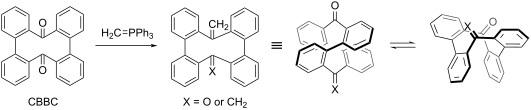
- nucleophilic substitution of the thus generated alkoxide to form an oxygen-containing five-membered ring. At least, density functional theory (DFT) calculations support that the nucleophilic attack of methylenetriphenylphosphorane to the exo-methylene unit is slightly favorable over reaction with the carbonyl