Search results
Search for "assembly" in Full Text gives 648 result(s) in Beilstein Journal of Organic Chemistry. Showing first 200.
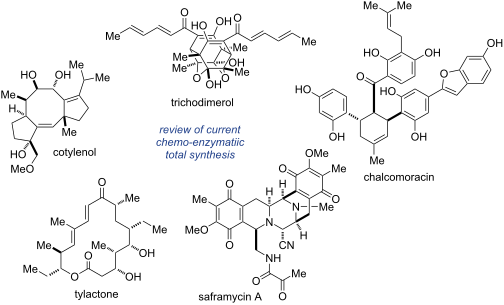
Chemo-enzymatic total synthesis: current approaches toward the integration of chemical and enzymatic transformations
Beilstein J. Org. Chem. 2024, 20, 1693–1712, doi:10.3762/bjoc.20.151
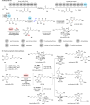
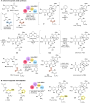
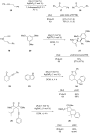
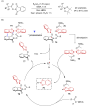
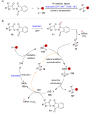
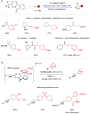
- second cycle, the PS domain catalyzes the assembly of the tyrosine derivative and the liberated aldehyde 90 to form tetracyclic thioester 91 bearing an additional chiral center at C11. Subsequent reduction of 91 to aldehyde 92 by the Red domain and spontaneous cyclization would furnish 93, the
- pentacyclic core scaffold of 5. Overall, the single NRPS module SfmC is responsible for the construction of the highly functionalized scaffold 93 from the two simple amino acid derivatives 86 and 88. After NRPS-catalyzed scaffold assembly, SfmM1-mediated N-methylation at N12, and subsequent SfmO2/O4-promoted
- the attachment and detachment of the fatty acid moiety. The myristic acid, introduced by SfmA at the beginning, is not attached in the final product 5. However, detailed investigations by Oikawa and co-workers clearly demonstrated that this fatty acid is essential for SfmC-catalyzed scaffold assembly




Ring opening of photogenerated azetidinols as a strategy for the synthesis of aminodioxolanes
Beilstein J. Org. Chem. 2024, 20, 1671–1676, doi:10.3762/bjoc.20.148
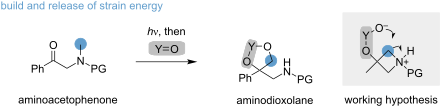
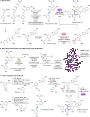
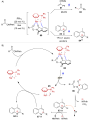
- stringent demands on the selection and assessment of substrates. In our quest to identify a suitable system, we were attracted by the use of azetidines as potential reaction intermediates (Scheme 1b) [8][9][10]. Azetidines were chosen because of existing literature precedent for their photochemical assembly



Polymer degrading marine Microbulbifer bacteria: an un(der)utilized source of chemical and biocatalytic novelty
Beilstein J. Org. Chem. 2024, 20, 1635–1651, doi:10.3762/bjoc.20.146
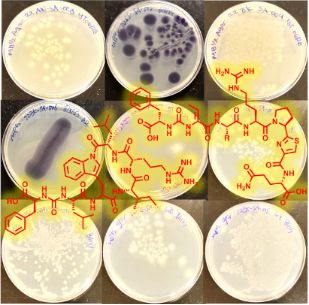
- invertebrates and plants, perhaps hinting at these molecules being widely used alphabets in inter-organismal chemical cross talk. Non-ribosomally synthesized peptidic natural products Assembly line non-ribosomal peptide synthetases (NRPSs) are routinely detected to be encoded in Microbulbifer genomes [141]. An
- bacterial natural products, the only other example being the fungal psychrophilins [142][143][144]. It should be noted that the Trp indole nitrogen does participate in amide bond formation in other fungal natural products as well, but not in the context of macrocycle assembly [145]. Compound 27 inhibited
- products isolated from Microbulbifer (the corresponding BGCs and NRPS assembly lines are identified as denoted in Figure 11) [3][4]. Thus, it is immediately apparent that the potential for novel compound discovery and for the heterologous production of cryptic natural products from this genus is high




Supramolecular assemblies of amphiphilic donor–acceptor Stenhouse adducts as macroscopic soft scaffolds
Beilstein J. Org. Chem. 2024, 20, 1590–1603, doi:10.3762/bjoc.20.142
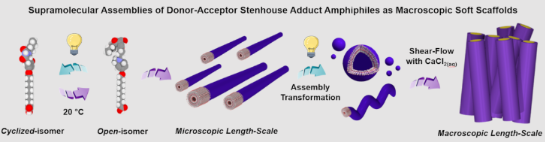
- linker length allowed fine adjustment of the hydrophobic volume of DAn, enabling significant packing parameters changes upon supramolecular assembly in aqueous medium. On a microscopic length scale, the expected supramolecular assembly and the related assembly transformations can be controlled
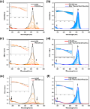
- , possibly due to the reduced stabilization and improved fatigue resistance of the cyclized-isomer in a polar environment. Photochemical properties of DAn in aqueous medium Delighted by the good photoswitchability performance of DAn in organic solvent, the photochemical properties and supramolecular assembly
- observed compared to the THF solution (Figure 1a, black line), possibly due to supramolecular assembly in aqueous medium. Because of the broad absorption range of DA11 in aqueous medium, photoisomerization could not be effectively accomplished by a 625 nm LED light source with a narrow emission wavelength




Electrocatalytic hydrogenation of cyanoarenes, nitroarenes, quinolines, and pyridines under mild conditions with a proton-exchange membrane reactor
Beilstein J. Org. Chem. 2024, 20, 1560–1571, doi:10.3762/bjoc.20.139
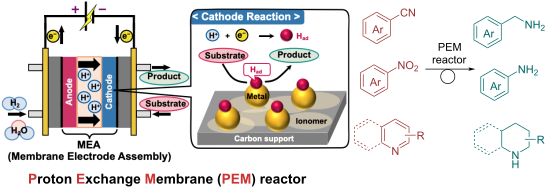
- ][34][35][36][37][38][39][40][41][42][43]. The PEM reactor included a membrane electrode assembly (MEA) consisting of a PEM and an electro-catalyst supported on carbon (Figure 1). Humidified hydrogen gas (H2) or H2O was injected into the anodic chamber and the substrate passed through the cathodic


Mining raw plant transcriptomic data for new cyclopeptide alkaloids
Beilstein J. Org. Chem. 2024, 20, 1548–1559, doi:10.3762/bjoc.20.138
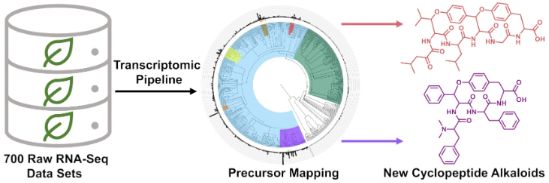
- members of the Rubiaceae and Rhamnaceae families. Ultimately, our results lay the groundwork for the rapid discovery of new burpitides across diverse plant species. Results and Discussion Assembly and analysis of 700 public transcriptomes In order to efficiently download, assemble, and analyze raw SRA
- transcripts which may arise from multiple gene copies, multiple core sequences, or multiple RNA splicing events. Therefore, we counted the number of translated transcripts from each assembly that scored better than an E-value of 0.1 using our custom precursor peptide HMM. To select for only the split
- the burpitide cyclase sequence and precursor peptides found during transcriptome assembly by performing a tblastn search against the unannotated G. jasminoides genome (NCBI GenBank assembly: GCA_013103745.1). Gene matches were primarily found on chromosome 4 (NCBI GenBank assembly: CM023098.1) with





Primary amine-catalyzed enantioselective 1,4-Michael addition reaction of pyrazolin-5-ones to α,β-unsaturated ketones
Beilstein J. Org. Chem. 2024, 20, 1518–1526, doi:10.3762/bjoc.20.136
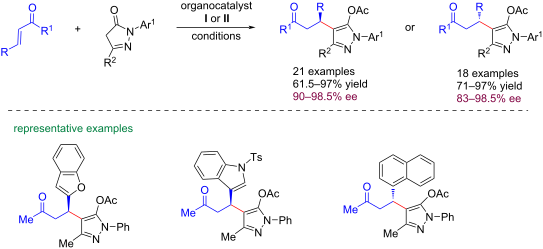
- assembly 4 (Scheme 5). It is known that Brønsted acids facilitate the iminium ion formation step [38][39] and the counteranion of the acid plays an important role in the stereocontrolling event [38][40]. On the other hand, the protonated quinuclidine nitrogen atom of the catalyst II (in the iminium ion
- assembly) activates the pyrazol-5-one 2a through hydrogen bonding and forms the corresponding enol. Simultaneously, the enol form of the pyrazol-5-one attacks the Re-face of the α,β-unsaturated ketone 1b to provide the intermediate 5 (Scheme 5), which after hydrolysis leads to product ent-3ba'. In situ




Bioinformatic prediction of the stereoselectivity of modular polyketide synthase: an update of the sequence motifs in ketoreductase domain
Beilstein J. Org. Chem. 2024, 20, 1476–1485, doi:10.3762/bjoc.20.131
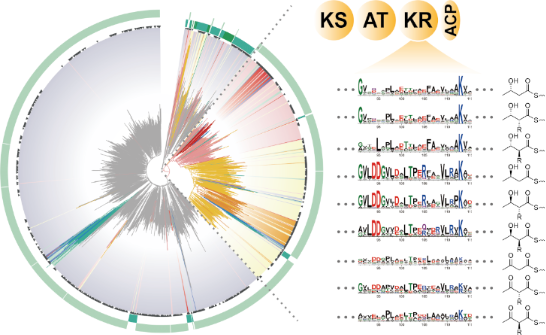
- medicines such as erythromycin and rapamycin. They are often rich in stereocenters biosynthesized by the ketoreductase (KR) domain within the polyketide synthase (PKS) assembly line. Previous studies have identified conserved motifs in KR sequences that enable the bioinformatic prediction of product
- embedded in the assembly line or not. All cis-AT PKS modules contain a ketosynthase (KS), an acyltransferase (AT), and an acyl carrier protein (ACP) to produce β-keto-intermediates, and some modules contain additional β-processing domains such as ketoreductase (KR), dehydratase (DH), and enoylreductase (ER
- ) Sequence alignment of KR domains whose stereoselectivity cannot be predicted based on the reported motifs. The labels show the product name and the order of the module where KR is located in the PKS assembly line (starting from the module with condensation function). KR types predicted based on the


Challenge N- versus O-six-membered annulation: FeCl3-catalyzed synthesis of heterocyclic N,O-aminals
Beilstein J. Org. Chem. 2024, 20, 1412–1420, doi:10.3762/bjoc.20.123
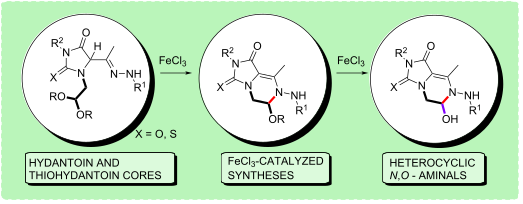
- transformations in a single reactor, reducing the number of steps and the amount of waste with consequent benefits of cost and environmental impact [42][43]. Representative examples of relevant N-fused heterocycles. Different acid-catalyzed six-membered ring cyclizations. Substrate scope for the assembly of


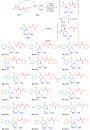
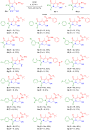


Hypervalent iodine-catalyzed amide and alkene coupling enabled by lithium salt activation
Beilstein J. Org. Chem. 2024, 20, 1405–1411, doi:10.3762/bjoc.20.122

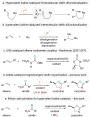
- of handling, and versatile reactivity, etc. render these catalysts highly attractive for adoption in organic synthesis. In particular, the field of olefin difunctionalization, known for its rapid assembly of molecular complexity, has been a fertile ground for innovation for hypervalent iodine



Synthesis of 1,4-azaphosphinine nucleosides and evaluation as inhibitors of human cytidine deaminase and APOBEC3A
Beilstein J. Org. Chem. 2024, 20, 1088–1098, doi:10.3762/bjoc.20.96
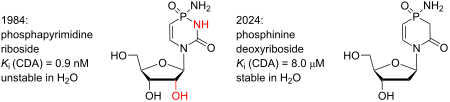
- ssDNA. Results and Discussion Synthesis of nucleosides It is more straightforward to start the synthesis of a modified nucleoside from the assembly of a nucleobase that can be coupled to the sugar afterwards using the Hilbert–Johnson reaction or a silyl variation of it as described in the literature [65
- combination of both. Difficulties in the Hilbert–Johnson reaction and the low yield observed for nucleoside 14 prompted us to use an alternative option for the synthesis of the target nucleosides based on the assembly of a nucleobase on the 2-deoxyribofuranos-1-yl scaffold. Hydrogenation of azide 15 [69
- C5 and C6 atoms (Figure 1). Towards this end, we developed a synthetic strategy for these nucleosides and identified that assembly of the nucleobase on the sugar was more viable than coupling of the final nucleobase to Hoffer’s chlorosugar (13). It is interesting that only the charge-neutral


Spin and charge interactions between nanographene host and ferrocene
Beilstein J. Org. Chem. 2024, 20, 1011–1019, doi:10.3762/bjoc.20.89
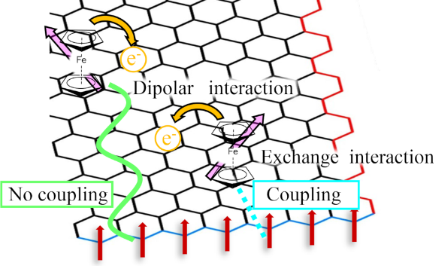
- IR electromagnetic wave by shielding effects of the conductive nanographene assembly. Interestingly, the FeCp2 molecular vibrational peaks appear as typical positive peaks for FeCp2-ACFs-150, indicating that most molecules are present inside the nanopores of ACFs without significant interactions such


Innovative synthesis of drug-like molecules using tetrazole as core building blocks
Beilstein J. Org. Chem. 2024, 20, 950–958, doi:10.3762/bjoc.20.85
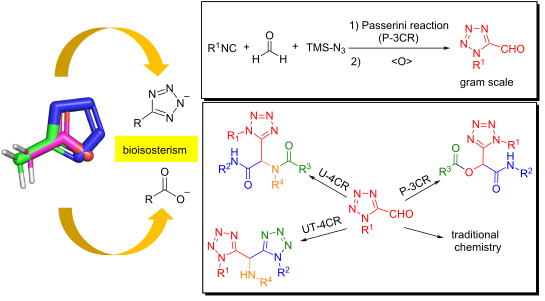
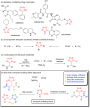
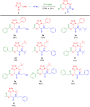
- . Tetrazole drugs, current assembly strategies, and novel building block strategy. Synthesis of tetrazole building blocks. Isolated yields. Substrate scope of Passerini products 3. Isolated yields. Substrate scope of Ugi products 4 and 5. Isolated yields. Synthesis of tetrazole building block 6. Isolated




Substrate specificity of a ketosynthase domain involved in bacillaene biosynthesis
Beilstein J. Org. Chem. 2024, 20, 734–740, doi:10.3762/bjoc.20.67
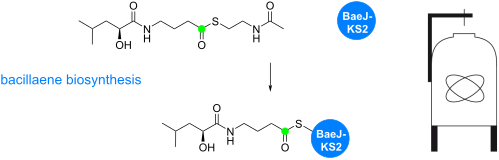
- introduced during the elongation steps of modules 13–15, and not after complete assembly of the PKS backbone [19]. A phylogenetic analysis of KS domains from trans-AT PKSs revealed that these domains group together, if the structures of their processed substrates are similar, allowing for a prediction of the
- significant importance. Many KSs within trans-AT PKSs function as gatekeepers, facilitating the transfer of intermediates along the assembly line without participating in chain elongation. For instance, the final KS of the bacillaene PKS lacks condensation capability, but may serve to ensure proper double


Chemoenzymatic synthesis of macrocyclic peptides and polyketides via thioesterase-catalyzed macrocyclization
Beilstein J. Org. Chem. 2024, 20, 721–733, doi:10.3762/bjoc.20.66
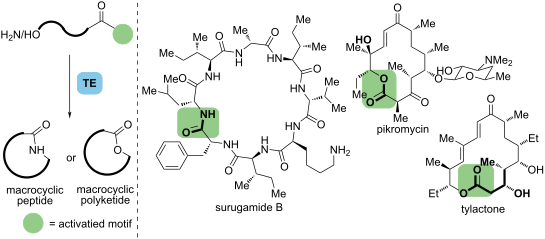
- and multifunctional enzymatic assembly, nonribosomal peptide synthases (NRPS), polyketide synthases (PKS), and hybrid NRPS/PKS systems, which are organized into sets of functional domains known as modules and function through a similar mechanism [9][10][11][12]. Each NRPS module is composed of three
- of monomers in the final product intimately correlates with the order of modules in the assembly line (Scheme 1a). Beyond several additional domains, including ketoreductase (KR), dehydratase (DH), enoyl reductase (ER), and methyltransferase (MT) domains and epimerase (E) domains, which are
- tylactone hexaketides, such as NAC thioester and thiophenol ester 49, which serves as the precursor for downstream enzymatic assembly. Thiophenol ester 49 was accepted by the two terminal of tylosin PKS modules (TylGIV and TylGV) in vitro, which are responsible for the last four carbon atoms assembly and


New variochelins from soil-isolated Variovorax sp. H002
Beilstein J. Org. Chem. 2024, 20, 692–700, doi:10.3762/bjoc.20.63
- a result, a total of 0.4 Gbp reads were obtained. The reads were subjected to hybrid de novo assembly using SPAdes (v0.4.8) [23]. The assemblies were subjected to BGC prediction using antiSMASH (6.0.1) [24]. Generation of ΔvarG mutant The 1 kb upstream and downstream regions flanking varG were
- Information File 1). The four fragments were combined by Gibson Assembly Reaction (New England Biolabs) to generate a disruption cassette: upstream-cmR-downstream. After the transformation of E. coli DH5α with the cassette-pRED, a HindIII site was inserted on the end of the cassette sequence to yield the


A laterally-fused N-heterocyclic carbene framework from polysubstituted aminoimidazo[5,1-b]oxazol-6-ium salts
Beilstein J. Org. Chem. 2024, 20, 621–627, doi:10.3762/bjoc.20.54
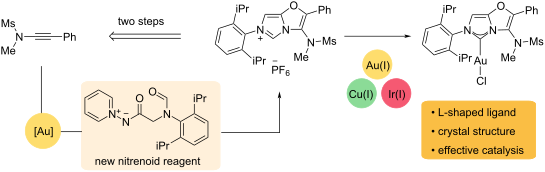
- -aminoimidazo[5,1-b]oxazol-6-ium motif, followed by salt metathesis using KPF6 leading to the clean hexafluorophosphate salt 9a in 67% yield after recrystallisation [4]. This two-step assembly of the 3-aminoimidazo[5,1-b]oxazol-6-ium motif was also applied to ynamide 1b affording the PMP-substituted salt 9b in


Switchable molecular tweezers: design and applications
Beilstein J. Org. Chem. 2024, 20, 504–539, doi:10.3762/bjoc.20.45
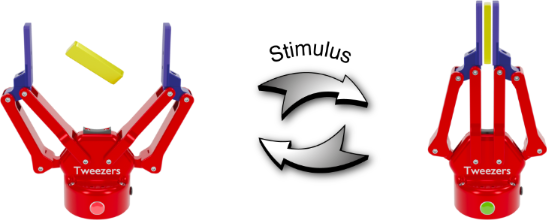
- , and molecular machines. In particular, the advent of artificial molecular machines [13][14], consisting of an assembly of molecular components that perform mechanical-like motions in response to specific stimuli, has inspired the development of stimuli-responsive molecular tweezers, which have
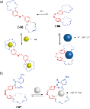
- by the addition of zinc(II) which opens the tweezers, releasing the guest and leading to the disappearance of the photosensitizing properties of the system. In an extension of this work, discrete tetranuclear Pt complexes with Pt–Pt interaction were obtained by self-assembly between 21 and




Mechanisms for radical reactions initiating from N-hydroxyphthalimide esters
Beilstein J. Org. Chem. 2024, 20, 346–378, doi:10.3762/bjoc.20.35
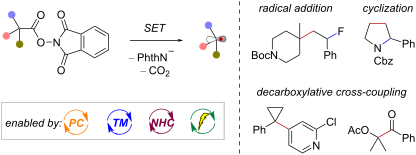
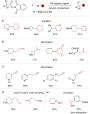
- of chemoselectivity can benefit from the multitude of mechanisms for their activation. Particularly, the use of RAEs in natural product total synthesis enables the assembly of strategic C–C bonds through radical coupling reactions that can draw from a wide range of reaction conditions (Scheme 37








Optimizations of lipid II synthesis: an essential glycolipid precursor in bacterial cell wall synthesis and a validated antibiotic target
Beilstein J. Org. Chem. 2024, 20, 220–227, doi:10.3762/bjoc.20.22
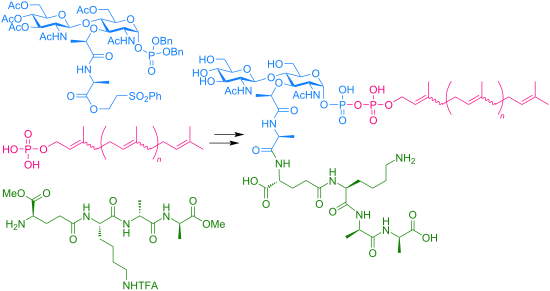
- conditions, including improvements in reaction time and yields. This approach enables the systematic assembly of lipid II and analogues that contain shorter polyprenyl chains, specifically farnesyl (C15), geranylgeranyl (C20), and solanesyl (C45). Such short chain analogues are valuable in several
- applications due to their improved solubility in aqueous systems. Assembly is achieved by integrating distinct carbohydrate, peptide, and polyprenyl phosphate building blocks. This modular synthetic method allows for the strategic substitution of constituent building blocks at different synthetic stages and


Facile access to pyridinium-based bent aromatic amphiphiles: nonionic surface modification of nanocarbons in water
Beilstein J. Org. Chem. 2024, 20, 32–40, doi:10.3762/bjoc.20.5
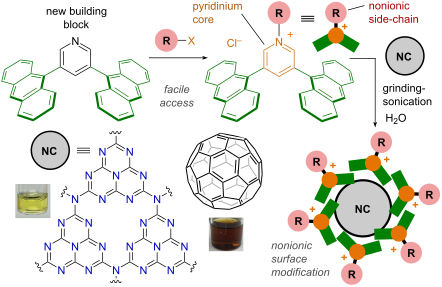
- similar to AA [12][13], indicating self-assembly via the hydrophobic effect and π-stacking interactions (Figure 3a,b). The self-assembly in water was further supported by UV–visible analysis, displaying slight red-shifts of the anthracene absorption bands relative to the spectrum in methanol (Δλmax = +3
- the self-assembly of in average six PA-CH3 amphiphiles into a small aromatic micelle (Figure 3g). In a similar way, the generation of micelles (PA-OCH3)n, (PA-OH)n, and (PA-Im)n was confirmed via NMR, UV–visible, and DLS analyses upon dissolution of the corresponding amphiphiles in water (Figure 3c,d




Long oligodeoxynucleotides: chemical synthesis, isolation via catching-by-polymerization, verification via sequencing, and gene expression demonstration
Beilstein J. Org. Chem. 2023, 19, 1957–1965, doi:10.3762/bjoc.19.146

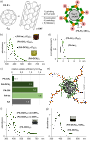
- 401 nt ODNs were synthesized and purified with CBP. The two were joined together using Gibson assembly to give the 800 nt green fluorescent protein (GFP) gene construct. The sequence of the construct was verified via Sanger sequencing. To demonstrate the potential use of the long ODN synthesis method
- . Keywords: automated synthesis; catching-by-polymerization; gene assembly; long oligonucleotide; synthetic biology; Introduction Long oligodeoxynucleotides (ODNs) are segments of DNAs extending beyond one hundred nucleotides (nt). Emerging research areas such as synthetic biology [1][2], protein
- the PCR assembly step. Because of this, misalignments may occur, and errors may be introduced. (2) PCR assembly of multiple short ODNs in one pot requires similar melting points of the multiple overlapping regions of the short ODNs. Therefore, the sequences of the short ODNs must be carefully chosen


Construction of diazepine-containing spiroindolines via annulation reaction of α-halogenated N-acylhydrazones and isatin-derived MBH carbonates
Beilstein J. Org. Chem. 2023, 19, 1923–1932, doi:10.3762/bjoc.19.143
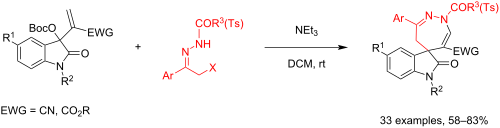
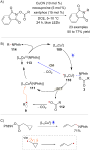
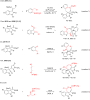
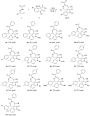
- . Additionally, the similar reaction with α-halogenated N-tosylhydrazones also afforded N-tosyl-substituted spiro[indoline-3,5'-[1,2]diazepine] in satisfactory yields. This protocol provides a convenient approach for the assembly of diverse highly functionalized spiro[indoline-3,5'-[1,2]diazepines] and also



Active-metal template clipping synthesis of novel [2]rotaxanes
Beilstein J. Org. Chem. 2023, 19, 1776–1784, doi:10.3762/bjoc.19.130
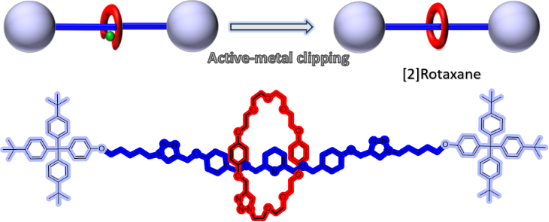
- . Our results proved that the CuAAC reaction catalyzed by copper(I) N-heterocyclic carbenes can be successfully used in the synthesis of [2]rotaxanes. This, combined with the fast and simple assembly of [CuCl(SIMes)] [45][46] could lead to the development of a Cu(I) NHC click chemistry in the field of


Unprecedented synthesis of a 14-membered hexaazamacrocycle
Beilstein J. Org. Chem. 2023, 19, 1728–1740, doi:10.3762/bjoc.19.126
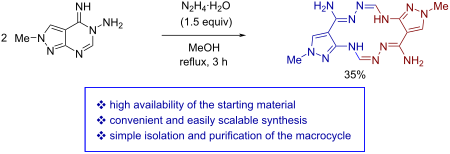
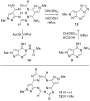
- -pyrazolo[3,4-d]pyrimidin-5-amine followed by dimerization to give the final macrocycle. A convenient synthesis of the latter starting from 4-imino-2-methyl-2,4-dihydro-5H-pyrazolo[3,4-d]pyrimidin-5-amine was developed. A plausible pathway for the macrocycle self-assembly is discussed. Some features of the
- structure and reactivity of the obtained macrocycle are outlined. Keywords: amidrazones; hexaazamacrocycles; pyrazolo[3,4-d]pyrimidines; ring contraction; self-assembly; Introduction The chemistry of polyazamacrocycles (PAMs) is currently one of the most rapidly developing areas of heterocyclic chemistry
- obtained instead [40]. Since this type of macrocycle self-assembly seems to be very promising, we decided to reproduce the Dolzhenko’s procedure, then study the macrocyclization in detail, and extend this approach to the synthesis of other polyunsaturated 1,2,4,8,9,11-hexaazamacrocycles. Herein, we report