Search results
Search for "coordination" in Full Text gives 642 result(s) in Beilstein Journal of Organic Chemistry. Showing first 200.
Divergent role of PIDA and PIFA in the AlX3 (X = Cl, Br) halogenation of 2-naphthol: a mechanistic study
Beilstein J. Org. Chem. 2024, 20, 1580–1589, doi:10.3762/bjoc.20.141
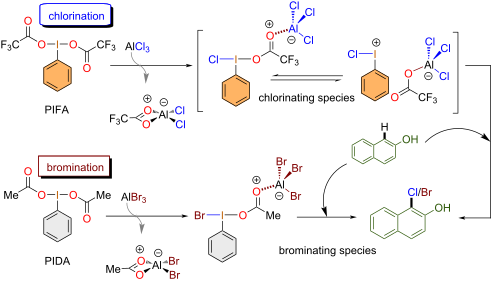
- –AlCl2 complex yields the final product 1-chloro-2-naphthol (P–Cl). The calculated mechanism for the chlorination reaction starts with coordination of a PIFA oxygen atom to aluminum chloride. This generates a highly exergonic PIFA–AlCl3 adduct. In Figure 1, the Gibbs free energy of this adduct is set as
- stoichiometry or the formation of PhICl2 as chlorinating species, were also investigated and ruled out. Thus, for the chlorination of 2-naphthol with the PIFA/AlCl3, 1:1 system, we found that in general, once the intermediate I-1–Cl is formed, the following coordination of 2-naphthol with the TFAO ligand via
- reaction proceeds through a stepwise mechanism. Thus, the reaction starts with the coordination of aluminum bromide to an acetate ligand in PIDA to form the PIDA–AlBr3 adduct in a highly exergonic process. Similar to the previous section, the Gibbs free energy at this point was set as 0 kcal/mol for


Benzylic C(sp3)–H fluorination
Beilstein J. Org. Chem. 2024, 20, 1527–1547, doi:10.3762/bjoc.20.137

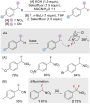
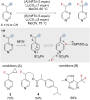
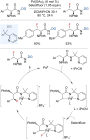
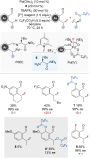
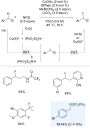
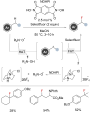
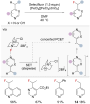
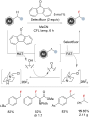
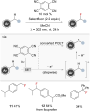
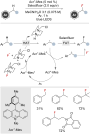
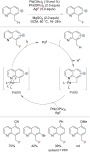
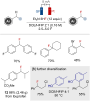
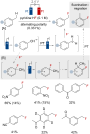
- vacant coordination site. By installing a cleavable directing group, the authors were able to extend the scope reported by Sanford and co-workers outside of 8-aminoquinoline substrates. Multiple electron-donating and withdrawing groups on the ring were tolerated, including the pinacolborane group




















Photoswitchable glycoligands targeting Pseudomonas aeruginosa LecA
Beilstein J. Org. Chem. 2024, 20, 1486–1496, doi:10.3762/bjoc.20.132
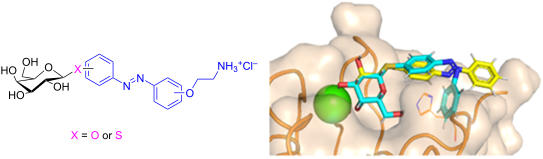
- has a tetrameric structure, displays a high affinity for ᴅ-galactose (ᴅ-Gal, with Kd = 34 μM) and galactosides. The 3- and 4-hydroxy function on the ᴅ-Gal unit are involved in the coordination of Ca2+ in the binding site [5][6][7][8][32]. A large range of galactosyl conjugates have been synthetized


Rapid construction of tricyclic tetrahydrocyclopenta[4,5]pyrrolo[2,3-b]pyridine via isocyanide-based multicomponent reaction
Beilstein J. Org. Chem. 2024, 20, 1436–1443, doi:10.3762/bjoc.20.126
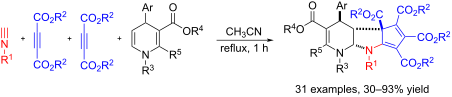
- carbon atom of isocyanide has both a lone electron pair and empty orbitals, so it has outstanding electrophilic and nucleophilic reactivity. At the same time, isocyanide also has good coordination ability to coordinate with metals to form diverse metal complexes [1][2][3]. Therefore, isocyanides have


Synthetic applications of the Cannizzaro reaction
Beilstein J. Org. Chem. 2024, 20, 1376–1395, doi:10.3762/bjoc.20.120
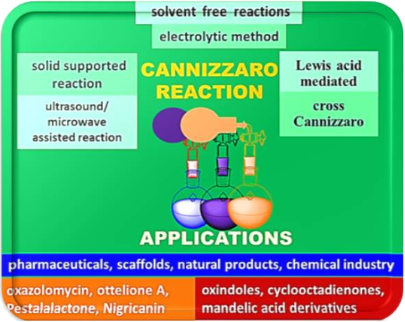
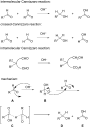
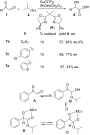
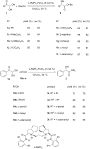
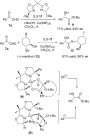
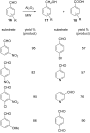
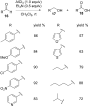
- transformation of the aryl glyoxals is outlined below (Scheme 4), which depicts the coordination of the hemiacetal B with the metal catalyst to give C, followed by hydride transfer to form the metal-coordinated Cannizzaro product D. Another intramolecular asymmetric Cannizzaro reaction was reported by Wu et al









Diameter-selective extraction of single-walled carbon nanotubes by interlocking with Cu-tethered square nanobrackets
Beilstein J. Org. Chem. 2024, 20, 1298–1307, doi:10.3762/bjoc.20.113
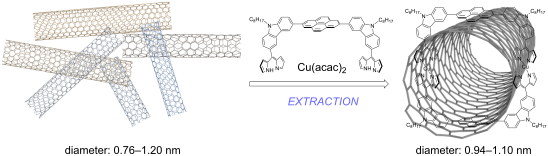
- complexation, a significant red-shift of the dipyrrin band to 465 nm was observed due to the metal coordination with the dipyrrin moieties in 4b. To compare the structures of 1a and 1b, they are calculated through geometry optimization with the density functional theory (DFT) method. The alkyl chains at the




Introduction of peripheral nitrogen atoms to cyclo-meta-phenylenes
Beilstein J. Org. Chem. 2024, 20, 1207–1212, doi:10.3762/bjoc.20.103
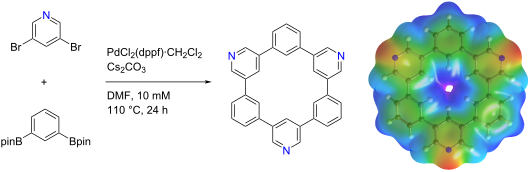
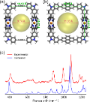
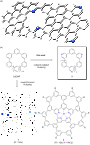
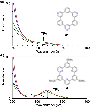
- equilibrium. These results show that the coordination chemistry associated with nitrogen dopants may well be controlled by the locations and directions of the nitrogen atoms. Conclusion Macrocycles with nitrogen atoms doped at the periphery were designed and synthesised, and their electronic properties were



Enantioselective synthesis of β-aryl-γ-lactam derivatives via Heck–Matsuda desymmetrization of N-protected 2,5-dihydro-1H-pyrroles
Beilstein J. Org. Chem. 2024, 20, 940–949, doi:10.3762/bjoc.20.84
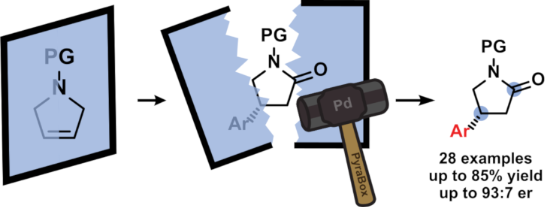
- methanolysis, the hemiaminal ether product 3 is formed. We hypothesize that the enantioselectivity-determining step consists of the migratory insertion of the aryl group bonded to palladium to the pyrroline. The steric effect of the t-Bu group favors the coordination of the pyrroline with the protecting group


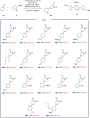


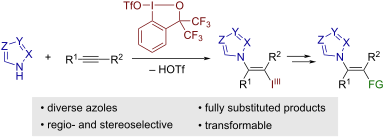
Three-component N-alkenylation of azoles with alkynes and iodine(III) electrophile: synthesis of multisubstituted N-vinylazoles
Beilstein J. Org. Chem. 2024, 20, 891–897, doi:10.3762/bjoc.20.79
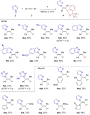
- ). Observing no byproducts originating from phenylacetylene, we speculate that the lack of reactivity stems from the relatively low electron density of the terminal alkyne, which likely leads to direct coordination of pyrazole to the iodine(III) reagent. To probe the relative reactivity of different azoles
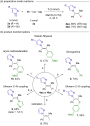
- attributed to its much greater Lewis basicity compared to other azoles, likely killing the reactivity of the iodine(III) electrophile by direct coordination. The present reaction could be performed on a preparative scale. Thus, 1 mmol-scale synthesis of the vinylazoles 4aa and 4ba could be successfully



New variochelins from soil-isolated Variovorax sp. H002
Beilstein J. Org. Chem. 2024, 20, 692–700, doi:10.3762/bjoc.20.63
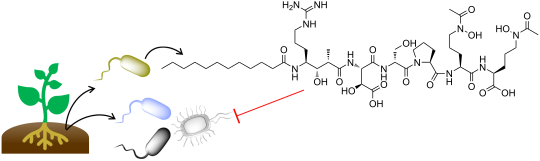
- structure – a linear hexapeptide with β-hydroxyaspartate and hydroxamate functional groups, serving in iron-binding coordination. Three new variochelins C–E (3–5) were characterized by varied fatty acyl groups at their N-termini; notably, 4 and 5 represent the first variochelins with N-terminal unsaturated


Evaluation of the enantioselectivity of new chiral ligands based on imidazolidin-4-one derivatives
Beilstein J. Org. Chem. 2024, 20, 684–691, doi:10.3762/bjoc.20.62
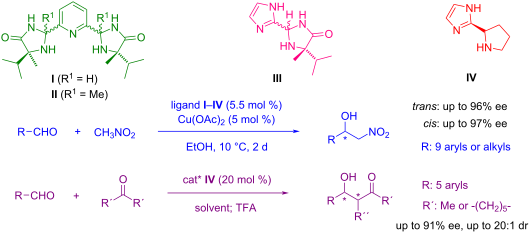
- explained by the sterical demand of the aldehyde (R = t-Bu), leading to suppressing its coordination with the complex. The ee values achieved with the complex of ligand Ia were variable (29–83%), whereas better enantioselectivity was found for less reactive aldehydes (aliphatic and bearing electron-donating
- -enantiomer. A possible explanation of these results is illustrated in Figure 2, which shows plausible transition structures for the Henry reaction. Due to the Jahn–Teller effect, i.e., distortion of the octahedral Cu(II) complex forming four equatorial and two perpendicular coordination sites [18], the


Switchable molecular tweezers: design and applications
Beilstein J. Org. Chem. 2024, 20, 504–539, doi:10.3762/bjoc.20.45
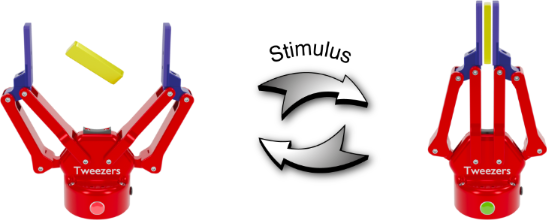
- first part will be devoted to chemically responsive tweezers, including stimuli such as pH, metal coordination, and anion binding. Then, redox-active and photochemical tweezers will be presented. Keywords: coordination; molecular recognition; molecular switches; photoswitch; redox; supramolecular
- , influence magnetic interactions, or serve as multilevel switches. These new directions will be highlighted in the following. Review Coordination-responsive tweezers Coordination-responsive switchable systems hold great potential thanks to the tunability and dynamic nature of the coordination bond. This is
- direction since the beginning of the 21st century concomitantly with the growth of the field [11][18]. Because of their ability to respond to chemical stimuli, coordination-responsive switchable tweezers have the potential to be used in many applications including but not limited to supramolecular sensors




Ligand effects, solvent cooperation, and large kinetic solvent deuterium isotope effects in gold(I)-catalyzed intramolecular alkene hydroamination
Beilstein J. Org. Chem. 2024, 20, 479–496, doi:10.3762/bjoc.20.43
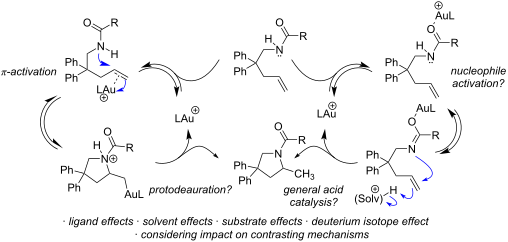
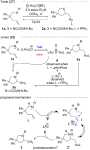
- substrate is the most active. In 2012, Kojima and Mikami utilized bimetallic tropos BIPHEP [bis(phosphino)biphenyl]–digold complexes for enantioselective intramolecular hydroamination of N-alkenylureas [9], and they hypothesized that N-alkenylureas could be activated through bimetallic coordination not only
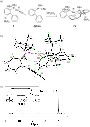
- with alkene but also the urea carbonyl. The Bronsted acidity of the urea would be increased by coordination to gold, and if such coordination is key to enabling reactivity, this would confirm the higher reactivity of urea 1a. The divergent behavior of sulfonamide 1d does not find an easy explanation
- -centered while being C-centered in analogous anions alpha to sulfonamides [51]. Sulfonamides are known to protonate at nitrogen [31]. Gold coordination to carbonyls would be predicted to retain N-centered nucleophilicity, while gold coordination to the sulfonamide nitrogen would not. Sulfonamides are less






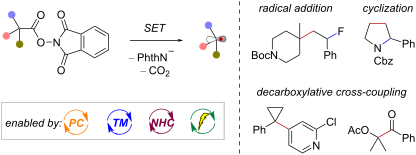
Mechanisms for radical reactions initiating from N-hydroxyphthalimide esters
Beilstein J. Org. Chem. 2024, 20, 346–378, doi:10.3762/bjoc.20.35
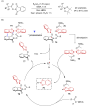
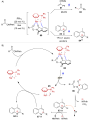
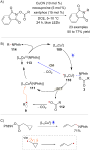
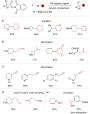
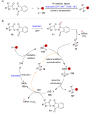
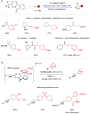
- radical cation species 89 and the radical anion 90 with the corresponding charges balanced by the LiBF4 additive. Notably, it was suggested that LiBF4 could also facilitate the reduction of the NHPI ester substrate, potentially by the coordination of Li cation to the phthalimide moiety. Next








Elucidating the glycan-binding specificity and structure of Cucumis melo agglutinin, a new R-type lectin
Beilstein J. Org. Chem. 2024, 20, 306–320, doi:10.3762/bjoc.20.31
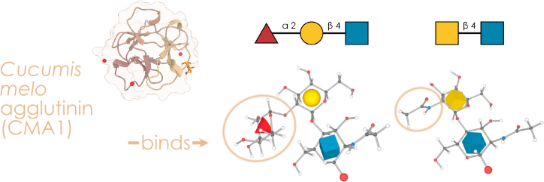
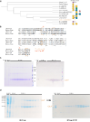
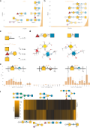
- with a carbohydrate here. It is found in a shallow groove, supporting our data on the lack of a distinct distal binding specificity. We report a tight coordination of the O3 and O4 hydroxy groups of the galactose residue involving Asp21, Asn43, and Gln41 side chains, as well as the Gly24 main chain
- coordination with the Trp36 ring nitrogen (alpha anomer) or the Gly24 main chain oxygen (beta anomer). Conclusion Our work presents a substantial exploration of the binding specificity and mechanism of the hitherto uncharacterized lectin CMA1 from melons. The binding specificity of CMA1, C2-substituted



Substitution reactions in the acenaphthene analog of quino[7,8-h]quinoline and an unusual synthesis of the corresponding acenaphthylenes by tele-elimination
Beilstein J. Org. Chem. 2024, 20, 243–253, doi:10.3762/bjoc.20.24
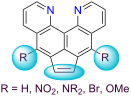
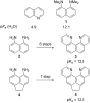
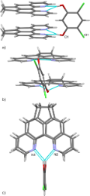
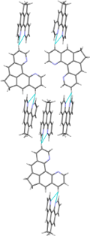
- of quinoquinolines, their planar structure, and very easy coordination to acidic and electrophilic sites (including water [15][22] or the C–H bond of chloroform [11]) almost always lead to co-crystallization. For example, there is no such crystallographic information for quinoquinoline 3 itself. In





Perspectives on push–pull chromophores derived from click-type [2 + 2] cycloaddition–retroelectrocyclization reactions of electron-rich alkynes and electron-deficient alkenes
Beilstein J. Org. Chem. 2024, 20, 125–154, doi:10.3762/bjoc.20.13
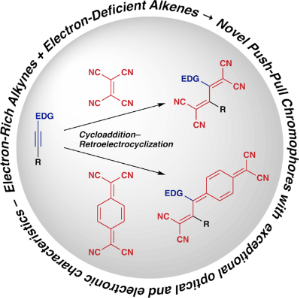
- addition of B(C6H5)3, which may be due to the enhancement of the dienophilic nature of the cyano group due to coordination with borane. Rotaxane synthesis Push–pull chromophores with nonplanar configurations have been reported as effective stoppering motifs for rotaxane synthesis. A rational approach


Electron-beam-promoted fullerene dimerization in nanotubes: insights from DFT computations
Beilstein J. Org. Chem. 2024, 20, 92–100, doi:10.3762/bjoc.20.10
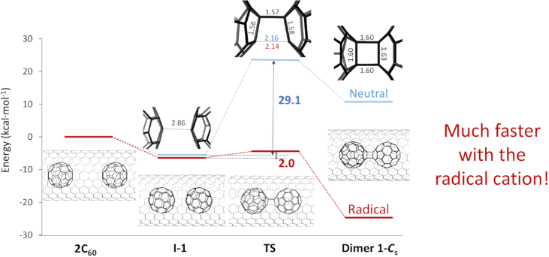
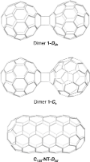
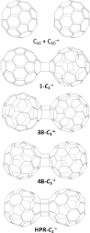
- methods for more details). It is not the goal of the present work to explain all the steps up to the formation of fullertube C120, but the steps that follow the formation of dimers 1-Cs•+ and 1-D2h•+. We first run a metadynamics simulation for dimer 1-Cs•+ using as CV the coordination number of nine
- CV the coordination number of ten carbon atoms of one C60 molecule (two contiguous hexagons) with respect to ten carbon atoms in the other C60, analogous to the first run. After 7 ps, we also observed the sequential formation of C–C bonds between the two cages in structures now called dimer 3B-D2h
- 20 Å) and a time step of 0.144 fs. We used the metadynamics technique to analyze the dimerization reaction mechanism [28][29][30]. The collective variable (CV) considered for the exploration of the free-energy surface was the coordination number of nine C atoms of one C60 (those that are involved in




1-Butyl-3-methylimidazolium tetrafluoroborate as suitable solvent for BF3: the case of alkyne hydration. Chemistry vs electrochemistry
Beilstein J. Org. Chem. 2023, 19, 1966–1981, doi:10.3762/bjoc.19.147
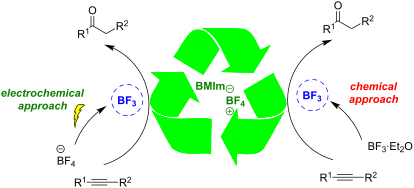
- of additional DBU to this solution did not show the signal of DBU in the 13C NMR spectrum (161 ppm), but increased the 166 ppm peak intensity (due to the DBU adduct) (see Supporting Information File 1, Figure S5e). We have no explanation for this behaviour, but the possibility of the coordination of


Aldiminium and 1,2,3-triazolium dithiocarboxylate zwitterions derived from cyclic (alkyl)(amino) and mesoionic carbenes
Beilstein J. Org. Chem. 2023, 19, 1947–1956, doi:10.3762/bjoc.19.145
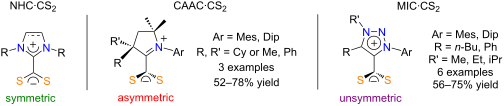
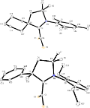
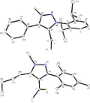
- -dithiocarboxylate zwitterions (Figure 2) [30][31][32][33][34][35][36][37][38][39][40][41][42][43]. These 1,1-dithiolate inner salts strongly bind main group elements and transition metals through various coordination modes. Indeed, we and others have already reported the synthesis of diverse metallic complexes
- featuring monodentate [44][45], chelating bidentate [46][47][48][49][50][51][52][53][54][55], or bridging bidentate NHC·CS2 ligands [45][51][52]. Small bimetallic clusters [51][52][56], coordination polymers [57], self-assembled monolayers [58], and nanoparticles [45] based on these zwitterions were also
- center that may act as a source of chirality. Thus, the novel compounds reported in this study represent a valuable addition to the family of neutral dithiolate ligands derived from stable nucleophilic carbenes, and we are currently investigating their coordination chemistry toward various transition


Substituent-controlled construction of A4B2-hexaphyrins and A3B-porphyrins: a mechanistic evaluation
Beilstein J. Org. Chem. 2023, 19, 1832–1840, doi:10.3762/bjoc.19.135
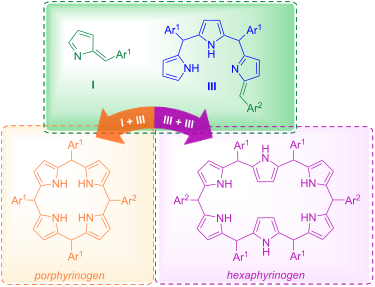
- selective synthesis of expanded porphyrins and their chemistry with regard to their aromaticity and coordination properties. They used meso-aryl-substituted dipyrromethanes and aldehydes in the synthesis of A3B3-type hexaphyrins [13] and 5,10-diaryl-substituted tripyrranes in A4B2-hexaphyrin synthesis [6



Active-metal template clipping synthesis of novel [2]rotaxanes
Beilstein J. Org. Chem. 2023, 19, 1776–1784, doi:10.3762/bjoc.19.130
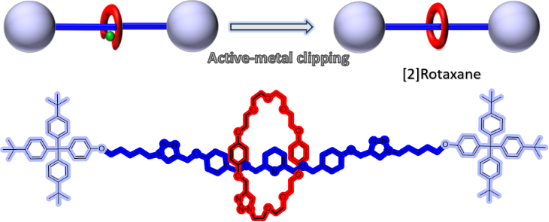
- ) [30][31], metal-ion template (coordination bonds [22][32], ion-dipol [16], donor–acceptor (charge transfer, π–π stacking) [30][33], and oligoamide macrocycle-hydrogen acceptors (hydrogen bonding) [20][34]. In active-metal template methods (Figure 1) the metal ion acts both as template and catalyst for


Selectivity control towards CO versus H2 for photo-driven CO2 reduction with a novel Co(II) catalyst
Beilstein J. Org. Chem. 2023, 19, 1766–1775, doi:10.3762/bjoc.19.129
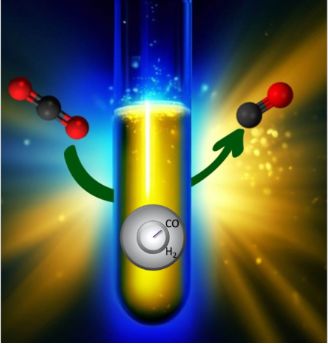
- (26.6 ppm) in the Earth crust [26]. Although it should not be considered a cost-effective option at present, as several social and environmental concerns are associated with its extraction, the high stability of the Co(II) ion and the versatility of the ligands used for coordination offer some
- ·) and after the addition of two protons, CO and H2O are produced. The cycle could be closed by the coordination of thiocyanate to the cationic Co(II) species, which is left after the generation of the products, or maybe the reduction of the above-mentioned species occurs with another PS cycle. This


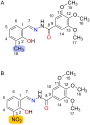
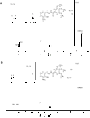
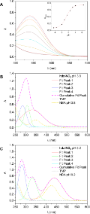
Effects of the aldehyde-derived ring substituent on the properties of two new bioinspired trimethoxybenzoylhydrazones: methyl vs nitro groups
Beilstein J. Org. Chem. 2023, 19, 1713–1727, doi:10.3762/bjoc.19.125
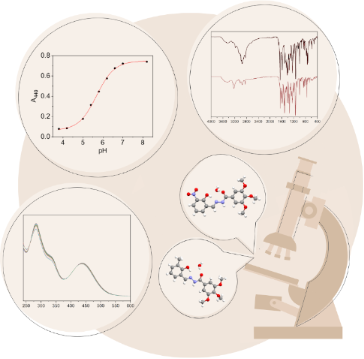
- ]. The study also found that those coordination compounds were selective towards abnormal cells, exhibiting lower toxicity for healthy human hepatocytes. On the other hand, an important development in cancer research is the use of physiological metal ion complexes, which afford more biocompatibility and





Tying a knot between crown ethers and porphyrins
Beilstein J. Org. Chem. 2023, 19, 1630–1650, doi:10.3762/bjoc.19.120
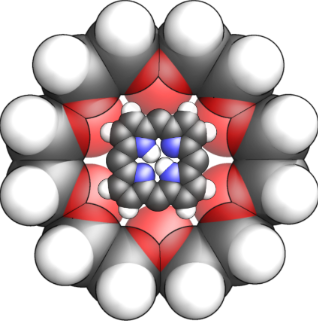
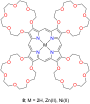
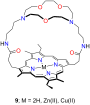
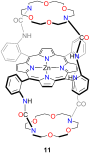
- the possible future directions. Keywords: crown ethers; porphyrinoids; self-assembly; sensors; supramolecular chemistry; Introduction Many areas of modern supramolecular chemistry, organic, inorganic, materials and coordination chemistry, are based upon macrocyclic compounds of specifically-designed
- synthesis of three-dimensional cryptands by Lehn [5], and spherands by Cram [6]. Later on, various classes of macrocyclic compounds were designed, demonstrating remarkable features in areas spreading from simple coordination chemistry [7], through host–guest chemistry, sensing [8], biomedicine [9], and
- other two have imine character [11][12]. They are rigid, planar molecules which feature macrocyclic aromaticity due to the cyclic delocalisation of π electrons [13]. The well-defined macrocyclic cavity termed the coordination core, can encompass one, two, or more central ions (typically metal/metalloid