Search results
Search for "in vivo" in Full Text gives 302 result(s) in Beilstein Journal of Organic Chemistry. Showing first 200.
In search of visible-light photoresponsive peptide nucleic acids (PNAs) for reversible control of DNA hybridization
Beilstein J. Org. Chem. 2019, 15, 2500–2508, doi:10.3762/bjoc.15.243
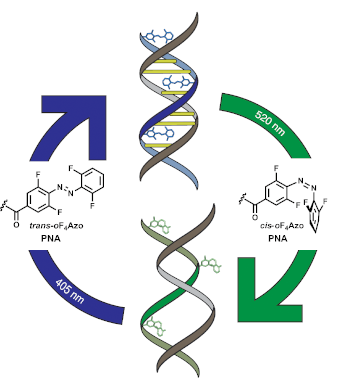
- ] and in vivo [8][9][10][11][12]. Manipulation of gene expression demonstrated therapeutic application – antisense chemistry [13]. Along these lines, photopharmacology [14][15] is an emerging field that highlights the importance of reversible photocontrollable drugs in tomorrow’s medicine, but
- been employed. In vivo application demands the development of a new generation of artificial agents to target DNA/RNA-associated processes. These compounds must be able to maintain their specificity and effectivity while still being nuclease resistant, nontoxic and susceptible to light of tissue
- properties of PNA, they may become a promising alternative to overcome the current limitations of the available photoswitchable DNA- and RNA-based systems with potential for in vivo applications too. Only very few is known about the reversible hybridization of PNAs upon irradiation [34][35][36]. Besides



Targeted photoswitchable imaging of intracellular glutathione by a photochromic glycosheet sensor
Beilstein J. Org. Chem. 2019, 15, 2380–2389, doi:10.3762/bjoc.15.230
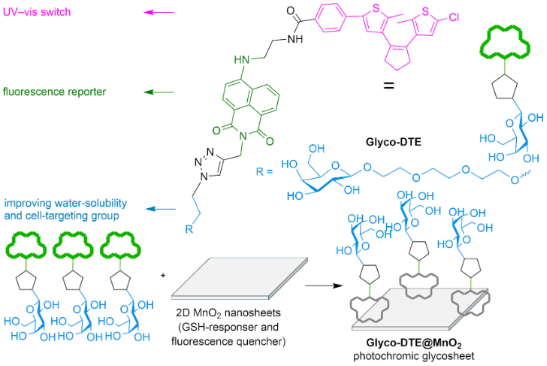
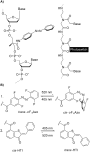
- -controllable “ON/OFF” working states. The OFF-state (one of the photoisomer or photocaged structure) “masks” the probe before reaching the target analyte, avoiding unwanted interactions with other abundant species in the “working zone”, or unnecessary consumption with analyte in nontargeted locations during in
- vivo/intracellular transport [18][19][20]. 2) A dynamic ON/OFF fluorescence signal is generated for reversible imaging of a targeted analyte (termed as “double-check”), which can facilitate a better discrimination of the analyte signal from the background interferences [9][10][11]. As a result, more



Fluorescent phosphorus dendrimers excited by two photons: synthesis, two-photon absorption properties and biological uses
Beilstein J. Org. Chem. 2019, 15, 2287–2303, doi:10.3762/bjoc.15.221
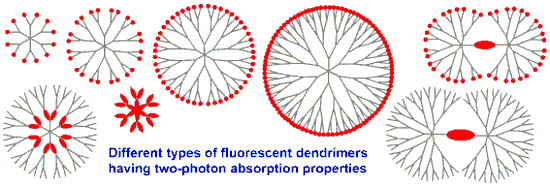
- nanocrystals [6]), widely used for imaging live cells, for in vivo imaging and diagnostics [7]. Even if the properties of quantum dots have been compared with those of classical organic fluorophores [8], organic fluorophores having giant TPA properties are far less common [9], although there are noticeable
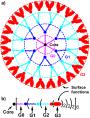
- use concerned in vivo imaging with some of the dumbbell-like dendrimers. The second generation of the dendrimer shown in Figure 9 was injected to a rat and the two-photon imaging of the vessels of the living rat olfactory bulb could be obtained [56]. The other dumbbell-like dendrimer shown in Scheme 5
- surface of the dendrimers incorporating TPA fluorophores inside their structure has led to interesting properties in biology. Indeed, some of these dendrimers have been used in vivo as tracers for imaging blood vessels of rats and tadpoles, others have been used for determining phenotype of cells, for










Azologization and repurposing of a hetero-stilbene-based kinase inhibitor: towards the design of photoswitchable sirtuin inhibitors
Beilstein J. Org. Chem. 2019, 15, 2170–2183, doi:10.3762/bjoc.15.214
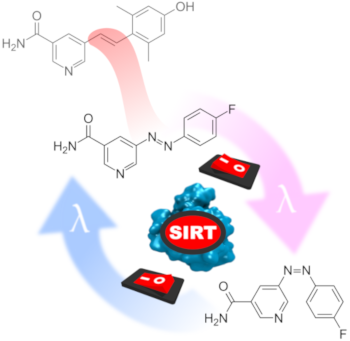
- the biological activity of small molecules in vitro or in vivo comprises numerous opportunities for example in the elucidation of biochemical pathways or the reduction of systemic side effects in drug therapy. Molecular photoswitches, i.e., compounds that undergo changes in their geometry and


Genome mining in Trichoderma viride J1-030: discovery and identification of novel sesquiterpene synthase and its products
Beilstein J. Org. Chem. 2019, 15, 2052–2058, doi:10.3762/bjoc.15.202
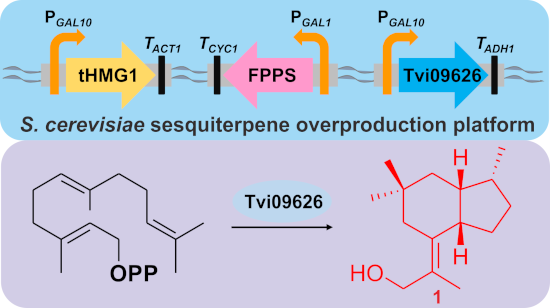
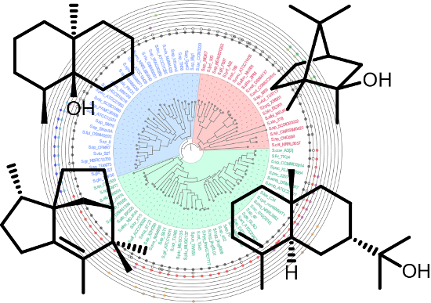
- Tvi09626 with other characterised terpene synthases. Six clades are marked with different colours and Tvi09626 is labelled in red in Clade V. Percentages indicate branch support based on 1,000 bootstrap replicates. GC–MS chromatogram of products in vivo (I), in yeast YZL141 (II), in vitro Tvi09626 with FPP



Analysis of sesquiterpene hydrocarbons in grape berry exocarp (Vitis vinifera L.) using in vivo-labeling and comprehensive two-dimensional gas chromatography–mass spectrometry (GC×GC–MS)
Beilstein J. Org. Chem. 2019, 15, 1945–1961, doi:10.3762/bjoc.15.190
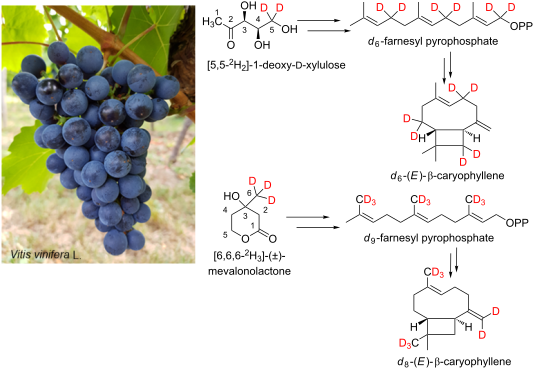
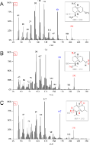
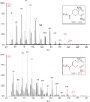
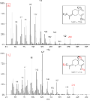
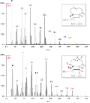
- available for most of the analytes. For this reason, feeding experiments (in vivo labeling) were carried out using the stable isotope-labeled precursors [5,5-2H2]-1-deoxy-ᴅ-xylulose (d2-DOX) and [6,6,6-2H3]-(±)-mevalonolactone (d3-MVL) to clearly identify the volatiles. Based on the recorded mass spectra of
- advantages of multidimensional gas chromatography with those of in vivo labeling. In vivo labeling makes it possible to identify compounds for which authentic standards are not commercially available, which applies to the majority of compounds found in plant foods [18]. We performed feeding experiments on
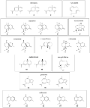
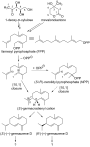
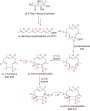
- and Tantillo, d9-α-ylangene with m/z = 213 should have been detected after in vivo labeling using [6,6,6-2H3]-(±)-mevalonolactone (d3-MVL) as precursor. At this point it should be mentioned that biosynthetic pathways in organisms can differ and computational studies only bear on the intrinsic











Design, synthesis and biological evaluation of immunostimulating mannosylated desmuramyl peptides
Beilstein J. Org. Chem. 2019, 15, 1805–1814, doi:10.3762/bjoc.15.174

- synthesized and biologically evaluated [19][20][21]. The best adjuvant activity in experiments in vivo showed the ManAdTP derivative (Figure 2) which has a ᴅ-configuration at the (adamant-1-yl)glycine moiety and (R)-configuration at the hydroxyisobutyryl linker. Its activity was higher than PGM that was used
- with derivatives lacking the adamantane moiety. Immunostimulating properties of synthesized derivatives were assessed in vivo using ovalbumin as an antigen. Results and Discussion Design Desmuramyl peptides enter into the cell by passive absorption and this process depends on lipophilicity [25
- the adjuvant activity in experiments in vivo [20][21]. Two series of manno-conjugates were prepared: (i) derivatives with glycolyl linker and (ii) the ones with (R)-hydroxyisobutyryl linker which is present in the parent ManAdTP. The glycolic linker was introduced due to the fact that N-glycolyl


Fluorine-containing substituents: metabolism of the α,α-difluoroethyl thioether motif
Beilstein J. Org. Chem. 2019, 15, 1441–1447, doi:10.3762/bjoc.15.144

- -OCF3 substituent is not directly metabolised, however, the sulphur associated with the -SCF3 group is susceptible to in vivo oxidation. Tiflorex, an appetite suppressant, toltrazuril, a coccidiostat used as an additive to poultry feed, and SKA-19, an anticonvulsant as shown in Figure 1, are three such


Complexation of a guanidinium-modified calixarene with diverse dyes and investigation of the corresponding photophysical response
Beilstein J. Org. Chem. 2019, 15, 1394–1406, doi:10.3762/bjoc.15.139
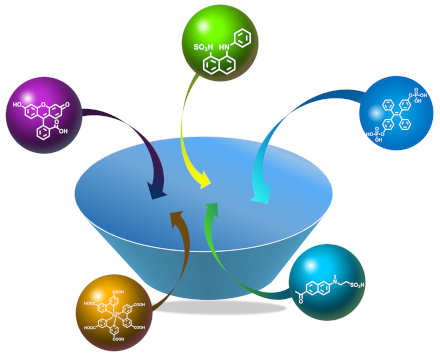
- targeted therapy in vivo [27]. These biomedical applications depend on the fine set-up of receptor–dye complexation. In this work, we comprehensively investigated the complexation behavior of GC5A with a series of luminescent dyes. Their complexation-induced photophysical alternations were comparatively
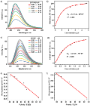
- , indicating a tentative PET quenching mechanism, similar to the aforementioned ACQ examples. The data was well fitted by a 1:1 binding model, giving a Ka value of (1.4 ± 0.1) × 106 M−1 (Figure 3b, Table 1). Recently, such host–guest reporter pairs have been applied in cell imaging and even imaging in vivo [16
- economy, sensitivity and interference. When expanding these supramolecular assay strategies to bioimaging in cells and in vivo, two-photon reporter dyes exhibit advantages of deeper tissue penetration, higher spacial resolution and reduced photodamage of tissue. In the field of photodynamic therapy



Phylogenomic analyses and distribution of terpene synthases among Streptomyces
Beilstein J. Org. Chem. 2019, 15, 1181–1193, doi:10.3762/bjoc.15.115
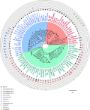
- ). These exceptions may indicate horizontal gene transfer of the genes encoding for these enzymes. The sesquiterpene 7-epi-α-eudesmol synthase from S. viridochromogenes DSM 40736 has been chemically characterised in vivo by heterologous expression in E. coli BL21 and identification of the product in



A chemically contiguous hapten approach for a heroin–fentanyl vaccine
Beilstein J. Org. Chem. 2019, 15, 1020–1031, doi:10.3762/bjoc.15.100

- positive correlation in the heroin group and this correlation improved by week 8. Because there was no relationship between antibody affinity for 6-AM and in vivo efficacy, it is tempting to conclude that the quantity of antibody is more important for protection against a heroin challenge. However, the





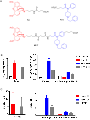


Heck- and Suzuki-coupling approaches to novel hydroquinone inhibitors of calcium ATPase
Beilstein J. Org. Chem. 2019, 15, 971–975, doi:10.3762/bjoc.15.94
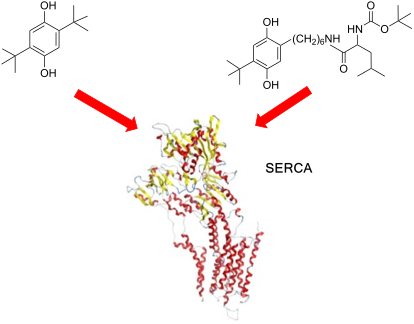
- -methylcyclopentyl) analogue of BHQ 3 has an IC50 value of 500 nM, which is comparable to BHQ’s value of 400 nM. Having available tethered SERCA inhibitors that are not based on the structure of TG could be beneficial for future in vivo trials because of the greater flexibility afforded by the structurally less


Photochemical generation of the 2,2,6,6-tetramethylpiperidine-1-oxyl (TEMPO) radical from caged nitroxides by near-infrared two-photon irradiation and its cytocidal effect on lung cancer cells
Beilstein J. Org. Chem. 2019, 15, 863–873, doi:10.3762/bjoc.15.84
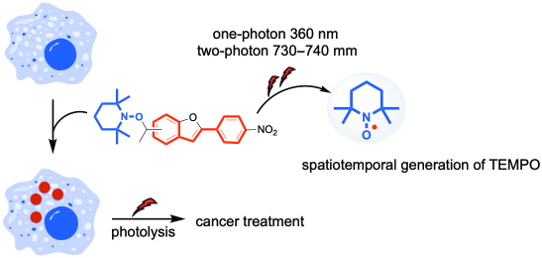
- 2a induced cancer cell death in vitro, although no in vivo study was performed because of the low water solubility of 2a. At this point, we cannot rule out generate of ROS by photosensitization of the chromophore in the presence of O2 for the cytotoxicity. Conclusion In the present study, novel caged






Design and synthesis of multivalent α-1,2-trimannose-linked bioerodible microparticles for applications in immune response studies of Leishmania major infection
Beilstein J. Org. Chem. 2019, 15, 623–632, doi:10.3762/bjoc.15.58
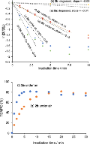
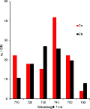
- ]. Cutaneous, the most common form, causes severe nodular and ulcerative skin lesions, while mucocutaneous destroys mucus membranes, and the most deadly form, visceral leishmaniasis, often results in organ failure [6]. L. major, the parasite used in our in vivo model, causes the cutaneous disease. In each
- investigated how truncated oligosaccharide capping structures of LPG interact with macrophage pattern recognition receptors (PRRs) to modulate an innate immune response to L. major-induced leishmaniasis in vitro and in vivo [11][40][41][42]. These studies showed that a neutral α-1,2-trimannose capping
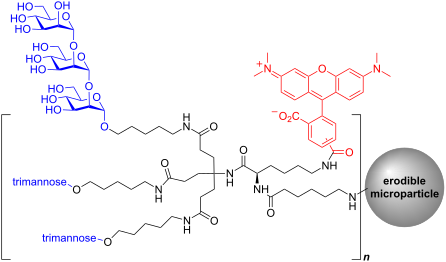
- deprotected trimannose 16 to the dendrimeric core 25 provided the glycodendrimer 26. For the attachment of the glycodendrimer to the microparticle surface, the amino Fmoc was removed then coupled via EDCI/NHS to afford the desired bioerodible glycodendrimer microparticle 2. In vivo assessment of bioerodible


Cyclopropene derivatives of aminosugars for metabolic glycoengineering
Beilstein J. Org. Chem. 2019, 15, 584–601, doi:10.3762/bjoc.15.54
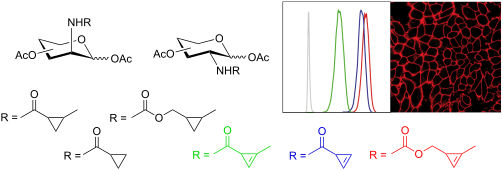
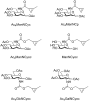
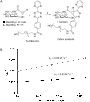
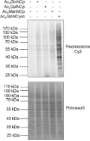
- Diels–Alder reaction; metabolic engineering; Introduction Carbohydrates are an important class of biological molecules involved in many fundamental biological processes [1]. An important tool to visualize glycoconjugates in vitro and in vivo is metabolic glycoengineering (MGE) [2][3][4]. In this




Synthesis of the polyketide section of seragamide A and related cyclodepsipeptides via Negishi cross coupling
Beilstein J. Org. Chem. 2019, 15, 577–583, doi:10.3762/bjoc.15.53
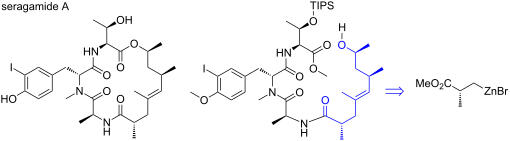
- A (1, Scheme 1) [1][2], is an ideal situation for the validation of the chemoselectivity and efficiency of photoaffinity labelling. Recently, it has been determined by cryo-electron microscopy how jasplakinolide A (1) binds to F-actin and alters the actin skeleton in vivo, resulting in pronounced




Synthesis and biological investigation of (+)-3-hydroxymethylartemisinin
Beilstein J. Org. Chem. 2019, 15, 567–570, doi:10.3762/bjoc.15.51
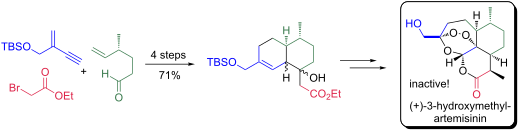
- [8][9][10]. Recently, it was shown that artemisinin interacts with the mammalian protein gephyrin and by stabilizing it, it enhances GABAA receptor signaling resulting in in vivo conversion of pancreatic α-cells into functional β-like cells [11]. Therefore, this sesquiterpene lactone may also find an


Back to the future: Why we need enzymology to build a synthetic metabolism of the future
Beilstein J. Org. Chem. 2019, 15, 551–557, doi:10.3762/bjoc.15.49
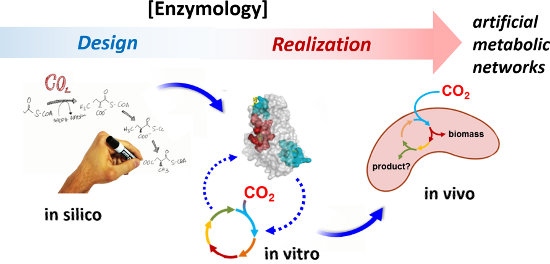
- , multiple level 3 and level 4 routes for the transformation of the one-carbon compound formate into cellular building blocks were designed that should theoretically outcompete natural formate assimilation pathways [18][19]. Some of the level 3 pathways were recently reconstructed in vivo [20][21][22][23


Aqueous olefin metathesis: recent developments and applications
Beilstein J. Org. Chem. 2019, 15, 445–468, doi:10.3762/bjoc.15.39
- , yielding 85% of product 22 (Table 5). A substitution of lysine with histidine at position 198 (Table 5, entries 8 and 9) did not improve the catalytic efficiency of ArM 2 at pH 7.0. Jeschek et al. subsequently evolved ArM 1 in vivo by directed evolution of an artificial metathase [68]. Tethering an OmpA
- and co-workers led to several biological applications [79][80]. Kiessling and co-workers were the first to use ROMP for the synthesis of biologically active polymers and for the synthesis of multivalent antigens to probe signaling pathways in vivo [81][82]. In 2008, Davis and co-workers performed site
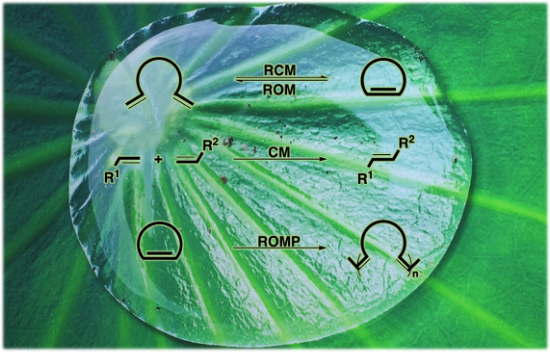
- tags. c) PEG-tethered catalysts. Chemical structure and components of amphiphilic molecule PTS and derivatives. In vivo metathesis with an artificial metalloenzyme based on the biotin–streptavidin technology. Most common metathesis reactions. Ring-opening metathesis polymerization (ROMP), acyclic diene




Olefin metathesis in multiblock copolymer synthesis
Beilstein J. Org. Chem. 2019, 15, 218–235, doi:10.3762/bjoc.15.21

- , IBI, and SIBIS multiblock copolymers, which include glassy, rubbery, and semicrystalline polymer segments and demonstrate peculiar mechanical behavior [57][58]. References [59] and [60] report on the preparation of fluorescent polymer nanoparticles for bioimaging and in vivo targeting of tumors and
- the nanoparticles were formed by a ABCBA pentablock copolymer. In this polymer A stands for hydrophilic oligo(ethylene glycol) (OEG)-grafted polynorbornene possessing stealth-like and antifouling properties that are useful for in vivo applications. The B block is formed by polynorbornene
- bioimaging and in vivo tumor targeting [60]. The multiblock copolymer capable of post-functionalization [76]. Multiblock copolymers synthesized by macromolecular cross metathesis. Changes in the DSC thermograms during MCM of PBD and polyesters (left) [84] and PNB–PCOE (right) mediated by Gr1 catalyst [89






Systematic synthetic study of four diastereomerically distinct limonene-1,2-diols and their corresponding cyclic carbonates
Beilstein J. Org. Chem. 2019, 15, 130–136, doi:10.3762/bjoc.15.13
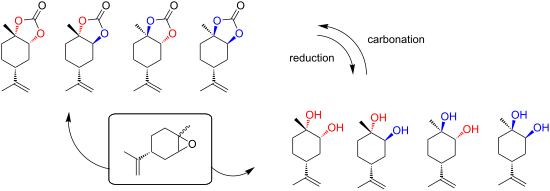
- is detected as metabolite in vivo in biochemistry [15], and is known to react in the atmosphere to afford the secondary organic aerosol as air pollutants [16]. Among the four diastereomers of LMdiols (Figure 2), 2b and 2c have already been reported [14][17][18][19][20]. Conversely, the distinct


Synthesis of a tubugi-1-toxin conjugate by a modulizable disulfide linker system with a neuropeptide Y analogue showing selectivity for hY1R-overexpressing tumor cells
Beilstein J. Org. Chem. 2019, 15, 96–105, doi:10.3762/bjoc.15.11
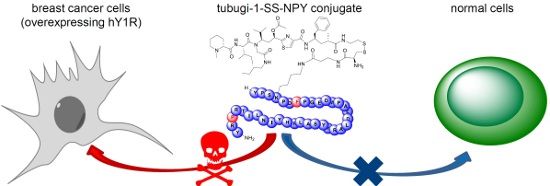
- treatment of, for instance, cancer cells: (1) a sufficient in vivo half-life, ideally hours to days, to reach the diseased cells with a high portion of intact PDC; (2) a selective conjugate binding to a specific target molecule, e.g., a cell-surface receptor, that is characteristic for the diseased cells
- been published, whereby the peptide moiety always is based on [F7,P34]-pNPY [32][39][40]. However, so far none of these [F7,P34]-pNPY-based conjugates proved a convincing in vivo efficacy. To further improve the general setting of peptide–drug conjugates, major efforts have been made to enhance target
- occur in vivo in case of untargeted applications. For that reason, feasible therapeutic windows of this class of toxins are only realistic if the toxins are applied as ‘detoxified’ prodrugs, e.g., in the form of peptide–toxin conjugates, whereby the effect of tubulysin or tubugi, respectively, is




Lectins of Mycobacterium tuberculosis – rarely studied proteins
Beilstein J. Org. Chem. 2019, 15, 1–15, doi:10.3762/bjoc.15.1
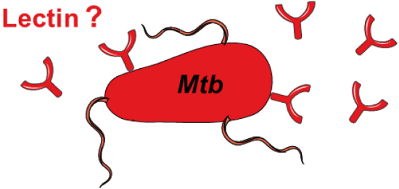
- indeed shown that alveolar type II pneumocytes can also become infected with Mtb bacteria in vitro and in vivo [13][14][15][16][17]. Furthermore, dendritic cells and neutrophils internalize Mtb bacteria and are important key players in the immune response against this pathogen [18][19][20]. Bacterial
- following successful antituberculosis therapy [80]. The results underline that mycobacterial lectins are expressed in vivo and might be important for Mtb infections. Furthermore, anti-sMTL-13 antibodies could serve as a biomarker of disease treatment progression. The exact function of sMTL-13 and its ligand
- showed reduced dissemination to other regions of the body relative to wild type, suggesting that HBHA plays an important role in extrapulmonary spread [84]. It has also been shown that antibodies directed against HBHA can limit adhesion of mycobacteria to epithelial cells in vitro and in vivo [80][83


Repurposing the anticancer drug cisplatin with the aim of developing novel Pseudomonas aeruginosa infection control agents
Beilstein J. Org. Chem. 2018, 14, 3059–3069, doi:10.3762/bjoc.14.284
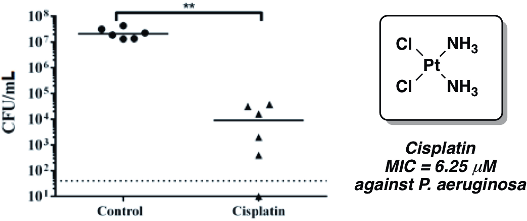
- the secretion of exotoxins. Furthermore, cisplatin was also demonstrated to eradicate in vitro biofilms and in vivo biofilms in a murine keratitis model. This showed that cisplatin could be effectively used to eradicate biofilm infections which were otherwise difficult to be treated by conventional
- were shown for in vivo biofilms. Student’s t-test was performed for testing differences between groups. *P < 0.01. Supporting Information Supporting Information File 500: Additional information. Disclosure of Financial and Competing Interests This research is supported by the National Research
- useful strategy for eradicating persistent biofilm-associated infections. Cisplatin treatment attenuates P. aeruginosa infection As cisplatin could reduce the synthesis of T3SS-mediated virulent products and kill biofilms of P. aeruginosa, we further tested if cisplatin treatment was able to eradicate in




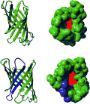
Olefin metathesis catalysts embedded in β-barrel proteins: creating artificial metalloproteins for olefin metathesis
Beilstein J. Org. Chem. 2018, 14, 2861–2871, doi:10.3762/bjoc.14.265
- and challenges and opportunities in this emerging field are shown from simple small-molecule transformations over ring-opening metathesis polymerizations to in vivo olefin metathesis. Keywords: artificial metalloprotein; β-barrel protein; metathease; olefin metathesis; ruthenium; Introduction Olefin