Search results
Search for "calculations" in Full Text gives 926 result(s) in Beilstein Journal of Organic Chemistry. Showing first 200.
Anion-dependent ion-pairing assemblies of triazatriangulenium cation that interferes with stacking structures
Beilstein J. Org. Chem. 2024, 20, 2567–2576, doi:10.3762/bjoc.20.215
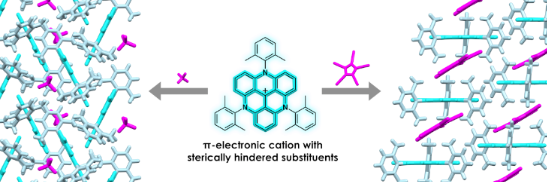
- ]. In each structure, the non-hydrogen atoms were refined anisotropically. CIF files (CCDC-2364292–2364296) can be obtained free of charge from the Cambridge Crystallographic Data Centre via https://www.ccdc.cam.ac.uk/data_request/cif. DFT calculations. DFT calculations for the geometrical optimizations
- NMR spectra of new ion pairs, details for crystal structures, and theoretical calculations. Acknowledgements Theoretical calculations were partially performed at the Research Center for Computational Science, Okazaki, Japan (Projects: 22-IMS-C077, 23-IMS-C069, and 24-IMS-C067). The synchrotron



Machine learning-guided strategies for reaction conditions design and optimization
Beilstein J. Org. Chem. 2024, 20, 2476–2492, doi:10.3762/bjoc.20.212

- scarcity and diversity, as they need to cover a vast reaction space [26][27]. However, collecting data relevant to chemical reactions represents a significant challenge. While specific molecular properties can be precisely computed using existing simulation methods like quantum chemical calculations
- – allowing for the generation of extensive data through large-scale simulations – chemical reactions pose a much greater difficulty for accurate simulation. The development of systematic theoretical calculations to model correlations between reaction yields and various substrates and catalysts requires
- theoretical calculations are typically restricted to gas-phase reactions [31]. Despite these challenges, recent advances in quantum chemical methods have shown that theoretical calculations can provide practical guidance for validating experimental results [32]. Thus, we posit that the role of theoretical


Hypervalent iodine-mediated cyclization of bishomoallylamides to prolinols
Beilstein J. Org. Chem. 2024, 20, 2455–2460, doi:10.3762/bjoc.20.209
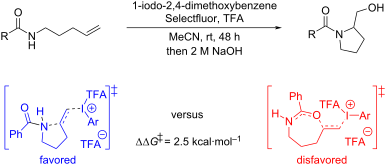
- -cyclization onto the alkene when n = 3, we modelled this reaction using DFT calculations (Scheme 2). Similarly, we concluded that the present reaction commences with activation of the olefin in 3a by the hypervalent iodine species 8, which is generated under the reaction conditions. The activation occurs via
- ring. We have performed DFT calculations to support the proposed change in mechanism and developed superior reaction conditions to effect this transformation. Finally, we have explored the substrate scope of this cyclization. Functional molecules containing a substituted pyrrolidine core. A) Our


Synthesis and conformational analysis of pyran inter-halide analogues of ᴅ-talose
Beilstein J. Org. Chem. 2024, 20, 2442–2454, doi:10.3762/bjoc.20.208
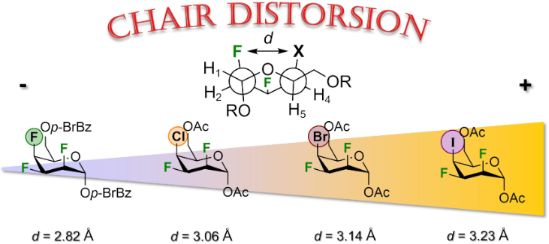
- and nonbonding interactions for the halogen at C4. Finally, density functional theory (DFT) calculations corroborate the preference of talose analogues to adopt a 4C1-like conformation and a natural bonding orbital (NBO) analysis demonstrates the effects of hyperconjugation from C–F antibonding
- ) [24]. The solution and the solid-state conformational analysis were supplemented with DFT calculations to understand key conformational drivers. This study adds more data to the field of nuclear magnetic resonance (NMR) spectroscopy of polyhalogenated molecules. It should be noted that the NMR
- -halides motivated us to use density functional theory (DFT) calculations to understand the preference of talose analogues to adopt 4C1-like conformations. DFT computations were performed using Gaussian 16 revision B.01 [67] with the CAM-B3LYP [68][69][70] functional and the Def2TZVP basis set [71], which


Asymmetric organocatalytic synthesis of chiral homoallylic amines
Beilstein J. Org. Chem. 2024, 20, 2349–2377, doi:10.3762/bjoc.20.201
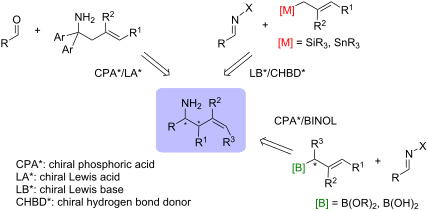
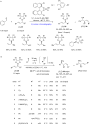
- of the analogous nucleophilic addition of cyanide was reported by Chen and Qiao [38] in 2023 (Figure 4). The calculations revealed that ΔG profile for the reaction pathway via 76, in which the imine molecule is activated by the direct chiral proton transfer from the COBI ion and then later attacked








Catalysing (organo-)catalysis: Trends in the application of machine learning to enantioselective organocatalysis
Beilstein J. Org. Chem. 2024, 20, 2280–2304, doi:10.3762/bjoc.20.196

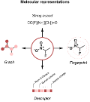
- energies of relevant species either via force field or quantum chemical methods to assess the properties of a reaction such as activation energies or selectivity. Irrespective of the degree of automation, in silico calculations are often less time-sensitive than wet-lab experiments and can be used to
- mechanical calculations is also increasing, such as a data set that considers propargylation reactions catalysed by bipyridine N,N’-dioxide-derived scaffolds, created by Wheeler and co-workers using their AARON toolkit [21][114][115][116]. Similar to experimental data, computational data sets also lead to
- for this reaction class (ee threshold 80%), even though amine-based catalysts demonstrate a higher average ee. Notably, this strategy is not restricted to literature-extracted examples and can also be applied to enantioselectivities calculated via quantum chemical calculations or predictions from an




Synthesis and reactivity of the di(9-anthryl)methyl radical
Beilstein J. Org. Chem. 2024, 20, 2254–2260, doi:10.3762/bjoc.20.193
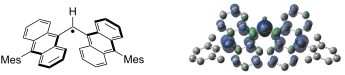
- two anthryl moieties (Figure 3b, Supporting Information File 1, Figure S1). DFT calculations for structural optimization revealed that the energy difference between two DAntM radical structures with different spin positions, spin localization at the central sp2 carbon and on the anthryl group, is
- Figure 6a and 6b, respectively. The DAntM radical exhibited a forbidden near-IR (NIR) band centered at 900 nm and relatively intense bands at 580 and 540 nm, whose spectral pattern is similar to the spectrum pattern of the TAntM radical [17]. The result of TD-DFT calculations could reproduce the obtained
- Research Areas (A) (Grant Number JP20H05865, T. K.), and by research grant from The Murata Science Foundation (T. N.). Quantum chemical calculations were performed at the Research Center for Computational Science, Okazaki, Japan (Project: 23-IMS-C212 and 24-IMS-C214). This work was the result of using


Cell-free protein synthesis with technical additives – expanding the parameter space of in vitro gene expression
Beilstein J. Org. Chem. 2024, 20, 2242–2253, doi:10.3762/bjoc.20.192
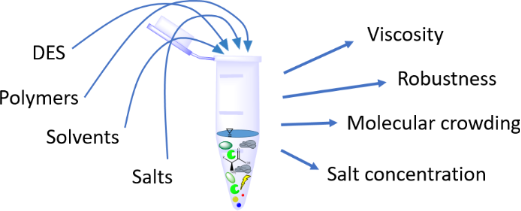
- from the 100% of pure water, additives decreased that value by the percentage of their contribution. Calculations and further details can be found in Supporting Information File 1. Cell-free protein synthesis The CFPS system was prepared and the reactions performed according to Rolf et al. [18] with
- Supporting Information File 75: Calculations of viscosity, macromolecules, inorganic ions, osmolarity and water content for CFPS in Table 1. Supporting Information File 76: Calculations of viscosity for CFPS with water-soluble solvents in Table 2. Supporting Information File 77: Fractional Yield of average



Metal-free double azide addition to strained alkynes of an octadehydrodibenzo[12]annulene derivative with electron-withdrawing substituents
Beilstein J. Org. Chem. 2024, 20, 2234–2241, doi:10.3762/bjoc.20.191
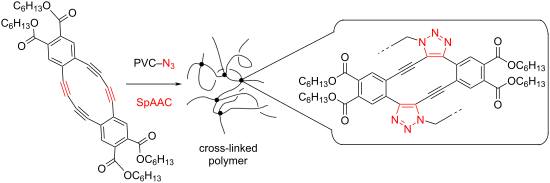
- substituents has a lower Ea than DBA with electron-donating substituents. DFT calculations The reaction mechanism was investigated by computational calculations. The reaction mechanism between 5 and benzyl azide was supported by the ωB97X-D/6-31G(d,p) calculations with the CH2Cl2 polarizable continuum model
- previously reported electron-donating hexyloxy substituents. The addition pattern was experimentally investigated by 2D NMR, which was also supported by DFT calculations. The bistriazole product displayed fluorescence in the visible range with a fluorescence quantum yield of 7.0%. Finally, the developed
- recorded on a JASCO FP-8500. All calculations were carried out using the Gaussian 16 program [21]. The DFT calculations were carried out using the long-range and dispersion-corrected ωB97X-D functional [22]. The 6-31G(d,p) basis set was used for H, C, O, and S atoms [23][24]. The solvent effect of CH2Cl2




Selective hydrolysis of α-oxo ketene N,S-acetals in water: switchable aqueous synthesis of β-keto thioesters and β-keto amides
Beilstein J. Org. Chem. 2024, 20, 2225–2233, doi:10.3762/bjoc.20.190
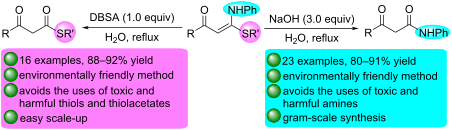
- yield is stated. Keto/enol ratio of 3 was determined by 1H NMR spectroscopy. Gram-scale hydrolysis reactions of 1a. Proposed mechanism for formation of β-keto thioesters 2 and β-keto amides 3. Optimization of the reaction conditions. EcoScale calculations and results for the synthesis of 2a and 3a [75

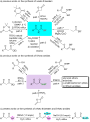


Heterocycle-guided synthesis of m-hetarylanilines via three-component benzannulation
Beilstein J. Org. Chem. 2024, 20, 2208–2216, doi:10.3762/bjoc.20.188
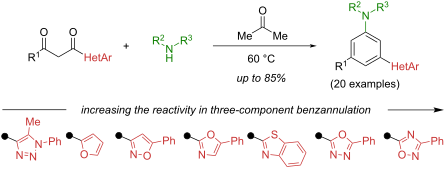
- /chemoinformatics calculations were also performed to correlate the observed reactivity with the charges on the carbonyl group of 1,3-diketones. Unfortunately, no reliable correlation was found between the charges and the reactivity of the 1,3-diketones with the present set of heterocyclic substituents or with the
- Russian Federation (FSNF-2023-0004). The DFT calculations were supported by the RUDN University Scientific Projects Grant System, project № 021342-2-000.


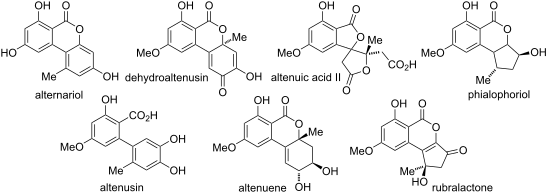
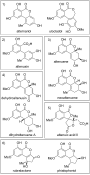
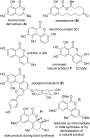
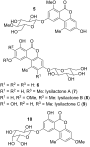
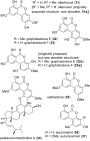
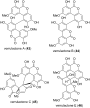
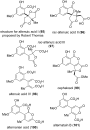
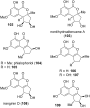
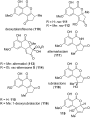
Natural resorcylic lactones derived from alternariol
Beilstein J. Org. Chem. 2024, 20, 2171–2207, doi:10.3762/bjoc.20.187










Computational toolbox for the analysis of protein–glycan interactions
Beilstein J. Org. Chem. 2024, 20, 2084–2107, doi:10.3762/bjoc.20.180
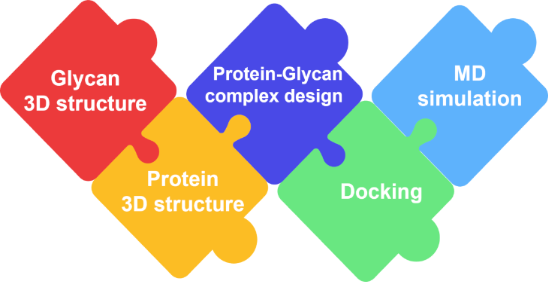
- bacterial sugars, the parametrisation of each building block is needed and requires the use of ab initio methodologies, including several steps of charges and electron density calculations, optimization and minimization, making the computational study of bacterial glycans difficult and time-consuming. 2
- involving unusual ligands, useful tools can be employed to provide the parameters needed for running MD simulations. Charge calculations and electron density computations for glycan units can be performed using tools like the online RED Server [70]. Although information on force fields is usually available
- , modifications can sometimes be required and can be achieved through ab initio calculations or programs like for example VFFDT [71]. Tools for the conformational analysis of glycans in the free state The structure and biological functions of glycans are closely intertwined; the roles they play are influenced not


Understanding X-ray-induced isomerisation in photoswitchable surfactant assemblies
Beilstein J. Org. Chem. 2024, 20, 2005–2015, doi:10.3762/bjoc.20.176
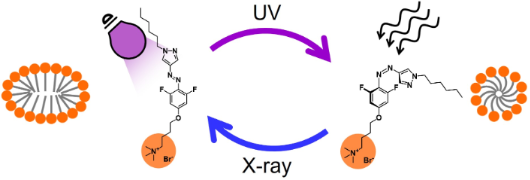
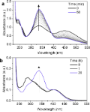
- , SAXS using in-situ irradiation, models used for SAXS fitting, micelle dimensions from SAXS fits, calculations for the pH change on X-ray irradiation and UV–vis absorbance spectra for acid-induced isomerisation. Acknowledgements This work was carried out with the support of Diamond Light Source



Allostreptopyrroles A–E, β-alkylpyrrole derivatives from an actinomycete Allostreptomyces sp. RD068384
Beilstein J. Org. Chem. 2024, 20, 1981–1987, doi:10.3762/bjoc.20.174
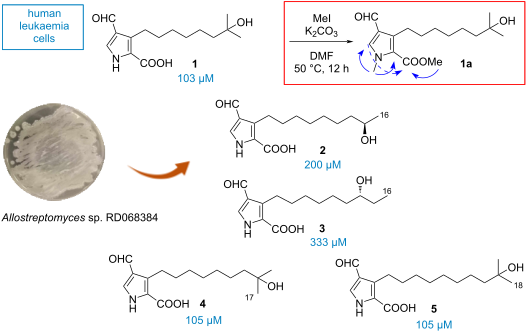
- monitored by TLC. The solution was diluted with water and extracted with EtOAc three times. The organic layer was washed with brine and evaporated to dryness to afford bismethylated derivative of 1 (1a, 1.9 mg, 88% yield). DFT methodology Prior to the calculations of the molecular properties of compounds 2


Radical reactivity of antiaromatic Ni(II) norcorroles with azo radical initiators
Beilstein J. Org. Chem. 2024, 20, 1967–1972, doi:10.3762/bjoc.20.172
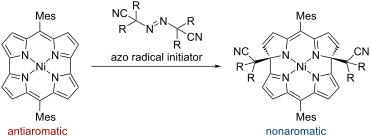
- ) norcorrole. The radical reactivity of Ni(II) norcorroles was investigated by density functional theory (DFT) calculations. Keywords: 16π; antiaromatic; norcorrole; porphyrinoid; radical; Introduction Considerable attention has been directed toward antiaromatic norcorroles [1][2][3] due to the fascinating
- presented. We also discuss the selectivity of the radical addition to Ni(II) norcorroles using DFT calculations. Results and Discussion Reactivity with azo radical initiators We selected 2,2'-azobis(isobutyronitrile) (AIBN) as a radical source. Ni(II) dimesitylnorcorrole 1 was treated with AIBN in refluxing
- 2a obtained by TD DFT calculations at the M06/6-31G(d)+SDD//B3LYP-D3/6-31G(d)+SDD level of theory was consistent with the experimental results. Therein, the absorption band at 670 nm (f = 0.0026) was attributed to the transition from HOMO to LUMO+1. Next, the electrochemical properties of 2a in


Regioselective alkylation of a versatile indazole: Electrophile scope and mechanistic insights from density functional theory calculations
Beilstein J. Org. Chem. 2024, 20, 1940–1954, doi:10.3762/bjoc.20.170
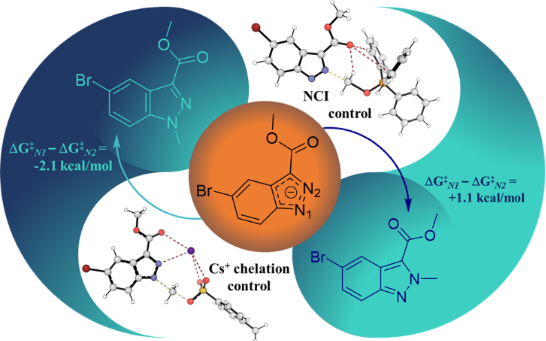
- -carboxylate (6) and the use of density functional theory (DFT) to evaluate their mechanisms. Over thirty N1- and N2-alkylated products were isolated in over 90% yield regardless of the conditions. DFT calculations suggest a chelation mechanism produces the N1-substituted products when cesium is present and
- -3 as a bidentate ligand to the Na+ cation from NaH. The tight ion pair would direct alkylation under conditions A to N1. As this and other postulations exist, we explored the possible mechanisms of each reaction conditions computationally. All calculations were performed in implicit THF at the
- (NCI) in N1-s-cis, which accounts for the 2.1 kcal/mol difference in energy. Calculations showed that the sulfonate oxygens also chelate the cesium ion in both TSs. Thus, nitrogen NCIs with cesium, or lack thereof, seem to drive N1-product formation, which is both kinetically and thermodynamically


2-Heteroarylethylamines in medicinal chemistry: a review of 2-phenethylamine satellite chemical space
Beilstein J. Org. Chem. 2024, 20, 1880–1893, doi:10.3762/bjoc.20.163
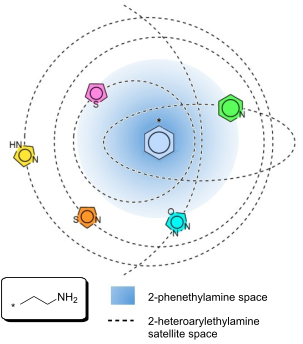
- docking or QSAR calculations to describe the bioisostere, impact and rationalize the observed experimental binding or efficacy measurements. As it was stated in the introduction, only the rings described in this review, are the ones with reported activity, but there exists a plethora of other analogues




The Groebke–Blackburn–Bienaymé reaction in its maturity: innovation and improvements since its 21st birthday (2019–2023)
Beilstein J. Org. Chem. 2024, 20, 1839–1879, doi:10.3762/bjoc.20.162
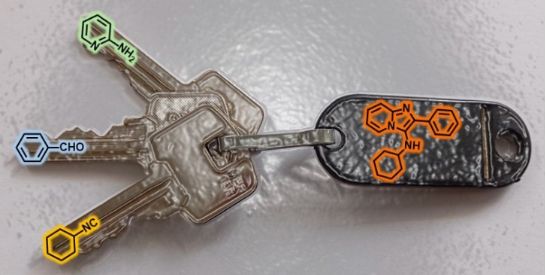
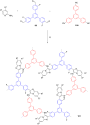
- diaryliodonium triflates such as 8 and 9 [13]. They studied a model reaction with 2-aminopyridine (1), p-tolualdehyde (10) and cyclohexyl isocyanide (11) both experimentally (by binding and kinetic studies) and theoretically (by density functional theory (DFT) calculations) (Scheme 5). Catalyst 8 was found to be






Oxidative fluorination with Selectfluor: A convenient procedure for preparing hypervalent iodine(V) fluorides
Beilstein J. Org. Chem. 2024, 20, 1785–1793, doi:10.3762/bjoc.20.157
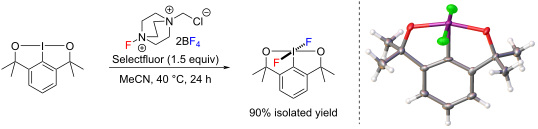
- (1–3 % spectroscopic yield) when BF3·OEt2 was added to the reaction mixture. X-ray crystallography and DFT calculations The solid-state structure of difluoroiodane 6 is shown in Figure 2 and displays the expected square pyramidal geometry around the iodine atom, with only minor distortion (τ5 = 0.191
- Supporting Information File 1). DFT calculations were carried out to gain further insight into the structures of iodine(V) fluorides 21 and 22 whose X-ray structures could not be obtained, and hypothetical iodine(V) amides 7a and 7b which could not be made. Comparisons were made with iodine(V) compounds 6
- . The only major difference between the bicyclic and monocyclic iodine(V) fluorides is the much smaller O–I–O bond angle (161.4(2) °) in difluoroiodane 6 compared to the F’–I–O bond angle (167.9(2) ° in 20) in the monocyclic iodanes 20–22. In fact, DFT calculations predicted that hypothetical


Synthesis and characterization of 1,2,3,4-naphthalene and anthracene diimides
Beilstein J. Org. Chem. 2024, 20, 1767–1772, doi:10.3762/bjoc.20.155
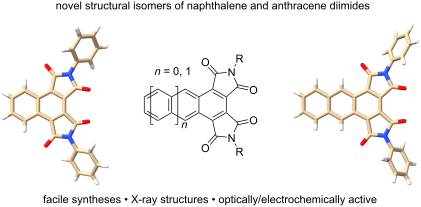
- been achieved as well. Other efforts have demonstrated that anthracene diimides (ADIs) can be tuned to achieve decent electron mobilities in electronic settings [13][14]. Although there have been calculations conducted that suggest 6-membered cyclic imides are more compelling than 5-membered cyclic


Syntheses and medicinal chemistry of spiro heterocyclic steroids
Beilstein J. Org. Chem. 2024, 20, 1713–1745, doi:10.3762/bjoc.20.152
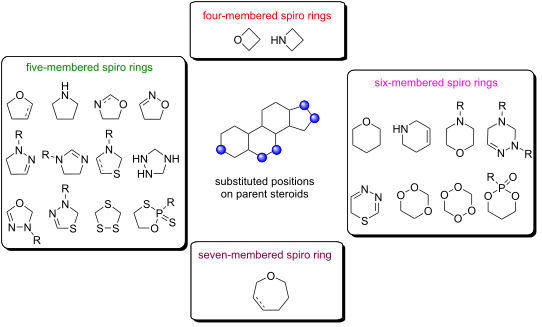
- yields (82–85%) (Scheme 28). The authors proposed a free radical mechanism facilitated by hydrogen peroxide, generating a primary radical at the terminal nitrogen atom -CO-HN• which then adds to the carbon atom of the imino group. The reaction mechanism was substantiated by theoretical calculations


pKalculator: A pKa predictor for C–H bonds
Beilstein J. Org. Chem. 2024, 20, 1614–1622, doi:10.3762/bjoc.20.144
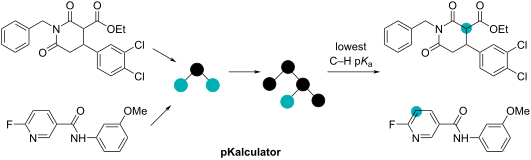
- methods are evaluated as single-point calculations or optimization and frequency calculations. For comprehensive details, refer to Supporting Information File 1, section “Benchmark study - computational methods”. Hereafter, we check the geometries for imaginary frequencies and use the total thermal energy
- Finkelmann et al. [30][31] and Ree et al. [14], we utilize the automated approach to compute CM5 atomic charges from semiempirical tight-binding (GFN1-xTB [37]) calculations. We modify the workflow to enhance the accuracy of the computed CM5 atomic charges. Instead of generating a single random conformer, we
- squared error. QM calculations were carried out at the CAM-B3LYP/def2-TZVPPD CPCM(DMSO)//GFN2-xTB ALPB(DMSO) level of theory. ML-predicted pKa values vs QM-computed pKa values of the held-out test set (155 compounds; 789 pKa values). r: Pearson correlation coefficient; ρ: Spearman’s rank correlation


![[Graphic 9]](/bjoc/content/inline/1860-5397-20-144-i12.svg?max-width=637&scale=1.3000021)


Divergent role of PIDA and PIFA in the AlX3 (X = Cl, Br) halogenation of 2-naphthol: a mechanistic study
Beilstein J. Org. Chem. 2024, 20, 1580–1589, doi:10.3762/bjoc.20.141
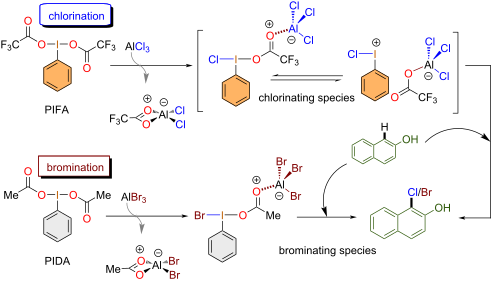
- reported by our group, was elucidated via quantum chemical calculations using density functional theory. The chlorination mechanism using PIFA and AlCl3 demonstrated a better experimental and theoretical yield compared to using PIDA. Additionally, the lowest-energy chlorinating species was characterized by
- , and transition-state structures were optimized by density functional theory (DFT) calculations employing the software Gaussian 16 [34]. Although the B3LYP functional could be suitable for these calculations, e.g., for tracing reaction pathways, nitrations, halogenations, or FC acylations in solution
- , the 6-31G(d) basis set was used for the other atoms (i.e., H, C, O, F, Al, etc.). Geometry optimizations were carried out without any symmetry constraints, and the stationary points were characterized by analytical frequency calculations, i.e., energy minima (reactants, intermediates, and products


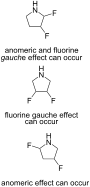
Regio- and stereochemical stability induced by anomeric and gauche effects in difluorinated pyrrolidines
Beilstein J. Org. Chem. 2024, 20, 1572–1579, doi:10.3762/bjoc.20.140
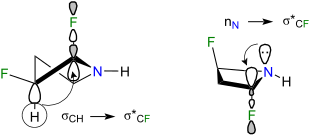
- the impact of gauche and anomeric effects on the conformer stabilities of different stereo- and regioisomers. Initially, we conducted a benchmark assessment comparing the optimal density functional theory method with coupled cluster with single and double excitations (CCSD) calculations and
- . In this study, initially, the conformational equilibrium of 3-fluoropyrrolidine and the corresponding cation were analyzed to establish a benchmark for selecting an appropriate theory level for subsequent calculations. Then, the different isomers of the 1,2- or 1,3-difluorinated pyrrolidines were
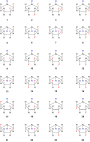
- (Table 1). Consequently, the B3LYP-D3BJ/6-311++G** level was selected for further calculations involving the difluorinated pyrrolidines shown in Figure 4. From the pool of 24 potential conformational, configurational, and constitutional isomers of the difluorinated pyrrolidines (i.e., 1–24), two pairs