


Search results
Search for "scale up" in Full Text gives 214 result(s) in Beilstein Journal of Organic Chemistry. Showing first 200.
Solid-phase enrichment and analysis of electrophilic natural products
Beilstein J. Org. Chem. 2017, 13, 405–409, doi:10.3762/bjoc.13.43
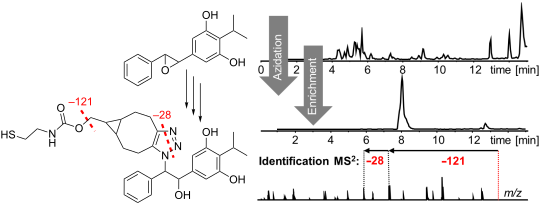
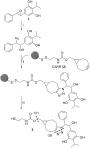
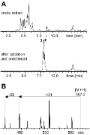
- combination with labeling experiments even the nature of the parent natural product could be revealed. Moreover, a possible scale-up of this procedure should enable the preparative purification of yet unidentified compounds as well as the structural confirmation of the identified structures. This approach can


A chemoselective and continuous synthesis of m-sulfamoylbenzamide analogues
Beilstein J. Org. Chem. 2017, 13, 303–312, doi:10.3762/bjoc.13.33
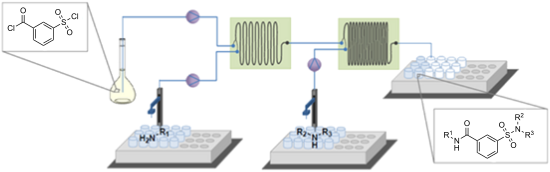
- suitable for automation, thus allowing the fast synthesis of compound libraries, but as opposed to, e.g., combinatorial chemistry, the developed protocols are directly useful for scale-up. A class of small molecules where these principles can apply for are m-sulfamoylbenzamides. These compounds proved to


NMR reaction monitoring in flow synthesis
Beilstein J. Org. Chem. 2017, 13, 285–300, doi:10.3762/bjoc.13.31
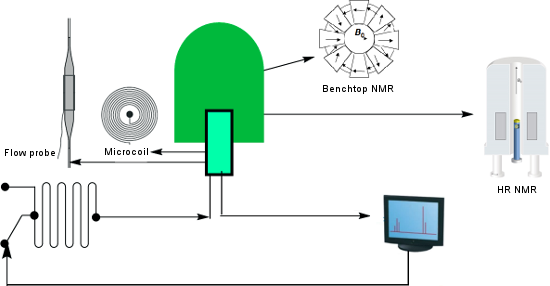
- , analysis and work-up can be performed in an automatic and continuous manner, but optimization and scale-up represent a new step forward towards the full automation of the chemical process [3]. The final objective is to save time for chemists to focus on the more technical work and to spend their time


Continuous-flow synthesis of highly functionalized imidazo-oxadiazoles facilitated by microfluidic extraction
Beilstein J. Org. Chem. 2017, 13, 239–246, doi:10.3762/bjoc.13.26
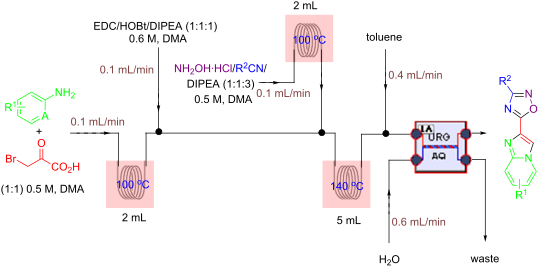
- less attractive during scale-up due to the difficulty of removal of these solvents during purification. Consequently the current method is limited to small scale library synthesis. Therefore, our next goal was to convert this microfluidic procedure to a sequence that would deliver compounds on a larger
- reaction steps requiring work-up and purification of several intermediates. Furthermore, liquid–liquid microextraction removes high boiling point solvent and impurities from the product. Finally, this new process with liquid–liquid extraction allows easy scale-up and eliminates the tedious high boiling


Diels–Alder reactions of myrcene using intensified continuous-flow reactors
Beilstein J. Org. Chem. 2017, 13, 120–126, doi:10.3762/bjoc.13.15
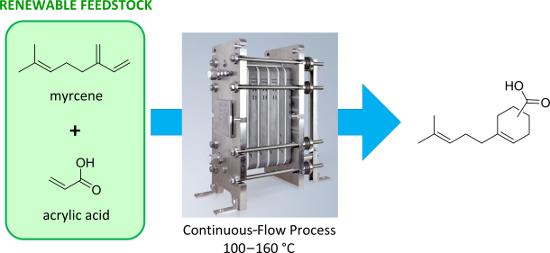
- continuous-flow approach provides a facile alternative scale-up route to conventional batch processing, and it helps to intensify the synthesis protocol by applying higher reaction temperatures and shorter reaction times. Keywords: continuous processing; flow chemistry; renewable feedstock; surfactant
- R2/R4 tubular flow reactor to a reaction volume of typically 20 mL and then on a Chemtrix Plantrix® MR260 plate flow reactor to a reaction volume of typically 200 mL (see also experimental section). The results from these continuous-flow experiments are shown in Table 3. The 10-times scale-up in the
- tubular flow reactor and the 100 times scale-up in the plate flow reactor resulted in similar, if not slightly higher conversions than the batch experiments (see Figure 2). The two continuous reactors produced high-quality material at steady state conditions. The reaction profile in the plate flow reactor


Extrusion – back to the future: Using an established technique to reform automated chemical synthesis
Beilstein J. Org. Chem. 2017, 13, 65–75, doi:10.3762/bjoc.13.9
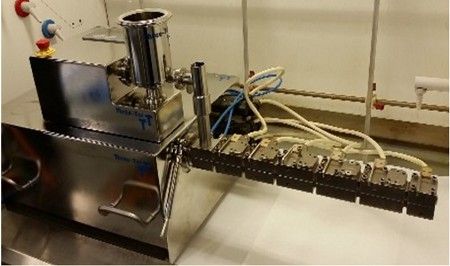
- formation In 2009, Alvarez-Nunez et al. of Amgen used TSE to scale up the synthesis of a cocrystal which had already been reported to be synthesised successfully by ball milling (employing liquid-assisted grinding (LAG)). This was the first example demonstrating that mechanochemical synthesis could be
- avoided. In summary, extrusion is a technique that has great potential for use in organic synthesis. It has already been demonstrated as a method to scale up synthesis carried out by ball milling, therefore there is very little preventing its use for the organic reactions that have been reported to be


The digital code driven autonomous synthesis of ibuprofen automated in a 3D-printer-based robot
Beilstein J. Org. Chem. 2016, 12, 2776–2783, doi:10.3762/bjoc.12.276
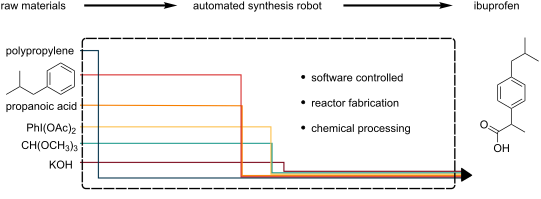
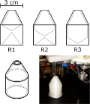
- reaction solutions deposited. These could be easily tuned in the control software and the volumes required for each of these scales are summarised in Table 2. The yields from each of the scales of reaction described were similar (see Supporting Information File 1), however, it was found that further scale
- -up by increasing the reaction vessel volume (a fourth reaction vessel, R4, was also produced with an internal volume of 28.12 mL, see Supporting Information File 2 for dimensions) lead to reduced yields and longer reaction times. The maximum yield obtained using larger volume reactor vessels was



Electron-transfer-initiated benzoin- and Stetter-like reactions in packed-bed reactors for process intensification
Beilstein J. Org. Chem. 2016, 12, 2719–2730, doi:10.3762/bjoc.12.268
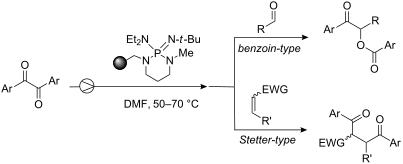
- homogeneous NHCs [13][14]. On the other hand, heterogeneous catalysis in microstructured flow reactors represents a robust synthetic platform, with benefits over the corresponding batch processes such as catalyst stability, lower degradation of supports, and ease of scale-up with minimal changes to the
- -supported base. Together with the ease of product/promoter separation, an important benefit of the flow regime has been the significant long-term stability of the packing bed (ca. 5 five days on streams). Small-scale reactors have been described in this work; nevertheless, an easy scale-up of the disclosed


Continuous-flow synthesis of primary amines: Metal-free reduction of aliphatic and aromatic nitro derivatives with trichlorosilane
Beilstein J. Org. Chem. 2016, 12, 2614–2619, doi:10.3762/bjoc.12.257
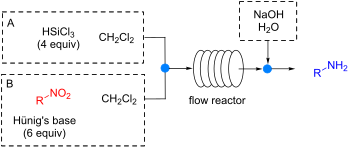
- . Flow chemistry has recently emerged as a powerful technology in synthetic chemistry [12] as it can reduce risks associated to the use of hazardous chemicals and favors reaction scale-up [13][14][15][16][17]. The possibility to efficiently perform nitro reduction in continuo would make the
- transformation safer and more appealing in view of an industrial application and a possible scale-up of the process [18][19][20]. Herein we report a very convenient, metal-free reduction of both aromatic and aliphatic nitro derivatives, including chiral compounds, to amines with HSiCl3 under continuous-flow
- the reaction (the first few hours). Having demonstrated that the flow transformation is very fast we next explored reaction scale-up employing a bigger flow reactor (5 mL PTFE reactor, i.d. = 2.54 mm, l = 100 cm), in order to increase the productivity of the process. Using the same reaction set-up


Development of a continuous process for α-thio-β-chloroacrylamide synthesis with enhanced control of a cascade transformation
Beilstein J. Org. Chem. 2016, 12, 2511–2522, doi:10.3762/bjoc.12.246
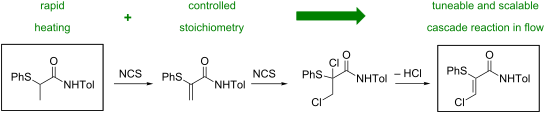
- into an oil bath at 90 °C (Scheme 2). While this route has consistently provided a robust means of generating the desired β-chloroacrylamides at scales of 1–10 g, it suffers from several disadvantages which impact on the ease of scale-up. The preparation of the α-chloroamide 1 is exothermic and
- requires significant external cooling, an undesirable feature for scale-up. The synthesis of the α-thioamide 2 involves prior generation of fresh sodium ethoxide from sodium metal. Furthermore, this α-thioamide protocol, at high pH, ordinarily does not go to completion, leaving unreacted starting material
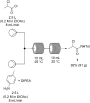
- efficient rapid heating poses practical difficulties for scale-up and, furthermore, chromatographic separation is required to remove product impurities. The nature of the aforementioned difficulties outlined are, however, largely specific to the scale-up of batch chemistry. A continuous processing approach




Facile synthesis of indolo[3,2-a]carbazoles via Pd-catalyzed twofold oxidative cyclization
Beilstein J. Org. Chem. 2016, 12, 2490–2494, doi:10.3762/bjoc.12.243
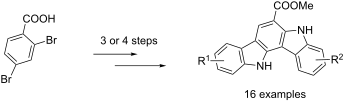
- sequence to deliver 9-methoxycarbonyl indolo[3,2-a]carbazole derivatives. Previous literature aimed at providing rapid and efficient access to indolo[3,2-a]carbazoles, however, most of them have some disadvantages. Few methods were reported to be suitable for scale-up preparation and the introduction of
- material and the product may occur. To examine whether the desired transformation was suitable for scale-up, a gram-scale synthesis of 2a was also achieved (Table 1, entry 9). With the optimized conditions in hand, the generality and scope of the reaction were also examined (Scheme 3). A range of


Efficient mechanochemical synthesis of regioselective persubstituted cyclodextrins
Beilstein J. Org. Chem. 2016, 12, 2364–2371, doi:10.3762/bjoc.12.230
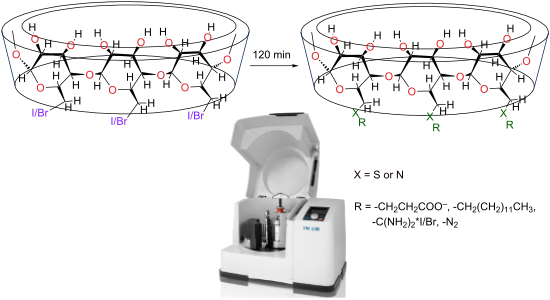
- conditions nor the purifications were optimized in any terms the presented results can serve as starting point to develop more environmentally benign synthetic methods of important CD derivatives. The well-established engineering of HEBM reactions makes them easy to scale-up, while simplified work-up
- removal found in the small scale, as it becomes clear in the scale-up experiments (entries 4 and 11 in Table 1). Although the preparation of 6I-monoazido-6I-monodeoxy-β-CD [22] was very effective, the analogue reactions with per-6-substituted CDs (4a and 4b) were less efficient. Either the reaction did
- needed to get less deficit in the precipitates. Considerable losses during filtrations were found in the small-scale cases, which significantly reduced the yields because of the inevitably used diluted solutions. The ten-fold scale up (entry 28 in Table 1) further simplified the product isolation because


High performance p-type molecular electron donors for OPV applications via alkylthiophene catenation chromophore extension
Beilstein J. Org. Chem. 2016, 12, 2298–2314, doi:10.3762/bjoc.12.223
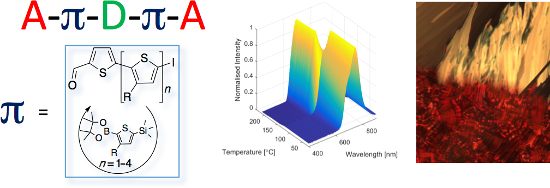
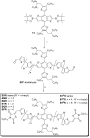
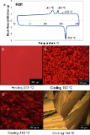
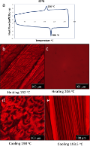
- active layer up to 310 nm thick. In this case fill-factors (FF) remain above 70%. However, OSC devices containing BTR are not stable to thermal annealing, a requirement for scale up using common printing processes, where temperatures >80 °C are required for drying or annealing of printed layers [15]. BTR
- has extremely interesting properties worth further study and leads to three key questions; Synthesis: Can we simplify the synthesis of BTR removing some chromatographic purification steps and use of toxic tin containing Stille condensation reactions? Scale-up: Can we develop a multi-gram synthesis




Economical and scalable synthesis of 6-amino-2-cyanobenzothiazole
Beilstein J. Org. Chem. 2016, 12, 2019–2025, doi:10.3762/bjoc.12.189

- ), which has an amine handle for straight-forward derivatisation. Here we present an economical and scalable synthesis of ACBT based on a cyanation catalysed by 1,4-diazabicyclo[2.2.2]octane (DABCO), and discuss its advantages for scale-up over previously reported routes. Keywords: ACBT; cyanation; 2
- variable yields (typically 30–50% in our hands). In addition, because DMSO can quickly penetrate the skin, working with KCN in DMSO requires substantial safety measures. Therefore, this route does not allow straightforward scale-up under laboratory conditions. Prescher and co-workers reported an
- . In view of scale-up of the DABCO-catalysed cyanation of 6, an alternative solvent (mixture) was sought in order to eliminate safety issues and work-up problems resulting from the use of DMSO. An initial attempt to run the reaction in water failed because of the low aqueous solubility of 6 – resulting



The in situ generation and reactive quench of diazonium compounds in the synthesis of azo compounds in microreactors
Beilstein J. Org. Chem. 2016, 12, 1987–2004, doi:10.3762/bjoc.12.186
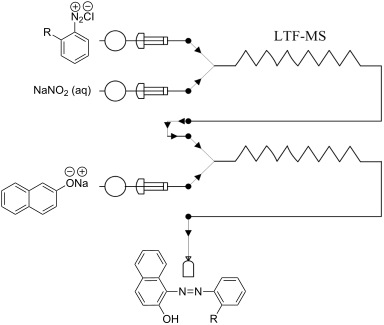
- reaction conversions ranging between 66–91% were attained. Keywords: azo coupling; diazotization; microreactor; scale up; Introduction Going green, a familiar catch phrase in the chemical industry, in addition to environment protection laws have influenced and also triggered the development of cleaner
- investigative research involving the synthesis of two azo pigments (yellow and red pigments) in microreactors [24], demonstrated that scaling out in the microreactors provided better and more consistent quality of the pigments as compared to scale up in the batch vessels. Similarly, yellow pigment 12 (15) was
- reaction. In addition, industry always questions why reactions are done in micro structured reactors rather than simple tubular reactors. As such, we extended this investigation to study the optimized conditions obtained within the LTF microreactors within PTFE tubing (i.d. 1.5 mm) in order to scale up the


Catalytic Chan–Lam coupling using a ‘tube-in-tube’ reactor to deliver molecular oxygen as an oxidant
Beilstein J. Org. Chem. 2016, 12, 1598–1607, doi:10.3762/bjoc.12.156
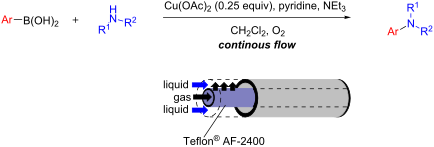
- characteristic NOESY signal encircled. Substrates that gave no products in flow. Comparison of early C–N and C–O coupling reactions. Scope of the catalytic Chan–Lam reaction in continuous flow. Syntheses of substrate 39. Scale-up procedure for 19. Optimisation of the Chan–Lam reaction in continuous flow


Flow carbonylation of sterically hindered ortho-substituted iodoarenes
Beilstein J. Org. Chem. 2016, 12, 1503–1511, doi:10.3762/bjoc.12.147
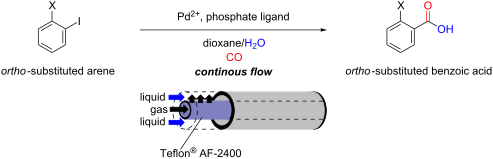
- smaller when larger volume flasks are used as in scale up procedures making the mass transfer even less efficient. In contrast, high interfacial areas can be achieved in flow reactors especially microchannel reactors (a = 3400–18000 m2 m−3) [30], which increases the mass transfer and thus helps solubilise
- turnaround time is much longer. This makes the flow reactor more efficient in terms of processing time. Additionally, the added safety and potential benefits regarding scale up associated with the flow reactor makes this even more favourable. Having identified a set of reaction conditions for successful
- of ortho-substituted substrates giving moderate to good yields. Comparison of 22 with 32 also showed that the steric encumbrance on the ortho position has an effect on the yield even when other electronic effects are in place such as those coming from the additional aromatic ring attached. A scale-up


Asymmetric α-amination of 3-substituted oxindoles using chiral bifunctional phosphine catalysts
Beilstein J. Org. Chem. 2016, 12, 725–731, doi:10.3762/bjoc.12.72
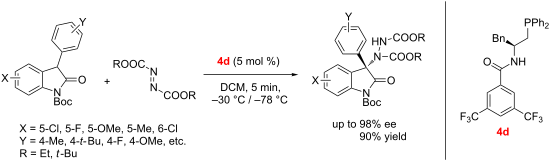
- -substituent was changed to an alkyl group (Table 3, entry 18). Subsequently, a scale-up experiment on 1.0 mmol scale of the reaction was examined, and the corresponding product could be obtained smoothly with a slightly reduced yield (70%) and ee (85%). The ee value of the product could be raised to 96% after
- spectra research in CD2Cl2. The mimetic activation mode of Mitsunobu reaction. Scale-up of the reaction and deprotection of the product. Proposed transition-state model. Catalyst screening. Optimization of conditions. Substrate scope. Supporting Information Supporting Information File 32: Experimental


Three new trixane glycosides obtained from the leaves of Jungia sellowii Less. using centrifugal partition chromatography
Beilstein J. Org. Chem. 2016, 12, 674–683, doi:10.3762/bjoc.12.68

- technique for the investigation of polar extracts. Moreover, the commercial availability of industrial instruments enables scale-up to batch production for high-scale isolation. The CPC technique turned to be a versatile analytical tool leading to the purification and identification of new glycosylated


New synthetic strategies for xanthene-dye-appended cyclodextrins
Beilstein J. Org. Chem. 2016, 12, 537–548, doi:10.3762/bjoc.12.53
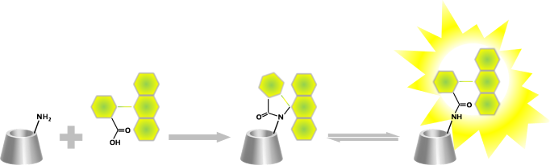
- dyes and coupling agents, thus having clear potential for multigram scale-up. The mild, aqueous conditions, as well as the simplicity of the synthesis, make these reactions attractive tools for the preparation of fluorescent cyclodextrins connected through an amide bond. The obtained products were


Enabling technologies and green processes in cyclodextrin chemistry
Beilstein J. Org. Chem. 2016, 12, 278–294, doi:10.3762/bjoc.12.30
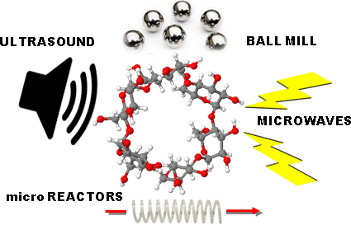
- technology can exploit a liquid milling medium. The preparation of CD and other complexes with the aid of ball milling is well-known [82][83]. In spite of an easy scale-up of this technology, some disadvantages might occur: metastable crystalline complexes can recrystallize to an equilibrium state upon



A quadruple cascade protocol for the one-pot synthesis of fully-substituted hexahydroisoindolinones from simple substrates
Beilstein J. Org. Chem. 2016, 12, 253–259, doi:10.3762/bjoc.12.27
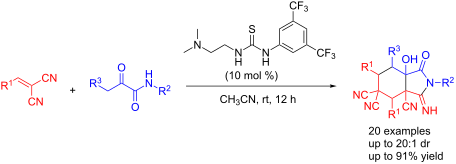
- [65]. However, substrates with aliphatic R1, R2 or R3 did not produce the desired products (Table 2, entries 21–26). This bifunctional catalysis cascade reaction was also amenable to scale-up. When the reaction was carried out on a 3 mmol scale, the desired product was obtained in 84% yield. Therefore


Catalytic asymmetric formal synthesis of beraprost
Beilstein J. Org. Chem. 2015, 11, 2654–2660, doi:10.3762/bjoc.11.285
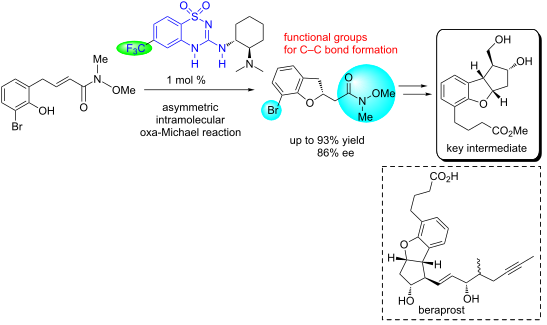
- improved to 85% ee while maintaining the high reactivity. Employing catalyst E we further investigated the reaction conditions and found that a scale-up synthesis can be performed using only 1 mol % of E with no loss of enantioselectivity, although gentle heating was required to ensure a high chemical
- exchange and subsequent addition to methyl 4-oxobutanoate was found to be the best method to introduce the C4 subunit with reproducibility in the case of scale-up synthesis. Deprotection of the resultant ester 23 followed by reduction of the benzylic OH group finally afforded the key intermediate 2



Continuous formation of N-chloro-N,N-dialkylamine solutions in well-mixed meso-scale flow reactors
Beilstein J. Org. Chem. 2015, 11, 2408–2417, doi:10.3762/bjoc.11.262
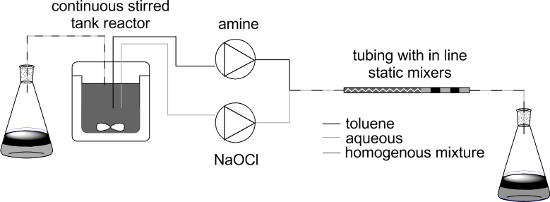
- phase separation into alternating organic–aqueous segmented flow; whilst meso-scale reactors are much better suited, and provide more accurate and reliable information for scale-up. Interaction of the reactants occurs only at the phase interface, so efficient mixing increases the surface area and


Efficient synthetic protocols for the preparation of common N-heterocyclic carbene precursors
Beilstein J. Org. Chem. 2015, 11, 2318–2325, doi:10.3762/bjoc.11.252
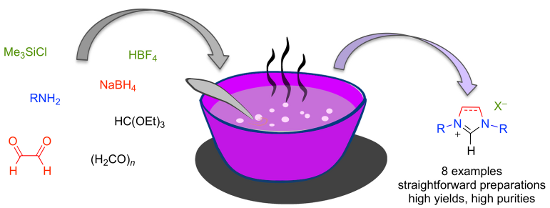
- solvent and hinders scale up. Synthesis of 1,3-bis(2,6-diisopropylphenyl)imidazolinium chloride In most cases, experimental procedures leading to 1,3-dimesitylimidazolinium salts could be successfully extended to their 1,3-bis(2,6-diisopropylphenyl) counterparts without any adaptation. Thus, the three
- laboratories and do not require any particular skills from the experimenter. Furthermore, the detailed experimental procedures supplied in Supporting Information File 1 of this article are easy to scale up or down according to the particular needs for a given compound. Thus, we hope that they will be helpful





