


Search results
Search for "spectroscopy" in Full Text gives 1420 result(s) in Beilstein Journal of Organic Chemistry. Showing first 200.
Mechanochemical difluoromethylations of ketones
Beilstein J. Org. Chem. 2024, 20, 2799–2805, doi:10.3762/bjoc.20.235
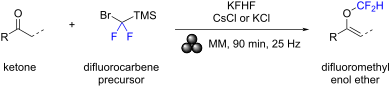
- standard reaction conditions with difluorocarbene precursor TMSCF2Br (2, 2.0 equiv), activator KFHF (4.0 equiv), and grinding auxiliary CsCl (4.0 equiv), difluoromethyl enol ether 3a was obtained after 90 min reaction time at 25 Hz in 74% yield, determined by quantitative 1H NMR spectroscopy (Table 1
- spectroscopy with 1,2-dichloroethane as the internal standard. After these analyses, isolating the products by column chromatography was attempted. Unfortunately, many products were highly volatile and very non-polar, rendering the purification difficult. As a result, in several cases only little or no product
- was obtained. Furthermore, most isolated products had only purities of ca. 90% still containing inseparable impurities (as revealed by NMR spectroscopy). In the first series of substrates, acetophenone derivatives with various para-substituents were applied. Similar to methyl tolyl ketone (1a), which


Access to optically active tetrafluoroethylenated amines based on [1,3]-proton shift reaction
Beilstein J. Org. Chem. 2024, 20, 2776–2783, doi:10.3762/bjoc.20.233
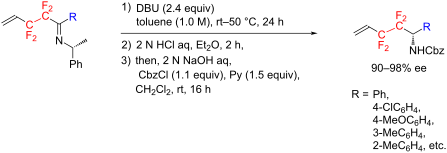
- scope for the present [1,3]-proton shift reaction. aYields are determined by 19F NMR spectroscopy. Values in parentheses show isolated yields. Enantiomeric excesses are deteremined by HPLC equipped with DAICEL CHIRALPAK AD-H. bCarried our at 50 °C in the [1,3]-proton shift reaction step. Proposed



Synthesis of benzo[f]quinazoline-1,3(2H,4H)-diones
Beilstein J. Org. Chem. 2024, 20, 2708–2719, doi:10.3762/bjoc.20.228
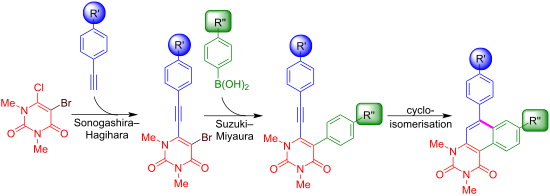
- was studied by UV–vis and fluorescence spectroscopy. Keywords: cross-coupling; cyclization; heterocycles; palladium; Introduction Nucleobases contain the coded information and give DNA and RNA their typical structure. As a nucleobase, uracil is involved in numerous vital processes and is therefore a
- -based benzo[f]quinazoline-1,3(2H,4H)-diones C [65]. Furthermore, optical properties were analysed by UV–vis and fluorescence spectroscopy. Results and Discussion Synthesis Our strategy for the synthesis of benzo[f]quinazoline-1,3(2H,4H)-diones is based on a four-step sequence and relies on a combination
- properties All synthesized compounds exhibit photoluminescence by excitation with UV light. Hence, we studied the photophysical properties of all obtained derivatives 5 by steady-state absorption and fluorescence spectroscopy. The influence of the substitution pattern on the photophysical properties is




Synthesis of fluoroalkenes and fluoroenynes via cross-coupling reactions using novel multihalogenated vinyl ethers
Beilstein J. Org. Chem. 2024, 20, 2691–2703, doi:10.3762/bjoc.20.226

- mixture of diastereomers (diastereomer ratio = 1:1) for cross-coupling, and the corresponding compounds 2 and 3 were obtained as mixtures of diastereomers in a certain ratio as estimated by proton and fluorine NMR spectroscopy. Substrate scope for cross-coupling reactions The substrate scope was


Transition-metal-free decarbonylation–oxidation of 3-arylbenzofuran-2(3H)-ones: access to 2-hydroxybenzophenones
Beilstein J. Org. Chem. 2024, 20, 2655–2667, doi:10.3762/bjoc.20.223
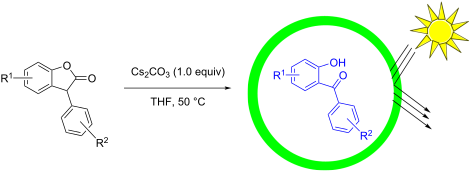
- characterized using 1H NMR, 13C NMR, FTIR spectroscopy, and elemental analysis. Next, in a model experiment, we carried out the decarbonylation–oxidation reaction of 5-methyl-3-phenylbenzofuran-2(3H)-one (3ba) using different bases in different solvents (Table 1) under open atmospheric conditions. In the
- the 7-position does not hinder the reaction. Further, to understand the origin of the product, we monitored the progress of the reaction of 3aa using 1H NMR spectroscopy. Aliquots from the reaction mixture were taken at different time intervals (Figure 4), THF evaporated under vacuum, and the residue




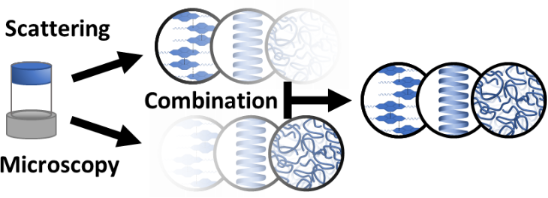
Applications of microscopy and small angle scattering techniques for the characterisation of supramolecular gels
Beilstein J. Org. Chem. 2024, 20, 2608–2634, doi:10.3762/bjoc.20.220
- -FF fibres (Figure 3). However, Fourier-transform infrared spectroscopy indicated that the Fmoc-S assembled on the surface of the Fmoc-FF fibres. The addition of carboxylate ions at the fibre surface allows cross-linking to occur, altering the bulk physical properties of the gel [20]. While the
- , cells that allow for the coupling of SAS with non-X-ray techniques continue to be developed; these include spectroscopy, rheology, and electrochemistry [62][63][64]. Ascribing changes in properties of interest directly to changes in the structure further elucidates the interesting properties of self


Base-promoted cascade recyclization of allomaltol derivatives containing an amide fragment into substituted 3-(1-hydroxyethylidene)tetronic acids
Beilstein J. Org. Chem. 2024, 20, 2585–2591, doi:10.3762/bjoc.20.217
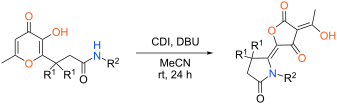
- formation of various unidentified byproducts. The obtained tetronic acids 4 are solid crystalline compounds, whose structure was proved by 1H, 13C NMR spectroscopy and high-resolution mass spectrometry. The 1H NMR spectra of the synthesized products contain characteristic signals of protons of the methyl


Transition-metal-free synthesis of arylboronates via thermal generation of aryl radicals from triarylbismuthines in air
Beilstein J. Org. Chem. 2024, 20, 2577–2584, doi:10.3762/bjoc.20.216
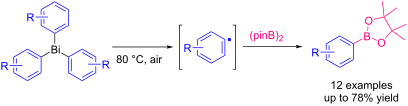
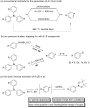
- arylboronates 3 using triaylbismuthines 1 and diboron 2. Yields were determined by 1H NMR spectroscopy based on 1 as three transferable aryl groups (internal standard: 1,3,5-trioxane). Isolated yield was shown in parentheses. aCHCl3 (0.4 mL) was used as the solvent. Control experiment of the metal-free



Synthesis and conformational analysis of pyran inter-halide analogues of ᴅ-talose
Beilstein J. Org. Chem. 2024, 20, 2442–2454, doi:10.3762/bjoc.20.208
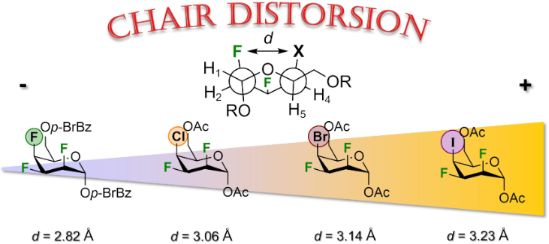
- ) [24]. The solution and the solid-state conformational analysis were supplemented with DFT calculations to understand key conformational drivers. This study adds more data to the field of nuclear magnetic resonance (NMR) spectroscopy of polyhalogenated molecules. It should be noted that the NMR


Phenylseleno trifluoromethoxylation of alkenes
Beilstein J. Org. Chem. 2024, 20, 2434–2441, doi:10.3762/bjoc.20.207
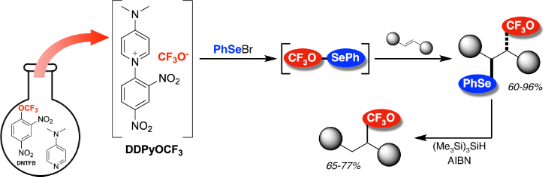
- by chromatography. Examples of trifluoromethoxylated drugs. Proposed mechanism of the reaction and 19F NMR of the DDPYOCF3/PhSeBr mixture. Phenylseleno trifluoromethoxylation of various alkenes. Yields determined by 19F NMR spectroscopy with PhCF3 as internal standard (in parentheses isolated yields
- ). a24 h. b48 h. Degradation of 2a under acidic conditions. Radical deselenylation of 2. Yields determined by 19F NMR spectroscopy with PhCF3 as internal standard (in parentheses isolated yields). Reaction of 1a with PhSeX and DDPyOCF3.a Supporting Information Supporting Information File 116: Additional



Evaluating the halogen bonding strength of a iodoloisoxazolium(III) salt
Beilstein J. Org. Chem. 2024, 20, 2401–2407, doi:10.3762/bjoc.20.204
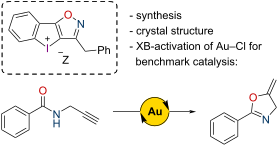
- )AuCl was applied with a catalyst loading of 2 mol %, activated by an equal amount of the DAI salt. Due to solubility issues, the reaction had to be performed in methylene chloride instead of chloroform. The gold-catalyzed cyclization reaction (Scheme 2) was followed via 1H NMR spectroscopy (Figure 3
- ]. For all catalyst systems, decomposition of the −BArF24 anion was observed via 1H and 19F NMR spectroscopy, which is known to happen in the presence of activated gold complexes [29]. The stability of the DAI cations was checked with 1H NMR: the characteristic doublets belonging to the respective




Efficient one-step synthesis of diarylacetic acids by electrochemical direct carboxylation of diarylmethanol compounds in DMSO
Beilstein J. Org. Chem. 2024, 20, 2392–2400, doi:10.3762/bjoc.20.203
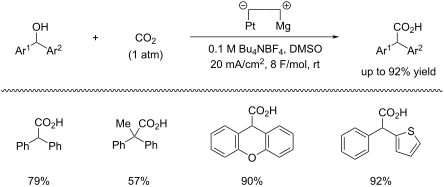
- proton in triphenylmethane (3, Scheme 4, bottom). Further, the yield was determined to be 67% by 1H NMR spectroscopy. These results indicated that the triphenylmethyl anion species generated by electroreductive C(sp3)–O bond cleavage acted not as nucleophile toward carbon dioxide but as base, performing
- MgSO4. Evaporation of the solvent gave a residue that was analyzed by 1H NMR spectroscopy, during which 1,4-dinitrobenzene was used as an internal standard for quantification of the substances. The products diphenylacetic acid (2a) [30][31], (4-methylphenyl)phenylacetic acid (2d) [32], (4-methoxyphenyl


Synthesis, electrochemical properties, and antioxidant activity of sterically hindered catechols with 1,3,4-oxadiazole, 1,2,4-triazole, thiazole or pyridine fragments
Beilstein J. Org. Chem. 2024, 20, 2378–2391, doi:10.3762/bjoc.20.202
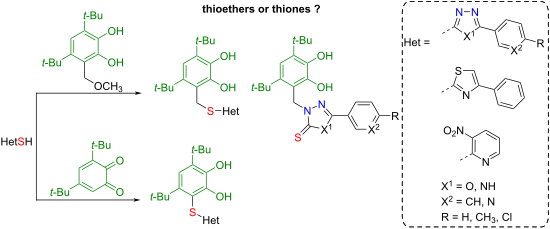
- , compounds 6–9 are products of alkylation of the nitrogen atom of the heterocycle. Thiones 6–9 were obtained in 40–79% yield (Scheme 1,b). The structures of synthesized compounds were confirmed by the spectral methods IR-, 1H NMR, 13C{1H} NMR spectroscopy (Figures S1–S18 in Supporting Information File 1




Asymmetric organocatalytic synthesis of chiral homoallylic amines
Beilstein J. Org. Chem. 2024, 20, 2349–2377, doi:10.3762/bjoc.20.201
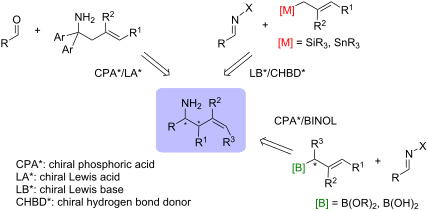
- active catalytic species in COBI-catalysed allylations, chemical equilibria in a solution containing catalyst 72, triflic acid, and aldimine 73 were investigated by low-temperature NMR spectroscopy (Scheme 15). Protonation of oxazaborolidine 70 with triflic acid resulted in an 8.3:1 mixture of 71 and 72








Tandem diazotization/cyclization approach for the synthesis of a fused 1,2,3-triazinone-furazan/furoxan heterocyclic system
Beilstein J. Org. Chem. 2024, 20, 2342–2348, doi:10.3762/bjoc.20.200
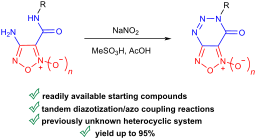
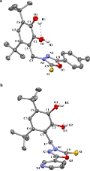
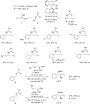
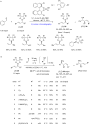
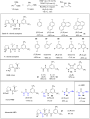
- , indicating that the developed tandem protocol does not depend on the presence of the N-oxide moiety in the parent heterocycle. All synthesized triazinones 1 and 7 were fully characterized by IR, 1H and 13C NMR spectroscopy, and high-resolution mass spectrometry. The structure of compounds 1b and 7h was


Synthesis and reactivity of the di(9-anthryl)methyl radical
Beilstein J. Org. Chem. 2024, 20, 2254–2260, doi:10.3762/bjoc.20.193
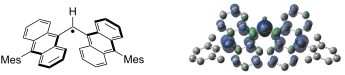
- spectroscopy under ambient conditions. The CV of DAntM species showed a reversible wave at E1/2 = −0.20 V (V vs Fc/Fc+) (Figure 5a) [39]. This redox potential is close to that of TAntM radical and cation [17]. Additionally, at a scan rate of 0.1 V s−1, the current peak intensity on the anodic side (from


Metal-free double azide addition to strained alkynes of an octadehydrodibenzo[12]annulene derivative with electron-withdrawing substituents
Beilstein J. Org. Chem. 2024, 20, 2234–2241, doi:10.3762/bjoc.20.191
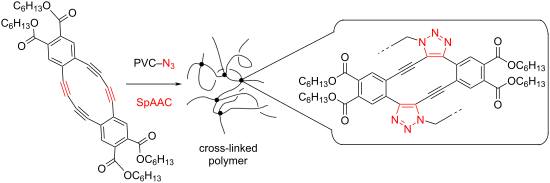
- . Chemical shifts of NMR were reported in ppm relative to the residual solvent peak at 7.26 ppm for 1H NMR spectroscopy and 77.6 ppm for 13C NMR spectroscopy. Coupling constants (J) were given in Hz. The resonance multiplicity was described as s (singlet), t (triplet), and m (multiplet). FTIR spectra were




Selective hydrolysis of α-oxo ketene N,S-acetals in water: switchable aqueous synthesis of β-keto thioesters and β-keto amides
Beilstein J. Org. Chem. 2024, 20, 2225–2233, doi:10.3762/bjoc.20.190
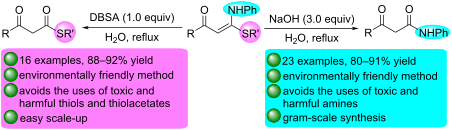
- by other acids such as H2SO4 and CF3SO3H, the reaction showed poor effectiveness due to the poor solubility of 1a in water (Table 1, entries 4 and 5). Most notably, 2a was an inseparable mixture of keto and enol isomers, reaching a keto/enol ratio of 5:4 as determined by 1H NMR spectroscopy. Thus
- . Reaction conditions A: 1 (0.25 mmol), DBSA (87.9 mg, 0.25 mmol), H2O (1 mL), reflux, 5 h. Isolated yield is stated. Keto/enol ratio of 2 was determined by 1H NMR spectroscopy. Synthesis of β-keto amides 3. Reaction conditions B: 1 (0.25 mmol), NaOH (0.75 mmol, 30 mg), H2O (1 mL), reflux, 24 h. Isolated
- yield is stated. Keto/enol ratio of 3 was determined by 1H NMR spectroscopy. Gram-scale hydrolysis reactions of 1a. Proposed mechanism for formation of β-keto thioesters 2 and β-keto amides 3. Optimization of the reaction conditions. EcoScale calculations and results for the synthesis of 2a and 3a [75



Electrochemical allylations in a deep eutectic solvent
Beilstein J. Org. Chem. 2024, 20, 2217–2224, doi:10.3762/bjoc.20.189
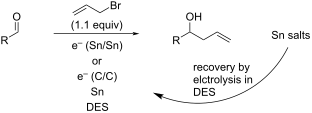
- spectroscopy to determine that the deposited metal was tin, with traces of other metals consistent with the purity of the initial tin source. The tin recovery was 99% of the theoretical. To explore recycling of this recovered tin, 1 mmol was used in a 0.5 mmol scale allylation of anisaldehyde under the
- funnel with the aid of 10 mL of deionized (DI) water followed by 20 mL of diethyl ether. The organic layer was separated, dried with anhydrous magnesium sulfate, filtered, and the solvent removed in vacuo to afford the crude product, which was first analyzed by 1H NMR spectroscopy and then purified using
- sulfate, filtered, and the solvent removed in vacuo to afford the crude product, which was first analyzed by 1H NMR spectroscopy and then purified using flash column chromatography. The graphite electrodes were not polished in between reactions, but were rinsed with DI water and then acetone. General Sn

Natural resorcylic lactones derived from alternariol
Beilstein J. Org. Chem. 2024, 20, 2171–2207, doi:10.3762/bjoc.20.187
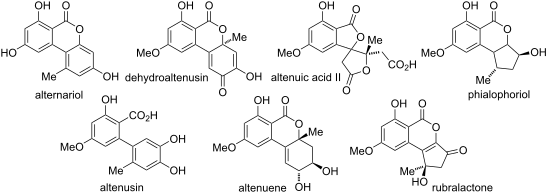
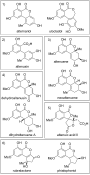
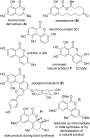
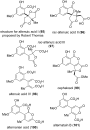
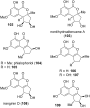
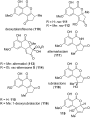
- from an unidentified endophytic fungus [124] and later from colletotrichum sp. [125], Lachnum abnorme [126], Diaporthe phragmitis [127] and a further D. sp. [128], and deviantly from the flower buds of the banana species Musa nana [129]. Its structure was determined by NMR spectroscopy [126] and
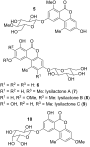
- -methoxylglucopyranoside] (5) was isolated from Alternaria alternata and its structure was determined by NMR spectroscopy. It showed no antibacterial activity [138]. Lysilactones A–C (7–9) bearing β-glucopyranoside moieties were first isolated from Lysimachia clethroides, where lysilactone B is mentioned in this review
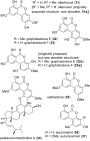
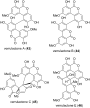
- determined by NMR spectroscopy and unambiguously confirmed by total syntheses [44][177]. It showed cytotoxic activity against SW1116 cells with an IC50 value of 12 μg/mL [168]. Chlorinated alternariol derivatives (Figure 9) together with the respective redox-modified natural products (Figure 20, vide infra










Novel truxene-based dipyrromethanes (DPMs): synthesis, spectroscopic characterization and photophysical properties
Beilstein J. Org. Chem. 2024, 20, 2163–2170, doi:10.3762/bjoc.20.186
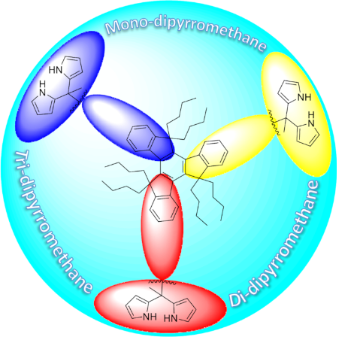
- derivatives were successfully characterized and their structures were established by means of the 1H and 13C NMR spectroscopy, besides further confirmation by mass spectrometry (see Supporting Information File 1). The UV–vis absorption, emission and time-resolved fluorescence spectra Emission and absorption


O,S,Se-containing Biginelli products based on cyclic β-ketosulfone and their postfunctionalization
Beilstein J. Org. Chem. 2024, 20, 2143–2151, doi:10.3762/bjoc.20.184
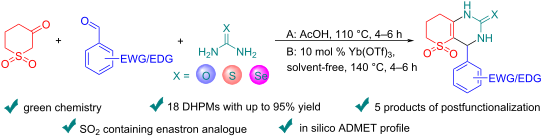
- in our study (Table 1, entries 1–6), but in any case, we received a mixture of regioisomeric products 2a/2a’ (3:1 to 2:1) confirmed by 2D NMR spectroscopy (see Supporting Information File 1, Figures S1–S6). Classical conditions for Biginelli reaction (reflux in ethanolic HCl) gave only 23% yield



Efficacy of radical reactions of isocyanides with heteroatom radicals in organic synthesis
Beilstein J. Org. Chem. 2024, 20, 2114–2128, doi:10.3762/bjoc.20.182
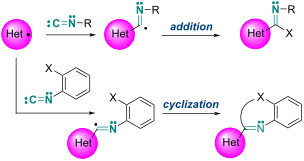
- . Because of this conjugation, the aromatic ring at the N of the 1,1-addition product 4 (R = Ar, E = PhS) geometrically isomerizes faster than the NMR timescale, so that the two thio groups of 4 are observed to be equivalent in NMR spectroscopy. In the case of diphenyl diselenide as a representative organic


Understanding X-ray-induced isomerisation in photoswitchable surfactant assemblies
Beilstein J. Org. Chem. 2024, 20, 2005–2015, doi:10.3762/bjoc.20.176
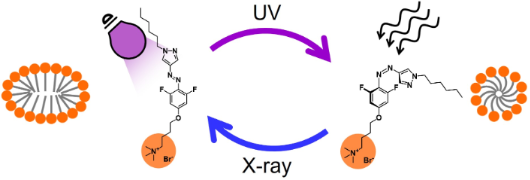
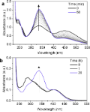
- effect, but also as the medium for structural rearrangements. Effect of acidification The effect of acidification on isomerisation was further investigated using UV–vis absorbance spectroscopy, where excess hydrobromic acid (HBr) was added to AzoTAB and AAPTAB samples (25 μM) that had been preirradiated
- the samples ex-situ for 3.5 hours to achieve a Z-rich PSS, where the percentage isomerised has been determined previously using 1H NMR spectroscopy [20]. The 10 wt % sample was measured over 800 X-ray exposures of 250 ms each. The initial Z-rich PSS SAXS pattern shows a strong interaction peak at Q
- (10 and 90 wt %), and the samples were heated to 60 °C, whilst stirring until homogenous. Samples were left to cool to room temperature whilst stirring. For the photoisomerisation studies using UV–vis absorbance spectroscopy, samples were irradiated to the PSS in a custom-built LED light box with UV



1,2-Difluoroethylene (HFO-1132): synthesis and chemistry
Beilstein J. Org. Chem. 2024, 20, 1955–1966, doi:10.3762/bjoc.20.171
- ]. Additionally, when the reaction was performed using DMSO-d6 (or CD3CN) and CH3ONa, H/D exchange occurred already at ambient temperature (25 °C, 20 h) [78]. The formation of CDF=CDF was confirmed by NMR spectroscopy, namely by the change of signal multiplicity in the 19F NMR spectra of E- and Z-isomers of 1,2





