


Search results
Search for "imaging" in Full Text gives 244 result(s) in Beilstein Journal of Organic Chemistry. Showing first 200.
Fast and efficient synthesis of microporous polymer nanomembranes via light-induced click reaction
Beilstein J. Org. Chem. 2017, 13, 558–563, doi:10.3762/bjoc.13.54
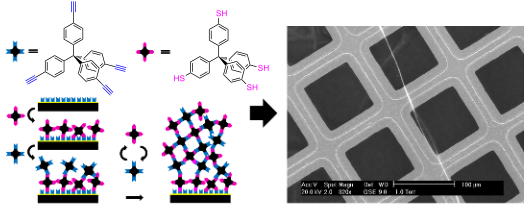
- conductivity. All specimen were imaged under high-vacuum conditions (1.0 Torr), using an acceleration voltage of 20 keV. Atomic force microscopy (AFM): AFM-imaging was performed using an Asylum Research Atomic Force Microscope, MFP-3D BIO. The AFM was operated at 25 °C in an isolated chamber in alternating


Novel β-cyclodextrin–eosin conjugates
Beilstein J. Org. Chem. 2017, 13, 543–551, doi:10.3762/bjoc.13.52
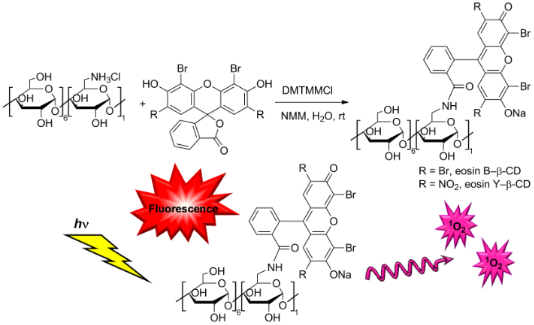
- preservation of the photophysical properties of the dye. In fact, this molecular hybrid exhibits satisfactory fluorescence and 1O2 photogeneration quantum yields making it a suitable candidate for biomedical research studies in the field of imaging and PDT applications. The possibility to exploit the CD cavity



Investigation of the action of poly(ADP-ribose)-synthesising enzymes on NAD+ analogues
Beilstein J. Org. Chem. 2017, 13, 495–501, doi:10.3762/bjoc.13.49
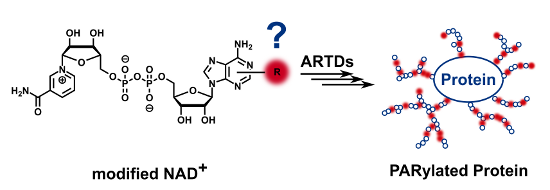
- labelling approaches comprising different reporter-modified NAD+ building blocks have stimulated and enriched proteomic studies and imaging applications of ADP-ribosylation processes. Herein, we compare the substrate scope and applicability of different NAD+ analogues for the investigation of the polymer
- activity [15][16][17][18], the identification of PARylation sites and targets [15][19][20] and the real-time imaging [21] of PARylation processes. In this report, we systematically compare the substrate scope of the four poly(ADP-ribose)-synthesising enzymes ARTD1, ARTD2, ARTD5 and ARTD6. For this purpose


A postsynthetically 2’-“clickable” uridine with arabino configuration and its application for fluorescent labeling and imaging of DNA
Beilstein J. Org. Chem. 2017, 13, 127–137, doi:10.3762/bjoc.13.16
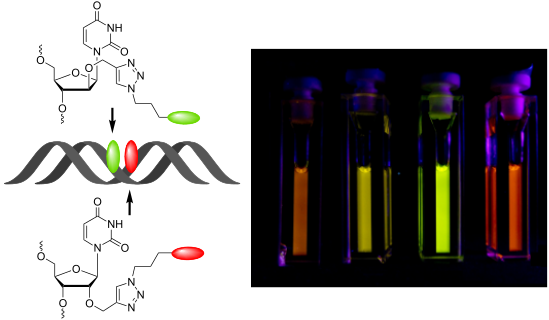
- yield. Especially mixed combinations, that means donor dyes with arabino-configured anchor with acceptor dyes with ribo-configured anchor, and vice versa, showed significantly improved fluorescence properties. Those were successfully applied for fluorescent imaging of DNA after transport into living
- traffic lights” [17][19][25] that are energy transfer-based nucleic acid probes that can be used in molecular beacons [26], especially for vesicular microRNA imaging in living cancer cells [27], and for siRNA transport imaging [28]. Donor and acceptor dyes are combined in an interstrand and diagonal
- -green contrast of 86). In order to test the functionality of the respective dyes as FRET pairs in DNA duplexes for imaging in cells, four representative duplexes, DNA2aD1–DNA3rD5, DNA2rD1–DNA3aD8, DNA2aD2–DNA3aD8 and DNA2rD4–DNA3aD8, were tested in HeLa cells. 5 × 10⁴ HeLa cells were transiently



Versatile synthesis of end-reactive polyrotaxanes applicable to fabrication of supramolecular biomaterials
Beilstein J. Org. Chem. 2016, 12, 2883–2892, doi:10.3762/bjoc.12.287

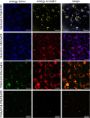
- modified with dibenzylcyclooctyne (DBCO)-conjugated fluorescent molecules via a copper-free click reaction; this fluorescently labeled PRX was utilized for intracellular fluorescence imaging. The method of synthesizing end-reactive PRXs described herein is simple and versatile for the design of diverse
- -catalyzed click reactions are performed. Additionally, fluorescence labeling of the PRX and intracellular fluorescence imaging were performed as an example application. Results and Discussion Synthesis of azide-terminated PRXs using bis(2-amino-3-phenylpropyl) poly(ethylene glycol) and 4-substituted benzoic
- fluorescence imaging Terminal reactive groups in the PRXs can be utilized in various biomaterials applications, such as the fabrication of cross-linked materials (e.g., hydrogels) [29], direct surface immobilization onto alkyne-immobilized surfaces [30], and the modification of other functional molecules for




Biochemical and structural characterisation of the second oxidative crosslinking step during the biosynthesis of the glycopeptide antibiotic A47934
Beilstein J. Org. Chem. 2016, 12, 2849–2864, doi:10.3762/bjoc.12.284
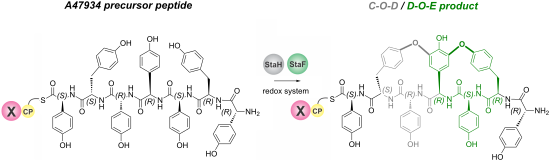
- Biochemistry and Molecular Biology and ARC Centre of Excellence in Advanced Molecular Imaging, Monash University, Clayton, Victoria 3800, Australia 10.3762/bjoc.12.284 Abstract The chemical complexity and biological activity of the glycopeptide antibiotics (GPAs) stems from their unique crosslinked structure




Chemical probes for competitive profiling of the quorum sensing signal synthase PqsD of Pseudomonas aeruginosa
Beilstein J. Org. Chem. 2016, 12, 2784–2792, doi:10.3762/bjoc.12.277
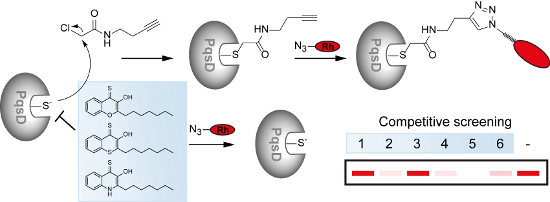
- selectively targeting the active site of an enzyme and a reporter group that allows in-gel imaging and/or affinity enrichment of target enzymes [22]. We thus synthesized a small library of chemical probes with electrophilic α-chloroacetamide, α,β-unsaturated amide, and α,β-unsaturated ketone moieties as
- and excess reporter tag were removed by SDS-polyacrylamide gel electrophoreses (SDS-PAGE), and labelling of the protein was visualized by fluorescence imaging. Consistency of protein levels was checked by coomassie staining (Supporting Information File 1, Figures S2 and S3). While the α,β-unsaturated



Synthesis of medronic acid monoesters and their purification by high-performance countercurrent chromatography or by hydroxyapatite
Beilstein J. Org. Chem. 2016, 12, 2145–2149, doi:10.3762/bjoc.12.204
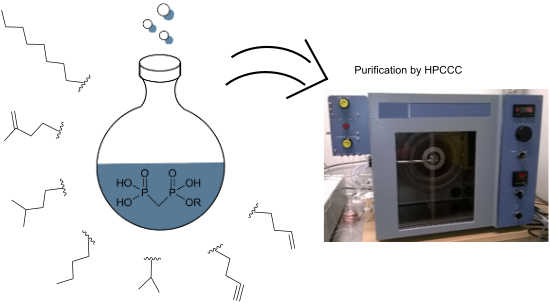
- : bisphosphonate; bisphosphonate monoester; high performance counter current chromatography; hydroxyapatite; medronic acid; Introduction Bisphosphonates (BPs) have been used for decades in the treatment of bone-related diseases as well as for bone imaging. Nevertheless, several recent reports have demonstrated


Economical and scalable synthesis of 6-amino-2-cyanobenzothiazole
Beilstein J. Org. Chem. 2016, 12, 2019–2025, doi:10.3762/bjoc.12.189

- Laboratories, University of Leeds, Leeds LS2 9JT, UK 10.3762/bjoc.12.189 Abstract 2-Cyanobenzothiazoles (CBTs) are useful building blocks for: 1) luciferin derivatives for bioluminescent imaging; and 2) handles for bioorthogonal ligations. A particularly versatile CBT is 6-amino-2-cyanobenzothiazole (ACBT
- -cyanobenzothiazoles; DABCO; luciferins; organocatalysis; Introduction Functionalised 2-cyanobenzothiazoles (CBTs, 1) are key building blocks for the synthesis of luciferins 3 [1][2][3], substrates of natural and engineered firefly luciferases that are widely used for bioluminescence imaging (BLI) [4][5]. The typical
- bioorthogonal ligation and bioluminescent imaging. The procedure allowed the safe synthesis of 8 at multigram scale and in high purity. In addition, the sole use of filtrations and crystallisations for purification of all intermediates and products, in combination with the endothermic nature of the controlled


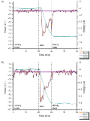

Synthesis and characterization of fluorinated azadipyrromethene complexes as acceptors for organic photovoltaics
Beilstein J. Org. Chem. 2016, 12, 1925–1938, doi:10.3762/bjoc.12.182
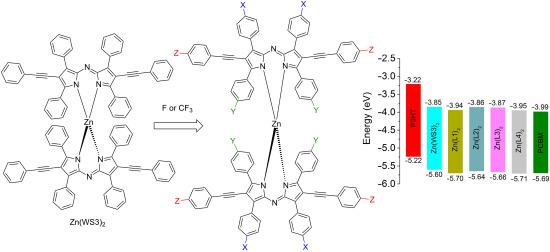
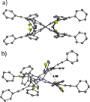
- chelation [1][2][3][4]. BF2+-chelated ADP derivatives (Figure 1b) in particular have drawn interest for photodynamic therapy, bio-imaging and light harvesting applications [5][6][7][8]. We have shown that derivatives of Zn(ADP)2 are promising electron acceptors for organic photovoltaics (OPVs) [9][10]. A


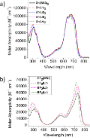
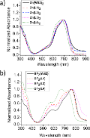


Ionic liquids as transesterification catalysts: applications for the synthesis of linear and cyclic organic carbonates
Beilstein J. Org. Chem. 2016, 12, 1911–1924, doi:10.3762/bjoc.12.181
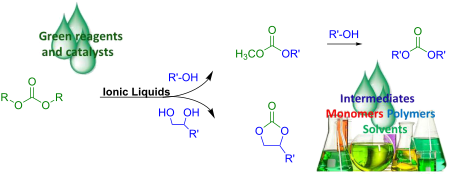
- therapeutics, imaging agents and packaging films and coatings [77]. Conclusion The literature survey illustrated in this review highlights three main facts. Firstly, organocatalysis by ionic liquids can be an efficient tool for base and even acid-catalyzed transesterification reactions in place of traditional


Synthesis and properties of fluorescent 4′-azulenyl-functionalized 2,2′:6′,2″-terpyridines
Beilstein J. Org. Chem. 2016, 12, 1812–1825, doi:10.3762/bjoc.12.171
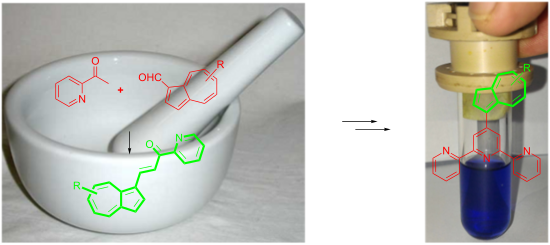
- have been investigated for their potential applications in catalysis, photovoltaic cells and biomedical science [5]. Special attention has been paid to fluorescence responses of metal–terpyridine compounds permitting access to new sensors for bioassays and in vivo imaging purposes [6]. The


Dinuclear thiazolylidene copper complex as highly active catalyst for azid–alkyne cycloadditions
Beilstein J. Org. Chem. 2016, 12, 1566–1572, doi:10.3762/bjoc.12.151
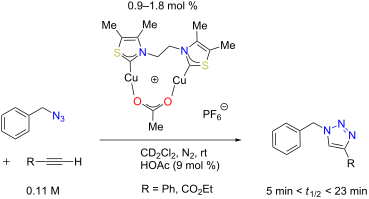
- bioactive surfaces [8][14], imaging of biochemical processes [15], localization of bioactive compounds inside living cells [16], syntheses of small-molecule screening libraries [17], catenane and rotaxane syntheses [18], in reactions under continuous flow processing [19], polymer and surface science [20][21


Towards potential nanoparticle contrast agents: Synthesis of new functionalized PEG bisphosphonates
Beilstein J. Org. Chem. 2016, 12, 1366–1371, doi:10.3762/bjoc.12.130

- for biomedical imaging applications, the adsorption of plasmatic proteins on the surface of nanoparticles must be prevented to reduce the hepatic capture and increase the plasmatic time life. In biologic media, metal oxide nanoparticles are not stable and must be coated by biocompatible organic
- the development of superparamagnetic iron oxide nanoparticles (SPIONPs) because of their biocompatibility which allows there in vivo use both for diagnosis in magnetic resonance imaging and in therapy [1][2]. Most often, it is necessary to modify the surface of SPIONPs to increase the metabolic


Application of Cu(I)-catalyzed azide–alkyne cycloaddition for the design and synthesis of sequence specific probes targeting double-stranded DNA
Beilstein J. Org. Chem. 2016, 12, 1348–1360, doi:10.3762/bjoc.12.128
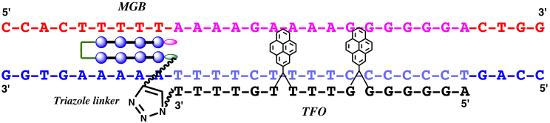
- , so they were successfully used for both gene expression regulation and the synthesis of fluorescent probes for DNA imaging in fixed and live cells [1][2][3][8][9]. However, the length of the sequence recognized by the classical hairpin polyamides (5–6 base pairs) is much shorter than that for TFOs


Synthesis, fluorescence properties and the promising cytotoxicity of pyrene–derived aminophosphonates
Beilstein J. Org. Chem. 2016, 12, 1229–1235, doi:10.3762/bjoc.12.117
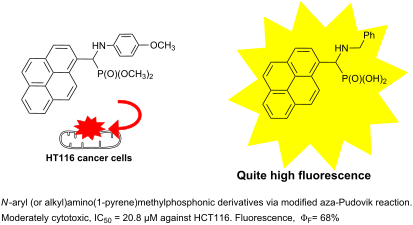
- biological imaging. Investigation of cytotoxic effects of studied compounds The cytotoxic effects of dimethyl aminophosphonates 3Aa, 3Ab, 3Ac, 3Ad, 3Ai and dimethyl [hydroxy(pyren-1-yl)methyl]phosphonate (5A) were investigated with two human colorectal carcinoma cell lines: HT29 and HCT116 and also on the


Synthesis of a deuterated probe for the confocal Raman microscopy imaging of squalenoyl nanomedicines
Beilstein J. Org. Chem. 2016, 12, 1127–1135, doi:10.3762/bjoc.12.109

- fulfill this task, radioactive labeling or fluorescent probes have been thoroughly used. For example, the subcellular localization of the 3H-radiolabeled GemSQ conjugate has been evaluated by micro-autoradiography coupled to confocal imaging of fluorescently labeled cellular structures [21]. A dual
- , its coupling with gemcitabine and the Raman spectra of the deuterated GemSQ nanoassemblies, opening the way to perform intracellular imaging of squalenoyl nanomedicine (Figure 1). Results and Discussion Chemical synthesis of squalenic acid-d6 and GemSQ-d6 conjugate In a first approach we decided to


Creating molecular macrocycles for anion recognition
Beilstein J. Org. Chem. 2016, 12, 611–627, doi:10.3762/bjoc.12.60
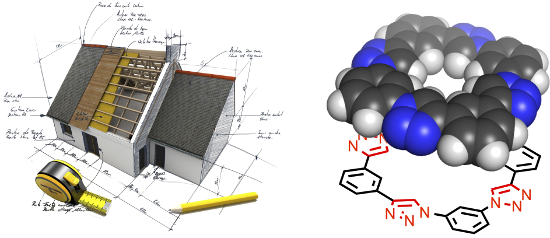
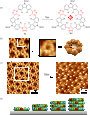
- microscopy (STM) imaging. Their shape persistence makes them ideal for the study of structure–property relationships to enable deep understanding of anion recognition phenomena. The identification of 1,2,3-triazoles as linkers, ligands and building blocks. The synthetic creation of macrocycles sets the scene
- self-assembly and anion binding (Figure 17a) using STM and were surprised by what we saw. Clear in the imaging (Figure 17b) were their shapes, looking like lumpy donuts; a shape similar to the one offered by Japan’s Mister Donut. Interestingly, these macrocycles displayed a reliable propensity for






Self and directed assembly: people and molecules
Beilstein J. Org. Chem. 2016, 12, 391–405, doi:10.3762/bjoc.12.42
- will develop as a direct result of the increased importance of animal, tissue and cellular imaging techniques using boronic acid receptors [124]. “Education is the passport to the future, for tomorrow belongs to those who prepare for it today.” – Malcolm X (1925–1965) Author biography Tony D. James is






Art, auto-mechanics, and supramolecular chemistry. A merging of hobbies and career
Beilstein J. Org. Chem. 2016, 12, 362–376, doi:10.3762/bjoc.12.40
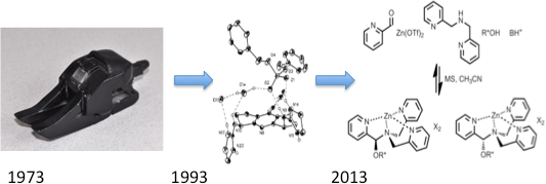
- -based differential sensing is likewise struggling for a solid foothold in the economy. In contrast, imaging agents are clearly a frontier. These are the kinds of sensors that Tony Czarnik originally envisioned [72], and commercial success has been achieved with the company Life Technologies, formally





Diastereoselective synthesis of new O-alkylated and C-branched inositols and their corresponding fluoro analogues
Beilstein J. Org. Chem. 2016, 12, 353–361, doi:10.3762/bjoc.12.39

- derivatives, bearing an arm terminated either with a hydroxy group or a fluorine atom, could be interesting candidates for diastereoisomeric intermediates and biological evaluations, especially for PET imaging experiments. Keywords: C-branched; diastereoselective; fluoroinositols; inositols; O-alkylated
- this compound crosses the blood brain barrier (BBB) with difficulty [32]. The same PET imaging studies using the diastereoisomeric compound of myo configuration (2-[18F]fluoro-2-deoxy-myo-inositol), did not get better results [33]. On the other hand, these radiotracers have shown interesting features
- in the diagnosis of breast cancer with this imaging technique [33][34]. Considering the synthetic and biological importance of inositol analogues, the design of new inositol derivatives to study their biological properties and to understand their binding mechanisms with molecular targets, for


Natural products from microbes associated with insects
Beilstein J. Org. Chem. 2016, 12, 314–327, doi:10.3762/bjoc.12.34
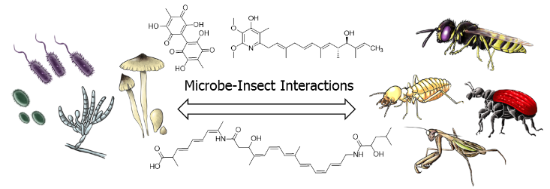
- identified as piericidin derivatives (e.g., piericidin A1 (1), Figure 3) and the chlorinated indole derivative streptochlorin (2). Imaging analysis based on a combination of laser desorption/ionization (LDI)–time of flight (TOF) mass spectrometry imaging visualized the spatial distribution of the antibiotics
- pathways. This in turn can lead to the discovery of new metabolic pathways that would otherwise be silent or undetected under typical laboratory cultivation conditions. In recent years many successful analytical methods including UHPLC–DAD and UHPLC–MS-based techniques, imaging mass spectrometry (IMS) [138





Enabling technologies and green processes in cyclodextrin chemistry
Beilstein J. Org. Chem. 2016, 12, 278–294, doi:10.3762/bjoc.12.30
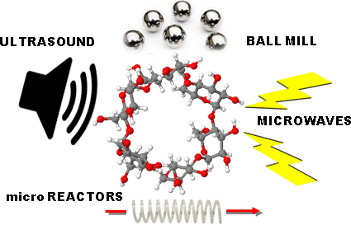
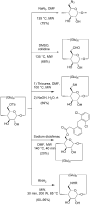
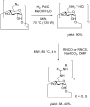
- -soluble cyanine/β-CD derivatives have been efficiently prepared via CuAAC under simultaneous US/MW irradiation at 75 °C for 2 h (MW 15 W and US 20 W) in good yields (23% and 33%). These dyes were used as versatile carriers for drug delivery and optical imaging. Preparation of CD-grafted materials and CD



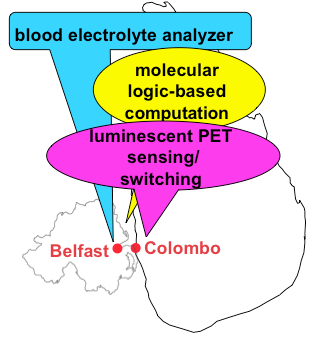
Bright molecules for sensing, computing and imaging: a tale of two once-troubled cities
Beilstein J. Org. Chem. 2015, 11, 2774–2784, doi:10.3762/bjoc.11.298







Synthesis of cyclic N1-pentylinosine phosphate, a new structurally reduced cADPR analogue with calcium-mobilizing activity on PC12 cells
Beilstein J. Org. Chem. 2015, 11, 2689–2695, doi:10.3762/bjoc.11.289

- ) equipped with a FLUAR 40X oil objective lens. The experiments employed a digital imaging system composed of a MicroMax 512BFT cooled CCD camera (Princeton Instruments, Trenton, NJ, USA), LAMBDA 10-2 filter wheeler (Sutter Instruments, Novato, CA, USA), and Meta-Morph/MetaFluor Imaging System software
- (Universal Imaging, West Chester, PA, USA). After loading, the cells were illuminated alternately at 340 and 380 nm by a Xenon lamp. The emitted light was passed through a 512 nm barrier filter. Fura-2AM fluorescence intensity was measured every 3 s. Forty to sixty-five individual cells were selected and





