Search results
Search for "reduction" in Full Text gives 1657 result(s) in Beilstein Journal of Organic Chemistry. Showing first 200.
Efficient one-step synthesis of diarylacetic acids by electrochemical direct carboxylation of diarylmethanol compounds in DMSO
Beilstein J. Org. Chem. 2024, 20, 2392–2400, doi:10.3762/bjoc.20.203
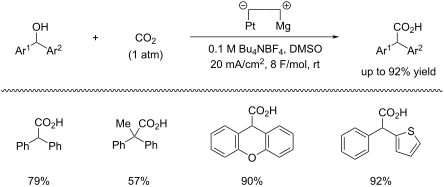
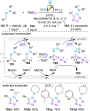
- diarylacetic acids from diarylmethanol species and carbon dioxide without transformation of the hydroxy group into appropriate leaving groups, such as halides and esters including carbonates. Keywords: C(sp3)–O bond cleavage; diarylacetic acid; diarylmethanol; electrochemical reduction; fixation of carbon
- dioxide; Introduction Electrochemical reduction of benzyl alcohol derivatives can induce reductive cleavage of a C(sp3)–O bond [1] at the benzylic position to generate the corresponding benzylic anion species. This protocol has been frequently applied to electrochemical carboxylation [2][3][4][5][6][7][8
- ][9][10][11], yielding phenylacetic acids. For example, Troupel et al. successfully performed electrochemical reduction of benzyl ethers and several esters such as acetate, trifluoroacetate, benzoate, and dibenzyl carbonate derived from benzyl alcohols, including 1-phenylethanol compounds, in the


Synthesis, electrochemical properties, and antioxidant activity of sterically hindered catechols with 1,3,4-oxadiazole, 1,2,4-triazole, thiazole or pyridine fragments
Beilstein J. Org. Chem. 2024, 20, 2378–2391, doi:10.3762/bjoc.20.202
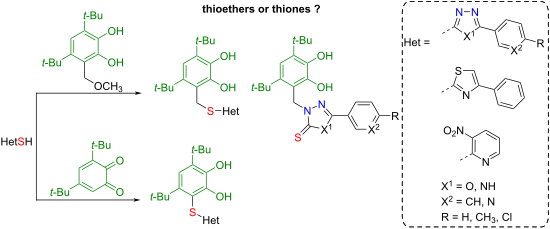
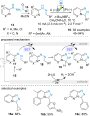
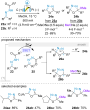
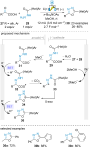
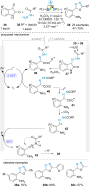
- reaches 51%). Besides, the current value of the second peak remains unchanged. In the cathodic region, a one-electron quasi-reversible peak is displayed (Epc = −0.58 V). This process corresponds to the reduction of o-benzoquinone to o-benzosemiquinone. During electrolysis, the color of the solution




Asymmetric organocatalytic synthesis of chiral homoallylic amines
Beilstein J. Org. Chem. 2024, 20, 2349–2377, doi:10.3762/bjoc.20.201
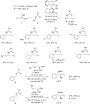
- scale (Scheme 27). Thus, the hydrolysis of the N=CPh2 group in the N-morpholinyl product 129 with hydroxylamine hydrochloride afforded the deprotected homoallylic amine 133 in a 99% yield without need for chromatographical purification. In a separate experiment, the sequential reduction of the N
- -morpholinyl amido and benzophenone imino groups with LiAlH4 and NaBH4 afforded the corresponding syn-2-benzyl-1,3-amino alcohol 134 in 83% yield. In the case of the dimethylamide derivative, deprotection of benzophenone imine 128 with NH2OH·HCl followed by the LiAlH4 reduction gave rise to chiral syn-2-benzyl








Hydrogen-bond activation enables aziridination of unactivated olefins with simple iminoiodinanes
Beilstein J. Org. Chem. 2024, 20, 2305–2312, doi:10.3762/bjoc.20.197
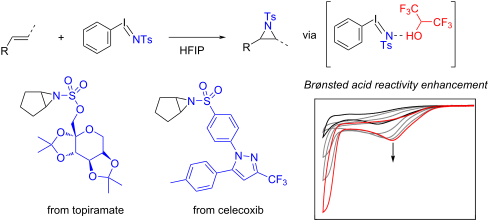
- −1.52 V, respectively. The titration showed a saturation point at 25 µL of HFIP (6.0 equiv with respect to 2c), at which the CV of 2c showed an Epr = –1.47 V and –1.52 mA current. Overall, the addition of HFIP results in a 250 mV shift in the reduction of 2c. The increased facility of reduction is


Deuterated reagents in multicomponent reactions to afford deuterium-labeled products
Beilstein J. Org. Chem. 2024, 20, 2270–2279, doi:10.3762/bjoc.20.195
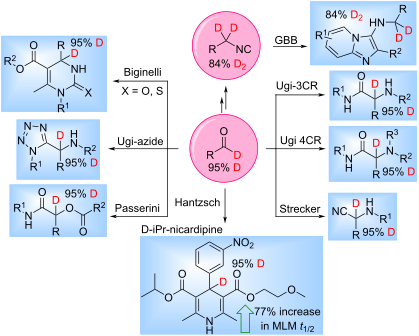
- production or external purchase and have progressed along the value chain to the clinic and full approval [5]. Literature inspection reveals that an established common method to prepare deuterated benzylic isonitriles is reduction of a nitrile in the presence of a deuterium source (Scheme 1) [16][17][18


gem-Difluorination of carbon–carbon triple bonds using Brønsted acid/Bu4NBF4 or electrogenerated acid
Beilstein J. Org. Chem. 2024, 20, 2261–2269, doi:10.3762/bjoc.20.194
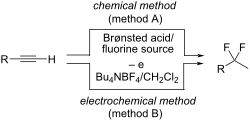
- solution of Bu4NBF4/CH2Cl2 containing substrates might also promote the same reactions (Figure 1, reaction 6, electrochemical method). Currently, electrochemistry can be regarded as a promising technique in organic synthesis, because heavy-metal reagents can be avoided for the oxidation or reduction of



Cell-free protein synthesis with technical additives – expanding the parameter space of in vitro gene expression
Beilstein J. Org. Chem. 2024, 20, 2242–2253, doi:10.3762/bjoc.20.192
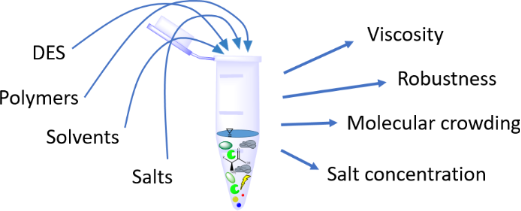
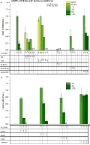
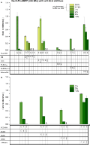
- a strong negative effect on the in vitro synthesis of sfGFP. Although the concentration of inorganic ions and osmolarity are close to physiological conditions at a concentration of 2% choline chloride, a reduction of sfGFP production to only 2% was measured for choline chloride/urea and 41% for

Electrochemical allylations in a deep eutectic solvent
Beilstein J. Org. Chem. 2024, 20, 2217–2224, doi:10.3762/bjoc.20.189
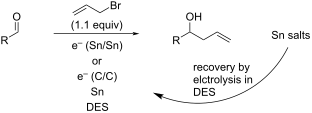
- there are many reasons for this renewed interest, two major motivations are the unmatched control of oxidation or reduction potential that can be achieved and the environmentally friendly aspect of having electrons as the only consumed reagent. This latter reason is certainly an advantage in many cases
- product, although in this case, reduction of the nitro group to an amino group was observed and the resulting 4-aminobenzaldehyde is likely too electron-rich to undergo allylation. The use of other halides was also explored (Table 3). Switching to allyl chloride (Table 3, entry 2) did result in partial
- reducing the waste generated in these allylations. While non-sacrificial graphite electrodes had failed to result in any reaction, it seemed possible that the use of a catalytic amount of tin metal or a tin salt with graphite electrodes would result in a superior reaction due to in situ reduction and/or

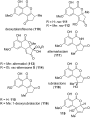
Natural resorcylic lactones derived from alternariol
Beilstein J. Org. Chem. 2024, 20, 2171–2207, doi:10.3762/bjoc.20.187
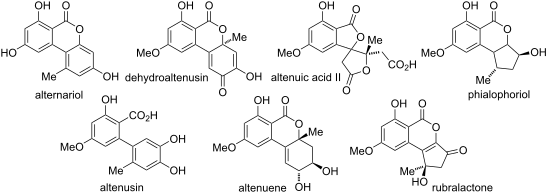
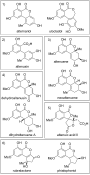
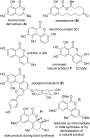
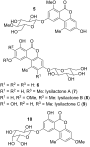
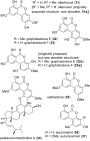
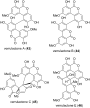
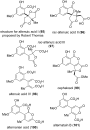
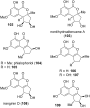
- Graphis scripta var. pulverulenta, G. prunicola, and G. cognata [43][45][46][165]. Their structures were proposed based on NMR-spectroscopic investigations and were unambiguously confirmed by total syntheses [44][166]. Graphislactone A had already been obtained previously from the synthetic reduction of
- ring was isolated from Ulocladium botrytis [219] and Microsphaeropsis olivacea [167]. Its structure was unambiguously confirmed by NMR spectroscopy and by total syntheses [44][220]. Ulocladol is a tyrosine kinase (p56lck) inhibitor leading to a reduction of enzyme activity to 7% at 0.02 µg/µL) [219
- ] and from Talaromyces sp. [243]. It showed significant α-glucosidase inhibition with an IC50 value of 2.2 μM [244] and was a potent scavenger of DPPH and of nitrite [243]. Decarboxyaltenusin (50) was reported in 1974 to be obtained by chemical decarboxylation of altenusin (47) and by reduction of










Efficacy of radical reactions of isocyanides with heteroatom radicals in organic synthesis
Beilstein J. Org. Chem. 2024, 20, 2114–2128, doi:10.3762/bjoc.20.182
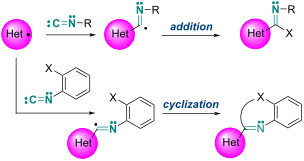
- radicals abstract hydrogen from the tin hydride or hydrosilane, and the reduction reaction proceeds with the concomitant formation of stannyl or silyl cyanide 15 as byproducts (Scheme 9a) [38][43]. In the presence of acrylonitrile, the formed alkyl radical can add to acrylonitrile, affording the addition


From perfluoroalkyl aryl sulfoxides to ortho thioethers
Beilstein J. Org. Chem. 2024, 20, 2108–2113, doi:10.3762/bjoc.20.181
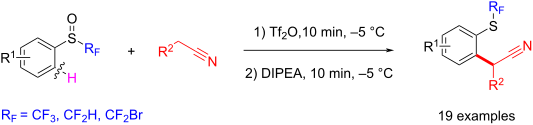
- yield of 15%. The main product obtained was phenyl(trifluoromethyl)selane, a reduction product of the selenoxide. Despite a low yield, this result is encouraging because it is the first example of rearrangement with aryl trifluoromethyl selenoxide. We further investigated the generality of the reaction
- chain, and the alkyl chain linking the cyano functional groups. The [3,3]-sigmatropic rearrangement of perfluoroalkyl selenoxides needs to be optimized to improve the yield and decrease the amount of reduction product. The complete evaluation of the potential of these new compounds will be provided in



Understanding X-ray-induced isomerisation in photoswitchable surfactant assemblies
Beilstein J. Org. Chem. 2024, 20, 2005–2015, doi:10.3762/bjoc.20.176
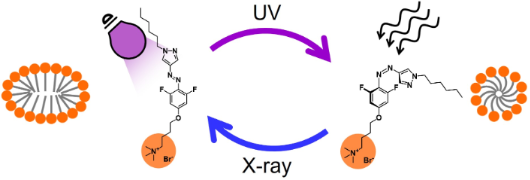
- , Supporting Information File 1). Fits to the data show a return to the cylindrical micelle morphology present in the E isomer, but with smaller dimensions of 98 Å length (cf. 136 Å in the E isomer), and radii of 13 and 15 Å in the polar and equatorial directions (Table 1). A similar reduction in micelle size



Harnessing the versatility of hydrazones through electrosynthetic oxidative transformations
Beilstein J. Org. Chem. 2024, 20, 1988–2004, doi:10.3762/bjoc.20.175
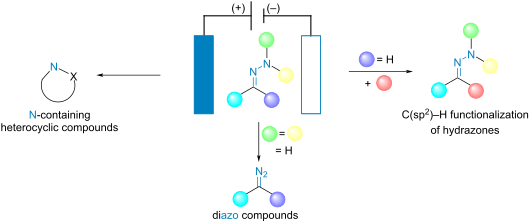
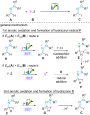
- have been harnessed as valuable intermediates in Wolff–Kishner reduction reactions [12][13][14] or for the synthesis of various olefins via diazo or vinyllithium intermediates in the Bamford–Stevens reaction [15] and Shapiro reaction [16], respectively [17]. SAMP/RAMP ((S)/(R)-1-amino-2
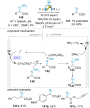
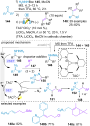
- hydrazone and (ii) the ammonium cation would provide a performant proton source to counterbalance the overall process, thereby protecting the diazo product from cathodic reduction (akin to the conversion of 132 into 135 in Scheme 27). Based on these studies, the authors proposed the initial anodic formation
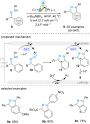
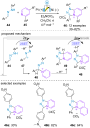
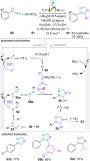
- + (E1/2(TAC2+/TAC+) = +1.3 V vs SCE). Subsequent SET between highly oxidizing photoexcited species TAC2+* (E1/2(TAC2+*/TAC+) = +3.3 V vs SCE) and 150 generated distonic species 151 by denitrogenation. After Wagner–Merweein shift, the resulting radical cation 152 would undergo SET reduction from an








Radical reactivity of antiaromatic Ni(II) norcorroles with azo radical initiators
Beilstein J. Org. Chem. 2024, 20, 1967–1972, doi:10.3762/bjoc.20.172
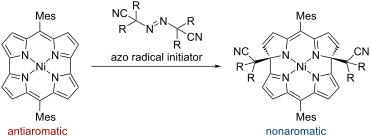
- the electrophile [16][17][18]. In addition, C–C double bonds of the norcorrole skeleton outside the π-delocalization pathway exhibit a reactivity similar to an alkene to afford hydrogenated norcorroles by hydrogenation [19] or reduction with hydrazine [20] and [3 + 2]-cycloadducts with 1,3-dipoles [21
- CH2Cl2 were examined using cyclic voltammetry (Figure 4). Macrocycle 2a exhibited one reversible oxidation wave at 0.44 V and two reversible reduction waves at −0.85 V and −1.14 V. The electrochemical HOMO–LUMO gap of 2a is 1.29 V, which is larger than that of 1a (1.08 V) [2]. DFT calculations We next


1,2-Difluoroethylene (HFO-1132): synthesis and chemistry
Beilstein J. Org. Chem. 2024, 20, 1955–1966, doi:10.3762/bjoc.20.171
- -difluoroethylene was based on 1,2-dichloro-1,2-difluoroethane (HCFC-132) [48][49][50][51][52], prepared from 1,1,2,2-tetrachloro-1,2-difluoroethane (CFC-112) by reduction using lithium aluminum hydride [48][49][50][51] or photoreduction (Scheme 2) [51]. The resulting HCFC-132 reacted with zinc [47][49][52] or


Negishi-coupling-enabled synthesis of α-heteroaryl-α-amino acid building blocks for DNA-encoded chemical library applications
Beilstein J. Org. Chem. 2024, 20, 1922–1932, doi:10.3762/bjoc.20.168
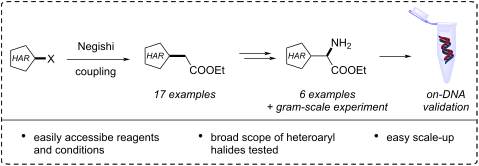
- heteroaromatic halides. The reaction sequence utilizes a photochemically enhanced Negishi cross-coupling as a key step, followed by oximation and reduction. The prepared amino esters were validated for on-DNA reactivity via a reverse amidation–hydrolysis–reverse amidation protocol. Keywords: amino acids; DEL
- that α-heteroaryl acetates accessed through Negishi coupling can be used as key intermediates towards NCAs (Scheme 1c). Indeed, oximation of these motifs followed by reduction gave access to the desired NCAs. Results and Discussion Negishi cross-coupling step The Negishi reaction provides convenient
- amino group by reduction. We reasoned that increasing the sp2 fraction and the rigidity of the whole structure will lead to increased stability of these derivatives. The first exploratory attempts demonstrated the easy preparation and the high bench stability of the oxime derivatives, therefore we opted




Novel oxidative routes to N-arylpyridoindazolium salts
Beilstein J. Org. Chem. 2024, 20, 1906–1913, doi:10.3762/bjoc.20.166
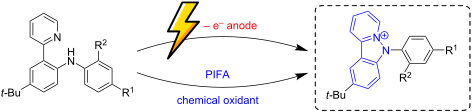
- −1.2V to −1.3 V region (Table 1). In case of S2, the second reduction peak corresponds to the reduction of the carbonyl group. Thus, the electrochemical window for the new salts exceeds 3.5 V; that makes their molten forms perspective for application as ionic liquids. As follows from Table 1, oxidation
- of the starting amines A1–A3 occurs at ca. 1–1.1 V vs Ag/AgCl, KCl(sat.). The electrochemical study of PIFA reduction showed a broad irreversible peak with the onset potential value of +0.93 V (vs Ag/AgCl, KCl(sat.)). Thus, it is sufficiently strong to perform oxidation of diarylamines A1–A3, as it
- direction of the potential sweep is changed after passing the first reduction peak of salt S2, the new peak appears at the potential of 0.89 V that completely coincides with the first oxidation peak of the amine precursor. The CV curve for the diarylamine, in its turn, exhibited (in the reverse scan after


Electrochemical radical cation aza-Wacker cyclizations
Beilstein J. Org. Chem. 2024, 20, 1900–1905, doi:10.3762/bjoc.20.165
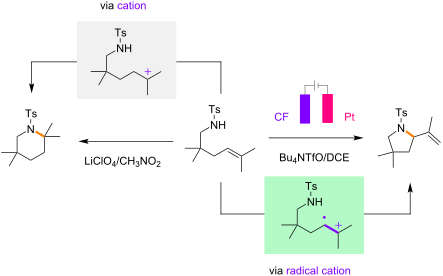
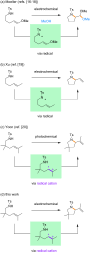
- step to driving bond formation and/or cleavage. Therefore, the discovery of new modes for activation leads to reaction advancements. Electrochemical [1][2][3][4][5] and photochemical [6][7][8][9][10] reactions that induce single-electron reduction and oxidation are widely used in modern synthetic
- organic chemistry [11][12][13][14][15]. Single-electron oxidation of bench-stable substrates can generate radical cations that offer unique reactivities as intermediates for various bond-formation processes (also true for reduction). Because the reactivities of radicals and ions are fundamentally




2-Heteroarylethylamines in medicinal chemistry: a review of 2-phenethylamine satellite chemical space
Beilstein J. Org. Chem. 2024, 20, 1880–1893, doi:10.3762/bjoc.20.163
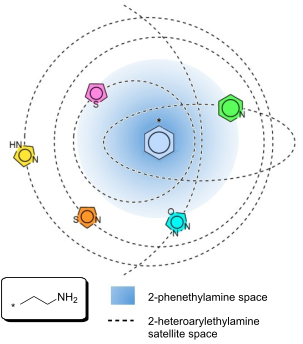
- ). Later, the authors expanded the histaprodifen family by SAR exploration of small substituents in the phenyl rings (compounds 67–78, Scheme 11) [59][60]. While pEC50 values varied very subtle, a histamine relative potency screening revealed a general reduction in potency. Following the same assay
- -ring bioisostere, but as carboxylic acid one, Schwarz et al. [79] developed tetrazole-based pregabalin bioisosteres 113–118 (Scheme 18). The target protein α2-δ is involved in neurotransmitters release reduction, as a model of anxiety and neuropathic pain. In general, submicromolar affinities were




The Groebke–Blackburn–Bienaymé reaction in its maturity: innovation and improvements since its 21st birthday (2019–2023)
Beilstein J. Org. Chem. 2024, 20, 1839–1879, doi:10.3762/bjoc.20.162
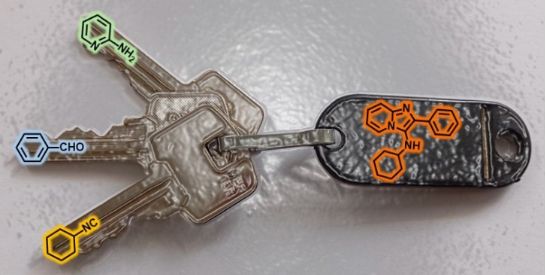
- incorporated into the second isocyanides. The utility of this protocol was evaluated by conducting a gram-scale synthesis using 10 mmol of all precursors and there was no significant reduction in the yield of products. Al-Tel et al. [62] developed a synthetic strategy where a Michael acceptor (a conjugated






A facile three-component route to powerful 5-aryldeazaalloxazine photocatalysts
Beilstein J. Org. Chem. 2024, 20, 1831–1838, doi:10.3762/bjoc.20.161
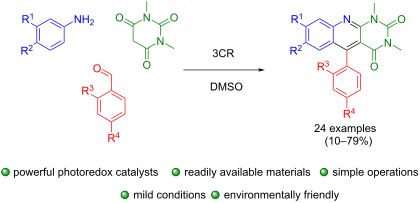
- , value for Ar = Ph] [14][15][16][17][18] (Figure 1B). 5-Aryldeazaalloxazines 2 have been found to be even more powerful reductants than 1 due to their more negative ground-state reduction potential by ca. 300 mV. Moreover, 2 exhibits higher photostability than 1. Consequently, 5-aryldeazaalloxazine 2f




Oxidative fluorination with Selectfluor: A convenient procedure for preparing hypervalent iodine(V) fluorides
Beilstein J. Org. Chem. 2024, 20, 1785–1793, doi:10.3762/bjoc.20.157
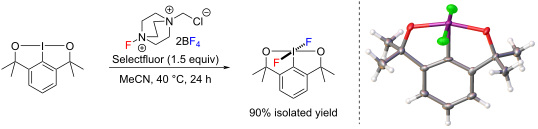
- major products were phenyliodane 23, presumably a result of ligand exchange and reduction, and iodoalcohol 18. Different solvents, temperatures and activators were investigated and the results are shown in Table S3 in Supporting Information File 1. Fluorobenzene was only ever observed in trace amounts


Synthesis and characterization of 1,2,3,4-naphthalene and anthracene diimides
Beilstein J. Org. Chem. 2024, 20, 1767–1772, doi:10.3762/bjoc.20.155
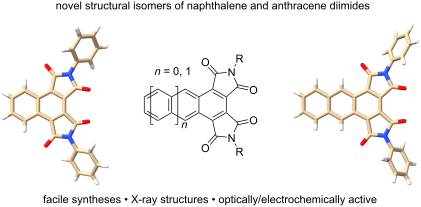
- undergo reversible chemical reduction processes, as determined by cyclic voltammetry in CH2Cl2 solvent (Figure 4). There are two factors at play. The imide substitution is impactful as the N-phenyl derivatives are roughly by 100 mV easier to reduce than the N-hexyl analogs. The anthracene scaffold also
- lends itself to a more facile reduction process, with an approximately 150 mV shift of the event toward more positive potentials for 8-R vs 7-R. When compared to other structural isomers, aromatic diimides with 5-membered cyclic imides tend to be slightly harder to reduce than those with 6-membered
- title compounds indicates that they are optically and electronically similar to previously reported naphthalene and anthracene diimides, absorbing/emitting light in the visible region and readily undergoing one-electron-reduction processes. As such, this work opens the possibility of incorporating the


Harnessing unprotected deactivated amines and arylglyoxals in the Ugi reaction for the synthesis of fused complex nitrogen heterocycles
Beilstein J. Org. Chem. 2024, 20, 1758–1766, doi:10.3762/bjoc.20.154
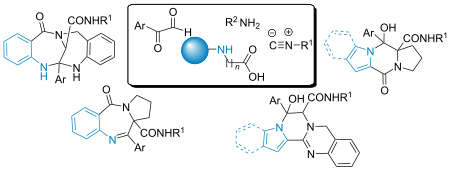
- with a reduced reactivity in the synthesis of 3H-benzo[e][1,4]diazepin-5-ones, heterocycles previously synthesized by our research group through Ugi/Staudinger/aza-Wittig and Ugi/reduction/cyclization sequences, using 2-azidobenzoic [20] and 2-nitrobenzoic [21] acids, respectively. The first
- chromatography column, while the more eco-friendly second strategy needs an additional stage for the reduction of the nitro group on the Ugi adduct. In order to find a more efficient synthesis, we thought that the second nitrogen in the diazepine nucleus could be incorporated without the need of surrogates or
- reaction took place with a α,3-like relative configuration on the major diastereomer, similar to that obtained for the Ugi/Staudinger/aza-Wittig sequence and complementary to that observed for the Ugi/reduction/cyclization sequence (see Supporting Information File 1, Figure S2). With the aim of building


Synthesis of polycyclic aromatic quinones by continuous flow electrochemical oxidation: anodic methoxylation of polycyclic aromatic phenols (PAPs)
Beilstein J. Org. Chem. 2024, 20, 1746–1757, doi:10.3762/bjoc.20.153
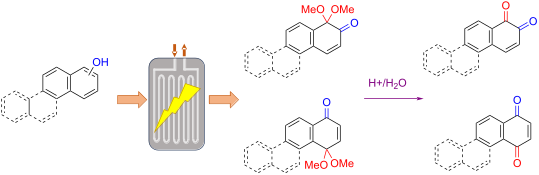
- showed irreversible oxidation processes within the oxidative potential window, scaling from 0.79 V to 1.10 V vs Fe/Fe+. The oxidation peak potential difference between isomers of chrysenols 3 and phenanthrols 6 was 20–310 mV. No reduction peaks were observed in the reverse scan in solutions of neither
- chrysenols nor phenanthrols, suggesting a chemically irreversible reaction of the radical cation intermediate with the ensuing product no longer being electrochemically active within the potential window of the CV scans. However, a reduction peak was observed for compound 1b (see Figure S2 in Supporting